Originally Published the Week of June 12, 2022 in Western Outdoor Publications
I’m joking, but would not be surprised.
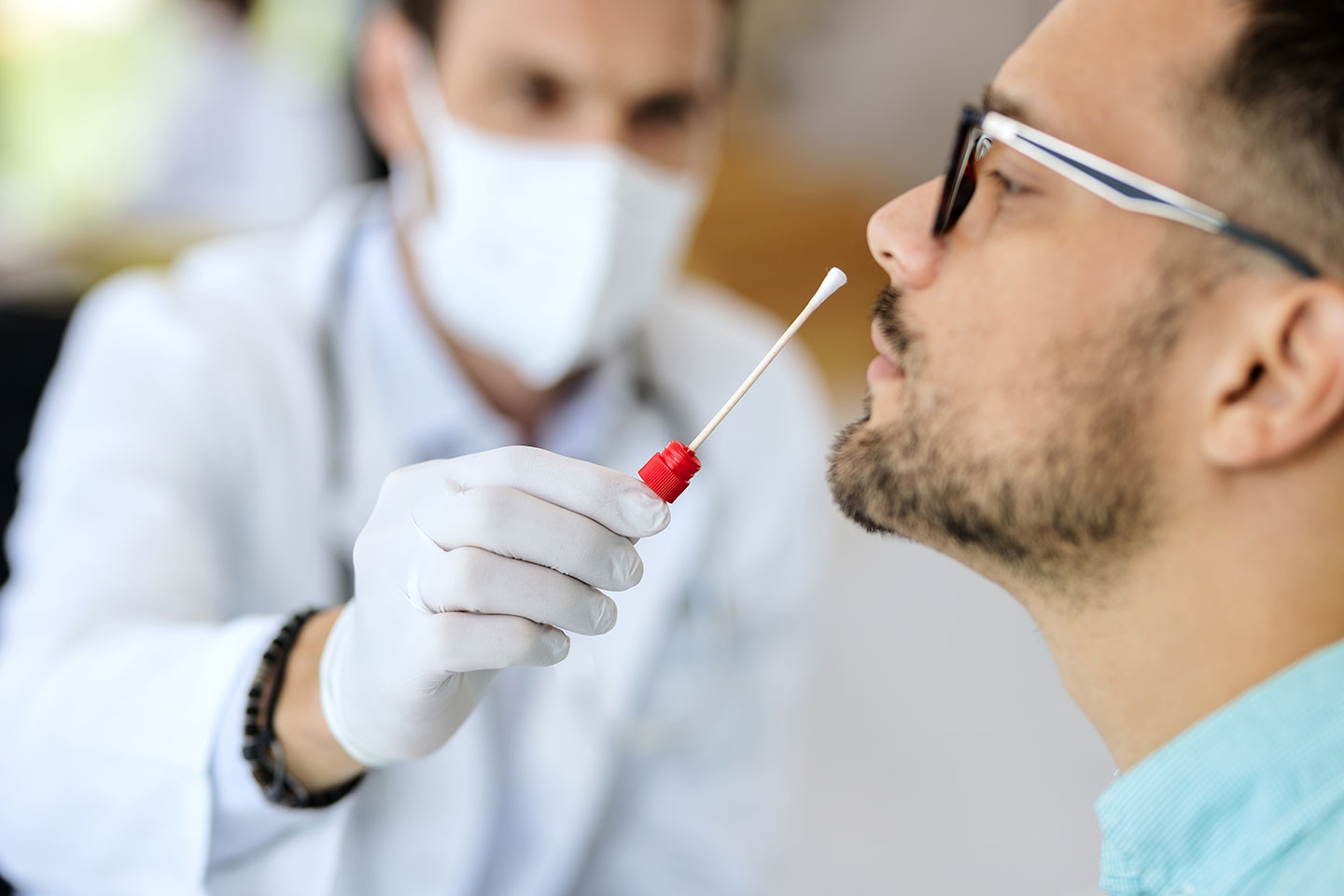
No more covid tests to return to the U.S. No more of those intrusive “nose probes” with the Q-tips to the back of your brain.
As of midnight Sunday June 12, one of the last vestiges and barriers to travel finally fell. It’s long overdue, but it’s about time.
For last two years, travelers heading back on international flights to the U.S. have been required to obtain a negative covid test in order to enter the country.
Initially, it required one to go find a testing facility. And this had to be done within 72 hours of the flight back into the U.S.
As onerous and burdensome as that may have been, the U.S. raised the barrier even higher last November. Although covid rates had been dropping along with all the protocols, the CDC feared the ominous head of the Omicron virus.
So, they removed the 72-hour testing requirement and made it even more difficult. Folks had to get a test within 24 hours of their international flights back to the U.S.
Insofar as tourist destinations in Mexico were already reeling from Covid in 2020 when everything was shut down, it was just starting to get back on it’s feet when the testing was initially implemented.
It sent the tourism section of Mexico into a mad scramble to set up testing facilities or find ways to get tests for guests. It further had to assure prospective visitors that it would be easy to obtain.
Test facilities were set up at major airports. Labs popped up everywhere including mobile labs willing to visit hotels to accommodate the demands.
Mexico desperately needed to keep the tourists coming back. It was just getting back a head of steam when the initial testing requirements were implemented.
I remember many people suddenly curtailing their vacations and hastily exiting the country when testing started.
And what if you tested positive? New protocols had to be implemented as well.
Ultimately, what a fiasco. Even moreso when the requirements were increased from 72 to 24 hours before the flight.
Of the zillions of folks that came through Cabo Airport alone, barely a handful tested positive and, according to statistics, most were false positives.
There was a lot of money to be made by sticking that q-tip up people’s noses. The tests ranged from 20 dollars to over 100 dollars in costs.
Once you took the test, you either had to get a printed copy of the results. Or, one had to get their results on their cellphone.
These results had to be taken to the airport. Every time I went to the airport, my personal observation was that the airlines or health inspectors just gave it a cursory look and directed you to the boarding gate. No big deal.
Believe me, Mexico didn’t want you hanging around with covid either false positive or not. In fact, you were able to obtain a new test within 24 hours.
As soon as you were negative…off you go! Adios and please come back again soon. Sorry for the inconvenience, but it’s YOUR country doing this not Mexico.
Also, there were ways around the requirements.
I know of some labs that would “guarantee” whatever result you wanted.
Definitely need to get home and work? No problem, we’ll guarantee a negative test result.
Want to stay a few days with a good excuse? No problem, we’ll guarantee a positive result.
Also, this only applied to international flights.
Many travelers to Baja, for example, cross the border and fly from Tijuana to their Mexican destinations. Those are DOMESTIC flights.
Therefore, on the return, they fly BACK to Tijuana and walk, drive back across the border. No testing required. No international flight was involved.
I had also heard stories of folks who tested positive (with no symptoms) deciding they were NOT going to return to their hotel rooms. They had to get home.
Simple solution. They flew to Tijuana and easily crossed the border and found a U.S flight home.
So…bottom line. Just like masks.
No more testing required. For now.
The CDC says it reserves the right to monitor things and see is some new and crazier viral strain returns. We’ll see.
For now, no tests to come down here. No testing to leave!
That’s my story
Jonathan
______________
Jonathan Roldan has been writing the Baja Column in Western Outdoor News since 2004. Along with his wife and fishing buddy, Jilly, they own and run the Tailhunter International Fishing Fleet in La Paz, Baja, Mexico www.tailhunter.com.
They also run their Tailhunter Restaurant Bar on the famous La Paz malecon waterfront. If you’d like to contact him directly, his e-mail is: jonathan@tailhunter.com
Or drop by the restaurant to say hi. It’s right on the La Paz waterfront!
A couple of years ago, I had some fishing clients come down to fish with us here in La Paz with our fleet. It was their first trip.
Now, let me post a little background.
It wasn’t just their first trip to Mexico. This was their first trip out of the U.S.
After meeting them, I can only imagine the trepidation they experienced deciding to try Mexico.
You and I have travelled all over. No biggie. Many folks have not. I often forget that!
It was obvious from the first evening they arrived off the plane and we greeted them. They were smiley and friendly, but you could tell there was a level of anxiety and nervousness.
Maybe in the way they would smile, but their eyes darted around. Or the way they were checking things out. And the questions they asked.
It was almost like they couldn’t believe they were here. Or that it was a modern as it was. Or that we had all the amenities like electricity and had discovered the use of the wheel. And fire.
Not sure where they had gotten their info or what they must have been reading or envisioned, but I think they half expected open desert and donkey carts when they got here.
After getting them to their hotel, the first thing they wanted was for me to direct them to a local supermarket. Understandably, they wanted to do some shopping for their stay with us.
Not unusual. So, I had one of our drivers take them over to the little neighborhood grocery store a few blocks away.
I figured, that like many of our visitors, they wanted to pick up ice, munchies, beers, etc. for their room and for on the boat while fishing.
I was surprised with what they brought back.
In addition to the bags of chips and junk food, they came back with bread, cold cuts, condiments, lettuce, tomatoes, peanut butter and jelly. Lots of it. And cases of water.
Here’s where I heard the kicker…
They were apparently planning to eat in their hotel room each day.
Despite the fact that we provided breakfast and lunches on their fishing days…Despite all the restaurants they had passed by on the way to the airport…Despite a perfectly good restaurant in the the hotel…
They planned to eat in their room each day.
From the horror stories they had apparently been reading, they didn’t trust the food or water in Mexico.
They were gonna wash their faces and brush their teeth with bottled water. Even in their modern hotel, they weren’t taking chances on faucet water.
(Were they also planning to shower in bottled water? I never asked. But it begged the question!)
On the way from the airport, they didn’t see the nice restaurants. They saw ramshackle (in their minds) taco stands on the side of the road with scruffy plastic tables and chairs.
They saw food vendors on street corners selling hot dogs, tacos, corn and other things from carts and make-shift bicycles.
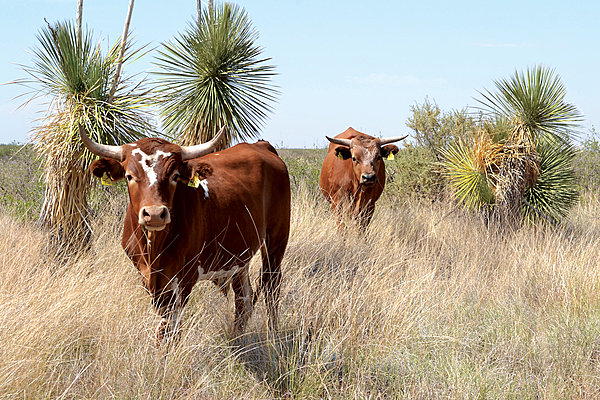
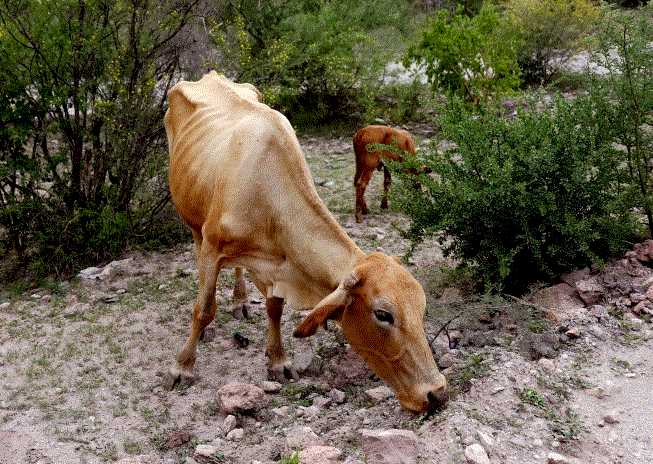
And, they saw the cattle roaming the side of the highway. The cows were emaciated and skeletal.
Thank you and muchas gracias, but they were having none of that. They were gonna fish and eat sandwiches in their room and go home without any intestinal troubles!
After a sigh and trying to hide my rolling of the eyes, I had to do some explaining.
I told them I could understand buying lots of water. You want to stay hydrated. But the hotel water was fine to wash and brush with.
It was even safe to drink. However, like most city waters, it just didn’t taste real great. So, all of us drink bottled water just like up in the U.S.
As far as food and meat, local food was great. It’s part of the fun of travelling.
If they had doubts, just eat where they saw other people eating. Or, if they were really nervous, eat where they saw other gringos eating. That’s the best test of any eatery including street vendors and side-of-the-road stands.
The rule works all over the world.
I explained to them that vegetables and meat, gets inspected like everywhere else. And I had to tell them, the cattle they see next to the highway is NOT the meat that gets into tacos and dinner plates.
The cattle is free-range cattle that land owners must have on vacant property. Those animals pretty much forage around and that’s why they look so bedraggled and poor.
Mexican meat, especially beef is often some of the best meat around. I’ve had some that rivals the beef we get in Texas where we have our U.S. home. In fact, Mexico is the 7th largest meat producer in the world and the U.S. imports a surprising amount of Mexican beef.
Often it’s grass-fed cattle from the Mexican state of Sonora which is famous for their beef in the same way salmon from Alaska or the Pacific Northwest or lobster from Maine has an international reputation.
Despite my explanations. They remained skeptical.
Indeed, they did make sandwiches, but by the end of the week, they came out’ve their culinary shells a bit. At least were eating at the hotel restaurant, although I did see them fishing the ice cubes out’ve their drinks.
(Obviously, the ice cubes “might” be made with unfiltered water. Melted ice was OK, however.)
And presumably, they were brushing their teeth and taking showers!
Can’t convince them all!
That’s my story!
Jonathan
______________
Jonathan Roldan has been writing the Baja Column in Western Outdoor News since 2004. Along with his wife and fishing buddy, Jilly, they own and run the Tailhunter International Fishing Fleet in La Paz, Baja, Mexico www.tailhunter.com.
They also run their Tailhunter Restaurant Bar on the famous La Paz malecon waterfront. If you’d like to contact him directly, his e-mail is: jonathan@tailhunter.com
Or drop by the restaurant to say hi. It’s right on the La Paz waterfront!
Originally Published the Week of May 18, 2022 in Western Outdoor Publications
Many of you readers know that I’m often writing about food. After reading the title, it would seem there’s a joke just begging to be told.
However, “getting gas” in Mexico has nothing to do with checking out taco stands or the culinary benefits of eating refried beans and cheese down here.
It’s a bit more “refined” than that (no pun intended). I’m actually talking about gasoline.
None of us are strangers to the fact that gasoline prices are soaring to incredible heights. Jill and I just finished 3 months on the road doing our tours through 14 different states and exhibiting and all the major hunting and fishing expositions.
This was from January to March of this year. We drove over 10,000 miles. That’s a lot of visits to the gas station.
Nothing like driving a fully loaded Suburban from one state to another. Seattle, Washington to Denver, Colorado. Or Dallas to Sacramento. Having to fill up two or three times a day in the span of 24 hours and watching the price of gas climb a buck or more from state to state or city to city was depressing. OUCH!
We’re back home now here in La Paz where we have our fishing fleet and restaurant, but our fishermen coming to fish with us are confirming the horror stories at the gas pump.
And apparently, prices haven’t hit their apex yet.
Here in Mexico, fuel prices have risen as well. But surprisingly, they have risen only a fraction compared to the escalation in the U.S.
It’s been a moderate rise.
Gas is sold by the liter down here. But, on the average I’m seeing prices at a bit over 4 bucks a gallon or thereabouts. That’s way cheaper than up north.
However, relative to what folks earn here in Mexico, any little price increase is huge.
The minimum wage here is about 7 dollars…A DAY! Not an hour. Per DAY!
So, imagine in your own personal situation back there in the U.S. Imagine more than half of your daily wages is what you fork out for one gallon of gas! A fill up could be your whole weekly paycheck.
Mexican President Obrador promised to insulate the Mexican people from things like this. Therefore, the Mexican government has been subsidizing the fuel prices to keep things as low as possible.
Probably not so good for the Mexican government, but good for the local population that has to live and work at ground zero.
Not to mention how it keeps the wheels of commercial transportation moving like trucks, buses and airlines. Keeps prices low for everyone.
Nevertheless, the lower gas prices in Mexico have become very attractive to Americans living near the border. Especially in California and Texas.
Many are finding that it’s cheaper to just cross the border to full up. In some cases they are also bringing extra fuel tanks or gasoline containers to get as much gasoline as they can.
In some instances, Mexican gas stations along the border are reporting that they sell more gasoline to Americans now than to locals. And there are lines of cars waiting to fill up.
Understandably, there have been complaints because the stations run out’ve gas. They don’t have enough gasoline to sell to locals.
Or say, some American drives all the way into Tijuana only to find out that gas station are already dry. Simple supply and demand economics.
In an attempt to curb that situation, the Mexican government recently stopped subsidizing the gasoline in some of it’s border states, including Baja.
So, now gasoline prices are rising in the Mexican states along the U.S. border.
Still, when gasoline in Mexico is 2 or 3 dollar cheaper than in the U.S. it’s just a matter of how far an American is willing to drive and the time necessary to save on filling up.
So far, it doesn’t seem to be working.
Americans are still driving across the border. Statistic show that fuel demand is not only high, it’s growing!
Saving two or three dollars per gallon is still saving two or three dollars per gallon!
That’s my story!
Jonathan
______________
Jonathan Roldan has been writing the Baja Column in Western Outdoor News since 2004. Along with his wife and fishing buddy, Jilly, they own and run the Tailhunter International Fishing Fleet in La Paz, Baja, Mexico www.tailhunter.com.
They also run their Tailhunter Restaurant Bar on the famous La Paz malecon waterfront. If you’d like to contact him directly, his e-mail is: jonathan@tailhunter.com
Or drop by the restaurant to say hi. It’s right on the La Paz waterfront!
Originally Published the Week of May 12, 2022 in Western Outdoor Publications
This past week the last vestiges of covid-masking were removed here in Southern Baja. Mask wearing in public places is now optional.
Realistically, private businesses could still require masks to enter and employers can still require their employees to mask-up. However, for the most part, we’re seeing the last remnants of “cobre boca” (face coverings) at least for now.
During the pandemic, things were highly restrictive. Much moreso than in the U.S. Especially during that first year in 2020, beaches were closed among many other things.
Once things started opening, beaches were open…closed…open… and closed depending on the whims of government to co-incide with the ebb and flow of covid infections.
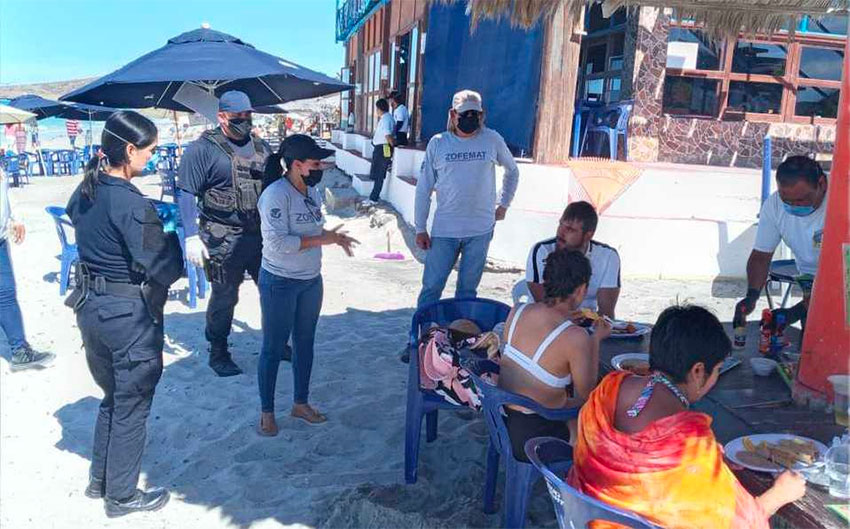
Understandably, whenever beaches were opened, the government advised folks headed there about social spacing. Basically, asking folks to maintain their 3-6 foot distance from one group or family to the other.
Well, that went over like wings on a pig.
After being cooped up for months, locals flooded to the beaches in droves. Inspectors, police, health officials ran around trying to get people to space out. That was like trying to empty a bucket of water with a sieve. Wasn’t happening.
A rule with no ability to enforce it is toothless.
So, beaches got closed again.
As covid ebbed, they tried something else.
Respective beaches were allowed an occupancy quota. For example, one beach allows only 350 people. That down the way beach gets 425. The other beach is allowed 500. And so on.
Once they hit a number, no one else was allowed in. Even AFTER people left, no one was allowed in.
Another exercise in futility.
Authorities were out there actually trying to count heads on the sand.
Let’s see…24, 25, 26…oh, your kids just ran into the water? How many kids you got? 29, 30…
Not an easy task.
Back to the drawing board.
The next attempt placed security at the entrance to the beaches. They checked each car. They counted the heads in each car.
Again, once the quote was reached, too bad for the rest of you. Go home or go find another beach.
That system actually got some traction. Except not so much for the hundreds of folks that had been waiting in their cars in the Baja heat for a couple of hours with a carload of kids trying to get into the beach.
Then, being told, they were too late. A lot of ticked off people.
Sorry kids. Sorry mom.
Thousands of people want to escape to the beaches. However, allowing only a limited number did work out so well.
So, the latest venture attempts to remedy that.
And it’s being implemented in many places. So far.
It makes the beaches more accessible to more people. Problem solved.
There’s just one catch. Well, two actually.
One is cost. The other is time.
Here’s how it works. They’re thinking about implementing this at many of the Baja beaches.
You arrive at the entrance to the beach. You are sold a bracelet to enter the beach. Cost is less than 2 bucks. That’s manageable.
However…
The bracelet allows you to stay in the beach for THREE HOURS. That’s it.
Shifts are 8-11 a.m. Then 11 a.m. to 1 p.m. Finally 1-4 p.m.
I’ll let you wrap your brain around that one.
Apparently, at the end of each “shift”, they sound an alarm. You gotta chug that last beer; fold up the umbrella and beach towels; grab the kids and scoot!
If you want to stay longer, you need to purchase extra bracelets when you arrive at the beach.
I guess this will indeed allow more people access to the beach. In theory.
However, I’ve never been able to spend only 3 hours at the beach. I don’t know many folks that have that ability.
There’s one other glitch. At some beaches, no charge to locals. If you’re not local, you pay for the bracelet. But that begs the question. Are locals able to stay as long as they want? And do they just grab a bunch of bracelets when they enter?
Tourists need to pay AND scoot after 3 hours?
Stand by. I don’t think this is the last we’ve heard of this new plan.
That’s my story
Jonathan
______________
Jonathan Roldan has been writing the Baja Column in Western Outdoor News since 2004. Along with his wife and fishing buddy, Jilly, they own and run the Tailhunter International Fishing Fleet in La Paz, Baja, Mexico http://www.tailhunter.com.
They also run their Tailhunter Restaurant Bar on the famous La Paz malecon waterfront. If you’d like to contact him directly, his e-mail is: jonathan@tailhunter.com
Or drop by the restaurant to say hi. It’s right on the La Paz waterfront!
Some High-Fives are gratuitous and don’t mean much. There are other High-Fives that mean everything!
HIGH FIVE and WELL DONE!
Originally Published the Week of April 4, 2022 in Western Outdoor Publications
Last week, my wife, Jill and I were in Denver.
We’ve been on the road 3 months doing the fishing and hunting expositions across the western U.S. promoting our fishing operation in La Paz as well as tourism in general to Baja.
Each week a different city. A different show.
In our booth four or five days for 8-12 hours-at-a-time. Meeting and greeting. Shaking hands and socializing.
We’ve been doing it every January to March for almost 30 years. It’s fun. But, it can also be wearing.
Long hours driving. Different hotel rooms. Too much fast food. Packing and unpacking all the booth and gear. Convention centers with thousands of people packed inside.
So, we’re at our last show in Denver. As often happens, rather than look for parking in a major downtown metro, it’s often easier to take Uber from our hotel to the respective convention center.
Dial up Uber. He’s on his way. Meet out front on the sidewalk.
It’s early. We’re half-asleep, but we gotta get to the expo. It’s show time.
Our uber driver today is Haani. He has a white Toyota Camry.
He pulls up. Good-looking pleasant young man. Swarthy. Cleanly dressed. He helps us with all our briefcases, backpacks and other things we need to drag to the show each day.
We climb in. Bonus points, the car is spotless and he’s got some light jazz playing. Nice music for the morning.
We make the usual conversation.
Jill asks, “Are you having a busy day?”
He says cheerfully, “I’ve been working all morning and usually work the whole day. But, today, I have to take a break in the middle of the day.”
“For lunch?” asks Jill.
“No. Not today! Not for lunch. Today I have a special service to attend!” replies Haani.
“A special service?”
He smiles and turns around towards us in the backseat and says proudly, “Today I will become a naturalized American citizen!”
A pause as Jill and I wrap our collective brains around that for a moment.
“Oh my God! That’s awesome!”
“Congratulations!”
“This is the best news of the day!”
Jill and I are both yammering out loud at the same time from the backseat as we lean over towards him.
We are spontaneously shaking his hand; playfully punching him in the shoulder and giving him high-fives from the backseat. I’m shaking him by his neck. It’s like he just shot the winning basket…scored the 4th quarter touchdown…touched all the bases in the World Series.
For indeed he has!
He is laughing and trying to keep the car on the road!
He is beaming and his proud smile fills the rearview mirror as he watches Jill and I bounce around his backseat pumping our fists in the air!
Haani is from Afghanistan. He has been working hard on getting his citizenship for six long years. He says it is the hardest and best thing he has ever done.
He and his wife work two jobs. Two young kids in school.
He tell us what a great country America is. He could not be prouder. Or more grateful.
Neither could we. He dropped us off and we all laughed and we wished him well with one last handshake and high-five. It made our day.
Welcome to America, Haani.
We’re gonna lift up a cold one to you and your spirit to luck and a better life!
That’s my story!
Jonathan
______________
Jonathan Roldan has been writing the Baja Column in Western Outdoor News since 2004. Along with his wife and fishing buddy, Jilly, they own and run the Tailhunter International Fishing Fleet in La Paz, Baja, Mexico www.tailhunter.com.
They also run their Tailhunter Restaurant Bar on the famous La Paz malecon waterfront. If you’d like to contact him directly, his e-mail is: jonathan@tailhunter.com
Or drop by the restaurant to say hi. It’s right on the La Paz waterfront!
Originally Published the Week of Mar. 26, 2022 in Western Outdoor Publications
Living in Baja, visitors often ask me some suggestions of where they can “see the real Mexico.” They’re not interested in finding out where to go zip-lining or the cheapest place to buy a hammock or sarape.
They want the genuine article. The real deal. Something not “touristy.”
I tell them to head to church. Preferably on a Sunday or a Saturday afternoon.
After a momentary quizzical look, I explain that they’ll see a part of Mexico…a part of the community…a lot of history and a lot of culture if they make a visit to the local church.
Every city or large town has a Catholic church.
Since the earliest days of the conquistadores and missionaries, you can pretty much find a Catholic Church somewhere in the area. To this day, Mexico remains largely a Catholic country and the church is still the center of life…even if not everyone goes to church all the time.
Nevertheless, the church is still central to so much that goes on in a Mexican community. Obviously, it’s a spiritual and religious center.
Architecturally, it’s usually in the center of town or in a town square, park or pavilion area.
Socially, it often remains the place where life’s milestones still take place. Start to finish…baptism…confirmations…quincineras (sweet 16 presentations)…weddings…more baptisms…and funerals.
So, I tell folks to head to the local church.
Outside, there are often street vendors in the larger cities. It can be a hub of activity.
Our own cathedral in La Paz is in the town square and adjacent to the town park. There are often musicians playing. Families picnicking. Impromptu karaoke and bingo games. Old men playing chess or checkers.
Stand outside.
If it’s an old church, take in the architecture. Admire the craftsmanship. Many of these churches weren’t made with modern cranes, bulldozers and electric tools.
Old-fashioned human labor with hand tools. Sweat equity for credits in heaven. Pride in details that were meant to last for decades or centuries.
Handmade brick and quarried stone transported maybe from many miles away with carts, wagons and mules. In some cases, the very wooden beams inside the structure as well as the window glass was transported from Spain, not to mention statues and religious artifacts and furniture.
The bells may have come from some faraway forge as well. Most likely yes.
If there’s an old cemetery nearby, well worth it to trace the history of the former priests, padres and parishioners. It was a hard life.
You’ll often see short life spans. Children and babies who died early. Many deaths close in date could indicate a communal epidemic like measles, smallpox, dysentery or a simple flu.
Step inside. Remove your hat. There might be a Mass or other event taking place. Even if not, remember it’s still a house of worship. Be respectful.
If nothing is happening, wander and gaze. Statues, the alter, the stained glass, the wooden pews, paintings and artwork may date back decades or centuries. They may have travelled thousands of miles to find their forever homes in this church.
The craftsmen are long gone, but their work remains. It’s better than any museum.
Imagine today, we go to Home Depot. Get our materials. Build a bookshelf for your home. Never in a million years would we expect it to last for decades. Not like these old artisans.
I’ve been in old Mexican churches where the walls and ceilings are still covered with the dark soot of a century or more of burning votive candles.
A close examination of the area around the alter shows inset graves of the old padres who once serviced their community. The tiles show their names.
It’s a testament to their dedication and commitment that many of them travelled from Spain or other places in Mexico to find their final resting place in the arid hard-scrabble frontier of Baja.
If there are services taking place, many times, there can be multiple events transpiring since often, there’s only one priest or padre. In some instances, the priest is a travel-priest doing services from town-to-town to tend to his parishioners.
But, if you’re visiting, that’s where you’ll see the culture.
I once came for Mass. It was followed by a baptism. Followed by a wedding. Followed by a first communion of 8 and 9 year-old-kids in their little white shirts and puffy dresses.
The whole gamut. Proud families. Happy couples. Nervous youngsters. Big days in life. Big days in the community. The circle of life. The cycle of life.
All in one place. Just follow the sound of the bells!
That’s my story!
Jonathan
______________
Jonathan Roldan has been writing the Baja Column in Western Outdoor News since 2004. Along with his wife and fishing buddy, Jilly, they own and run the Tailhunter International Fishing Fleet in La Paz, Baja, Mexico www.tailhunter.com.
They also run their Tailhunter Restaurant Bar on the famous La Paz malecon waterfront. If you’d like to contact him directly, his e-mail is: jonathan@tailhunter.com
Or drop by the restaurant to say hi. It’s right on the La Paz waterfront!
Originally Published the Week of Mar. 20, 2022 in Western Outdoor Publications
My wife, Jill, and I have been on the road now for the better part of three months. Every year, we drive all over the U.S. doing fishing and hunting expos drumming up business for our fishing operation in La Paz.
We set up our booth and join many hundreds of other international outfitters, fishing guides, hunting guides, gear retailers, RV and boat sellers and others in the modern day version of the fur trapper rendezvous.
It’s definitely a “gathering of tribes.” Over the course of 4 or 5 days, often tens of thousands of attendees fill the aisles. It can be quite an event.
As of today, we’ve been over a dozen states now. A few more still to come.
We’ve been through huge cities and the smallest of towns. Towering skyscraper skylines to one-horse crossroads. I believe we’ve already logged over 10,000 miles driving. (Not so fun watching gas prices blow up, but that’s another story!)
In previous columns, I’ve documented the distressing amount of crime, vagrancy, squalor and trash we encountered in so many cities. Especially along the west coast.
Friends and other outfitters were victimized by burglaries and outright thefts of their vehicles, trailers and rigs. One friend was carjacked at gun point by a guy running from a murder.
Our own rig was rendered undriveable by a break-in where the bad guys completely smashed not only our rear glass, but the whole liftgate.
We joke about the “Zombie Apocalypse,” but many a night none of us would leave our hotel/ motel rooms because of all the homeless folks wandering outside; sleeping in the bushes; panhandling; hustling; partying; defecating and more.
Some of our most beautiful and favorite cities broken, ruined and abandoned except for the tattered, the homeless, the lawless, the disenfranchised of the streets. It’s an urban landscape straight out’ve an “end of the world” sci-fi flick.
After several weeks in these areas, it was more than disheartening and depressing. I wasn’t alone in my assessment.
Other outfitters, local residents and law enforcement friends echoed the same sentiments in these areas.
There was a tacit resignation of spirit that THIS is what it’s come to. THIS is where WE are. THIS is how it will always be and only get worse.
And not a thing we can do about it.
The whole country to hell-in-a-handbag.
But wait…
Then our show schedule took us inland. Smaller shows AWAY from the big cities. We passed through and spent more time in smaller cities and neighborhoods.
Back to the countryside. Little pink houses. Denny’s diners. Swings and slides in town parks. Crossing guards at the elementary school. There’s a banner about a pancake breakfast at the church. The VFW Hall has a bunch of pick-up trucks parked outside.
Went into a grocery store in Central Oregon. A 9-year-old boy held the door open for me and said, “after you, sir!”
Shock and awe.
In little towns in Washington and Nevada, Arizona, New Mexico, Colorado, Texas and Wyoming, we got “sir” and “ma’am” a lot. And not just from kids.
Adults you run into in the street in the normal course of a day or at our hotels addressed us similarly. Just the way things are. Courtesy and hospitality, that was rarely found in the big cities.
We had become so callous to common civility and comity that it seemed like people were going out of their way to be amiable. But, it’s just the way people are in different spots of the country. Or how they are brought up.
I was brought up addressing others like that as well. Just how I was taught. However, when I use “sir” or “ma’am” I often get a quizzical look as if I was speaking Greek. Some folks get offended as if I was calling them “old.”
In these small towns and open spaces, I got a nod and smiles and friendly responses instead.
At the shows themselves, it’s a different crowd for sure.
At the start of the show before they let the crowds in, they play the Star Spangled Banner over the loudspeaker in these expo centers. Everyone stops what they are doing and puts hand or hat over heart and faces the flag.
Many people sing out loud. You can help smiling. You stand up a little straighter. I catch myself singing as well.
When the crowds come in..
Again, I’m often addressed as “sir.” After chatting with someone at our booth, it’s not uncommon for someone to thank me for taking the time to answer their questions.
Are you kidding me?
I hear the word “please” a lot .
The adults/ parents are much more blue collar. Yes, there’s a lot of pick-up trucks and suburbans in the parking lot . A lot of baseball hats, blue jeans, camo vests and work, hiking or cowboy boots. Men and women alike.
Some look just like they just took off the gloves and came to the show from the ranch, farm or mechanic shop. Moms look like they just grabbed the kids from school and are trying to get through the show before they gotta race home to cook dinner.
In the meantime, a beer or Coke and a bag of popcorn will do, thank you very much.
But in talking to adults and kids alike, they sound like they can fix cars and boats. They can take out an elk at 500 yards AND carry it out on their backs. They can run tractors and they tell you they can only come visit us in Mexico AFTER the crops come in but BEFORE hunting season starts.
At one show on a Sunday, a family apologized to me for coming so late to the show. Because they were at CHURCH!
I felt like giving them all a high-five!
At one show, I was next to a sporting goods outfitter.
The men, women AND kids knew how to handle guns and fishing gear and were as at adept and knowledgeable about fishing and hunting, camping and boating and off-roading as any expert.
It was refreshing. It’s not hopeless. It’s not as depressing as it seems.
It’s not a Normal Rockwell painting, by any stretch. All places have their issues and problems. I realize my view was only a tiny miniscule slice.
But, all is not lost. Faith renewed.
Yes, Sir. Yes, Ma’am.
That’s my story!
Jonathan
______________
Jonathan Roldan has been writing the Baja Column in Western Outdoor News since 2004. Along with his wife and fishing buddy, Jilly, they own and run the Tailhunter International Fishing Fleet in La Paz, Baja, Mexico www.tailhunter.com.
They also run their Tailhunter Restaurant Bar on the famous La Paz malecon waterfront. If you’d like to contact him directly, his e-mail is: jonathan@tailhunter.com
Or drop by the restaurant to say hi. It’s right on the La Paz waterfront!
Originally Published the Week of March 7, 2022 in Western Outdoor Publications
Whether you’re planning to fly, drive or walk to Baja or any place in Mexico in April, come ahead. For the first time in 2 years, Mexico is basically open and really wants you to come visit. (aka “needs you to visit!”)
Since the pandemic hit in 2020, Mexico implemented a “traffic light” scale to measure the covid restrictions and protocols. Red being the worst. Green was the best.
In between those extremes were a series of various shades of oranges and yellows. Over the pandemic, the scale has bounced back and forth between those variations.
Just like in the U.S. it’s been “masks on.”
Now they are “off.”
Now they are back on.
Same with all the attenuated protocols like social distancing, closures and activities. Back-and-forth. Up-and-down. Enough to make your head spin.
Unless you’ve quarantined in a windowless room the last two years, you know the drill.
However, like many locations in the world, covid and it’s seemingly unnumerable waves, permeations and mutations is declining. Infections, hospitalizations and fatalities thankfully are also down.
According to officials, something like 80-85% of the eligible population has been vaccinated.
So, it’s a virtual green light to go visit Mexico this Easter or spring break. It’s the first time in two years.
Of course, like everywhere else, there’s some trepidation about the anticipated onslaught. With so many people suddenly running around with impunity health officials and politicians have some underwear bunching up.
But, for better or worse, things are open!
Some vestiges of covid might linger. Some private businesses might still require masks. It’s their prerogative. But, otherwise, party like it’s 2019!
But, Mexico has been trying to get ready.
Statistics have shown that Mexico has been the #1 travel destination in the world. Not just Americans, but anyone else who can jump on a plane has looked to Mexico.
It was easy to get in.
Easy to get out (mostly).
Chances of quarantine were minimal.
It’s a great value for a vacation.
The only thing you need to do is get a negative covid test before returning to the U.S. Fingers are crossed that even this may drop to the wayside. We can only hope.
So, if you’re thinking of heading south in April, especially the weeks preceding or following Easter on April 17th, look for it to be crowded.
It won’t just be Americans and international travelers. Especially around beach cities, and Baja in particular, the Easter weeks are the busiest times for Mexican nationals to travel as well.
Many take the time off work to take vacations. Many go to visit family.
So, expect crowds at restaurants, bars, beaches and other gathering places. That includes airports especially. Prime arrival and departure times are expected to be packed.
In addition to everyone flying into Mexico, many Mexicans use the holidays to visit family and friends in the U.S. In fact, it’s the busiest time of the year to try to fly.
Busier than Christmas. Busier than Thanksgiving.
Therefore, give yourself extra time coming and going.
With the demand for travel, airline tickets will often be more expensive than any other time of the year and also more difficult to purchase as popular flights fill up.
That goes for rental cars also.
The rental agencies are over-run. The last two times we tried to rent vehicles in Cabo, we waited as long as two hours to get vehicles that had been reserved months in advance.
Put an extra case of “patience” in your luggage. Mexico is also going through the throes of not being able to find enough employees.
So service at hotels, restaurants and other spots might also be slower than expected. Keep smiling and just cut folks some slack. They’re doing their best.
Plan well. Mexico is waiting!
That’s my story!
Jonathan
______________
Jonathan Roldan has been writing the Baja Column in Western Outdoor News since 2004. Along with his wife and fishing buddy, Jilly, they own and run the Tailhunter International Fishing Fleet in La Paz, Baja, Mexico www.tailhunter.com.
They also run their Tailhunter Restaurant Bar on the famous La Paz malecon waterfront. If you’d like to contact him directly, his e-mail is: jonathan@tailhunter.com
Or drop by the restaurant to say hi. It’s right on the La Paz waterfront!
I’m writing this at night from our hotel room in Boise, Idaho. We’re doing a banzai drive from Salt Lake City to get to Portland, Oregon. As fast as the speed limit will let us.
It seems strange to say that we’re not looking forward to being in Portland.
Let me back up.
For almost 30 years, I spend the better part of 3 months on the road exhibiting at all the huge hunting and fishing expositions across the western U.S. Every week another 4 or 5 day show.
My wife, Jill, and I haul our booth, a million brochures and flyers spreading the good word about fishing and vacationing in Baja. Specifically with our own Tailhunter Sportfishing in La Paz.
Thousands-upon-thousands of attendees wander and socialize with outfitters like ourselves in the fishing, hunting, camping, boating, RV and other outdoor pursuits. Us exhibitors sell our wares.
Each week finds us in different cities like Denver, Phoenix, Bozeman, Seattle, San Diego, Long Beach, Las Vegas even Anchorage, Alaska! Criss-crossing the U.S. up-down-back-and-forth in snow, rain, ice, and sunshine.
We’ve been on the road now almost 6 weeks and have finished shows in Reno, Sacramento, Puyallup (south of Seattle) and this past weekend in Salt Lake City. As previously mentioned, we’re back on the Pacific Coast in Portland this week.
A few weeks back in my column, I had commented about driving through so many cities and states and observing the differing covid-mask protocols or lack thereof. I also wrote about my observations of how everyone was hurting for employees. And how customer services were directly suffering from it.
We really didn’t know what to expect of the shows this year. In short, a crapshoot.
No one knew what the attendance would be like. No one knew how many vendors/ outfitters wouldn’t show-up as a result of covid; the fear of covid; or the local mandates and protocols.
As it turned out, attendance suffered at 3 of the 4 shows. All on the west coast.
Exhibitors were absent as well. Again, this was at all at the west coast shows in California, Washington and, to some degree, the Reno Show.
Masking/ testing/ vax card protocols were in place to greater or lesser degrees. Nothing was standardized
I guess that was to be expected. All these shows had been cancelled last year and it’s going to take awhile for them (and the public) to get back up to speed.
And now, we’re headed to Portland.
We love our Pacific Coast. My wife Jill and I both grew up on the West Coast. But, after our experiences the past month in California, Oregon and Washington, we’re dreading Portland, one of our favorite western cities.
I’ll tell ya why.
There’s been a drastic change. A polar shift. A techtonic social upheaval.
In Sacramento, we stay at a well-know hotel chain. Almost 20 years. Not the 4 Seasons or the Ritz Carlton, but hardly the Econo-Riverside Motel either.
Upon arrival. What a change!
People living in their cars in the parking lot. Broken cars everywhere. People living in boxes on busy public street. Multiple people living in rooms meant for 2. Trash everywhere. Tent camps everywhere. Open sewage/ excrement on sidewalks, planters…opens spaces.
Vagrant folks lining the streets. Stores trashed, littered and empty shelves. Such common things like soap, toothbrushes, laundry detergent, masking tape…all in locked cases!
I asked one store clerk what happened to all the shopping carts and shopping baskets. He said, “They all got stolen.”
The second night, our new Chevy Suburban rig got broken into. Not just busted windows. They tore the whole rear liftgate rendering our rig undriveable. Looks like a crowbar was used. Because nothing could be found inside, the bad guys took it out on the vehicle.
Fortunately, we had emptied the vehicle and nothing was taken. But, the vehicle was disabled.
Because of supply chain issues, parts not available!
Over the next few days, others also got burglarized. Police don’t come out because burglary is so common. And they are under-staffed like everyone else. You file a report online. That’s it.
I had to take Uber to the Expo. My driver said, in his neighborhood they leave their trunks and liftgates unlocked so the thieves don’t break in.
Except one day his neighbor found a guy sleeping in his trunk!
While at the show, several outfitters got their rigs completely stolen. One of our clients came to our booth and said several days earlier, he had been carjacked at gun-point by a guy who was escaping from a murder!
We headed north to Washington. Passing through Oregon (more on that later).
While in Washington State, more of the same. Tent cities scattered everywhere. Again, several of our outfitter friends had their trucks and trailers stolen. This time in broad daylight from “guarded” parking lots.
Friends who are law enforcement officers told us many vehicles are being stolen for the catalytic converters. And, many officers are quitting or taking early retirement leaving the remaining tired officers working overtime.
Oh, and new legislation prevents officers from giving chase. About all they can do is yell “Stop!” Also, if someone steals something less than $750 dollars and says “it’s a necessity”, no prosecution ensues.
We were advised by Washington friends not to go into downtown Seattle, again, one of our favorite cities to visit.
And now everyone-and-their-brother is warning us against Portland now. And saying it’s even worse. Even before the pandemic, the area and hotels around the Portland Expo Center were rife with homeless and property crime was rampant.
Vehicles at the Expo and surrounding areas, were regularly targeted. Our own van was broken into several years ago. Police told us that the thieves love vehicles belonging to the outfitters because they are often loaded with camping gear, fishing gear, electronics, outdoor clothing and yes…firearms.
So, now they tell us it’s even going to be worse. And definitely do NOT go into Portland metro.
Tell you what. Several of us outfitters were standing around. We were somberly discussing the crime these days while on the show tours now. All of them hunting and fishing guides.
I quietly admitted that my wife and I both have our concealed-carry permits and that I always carry a firearm now. There was a little pause among the group.
I thought I was going get some blowback for carrying. Big burley mountain guys and salty fishing captains staring at me.
As it turned out, all of them were carrying. In fact, talking to most of the other vendors in their booths, everyone either had firearms in their booths, on their person, or in their cars.
My wife wouldn’t let us drive this year without a (legal) shotgun hidden in the car.
As one Alaska guide told me, “I carry a big pistol to guard against grizzly bears attacks in the bush. But, I’m even more afraid to walk around the cities. So, of course, I carry. Bears are predictable. Idiot people are not.”
It’s gotten pretty sad. Portland, here we come.
Hope for the best. Prepare for the worst. The new normal.
Update: Just finished the Portland Show. We did NOT go downtown. The area around the Expo Center was tragic. Many of the outfitters and vendors said they would not come back. Someone tried to break into our vehicle 3 times, but the alarm scared them off although we were messaged that someone had tried to open the doors…twice when we just ran into a gas station just to buy some soda for the road. It happened that fast! Several vehicles in the parking lot at the Expo Center were burglarized as well.
That’s my story
Jonathan
______________
Jonathan Roldan has been writing the Baja Column in Western Outdoor News since 2004. Along with his wife and fishing buddy, Jilly, they own and run the Tailhunter International Fishing Fleet in La Paz, Baja, Mexico www.tailhunter.com.
They also run their Tailhunter Restaurant Bar on the famous La Paz malecon waterfront. If you’d like to contact him directly, his e-mail is: jonathan@tailhunter.com
Or drop by the restaurant to say hi. It’s right on the La Paz waterfront!
Originally Published the Week of Feb. 1, 2022 in Western Outdoor Publications
They say no good story starts with the phrase,”We stopped in for one glass of white wine.”
However, lots of stories, both good and bad, start with, “Let’s just have one margarita!”
As the owners of a beachfront restaurant/bar in La Paz for almost 15 years and hosting fishing clients for almost 30, we’ve witnessed a lot of alcohol-related stories. Most have been good.
Just fun. Folks having a good time on a well-deserved and long-anticipated vacation where the sand is warm, the waters are blue and the drinks are icy cold.
Other stories? Well…maybe not so good.
Usually, alcohol pain is “self-inflicted.” As much as one can joke that you’re just a “victim,” no one forces you to down another shot or order another umbrella drink.
And I can’t tell you how often, I’ve heard, ”Hold my drink for me for a minute.” Promptly followed by some questionable lapse of judgement.
I’ve always suspected that some drinks get you “more drinker” than others. Or are more conducive to the dreaded hangover.
Likewise, there are so many myths regarding avoidance and cure of the hangover. Of course, you can simply abstain from drinking.
Not much fun in that.
First things first. Obviously, the more you drink and the frequency at which you consume the drinks will have an effect. Likewise, the more alcohol in the drink will have an effect.
However, all things being equal, drinks with bubbles will get you there quicker. Therefore, drinks like champagne or drinks where you add a carbonated beverage like soda will hit your bloodstream faster.
Consider this as well about the alcohol content of the liquor itself. Tequila runs about 40-50% alcohol. Vodka and rum can go 60-95% while gin and whiskey run between 30 and 50%
By comparison a beer while top at 4-6% and wine about double that.
So, how do you help keep a lid on getting totally blitzed?
You’ve got nothing to prove. Sip instead of chug. Sip instead of doing shots.
Water and food are your friends. Eating before drinking helps slow down alcohol absorption in your system.
Drinking water before, in-between, and after drinks helps to keep you hydrated and helps your body better absorb alcohol. Additionally, it helps you slow down your drinking.
Well…assuming you forgot all about that and you passed the point of no return. The party is over and you’re feeling 10 feet tall and bullet proof.
Or not. You know you’re headed down the rabbit hole.
Two rules.
Don’t drive, knucklehead.
Second, there is nothing…absolutely nothing you can do to lower your blood alcohol level. What’s in there is in there.
You drank it…own it. And hope there’s not breathalyzer in your immediate future.
A cold shower might suddenly jerk you into feeling alert, but that doesn’t mean you’re any less intoxicated or impaired.
Same with coffee. It might make you look and feel alert enough to fool someone, but your blood alcohol will still be the same.
Either one is only temporary anyway. You may still end up praying at the porcelain alter anyway and barking like the proverbial seal aka “throwing up.”
Water and lots of it is the best thing you can do for yourself. And lots of sleep. Or, assuming you’re ambulatory and not walking like Gumby, exercise is also good.
But, in reality, few of us think of exercising after a good party.
Now, assuming you make it through the night. And here it comes…the hammer of the gods…your hangover.
A few myths.
Those sugary drinks you had at the cantina did not make the hangover worse. They only made the drinks taste better so you drank more of them faster.
Having another alcoholic beverage (“hair of the dog”) makes no sense either when you wake up. It might make you feel better for a bit but it will only temporarily return you to your happy place. The hangover is still coming.
Many us us grew up grabbing an aspirin or ibuprofen before hitting the rack for the night or first thing the morning-after. It makes sense.
Grab a pain reliever from the medicine cabinet.
However, doctors say that ultimately, pain relievers can add more acidic irritation to your stomach and guts that you already punished with alcohol.
So, what do you do?
Again, water and food are your best friends on the backside of your evening bender.
Water helps re-hydrate.
If you’ve been vomiting in addition to being dehydrated, it really helps to replace lost electrolytes with Gatorade (lots of sugar) or the milder Pedialyte which is often given to babies.
At our bar in La Paz, we keep a good stock of both but also have found packets or tablets of straight electrolytes dissolved in a bottle of water work wonders without the added sugar.
Frankly, they’re great anytime someone is feeling dehydrated.
As far as food, skip the greasy lumberjack special or the taco special combination in the morning. Be kind to your stomach.
Good carbs such as toast or crackers will make you feel a lot better. Weak chicken broth with some rice or bananas also help the situation.
Then get back to sleep.
And promise yourself “Never ever again will I…”
That’s my story!
Jonathan
______________
Jonathan Roldan has been writing the Baja Column in Western Outdoor News since 2004. Along with his wife and fishing buddy, Jilly, they own and run the Tailhunter International Fishing Fleet in La Paz, Baja, Mexico www.tailhunter.com.
They also run their Tailhunter Restaurant Bar on the famous La Paz malecon waterfront. If you’d like to contact him directly, his e-mail is: jonathan@tailhunter.com
Or drop by the restaurant to say hi. It’s right on the La Paz waterfront!
Western
Outdoor News
Western Outdoor News Magazine
Pacific Coast Sportfishing
Discover Baja Magazine
Baja Life Magazine
The Log
Fish Taco Chronicles
Sportsman's Channel Magazine
His articles also appear in:
San Diego Union Newspaper
Los Angeles Times Newspaper
Sacramento Bee
San Francisco Chronicle