Feeds:
Posts
Comments

Archive for the ‘crankbait’ Category

HOLD MY DRINK FOR A MOMENT…

I PROMISE NEVER WILL I EVER…

HOLD MY DRINK FOR A MOMENT…

Originally Published the Week of Feb. 1, 2022 in Western Outdoor Publications

          They say no good story starts with the phrase,”We stopped in for one glass of white wine.”

          However, lots of stories, both good and bad, start with, “Let’s just have one margarita!”

          As the owners of a beachfront restaurant/bar in La Paz for almost 15 years and hosting fishing clients for almost 30, we’ve witnessed a lot of alcohol-related stories.  Most have been good.

          Just fun.  Folks having a good time on a well-deserved and long-anticipated vacation where the sand is warm, the waters are blue and the drinks are icy cold.

          Other stories?  Well…maybe not so good. 

         Usually, alcohol pain is “self-inflicted.”  As much as one can joke that you’re just a “victim,” no one forces you to down another shot or order another umbrella drink.

          And I can’t tell you how often, I’ve heard, ”Hold my drink for me for a minute.”  Promptly followed by some questionable lapse of judgement.

          I’ve always suspected that some drinks get you “more drinker” than others.  Or are more conducive to the dreaded hangover.

          Likewise, there are so many myths regarding avoidance and cure of the hangover.  Of course, you can simply abstain from drinking.   

         Not much fun in that. 

          First things first.  Obviously, the more you drink and the frequency at which you consume the drinks will have an effect. Likewise, the more alcohol in the drink will have an effect.

          However, all things being equal, drinks with bubbles will get you there quicker.  Therefore, drinks like champagne or drinks where you add a carbonated beverage like soda will hit your bloodstream faster.

          Consider this as well about the alcohol content of the liquor itself.  Tequila runs about 40-50% alcohol.  Vodka and rum can go 60-95% while gin and whiskey run between 30 and 50%

          By comparison a beer while top at 4-6% and wine about double that.

          So, how do you help keep a lid on getting totally blitzed?

          You’ve got nothing to prove.  Sip instead of chug. Sip instead of doing shots. 

          Water and food are your friends. Eating before drinking helps slow down alcohol absorption in your system. 

         Drinking water before, in-between, and after drinks helps to keep you hydrated and helps your body better absorb alcohol.  Additionally, it helps you slow down your drinking.

         Well…assuming you forgot all about that and you passed the point of no return.  The party is over and you’re feeling 10 feet tall and bullet proof. 

          Or not.  You know you’re headed down the rabbit hole.

Two rules.

          Don’t drive, knucklehead.

          Second, there is nothing…absolutely nothing you can do to lower your blood alcohol level.  What’s in there is in there. 

          You drank it…own it.   And hope there’s not breathalyzer in your immediate future.

          A cold shower might suddenly jerk you into feeling alert, but that doesn’t mean you’re any less intoxicated or impaired.  

          Same with coffee.  It might make you look and feel alert enough to fool someone, but your blood alcohol will still be the same.

          Either one is only temporary anyway.  You may still end up praying at the porcelain alter anyway and barking like the proverbial seal aka “throwing up.”

          Water and lots of it is the best thing you can do for yourself.  And lots of sleep.  Or, assuming you’re ambulatory and not walking like Gumby, exercise is also good. 

          But, in reality, few of us think of exercising after a good party.

          Now, assuming you make it through the night.  And here it comes…the hammer of the gods…your hangover.

          A few myths. 

         Those sugary drinks you had at the cantina did not make the hangover worse.  They only made the drinks taste better so you drank more of them faster.

          Having another alcoholic beverage (“hair of the dog”) makes no sense either when you wake up.  It might make you feel better for a bit but it will only temporarily return you to your happy place.  The hangover is still coming.

          Many us us grew up grabbing an aspirin or ibuprofen before hitting the rack for the night or first thing the morning-after.  It makes sense. 

          Grab a pain reliever from the medicine cabinet. 

          However, doctors say that ultimately, pain relievers can add more acidic irritation to your stomach and guts that you already punished with alcohol. 

          So, what do you do?

          Again, water and food are your best friends on the backside of your evening bender.

Water helps re-hydrate. 

         If you’ve been vomiting in addition to being dehydrated, it really helps to replace lost electrolytes with Gatorade (lots of sugar) or the milder Pedialyte which is often given to babies.

          At our bar in La Paz, we keep a good stock of both but also have found packets or tablets of straight electrolytes dissolved in a bottle of water work wonders without the added sugar.

          Frankly, they’re great anytime someone is feeling dehydrated.

          As far as food, skip the greasy lumberjack special or the taco special combination in the morning.  Be kind to your stomach.

          Good carbs such as toast or crackers will make you feel a lot better. Weak chicken broth with some rice or bananas also help the situation.

          Then get back to sleep.

And promise yourself “Never ever again will I…”

That’s my story!

Jonathan

______________

Jonathan Roldan has been writing the Baja Column in Western Outdoor News since 2004.  Along with his wife and fishing buddy, Jilly, they own and run the Tailhunter International Fishing Fleet in La Paz, Baja, Mexico  www.tailhunter.com.

They also run their Tailhunter Restaurant Bar on the famous La Paz malecon waterfront.  If you’d like to contact him directly, his e-mail is: jonathan@tailhunter.com

Or drop by the restaurant to say hi.  It’s right on the La Paz waterfront!

_____________ 

Jonathan Roldan’s

Tailhunter International

Website: 

www.tailhunter-international.com

Mexico Office: Tailhunter International, 755 Paseo Obregon, La Paz, Baja Sur, Mexico

U.S. Mailing Address:  Tailhunter International, 8030 La Mesa Blvd. #178, La Mesa CA  91942

Phones: 

from USA : 626-638-3383

from Mexico: 044-612-14-17863

.

Tailhunter Weekly Fishing Report:  http://fishreport.jonathanroldan.com/

Tailhunter YouTube Video Channel:

https://www.youtube.com/channel/UCBLvdHL_p4-OAu3HfiVzW0g

“When your life finally flashes before your eyes, you will have only moments to regret all the things in life you never had the courage to try.”

Read Full Post »

PARTY LIKE IT’s 2019

WELCOME NEW ARRIVALS! ENJOY YOUR VACATION!

PARTY LIKE IT’S 2019

Originally Published the Week of Jan. 26, 2022 in Western Outdoor Publications

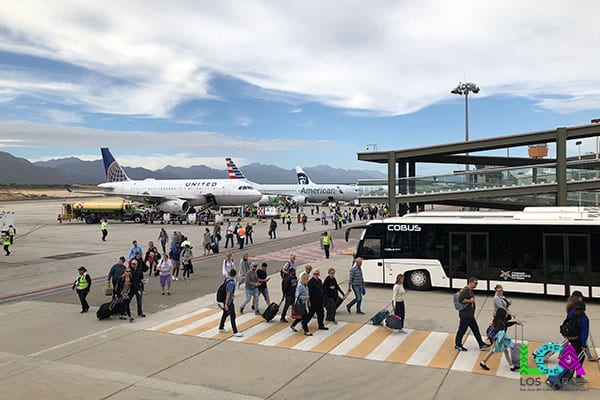
          Well…check any source and you’ll find that the number one travel destination since covid started is (drumroll)…MEXICO!

         This is not just for Americans.  It’s apparently the top spot for the whole world.

         It’s pretty easy to get to, especially for Americans. There’s lots of flights. Or you can drive or jump a cruise ship.

          It’s pretty economic.  Foreign currency against the Mexican peso is pretty strong.  For Americans, the dollar is huge.  It’s 20 pesos to the U.S. dollar.  International money goes a lot further than in many other countries.

          It’s easy to come home. That’s pretty important.  When you’re ready to come home…you come home!

           Your chances of getting stranded there are pretty slim because of Covid.  Your own country might put the pinch on you, but not Mexico.  

          In fact, there have been some new changes in Mexican restrictions.

          As of this month, Mexico has completely dropped all entry requirements.  Gone!  Deleted! You are welcomed with open arms.

          You can argue whether that is good or bad, but it is what it is. I make no judgements.  Don’t kill the messenger.

          However, borders are now open.  In fact, many would ventur that they were never really closed at all. It was pretty leaky.

          You also no longer have to fill out either the paper or digital health-care form to enter Mexico. This was the form asking thing like whether you had been in contact with a Covid person or whether you had Covid. 

          I always thought it was silly.  I mean…who is going to answer “yes” on the way to their vacation?  Who wants to get told they have to go in the little back room for secondary questioning when the tour bus to the hotel is waiting outside and your luggage is spinning mindlessly on the carousel?

          Additionally, Mexican President Obrador has said he doesn’t plan to ever ask for proof of vaccinations. 

But, there’s a small caveat. 

LCA-COVID-Safety-Banner-min

          Individual states, areas or businesses like restaurants, bars and casinos might ask for your vax card.  However, according to sources, it’s just like many places in the U.S. with masks.  It only applies if the rule is enforced and no one seems to really enforce it.

          In lieu of that, proof of a negative covid test within 48 hours will also work. Jalisco is one of the states that recently implemented the rule about showing a vax card.

          So, basically, it’s time travel.  Mexico is back to pre-covid 2019 in terms of travel.

          As of right now, the only real bump in your travel road is coming BACK to the U.S. or entering the U.S. if you’re a foreign national.

          The U.S. requires that within 24 hours of your flight back to the U.S. you need to take a rapid Covid test.  And, of course, it has to come back negative. 

          The test takes 15 minutes and you get your results usually within the hour on your cellphone.  The airports all have facilities as do many hotels. Or the hotels will have someone come to the hotel.

          There are also a plethora of labs that sprang up all over the place understandably.

          This applies whether you are vaccinated or not.

          If you are a foreign traveler headed to the U.S., the new rules mandate that you must show proof of vaccination now.

          Stay tuned.  The picture changes all the time!

That’s my story!

Jonathan

______________


Jonathan Roldan has been writing the Baja Column in Western Outdoor News since 2004.  Along with his wife and fishing buddy, Jilly, they own and run the Tailhunter International Fishing Fleet in La Paz, Baja, Mexico  www.tailhunter.com.


They also run their Tailhunter Restaurant Bar on the famous La Paz malecon waterfront.  If you’d like to contact him directly, his e-mail is: jonathan@tailhunter.com


Or drop by the restaurant to say hi.  It’s right on the La Paz waterfront!


_____________


Jonathan Roldan’s
Tailhunter International


Website:


Mexico Office: Tailhunter International, 755 Paseo Obregon, La Paz, Baja Sur, Mexico


U.S. Mailing Address:  Tailhunter International, 8030 La Mesa Blvd. #178, La Mesa CA  91942
 
Phones:
from USA : 626-638-3383
from Mexico: 044-612-14-17863
.


Tailhunter Weekly Fishing Report:  http://fishreport.jonathanroldan.com/


Tailhunter YouTube Video Channel:


“When your life finally flashes before your eyes, you will have only moments to regret all the things in life you never had the courage to try.”

Read Full Post »

DESERT GHOSTS

Someone had a dream at one time…or at least a good idea!

DESERT GHOSTS

Originally Published the Week of Jan. 12, 2022 in Western Outdoor Publications

           I’ve always had this weird (not creepy) thing about looking at (and into) people’s houses. 

         At the time I’m writing this, we’re driving across country to the fishing and hunting shows in various cities around the western U.S.  We’ve exhibited at these shows from January to April for almost 30 years to talk to folks about fishing with our company in La Paz.

         We have our booth packed up and are on our way to the Wild Sheep Foundation Show in Reno, NV.  Over the past 3 days, we’ve driven across Texas, New Mexico and Nevada.

         My wife Jill is driving and I’m tapping out on my laptop.

         And looking at people’s houses. 

        I like to guess what they do.  I’m intrigued by their story.

Why they happened to plant themselves in this particular area near that particular town.

         Or in the middle of nowhere.

         I look at what’s in the yard.  Kid’s toys?  A rusty swing? A bunch of old cars?  An RV?  Five later model cars and a mini-van?  Or 5 cars on concrete blocks?

         Is the yard done?  Is there even a yard or just tumbleweeds and a cotton field in the back. 

         There’s a washing machine on the front porch of a single-wide modular.  Or is there a swimming pool out back?

         You can tell a lot.

         Driving up and down Baja, I have that same fascination.

         But, it’s not the occupied homes that I focus on. 

         It’s the empty houses.

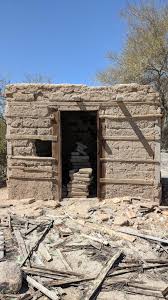
        Empty buildings have a story as well.  And sometimes they talk.

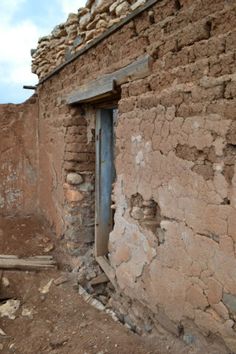
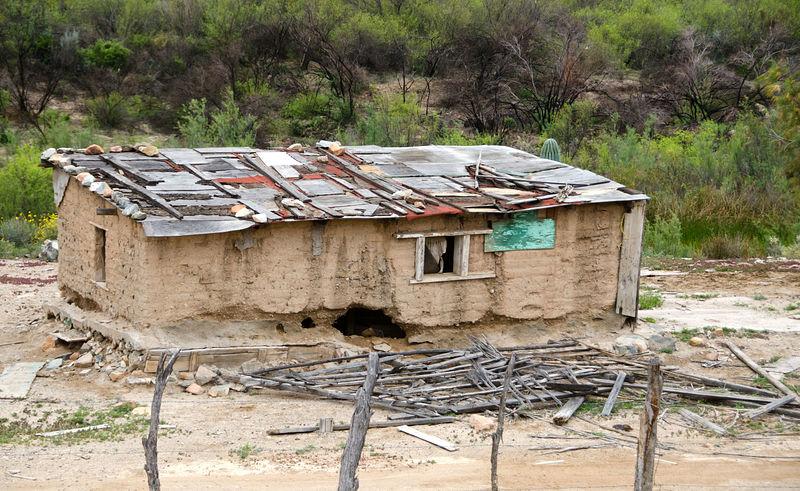
        These are the abandoned homes and  buildings standing ( or leaning) in the middle of the Baja landscape.  You find them built on the side of a hillside.  Or they are tucked onto the bank of an arroyo or still standing observant by the side of the highway.

Baja - Mision San Fernando Velicata - Ruin - Shack

         Dilapidated.  Wind, sun-baked and weather torn.  Collapsing roofs and leaning walls.  Warped and sandblasted wood.  Maybe some leftover traces of color or paint.

         The Baja is not kind to old buildings left unattended.

         Fascinating head-scratchers.  I wonder about those stories.

         Why here?  It’s the only house for miles.  What were they thinking?

        No obvious source of water.  No towns or communities nearby to drive to…or if the house is that old… nothing nearby to walk to…or ride a cart or burro to.

Is this as far as the got?  Is this where the donkey cart finally busted an axle?

         Maybe the few small tree trunks stuck in the ground at crazy angles are evidence of an old corral.

         Stone, bricks and adobe are handy. 

         How did the even get the wood to build?  It’s not like Baja has a lot of treeworthy lumber around.  Did the haul it here?  From where?   

          Baja isn’t exactly known for its forests.

         Occasionally, you find a small cluster of buildings.  Or what’s left of them.

         Perhaps an extended family.  Again, why here? And what happened to them.

         Maybe as often happens, parents settle.  Raise kids in the hardscrabble environment.  Kids move on as they grow up.  Parents pass. 

         Or the parents pass and the dream of living in the middle of nowhere is not the dream of their progeny.  They move on.

         Buildings are abandoned.

         I’ve never trespassed, but if it looks like it doesn’t matter, I like to stop.  Normally, it’s not like anyone cares.  There’s no one around for miles and I doubt the tumbleweeds or jackrabbits care.

         But, poking around old buildings…they sometimes talk to you if you look.

         A blackened brick outdoor firepit.  A sign that there was probably no electricity when these folks lived there.  They cooked outside.

         No signs of plumbing of any kind.

         Rough carpentry.  Uneven door and window frames.  No signs that glass ever filled those windows.  

         Old uneven hammered rusty nails protrude from splintering dried wood.  These didn’t come from Home Depot.  They look like tiny sharpened spikes…handmade.  Probably pretty precious back in the days.

         In fact, there are signs that furniture and parts of the buildings may have been bound together with what remains of rope or old leather strips.

         I find an old bent spoon in what would have been a dirt floor.

         I have found an old coin or almost rubbed smooth and largely unidentifiable.

         There are dark patches along walls where perhaps candles or old fuel lanterns once burned. 

 I found lots bleached fish bones around the back of one building.  They ate fish?  We were 10 miles from any body of water.

         I once found two old crosses and a weathered upright stone marker side-by-side. They were in the shade of an old scrub tree back behind what may have been an old shed or barn.

 Nearby the remains of a cracked clay vase that long ago may have held desert flowers.  A family cemetery?

         Whoever lived in these places are long gone and forgotten.  But, there was a story here at one time.

         I think in some sense, moving through these old living spaces makes them somewhat more real.  A reminder that real people and families once lived here.  Had dreams here. 

         And moved on.  While the desert moves back to reclaim everything.

images

That’s my story!

Jonathan

______________

 
Jonathan Roldan has been writing the Baja Column in Western Outdoor News since 2004.  Along with his wife and fishing buddy, Jilly, they own and run the Tailhunter International Fishing Fleet in La Paz, Baja, Mexico  www.tailhunter.com.

They also run their Tailhunter Restaurant Bar on the famous La Paz malecon waterfront.  If you’d like to contact him directly, his e-mail is: jonathan@tailhunter.com

Or drop by the restaurant to say hi.  It’s right on the La Paz waterfront!

_____________


Jonathan Roldan’s
Tailhunter International


Website:

Mexico Office: Tailhunter International, 755 Paseo Obregon, La Paz, Baja Sur, Mexico


U.S. Mailing Address:  Tailhunter International, 8030 La Mesa Blvd. #178, La Mesa CA  91942


Phones:
from USA : 626-638-3383
from Mexico: 044-612-14-17863
.

Tailhunter Weekly Fishing Report:  http://fishreport.jonathanroldan.com/

Tailhunter YouTube Video Channel:

“When your life finally flashes before your eyes, you will have only moments to regret all the things in life you never had the courage to try.”


Read Full Post »

END GAME

END GAME

Originally Published the Week of Jan. 3, 2022 in Western Outdoor Publications

Back in the day when I lived close to the somewhat remote East Cape area of Baja, I loved getting invited to someone’s house for dinner.  It was a special treat.

         First and foremost, it sure beat the one-pan meals I would usually cook for myself.  The food at these gatherings would be simple, but they were always the best-of-the-best spread they had to offer and tremendously delicious.

         I remember barbecued meat or fried fresh fish.  Often it was something they had caught or one of their own animals.

         I was a grateful beneficiary to the sharing of the largesse.

Of course handmade tortillas, beans and rice and maybe grilled vegetables or fresh cheese!  Dang.  I secretly always hoped there would be that fresh farm cheese.

         Plates and cups never matched. Lots of well-used plastic. The cups seemed to be those indestructible plastic/ acrylic things we all had in our cupboards back in the day.  Free with a fill-up of gas (or a steak knife) or were bought from the neighbor’s kid raising money for school.

         Somehow, those same cups magically migrated to Mexico!

 Silverware was burnished and scratched.  No big thing.  Lots of paper napkins.  No matter. 

These folks might not have much, but everything was always spic-and-span  and pridefully clean in the home.

         It was not only a treat, but an honor to be invited to the family home.

         Often, there might be another family or two… or extended family member at the table as well.  A few cousins.  A tio or tia (uncle or auntie).  Maybe some neighbors.

         Again, sharing the wealth.

         It was typically a pot-luck kind of affair from what I could tell.

         Cousin Jose and his family might bring some fresh ceviche.  The neighbors ferried over a Tupperware of salsa fresca. 

         It seemed the uncles would ALWAYS bring beer.  Always welcome and they seemed to drink the majority of it!

         After dinner there was always talk.

         Just fun and interesting conversation and b.s. directly dependent upon the level of beer consumption taking place.

         My Spanish at that point wasn’t full-speed, but it was enough to participate and I often became the center of the chit-chat.  It was usually something of an enjoyable question-and-answer session.

         Parents…well, the moms asked about food and markets and clothes.  Dads would talk about fishing or travel. 

Politics were big.  So were sports.  The New York “Yonkeys” and the Los Angeles “Doyers.” Andale!

         Recently, I was thinking about some of the great conversations with the kids. 

The younger girls would ask about celebrities, fashion and movie stars. 

         Did I really see movie stars all the time and every day?

         What is Hollywood like and tell them about a shopping mall.

         The boys naturally wanted to know about American cars.  American music.  Of course…American girls.

         Remember, these were the days before the internet was rampant and everyone had a cell phone. Often folks didn’t even have TV’s back then out there.

         I was sort of the welcomed travelling bard.  Folks were anxious to hear what was going on “out there.”  Tell us some news.  Tell us a story.

         With the kids…

         Often, we’d get into the typical, “What do you want to do when you get older?”

         At the time, it was just fun conversation, but looking back, the responses were really eye-opening.

         American kids talk …doctors…lawyers…executives…business owners…teachers…travel…own a ranch…own a sportscar…be a firefighter…engineer…computers…be a rockstar…attend a great university…be a pilot…marry a rich doctor…lawyer…blah blah blah!

         For these, mostly rural Mexican kids, the bar wasn’t quite so high.

         Most wouldn’t get past the mandatory 6th grade.  So, like all kids, many were eager to “get outta school” to go to work.

         Not so much to be independent like American kids…move out…have a car…get an apartment.

         These Mexican kids were eager to work so they could help the family.

         The aspirations weren’t so lofty.

         “I will help my father catch fish for the market.”

         “I will go to work at the farm picking vegetables.”

         “I would like to move to the city.  Maybe work at a restaurant or a hotel.  Maybe clean rooms or wash dishes.  I can stay with relatives.”

         “I have a boyfriend and we will get married and have kids.  He has a good job driving a truck for the market.”

         The ambitions were much more tempered.  Perhaps much more pragmatic in the big picture.  


         The big difference is that these are somewhat the kind of jobs American kids might do “on their way” to do something else.  Like while they are in school.

         Or a summer job.

         Or for some pocket money.

         For these Mexican kids, they are not jobs before they move onto something else. These are their CAREERS.

         This is what they will most likely do for the rest of their working lives.

         Forty or fifty years from now, it’s very likely, many will still be washing dishes or cleaning someone’s hotel room.  Some will still be trying to catch enough fish to sell to the market and feed the family.

         That fruit or vegetable farm still needs laborers.

         That girl wanting to be married has raised another generation herself.

         These “occupations” are the end game.  There is no “glass ceiling” because there is no glass. That solid ceiling they see is the height of ambition and opportunity.

         I’m trying to imagine some of the summer or school jobs I took in younger days.  Could I have worked in a warehouse the rest of my life?  Or driven a taxi? Or sold vacuum cleaners door-to-door? 

         Nothing wrong with good honest labor. 

         For Americans, we have the ability to envision better things.  We can hope that around the corner our ship will come in.  We have that ability to dream.  It may never happen, but we can strive and hope.

         Our end game has continuum.

         For these youngsters, their aspirations are limited to immediate and restricted finite opportunities.  The end game is for life.

         Do not pass GO.  Stay in the same square.  Repeat.


That’s my story

Jonathan

______________

Jonathan Roldan has been writing the Baja Column in Western Outdoor News since 2004.  Along with his wife and fishing buddy, Jilly, they own and run the Tailhunter International Fishing Fleet in La Paz, Baja, Mexico  www.tailhunter.com.

They also run their Tailhunter Restaurant Bar on the famous La Paz malecon waterfront.  If you’d like to contact him directly, his e-mail is: jonathan@tailhunter.com

Or drop by the restaurant to say hi.  It’s right on the La Paz waterfront!

_____________


Jonathan Roldan’s
Tailhunter International


Website:

Mexico Office: Tailhunter International, 755 Paseo Obregon, La Paz, Baja Sur, Mexico


U.S. Mailing Address:  Tailhunter International, 8030 La Mesa Blvd. #178, La Mesa CA  91942


Phones:
from USA : 626-638-3383
from Mexico: 044-612-14-17863
.

Tailhunter Weekly Fishing Report:  http://fishreport.jonathanroldan.com/

Tailhunter YouTube Video Channel:

“When your life finally flashes before your eyes, you will have only moments to regret all the things in life you never had the courage to try.”

Read Full Post »

DON’T TOUCH YOUR EYES

THIS IS WHAT YOU CAME FOR! FEEL THE BURN…OR NOT!

DON’T TOUCH YOUR EYES!

Originally Published the Week of Dec. 27, 2021 in Western Outdoor Publications

          I’m a chips and salsa guy. 

         I go into a Mexican restaurant and I look forward to ruining the rest of my meal filling up on the chips and salsa that get plopped in front of me. 

In fact, I judge the restaurant based on their chips and salsa.

         It’s the opening round.  First impressions are everything.  Usually, the chips and salsa are a pretty good reflection on the rest of the meal-yet-to-come.

         The problem is that in most Mexican restaurants in Mexico, you don’t get chips unless it’s a tourist place or you ask for the chips.  And, even then, chances are you definitely don’t get the typical big basket.

         You get a little bowl.  Like a peace offering of chips!   

         But, there’s still the salsas.  And every place worth it’s chili peppers makes their own. 

I’m not talking about stuff you pour out’ve a bottle like Tabasco, Cholula, etc.  Those are hot sauces, not technically salsas. 

         That’s for a different column.  If the salsa comes out’ve a bottle or jar, move along. Those places don’t last anyway. 

         I have a rule or two when I hit a new place and try their salsas.

         First, just because it looks mild doesn’t mean anything.  Conversely, a very tasty benign salsa could appear like Satan’s own brew.  

         Even at a regular place that you visit often. 

         Their homemade salsa can change from day-to-day.   That’s because the quality and flavor of the ingredients can change.

         For example in our restaurant in La Paz, we would make green salsa verde from green tomatillo tomatoes.  One day the salsa would be sweet and mild. 

        The next day, it could be very bitter and we would have to adjust the recipe.  That’s because the quality and taste of the tomatoes would change from our delivery guy.

        All tomatoes are not created equally.  Nor or chilis or onions.

         So, as a rule, no matter what the salsa looks like, I put a little dab on the tip of my little finger and taste it.  Or on the edge of my plate. 

         Knowledge is power and better to know up-front before I slather my taco with a sauce that I won’t like or will cause me physical damage!

         There are several main salsas to keep an eye-out for.  They’re the standards at most any restaurant or taco cart you visit in Mexico. 

Salsa-1170x617

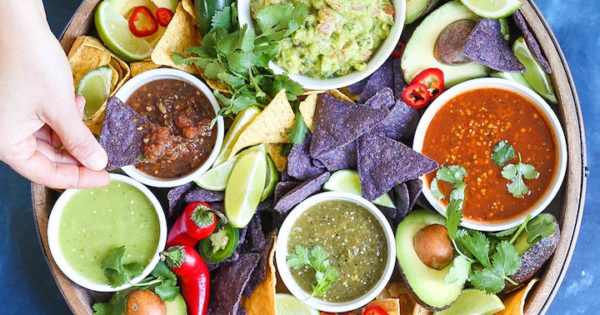
         SALSA FRESCA/ PICO de GALLO – Usually pretty mild and can surely vary from place-to-place.  Usually bright red and green.

Typically consists of chopped red tomatoes, onions, salt, cilantro and fresh jalapeno or serrano chilis.  This is the universal salsa.  Stuff it in a taco.  Divebomb it with chips.  Spoon it over your huevos rancheros, fish or steak.

         SALSA VERDE/ TOMATILLO SAUCE – Made from green tomatillo tomatoes, this can range from tart to sweet and savory.  If the tomatoes are first grilled, roasted or boiled, then blended with the other ingredients such as the chilis and onions, you get a bolder full-bodied salsa.  In fact, all of the ingredients are sometimes cooked then blended together.

Using uncooked ingredients produces a salsa on the tart side.  Not necessarily a bad thing.  Just deliciously different.

         AGUACATE – This is avocado salsa.  My personal favorite. 

I can put this on everything in sight.  Remember, the “taquitos” they sold at your little league games as a kid and the green sauce that came out’ve a plastic jug?  Aguacate is a 5-star creamy upgrade.

It’s got the coolness of avocado blended with cilantro, a bit of lime, salt, onion and garlic contrasted with the serrano peppers.  It also has tomatillos in it very often. 

Guacamole…another favorite for other reasons…isn’t so creamy and is primarily avocados without the tomatoes and has a thicker consistency.

       SALSA ROJA – This is often the signature sauce at any local dining spot.  I’ve encountered places that guard “grandma’s recipe” like Colonel Sanders safeguarded his finger-lickin’ good chicken recipe.  

The main thing is roasted or boiled chili arbol.  It’s got more kick than other salsa chilis and cooking brings out spicy smokey flavors and deep red colors.  It’s then blended with the onions, garlic and other ingredients and can be served hot or cold.

This is definitely one you should taste ahead of time before spooning it on your food.  Sometimes, a little goes a long way.

Everyone makes their salsas differently and part of the fun of eating in Mexico is sampling all the different types.

 That’s my story!

Jonathan


______________

Jonathan Roldan has been writing the Baja Column in Western Outdoor News since 2004.  Along with his wife and fishing buddy, Jilly, they own and run the Tailhunter International Fishing Fleet in La Paz, Baja, Mexico  www.tailhunter.com.

They also run their Tailhunter Restaurant Bar on the famous La Paz malecon waterfront.  If you’d like to contact him directly, his e-mail is: jonathan@tailhunter.com

Or drop by the restaurant to say hi.  It’s right on the La Paz waterfront!

_____________


Jonathan Roldan’s
Tailhunter International


Website:

Mexico Office: Tailhunter International, 755 Paseo Obregon, La Paz, Baja Sur, Mexico


U.S. Mailing Address:  Tailhunter International, 8030 La Mesa Blvd. #178, La Mesa CA  91942


Phones:
from USA : 626-638-3383
from Mexico: 044-612-14-17863
.

Tailhunter Weekly Fishing Report:  http://fishreport.jonathanroldan.com/

Tailhunter YouTube Video Channel:

“When your life finally flashes before your eyes, you will have only moments to regret all the things in life you never had the courage to try.”


Read Full Post »

IT’S OK TO BREATHE THIS AIR

IT’S OK TO BREATHE THIS AIR

Originally Published the Week of Dec. 13, 2021 in Western Outdoor Publications

Christmas time in Baja.

         Specifically, here in La Paz where we live and have our businesses.  

         On so many levels, the air is definitely different this year.  And, on so many levels, it’s easier to breathe.

         It’s palpable

         Practically speaking, masks are pretty much down.  Exhale.  Inhale.  Exhale again.  It’s been awhile. 

You can probably relate. Feels pretty good not to talk through a piece of cloth.  Or trying to figure out what you were saying to me!

I have a hard enough time understanding Spanish or trying to make sure my Spanish was correct.  Let alone trying to do it through a mask!

And hey!  That’s a smile under there.  I was tired of just looking at your eyes!

The pandemic hit Mexico especially hard.  It whacked Baja really hard, especially for an economy that depends so heavily on tourism.

Seventy percent of the population lives hand-to-mouth.  It’s a cash economy. No one is on anyone’s books. 

If you have a job, most get paid in cash or what you can sell.  Conversely you pay cash as well. 

Cash.  No checks.  No credit card.  No bank account .

What’s in your pocket at the end of the day is how you feed yourself and your family. And back home, that could be a lot of folks living in a small space.

No school.  No computers.  No Netflix.  Beaches closed.  Stores closed.  Restaurants closed.  Curfews enforced.  Entire areas completely off-limits.

Sit and stare at the rest of your family for days-on-end.

If you were actually on someone’s payroll and that business closed it’s doors during pandemic, that was just tough luck.

No feel-good stimulus checks.  No unemployment checks.  It doesn’t work like that in Mexico.

No money . No food . Simple as that.

Last Christmas, there wasn’t a lot of hoo-haaa. 

So much lingering uncertainty . Many places and events still closed.  Even churches were closed. 

Fast forward to Christmas 2021.

This year, most of Mexico is now in the green level.  It’s been a long transition from being in the red. 

In our city of La Paz, I’ve heard it’s got one of the highest levels of vaccination.  Something like 85% of the population has their shots.

Tourists are flocking to Mexico, in general, and Baja, in particular.  It’s a quick hop from the U.S.  No need to quarantine or prove you’re vaccinated to enter. 

The dollar is strong.  Mexico wants you.  Mexico needs you.  There are deals to be had.  The world is figuring out Mexico is a good value as well. 

The border is “officially” open now.  Technically, it’s been closed since early 2020 although it was easy enough to drive across.  But, it deterred many visitors from…well…visiting!

So, there’s a reason for optimism in the air.

You can just tell walking around town.

It’s good to see decorations and lights again.  It’s good to see people in the stores and restaurants. 

There are actually real live people hanging out on the beaches again.  Not just police shooing people away or giving out tickets.

Even Mexicans are travelling.  It’s OK this year to go see family and friends. 

The surest sign of hope and optimism…I saw a wedding and a baptism at our local cathedral. 

And that’s the difference.  There’s a subtle sense of joy in locals and visitors alike.  They’re enjoying themselves!   Not looking over their shoulders or over masks.

Yes, people are gathering. 

We may have this virus with us for a long time.  Things will probably never be like it was, but there’s an actual air of hope. 

You can feel it.  You can breathe it.

It probably makes the health officials cringe.  And government officials cautiously tippie-toe on eggshells hoping the other shoe doesn’t drop on the merriment or economy.

But, for now, it’s a good time to enjoy the smiles. 

A good time to appreciate the moment.  A time not to be taken for granted.  A time to appreciate each other again and how precious simple freedom is to each of us. 

It can be fleeting.  As we saw only a year ago.  Poof…gone!

I’m not talking about political freedom.

It’s even more basic. 

The simplicity of walking where we want to walk.  Taking a big unhindered breath.  Going where you want to go.   Shake a hand.  Give a hug.  Eat dinner with the family.

Hold a child.

This is the precious air you can gratefully breathe this Christmas. 

May it wrap and surround you and yours.

Revel in it. Amen.


That’s my story!  May you and yours be blessed this holidays and Christmas. 

Jonathan

______________

Jonathan Roldan has been writing the Baja Column in Western Outdoor News since 2004.  Along with his wife and fishing buddy, Jilly, they own and run the Tailhunter International Fishing Fleet in La Paz, Baja, Mexico  www.tailhunter.com.

They also run their Tailhunter Restaurant Bar on the famous La Paz malecon waterfront.  If you’d like to contact him directly, his e-mail is: jonathan@tailhunter.com

Or drop by the restaurant to say hi.  It’s right on the La Paz waterfront!

_____________


Jonathan Roldan’s
Tailhunter International


Website:

Mexico Office: Tailhunter International, 755 Paseo Obregon, La Paz, Baja Sur, Mexico


U.S. Mailing Address:  Tailhunter International, 8030 La Mesa Blvd. #178, La Mesa CA  91942


Phones:
from USA : 626-638-3383
from Mexico: 044-612-14-17863
.

Tailhunter Weekly Fishing Report:  http://fishreport.jonathanroldan.com/

Tailhunter YouTube Video Channel:

“When your life finally flashes before your eyes, you will have only moments to regret all the things in life you never had the courage to try.”

Read Full Post »

WE HAVE A BLEEDER

WE HAVE A BLEEDER

Originally Published the Week of Oct. 24, 2021 in Western Outdoor Publications

In the several decades that I’ve been writing fishing articles and columns for magazines and newspapers, I don’t think I’ve ever tackled this subject.  I don’t know why.  Maybe it’s because it’s just something I don’t think about much.

         For what we do down here, it’s just not much of an issue. 

         However, it’s come up several times in the last few weeks with regards to our panga fleet here in La Paz.

         One was a legitimate question about bleeding your catch.

         Two of them were complaints of sorts from first-time anglers who had never fished in Mexico and had also never fished in a panga.

         Let me explain.

         The process if “bleeding” a fresh-caught fish can really be beneficial.  It’s not that difficult to do, especially after you’ve done it a time or two.

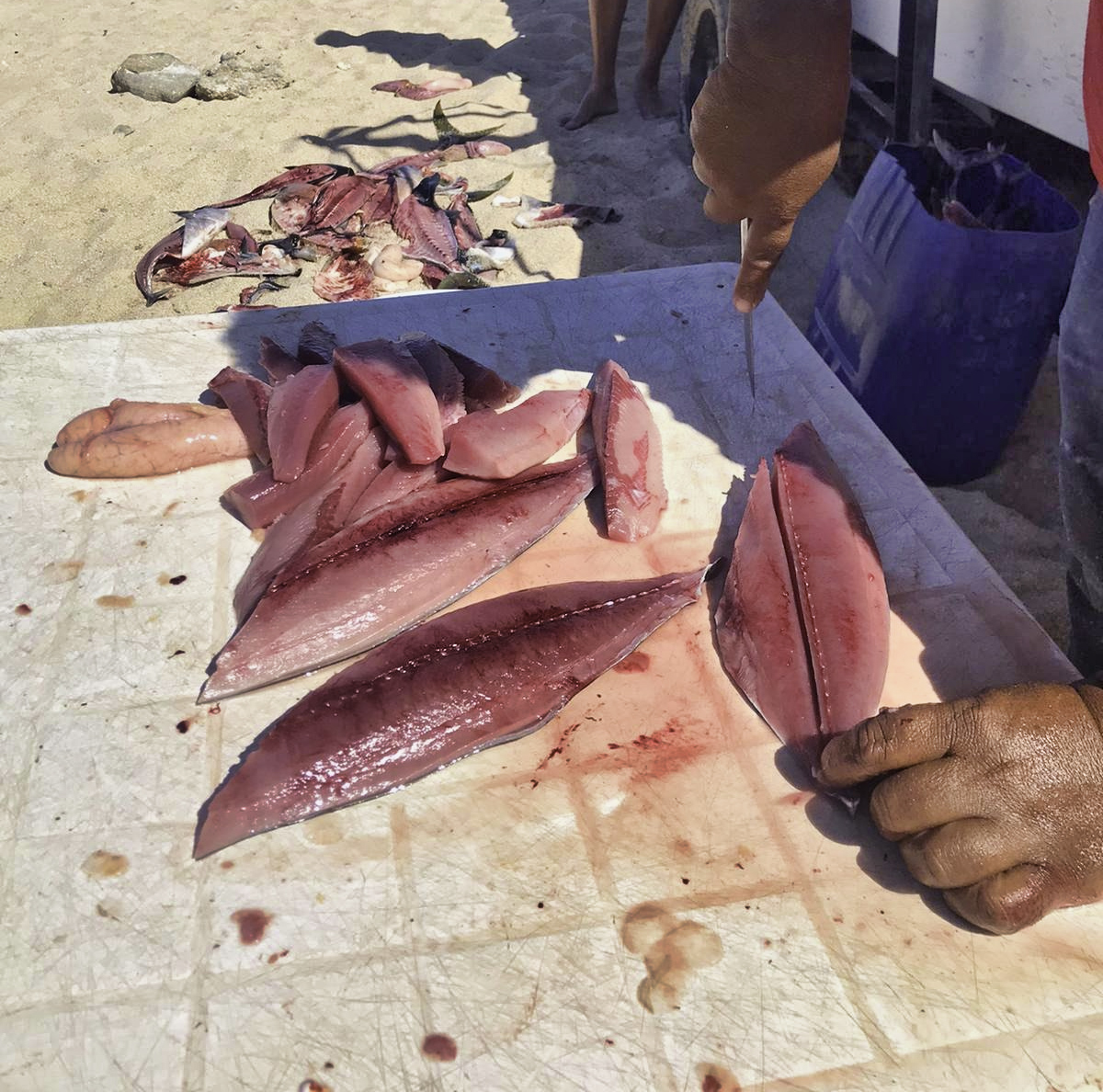
         It involves taking a catch just out’ve the water.  While the fish is still flapping, quickly cut to it’s heart and the main artery right behind the gills.  You let the heart pump out the blood.  Easy.

         All fish are a bit different, but you can Google up the specifics. 

         By, the way, I’m all for a quick dispatch of any catch.  The quicker you do any of this, the better for the fish rather than let it flip around in a fish box, bucket, ice chest or kill bag. 

         But, it can be messy.  I mean, “all-over-the-deck messy” especially for really dense muscled fish like a tuna or bonito for example.

         Therefore, if you can, let the blood pump out while holding the fish over the side, if possible and practical.  Or, hold it in or over your bait tank.  If you can’t do either of those, at least do it away from everyone else.

         And be prepared to clean off the deck rapidly. 

         Then, get the fish chilled on ice.

         The whole idea, as explained to me by a marine biologist many years ago is that when a fish, or anything dies, it immediately begins to decompose.  Makes sense.  No vital organs are working anymore.  Blood, nerves, brain function, etc. are all flat-lined. 

         Blood left in the fish is also  logically decomposing. 

         By getting rid of the blood, you can really help improve the flavor of the meat by leaving you with cleaner and better tasting fillets.

         That’s the theory.  And it works!

         The reality can sometimes be different which brings me back to the complaints I received this week.

         When I worked on big private charter boats, it was relatively easy to bleed-out a fish.  I was a deckhand. 

Or there were other deckhands.  Even if there was a lot of activity on the deck during a bite, usually someone could bleed fish.

         Unless it was really crazy.

         I’ve worked on party boats and multi-day charter boats and ultimately, you’re dealing with a lot of fishermen.  There’s simply too much happening.

         A bunch of folks are trying to catch fish.  Fish are biting.  Lines are all over the place.  It’s frantic.

         We’re tying hooks; gaffing fish; untangling lines; tossing bait; bagging and tagging fish…and more.  It’s full-speed turbo. 

         There’s hardly time to take one person’s fish and bleed it in the middle of the chaos.   It is what it is.

         On a panga like we have here in La Paz, sometimes it’s possible to bleed a lone solitary fish.  Sure. Let me get right to it.

         Here’s the dilemma.

         There’s one captain and there 2 or 3 anglers.

         The captain is the one-stop, driver; guide; deckhand and navigator. He’s got his hands full.   It’s kind of a small, efficient but ultimately croweded working platform.

         The fishermen are out there to catch fish.  The captain’s job is to facilitate that event.

         Bites can happen in a frenzy.  Two or three fishermen with bent rods and slinging fish in a small boat is fun and exciting and can be a blur of motion for the captain. However…

         If he stops to gaff, cut and bleed a fish…

         The whole process comes to a standstill.

         He can’t re-rig your lines or the lines of your buddies.

         He can’t be baiting hooks.

         He can’t be untangling your backlash.

         He can’t drive the boat.

         Your buddies might be pulling in fish at the same time.

         Or losing them.

         The fish school could disappear.

         It’s a pragmatic issue.  The anglers need to weigh taking the time to bleed solo fish versus all the other things that can happen in the interim.

         I think most would rather be catching fish than watching the school disappear.

         Simple as that!

That’s my story!

Joanthan


Jonathan Roldan has been writing the Baja Column in Western Outdoor News since 2004. Along with his wife and fishing buddy, Jilly, they own and run the Tailhunter International Fishing Fleet in La Paz, Baja, Mexico http://www.tailhunter.com.

They also run their Tailhunter Restaurant Bar on the famous La Paz malecon waterfront. If you’d like to contact him directly, his e-mail is: jonathan@tailhunter.com

Or drop by the restaurant to say hi. It’s right on the La Paz waterfront!


Jonathan Roldan’s
Tailhunter International

Website:

www.tailhunter-international.com

Mexico Office: Tailhunter International, 755 Paseo Obregon, La Paz, Baja Sur, Mexico

U.S. Mailing Address: Tailhunter International, 8030 La Mesa Blvd. #178, La Mesa CA 91942

Phones:
from USA : 626-638-3383
from Mexico: 044-612-14-17863
.

Tailhunter Weekly Fishing Report: http://fishreport.jonathanroldan.com/

Tailhunter YouTube Video Channel:

https://www.youtube.com/channel/UCBLvdHL_p4-OAu3HfiVzW0g

“When your life finally flashes before your eyes, you will have only moments to regret all the things in life you never had the courage to try.”

Read Full Post »

CHANGING SEASONS

FRESH FROM OREGON!

CHANGING SEASONS

Originally Published the Week of Oct. 17, 2021 in Western Outdoor Publications

          Having a fishing business down here, I could usually tell when the warm water season was cooling down.   The signs are usually everywhere.

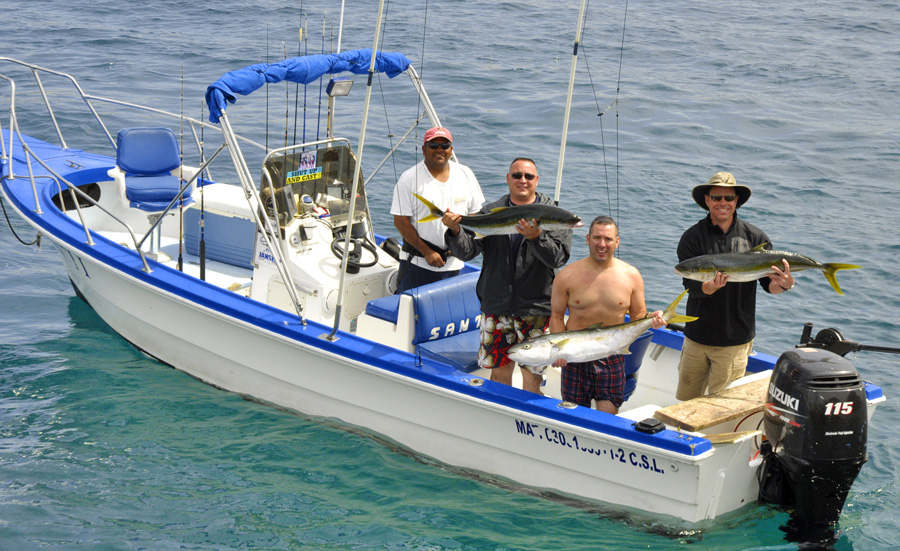
         The kinds of fish start to change.  Instead of warm water species like billfish, tuna, dorado, etc., we there are fewer in the counts.  More inshore species acclimated to cooler waters like sierra, pargo, snapper, cabrilla and amberjack become more prevalent.

         The winds from the north start to blow a little stronger and more consistently. The waters are choppier and cooler.

         The sun is at a different angle and throws longer shadows around.

         It sounds silly to the tourists, but we are starting to wear sweatshirts and long pants even though the temps are still in the high 70’s.  Tourists are still running around in shorts and t-shirts.  To us, it’s unequivocally cooler.    

         You can even tell by the types of visitors we’re getting.

         Not quite so many folks from California or Arizona, Utah, Texas or Nevada.

         Now, we’re getting more Canadians, Alaskans and folks from Oregon, Washington and the Dakotas.  They don’t ask much about fishing or what they will catch.  They just want to know if there will be sunshine. 

         Even if it’s a cool 70 degrees here, it’s still much warmer than what they’ve got back home so yes, the snowbirds are already showing up.

         The crowds are definitely down.

         Families are largely gone.  Kids are back in school.  Fishermen as well.  Everyone’s getting ready for holidays back in the U.S.   It’s a quieter time down here.

         However, the biggest indicator of the changing seasons can be viewed by anyone driving around town.  And it usually elicits a collective groan.

         Christmas is already in the air here in Mexico.

         Usually, in the U.S. we can generally figure it kicks in right after Thanksgiving. 

         Well, there’s no Thanksgiving holidays here in Mexico.  Halloween is growing, but it’s a minor little kid thing mostly.

         So, just about the end of September, here we go!

         Stores are pushing aside merchandise and stocking rows and rows of toys.  Those that don’t have the room, erect huge “TOY TENTS” in their parking lots.

         Christmas decorations are already on the shelves as well.  In fact, if you don’t purchase them now, there probably will not be any around by the beginning of December and the stores do not re-stock.  Once they’re gone…they’re gone!

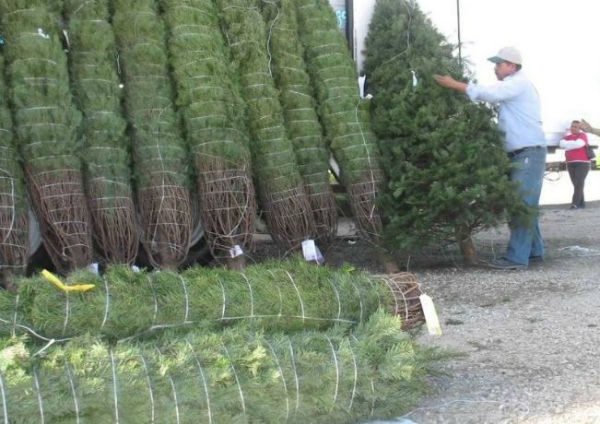
         Christmas tree lots are also popping up in vacant lots and parking areas.

         You can see where the fencing is being put in and banners advertising “Fresh Oregon Christmas Trees” are already being hung in anticipation of the arrival of trees in a few weeks.

         They’ll be here by the beginning of November and folks will snap them up.  Nothing like a fresh “Oregon Christmas Tree” in the living room.  How you keep a tree fresh and fragrant for two months is beyond me.

         I’m just not quite ready for this.

         I know in a few weeks, shop owners will start painting elves and fake snow on storefronts. Somehow, it’s just not the same in Mexico seeing fake snow sprayed on things.

         For most folks, the only snow they want to see is inside the rim of a margarita glass or when they pop an ice chest full of Pacifico or Dos Equis long-necks.

That’s my story!

Jonathan


Jonathan Roldan has been writing the Baja Column in Western Outdoor News since 2004. Along with his wife and fishing buddy, Jilly, they own and run the Tailhunter International Fishing Fleet in La Paz, Baja, Mexico http://www.tailhunter.com.

They also run their Tailhunter Restaurant Bar on the famous La Paz malecon waterfront. If you’d like to contact him directly, his e-mail is: jonathan@tailhunter.com

Or drop by the restaurant to say hi. It’s right on the La Paz waterfront!


Jonathan Roldan’s
Tailhunter International

Website:

www.tailhunter-international.com

Mexico Office: Tailhunter International, 755 Paseo Obregon, La Paz, Baja Sur, Mexico

U.S. Mailing Address: Tailhunter International, 8030 La Mesa Blvd. #178, La Mesa CA 91942

Phones:
from USA : 626-638-3383
from Mexico: 044-612-14-17863
.

Tailhunter Weekly Fishing Report: http://fishreport.jonathanroldan.com/

Tailhunter YouTube Video Channel:

https://www.youtube.com/channel/UCBLvdHL_p4-OAu3HfiVzW0g

“When your life finally flashes before your eyes, you will have only moments to regret all the things in life you never had the courage to try.”

Read Full Post »

BUMPS IN THE NIGHT

BUMPS IN THE NIGHT

ORIGINALLY PUBLISHED the WEEK of Oct. 9, 2021 in WESTERN OUTDOOR PUBLICATIONS

          I am often asked about renting cars or just driving around Baja in general.

           Or there are folks who tell me they are going to make some grand “Banzai” run from the border all the way down to Cabo.  They tell me they drive wide open and non-stop like race car drivers.

         They ask me for advice.

         Having been down here almost 30 years and also having driven the Baja over a dozen times top to bottom and back, I mostly have one rule.

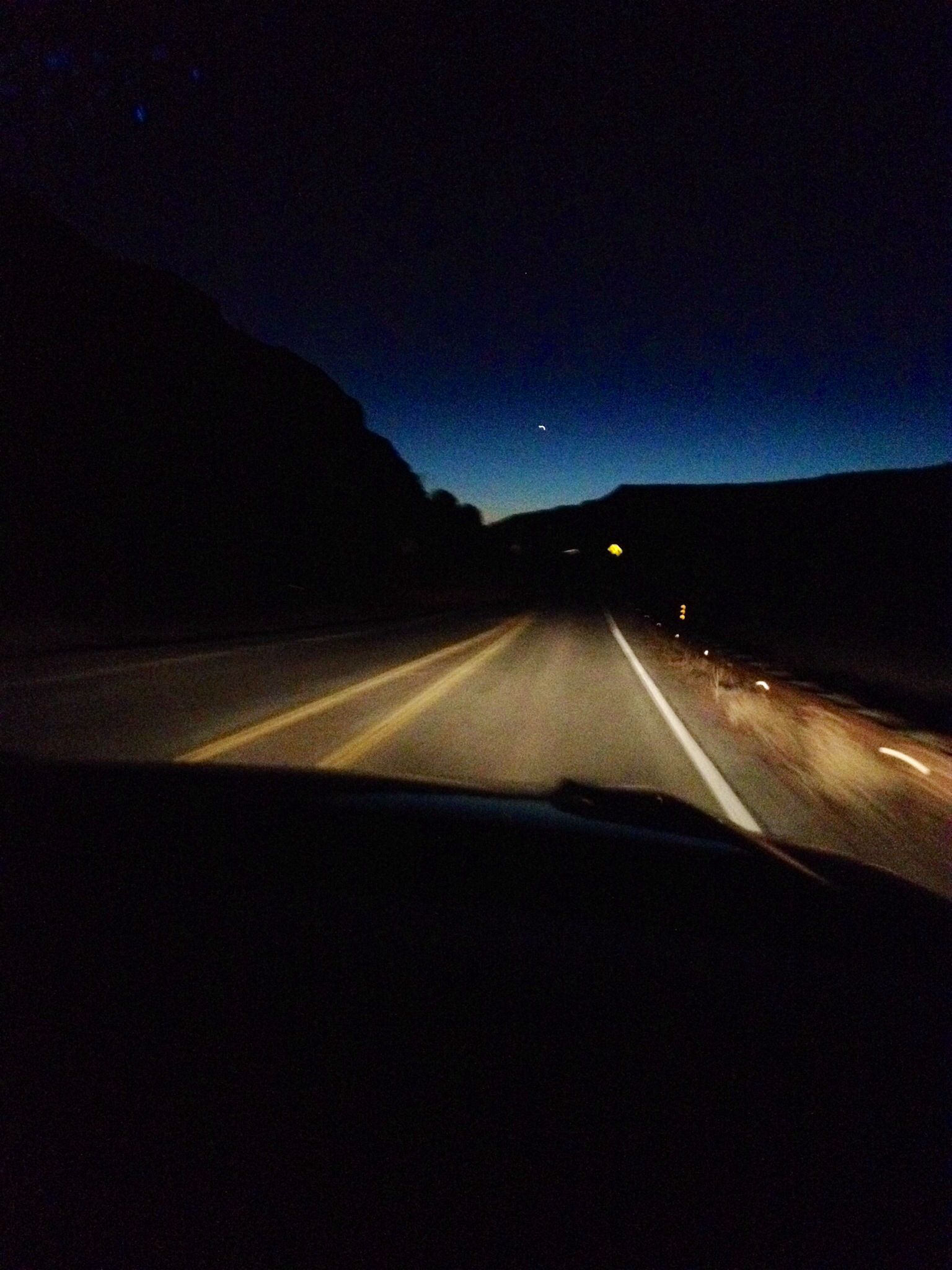
         Do not drive at night.

         Frankly, it’s dangerous.

         When I tell folks that, I see their eyes go wide.

         No, it’s not the banditos.

         Some cartel is not going to grab you and run away with you.

         The legendary chubacabra (vampire bat/dog) is not going to suck your blood and leave you in the desert.

         It’s much more simple than that.

         You have a great possibility of bumping into something at night in Mexico.  Or, even missing something completely!

         I don’t care how careful of a driver you are.

         Mexican road are notoriously bad.  You are probably already on an unfamiliar patch of highway or road.  

A foot-deep pothole can suddenly shred a tire or bend an axle.  Not to mention shake your dentures.

Also, consider this.

         The Mexican road construction guys just LOVE to install speed bumps of all kinds.  If one speed bump works let’s install 5 more just for fun! 

At one point, in the two miles from my home to my office, there were 36 speed bumps along the way. You’ll hit them at the strangest places placed there for no apparent reason.

         Some would give an Abrams battle tank fits.  Others are spaced just enough so it’s like driving over a washboard.  Others will literally launch your car airborne if you hit it at just the right speed.

         Also, driving at night, you put on your headlights, right?  Don’t assume other drivers will also have their headlights on.  In fact, don’t assume other drivers even have headlights or taillights or brake lights for that matter. 

         Oh, and if they have headlights, they like to drive at you or pull up behind you with their bright hi-lights on.

         Assuming again that you’re on unfamiliar roadway, things aren’t always well marked.  Street signs can be non-existent, broken, hidden behind bushes and even hidden behind other signs. 

         This includes stop signs.  Street lights.  Street names.  Detours. Warnings about potholes and speed bumps coming up…SOON!

         Street lights often don’t work or are non-existent.

         Therefore, all things considered, you have a great possibility of getting LOST.  Or getting a traffic ticket.  Remember, you’re in a highly visible rental car or a car with non-Mexican license plates.

 I see it happen all the time.

         Another thing I’ve noticed is that a lot of folks dress in black at night.  I don’t know if it’s a fashion thing, but they’ll dash across a street.  Walk through a crosswalk without looking.  Jog and bike rider right in the traffic lane too!

         Out in the country side, you have a whole other set of things to be concerned about.

         Often, there’s debris on the roadway.  Rocks.  Parts of trees. Trash. Things that have fallen off other trucks or cars.  Even on the best highways, there is always that danger.  

I’ve seen it all.  I’ve hit them all!

         Even moreso, the biggest danger is hitting animals. 

         I’m not talking cats and dogs. Domestic street animals are usually pretty smart.

         I have seen wild pigs and deer that occasionally cross a highway.

         However, it’s the cows, burros, horses and goats you need to watch out for. Mostly, they are freerange animals left to wander a the countryside by a land owner.

         They can be grazing on the side of the road.  Often, at night, they will lie on the pavement for warmth.  They can suddenly dart out’ve the bushes across the road. 

         In the middle of the night on a long lonely stretch of desert a herd of goats suddenly were in our headlights as we rounded a corner.  We were already half-dazed from a lengthy drive. 

         Our big pickup with dually-rear tires ripped right into the herd.  I would swear that I saw two bodies fly up and over our windshield and cab and our tires rapidly went “bump-bump” over others several several times.

         Oops!  No way to avoid them.

         Even worse, I’ve had friends hit larger animals like a cow, or a burro.  Not only is there extensive damage to the vehicle, but on several occasions, the animal is now the ranchers “most prized” and expensive piece of livestock.

         Or course, it is.

         Even if it was really nothing more than a scrawny range animal wandering the property.

         The rancher now wants BIG MONEY. 

         So, drive in the light.  Stay safe.  Take your time.

That’s my story!

Jonathan    

______________

Jonathan Roldan has been writing the Baja Column in Western Outdoor News since 2004.  Along with his wife and fishing buddy, Jilly, they own and run the Tailhunter International Fishing Fleet in La Paz, Baja, Mexico  www.tailhunter.com.

They also run their Tailhunter Restaurant Bar on the famous La Paz malecon waterfront.  If you’d like to contact him directly, his e-mail is: jonathan@tailhunter.com

Or drop by the restaurant to say hi.  It’s right on the La Paz waterfront!

_____________

Jonathan Roldan’s
Tailhunter International

Website:

Mexico Office: Tailhunter International, 755 Paseo Obregon, La Paz, Baja Sur, Mexico

U.S. Mailing Address:  Tailhunter International, 8030 La Mesa Blvd. #178, La Mesa CA  91942
Phones:
from USA : 626-638-3383
from Mexico: 044-612-14-17863
.

Tailhunter Weekly Fishing Report:  http://fishreport.jonathanroldan.com/

Tailhunter YouTube Video Channel:

“When your life finally flashes before your eyes, you will have only moments to regret all the things in life you never had the courage to try.”

Read Full Post »

WHY MY MEXICAN FOOD TASTES BETTER THAN YOUR MEXICAN FOOD

WHY MY MEXICAN FOOD TASTES BETTER THAN YOUR MEXICAN FOOD

Originally Published the Week of Oct. 2, 2021 in Western Outdoor News

           As the owner of a restaurant here in Baja and having hosted thousands of visiting fishermen, tourists, foodies and locals, I have many interesting conversations with our patrons.  I think the “social aspect” of owning a restaurant is one of the great reasons many folks do something crazy… like opening a restaurant.

         Something I hear a lot is, “Man, the food just tastes so much better down here!”

         Yea, there’s something to that.  Maybe you’ve said it yourself on a journey south of the border.  Food just tastes better down here.

         It could be the shrimp or the steak or even something as simple as a taco, guacamole or salsa.  There’s just “something” about the food in Mexico that’s different. 

20210113_193423_Burst01

I mean, it’s not like you’ve never had a taco or shrimp before.  It’s not like you’ve never dive-bombed the salsa or guacamole with a crispy tortilla chip.

         Heck, even the chips taste different!

         I have to agree. 

         Now, don’t get me wrong, I do love my Mexican food back in the U.S, but there’s something about the food down here that sets it apart.

         For one, it is indeed “local” in every sense of the word.

         Of course, speaking very generally and with exceptions to every rule,  you’re probably gonna find the good Italian food in a place named “Gino’s” and a bunch of Italian guys are working in the kitchen.  Or Gino’s mom is back there herself making the sauces or slinging pasta.

         Chinese food?  Personally, I’d probably duck into a place called “Chin Wah” than “Joe’s Chop Suey Express.” 

         In Sacramento on business once, I asked for the best Mexican food in the neighborhood and was directed to a local eatery that had 4 stars online.  OK.  Sounds good.  I was excited.

         As I entered the restaurant, we walked by the open kitchen so I stuck my head in and waved, “Hola! Que pasa?”  A whole bunch of Asian guys (I’m Asian) turned around and looked at me puzzled as if I was speaking Martian.

         Oh boy.  The food reflected it.  Barely so-so.

tacos in the dark

         My point being, that local ethnic food made by locals is probably going to be a notch above.  Most restaurants down here are mom-and-pop operations.  Dad, mom, the kids…all working.  Probably using the same family recipes used for generations.

         When we opened our restaurant, we asked our employees what was their family known for in the kitchen?  Salsa? Grilled fish? Rice? 

fish-taco

         We got their recipes and then took the best and adapted it to our restaurant and our menu.  We’ve kept our menu very local and held to those same recipes for over a decade.

         It sound cliché, but Mexican food made by Mexicans is a great start.

         Secondly, a big reason Mexican food tastes different than in the U.S. is that pretty much of  American-made Mexican food is pretty much the same.  You have the chain fast-food places.  Then, you have the chain restaurants.  Then, you have the local places.

         But, mostly all of them cater to American tastes.  Understandable.  Of course, I’m again speaking in broad generalities.

         However, here in Mexico, there are so many incredible culinary regions, that grilled fish in Cabo San Lucas will taste completely different  in Veracruz.  Ceviche in Puerta Vallarta might have completely different ingredients than in Cozumel.  Chorizo made in Puebla is different than chorizo in Toluca. 

         Mole…a big favorite salsa used on chicken, pork and beef has something like 28 different ingredients like chocolate, chile, peppers…it will taste different all over the country.  Even beef and pork will be different from region to region.

         Speaking of ingredients, that’s a big plus as well.

         Here in Mexico, storage is expensive.  Labor is cheap.

20210115_080737_HDR

Vegetables and fruits are actually allowed to ripen in the sunshine and in the soil.  They don’t ripen at the grocery store or some warehouse or shined-up to make them look juicier.

         Limes, avocados, onions, mangos, cucumbers are often in the store the same day they are picked.  When you bite into a red tomato, it actually tastes like a juicy fruit that it is.  The oranges are sweeter.  The aroma of cilantro can fill a room.

         It’s no wonder that your salsas taste so much better and your drinks (if made fresh) don’t taste like they are made from a mix.

         Beyond that, real Mexican food has all those “fun things” that taken in abundance would make a nutritionist or doctor cringe.

         Salt.  Check.

In fact, please pass the salt shaker. My chips could use a bit more!

         Sugar.  Check. 

Ice cold Mexican Coke is popular because it has real Mexican cane sugar in it!  Same with Mexican ice cream that’s growing in popularity north of the border.

         Fat.  Absolutely.

Why do you think the tortillas taste so good.  They use real lard to make them!  Fried things?  Sure…fry them in more real lard!  Makes all the difference.

         Salt…Sugar…Fat!  It’s the un- holy trinity of things you should eat in moderation.  It’s also why diabetes and heart disease are so rampant in Mexico.  But, if you’re on vacation, a little indulgence is part of the fun.

IMG_3142

         Enjoy the culinary ride down here.  You can go back to eating at Whole Foods and granola with almond milk when you get home.  Or the fast-food taco chain drive through.

That’s my story!

Jonathan

______________

Jonathan Roldan has been writing the Baja Column in Western Outdoor News since 2004.  Along with his wife and fishing buddy, Jilly, they own and run the Tailhunter International Fishing Fleet in La Paz, Baja, Mexico  www.tailhunter.com.

They also run their Tailhunter Restaurant Bar on the famous La Paz malecon waterfront.  If you’d like to contact him directly, his e-mail is: jonathan@tailhunter.com

Or drop by the restaurant to say hi.  It’s right on the La Paz waterfront!

_____________
Jonathan Roldan’s
Tailhunter International

Website:

Mexico Office: Tailhunter International, 755 Paseo Obregon, La Paz, Baja Sur, Mexico

U.S. Mailing Address:  Tailhunter International, 8030 La Mesa Blvd. #178, La Mesa CA  91942
Phones:
from USA : 626-638-3383
from Mexico: 044-612-14-17863
.

Tailhunter Weekly Fishing Report:  http://fishreport.jonathanroldan.com/

Tailhunter YouTube Video Channel:

“When your life finally flashes before your eyes, you will have only moments to regret all the things in life you never had the courage to try.”

Read Full Post »

« Newer Posts - Older Posts »