Feeds:
Posts
Comments

Archive for the ‘tuna tournament’ Category

BAJA SMORGASBORD

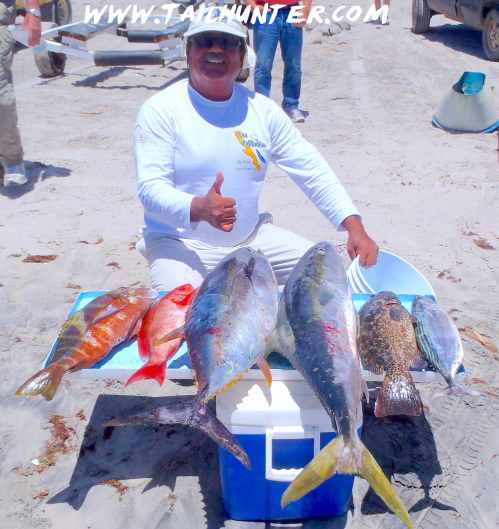
Victor rack 4-18 tags

SIX DIFFERENT GOOD-EATING SPECIES ON ONE DAY and OTHERS RELEASED! (Pargo mulatto…red snapper…yellowfin tuna…yellowtail…cabrilla…white bonito)

BAJA SMORGASBORD

Originally Published the Week of April 24 in Western Outdoor Publications

I was on the beach a few days ago waiting for our fishing fleet pangas to come back that afternoon.  I could see them slowly making their way towards me maybe 10 or so minutes out.


I had my toes scrunched in that fine warm Baja sand, having kicked off my flip-flops and my drivers and fish cleaners were all waiting to see what showed up.


Dang, that sun felt warm on my shoulders.  Not too hot. No humidity.  Just a slight off-shore breeze.  My legs sure need some color.  Too many days in long pants.


Just one of those awesome spring days in Mexico.


I think spring-time is my favorite time to be here.  It’s the “tweener” time between the end of March and the beginning of June.  It’s not quite winter.  Not quite summer.


It’s always sunny.  Temps in the low to mid-80’s.  Nights, you still use a blanket.  Good to have a sweatshirt or light windbreaker in the morning for fishing.  It comes off quick enough!


There can still be some strong bouts of wind, current and swells as winter doesn’t always slide out easily.  But, much of the time, it’s just something I call “non-weather,”  It’s so pleasant you don’t even think about it.


Conversations don’t center around how hot or cold it is. No one talks about how cloudy or rainy it will be.  You just know the sun is up and then it goes down and in between, it’s mighty pleasant.


After Easter and before the summer vacation, it’s also a slower easy time.  The big summer crowds aren’t here yet.  A lot of visitors are refugees from wherever they spend their colder wet winters like Canada, the Pacific Northwest and Alaska. If even for just a few days.  Or so it seems.  I can’t blame them.


When they arrive, they tell me about snow on the ground or not having seen the sun “back home” for several weeks.  They just want to see the big warm yellow “orb” in the sky.  They often don’t even care if the fish are biting or what’s biting!


And that’s one of the really special things about fishing during this time.  I thought about that as I continued to revel in the warm sun on my back waiting for the boats.


You honestly just don’t know what you’re going to catch.


There’s a lot of anglers who will argue that the hotter warmer months are their favorites.  That’s when the “glamor” fish like tuna, wahoo, billfish and dorado are centerstage.  And rightly so.


But during the springtime, there seems to be a lot of variety.


The cooler water fish are still around like yellowtail, amberjack, several varieties of pargo and snapper . You can find cabrilla as well as triggerfish and sierra.


There are some fish much more specific to this spring-time bite like roosterfish, pompano and palometta  as well.


Additonally, as the waters warm or you find the patches of warmer currents, you’ll also get shots at the aforementioned bluewater species like the sailfish, marlin, yellowfin tuna, wahoo and dorado.


Then, there are always the seemingly ever-present fish like bonito, jack crevalle, bullet tuna and others.


I’ve had our fleet come back with as many as a dozen species in a single day scattered among the various boats.  You might not catch a lot of any one species, but you might get some of these…two of those…3 of these and another of that!


And the next day might be completely different.  Even two boats next to each other might have completely different catches.


Several years ago, I had one Outdoor TV crew that wanted to see how many different species they could catch in a single day.  By the end, we tallied 16 different species of fish!


By the same token, anglers can return to a “hot spot” from the day before and find completely different fish have taken over the area the next day.  Or what was biting one day has completely changed depending on conditions.


This offers some incredible challenges to anglers.


It’s a super time to check off some fish on the bucket list, but also presents new twists on fishing.  Does one use light tackle or heavy tackle?  Spinning gear of conventional gear?  Maybe a flyrod if the winds are down?


Are you fishing the warmer water where conditions are blue and clear or will you be fishing the cloudier colder waters?  What about depths?  With both warm and colder waters mixing it up, there will be different temperature thermoclines holding different layers of fish.  Should you use weights? Jigs? Plastics?  Will the fishing be offshore or closer to shore?


Or geographically, where are you fishing?  The Pacific side of Baja or the Sea of Cortez?  Also what’s happening in Cabo San Lucas is probably way different than what’s biting in Mulege or San Quintin!


Many times during the year when fishing Baja you can get away with one or two rigs and be good for 90% of the targeted species.  But during the spring, you just never know.


It does make for some interesting decision making and trips to the tackle store.  Next time, consider a trip in the spring.  It’s a pretty fine time.


That’s my story!

Jonathan signature

Jonathan

______________

Jonathan Roldan has been writing the Baja Column in Western Outdoor News since 2004.  Along with his wife and fishing buddy, Jilly, they own and run the Tailhunter International Fishing Fleet in La Paz, Baja, Mexico  www.tailhunter-international.com.  They also run their Tailhunter Restaurant Bar on the famous La Paz malecon waterfront.  If you’d like to contact him directly, his e-mail is: jonathan@tailhunter.com

Or drop by the restaurant to say hi.  It’s right on the La Paz waterfront!

_____________ 


Jonathan Roldan’s
Tailhunter International


Website: 

www.tailhunter-international.com

Mexico Office: Tailhunter International, 755 Paseo Obregon, La Paz, Baja Sur, Mexico


U.S. Mailing Address:  Tailhunter International, 8030 La Mesa Blvd. #178, La Mesa CA  91942
 

Phones: 
from USA : 626-638-3383
from Mexico: 044-612-14-17863
.

Tailhunter Weekly Fishing Report:  http://fishreport.jonathanroldan.com/

Tailhunter YouTube Video Channel:

“When your life finally flashes before your eyes, you will have only moments to regret all the things in life you never had the courage to try.”

Read Full Post »

NO BAD QUESTIONS?

inkfrog178376730-335-blue-water-charters-tin-sign-deep-sea-fishing-trip-fish-sea-food-ocean-marlin (1)

No Bad Questions?

Originally Published the Week of March 27, 2018 in Western Outdoor Publicastions

As I’m writing this, we’re just about to do our last shows of the season.  Since December, Jill and I have been on the road appearing in our booth at some of the largest fishing/ hunting/ outdoor expositions in the Western U.S.  We’ve been out promoting our fishing operation in La Paz but generally just talking it up about visiting Baja.


It’s always fun.  After more than 30 years of standing in booths fielding questions and chatting with thousands of folks, I’d like to share with you some of questions you should ask a prospective outfitter or guide.


This applies to whether you meet face-to-face or, as happens in most cases these days, you make an inquiry online or over-the-phone.  At least, give it some thought.


Many times, their literature or social media already has it.  But…It’s YOUR vacation.


Better to have too much information and being prepared than getting surprised later on.  This is especially true when you might be coming to Mexico or a location in Mexico or Baja for the first time and even moreso, if you don’t speak the language.


This is no particular order, but should come up in the conversation somewhere.


CREDIBILITY – How long have they been in business?  What’s their background?  I know lots of guys that were truck drivers then one day just decided they were going to be “guides” or “outfitters” with no real background.   Everyone wants to “live the dream” but it’s an entirely different thing to actually turn a hobby into a paying profession.


It helps if they have a track record of advertisements or are recommended by someone you know or their social media presence.  It takes something to stay in business in this field.  It’s not everything, but it helps.


What do other say about them?  Check places like Trip Advisor and Google which is very regulatory when it comes to posting comments.


ACCOUNTABILITY – Is the person you’re talking to going to be there when you are there for your vacation?  Is the person you’re talking to just an agent that you’ll never see or hear from again once you’re booked?  Does the person even live there?


Who will actually be delivering the services?


Who’s going to be the captain, guide, driver, etc.?   The person you’re talking to might be totally reputable and we know many fine agents, but posing the question doesn’t hurt.  At least you’re expectations will not be misplaced.


KNOW WHAT YOU’RE GETTING – You wouldn’t buy a car or a house without having things in writing.  Most outfitters we know that have had any longevity in the hospitality business know their stuff.


But, over the course of a conversation things get lost outright or lost in translation.  This is especially true  at shows where so much gets said or on social media where a zillion e-mails or texts might shoot back and forth.  It’s best to have some record of what you’re getting and not getting.


Nothing like showing up then finding out there were extra charges for bait, transportation, food, gear, etc.  Major buzz kill having to reach into your pocket unexpectedly.  Or that that hotel “close to the beach” was really 2 blocks away with a view only if you’re on your tippy-toes standing on the roof.


PRICE ISN’T EVERYTHING – Like most things in life, you really DO get what you pay for.  If you’re “budget shopping” chances are you’ll get a budget vacation too.


It surely doesn’t hurt to ask a prospective outfitter if there’s any discounts, but honestly, I wouldn’t push it.  Maybe if it’s a different time of year.  Maybe a saving if you bring more people.


Most outfitters working these days live on a tight budget themselves.  If they are at shows, they are probably already offering discounted trips.


But that “discounted trip” might mean you’re now going to be in the room with a single light bulb hanging from the ceiling and sharing a bathroom with two other rooms.


I do know some that will get offended if you push too hard.


As one outfitter told me, “I know what my services are worth. I work hard.   One guy pushed and pushed for discounts.  So, I asked him, ‘You work hard for your paycheck right? If your boss asked you to take a 20% paycut would you work as hard or as diligently for him?’ The guy shut up. “ Point taken.


Another example I have seen numerous times.  One charter operation is $100 less than another.  The less expensive guy might be a little more hesitant to burn extra gas to go where the fish are biting in order to save money. He has to make a living too.


Think about it.  Simple economics.  Get the best you can afford.  Not the most you can get away with.  Vacations are too special to cut corners if you don’t have to.


There’s also some questions you can ask that will get a raised eyebrow from some outfitters and guides.


I have heard people ask me or ask other outfitters:


Will you guarantee that I will catch fish? (I’ve never met an outfitter that will!)


If I pay more will I catch more fish? (You’re always welcome to pay us more!)


If I don’t have a good time, will you refund my money? (I can’t hear you)


How many fish will I catch in a day? (I don’t know.  Are you any good?)


Can you promise me the sun will be out when I fish? (Sure…let me wave my magic wand!)


Will it be too hot for me when I come on vacation? (What’s “too hot” mean?)


How can I make it so I only catch smaller fish?  Big fish are too strong for me. (You will love catching bait!)


How hard are the beds / pillows at the hotel we will stay at? (Compared to what?)


How deep is the ocean? (About that deep!)


What if I stop breathing when I SCUBA dive?  (Stay with the snorkel trip!)


I heard Baja is primitive. How much toilet paper should I bring? (So “primitive! You better fill a suitcase with it!)


We hear them all. And just when you think you’ve heard the all, you get another.


“If I have to go ‘number two’ in the middle of the ocean and can’t hold it, what will happen?”

That’s my story!

Jonathan signature

Jonathan

______________

Jonathan Roldan has been writing the Baja Column in Western Outdoor News since 2004.  Along with his wife and fishing buddy, Jilly, they own and run the Tailhunter International Fishing Fleet in La Paz, Baja, Mexico  www.tailhunter-international.com.  They also run their Tailhunter Restaurant Bar on the famous La Paz malecon waterfront.  If you’d like to contact him directly, his e-mail is: jonathan@tailhunter.com

Or drop by the restaurant to say hi.  It’s right on the La Paz waterfront!

_____________ 

 
Jonathan Roldan’s
Tailhunter International


Website: 
www.tailhunter-international.com

Mexico Office: Tailhunter International, 755 Paseo Obregon, La Paz, Baja Sur, Mexico


U.S. Mailing Address:  Tailhunter International, 8030 La Mesa Blvd. #178, La Mesa CA  91942
 

Phones: 
from USA : 626-638-3383
from Mexico: 044-612-14-17863
.

Tailhunter Weekly Fishing Report:  http://fishreport.jonathanroldan.com/

Tailhunter YouTube Video Channel:

“When your life finally flashes before your eyes, you will have only moments to regret all the things in life you never had the courage to try.”


Read Full Post »

Tell Them Bring the Salad Next Time!

cs1_26_595_01

PEACE OFFERING or DID THE SPANISH GET PUNKED?

NEXT TIME TELL THEM TO BRING THE SALAD INSTEAD!

Originally Published the Week of March 14, 2018 in Western Outdoor News

I’m a fan of history and enjoy finding little obscure bits of historical trivia.  I recently came across a story about our own city of La Paz where we live.


If you ever have a chance to visit the city,  I hope you get  the opportunity to visit the city cathedral in the town square.  It’s not a big city.  The cathedral is not hard to find.


The first thing that will strike you is that it sure doesn’t look like your typical Spanish-style mission so common up-and-down the Baja and into California.


It is strikingly absent of the long sepia-colored arched breezeways and adobe walls usually associated with mission architecture.  On the contrary, the La Paz cathedral is kind of square and blocky-looking.


It has two atypical  massive bell towers that look more fortress-like than other mission churches.  Heavy stone blocks and concrete masonry have been described as “sober neo-classical” in design.  It doesn’t sound too exciting, but nonetheless, it’s a big church!


Indeed, it looks different because it is.


Most other missions were constructed by Spanish Jesuit missionaries and conquistadores in the 1600’s and 1700 hundreds.  La Paz didn’t complete it’s house of worship until the latter part of the 1800’s.


According to the history, when the Spanish first arrived, they didn’t come as benevolent emissaries of church and crown.  Actually, they showed up as violent buttheads and took a heavy brutal hand to the local indigenous population.  They had no problem applying armor, cannons and musket to get their point across.


The locals didn’t take kindly to it and battled back.  And won.  Booted the Spanish right out.


This happened again and again.  Something between 5 and 8 incursions by the Spanish were made in La Paz to set up a colony.  In each case, the locals either whupped up on the padres and their military escorts or simply made it difficult to for the Spanish colonists to sustain the outpost.


The natives would cut off water; damage crops; and made it impossible for supply trains and ships to replenish and re-inforce the beleaguered  colonists. Life in the New World was hard  and brutal enough let alone being harassed by belligerent tribes.


So, the Spanish would pack up and sail away.


At least until the next intrepid group of helmet-headed imperialists showed up.


According to the story, during one of these attempts, the Spanish thought they were making some headway with the locals.  Rather than attack, the tribesmen presented the Spanish with many loaves of native papaya bread.


A welcome gift and gesture indeed!  The Spanish were thrilled with this apparently peaceful overture.  So, thrilled that they decided to have a fiesta to celebrate the wondrous gift of the delicious bread. A bit like the colonists at the first Thankgiving.


It was during this fiesta that the Spanish found out that the natives had a special method to making their bread.


The natives loved papaya and would consume the entire fruit wasting nothing.  This included the skin, meat and seeds.  It was their traditional way.


So far so good.  The key words are “wasting nothing.”


The most interesting part was that the tribespeople would then gather up the “previously digested seeds.”  Use your imagination.


The seeds ground into the flour used to make this special “Baja Bread” …wasting nothing!


Upon hearing this, the Spanish pretty much choked and gagged in” mid-chew” thinking about the origins of their yummy bread.


They were mad. Fighting mad at what they perceived was a cruel and sinister joke.  No one was laughing.  The Spaniards thought they got punked big time.  Talk about a “party fail!”


And once again, hostilities broke out.  The Spanish had no sense of humor and much blood was spilled over breaking bread.


A peace offering misunderstood and gone awry?  Or a dastardly prank pulled on the Spanish masters and padres?


We will never know.


But the natives again rose up and pummeled the Spanish back to the mother country.


I love history.


That’s my story!

Jonathan signature

______________

Jonathan Roldan has been writing the Baja Column in Western Outdoor News since 2004.  Along with his wife and fishing buddy, Jilly, they own and run the Tailhunter International Fishing Fleet in La Paz, Baja, Mexico  www.tailhunter-international.com.  They also run their Tailhunter Restaurant Bar on the famous La Paz malecon waterfront.  If you’d like to contact him directly, his e-mail is: jonathan@tailhunter.com

Or drop by the restaurant to say hi.  It’s right on the La Paz waterfront!

_____________ 


Jonathan Roldan’s
Tailhunter International


Website: 

www.tailhunter-international.com

Mexico Office: Tailhunter International, 755 Paseo Obregon, La Paz, Baja Sur, Mexico


U.S. Mailing Address:  Tailhunter International, 8030 La Mesa Blvd. #178, La Mesa CA  91942
 

Phones: 
from USA : 626-638-3383
from Mexico: 044-612-14-17863
.

Tailhunter Weekly Fishing Report:  http://fishreport.jonathanroldan.com/

Tailhunter YouTube Video Channel:

“When your life finally flashes before your eyes, you will have only moments to regret all the things in life you never had the courage to try.”

Read Full Post »

I SWEAR IT WAS THIS BIG

exaggeration

I SWEAR IT WAS THIS BIG! 

Originally Published the Week of January 3, 2018 in Western Outdoor Publications


“All fishermen are born honest…but they eventually grow out’ve it.”…Anonymous sign posted on a fishing shack


“Jonathan, come down quick, I’ve got a huge fish.  It could be a record!”


Over the several decades in the fishing business down here in Baja, I can’t tell you how many times I’ve heard that.


There was a day and time when I’d go rushing over with camera, scale, and tape measure.  Hey, it’s Baja!


More world records pop out’ve Baja waters than any other place on the planet.  Line class and weight class records are set every year.


I used to stumble over myself sprinting over to the massive fish and beaming fisherman.  Couldn’t get there fast enough.


If it wasn’t a call for a “world record” it was a call to check out some no less massive creature from the deep.


I admit I’ve gotten older and slower through the years, but I don’t quite sprint over like I used to.   At least not with the same urgency!


I have not curbed my enthusiasm by any means.  If an angler is excited and thinks it’s a big fish, then by gosh, I’m excited about that big fish too!


But logically, not every fish is going to be a “world record.”  Logically, not every dorado is a “fifty-pound beast.”  Not every roosterfish or wahoo weighs 80 pounds!


But, if someone is excited about it, then it’s very likely the largest fish that proud angler has caught…or the first…or prettiest…  It really doesn’t matter.


It’s an important fish and I’m excited about it too.

And, despite jokes to the contrary, “size matters.”


Actually, it’s all that matters.  But, like we all know, size is relative.


I’ve gotten pretty good after all those years after handling thousands of fish.  I can  eye-ball the size of a fish and can give a pretty good estimate on size.


So, like I said, I don’t quite hustle down the beach with all available speed any longer.


I don’t want to bust anyone’s bubble or temper their excitement so I’ll “conveniently” say, “Darnit,  I forgot my scale, but that’s a dandy fish!”


I’ll give a generous estimate and I make sure I take a photo if at all possible with lots of well-deserved genuine high-fives…low-fives…knuckle-bumps and back-slapping.


The best part is listening to the stories of the great catch.  Having clients who return year-after-year, gives me a great opportunity to hear the story over and over.


Having our own restaurant and bar is also an excellent venue to hear the stories, especially as the beer and margaritas flow.


And sometimes, oh my…how the story and size change!


There’s the quote that goes, “May I catch a fish so big that I don’t have to lie about the size when I tell the story later.”


Fishermen are among the best story-tellers on the planet.   Ever since the first cave-dwellers came back from the hunt to share exploits around the fires with the rest of the tribe, story-telling is part of the excitement and fun.


But, y’know, there really ARE some fish that need to be put on the scale and remove all doubt.


We finally got a very expensive IGFA scale that will weigh fish up to 2000 pounds and has to be certified ever year.  It’s come in handy a time or two.


Now, I don’t suggest you go out and do that.  For years, I got along very well and still carry some inexpensive hand-held devices in my tackle bag.


One is a little battery-operated hand-scale.  A number of companies make them and, although there are still numerical scales, the digital ones are handier and seem more accurate.


They have a big hook on them to hang the fish and, will give you a pretty accurate read-out of the weight of a fish.  They’re pretty handy to weigh your luggage as well.


They come in several sizes, but for Baja purposes, I have the ones that have 50-pound limits.  It seems to cover most Baja fish.


While normally not certifiably accurate, I’ve actually had several of my devices sent in to check their accuracy.  They were all within ¼ to ½ pound of our expensive certified rig.   Surely close enough!


Great for settling debates among friends. Great to decide who wins the jackpot over the largest fish and will be buying drinks at the cantina that night.


For larger fish up to 100 pounds, there’s the boga-type grips that look like a handled tube with a claw on the end.  They’re a little pricier and spring loaded.


They’re also a bit heavier, since they’re made of steel, but also fit easily in a tackle bag.


Using the trigger on the device, the hooks grab a fish by the lips.  When lifted, the springs inside the tube give a read-out of the weight.


Works great on larger fish although if it’s a long fish like a wahoo or dorado and you’re short like me, you might need to stand on something so the fish is off the ground.


But, it’s also handy if you plan to release the fish.  By “lipping” the fish, you minimize harming it.  You weigh it.  You take a photo and you release the fish to fight another day.


But, now you know the truth!  What you do with it and how you tell the story is still up to you.

Honest!

That’s my story (Really!  Believe me!!!)

Jonathan signature

Jonathan

______________

Jonathan Roldan has been writing the Baja Column in Western Outdoor News since 2004.  Along with his wife and fishing buddy, Jilly, they own and run the Tailhunter International Fishing Fleet in La Paz, Baja, Mexico  www.tailhunter-international.com.  They also run their Tailhunter Restaurant Bar on the famous La Paz malecon waterfront.  If you’d like to contact him directly, his e-mail is: jonathan@tailhunter.com

Or drop by the restaurant to say hi.  It’s right on the La Paz waterfront!

_____________ 

 
Jonathan Roldan’s
Tailhunter International
 
TAILHUNTER FISHING FLEET #1 Rated on Trip Advisor
TAILHUNTER RESTAURANT BAR Top 5 – Rated in La Paz on Trip Advisor
 
Now follow us on FACEBOOK TOO
 

U.S. Office: 8030 La Mesa, Suite #178, La Mesa CA  91942
Mexico Office: 755 Paseo Obregon, La Paz, Baja Sur, Mexico
Phones:
from USA : 626-638-3383
from Mexico: 044-612-53311
.
Tailhunter Weekly Fishing Report:
http://fishreport.jonathanroldan.com/

“When your life finally flashes before your eyes, you will have only moments to regret all the things in life you never had the courage to try.”



Read Full Post »

BUDDY DO YOU HAVE SOME CHANGE?


money exchange

Buddy Do You Have Some Change?

Originally Published the Week of Oct. 10, 2017 in Western Outdoor Publications

In all the years and all the columns that I’ve written, I don’t know how I could have passed up the subject of money changing.   But, lately, I’ve gotten a number of folks asking so I guess that’s the genesis of this week’s subject.


If you’re coming to Mexico, is it a good idea to change dollars to pesos?


The answer is yes.


Using the “coin of the realm” is always a good idea, but especially now.  With the dollar-to-peso exchange rate at 16 to 18 pesos to the dollar, you stretch your purchasing power by having a pocketful of pesos.


There’s more “bang for the buck” as you wander around buying t-shirts for the kids; a sombrero that will end up in a garage sale; and another round of tequila against your better judgment.


Don’t get me wrong.  U.S. dollars are really welcome down here and we love having you spend them, but pesos are just handy to have.


With pesos in hand, if you see the shrimp dinner costing 150 pesos, you don’t have to do the mental gymnastics to figure how to convert to dollars.   It’s sure easier to figure out the 10% tip too.  It’s also easy math  to calculate if you received the correct amount of change.


Additionally, many local business, charge a little more for taking dollars.  We accept them as a “convenience” for visitors like you, but it actually costs us to accept those dollars.  So, there might be a small “visitor tax.”


Let me explain.


In order to deposit our earnings into the Mexican bank we have to convert them to pesos.  There’s a bank transaction fee attached so Mexican businesses lose some money by doing that.


Additionally  some Mexican banks only allow a certain amount of dollars to be deposited by the week or month. If you have more than that, you have to hold onto it and sit on it.


For a business, money sitting there doing nothing is not doing anyone any good.  Can’t pay bills.  Can’t make payroll.  Can’t purchase inventory with money that has to sit and, at some point, be accounted for.


So that begs the larger question for visitors.  Where should I exchange my money?


Out-of-hand, I used to  tell folks to change your money at the airport.  You’re already there.  It’s handy.  They have plenty of money. And the rates seemed about right for the market.


WRONG!


I didn’t realize that those exchange offices at the airport tack on huge “transaction fees” that pretty much erase any real pragmatic reason for using them.  If you have to use them, use them.  But, there’s better places.


For one, there’s your bank at home. Start with them.  You know them.  They know you.  You have an account or two with them. They won’t ding you so hard.


If you didn’t get it done before you left home and now you’re in-country, the next place I’d hit is the various money exchange houses around town.  In tourist places like Cabo San Lucas or larger cities like Ensenada or Tijuana, you’ll find them all over.


Some are just little kiosks.  Others have small offices.


But, they’re easy to find.   And they’re competitive.  Not just with the market rates, but against each other.  The want your business.  They want your dollars and are eager to hand you pesos.


Also in the larger tourist areas, they’re open all the time.  You suddenly realize you’re out’ve pesos for a late night taco run.  Or, you know that no one will be able to accept or break your $100 bills, you can usually find someone to change your money.


If you’re in a smaller community like La Paz, where we live,  or even smaller places, the money exchange houses will be harder to find and their hours will be more limited. But, they’re there.


So, try to think ahead.  If you need change after 5 p.m. you might be out’ve luck.  They‘ll be closed.


However, secondary and tertiary options can be found.


If you’re at a larger hotel, they can often exchange smaller amounts at the front desk.   For example you need to change $40 bucks that’s fine.  If you’re trying to change $500 dollars, not so fine.


But it’s subject to them having dinero in the til.  Don’t always count on the reception desk being able to make change or conversions.  But, it’s an option.


There are also larger grocery store chains that have “customer service desks” just like back home. They usually have more money on hand and offer pretty good exchange rates.


Just be aware that many places do not accept bills over $20 because of fear of counterfeit.  So, bring five $20 bills.  Don’t bring one $100 bill.


There are also ATM machines all over.  Personally, I avoid them.  There’s too many opportunities for fraud, especially in ATM’s on street corners or willy-nilly in markets or bars.  If your card gets eaten by the machine, it’s not like you can ask the bartender to get it out for you.


If you have to use an ATM, use one at a bank.  That way if there’s an issue, there’s bank personnel who can assist.  The ATM’s will dispense 200 peso notes (about $11).  And you’ll see a transaction fee on your next statement.  But, in a pinch, it’s better than nothing!

That’s my story!

Jonathan signature

Jonathan

______________

Jonathan Roldan has been writing the Baja Column in Western Outdoor News since 2004.  Along with his wife and fishing buddy, Jilly, they own and run the Tailhunter International Fishing Fleet in La Paz, Baja, Mexico  www.tailhunter-international.com.  They also run their Tailhunter Restaurant Bar on the famous La Paz malecon waterfront.  If you’d like to contact him directly, his e-mail is: jonathan@tailhunter.com

Or drop by the restaurant to say hi.  It’s right on the La Paz waterfront!

_____________ 

 
Jonathan Roldan’s
Tailhunter International
 
TAILHUNTER FISHING FLEET #1 Rated on Trip Advisor
TAILHUNTER RESTAURANT BAR Top 5 – Rated in La Paz on Trip Advisor
 
Now follow us on FACEBOOK TOO


U.S. Office: 8030 La Mesa, Suite #178, La Mesa CA  91942
Mexico Office: 755 Paseo Obregon, La Paz, Baja Sur, Mexico
Phones:
from USA : 626-638-3383
from Mexico: 044-612-53311
.
Tailhunter Weekly Fishing Report:
http://fishreport.jonathanroldan.com/

“When your life finally flashes before your eyes, you will have only moments to regret all the things in life you never had the courage to try.”

Read Full Post »

JUST BITE ME

just bite me

JUST BITE ME!

Originally Published Week of Aug. 31, 2017 in Western Outdoor News Publications

It’s that time of the year in Baja.


In my opinion, nothing beats the late summer and fall for fishing.  The sunny days are long.  The waters are flat.  The non-fishing tourists and families have left to go back to school.  And the fishing just seems to ramp up.


Oh…and airline tickets are cheaper too!


More importantly…


The “glamour” fish seem to know it’s “showtime.”  Billfish, wahoo, bigger dorado, larger roosterfish, tuna and others play to the crowds during prime time.  It’s big boy time on all levels.


But, there’s some small-time players who also come to the party and can ruin a night or ruin a vacation faster than a wahoo blasting after a trolled lure.  It’s often a reality that can’t be avoided.  Or can it?


I’m talking about bugs…yea…creepy stinging flying annoying biting critters that can put a buzz kill (no pun intended) on a fun time really fast.


Mostly I’m referring to mosquitos, flies and no-see-ums (invisible biting gnats).


At best, they’ll pester you into submission as you slap yourself silly while trying to down your margarita; or catch a siesta on the beach; or ruin your evening with that (we’ve all been there) annoying drone in your ear followed by the inevitable bites and scratches.


At worst, they can cover you in bites. However, in the ultimate scenario, they can send you to the hospital with a severe case of dengue fever or other sickness.  Nothing to laugh about.


Here in Mexico, we call dengue fever the “broken bone flu” because it’s very painful.


It starts with water.


The summer and fall is when we get our tropical storms and rainfalls.  Water puddles and collects. By the roadside.  Little containers.  Trash.


Bugs lay eggs where it’s warm and wet. The heat hatches them and then they go on the hunt.  In swarms.   They search for food and pro-create other nasty critters!


You, sir and madam, are the perfect host!


You have all that unprotected exposed skin.  And you smell!


Perspiration. Fruity fragrances like perfume and cologne; hair products like shampoo and mousse; your sunscreen; the “spring fresh” smell of detergent in your clothes…you’re just a walking neon sign that says “Bite Me!”


What’s that they say about an “ounce of prevention is worth a pound of pain?”  (or itch?)


Let’s start with basics!


For Pete’s sake…keep your hotel doors and windows closed or at least keep the screens closed. Keep the bad critters outside.


A mosquito doesn’t care that you spent $1000 bucks-a-night for that ritzy hotel room with the 700-count-thread Egyptian cotton sheets. It’s gonna buzz your ear and you know it!


If you’re camping, that screen isn’t called “no-see-um” screen so people can’t see you change your clothes.  It’s because the mesh is so small that the almost invisible little gnats with the mean sting can’t get through.  So take advantage of it!


Once no-see-um get to you, they will attack in hordes and you’ll never know what hit you.


They’ll bite through your hair; inside your clothes; in the crack of your you-know-what; in your ears and under your armpits and you’ll never see a single one of them.


I was once working a photo shoot for a magazine with a bunch of models on a beach.  Within 10 minutes of setting up, the girls and photographer were screaming back to the van covered in dozens of red itching little welts.  The girls had been bitten even inside their bikinis and in their hair and weren’t able to work for over a week.


Which leads me to location.


Flying bugs have a hard time in the wind or breeze.  Don’t set up your beach chair near the bushes or your campsite in the trees.   For the photo-shoot I mentioned above, the photographer wanted to shoot the girls on the white sands next to a grove of mangrove trees.


If your boat is mooring up in a cove, get up-wind from brush as well.  These bugs will fly out to your boat and create havoc.  Near one remote island, we once had to sleep in our wetsuits on deck because of the bugs.  Imagine trying to sleep in a rubber suite in 95 degree night heat.


Obviously too, as alluded to above, fragrances are your enemy.  Avoid them.  Almost impossible with all the chemicals we use on ourselves these days, but at least be conscious of it.  If you spill food or sugary things, likewise, clean it up.  It’s common sense, but bag of your trash.


Fragrances can also be your friend.


There’s a lot of bug repellants out there.  Fragrance is their major component.


I’m not a big fan of putting more chemicals on myself, but there’s some newer and better natural and organic repellants that you can purchase that work well.  Spray your clothes especially the openings.  Lighting a citronella candle or two works great as well, especially at night.


In a pinch, acid things like a lime will work also!


Gringos like to stick a lime in their beer bottles.  Well, that wasn’t created by beer company advertising.  Squeezing lime on the rim kept flies away from crawling on the bottle or rim of your glass!


When I have nothing else, I’ll rub some lime or lemon juice on my skin.  It’s better than nothing especially against flies!


Also, if you can, cover up.  Long loose sleeves help protect against sunburn as well as bugs.


Critters like paradise too.  And there’s more of them than you.

That’s my story!

Jonathan signature

Jonathan

______________

Jonathan Roldan has been writing the Baja Column in Western Outdoor News since 2004.  Along with his wife and fishing buddy, Jilly, they own and run the Tailhunter International Fishing Fleet in La Paz, Baja, Mexico  www.tailhunter-international.com.  They also run their Tailhunter Restaurant Bar on the famous La Paz malecon waterfront.  If you’d like to contact him directly, his e-mail is: jonathan@tailhunter.com

Or drop by the restaurant to say hi.  It’s right on the La Paz waterfront!

_____________ 

 
Jonathan Roldan’s
Tailhunter International
 
TAILHUNTER FISHING FLEET #1 Rated on Trip Advisor
TAILHUNTER RESTAURANT BAR Top 5 – Rated in La Paz on Trip Advisor
 
Now follow us on FACEBOOK TOO
 

U.S. Office: 8030 La Mesa, Suite #178, La Mesa CA  91942
Mexico Office: 755 Paseo Obregon, La Paz, Baja Sur, Mexico
Phones:
from USA : 626-638-3383
from Mexico: 044-612-53311
.
Tailhunter Weekly Fishing Report:
http://fishreport.jonathanroldan.com/

“When your life finally flashes before your eyes, you will have only moments to regret all the things in life you never had the courage to try.”

Read Full Post »

WHERE THE WILD THING ARE…er…WERE

216

Where the Wild Things Are…er…Were

Originally published the Week of July 4, 2017 in Western Outdoor Publications

As a little kid, there was a beach I would sneak off to back home in Hawaii.


I’m dating myself.  I could ride my sting-ray bike there.


Down from the main road to where it sloped to gravel.  Down through the thick over-hanging jungle canopy. The air was thick and moist and the gravel gave way to a path of rich soft wet damp earth that never seemed to dry out and carpeted with soggy decaying leaves.


It would suddenly break into a clearing that I simply called “my beach.”  A sunny little white sand cove protected by a small shallow coral reef.  Dark lava rocks at the two small headlands and waves broke gently over into a blue pool about as wide as I could throw a rock.


A small stream that started somewhere in the rain forest up in the mountains dropped from a small waterfall.  It emerged from the thick vegetation and tumbled over smooth dark boulders through a gritty arroyo where it’s darker reddish waters joined the blue ocean.


It was a good little place to fish.  Or swim.  Or hang out with neighborhood pals under the coco palms.  For a bunch of black-haired, barefooted, hell-bent tribal children with unlimited energy and imagination , it was the best playground.


Where the wild things are.


Build forts out’ve driftwood. Chase each other with rounds of “Marco Polo,” our version of “tag.”


Play “chicken” in the waters while perched on each other’s shoulders and exhausted ourselves with laughter attacking the “king of the hill” on the small sand dunes.   Then later a retreat under the palms to eat sandwiches or maybe sticky-finger spam and rice rolls made by our moms.


Looking back we referred to it as “little kid time.”


It was “my beach.”  And I was convinced no one knew about it.  We never saw anyone else there.


On the island we just figured there were lots of little hidden beaches and coves.  This was “ours.”  Other people must have “their own beach.”  Right?   Little boys have their own brand of logic.


But, as with all “little kid time,”  little kids grow up.  Life and other things came along.  The islands were left behind, but always carried with me.


Years later, I came back.  To where the road ended.  To where the gravel started.  To where the dirt path emerged from the dampness to the light.  And I stopped.


Or to be more precise.  I was halted.


By a barbed wire gate.  It had a sign.


“No Trespassing.  Private Beach.  Exclusively for Owners.  No locals.”


Some “non-local” kids were gunning wave runners through the shallows where we used to play chicken.  Some new “kings of the hill” had built expensive houses on our sand.  An expensive European SUV was parked in front of one of them.


I stared at the barbed wire. . . and the sign.


Fast forward.


Two days ago. Mid-day Baja heat.


I drove out to one of the beaches north of La Paz where we live.  Just needed to get out’ve the office and not to be found for an hour or so.


No more beeping text messages or phone calls. Maybe just close my eyes for a few minutes to the sound of…nothing.


Just to take a breath.  Get some air.  Look at some blue water.  Get lucky and watch some dolphin make me envious.


I drove to one of the remote beaches.  This one famous on postcards for sugar sand and water the color of sapphire turquoise. It often shows up on travel shows and brochures as one of the most beautiful beaches in the world.


And there, plain as day, the beach had been lined with umbrellas and plastic tables and chairs.  And you needed to pay for a permit.


It was like being told you can’t look at Yosemite or the Grand Canyon without renting special glasses.


Oh, and no photos allowed either.  Or what?  Are you kidding me?


On the license plates here in Baja it says, “La Frontera.” The frontier. Yea, I get it.  Wide open spaces. Deserted beaches. Solitary beaches.  OK. It’s not Mexico City. It’s definitely not the mainland.


But, it had this reputation of being someplace you could still find the wild places to go.


And maybe re-aquaint yourself with some of your own internal wildness or hidden “little kid time”  that seems to get buried in traffic jams, office politics, corporate jumble and suburbia strip-mall-life-back home.


I guess, it’s still here.  You just have to look a little hard and go a little further.  And further still.  Everywhere.  Somewhere.

That’s my story!

Jonathan signature

______________

Jonathan Roldan has been writing the Baja Column in Western Outdoor News since 2004.  Along with his wife and fishing buddy, Jilly, they own and run the Tailhunter International Fishing Fleet in La Paz, Baja, Mexico  www.tailhunter-international.com.  They also run their Tailhunter Restaurant Bar on the famous La Paz malecon waterfront.  If you’d like to contact him directly, his e-mail is: jonathan@tailhunter.com

Or drop by the restaurant to say hi.  It’s right on the La Paz waterfront!

_____________ 

 
Jonathan Roldan’s
Tailhunter International
 
TAILHUNTER FISHING FLEET #1 Rated on Trip Advisor
TAILHUNTER RESTAURANT BAR Top 5 – Rated in La Paz on Trip Advisor
 
Now follow us on FACEBOOK TOO


U.S. Office: 8030 La Mesa, Suite #178, La Mesa CA  91942
Mexico Office: 755 Paseo Obregon, La Paz, Baja Sur, Mexico
Phones:
from USA : 626-638-3383
from Mexico: 044-612-53311
.
Tailhunter Weekly Fishing Report:
http://fishreport.jonathanroldan.com/

“When your life finally flashes before your eyes, you will have only moments to regret all the things in life you never had the courage to try.”

Read Full Post »

WEATHER or NOT?

windy-trees

WEATHER or NOT?

Originally Published the Week of June 6, 2017 in Western Outdoor News

For the last few months or so…well…actually since winter…I’ve been whining about the crazy windy conditions in all my fishing reports.  As many of you in the U.S. may have noticed, winter is being a tenacious boob about going away.


Memorial Weekend has come and gone.  I’m still hearing from amigos north of the border about abrupt snowstorms;  unexpected hail; crazy winds; and rain.  Folks are  uncovering their swimming pools; getting ready to mow lawns; pulling out the barbecue…and  winter sweeps in with an 11th-hour punch.


Even, in Mexico City, they had historic hailstorms causing damage!


Well, it’s been the same down here in Baja.


We SHOULD be into balmy hot sunny weather about now.  I should be hearing from fishing clients laughing asking for “a little breeze” to knock back some of the heat.


Instead, we get sporadic windstorms that kick up the ocean.  They muss up my water.  They scatter the bait.  They get people seasick.  They gum up the fishing!


So, I bitch. And I whine.  And I rail about “the wind.”


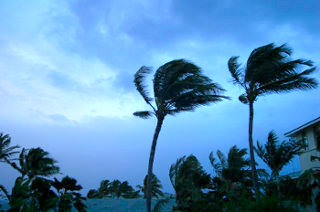
In fact, as I write this column at about 4 a.m. in the morning, the winds outside are howling and I can hear it rattling my windows.  I can hear waves crashing outside and the palm trees are somewhere out there in the dark being rudely rustled by a strong northwind.


And I’m dreading putting out my fishermen in about an hour.  The forecast says the winds will calm down, but I know they’re gonna get wet.  And bounced.  And uncomfortable.  And that’s not what I want.   It sure doesn’t look like the fancy brochures right now!


But, last time I checked, I didn’t have a “weather control” button.  Dangit!

Anyway, a good friend asked me a great question that I don’t think I’ve ever been asked before.


“When is it too windy to fish?”


Relatively speaking, that’s an easy answer.


Like asking “When are the waves too big?  Or “When is it raining too hard?”  Or not.  You walk outside.  You figure it out pretty fast.   Yes or no.  You then decide to go. Or not.


But, if you’re like me, you want to play the odds a little better than just looking out the window or showing up at the docks.  This is especially true this year whether you’re going to Baja or anywhere else for that matter.


Since our livelihood down here with our fishing fleet depends on putting our customers on fish, I look at several variables.  Internet weather and wind sites are invaluable.  I use several to get the best picture of the coming forcast.


I look at:


  1. Windspeed
  2. Time
  3. Direction


Obviously, with regard to windspeed, I want it to be as calm as possible.  If the windsurfing and kiteboarding crowd starts to gather on the beach, something is up!   I want to know if the winds will be single or double digit speeds.


If you’re going to be panga fishing, then double-digit winds could be problematic.  If you’re going to fish inshore, maybe it will be OK.  If offshore, you might want to re-think things.  If you’re headed out in a 50-foot sportfisher, probably not so much.


The second variable I check is time.  When will the wind be blowing?  If it’s going to be blowing in the early morning and calm down later in the day,  that’s not too bad.


If the forecast calls for double-digit winds, but during the fishing hours, it settles down then, I really don’t care.  Let the wind blow all it wants when I’m back at the hotel hitting happy hour after a good day of fishing!


The third thing I take into consideration is the direction of the wind.  If it’s going to be blowing harder than I would like;  if it’s also going to blow during the hours I want to fish; then I want to know where the wind is blowing.


If the winds are coming full-speed out of the north and I’m going to be heading north to the fishing grounds early in the morning, then I know it might be a long bumpy wet ride.


If we’re heading south and the winds are coming from the north, then it would mean the wind is at our backs.  It’s going to push us along very nicely to where we want to go.  (Although coming back might be an issue if the wind is still blowing.)


By the same reasoning, if those north winds are going to kick up and we’re going west or east, then it might create some swells and rollers as the boat goes side-to-side.  You might want to be sure everyone has their seasick pills that morning and stays away from the greasy breakfast burritos!

That’s my story!

Jonathan signature

Jonathan

______________

Jonathan Roldan has been writing the Baja Column in Western Outdoor News since 2004.  Along with his wife and fishing buddy, Jilly, they own and run the Tailhunter International Fishing Fleet in La Paz, Baja, Mexico  www.tailhunter-international.com.  They also run their Tailhunter Restaurant Bar on the famous La Paz malecon waterfront.  If you’d like to contact him directly, his e-mail is: jonathan@tailhunter.com

Or drop by the restaurant to say hi.  It’s right on the La Paz waterfront!

_____________ 

 
Jonathan Roldan’s
Tailhunter International
 
TAILHUNTER FISHING FLEET #1 Rated on Trip Advisor
TAILHUNTER RESTAURANT BAR Top 5 – Rated in La Paz on Trip Advisor
 
Now follow us on FACEBOOK TOO


U.S. Office: 8030 La Mesa, Suite #178, La Mesa CA  91942
Mexico Office: 755 Paseo Obregon, La Paz, Baja Sur, Mexico
Phones:
from USA : 626-638-3383
from Mexico: 044-612-53311
.
Tailhunter Weekly Fishing Report:
http://fishreport.jonathanroldan.com/

“When your life finally flashes before your eyes, you will have only moments to regret all the things in life you never had the courage to try.”

Read Full Post »

WHAT DATE WILL THE DORADO SHOW UP?


Calendar

What Date Will the Dorado Show Up?

Originally Published the Week of April 25, 2017 in Western Outdoor News

So, can you tell me what date the dorado will show up?

I don’t know.

Fishing is not an exact science.

Dorado don’t participate on social media.  No Facebook.  No Instagram.  No cute dorado tweets.

They don’t answer my text messages either.  Party foul.  Just rude.

Come to think of it, the tuna, marlin, wahoo and yellowtail don’t respond to me either.  Yes, there are days when I take that personally, especially when I have fishing clients here ready to burst.

Or they’re trying to make travel reservations and want to know specifically when to book their airlines.

“C’mon, Man!  You’re supposed to know stuff like that, Jonathan! “

 Right. Right. Right.  I’m the “expert.”

Honestly, however, most times, it’s said with a smile.  I’m never afraid to say that I don’t know something.

And the questions are good honest intelligent questions from fishermen who are just enthusiastic and want to get as much of an edge as possible.  I get it.  I’m the same way.  Especially with fish.

But, there are some things that are just not controllable.  If I was as good as some guys think I am, then I’d be able to wave my rod over the water and the fish would just jump in the boat.

I don’t have those Biblical abilities yet.  That one is right up there with the miracle of loaves and fishes or parting the Red Sea. Nope.  That’s up a few levels…actually a lot of levels…above me!

So, let’s work with what we have.  If you’re simply going to use the calendar, let’s just say it’s a start.

There’s so much more that will allow you to fine tune things.

A calendar is just a bunch of numbers on a page.  The fish don’t get calendars. They don’t know that your yearly vacation starts June 1st.

They don’t care about Christmas, Memorial Weekend or that you always fish on your birthday in November. They could care less that you always caught yellowtail in March or that on your last three Baja trips the tuna were great in August.

So, don’t curse the fish or the fish gods if things don’t always go as planned.  If you fish by the calendar, you take your chances for better or worse.  Go fish.  Have a good time.  It’s still better than working!

What the calendar can tell you is about the seasons.  Don’t look at it as specific dates.  Look at the calendar to tell you if it’s winter, spring, summer or fall because “generally speaking” certain fish usually show up during certain seasons.

For example, sierra, yellowtail and pargo in the later winter winter and spring.  Dorado and billfish show up when waters are warmer.  And so on. Like I said, it’s a start.

What fish do care about is food.  Big fish.  Small fish.  All fish.  They gotta eat.  And they will go where the food is located and show up when and where the food can be found.

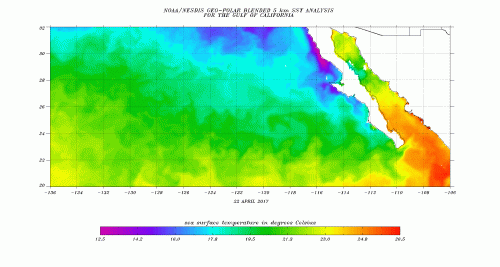
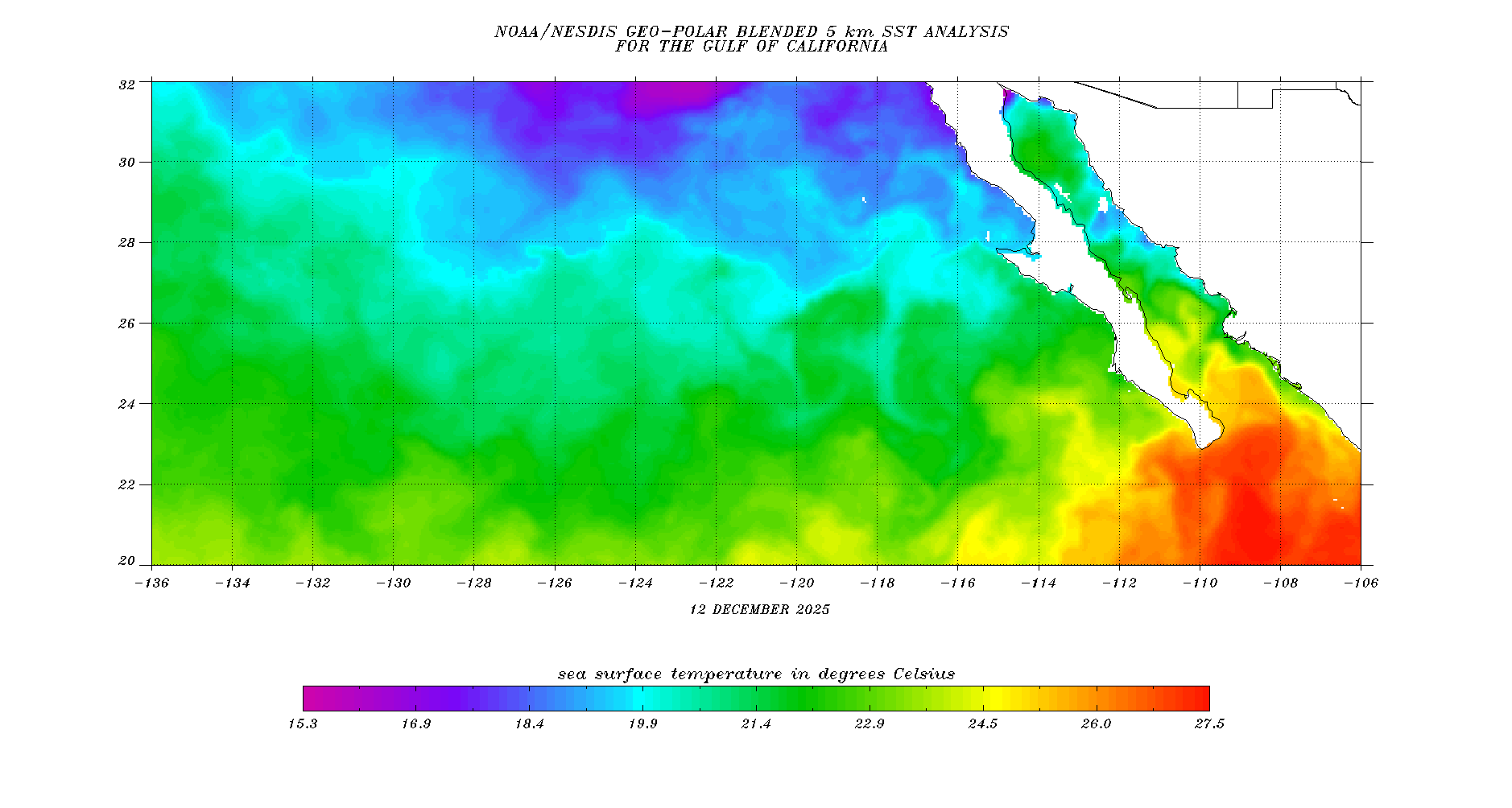
If you want to track food, track the water temperatures because even “food fish” have to eat as well.  So, don’t watch the calendar.  Track the water temperatures instead.

Even a few degrees can make all the difference.  Warmer water is bluer.  Colder water is darker, greener and cloudier.  That’s not necessarily a bad thing.  It depends on what species you’re hunting and several different water temperatures can be found in the same areas.  And that’s not unusual.

So, if you’re hunting yellowtail or amberjack, you’re looking for cooler waters.  Billfish or dorado?  The warmer waters are where you want to be fishing.  Tuna?  Well, that depends.  What kind of tuna?  Yellowfin tuna like warmer waters.  Bluefin and albacore like the cooler end of the blue water.

And that’s just the surface temperature!

Below the surface, there are thermoclines where water temperatures also vary.   The surface temperature can say 80 degrees, but 30 feet below that it’s only 70 degrees!

Confused?  Too much to wrap your brain around?

Might as well put technology to work.

That’s where I take my personal fishing to the next level beyond just looking at the calendar.  Veteran fishermen will back me up.

Websites and services such as the National Oceanic and Atmospheric Association (NOAA) has excellent satellite images of surface temperatures put out the by the U.S. government.

Here’s a sample:  www.ospo.noaa.gov/data/sst/contour/gulfcalf.cf.gifgulfcalf-cfTerrafin has been online for years and is a awesome resource (www.terrafin.com) and specifically directed at fishermen up and down the Pacific Coast.

Another fine service is Fish Dope put out by Bloody Decks (www.fishdope.com) that not only has water temperatures specific to certain fishing areas, but also various other fish finding services.   It’s well worth it to check out before you go fishing or setting up a trip.

It’s all in the details and a degree or two in water temperatures can make all the difference in the world.

Still waiting for the fish to answer my text messages.   Until then, I guess I’m stuck with the technology at hand!

That’s my story!

Jonathan signature

______________

Jonathan Roldan has been writing the Baja Column in Western Outdoor News since 2004.  Along with his wife and fishing buddy, Jilly, they own and run the Tailhunter International Fishing Fleet in La Paz, Baja, Mexico  www.tailhunter-international.com.  They also run their Tailhunter Restaurant Bar on the famous La Paz malecon waterfront.  If you’d like to contact him directly, his e-mail is: jonathan@tailhunter.com

Or drop by the restaurant to say hi.  It’s right on the La Paz waterfront!

_____________ 


TAILHUNTER FISHING FLEET #1 Rated on Trip Advisor
TAILHUNTER RESTAURANT BAR Top 5 – Rated in La Paz on Trip Advisor
 
Now follow us on FACEBOOK TOO


U.S. Office: 8030 La Mesa, Suite #178, La Mesa CA  91942
Mexico Office: 755 Paseo Obregon, La Paz, Baja Sur, Mexico
Phones:
from USA : 626-638-3383
from Mexico: 044-612-53311
.
Tailhunter Weekly Fishing Report:
http://fishreport.jonathanroldan.com/

“When your life finally flashes before your eyes, you will have only moments to regret all the things in life you never had the courage to try.”

Jonathan Roldan’s
Tailhunter International

Read Full Post »

Oh Say Can You See?

Oh Say Can You See?

Originally Published In Western Outdoor Publications the Week of April 12, 2017

I want to tell you a little story.

We just finished our 21st year on the road.  For 3 months of the year, we drive to a different fishing and hunting show around the country.


We sell the Baja.  Our Baja.  The sunshine.  The fishing.  The blue water.  Come put your toes in the sand and get away from it all.


Seattle…Denver…Portland…Boise…San Diego…Salt Lake City…it’s the life of a modern carnival worker.


We arrive in a city in our cargo van.   Set up our booth.  Talk to folks for 4 or 5 days. Break it all down.  Drive another 1000 miles or so to the next city.


Ready for the next show.  And on and on. See a lot of wonderful country.  Shake a lot of hands.  Talk to a lot of wonderful folks.


There’s a whole gaggle and rag-tag of other outfitters, guides, vendors, and show people who follow “the circuit.”


Several weeks ago at the show in Phoenix, my booth was surrounded by the usual outfitters.  One couple from Alaska.  Another from Colorado.  A guide from Canada.


But across the aisle from me, was a booth set up with chairs in a row.  The “kid” working the booth was selling electric back massagers.  Oh joy.


For two days, I watched the kid bust his butt working his booth and talking to people.  His booth was a favorite.


Everyone walking that show loved sitting in his chairs and getting a back massage.  Who wouldn’t?


But, I loved watching the kid work.


“C’mon in.  Put your feet up for a few minutes!” he would smile.


I say “kid” only because he was a lot younger than me. Medium height. Dark and swarthy with a neat mustache and beard. Good shape. Polo shirt Nike tennis shoes and hip black skinny jeans that I couldn’t wear even on my best days back then.


On the 3rd day of the show, a few minutes before they opened the doors to the public, he walked over to my booth and stuck out his hand with a big smile.


He introduced himself as Yama Nasrallah.


He said he had also been watching me working the past two days.  We struck up an easy conversation.


As vendors do, I told him I live in Mexico.


He told me he was from Afghanistan.


Over the next few minutes, he explained that he had come to the U.S. fifteen years ago.  He used to have businesses in Afghanistan and Pakistan. He moved with his mom, dad and brothers.


“When I came to America I could not speak or write any English.  I told myself the only way to get ahead is to learn English. So, I made myself study hard every night while I worked at whatever jobs I could get to support my family.”


“I still do not write English very well,” he grinned, “But I speak English pretty good and I still study every night…after work! I must be better!” he added enthusiastically in a slight accent.


Without prompting, he told me that hard work is the only way to get ahead and do good.  Too many people…even Americans (he laughed) expect things to be given to them.


But, he told me he works usually 7-days-a-week.  He does over 100 shows around the United States every year.


He now employed his two younger brothers and they were manning his other two booths at the same Phoenix show.  One sold soft bamboo sheets and pillows for camping.  The other sold a handy high-tech utility flashlight.


He had a warehouse in Salt Lake City.


I couldn’t help but grin and compliment him.


“Y’know, if you are lazy you won’t get anywhere.  I teach that to my young brothers.  They like to party too much,” he laughed.  “But hard work is how you earn respect.”


“Everyone thinks America is where life is good and things are free and you are entitled to anything you want.  That is not true.  America gives you opportunity and freedom to make choices.”


As the show would start in a few minutes and both of us had some things to get ready, he gave me a quick firm handshake, a smile and wished me a great day. He hustled back to his booth.


I walked back to my booth.


A few minutes later, just before the gates opened,  the show producers always play the Star Spangled Banner over the loudspeakers.


Most of the show people, vendors, outfitters and guides, stop what they are doing and face a nearby American flag.  Often several hundred vendors.


Hand over heart.  Hat over heart. Hands clasped behind back.  Old veterans often stand at attention and salute. No one takes a knee.  Some sing.


It’s a great way to start the day.  Like being in school again in some ways.


But, I’m always annoyed at someone who forgets.  Some folks don’t notice that everyone else is paying respect.  They keep writing.  Or talking.  Or chatting on their cell phones.


It makes me smirk. C’mon, put it on hold for a minute.


Toward the last part of the song, I glanced over at Yama, my new friend from Afghanistan.  Vendor of electric massagers, pillows and flashlights.


Straight as an arrow.


“Oh say does that star spangled…”


Hand over heart.


“…Banner yet wave…”


Shoulders back


“O’er the land of the free…”


Head high towards the huge American flag on the wall.


“And the home of the brave!” 


And when it all ended and all the outfitters were clapping and cheering, Yama, who can speak English, but can’t write English so well. . .


put two fingers to his lips and let out the loudest whistles.


And started pumping his fist in the air…


“U.S.A!  U.S.A!  U.S.A!”


I don’t think anyone else saw or heard.  I don’t think Yama cared. He didn’t look around. He got ready to work.  To earn respect.  To get ahead.


You go, Yama.


And that’s my story.

Jonathan signature

Jonathan Roldan’s

Tailhunter International


TAILHUNTER FISHING FLEET #1 Rated on Trip Advisor

TAILHUNTER RESTAURANT BAR Top 5 – Rated in La Paz on Trip Advisor


Now follow us on FACEBOOK TOO


Website: www.tailhunter-international.com

U.S. Office: 8030 La Mesa, Suite #178, La Mesa CA  91942

Mexico Office: 755 Paseo Obregon, La Paz, Baja Sur, Mexico

Phones: 

from USA : 626-638-3383

from Mexico: 044-612-53311

.

Tailhunter Weekly Fishing Report: 

http://fishreport.jonathanroldan.com/

Tailhunter YouTube Videoshttps://www.youtube.com/channel/UCBLvdHL_p4-OAu3HfiVzW0g

“When your life finally flashes before your eyes, you will have only moments to regret all the things in life you never had the courage to try.”
Read Full Post »

« Newer Posts - Older Posts »