Feeds:
Posts
Comments

Archive for the ‘historical’ Category

YOU CAN’T GOOGLE or TRIP ADVISOR THIS

YOU CAN’T GOOGLE OR TRIP ADVISOR THIS

Originally Published the Week of Mar. 26, 2022 in Western Outdoor Publications

         Living in Baja, visitors often ask me some suggestions of where they can “see the real Mexico.”  They’re not interested in finding out where to go zip-lining or the cheapest place to buy a hammock or sarape.

         They want the genuine article.  The real deal.  Something not “touristy.”

         I tell them to head to church.  Preferably on a Sunday or a Saturday afternoon.

         After a momentary quizzical look, I explain that they’ll see a part of Mexico…a part of the community…a lot of history and a lot of culture if they make a visit to the local church.

         Every city or large town has a Catholic church. 

         Since the earliest days of the conquistadores and missionaries, you can pretty much find a Catholic Church somewhere in the area.  To this day, Mexico remains largely a Catholic country and the church is still the center of life…even if not everyone goes to church all the time. 

         Nevertheless, the church is still central to so much that goes on in a Mexican community.  Obviously, it’s a spiritual and religious center.

         Architecturally, it’s usually in the center of town or in a town square, park or pavilion area.

         Socially, it often remains the place where life’s milestones still take place.  Start to finish…baptism…confirmations…quincineras (sweet 16 presentations)…weddings…more baptisms…and funerals.

         So, I tell folks to head to the local church. 

         Outside, there are often street vendors in the larger cities.  It can be a hub of activity.

         Our own cathedral in La Paz is in the town square and adjacent to the town park.  There are often musicians playing.  Families picnicking.  Impromptu karaoke and bingo games.  Old men playing chess or checkers.

         Stand outside. 

         If it’s an old church, take in the architecture.  Admire the craftsmanship.  Many of these churches weren’t made with modern cranes, bulldozers and electric tools. 

         Old-fashioned human labor with hand tools.  Sweat equity for credits in heaven.  Pride in details that were meant to last for decades or centuries.

         Handmade brick and quarried stone transported maybe from many miles away with carts, wagons and mules.  In some cases, the very wooden beams inside the structure as well as the window glass was transported from Spain, not to mention statues and religious artifacts and furniture.

         The bells may have come from some faraway forge as well.  Most likely yes.

         If there’s an old cemetery nearby, well worth it to trace the history of the former priests, padres and parishioners.  It was a hard life. 

         You’ll often see short life spans.  Children and babies who died early.  Many deaths close in date could indicate a communal epidemic like measles, smallpox, dysentery or a simple flu.

         Step inside.  Remove your hat.  There might be a Mass or other event taking place.  Even if not, remember it’s still a house of worship.  Be respectful. 

         If nothing is happening, wander and gaze.  Statues, the alter, the stained glass, the wooden pews, paintings and artwork may date back decades or centuries.  They may have travelled thousands of miles to find their forever homes in this church.

         The craftsmen are long gone, but their work remains.  It’s better than any museum. 

         Imagine today, we go to Home Depot.  Get our materials.  Build a bookshelf for your home.   Never in a million years would we expect it to last for decades.  Not like these old artisans. 

         I’ve been in old Mexican churches where the walls and ceilings are still covered with the dark soot of a century or more of burning votive candles. 

         A close examination of the area around the alter shows inset graves of the old padres who once serviced their community.  The tiles show their names.

         It’s a testament to their dedication and commitment that many of them travelled from Spain or other places in Mexico to find their final resting place in the arid hard-scrabble frontier of Baja.

         If there are services taking place, many times, there can be multiple events transpiring since often, there’s only one priest or padre.  In some instances, the priest is a travel-priest doing services from town-to-town to tend to his parishioners.

         But, if you’re visiting, that’s where you’ll see the culture.

         I once came for Mass.  It was followed by a baptism.  Followed by a wedding.  Followed by a first communion of 8 and 9 year-old-kids in their little white shirts and puffy dresses.

         The whole gamut.  Proud families.  Happy couples.  Nervous youngsters.  Big days in life.  Big days in the community.  The circle of life.  The cycle of life.

         All in one place.  Just follow the sound of the bells!

That’s my story!

Jonathan

______________


Jonathan Roldan has been writing the Baja Column in Western Outdoor News since 2004.  Along with his wife and fishing buddy, Jilly, they own and run the Tailhunter International Fishing Fleet in La Paz, Baja, Mexico  www.tailhunter.com.


They also run their Tailhunter Restaurant Bar on the famous La Paz malecon waterfront.  If you’d like to contact him directly, his e-mail is: jonathan@tailhunter.com


Or drop by the restaurant to say hi.  It’s right on the La Paz waterfront!


_____________


Jonathan Roldan’s
Tailhunter International


Website:


Mexico Office: Tailhunter International, 755 Paseo Obregon, La Paz, Baja Sur, Mexico


U.S. Mailing Address:  Tailhunter International, 8030 La Mesa Blvd. #178, La Mesa CA  91942
 
Phones:
from USA : 626-638-3383
from Mexico: 044-612-14-17863
.


Tailhunter Weekly Fishing Report:  http://fishreport.jonathanroldan.com/


Tailhunter YouTube Video Channel:


“When your life finally flashes before your eyes, you will have only moments to regret all the things in life you never had the courage to try.”


Read Full Post »

SHOCK and AWE

SHOCK and AWE

Originally Published the Week of Mar. 20, 2022 in Western Outdoor Publications

           My wife, Jill, and I have been on the road now for the better part of three months.  Every year, we drive all over the U.S. doing fishing and hunting expos drumming up business for our fishing operation in La Paz.

         We set up our booth and join many hundreds of other international outfitters, fishing guides, hunting guides, gear retailers, RV and boat sellers and others in the modern day version of the fur trapper rendezvous.  

         It’s definitely a “gathering of tribes.”  Over the course of 4 or 5 days, often tens of thousands of attendees fill the aisles.  It can be quite an event.

         As of today, we’ve been over a dozen states now.  A few more still to come.

         We’ve been through huge cities and the smallest of towns.  Towering skyscraper skylines to one-horse crossroads.  I believe we’ve already logged over 10,000 miles driving. (Not so fun watching gas prices blow up, but that’s another story!)

         In previous columns, I’ve documented the distressing amount of crime, vagrancy, squalor and trash we encountered in so many cities.  Especially along the west coast.

         Friends and other outfitters were victimized by burglaries and outright thefts of their vehicles, trailers and rigs.  One friend was carjacked at gun point by a guy running from a murder. 

         Our own rig was rendered undriveable by a break-in where the bad guys completely smashed not only our rear glass, but the whole liftgate. 

         We joke about the “Zombie Apocalypse,” but many a night none of us would leave our hotel/ motel rooms because of all the homeless folks wandering outside; sleeping in the bushes; panhandling; hustling; partying; defecating and more.

         Some of our most beautiful and favorite cities broken, ruined and abandoned except for the tattered, the homeless, the lawless, the disenfranchised of the streets.  It’s an urban landscape straight out’ve an “end of the world” sci-fi flick.

         After several weeks in these areas, it was more than disheartening and depressing.  I wasn’t alone in my assessment.

         Other outfitters, local residents and law enforcement friends echoed the same sentiments in these areas.

         There was a tacit resignation of spirit that THIS is what it’s come to.  THIS is where WE are.  THIS is how it will always be and only get worse. 

         And not a thing we can do about it.

         The whole country to hell-in-a-handbag.  

But wait…

         Then our show schedule took us inland.   Smaller shows AWAY from the big cities.  We passed through and spent more time in smaller cities and neighborhoods. 

         Back to the countryside.  Little pink houses.  Denny’s diners.  Swings and slides in town parks. Crossing guards at the elementary school.  There’s a banner about a pancake breakfast at the church. The VFW Hall has a bunch of pick-up trucks parked outside.

         Went into a grocery store in Central Oregon.  A 9-year-old boy held the door open for me and said, “after you, sir!”

Shock and awe.

         In little towns in Washington and Nevada, Arizona, New Mexico,  Colorado, Texas and Wyoming, we got “sir” and “ma’am” a lot.  And not just from kids.

         Adults you run into in the street in the normal course of a day or at our hotels addressed us similarly.  Just the way things are.   Courtesy and hospitality, that was rarely found in the big cities. 

         We had become so callous to common civility and comity that it seemed like people were going out of their way to be amiable.  But, it’s just the way people are in different spots of the country.  Or how they are brought up.

         I was brought up addressing others like that as well.  Just how I was taught.  However, when I use “sir” or “ma’am” I often get a quizzical look as if I was speaking Greek.  Some folks get offended as if I was calling them “old.”

         In these small towns and open spaces, I got a nod and smiles and friendly responses instead.

         At the shows themselves, it’s a different crowd for sure.

         At the start of the show before they let the crowds in, they play the Star Spangled Banner over the loudspeaker in these expo centers.  Everyone stops what they are doing and puts hand or hat over heart and faces the flag. 

         Many people sing out loud.  You can help smiling.  You stand up a little straighter.  I catch myself singing as well.  

         When the crowds come in..

         Again, I’m often addressed as “sir.”  After chatting with someone at our booth, it’s not uncommon for someone to thank me for taking the time to answer their questions. 

         Are you kidding me?

         I hear the word “please” a lot .

         The adults/ parents are much more blue collar.  Yes, there’s a lot of pick-up trucks and suburbans in the parking lot . A lot of baseball hats, blue jeans, camo vests and work, hiking or cowboy boots.  Men and women alike.

         Some look just like they just took off the gloves and came to the show from the ranch, farm or mechanic shop.  Moms look like they just grabbed the kids from school and are trying to get through the show before they gotta race home to cook dinner.

         In the meantime, a beer or Coke and a bag of popcorn will do, thank you very much.

         But in talking to adults and kids alike, they sound like they can fix cars and boats.  They can take out an elk at 500 yards AND carry it out on their backs.   They can run tractors and they tell you they can only come visit us in Mexico AFTER the crops come in but BEFORE hunting season starts.

         At one show on a Sunday, a family apologized to me for coming so late to the show.  Because they were at CHURCH!

         I felt like giving them all a high-five!

        At one show, I was next to a sporting goods outfitter. 

         The men, women AND kids knew how to handle guns and fishing gear and were as at adept and knowledgeable about fishing and hunting, camping and boating and off-roading as any expert. 

         It was refreshing.  It’s not hopeless.  It’s not as depressing as it seems. 

         It’s not a Normal Rockwell painting, by any stretch.  All places have their issues and problems.  I realize my view was only a tiny miniscule slice.

         But, all is not lost.  Faith renewed.

         Yes, Sir.  Yes, Ma’am. 

That’s my story!

Jonathan

______________

Jonathan Roldan has been writing the Baja Column in Western Outdoor News since 2004.  Along with his wife and fishing buddy, Jilly, they own and run the Tailhunter International Fishing Fleet in La Paz, Baja, Mexico  www.tailhunter.com.

They also run their Tailhunter Restaurant Bar on the famous La Paz malecon waterfront.  If you’d like to contact him directly, his e-mail is: jonathan@tailhunter.com

Or drop by the restaurant to say hi.  It’s right on the La Paz waterfront!

_____________

Jonathan Roldan’s
Tailhunter Sportfishing

Website:

Mexico Office: Tailhunter International, 755 Paseo Obregon, La Paz, Baja Sur, Mexico

U.S. Mailing Address:  Tailhunter International, 8030 La Mesa Blvd. #178, La Mesa CA  91942
Phones:
from USA : 626-638-3383
from Mexico: 044-612-14-17863
.

Tailhunter Weekly Fishing Report:  http://fishreport.jonathanroldan.com/

Tailhunter YouTube Video Channel:

“When your life finally flashes before your eyes, you will have only moments to regret all the things in life you never had the courage to try.”

___________

Read Full Post »

MY TWO CENT OBSERVATION FROM THE ROAD

No Words…

         I’m writing this at night from our hotel room in Boise, Idaho.  We’re doing a banzai drive from Salt Lake City to get to Portland, Oregon.  As fast as the speed limit will let us.

         It seems strange to say that we’re not looking forward to being in Portland. 

         Let me back up.

         For almost 30 years, I spend the better part of 3 months on the road exhibiting at all the huge hunting and fishing expositions across the western U.S.  Every week another 4 or 5 day show. 

         My wife, Jill, and I haul our booth, a million brochures and flyers spreading the good word about fishing and vacationing in Baja.  Specifically with our own Tailhunter Sportfishing in La Paz.

         Thousands-upon-thousands of attendees wander and socialize with outfitters like ourselves in the fishing, hunting, camping, boating, RV and other outdoor pursuits.  Us exhibitors sell our wares. 

         Each week finds us in different cities like Denver, Phoenix, Bozeman, Seattle, San Diego, Long Beach, Las Vegas even Anchorage, Alaska!  Criss-crossing the U.S. up-down-back-and-forth in snow, rain, ice, and sunshine.

         We’ve been on the road now almost 6 weeks and have finished shows in Reno, Sacramento, Puyallup (south of Seattle) and this past weekend in Salt Lake City.   As previously mentioned, we’re back on the Pacific Coast in Portland this week.

         A few weeks back in my column, I had commented about driving through so many cities and states and observing the differing covid-mask protocols or lack thereof.  I also wrote about my observations of how everyone was hurting for employees.  And how customer services were directly suffering from it.

         We really didn’t know what to expect of the shows this year.  In short, a crapshoot. 

No one knew what the attendance would be like.  No one knew how many vendors/ outfitters wouldn’t show-up as a result of covid; the fear of covid; or the local mandates and protocols.

         As it turned out, attendance suffered at 3 of the 4 shows. All on the west coast. 

         Exhibitors were absent as well.  Again, this was at all at the west coast shows in California, Washington and, to some degree, the Reno Show. 

        Masking/ testing/ vax card protocols were in place to greater or lesser degrees.  Nothing was standardized

         I guess that was to be expected.  All these shows had been cancelled last year and it’s going to take awhile for them (and the public) to get back up to speed.

         And now, we’re headed to Portland. 

         We love our Pacific Coast.  My wife Jill and I both grew up on the West Coast.  But, after our experiences the past month in California,  Oregon and Washington, we’re dreading Portland, one of our favorite western cities.

         I’ll tell ya why.

         There’s been a drastic change.  A polar shift.  A techtonic social upheaval.

         In Sacramento, we stay at a well-know hotel chain.  Almost 20 years.  Not the 4 Seasons or the Ritz Carlton, but hardly the Econo-Riverside Motel either.

         Upon arrival. What a change!

        People living in their cars in the parking lot.  Broken cars everywhere.  People living in boxes on busy public street.  Multiple people living in rooms meant for 2.  Trash everywhere. Tent camps everywhere.  Open sewage/ excrement on sidewalks, planters…opens spaces.

         Vagrant folks lining the streets.  Stores trashed, littered and empty shelves.  Such common things like soap, toothbrushes, laundry detergent, masking tape…all in locked cases!

         I asked one store clerk what happened to all the shopping carts and shopping baskets.  He said, “They all got stolen.”

         The second night, our new Chevy Suburban rig got broken into.  Not just busted windows.  They tore the whole rear liftgate rendering our rig undriveable.  Looks like a crowbar was used. Because nothing could be found inside, the bad guys took it out on the vehicle.

         Fortunately, we had emptied the vehicle and nothing was taken.  But, the vehicle was disabled.  

Because of supply chain issues, parts not available!

         Over the next few days, others also got burglarized.  Police don’t come out because burglary is so common.  And they are under-staffed like everyone else. You file a report online.  That’s it.

 I had to take Uber to the Expo.  My driver said, in his neighborhood they leave their trunks and liftgates unlocked so the thieves don’t break in. 

         Except one day his neighbor found a guy sleeping in his trunk!

         While at the show, several outfitters got their rigs completely stolen.   One of our clients came to our booth and said several days earlier, he had been carjacked at gun-point by a guy who was escaping from a murder!

         We headed north to Washington.  Passing through Oregon (more on that later).

         While in Washington State, more of the same. Tent cities scattered everywhere.  Again, several of our outfitter friends had their trucks and trailers stolen.  This time in broad daylight from “guarded” parking lots.

         Friends who are law enforcement officers told us many vehicles are being stolen for the catalytic converters.  And, many officers are quitting or taking early retirement leaving the remaining tired officers working overtime.

         Oh, and new legislation prevents officers from giving chase.  About all they can do is yell “Stop!”  Also, if someone steals something less than $750 dollars and says “it’s a necessity”, no prosecution ensues.

         We were advised by Washington friends not to go into downtown Seattle, again, one of our favorite cities to visit.  

         And now everyone-and-their-brother is warning us against Portland now.  And saying it’s even worse.  Even before the pandemic, the area and hotels around the Portland Expo Center were rife with homeless and property crime was rampant.

         Vehicles at the Expo and surrounding areas, were regularly targeted.  Our own van was broken into several years ago.  Police told us that the thieves love vehicles belonging to the outfitters because they are often loaded with camping gear, fishing gear, electronics, outdoor clothing and yes…firearms. 

         So, now they tell us it’s even going to be worse.  And definitely do NOT go into Portland metro.

         Tell you what.  Several of us outfitters were standing around.  We were somberly discussing the crime these days while on the show tours now.  All of them hunting and fishing guides. 

       I quietly admitted that my wife and I both have our concealed-carry permits and that I always carry a firearm now.  There was a little pause among the group.

       I thought I was going get some blowback for carrying. Big burley mountain guys and salty fishing captains staring at me.

       As it turned out, all of them were carrying.  In fact, talking to most of the other vendors in their booths, everyone either had firearms in their booths, on their person, or in their cars.

       My wife wouldn’t let us drive this year without a (legal) shotgun hidden in the car.  

       As one Alaska guide told me, “I carry a big pistol to guard against grizzly bears attacks in the bush.  But, I’m even more afraid to walk around the cities.  So, of course, I carry. Bears are predictable. Idiot people are not.”

       It’s gotten pretty sad.  Portland, here we come. 

       Hope for the best.  Prepare for the worst.  The new normal.

Update:  Just finished the Portland Show.  We did NOT go downtown.  The area around the Expo Center was tragic.  Many of the outfitters and vendors said they would not come back.  Someone tried to break into our vehicle 3 times, but the alarm scared them off although we were messaged that someone had tried to open the doors…twice when we just ran into a gas station just to buy some soda for the road. It happened that fast!  Several vehicles in the parking lot at the Expo Center were burglarized as well. 

That’s my story

Jonathan

______________


Jonathan Roldan has been writing the Baja Column in Western Outdoor News since 2004.  Along with his wife and fishing buddy, Jilly, they own and run the Tailhunter International Fishing Fleet in La Paz, Baja, Mexico  www.tailhunter.com.


They also run their Tailhunter Restaurant Bar on the famous La Paz malecon waterfront.  If you’d like to contact him directly, his e-mail is: jonathan@tailhunter.com


Or drop by the restaurant to say hi.  It’s right on the La Paz waterfront!


_____________


Jonathan Roldan’s
Tailhunter International


Website:


Mexico Office: Tailhunter International, 755 Paseo Obregon, La Paz, Baja Sur, Mexico


U.S. Mailing Address:  Tailhunter International, 8030 La Mesa Blvd. #178, La Mesa CA  91942
 
Phones:
from USA : 626-638-3383
from Mexico: 044-612-14-17863
.


Tailhunter Weekly Fishing Report:  http://fishreport.jonathanroldan.com/


Tailhunter YouTube Video Channel:


“When your life finally flashes before your eyes, you will have only moments to regret all the things in life you never had the courage to try.”

Read Full Post »

IN YOUR FACE CABRON ADOLF

I’ve always loved history. Given a choice, history might be my favorite subject to read or study.

And I really like trivia.

I was researching some info on Mexico’s imports/ exports and came across some really interesting facts about Mexico and World War 2.

WHA???  Mexico in World War 2?  The BIG ONE?

Well, actually that was my reaction.  Complete surprise. 

I mean, when you think of the major combatants of that global conflict, you think of the U.S., England, Italy, Canada, Germany, Japan, Russia.  All the main players, right?

And, of course, pretty much the rest of the world from the Philippines to Finland and Algiers to Australia.

Mexico doesn’t exactly come to mind.

And, you probably wouldn’t believe that Mexico was an ally to the United States.  That’s not a partnership that generally pops to the forefront of historical discussion.

But, yes, Mexico absolutely stuck one in the eye of the Axis powers.

Even before the U.S. was thrust into the war with the bombing of Pearl Harbor in December of 1941, countries had a strong foreboding of impending conflict.

Fortuitously, Mexico and the U.S. settled the usual border tensions with reciprocal trade agreements whereby Mexico continued to supply raw materials to the United States. Conversely, the U.S. helped stabilize the peso and Mexican economy by-way-of-long term loans as well as military aid for the Mexican military.

When Pearl Harbor was attacked in December 1942, Mexico terminated all relations with the Axis powers.  It was one of the first countries to show support for the U.S.   It also closed all of it’s ports to Germany thereby securing the Gulf of Mexico for the U.S.

The Mexican people were initially very reluctant and adamant about joining in the armed conflict.

However, that changed several months later in May of 1942.  German U-boats torpedoed two Mexican tankers in the Gulf of Mexico.

Hitler was unrepentant about the attacks.

And Mexico took the gloves off.

Mexico declared war on the Axis.  It also urged other Latin American countries to follow suit.

Mexico instituted nation military service as well as civil defense.  However, it’s main contribution to the war was the continued steady supply of raw materials to the U.S. war effort.

As much as 40% of the raw material for the American war machine came from Mexico.

Moreso, although most other Latin American countries sided with the allies, only Mexico and Brazil sent armed combatants to the front.  

At the invitation of the U.S. Mexico put together a special combat team of airmen.  The Mexican President Manuel Comacho gathered up more than 300 volunteers including more than 30 hand-picked experienced pilots and the rest veteran groundcrew.

After receiving extensive combat training in Texas and Idaho, the “Aztec Eagles” were dubbed the “201st Fighter Squadron” and attached to the American 58th Fighter Group.

Flying P-47 Thunderbolt Fighter Aircraft, the “Pancho Pistolas” were deployed to the Philippines and flogged more than 1900 hours of flight time and 795 combat sorties.  Their bombing runs and attacks were instrumental in helping push the Japanese off the islands of Formosa and Luzon in some of the toughest fighting in the Pacific.

Eight of the pilots were killed.  One was shot down. One crashed.  Three others ran out’ve fuel over the ocean and lost at sea.  Three others died in training.

Their ground crews were also involved in ground combat on  several occasions. 

According to Wikipedia, “The 201st Mexican Squadron was given credit for putting out of action about 30,000 Japanese troops [4] and the destruction of enemy held-buildings, vehicles, tanks, anti-aircraft guns, machine guns emplacements and ammunition depots.”

After the war, they returned to Mexico to a hero’s welcome.  A number of the pilots ended up becoming generals in the Mexican Air Force in later years.  

The Aztec Eagle’s squadron remains active today.  It is the only military unit from Mexico to engage in combat outside it’s borders.

In addition to the pilots, Mexico contributed in other ways. 

Although it was adamant about sending ground trips, Mexico did allow the United States to recruit Mexicans to the American Army. Between 1942 and and 1943 almost 7,000 Mexicans volunteered to fight for the the U.S.  In fact, the embassy was so overrun they had to close.

Nevertheless, somewhere estimates of 15,000 to 400,000 Mexican-born troops enlisted.  Statistics are not clear.  However, almost 2,000 would become casualties.

Many were decorated and four who were awarded the Congressional Medal of Honor during combat in the European and Pacific Theaters of war.

Viva Mexico, Cabrones!

That’s my story!

Jonathan

______________

Jonathan Roldan has been writing the Baja Column in Western Outdoor News since 2004. Along with his wife and fishing buddy, Jilly, they own and run the Tailhunter International Fishing Fleet in La Paz, Baja, Mexico http://www.tailhunter.com.

They also run their Tailhunter Restaurant Bar on the famous La Paz malecon waterfront. If you’d like to contact him directly, his e-mail is: jonathan@tailhunter.com

Or drop by the restaurant to say hi. It’s right on the La Paz waterfront!

_____________

Jonathan Roldan has been writing the Baja Column in Western Outdoor News since 2004.  Along with his wife and fishing buddy, Jilly, they own and run the Tailhunter International Fishing Fleet in La Paz, Baja, Mexico  www.tailhunter.com.

They also run their Tailhunter Restaurant Bar on the famous La Paz malecon waterfront.  If you’d like to contact him directly, his e-mail is: jonathan@tailhunter.com

Or drop by the restaurant to say hi.  It’s right on the La Paz waterfront!

_____________


Jonathan Roldan’s
Tailhunter International


Website:

Mexico Office: Tailhunter International, 755 Paseo Obregon, La Paz, Baja Sur, Mexico


U.S. Mailing Address:  Tailhunter International, 8030 La Mesa Blvd. #178, La Mesa CA  91942


Phones:
from USA : 626-638-3383
from Mexico: 044-612-14-17863
.

Tailhunter Weekly Fishing Report:  http://fishreport.jonathanroldan.com/

Tailhunter YouTube Video Channel:

“When your life finally flashes before your eyes, you will have only moments to regret all the things in life you never had the courage to try.”

Read Full Post »

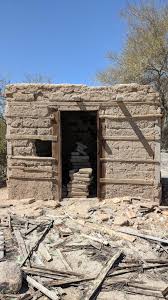
DESERT GHOSTS

Someone had a dream at one time…or at least a good idea!

DESERT GHOSTS

Originally Published the Week of Jan. 12, 2022 in Western Outdoor Publications

           I’ve always had this weird (not creepy) thing about looking at (and into) people’s houses. 

         At the time I’m writing this, we’re driving across country to the fishing and hunting shows in various cities around the western U.S.  We’ve exhibited at these shows from January to April for almost 30 years to talk to folks about fishing with our company in La Paz.

         We have our booth packed up and are on our way to the Wild Sheep Foundation Show in Reno, NV.  Over the past 3 days, we’ve driven across Texas, New Mexico and Nevada.

         My wife Jill is driving and I’m tapping out on my laptop.

         And looking at people’s houses. 

        I like to guess what they do.  I’m intrigued by their story.

Why they happened to plant themselves in this particular area near that particular town.

         Or in the middle of nowhere.

         I look at what’s in the yard.  Kid’s toys?  A rusty swing? A bunch of old cars?  An RV?  Five later model cars and a mini-van?  Or 5 cars on concrete blocks?

         Is the yard done?  Is there even a yard or just tumbleweeds and a cotton field in the back. 

         There’s a washing machine on the front porch of a single-wide modular.  Or is there a swimming pool out back?

         You can tell a lot.

         Driving up and down Baja, I have that same fascination.

         But, it’s not the occupied homes that I focus on. 

         It’s the empty houses.

        Empty buildings have a story as well.  And sometimes they talk.

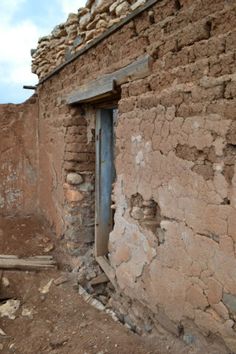
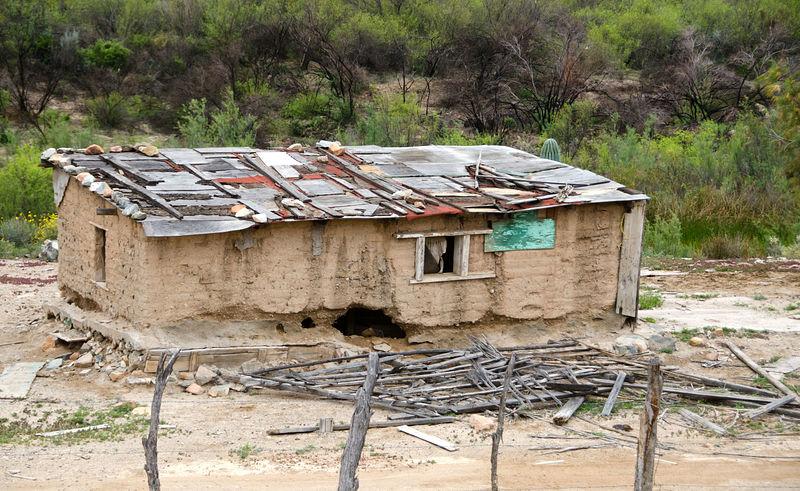
        These are the abandoned homes and  buildings standing ( or leaning) in the middle of the Baja landscape.  You find them built on the side of a hillside.  Or they are tucked onto the bank of an arroyo or still standing observant by the side of the highway.

Baja - Mision San Fernando Velicata - Ruin - Shack

         Dilapidated.  Wind, sun-baked and weather torn.  Collapsing roofs and leaning walls.  Warped and sandblasted wood.  Maybe some leftover traces of color or paint.

         The Baja is not kind to old buildings left unattended.

         Fascinating head-scratchers.  I wonder about those stories.

         Why here?  It’s the only house for miles.  What were they thinking?

        No obvious source of water.  No towns or communities nearby to drive to…or if the house is that old… nothing nearby to walk to…or ride a cart or burro to.

Is this as far as the got?  Is this where the donkey cart finally busted an axle?

         Maybe the few small tree trunks stuck in the ground at crazy angles are evidence of an old corral.

         Stone, bricks and adobe are handy. 

         How did the even get the wood to build?  It’s not like Baja has a lot of treeworthy lumber around.  Did the haul it here?  From where?   

          Baja isn’t exactly known for its forests.

         Occasionally, you find a small cluster of buildings.  Or what’s left of them.

         Perhaps an extended family.  Again, why here? And what happened to them.

         Maybe as often happens, parents settle.  Raise kids in the hardscrabble environment.  Kids move on as they grow up.  Parents pass. 

         Or the parents pass and the dream of living in the middle of nowhere is not the dream of their progeny.  They move on.

         Buildings are abandoned.

         I’ve never trespassed, but if it looks like it doesn’t matter, I like to stop.  Normally, it’s not like anyone cares.  There’s no one around for miles and I doubt the tumbleweeds or jackrabbits care.

         But, poking around old buildings…they sometimes talk to you if you look.

         A blackened brick outdoor firepit.  A sign that there was probably no electricity when these folks lived there.  They cooked outside.

         No signs of plumbing of any kind.

         Rough carpentry.  Uneven door and window frames.  No signs that glass ever filled those windows.  

         Old uneven hammered rusty nails protrude from splintering dried wood.  These didn’t come from Home Depot.  They look like tiny sharpened spikes…handmade.  Probably pretty precious back in the days.

         In fact, there are signs that furniture and parts of the buildings may have been bound together with what remains of rope or old leather strips.

         I find an old bent spoon in what would have been a dirt floor.

         I have found an old coin or almost rubbed smooth and largely unidentifiable.

         There are dark patches along walls where perhaps candles or old fuel lanterns once burned. 

 I found lots bleached fish bones around the back of one building.  They ate fish?  We were 10 miles from any body of water.

         I once found two old crosses and a weathered upright stone marker side-by-side. They were in the shade of an old scrub tree back behind what may have been an old shed or barn.

 Nearby the remains of a cracked clay vase that long ago may have held desert flowers.  A family cemetery?

         Whoever lived in these places are long gone and forgotten.  But, there was a story here at one time.

         I think in some sense, moving through these old living spaces makes them somewhat more real.  A reminder that real people and families once lived here.  Had dreams here. 

         And moved on.  While the desert moves back to reclaim everything.

images

That’s my story!

Jonathan
______________

 
Jonathan Roldan has been writing the Baja Column in Western Outdoor News since 2004.  Along with his wife and fishing buddy, Jilly, they own and run the Tailhunter International Fishing Fleet in La Paz, Baja, Mexico  www.tailhunter.com.

They also run their Tailhunter Restaurant Bar on the famous La Paz malecon waterfront.  If you’d like to contact him directly, his e-mail is: jonathan@tailhunter.com

Or drop by the restaurant to say hi.  It’s right on the La Paz waterfront!

_____________


Jonathan Roldan’s
Tailhunter International


Website:

Mexico Office: Tailhunter International, 755 Paseo Obregon, La Paz, Baja Sur, Mexico


U.S. Mailing Address:  Tailhunter International, 8030 La Mesa Blvd. #178, La Mesa CA  91942


Phones:
from USA : 626-638-3383
from Mexico: 044-612-14-17863
.

Tailhunter Weekly Fishing Report:  http://fishreport.jonathanroldan.com/

Tailhunter YouTube Video Channel:

“When your life finally flashes before your eyes, you will have only moments to regret all the things in life you never had the courage to try.”


Read Full Post »

A BETTER MARGARITA

A BETTER MARGARITA

Originally Published the Week of Nov. 5, 2021 in Western Outdoor Publications

         As the owners of our own restaurant in La Paz for over a decade and then living in Baja for almost 30 years, we’ve seen a lot of margaritas made and consumed.

         It’s interesting to note that most of the locals won’t touch tequila or margaritas.  When I’ve offered it to them at our restaurant, they (perhaps wisely) wag their fingers at me and smile.  “No, gracias!”

         I think they know better and I also think they enjoy watching the gringos go at it.  I mean, if you’re going to Mexico, it’s your “go-to” drink.  

         Seemingly, as soon as folks walk off the plane, vacation has not started until they have one of those high-priced margaritas served in a plastic cup at the bar just outside the terminal.  Am I right?

         “Whoo-hooo, Honey! We’re in Mexico.  Hot dang!”

         I’d estimate that at our restaurant, 95% of the margaritas are ordered by tourists.  Personally, I think we make a pretty good margarita.

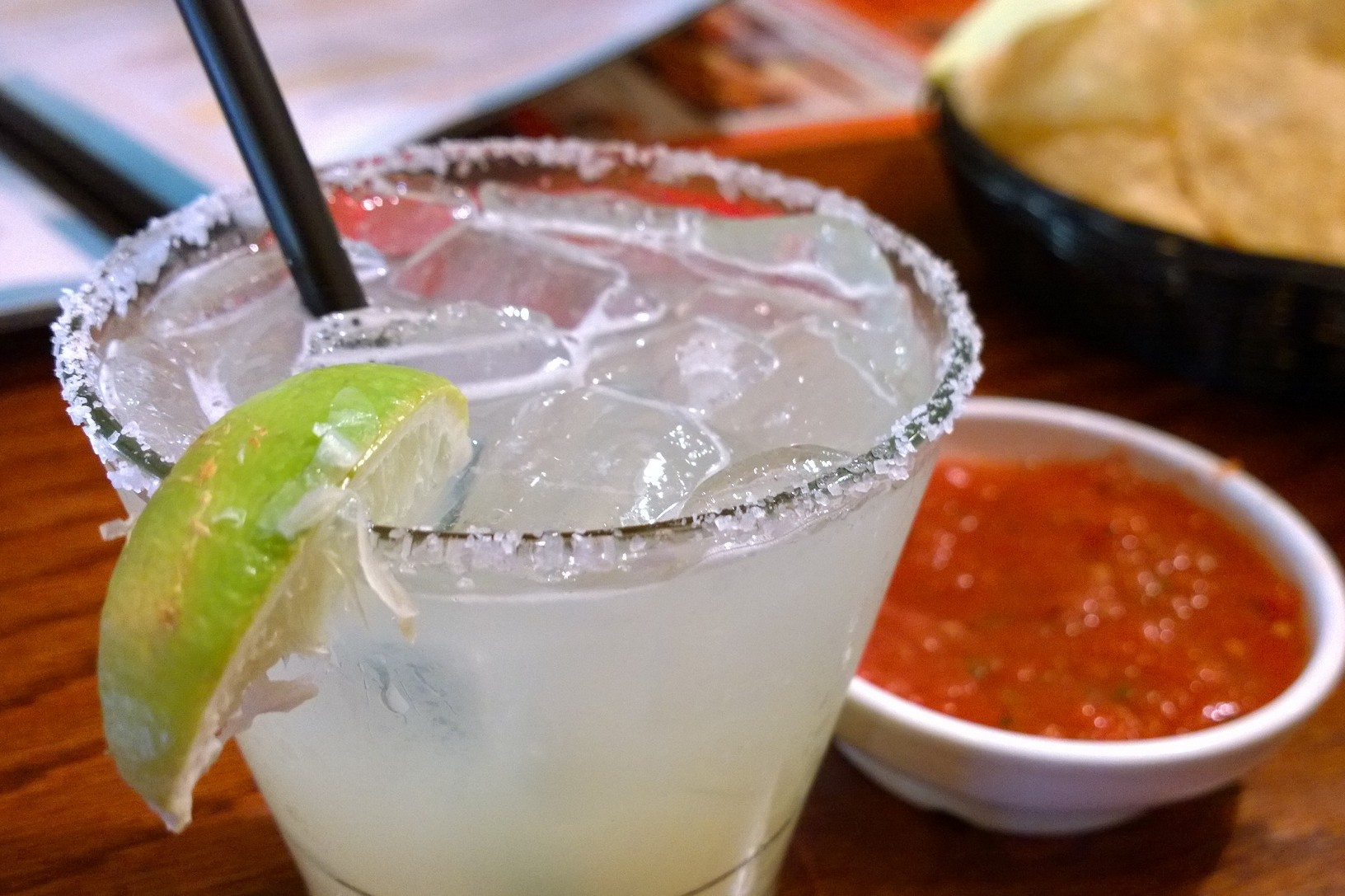
         We cut our own limes.  We make our own lime juice (no bottled mix).  Our tequila does not come from a plastic jug behind the bar.  We cut our own fruits and make our own syrups.

         Just like anything else, good fresh ingredients result in a better product.

         But, in the spirit of “research and development”, not to mention it’s a great way to actually write-off the cost of drinking margaritas, my wife and I have gone to numerous places to “test drive” margaritas. 

         Here’s the deal.  We go to someplace that’s known for their margaritas and as a tourist destination…Cabo San Lucas…Puerta Vallarta…Maui…San Diego…San Antonio Texas…and others.

         All in the name of “research and development,” as mentioned.

         We do our own version of a margarita crawl. 

         The purpose is not get drunk and buzzed.  However, I will admit it is sometimes a happy by-product of our in-depth research!  We go from bar-to bar at supposedly the places with the best margarita reputation.

         We ask for their house margarita. 

         We take a sip or two.  If we don’t like it, we pay for it and walk away without finishing it.  Move onto the next place. 

         And so-forth-and-so on.

         Spoiler alert.  Here it comes.

It is amazing that some of the places that are known to be great margarita-makers literally serve absolute JUNK!  Most places, we honestly can’t finish them.

         But tourists don’t know any better. 

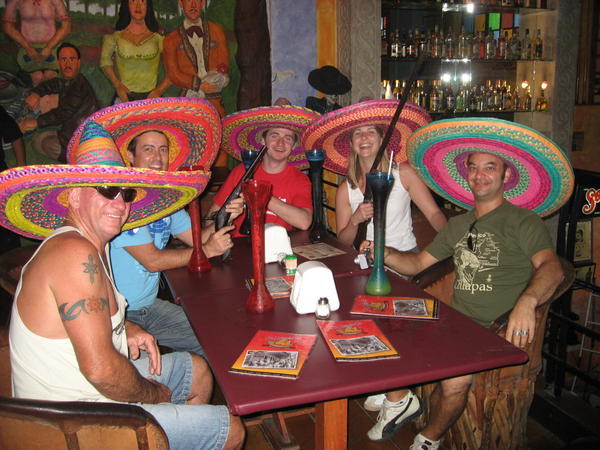
         They buy margaritas the size of birdbaths or chug them with their chips and that’s pretty much the extent of it. Or it’s what happens to be in their hands sitting at the pool bar all afternoon.

         Admittedly, there are a few places where Jill and I take a sip and then look at each other.  And another sip to make sure.  Surprise!  OK…not bad at all.  There’s some decent stuff out there.

         But, again as mentioned before, it starts with the ingredients.

         If volume selling to tourists or catering to the “buy-one-get-the-2nd margarita- free” crowd is the intent, the customers aren’t going to be very discriminating. 

993553-drinking-a-yard-of-beer-each-at-a-bar--merida-mexico-0

         They have no idea nor do they really care that they’re drinking a mix or that the tequila comes from a jug.  It’s got ice.  It’s got salt.  We are having a large fun time!

         “Let’s party, Baby.  Afterwards let’s go buy a sombrero and one of those sarape blankets and a hammock to bring back to Montana.”

         Honestly, nothing wrong with that.  Vacation fun is vacation fun.  Good on them!  But, you get the idea.

         If you really want a better margarita, here’s a few tips. 

          Yes, it will cost a tad more.  So figure that.

         For one,  ask for real lime juice.  Not “Jose’s Fiesta Lime Juice” in a bottle or jug.  Get the real stuff if at all possible.  It will make a tremendous difference.

         Ask what kind of tequila they’re making your margarita with.  In fact, ask to see the bottle! 

         There are 3 kinds of tequilas. 

         Silver (Plata) is clear.  It has not been aged or not more than 2 months.

         Resposada is slightly amber.  Reposada means “rested” and it has been aged in a barrel up to one year. 

         Anejo means “old.” This tequila has been sitting for awhile aging for more than a year and is much darker.

         The older the tequila, the richer and more full-bodied the taste.

         That doesn’t mean it’s the best for tequila.

          Personally, we feel that the Silver/ Clear plata tequila is best for mixing cocktails.  It’s got a clean flavor that blends nicely with other ingredients.

         I like the Reposada and Anejo in a shot glass or snifter.  It’s meant to be sipped or I especially like it with a cigar at sunset!

         While checking out the bottle, make sure it’s REAL tequila!  The real stuff must be from the blue agave plant and, by law, may ONLY be produced in the regions of Jalisco, Guanajuato, Michoacán, Nayarit, and Tamaulipas.

         I’m not being snobby here. 

         Good tequila does NOT have to be expensive to make a good margarita.  Like wines or beers there are so many great and inexpensive brands. 

         A fancy bottle does not necessarily mean a good tequila.  Conversely a good tequila doesn’t have to be in a fancy bottle either.

         However, like most liquors, the more expensive sipping tequilas do taste better and smoother.  But, that’s OK because I’m not using the good stuff to do slammers or shots with buddies!

         Life’s too short for bad margaritas!  So are vacations.

That’s my story!

Jonathan
______________

Jonathan Roldan has been writing the Baja Column in Western Outdoor News since 2004.  Along with his wife and fishing buddy, Jilly, they own and run the Tailhunter International Fishing Fleet in La Paz, Baja, Mexico  www.tailhunter.com.

They also run their Tailhunter Restaurant Bar on the famous La Paz malecon waterfront.  If you’d like to contact him directly, his e-mail is: jonathan@tailhunter.com

Or drop by the restaurant to say hi.  It’s right on the La Paz waterfront!

_____________


Jonathan Roldan’s
Tailhunter International


Website:

Mexico Office: Tailhunter International, 755 Paseo Obregon, La Paz, Baja Sur, Mexico


U.S. Mailing Address:  Tailhunter International, 8030 La Mesa Blvd. #178, La Mesa CA  91942


Phones:
from USA : 626-638-3383
from Mexico: 044-612-14-17863
.

Tailhunter Weekly Fishing Report:  http://fishreport.jonathanroldan.com/

Tailhunter YouTube Video Channel:

“When your life finally flashes before your eyes, you will have only moments to regret all the things in life you never had the courage to try.”

Read Full Post »

WE HAVE A BLEEDER

WE HAVE A BLEEDER

Originally Published the Week of Oct. 24, 2021 in Western Outdoor Publications

In the several decades that I’ve been writing fishing articles and columns for magazines and newspapers, I don’t think I’ve ever tackled this subject.  I don’t know why.  Maybe it’s because it’s just something I don’t think about much.

         For what we do down here, it’s just not much of an issue. 

         However, it’s come up several times in the last few weeks with regards to our panga fleet here in La Paz.

         One was a legitimate question about bleeding your catch.

         Two of them were complaints of sorts from first-time anglers who had never fished in Mexico and had also never fished in a panga.

         Let me explain.

         The process if “bleeding” a fresh-caught fish can really be beneficial.  It’s not that difficult to do, especially after you’ve done it a time or two.

         It involves taking a catch just out’ve the water.  While the fish is still flapping, quickly cut to it’s heart and the main artery right behind the gills.  You let the heart pump out the blood.  Easy.

         All fish are a bit different, but you can Google up the specifics. 

         By, the way, I’m all for a quick dispatch of any catch.  The quicker you do any of this, the better for the fish rather than let it flip around in a fish box, bucket, ice chest or kill bag. 

         But, it can be messy.  I mean, “all-over-the-deck messy” especially for really dense muscled fish like a tuna or bonito for example.

         Therefore, if you can, let the blood pump out while holding the fish over the side, if possible and practical.  Or, hold it in or over your bait tank.  If you can’t do either of those, at least do it away from everyone else.

         And be prepared to clean off the deck rapidly. 

         Then, get the fish chilled on ice.

         The whole idea, as explained to me by a marine biologist many years ago is that when a fish, or anything dies, it immediately begins to decompose.  Makes sense.  No vital organs are working anymore.  Blood, nerves, brain function, etc. are all flat-lined. 

         Blood left in the fish is also  logically decomposing. 

         By getting rid of the blood, you can really help improve the flavor of the meat by leaving you with cleaner and better tasting fillets.

         That’s the theory.  And it works!

         The reality can sometimes be different which brings me back to the complaints I received this week.

         When I worked on big private charter boats, it was relatively easy to bleed-out a fish.  I was a deckhand. 

Or there were other deckhands.  Even if there was a lot of activity on the deck during a bite, usually someone could bleed fish.

         Unless it was really crazy.

         I’ve worked on party boats and multi-day charter boats and ultimately, you’re dealing with a lot of fishermen.  There’s simply too much happening.

         A bunch of folks are trying to catch fish.  Fish are biting.  Lines are all over the place.  It’s frantic.

         We’re tying hooks; gaffing fish; untangling lines; tossing bait; bagging and tagging fish…and more.  It’s full-speed turbo. 

         There’s hardly time to take one person’s fish and bleed it in the middle of the chaos.   It is what it is.

         On a panga like we have here in La Paz, sometimes it’s possible to bleed a lone solitary fish.  Sure. Let me get right to it.

         Here’s the dilemma.

         There’s one captain and there 2 or 3 anglers.

         The captain is the one-stop, driver; guide; deckhand and navigator. He’s got his hands full.   It’s kind of a small, efficient but ultimately croweded working platform.

         The fishermen are out there to catch fish.  The captain’s job is to facilitate that event.

         Bites can happen in a frenzy.  Two or three fishermen with bent rods and slinging fish in a small boat is fun and exciting and can be a blur of motion for the captain. However…

         If he stops to gaff, cut and bleed a fish…

         The whole process comes to a standstill.

         He can’t re-rig your lines or the lines of your buddies.

         He can’t be baiting hooks.

         He can’t be untangling your backlash.

         He can’t drive the boat.

         Your buddies might be pulling in fish at the same time.

         Or losing them.

         The fish school could disappear.

         It’s a pragmatic issue.  The anglers need to weigh taking the time to bleed solo fish versus all the other things that can happen in the interim.

         I think most would rather be catching fish than watching the school disappear.

         Simple as that!

That’s my story!

Joanthan


Jonathan Roldan has been writing the Baja Column in Western Outdoor News since 2004. Along with his wife and fishing buddy, Jilly, they own and run the Tailhunter International Fishing Fleet in La Paz, Baja, Mexico http://www.tailhunter.com.

They also run their Tailhunter Restaurant Bar on the famous La Paz malecon waterfront. If you’d like to contact him directly, his e-mail is: jonathan@tailhunter.com

Or drop by the restaurant to say hi. It’s right on the La Paz waterfront!


Jonathan Roldan’s
Tailhunter International

Website:

www.tailhunter-international.com

Mexico Office: Tailhunter International, 755 Paseo Obregon, La Paz, Baja Sur, Mexico

U.S. Mailing Address: Tailhunter International, 8030 La Mesa Blvd. #178, La Mesa CA 91942

Phones:
from USA : 626-638-3383
from Mexico: 044-612-14-17863
.

Tailhunter Weekly Fishing Report: http://fishreport.jonathanroldan.com/

Tailhunter YouTube Video Channel:

https://www.youtube.com/channel/UCBLvdHL_p4-OAu3HfiVzW0g

“When your life finally flashes before your eyes, you will have only moments to regret all the things in life you never had the courage to try.”

Read Full Post »

ANOTHER GRAND LADY TAKES A BOW

Originally Published the Week of July 11, 2021 in Western Outdoor Publications

Hotel Perla on the La Paz Waterfront about 1965

          It came without fanfare as so many things did during the covid shutdowns last year.

         So many things were closed.  It was such a widespread occurrence that when things started to come back, you suddenly realized that some things just never opened up again. 

         Sad victims to businesses that Covid “wolves” pulled down.

         This afternoon, I walked down the historic Malecon waterfront of La Paz that extends about 2 miles along the eastern shore of La Paz Bay.  It’s a little more sedate than normal given there are still some Covid restrictions in place like so many other places.

         But, the popular stretch of roadway is filled with the usual restaurants, mom and pop eateries, watering holes, gift shops and tourist stops.  Strolling tourists meander.  Joggers and bikers huff and puff.

        Sidewalk cafes offer shade and refreshment al fresco under colorful awnings and umbrellas.  Locals  in cars cruise up one side and down the other in a decades-old ritual of life here along the waterfront .

         The blue waters of La Paz Bay lap gently up to the palapa dotted beaches and stately palms sway to the whims of the ocean breeze.

         It’s a Chamber of Commerce postcard.

         Except for one thing. 

         About mid-way down my stroll I hit the construction barriers and chain-link fence now surrounding the old Hotel Perla.  It’s the last original hotel in La Paz.

         Dating back to the 40’s, it’s the last elegant grand lady of the city. 

         It was built post-WW2 at a time when few cars moved along the waterfront  and there were more palm trees than people. Cobblestone streets were the norm just narrow enough for a wagon were the norm. 

         Folks didn’t usually fly into La Paz.  They took stately cruise ships.

s-l400

         Men wore white linen suits and panama hats to go along with fasionable pencil-thin mustaches.  Women wore dresses and heels.  Waiters stood by in waistcoated jackets.  One dressed for dinner. A lobster could be had for 2 dollars after the martini appetizers.  The margarita had not yet been invented.

         Celebrities like Bing Crosby, John Wayne, Lucy and Desi Arnaz might easily be sitting at the next table over.  Even the Queen of England stopped by for a visit.

         Ice was a luxury.  Air-conditioning usually meant opening the window to the fresh salty ocean breeze and the sweet smell of street vendors selling grilled carne. tacos.

         Mariachis didn’t just sing.  They serenaded.

unnamed (1)

         It was a slower and more elegant time.

         And,  now I just stared at the now barely visible old Hotel Perla.   The last anchor to a long history. 

Her bustling sidewalk café now boarded up.  The Copacabana Club upstairs forever silenced.  The arched entry only a memory.

         Like so many things it just stopped last year.

         They stopped accepting reservations.  Employees who had worked for decades were shown the door.

         A big mega-corporation had purchased it and now plan to put a big gleaming white shopping center there along with a tower hotel in the middle of it.  There’s talk of a glass-bottom pool.

         All the local little family shops surrounding the hotel are all vacant.  No doubt to make room for and allow for the massive construction to come.

         I’m sad.

         Historic things act as an anchor to the past.  A reminder of what was and had been. 

I used to love going into the lobby of the hotel and spending time just looking at all the old yellowed-photos documenting the history of the hotel and, in many ways, the history of the city.

         It was always there.  And now it’s not. 

         Like a favorite actress that was always there.  Decade after decade And then a surprising obituary posted with no fanfare.

         There was no grand ovation or exit stage left to applause. 

         Yes, the grand lady of the Malecon had drifted into her latter years catering toward budget travelers and families.  The old actress now accepting bit parts as a matriarch or matron.  Now playing a supporting role for the current starlet of the day.

        But, no doubt the old gal was still a handsome dowager along a waterfront that with it’s growing trend toward upscale chic.

         How could Perla’s $80 rooms compete with the $400/ night rooms at the new place down the street boasting down comforters; bathroom TV’s and Netflix?

         Frankly, I don’t think it had to.  The old lady could have held her own against the new upstarts.

         But, that’s just me.  No one asked me.

         She’s the last.  At least as far as I can remember. 

         The old Hotel Los Arcos has been closed for a decade now.  Hotel Las Arenas is long gone.  In Cabo, I think of the old Hotel Hacienda and Hotel Cabo San Lucas.  All gems of their day and built by visionary men of their day.

         From another time.

         Nothing is forever and there’s no staying the crash of the wrecking ball and din of the jack hammer.  Even for all of us.

         And then, there are just the good memories of days gone by.  That which is remembered lives forever. 

That’s my story!

Jonathan
______________

Jonathan Roldan has been writing the Baja Column in Western Outdoor News since 2004.  Along with his wife and fishing buddy, Jilly, they own and run the Tailhunter International Fishing Fleet in La Paz, Baja, Mexico  www.tailhunter.com.

They also run their Tailhunter Restaurant Bar on the famous La Paz malecon waterfront.  If you’d like to contact him directly, his e-mail is: jonathan@tailhunter.com

Or drop by the restaurant to say hi.  It’s right on the La Paz waterfront!

_____________


Jonathan Roldan’s
Tailhunter International


Website:

Mexico Office: Tailhunter International, 755 Paseo Obregon, La Paz, Baja Sur, Mexico


U.S. Mailing Address:  Tailhunter International, 8030 La Mesa Blvd. #178, La Mesa CA  91942


Phones:
from USA : 626-638-3383
from Mexico: 044-612-14-17863
.

Tailhunter Weekly Fishing Report:  http://fishreport.jonathanroldan.com/

Tailhunter YouTube Video Channel:

“When your life finally flashes before your eyes, you will have only moments to regret all the things in life you never had the courage to try.”

Read Full Post »

THE BEST LURE

THE BEST LURE

Originally published the Week of March 21, 2021 in Western Outdoor Publications

        a29021ca1cfcf4e3eca2841780d37257


          Y’know, say what you will about fishing, but sometimes you have the most profound and interesting conversations when the fish aren’t biting. 

         I have a friend.  You don’t know his name, but you’ve probably heard or seen his product. Or you have used it.

         He’s a fun hard-core East Coast angler. 

         Years ago, he came back to his home in Massachusetts from a day fifishing and was sitting at his kitchen table drinking beers.  He started fiddling with his plastic lures and decided on a whim to modify some. 

         He tested them and they worked. He went back to the kitchen table and more beers and modified them s’more.  They worked even better. 

         He then started pouring his own molds and started marketing them. Sales went viral.

         They went so well that Walmart or K-Mart or someone like that paid him mega millions for the rights.  And then it went the route of “As seen on TV.”

         And that’s where you probably heard of the famous “Helicopter Lures.” Just a goofy piece of twirly-colored-rubber with a hook that catches fish and made millions for my buddy.  

          He never worked again in his life.  Only fishes. Living the dream.

         So he and I were sitting in a boat.  On the ocean.  And the fish had stopped biting for the moment.

          He and I were talking about “the best all-around lure to have.”

         We had a laugh about it.  Him a famous (now wealthy) lure inventor and me running a charter operation in Mexico.

         We agreed that like cameras or guns it’s the old adage. “The camera or gun you have in your hand when you need it is better than the one you left at home.”

         Lures are like that too.  The one you have beats the one you left home.

         But, maybe as knuckleheads, that’s why us fishermen bring 50 lures to every waterfront battlefield.  Can’t leave any at home.

         Realistically, however, it’s harder and harder to bring every lure when you have to fly.  Thirty-pounds of lures is not only impractical, but airlines make you pay dearly as well.

         So, it’s a question I get all the time. 

        Here are my essential lures I would not leave home without if headed to Mexico.  These would apply pretty much anywhere.

         Any tackle store will know these or you can see them online if you don’t understand the terminology.

         I’d bring two tuna-style feathers for trolling.  One dark-color.  One light color.  I’d have them rigged with 80-pound leader line.

         To my trolling arsenal, I would add one cedar plug.  Natural.  Unvarnished.  No fancy paint job.  Trust me on this one.  Plain old wood with that ugly grey leadhead.

         I’d bring 4 Rapala-style lures.  These are the ones with the big lips that dive down when cast and retrieved or slow-trolled.  The two larger ones would be the “Magnum” sized lures.  In our area the Rapala Xrap style has become very very popular. 

         However, other companies such as Yo-Zuri and the old Bomber-style lures are excellent as well.  Get one dark colored and one lighter color .

         The two smaller ones would be 4 to 6 inches long for trolling the shallow areas or over rocks.  Bass fishermen are very familiar with these.  A zillion companies manufacture them. Call ‘em “crank baits. “

         I can’t tell you how many fishing trips were saved by slow trolling or casting one of these in the shallows.  There are few fish that won’t eat one of these. 

         The problem is that often, these are so effective that they get chewed up and busted up.  Or they get blown up by some huge critter and get dragged into the rocks and lost.

         Then, you suddenly find out you should have brought more! 

         Again, one dark one and one light one, but I especially like any style that looks like a shiny sardine or baitfish.

         So…the count.  We have two tuna feathers.  We have one cedar plus. We have four Rapala-style lures.

         Next, into the box goes two or three casting lures. 

  • A yo-yo style or candy bar style casting jig. Blue and white or something with chrome on it.  Used to sink and retrieve. Tons of manufacturers. Tady, Marauder, UFO,  Krocodile (the large ones) and Salas come to mind.
  • A knife-style jig like a Shimano butterfly jig, but others make good ones too.


       And that, my friends, is kinda of it!  Doesn’t take much space.  Won’t cost you much money to purchase or bring down.

      I would add in a Lucky Joe or Sabiki style rig and a 4 oz. torpedo sinker.  Good to have just-in-case, there’s the opportunity to use live bait. 

     You never know.   Better to have it and not need it, than to need it and not have it.

         Several caveats:

         First, I used brand names only as a means of simplifying the description.  Kinda like saying “Kleenex.”  Everyone knows tissue by that name even if it’s made by a dozen other companies. 

         Same with lures.  I used the brand name simply to make it easier to describe and find.

         Secondly, I left out plastic lures…swimbait and plastic jigs and such.  These are very very effective. 

         However, I was trying to minimize the space and keep things simple.  Plastic jigs are deadly-good.  But, everything in Mexico worth catching has a mouthful of teeth.  Even the smallest fish have teeth. 

         Plastics get torn up really fast. 

       In my experience, you need a whole zip-lock bag of each color just to keep up.  So, I purposely kept those off this list.  If you love ‘em, I’m sure you’ll bring your plastics anyway.

         Third, I mention colors.  These “colors” I mention have worked for me and zillions of fishermen over many decades. 

         But, I have often wondered. 

         When I worked as a deckhand, for instance, you would hear in the reports that all the yellowtail or barracuda, etc were being caught on blue and white jigs.  But, I’ve often wondered if that’s because 90% of the anglers are using blue and white jigs and they had a reputation about being effective.

         That being said, don’t be afraid to go outside the box of my recommendations and throw in some zany polka-dotted pink lure.  Just for the fun of it!

That’s my story

signature June '18 two 1

Jonathan

______________

Jonathan Roldan has been writing the Baja Column in Western Outdoor News since 2004.  Along with his wife and fishing buddy, Jilly, they own and run the Tailhunter International Fishing Fleet in La Paz, Baja, Mexico  www.tailhunter.com.

They also run their Tailhunter Restaurant Bar on the famous La Paz malecon waterfront.  If you’d like to contact him directly, his e-mail is: jonathan@tailhunter.com

Or drop by the restaurant to say hi.  It’s right on the La Paz waterfront!

_____________

Jonathan Roldan’s
Tailhunter Sportfishing

Website:

Mexico Office: Tailhunter International, 755 Paseo Obregon, La Paz, Baja Sur, Mexico

U.S. Mailing Address:  Tailhunter International, 8030 La Mesa Blvd. #178, La Mesa CA  91942
Phones:
from USA : 626-638-3383
from Mexico: 044-612-14-17863
.

Tailhunter Weekly Fishing Report:  http://fishreport.jonathanroldan.com/

Tailhunter YouTube Video Channel:

“When your life finally flashes before your eyes, you will have only moments to regret all the things in life you never had the courage to try.”

Read Full Post »

WHERE’s THE PARTY?

mexico-desfile-dia-muertos

When I first arrived here in Baja to live, Crocs were the hot shoe and I had a lot more hair.  It’s interesting over the decades watching Americana creep into the lives and culture of Mexico.


I was shopping just yesterday and noted that it’s mid-October and, as is custom, Christmas decorations and toys are already filling the stores.


Yes, it starts a lot earlier here. In about a week, there will be Christmas tree lots in the parking lots hawking trees “Fresh from Oregon!”  I’m not kidding.


Y’see, here in Mexico, there’s no Thanksgiving acting as a gastronomical speed-bump before Christmas.  So, of course, the stores want to get you into the holiday spirit while it’s still 98 degrees outside and humidity is 75%.


However, with increased popularity, I am seeing more folks referring to “turkey day” coming soon.  Not “Thanksgiving day.”  No reason to celebrate the Pilgrims breaking-bread with the native residents here in Mexico.


Still, turkey is quite popular here.  In fact, most cold-cuts and hot dogs are actually made from turkey so a reason to roast a whole big bird is a reason to celebrate “something different.”


It’s not every day folks roast turkeys in Mexico. The markets have some great bargains on the birds.


There is one more holiday that pops up before Christmas.  It’s not really a holiday, however, in the sense of a huge fiesta.  However, it’s a country-wide celebration that will actually be found throughout the Latin-American nations.


Dia de los Muertos…the Day of the Dead… comes in at the end of the month.  It’s not a national holiday.  Nothing is closed.  Business as usual. It’s more like a personal holiday that just happens to be celebrated by just about everyone in their own way.


It arises from the combination of Pagan/ Christianity/ Catholicism rituals and actually encompasses three days more-or-less.  Sort of all mixed together, there’s the Day of the Dead, All Souls Day and All Saints Day.


The religious side is a remembrance of the departed loved ones.

ofrandas-muertos

Small altars are built in homes with photos and other memorabilia of the departed. Some can be quite elaborate with candles, colorful table cloths, and favorite items of the deceased like bottles of alcohol, pastries and favorite items of clothing.


One hotel we work with here in La Paz used to construct an elaborate and beautiful altar in the lobby.  Truly a work-of-art.  They would place photos of long-time employees who had passed away.


The altar was decorated with photos; favorite books; musical items; a chef’s spatula and hat.  But, it often had several plates of pastries; cans of beer; bottles of whiskey or tequila…


The problem was that hotel guests, especially gringo guests, didn’t know the significance of the altar in the lobby.


They thought it was some kind of “welcome table” and would help themselves to the pastries, cookies and cans of beer.  The hotel stopped setting up the display after a few years.


The big party, however, is at the cemetery.

dia-de-muertos1


If you really want a taste of culture, head to the cemetery at Dia de los Muertos!  In the states, we rock Halloween, but few of us go to an actual graveyard that night.  In Mexico, it’s all part of it!


And, it isn’t a creep show.  There’s no gouls and ghosts.  But, there’s definitely a spirit in the air. It’s a big fiesta!


Families and friends bring out elaborate celebrations to the graveyard and it’s like a giant tailgate party of a whole different type.


Candles and torches set the mood.  Boom boxes and even live musicians add to the ambience. Everything from mariachi, to ranchero music, rap and classic rock can be heard.


Barbecues fill the air with grilling chorizo and carne asada. People sing.  Families spread out lawn chairs and blankets on the concrete grave slab.  Fresh flowers and wreaths are brought out.


If you forgot anything, food vendors, flower vendors and beer concessions are outside the gate. Grab a wreath; pick up a kilo of hot carne; a couple of bottles of Tecate and head-on-in with your lawn chair.

day-of-the-dead-568012_1280-1200x675

If there’s more than one deceased, as is often the case, it’s a mobile party.  From one grave to another.  Families and friends intermingle in a festive reunion of sorts.


They gather.  They tell stories.  They laugh.  They remember.  They drink to death as well as to life.  All night long.  Keeping the memories alive for a few fun-filled evening hours.

That’s my story!

signature June '18 two 1

Jonathan


______________

Jonathan Roldan has been writing the Baja Column in Western Outdoor News since 2004.  Along with his wife and fishing buddy, Jilly, they own and run the Tailhunter International Fishing Fleet in La Paz, Baja, Mexico  www.tailhunter.com.

They also run their Tailhunter Restaurant Bar on the famous La Paz malecon waterfront.  If you’d like to contact him directly, his e-mail is: jonathan@tailhunter.com

Or drop by the restaurant to say hi.  It’s right on the La Paz waterfront!

_____________


Jonathan Roldan’s
Tailhunter International


Website: 

www.tailhunter-international.com

Mexico Office: Tailhunter International, 755 Paseo Obregon, La Paz, Baja Sur, Mexico
U.S. Mailing Address:  Tailhunter International, 8030 La Mesa Blvd. #178, La Mesa CA  91942

Phones:
from USA : 626-638-3383
from Mexico: 044-612-14-17863
.

Tailhunter Weekly Fishing Report:  http://fishreport.jonathanroldan.com/

Tailhunter YouTube Video Channel:

https://www.youtube.com/channel/UCBLvdHL_p4-OAu3HfiVzW0g


“When your life finally flashes before your eyes, you will have only moments to regret all the things in life you never had the courage to try.”


Read Full Post »

« Newer Posts - Older Posts »