Feeds:
Posts
Comments

Posts Tagged ‘espirito santo island’

DECISIONS DECISIONS

flyfishing

DECISIONS DECISIONS

Originally Published the Week of Dec. 7, 2016 in Western Outdoor News

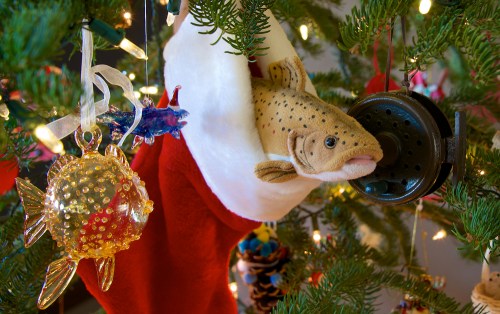
About this time of year, I get a lot of “Santa” questions.  It’s either from wives, girlfriends or kids asking what to buy for the guys.

Or, honestly, it’s a lot of guys thinking about buying stuff for themselves because of the sales.  Or for their “buddies.”

When I worked and managed a tackle store many many years ago, I enjoyed the many ruses that guys used to buy their toys.

Of course, the most common one was simply paying cash so the purchase wasn’t traceable to the home budget.   They would then boldy “hide” the new gear somewhere in the deepest recesses of the man-cave/garage so it wouldn’t be found.

More cleverly, two guys would conspire together.

Each guy purchased something the other wanted.  It was wrapped and they exchanged the  “gift.”  Come Christmas morning, each announced joyfully to his respectively family, “Oh my!  Look what my best fishing buddy bought me!”

Some guys would come to us at the tackle store with a “Santa’s list” of their own.

They knew full-well that their wives would come to the tackle store to make a purchase.  It was their sincere hope that our staff would steer the thoughtful wife in the proper direction.   “Oh honey!  How did you know that’s what I always wanted?  You’re the best!”

Well, the holiday season is upon us again.

Whether you’re purchasing for yourself or for someone else, there’s a few tips for hopefully scoring the right thing.

Of course, like everything else, a lot can be done online.

If you’re looking for stocking stuffers, it’s a great place and there’s all kinds of deals to be found.  If you have no inclination, time or ability to visit an actual tackle store then purchasing online is a no-brainer.

This is where you can find stuff like pliers, dikes, and lures.  Stuff for boats and the things that go along with fishing like camping and outdoor things work well.  What guy doesn’t like electronic fishing gadgets?

Books and videos are also great gifts.  If you know proper sizes,  it’s hard to go wrong.  If in doubt, look into a gift certificate.  This is especially true for clothing and footwear.

A number of charter operations also sell trips online that make a great gift.  Or, give some thought to an actual fishing vacation.  To someplace like Baja (hint-hint)!

You can also purchase fishing licenses online.   That includes Mexican fishing licenses as well.

But, there’s some things that you probably shouldn’t purchase online if at all possible.  Like a few other things in life.

For one, some items are just a bit too pricey to pick the “right one”  to someone in a backroom or warehouse no matter how good they might be.  Especially, if it’s a gift.

Or, if you’re not very knowledgeable about the item to begin with!  It helps to talk to a real salesperson.

For another, some things in life just need to be touched and held and examined before you lay down your cash.  Things like shoes or jewelry come to mind.

Additionally, no matter what you think, often no two items are the same!

That includes some fishing gear.  Unlike say, a TV set…or a set of pots and pans…or a box of chocolates, I bet most folks don’t realize that no two fishing reels are alike.  Guns can be like that.  Guitars are like that.  One item has “the feel.”  Others just don’t have it.

I’ve been in a store and asked them to take out a certain fishing reel.  I can try five of the exact same model, especially conventional reels.  And no two will be exactly alike.  The drags might feel different.  One free-spools like a dream.  The others might be a bit sticky.

Rods can be that way too.  Depending on what the rod is going to be used for, the grips might be different.  More important to me is the “taper” and the backbone of a rod.  Where does it shut off (bend)?   It’s something I like to check with my own hands.

Nothing against, Walmart, because there’s some good gear there and great folks, but if you can get to a tackle store that really knows their stuff you’ll be better off.  You might pay a little more, but maybe not.  However, you’ll get a better handle on making a good purchasing decision.

Even in some of the mega outdoor stores like Bass Pro or Cabelas find that “one guy” that knows his stuff.  If you live in some place like Denver or even northern California, the staff might be more on top of salmon or flyfishing.  But, I’ve found there’s usually that one guy who can steer you right.

If all else fails…gift certificates or gift cards.

Personally, I better get on my own horse.  I haven’t even started yet!

That’s my story!

Jonathan signature

Jonathan

______________

Jonathan Roldan has been writing the Baja Column in Western Outdoor News since 2004.  Along with his wife and fishing buddy, Jilly, they own and run the Tailhunter International Fishing Fleet in La Paz, Baja, Mexico  www.tailhunter-international.com.  They also run their Tailhunter Restaurant Bar on the famous La Paz malecon waterfront.  If you’d like to contact him directly, his e-mail is: jonathan@tailhunter.com

Or drop by the restaurant to say hi.  It’s right on the La Paz waterfront!

_____________ 

Jonathan Roldan’s

Tailhunter International

 TAILHUNTER FISHING FLEET #1 Rated on Trip Advisor

TAILHUNTER RESTAURANT BAR Top 5 – Rated in La Paz on Trip Advisor


Now follow us on FACEBOOK TOO


Website: www.tailhunter-international.com

U.S. Office: 8030 La Mesa, Suite #178, La Mesa CA  91942

Mexico Office: 755 Paseo Obregon, La Paz, Baja Sur, Mexico

Phones: 

from USA : 626-638-3383

from Mexico: 044-612-53311

.

Tailhunter Weekly Fishing Report: 

http://fishreport.jonathanroldan.com/

Tailhunter YouTube Videoshttps://www.youtube.com/channel/UCBLvdHL_p4-OAu3HfiVzW0g

“When your life finally flashes before your eyes, you will have only moments to regret all the things in life you never had the courage to try.”


Read Full Post »

ALL FORKED UP

doradowater-tags1

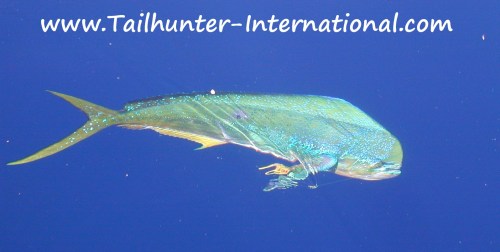
The tough-fighting, great-eating dorado or mahi-mahi

fish-taco

It’s a treat when visiting Mexico to have your own fresh-caught fish cooked up. But, is that fish ALWAYS a legal fish to be eating?


ALL FORKED UP

Originally Published the Week of Nov. 23, 2016 in Western Outdoor News

One of the great rewards of being down here in Baja and doing what we do is turning folks on to new experiences.  For many, it could be the first time out’ve the country…or the first time to Mexico.

For others, maybe it’s the first time fishing; going snorkeling; or seeing dolphin.  There are so many things that we take for granted.  If you’re a regular reader of my columns, we don’t even think twice about so many of them.

For example, this past season, we had a wonderful large family come visit.  As I put them on the fishing boats in the morning, one of the nice ladies told me, “This is our first time seeing the ocean!”

Hard to imagine, isn’t it?

They had never seen the ocean! It was like the time a few years ago when my dad told he had “…never seen the orginal Star Wars movie or any Star Wars movies.”  Everyone has seen the ocean.  Everyone has seen Star Wars!  Haven’t they?

Never seen the ocean.

Wrap your brain around that for a moment. Think what it might have felt like climbing into a relatively little fishing panga at sunrise to go fishing and all the things that might be going through their minds.

Probably like Columbus headed west across the ocean with a lot of faith that he’d be coming back.

The questions the family asked me started making sense.

“Will it be deep?”

 “How big will the waves be?”

 “Is this an ‘ocean’ or a ‘sea?’

 “What if a shark wants to jump in the boat?”  (One of the kids asked that one…which drew some nervous laughs from the rest of the family!)

Happily, they put on brave faces and stout hearts and went out about 200 yards and came back with big smiles and lots of fish and stories to tell to the folks back in the Midwest.

One of the other great experiences…a treat for us Baja rats, but eye-opening to newbies is having your fresh caught fish cooked up for you.

Having our own restaurant puts us at ground zero when it comes to visitors eating fresh fish and especially their own catch.

As I often tell folks contentedly telling me about the great fish dinner, , “Nothing better or fresher than fish that was swimming around this morning!”

And it’s true.

Real?  Fresh?  Fish? Folks are blown away to find out that fish that has never been frozen, canned, shipped, transporated or processed can taste so much better when prepared and eaten straight away.

Whether it’s plated up as tacos, grilled, broiled, fried…or whatever…then served up Baja style with fresh tortillas, frijoles ,rice, some home-made salsas or sauces…Well, fewer things are better and surely a highlight of your Baja visit.

But, there’s a few things you should know about restaurant fish in Baja.

Almost any restaurant will be happy to cook up your fish.  Speaking from experience, it’s a lot easier if YOU have already cleaned it.

Having you show up with 5 big pargo or 3 tuna straight out’ve your ice chest that still need to be cleaned is gonna take awhile. The restaurant might not be equipped to actually clean and dress out a fish for you. They might not know how!

Also,  if the restaurant is in a rush and busy, it’s hard to pull one of the kitchen staff off his station and have him clear a spot just to clean fish.  Many restaurants don’t have a “fish cleaning” station per se.

But, that aside,  by all means, bring in your fish. Any and all fish are welcome!

What many folks don’t know is that there are some fish that are prohibited from being on a restaurant menu here in Baja.  Two of the most common fish that come to mind are dorado (Mahi-mahi) and roosterfish.  Also, totuava.

All 3 of those species are prohibited from commercial fishing.  So, by law, a restaurant can certainly prepare YOUR fish that YOU caught and brought (Totuava is completely endangered and prohibited).  However,  that restaurant cannot legally purchase species like roosterfish or dorado and sell them to you or anyone  from on our menu.

Restaurants are only allowed to sell “commercially” legal fish.  To date, roosterfish and dorado are solely for “sportfishing” purposes. That means YOU with your hook and line . Roosterfish and dorado are prohibited from commercial harvesting.

Likewise, the restaurant can cook YOUR dorado or roosterfish, but it cannot legally purchase that fish from you (because it was sport caught) or from a commercial business.  So, chances are, if you see roosterfish, dorado or totuava on a Mexican menu, it probably shouldn’t be there.

There are several reasons for this.

For one, there’s certainly the ecological impact commercial fishing would have on these species.  Commerical and sportfishing pretty much wiped-out the tasty totuava population years ago.

The Mexican government…so far…has recognized that roosterfish and dorado are extremely important to the tourism/fishing industry and are a valuable resource. Translated, that means, they are worth a lot of tourist dollars.  They don’t want it going the way of totuava.

There’s also the health issues.

From the perspective of a restaurant, purchasing fish from a non-regulated source like from a fisherman or from illegal harvesting could pose a health fish.  Simply, in the chain-of-handling, there’s no way to know that the fish is safe to eat.

There’s no assurances (as far as that goes) to quality-control and inspection. Was it taken legally and correctly harvested and within the size and weight limited specified by law?  No way to be certain.

Eat fish.  Eat YOUR fish.  Eat fresh fish on the menu too.  However, it doesn’t hurt to ask what kind of fish you’re eating or raise an eyebrow if you see something wrong on the menu.

That’s my story!

Jonathan signature

Jonathan

______________

Jonathan Roldan has been writing the Baja Column in Western Outdoor News since 2004.  Along with his wife and fishing buddy, Jilly, they own and run the Tailhunter International Fishing Fleet in La Paz, Baja, Mexico  www.tailhunter-international.com.  They also run their Tailhunter Restaurant Bar on the famous La Paz malecon waterfront.  If you’d like to contact him directly, his e-mail is: jonathan@tailhunter.com

Or drop by the restaurant to say hi.  It’s right on the La Paz waterfront!

_____________ 

Jonathan Roldan’s

Tailhunter International

 TAILHUNTER FISHING FLEET #1 Rated on Trip Advisor

TAILHUNTER RESTAURANT BAR Top 5 – Rated in La Paz on Trip Advisor


Now follow us on FACEBOOK TOO

 Website: www.tailhunter-international.com

U.S. Office: 8030 La Mesa, Suite #178, La Mesa CA  91942

Mexico Office: 755 Paseo Obregon, La Paz, Baja Sur, Mexico

Phones: 

from USA : 626-638-3383

from Mexico: 044-612-53311

.

Tailhunter Weekly Fishing Report: 

http://fishreport.jonathanroldan.com/

Tailhunter YouTube Videoshttps://www.youtube.com/channel/UCBLvdHL_p4-OAu3HfiVzW0g

“When your life finally flashes before your eyes, you will have only moments to regret all the things in life you never had the courage to try.”


Read Full Post »

“LA PAZ EVENT TARGETS IGFA RECORDS AND ROOSTER RELEASES!”

Burgess 1 rooster 6-14 PMT

Fish like this huge roosterfish caught and released by Ron Burgess at Las Arenas last year have made the Las Arenas/ La Paz area famous and known as the “roosterfish capital of the world.” Last year in 4 days, Ron and his amigos caught and released 29 roosters between 40 and 90 pounds!

WP_20140327_14_48_39_Pro

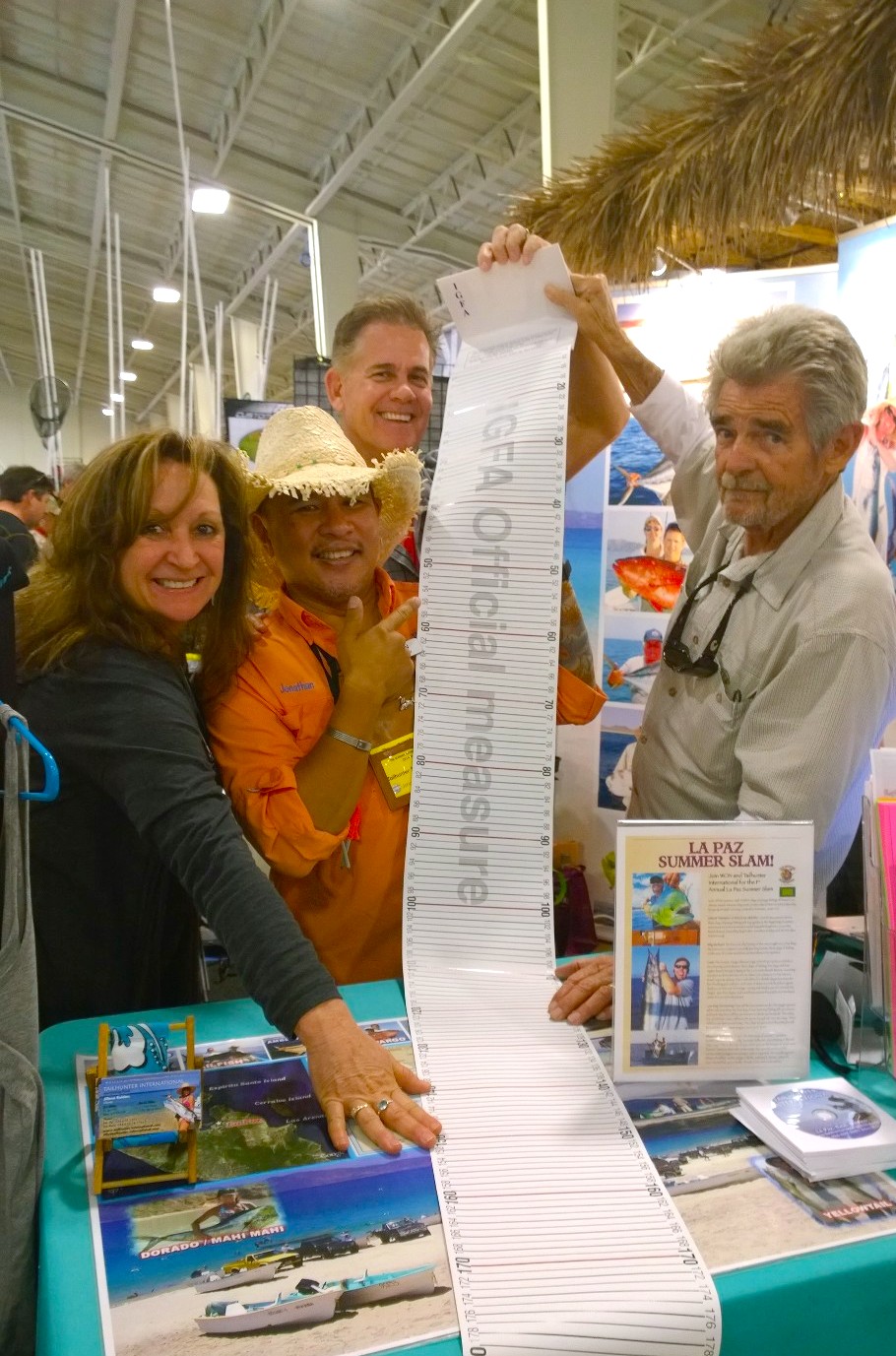
A sample of the new IGFA “release measuring devices” which will allow anglers to officially measure and release fish and still be eligible for world records! This new “category” for records is a big boost for catch-and-release of species! Shown here with Jilly and Jonathan Roldan, Pat McDonell, editor for Western Outdoor News, and Gary Graham (holding the tape!) who is not only a multi-IGFA record holder, but also an IGFA rep plus famous author and journalist. All will be at the event!


LA PAZ EVENT TARGETS IGFA RECORDS AND ROOSTER RELEASES!

Originally Published in Western Outdoor News the Week of April 29, 2014


In what appears to be a first, Western Outdoor News and Tailhunter International Sportfishing in La Paz are having the first certified tag-and-release roosterfish event this summer


The “Summer Panga Slam” will be held June 17-21 in La Paz. It promises to be quite an event.


Originally slated as a 3-day light tackle panga tournament among friends, the event has grown tremendously. It has sprouted some “legs” since it’s inception several months ago.


For one, Tailhunter International in La Paz now has a certified I.G.F.A. scale on hand and is a registered IGFA center. This means, Tailhunters and it’s clients can legitimately target world-record fish.


This is significant given that they fish the famous waters of La Paz and Las Arenas as well as the northern East Cape where arguably more world records have been set over the decades than anywhere else. Many consider it to be one of the top light-tackle fisheries in the world.


Additionally, the area has been known as the “roosterfish capital of the world” famous for it’s slugger-sized rooster populations. In fact, in 1987, the world record roosterfish was caught on these very beaches. It weighed in ta 114-pounds. Larger ones have been caught and released.


Last year, the area had a banner roosterfish season where roosters averaged 40-90 pounds and a number of fish over 100-pounds were tallied and released including one estimated over 150-pounds!


All of this is important to the “Panga Slam” event for two reasons:


  1. The IGFA now has “release” categories that were previously not available. That means you can now become a world-record holder and not have to kill your fish. Last year, a world-record release rooster was produced in La Paz waters! There are categories for men, women and children! However, you MUST have a special IGFA measuring device of which this event will have several on hand!


  1. Tailhunter International is part of the newly formed Roosterfish Foundation dedicated to preserving the exotic rooster and monitoring the health of the species. To that end, tag-and-release devices are now available so that released fish can now be tagged before we let them go.


So, what all this means is that the “Summer Panga Slam” now gives participating anglers not only a shot a getting a record fish that can actually be weighed. But, it’s also an opportunity to release a world-record fish and get into the record books as well as help to proliferate the roosterfish species for everyone!


It’s going to be a lot of fun and, as mentioned, the event has grown. WON editor Pat McDonell himself will be down to help host the event. WON columnist, journalist and famous author Gary Graham will be on hand as well to record the event. Gary is himself also a multi-record IGFA record holder and the IGFA representative.


On board as well are a growing number of sponsor with lots of goodies for the participants.


The event is limited to 40 anglers in 20 two-person panga teams. There are still a few spots left! Here’s the rest of the details:


  • Sponsors aboard now include:  Okuma Reels, Costa Sunglasses, Yo-Zuri, Sufix, Turners Outdoors and Lazer Trokar Hooks!
  • Three full days of panga fishing at Las Arenas  (gear, breakfast and lunches included) 
  • 4 nights La Concha Beach Resort in ocean-facing room
  • Welcome dinner and Awards Dinner
  • Taco feed night and live music at famous Tailhunter Restaurant
  • One day open fun fishing and then two days jackpot tournament (cash entry $100 in La Paz per team) 
  • Event t-shirts
  • Cabo San Lucas Airport Shuttles 

Cost is $1350 per person. Space is limited and going fast. For more information, you can contact Western Outdoor News and talk with Mike Flynn at FLYNN@wonews.com or call him at 949-366-0030.


We’re looking forward to having you join us!

That’s our story

Jonathan signature

Jonathan

_______________


Jonathan Roldan has been writing the Baja Column in Western Outdoor News since 2004.  Along with his wife and fishing buddy, Jilly, they own and run the Tailhunter International Fishing Fleet in La Paz, Baja, Mexico  www.tailhunter-international.com.  They also run their Tailhunter Restaurant Bar on the famous La Paz malecon waterfront.  If you’d like to contact him directly, his e-mail is riplipboy@tailhunter-international.com  or drop by the restaurant to say hi!

______________

Jonathan Roldan’s

Tailhunter International


TAILHUNTER FISHING FLEET #1 Rated on Trip Advisor

TAILHUNTER RESTAURANT BAR #1 Rated in La Paz on Trip Advisor


Now follow us on FACEBOOK TOO


Website: www.tailhunter-international.com

U.S. Office: 8030 La Mesa, Suite #178, La Mesa CA  91942

Mexico Office: 755 Paseo Obregon, La Paz, Baja Sur, Mexico

Phones:

from USA : 626-638-3383

from Mexico: 044-612-14-17863

.

Tailhunter Weekly Fishing Report:

http://fishreport.jonathanroldan.com/

Tailhunter YouTube Videos:

http://www.youtube.com/user/pangapirate

“When your life finally flashes before your eyes, you will have only moments to regret all the things in life you never had the courage to try.”


Read Full Post »

“Just Ask”

Screen-Shot-2013-10-14-at-7.50.13-PM


“JUST ASK”

Originally Published the Week of April 3, 2014 in Western Outdoor News

The pangas had all returned to the beach with happy fishermen.  Fish had been cleaned and were either getting icy in the hotel freezers or were in the kitchens getting prepped for the grill and tonite’s dinner.


Most of the guys had headed to their rooms for siestas and shower.


Others, had dragged themselves directly to the pool and the margarita bar foregoing the showers…and the siestas. But, I knew that for most, one drink and they’d be passed out contentedly in a lounge chair…dreaming of the fish they caught and the ones that got away.


I was already in the office, putting away gear and breaking down the days’ events.   I had to get ready for another group of anglers coming in that evening on the next flight.


I brisk knock on the office door turned out to be one of the dad’s who had been fishing that day.


“Jonathan, I can’t find my son, Joey.  He helped me carry gear back to the room and I went in to take a quick shower before dinner. I came out and can’t find him anywhere. I hate to be a bother. But, I looked everywhere.”


I told him not to worry. Ten-year-olds don’t usually stray too far and many of the other anglers knew or were familiar with the youngster.


We checked the restaurant and the pool.  We hit the Jacuzzi. We walked to the kid’s playground. We asked a number of other anglers. No one had seen Joey.


“Let’s walk back to the beach,” I suggested to dad.  And we took a short little hike to the little cove next to the hotel where our pangas drop off the anglers.

Sure enough, there was Joey sitting in the panga with our Captain Lorenzo.  We could see both of them had their heads down and were concentrating on something.


As we got closer, Dad said, “Joey, we’ve been looking all over for you.  What are you doing here with Lorenzo?


Both the captains and Joey looked up with big smiles.  Joey held up a hook and some line!


“I came walking back to the beach and found my friend, Lorenzo.  And I asked him to show me how to tie a fishing knot! Look dad!”


He held up the hook and proudly showed off his knot.


“I did this one all by myself!”


“Wow!,” said dad with raised eyebrows.  “Even I don’t know how to tie a fishing knot.”


Captain Lorenzo looked just as pleased.


In broken “Span-glish” he explained that Joey had just walked up and asked how to tie a knot. It reminded him of his own boys and how he had shown them many years ago how to tie a fishing knot.


“They are grown men now, but I remember those good days,” he said wistfully.


“You are lucky to fish with your father,” he said to young Joey.


“Captain Lorenzo, will you show me how to tie a knot also?” asked dad.


Claro que si…of course, mi amigo.  Es un placer…it is a pleasure!” replied the Captain.  “Here take a hook and some line…”


And with that, I backed away smiling down the beach.  The lost had been found.  And perhaps some other things had been found along the way.


An hour later, I went back down to the beach and half-a-dozen guys were surrounding the panga, all intently learning to tie knots.  Captain Lorenzo and Joey were “holding court.”


One thing I learned long ago was one of the fastest way to get a “group session” going was to tie a knot in front of a bunch of fishermen.


Whether it’s a “San Diego jam,” a “Palomar”, an “Albright special”, a “Cat’s Paw”…whatever-you-want-to-name-it…tie a knot.


And someone will say “Hey, can you show me that again?”  Or, “But, I tie it differently, like this…”


And there you go! Instant…constructive debate discussion and discovery!


It also occurred to me that one of the least utilized sources of fishing education are the Mexican captains and deckhands who take us all out fishing.


These guys fish more days in a year than most sportfishermen and women will fish in our lives. Most of them started as commercial fishermen and have been doing nothing else their entire lives.


You get pretty good when catching a fish puts food on the table and buys clothes for the family. Often, without all the fancy technology available to the rest of us, they have to be better than the fish as well as their competitor captains and crews.  Proudly so.


I talked to Captain Lorenzo a few days after the knot-tying beach party.


“Everyday, there are new gringo clients. And they all want to catch fish. They come.  They go.”


“To many, I am just the Mexican captain and the guide.  And that is fine. We have a good time and I have been doing this more than 40 years and I am proud of what I do.”


“But, sometimes the clients get angry because they want to do everything.  That is fine too.  But, then I watch them and they have many problems.   And they get angry and do not catch fish.  Angry clients are not happy.”


“It is OK if they know how to fish, but many make mistakes.  And they do not want help.”


“I wish they would ask. I like it.  I am happy to teach. Then everyone has a good time.”


“No one ever asks.” He said with a shrug.  “Except one little boy.”


That’s our story!

Jonathan


_______________

Jonathan Roldan has been writing the Baja Column in Western Outdoor News since 2004.  Along with his wife and fishing buddy, Jilly, they own and run the Tailhunter International Fishing Fleet in La Paz, Baja, Mexico  www.tailhunter-international.com.  They also run their Tailhunter Restaurant Bar on the famous La Paz malecon waterfront.  If you’d like to contact him directly, his e-mail is riplipboy@tailhunter-international.com  or drop by the restaurant to say hi!

______________

Jonathan Roldan’s

Tailhunter International


TAILHUNTER FISHING FLEET #1 Rated on Trip Advisor

TAILHUNTER RESTAURANT BAR #1 Rated in La Paz on Trip Advisor


Now follow us on FACEBOOK TOO


Website: www.tailhunter-international.com

U.S. Office: 8030 La Mesa, Suite #178, La Mesa CA  91942

Mexico Office: 755 Paseo Obregon, La Paz, Baja Sur, Mexico

Phones:

from USA : 626-638-3383

from Mexico: 044-612-14-17863

.

Tailhunter Weekly Fishing Report:

http://fishreport.jonathanroldan.com/

Tailhunter YouTube Videos:

http://www.youtube.com/user/pangapirate

“When your life finally flashes before your eyes, you will have only moments to regret all the things in life you never had the courage to try.”


Read Full Post »

“But Will They Eat a Yo-Yo Jig?

Seriola_lalandi,I_RR1005

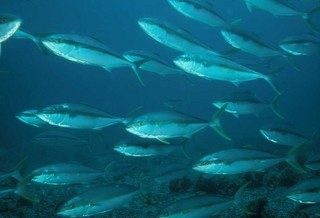
YELLOWTAIL FARMING?

BUT WILL THEY EAT A YO-YO JIG?

Originally Published the Week of March 20, 2014 in Western Outdoor News

While at the Long Beach Fred Hall Fishing Show a few weeks ago, I was directed to an interesting article by a friend who is a commercial fisherman and sportfisherman.  The title kinda piqued my interest:

“NEW FARMED YELLOWTAIL HITS U.S. MARKET”

According to the article published in Seafood Source.com on March 7, 2014 (http://www.seafoodsource.com/en/news/aquaculture/25678-new-farmed-yellowtail-hits-us-market),  these forkies are being formed right in Baja out’ve Bahia Magdalena.  Yes, real yellowtail ranches!

Here’s the article:

“California-based seafood distributor Catalina Offshore Products, and Baja Seas have partnered to bring a new farmed yellowtail to the U.S. market.

Baja Seas will officially introduce its Baja farmed yellowtail, also known as Baja hiramasa, at Seafood Expo North America in Boston on 16 to 18 March. Catalina Offshore Products has been test marketing the fish and it has already appeared on menus in from San Diego and Chicago.

The original stock was bred for Baja Seas from fingerlings produced at Hubbs-SeaWorld Research Institute. The fingerlings were transferred to Baja Seas’ grow out facility on Bahia Magdalena, a bay in southern Baja California. Future seed will be sourced from Baja Seas’ own hatchery, Ocean Baja Labs.

Baja Seas uses Recirculating Aquaculture Systems (RAS) to create a small water footprint by diminishing pollution and disease; fish are fed sustainable protein- and omega-rich meal derived from sardines in a low Fish In-Fish Out (FIFO) ratio; the fish are raised without antibiotics or paraciticides; and semi-automated feeders and feed cameras prevent overfeeding.

“With consumers demanding more seafood and pressures on wild harvests increasing, we believe aquaculture is the one true sustainable model,” said Luis Astiazarán, Baja Seas’ director general. “Because of their growth rate when compared to other species, marine finfish are the future of aquaculture.”

“The debut of this Baja hiramasa is very exciting for us as it marks a major milestone for Mexico and for the U.S.,” said Dave Rudie, Catalina Offshore CEO. “It is not only a great, local alternative to Japanese or Hawaiian yellowtail, its presence in the domestic market will increase people’s access to a highly valued food source while decreasing pressure on our wild populations.”

It sounds like a good deal.  I like eating yellowtail.  I like catching yellowtail.  I don’t know about the taste, but I have a feeling that the wild fresh stuff is gonna taste a lot better.   I know wild salmon blows away farmed salmon.

But, I’m pickier than most because I grew up on Pacific coast fish.  But, most folks I know wouldn’t know the difference.

I doubt that 90% of those ordering yellowtail in say, Red Lobster in the mid-west, would know the difference between wild or farmed yellowtail either.  It’s probably going to taste just dandy to them.

Just like my friends from Montana and Idaho and Wyoming who are hunters.  They can tell the difference between wild elk and ranch-raised elk meat.  To me, it’s just good eating!

However, if there’s a viable way to take the pressure off the wild stocks so us sportsfishers can still throw an iron or dropper loop a bait yet help meet the demand of the market, I’m all for it.  Win-win!

I’m especially interested in the aspect of this “farmed” yellowtail (no pun intended) if they’re raised with a small ecological footprint.  Not using additives and anti-biotics in their food means the “fish poo” (excuse my Spanish), isn’t polluting the water.

That has been an issue in other aquaculture situations.  Especially, since fish eat a tremendous amount of food to grow.  What goes in…has to come out!

Additionally, if they’ve found a new way to feed these fish and NOT deplete the local bait situation, that’s a major plus for anglers.  No bait…no fish!  No fish…no fishing!

I talked to an amigo of mine, Scott McKenzie, Director of Quality Assurance at the huge American Seafoods in Seattle WA.  Scott is also an avid Baja angler.

Here’s his take:

“The vast majority of Yellowtail consumed globally is farmed. Most of the farmed yellowtail comes out of Japan, with some small production in Australia and New Zealand. From what I’ve heard it is typically a 5:1  feed fish, meaning 5 lbs. of feed to return 1lb of  fish weight. Not the most ideal species to farm with regard to feed conversion rates as those are typically down around 3:1, some are even down close to 1:1 these days.

One of the unsavory part of a lot of these farmed fish operations is they are often using low trophic species as the feed (sardines, mackerel, menhaden, anchoveta,…). The feed coming out of global fisheries that are nothing more than rendering fisheries ( primary products being fish oil, meal) rather than a by-product of a food fishery. In a nut shell, the ocean gets stripped of bait fish to be converted into feed for a farmed fish somewhere around the world.

The amount of antibiotics and crap that can go into them I will leave for another day…

Sad thing, most consumers get all warm and fuzzy thinking they are making green decisions when they opt for a farmed fish to eat- in so many ways, it is more environmentally detrimental than the wild caught equal.”

The world is growing.  There’s more people to feed.  Yet,  we want a balance with our recreational activities.  Everyone has an interest and a stake in things.  It will be interesting to see how it plays out.

I wonder if farm-raised yellowtail can be released into the wild?  I know they do it with salmon!

And, I for one, wouldn’t mind giving it a whirl on my dinner plate too!

That’s my story!

Jonathan

Jonathan signature

_______________

Jonathan Roldan has been writing the Baja Column in Western Outdoor News since 2004.  Along with his wife and fishing buddy, Jilly, they own and run the Tailhunter International Fishing Fleet in La Paz, Baja, Mexico  www.tailhunter-international.com.  They also run their Tailhunter Restaurant Bar on the famous La Paz malecon waterfront.  If you’d like to contact him directly, his e-mail is riplipboy@tailhunter-international.com  or drop by the restaurant to say hi!

______________

Jonathan Roldan’s

Tailhunter International


TAILHUNTER FISHING FLEET #1 Rated on Trip Advisor

TAILHUNTER RESTAURANT BAR #1 Rated in La Paz on Trip Advisor


Now follow us on FACEBOOK TOO


Website: www.tailhunter-international.com

U.S. Office: 8030 La Mesa, Suite #178, La Mesa CA  91942

Mexico Office: 755 Paseo Obregon, La Paz, Baja Sur, Mexico

Phones:

from USA : 626-638-3383

from Mexico: 044-612-14-17863

.

Tailhunter Weekly Fishing Report:

http://fishreport.jonathanroldan.com/

Tailhunter YouTube Videos:

http://www.youtube.com/user/pangapirate

“When your life finally flashes before your eyes, you will have only moments to regret all the things in life you never had the courage to try.”

Read Full Post »

“IN THE PRESENCE OF GIANTS”

Deb_&_whale

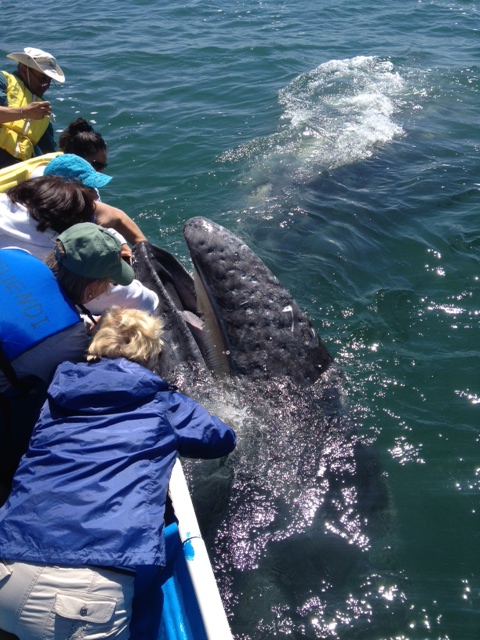
A moment of clarity ?

IN THE PRESENCE OF GIANTS

Originally Published in Western Outdoor Publications the Week of March 5, 2014

“Look deep into nature and you will understand everything better.”

Albert Einstein

Oooo!  Wow!  Oh my!  Lookit!  It’s coming right to us!

Squeels.  More ooo’s and ahhhs!

But, then everyone jostled to the starboard side of the panga. Whoa!  For a moment there was an air of apprehension as everyone hung on.

But Mexican pangas are built for stability and although there was a bit of a list, attention quickly focused on what was making it’s way towards us.

For most of us, we grow knowing we’re at the top of the heap.  We are the  apex of intelligence, power and the food chain.  Master of all we see.  Conquerors of time, space and dimension.

That is, until we’re suddenly faced with the fact that there are creatures larger and stronger than us.

That is, until those creatures are not behind some cage in the zoo giving us a false sense of security.

That is, until one of those creatures is right next to us and literally smack in our laps!

Looking at us.  And we touch it. And in some cases, it tries to touch us.  And maybe communicate with us?

Something like a whale.  Even a 15-foot baby…and it’s uh…its 40 foot mom!

And both were rising and approaching like two big grey submarines towards our awestruck panga full wide-eyed-cellphone-camera-snapping eco-tourists.

You feel small.  And vulnerable.  And utterly amazed.

This isn’t a video.  This isn’t the Discovery Channel or Animal Planet or National Geographic.  Or Sea World.

We’re not in the safety of our Lazy-Boy lounger in the living room in front of the big-screen.

We’re in Mexico. The light hum of the panga outboard is real.   The water and the salt air is real. The sun and breeze on your cheeks isn’t virtual reality. The smell of damp things from the ocean is real.

We’re not outside the aquarium.  We’re on the other side of the glass today.    And we’re in the presence of giants!

And then, the magic happens.

The mom stops just a few feet from our panga.  And the calf comes right up.  And stops and raises his head.  And it’s eye opens and you can swear it’s looking right at you with seemingly the same wonder that that you have for it!

And you reach out and you touch the rough skin and other hands also touch and scratch the youngster.  And in those few moments, you feel like you’re doing more than just touching.  It seems to transcend just a touch.

Two seeming intelligent creatures from different worlds…one above and one below the waters… reach across the abyss of eons and it’s unlike anything you have ever experienced.

Is the little calf really smiling and enjoying the scratches.  Is it wondering about the funny creatures in the floating panga as much as we wonder about it?  Can it sense us?  In some cosmic way, are we communicating?  Will we ever?

Whether one believes in a divine being or creator, I’ve never known anyone to come away from the experience without feeling something very special and different has happened or feeling humbled by the magnificence.   For many, it certainly gives new perspective to our place on the planet.

Every year from approximately, January to March, the gray whales arrive at in Baja at the end of the longest migration of any animal on earth.  Starting at the Bering Sea up by the Arctic Circle, they arrive in Bahia Magdalena, Scammons Lagoon and San Ignacio, three warm water lagoons on the Pacific Coast of Baja.

Once, almost hunted to extinction, they now arrive by the thousands, to breed, mate and give birth.  It is estimated that some 20,000 whales now make the seasonal migration to these protected areas.  In the 1800’s it was once suggested that they exceeded more than 100,000 in population.

But, these areas provide an incredible opportunity to get close to observe these magnificent creatures.  For many, it’s a once-in-a-lifetime experience and the calm, protected sanctuaries make an ideal place to see dozens of whales a day on many occasions.

Baja is currently experiencing perhaps one of it’s best whale-watching seasons in years.  If you have a chance, take a trip.  Look into an inquisitive eye of a creature larger than yourself.  Be in the presence of gentle giants.  And perhaps come away understanding a little bit more about so much more.

That’s our story!

Jonathan

Jonathan signature

_______________

Jonathan Roldan has been writing the Baja Column in Western Outdoor News since 2004.  Along with his wife and fishing buddy, Jilly, they own and run the Tailhunter International Fishing Fleet in La Paz, Baja, Mexico  www.tailhunter-international.com.  They also run their Tailhunter Restaurant Bar on the famous La Paz malecon waterfront.  If you’d like to contact him directly, his e-mail is riplipboy@tailhunter-international.com  or drop by the restaurant to say hi!

______________

Jonathan Roldan’s

Tailhunter International


TAILHUNTER FISHING FLEET #1 Rated on Trip Advisor

TAILHUNTER RESTAURANT BAR #1 Rated in La Paz on Trip Advisor


Now follow us on FACEBOOK TOO


Website: www.tailhunter-international.com

U.S. Office: 8030 La Mesa, Suite #178, La Mesa CA  91942

Mexico Office: 755 Paseo Obregon, La Paz, Baja Sur, Mexico

Phones:

from USA : 626-638-3383

from Mexico: 044-612-14-17863

.

Tailhunter Weekly Fishing Report:

http://fishreport.jonathanroldan.com/

Tailhunter YouTube Videos:

http://www.youtube.com/user/pangapirate

“When your life finally flashes before your eyes, you will have only moments to regret all the things in life you never had the courage to try.”
Read Full Post »

“COVERING THE SPREAD”

“COVERING THE SPREAD”

Originally Published the Week of Aug. 8, 2013 in Western Outdoor News

Lately, at least here in Southern Baja, there seems to be a dearth of live, or even dead bait.  It happens.  You still have to do your best to raise fish.  I mean, you’re already here.  It’s no one’s fault that the bait gods just didn’t happen to smile on your particular vacation dates.  So be it.

Be prepared.  Get ready to troll.  Cover some water.  I get asked all the time what would I recommend.

I usually don’t get hung up on having every color in the rainbow.  The days when I neede  two kinds of every conceivable lure is long gone and disappeared with the days of cheap airline tickets.  Besides, I’m too lazy and too old to carry that much gear anymore.

Now, I bring one dark and one light colored trolling feather in small, medium and large.  That’s it.  If my fishing partner or partners is bringing gear, I cut it back even further.   Let them carry the extra and pay for it!

But, honestly, agree among yourselves who is bringing what.  Gear can be shared as can the weight and the cost.

No sense in duplicating efforts and, given the penchance for airlines to charge for every extra bit of weight, it’s ridiculous to bring tons of stuff that will never get used.  Besides, you can only troll a limited number of lures at a time.  There’s no logic in bringing 20 or 30 lures!  Fight the urge.  You can do it!

Once you’re on the water, there’s a number of schools of thought on how to drag your lures and presenting a spread to the fish.  Veterans have their own multitude of theories and mine is just one guy’s opinion.

I used to subscribe to the technique of running light-colored lures during the brighter hours and the darker lures in the darker hours. Lots of fishermen do well with that.  But, for many years, now, I’ve been most productive with staggering my lure colors.

I run my brighter lures further back in the pattern.  I run my darker lures closer to the white prop wash.  If I have the ability to run more than 2 lures, I stagger them where one dark lure is right in the wash.  Another dark one on the edge of the wash and then two brighter ones staggered further back beyond says the 3rd and 5th wave behind the boat.

I believe the darker lures have a better presentation in the white water or near the white water where they create a more visible silhouette to the fish.

Regarding trolling speed, my general rule of thumb is somewhere in the neighborhood of 6-8 knots.  But I vary that.  The important thing is how the lures are swimming behind the boat.

I want the most action I can get from them so they create some kind of commotion.  I am also often reminding folks that pretty much any fish that has the ability to bite one of these feathers has the ability to swim way faster than the boat.  So goosing the throttle a few nudges to get the lures swimming correctly is a no-brainer.

That brings up another important variable.  Not all lures are created equal.  There are pusher heads (flat faced/ concave faced) .  Bullet heads (shaped like bullets natch).  Bubble/Jet heads (drilled with holes to make “smoke” bubble trails).  Slant heads (cut on an angle to dart back and forth or jump).  And others.

All of them have different characteristics.  Some work better at different times than others.

My general rule is the rougher the water, the more action I want from my lure to cut through all the surface disturbance on top of the water.  I want them to stand out as something “different” up there to potential predators.

To that end, again, trying to save space and weight is to pack bubble/jet heads or pusher head designs.  I like dragging them behind the boat so that they come jumping out of the face of trailing waves then dive back into the water with lots of splash and action.

Several stray suggestions:

If you only have small feathers or lures, consider making larger lures simply by sticking one inside of another.  Also, if you want to get down deeper, especially when nothing is close to the surface, either stick a torpedo sinker or egg sinker behind the head of the lure or simply tie a torpedo sinker to a leader ahead of the lure to make it swim deeper.

Give it a try!

That’s our story!

Jonathan

_______________

Jonathan Roldan has been writing the Baja Column in Western Outdoor News since 2004.  Along with his wife and fishing buddy, Jilly, they own and run the Tailhunter International Fishing Fleet in La Paz, Baja, Mexico  www.tailhunter-international.com.  They also run their Tailhunter Restaurant Bar on the famous La Paz malecon waterfront.  If you’d like to contact him directly, his e-mail is riplipboy@tailhunter-international.com  or drop by the restaurant to say hi!

______________

Jonathan Roldan’s

Tailhunter International


TAILHUNTER FISHING FLEET #1 Rated on Trip Advisor

TAILHUNTER RESTAURANT BAR #1 Rated in La Paz on Trip Advisor


Now follow us on FACEBOOK TOO


Website: www.tailhunter-international.com

U.S. Office: Box 1149, Alpine CA  91903-1149

Mexico Office: 755 Paseo Obregon, La Paz, Baja Sur, Mexico

Phones:

from USA : 626-638-3383

from Mexico: 044-612-14-17863

.

Tailhunter Weekly Fishing Report:

http://fishreport.jonathanroldan.com/

Tailhunter YouTube Videos:

http://www.youtube.com/user/pangapirate

“When your life finally flashes before your eyes, you will have only moments to regret all the things in life you never had the courage to try.”
Read Full Post »

“Ouch That’s Gotta Hurt!”

mexican-fishing-license-291x300

If only it was as easy as finding a KINKO’s to print them out!

OUCH THAT’S GOTTA HURT! (..again)

Originally Published the Week of July 23, 2013 in Western Outdoor News

So, often we hear the phrase “shot itself in the foot.”  So-and-so screwed up again and “shot itself in the foot.”  Sadly, when it comes to Mexico, you have to scratch your head.  Give it a shake and wonder, if it has as many feet as a centipede.   How many times can it cap a round into it’s own tootsies and keep walking?

Maybe you’ve already heard the latest.

You can’t get a Mexican fishing license in Mexico.  Chew on that for a minute.  Mexico has no fishing licenses.

You must still have a Mexican fishing license.  They inspectors are still out there.  But, you’ll be hard-pressed to find someone that will be able to sell you one down here.

Here in La Paz, at our Tailhunter operations, we normally have licenses to sell.  We sell a heap of licenses every year to our clients; our competitors clients as well as walk-in anglers.  We don’t make anything on them.  It’s a nice convenience for everyone and we’re happy to do it.

Previously, getting a fishing license was a 2-3 day ordeal and test of stamina and resilience, even here in big La Paz.  You filled out several forms.  You had to go to the CONAPESCA office.  Then off to the bank to pay the fee.  Then bring your bank receipt back to CONAPESCA.  Big difference from buying things over-the-counter at Walmart!

So, being one of the few places allowed to sell the fishing permits in 10 minutes is a wonderful convenience for everyone involved.

Several weeks ago, we were informed by CONAPESCA (Mexican Fish and Game) that they didn’t have any more licenses this year.  Not just us.  Everyone!

Loreto.  East Cape.  Cabo.  And not just us in S. Baja.  It was the WHOLE of Mexico.

We spoke with Tracy Ehrenberg from the Pisces Fleet in Cabo San Lucas and she phoned the main offices of CONAPESCA in Mazatalan.  Here’s their “We-shot-ourselves-in-the-foot” story.

Try to follow this.  According to Tracy, the new head of CONAPESCA simply “didn’t budget” for the printing of enough of the paper licenses to sell for the WHOLE COUNTRY.  Think about that one.  What no KINKO’s?

So, while some smaller outfits or out-of-the-way places might still have a stash of permits, they government is counting on YOU to purchase your fishing licenses online before you come down to Mexico!

There’s a few problems with that.   First, not everyone has computers.  Second, not everyone has printers.  Third, not everyone is computer savvy enough to navigate the Mexican website that sells the permits.  And…

Fourth, the website is about as primeval like it was built by a first-year intern as a school project.  It’s difficult to figure.  It makes mistakes.  It crashes all the time.  It sometimes takes your credit card, but gives you nothing to print out.   It’s very frustrating.

Several weeks ago when I notified our own clients about the situation, and posted the problem on our fishing reports, I must have gotten 20 phone calls and e-mails a day from livid, confused and frustrated anglers.

In fairness, eventually, with enough persistence, everyone got their licenses.  It eventually works and it seems that someone there at CONAPESCA has put the website on a larger server.  It doesn’t crash as often.

But, Mexico tourism didn’t need another SNAFU like this.  It’s supposed to be making it easier and more stress-free to visit, not throw another hurdle in the way of a vacation! How many times can it fire a round into it’s foot again?

Can you imagine the outcry if all the Fish and Wildlife operations in the U.S. “forgot” to print up enough fishing licenses or hunting tags…and yet still enforced them with inspectors out there in the field and on the water?

If you’re coming down, just make a note about the licenses and bear through it.  Here’s how to do it:

Here is the website:  https://www2.ebajacalifornia.gob.mx/Pesca/


•    Click the American flag and it will be in English

•    You want to purchase the fishing license for the “FEDERAL ZONE.”

•    Do not be alarmed at the price…it’s in pesos!!!  So just divide by 11 or 12 and that’s the rate in dollars and it will show up on your credit card statement in dollars.

•    If it’s slow or doesn’t work at first, try again later.  With this announcement, everyone in southern Baja has to purchase their licenses this way! 

There is also some other alternatives:

You can also get them from CONAPESCA San Diego, but must send a cashier’s check.  They also process the paperwork the same day and will mail you your permits.   Here’s the link:  http://www.conapescasandiego.org/.  Their phone number is: 619-233-4324

There’s a third option as well.

In Southern California, a number of well-known fishing tackle stores sell them and, if you can’t go to visit, they will take your information over the phone or via e-mail.  They will process the form for you and mail you out your fishing fishing licenses.  It’s fast, it’s easy.  But they have limited amounts as well, and after they sell their stash, they’ll be having trouble getting licenses as well.

Also many of the sportfishing landings in Southern California, especially in San Diego all have fishing licenses to sell.  That’s another alternative.

Most of the time, the website works fine these days.  Just persevere if it doesn’t work the first time.  There’s also the other aforementioned ways to get your license.

Don’t cancel your trip.  Just take a breath and know that it’s as frustrating for us down here as well and we don’t want you being surprised when you get down here and there’s no fishing licenses.

That’s my story!

Jonathan

______________

Jonathan Roldan has been writing the Baja Column in Western Outdoor News since 2004.  Along with his wife and fishing buddy, Jilly, they own and run the Tailhunter International Fishing Fleet in La Paz, Baja, Mexico  www.tailhunter-international.com.  They also run their Tailhunter Restaurant Bar on the famous La Paz malecon waterfront.  If you’d like to contact him directly, his e-mail is riplipboy@tailhunter-international.com  or drop by the restaurant to say hi!

______________

Jonathan Roldan’s

Tailhunter International

Website: 

http://www.tailhunter-international.com

Mexico Office: Tailhunter International, 755 Paseo Obregon, La Paz, Baja Sur, Mexico

U.S. Mailing Address:  Tailhunter International, P.O. Box 1149, Alpine  CA  91903-1149

Phones:

from USA : 626-638-3383

from Mexico: 044-612-14-17863

.

Tailhunter Weekly Fishing Report:  http://fishreport.jonathanroldan.com/

Tailhunter YouTube Videoshttp://www.youtube.com/user/pangapirate

“When your life finally flashes before your eyes, you will have only moments to regret all the things in life you never had the courage to try.”

Read Full Post »

“KING JACK”

Amberjack Junior Azores tags

Big and tough…amberjack in the Baja…cousins to yellowtail, the Spanish name for them is “Pez Fuerte” which means “strong fish!” No kidding. They get over 100 pounds!

KING JACK!

Originally Published the Week of May 15, 2013 in Western Outdoor News

It had been a pretty decent morning off the northern end of the island.   Dropping blue and white irons and jigging,  some heavy “winding and grinding” and elbow grease had produced a  nice brace of  five solid  20-pound-class yellowtail in the box.

Danny just finished pulling his jig out of the water and took a break to wipe his brow and crack a chilly Pacifico can from the ice chest.   The sun was at it’s mid-morning blaze already promising to get hotter.

“Whew!” he sighed with a laugh.  “This is hard work fishing the yo-yo iron for these yellows.  These things are tough fish!”  he added with a bit of exasperation.

“And the faster your crank the better the chance to hook-up!” responded Tony as he dropped his jig over the side and watched it flutter into the indigo blue water.  “It’s still better than working!”

Tony’s jig stopped slipping down.  Tony quickly put the reel into gear  and took a few cranks up off the bottom so as not to hang the jig on the craggy reef below.
“Here we go again, “ he grinned as he started the strenuous arm-aching crank back to the boat.

One crank…two cranks…three cranks…

SLAM!  The rod doubles over in an abrupt halt.  It’s  almost yanked from Tony’s hands. He adjusts and is nearly jackpoled over the side ramming his knees into the side of the panga to anchor himself in!  The rod is bucked straining on the gunwale of the boat and Tony is almost crouching down to get leverage unable to turn the handle of the reel.

Danny drops his beer which clatters to the deck…

“Oh man! This has gotta be a monster yellowtail! WHOA!!!” grimaces Tony as he struggles to get upright and get the butt of his rod into his rod belt still unable to get a turn on the reel handle.  It’s all he can do to hold onto the rod and keep his feet in the panga.

Pez fuerte!” says their panga captain excitedly .  “Amberjack grande.  Jale! Jale! Pull hard!”

Pez fuerte means ‘strong fish’ said Danny as he watched his buddy.

“Uh yea…no kidding…yea..this is a horse!” replies a tight-lipped Tony as he struggles to turn the big fish one slow lift and turn of the handle of his reel at a time.  Repeatedly, the rod would dip again and the exhausted sweating angler would have to lean into the stick to keep the fish turned.

After 15 grueling minutes, the big fish came up and a quick gaff was put to the fish.

“Dang, that looks like a yellowtail on steroids! Holy cow, it’s golden copper what a pig of a fish!”

“Maybe 30 kilos…60 pounds,”  says the captain grinning.

There’s a lot of confusion over amberjack.  People either “sorta heard of them” or  scratch their heads because they’ve “never heard of them.”  Or it’s quickly followed by the question, “Is that kinda like a yellowfin tuna?”

Well, Elmer…no it’s not.  But, it’s a fair question nonetheless.

They’re actually part of the jack family.  It’s that same feisty set of brawling sportfish that give us the jack crevalle (“toro”),  roosterfish (“pez gallo”), pompano (“pompano”…of course) and a whole host of other fish with  “jack” in their names.  Including the much-prized yellowtail (“jurel”).

The amberjack (“pez fuerte…which does indeed mean “strong fish” in Spanish) is the king of them all.  He’s the big boy cousin.  Broader and deeper in body, shoulders and head with a copper-orange-yellow-silver patina, they’re impressive.  And yes, powerful.

Where we are here in La Paz, they range as small as 10-20 pounds, but 40-50 pounders are not unusual and the bigger models will go 80 or more pounds.  We’ve taken several fish over 100 pounds in recent years and have lost many large fish over the years that broke tackle as well as the hearts of some very strong anglers.

We seem to get them during that “shoulder time” when the waters aren’t really spring and aren’t quite summer…like May or June…just as our yellowtail bite starts to taper off because of warmer waters.

It’a almost like the yellowtail move on and the amberjack move into those same spots.  These include high spots like reefs and shallow seamounts as well as boulder and rocky areas plus the edges of drop offs.

Basically, you won’t usually find them in open water, but rather in areas of structure.  The largest one I ever saw was while scuba diving a wreck and I saw several ambers in the dark hold that were well over 100 pounds.

Like their smaller cousins, the yellowtail, amberjacks will often school so, where there’s one you’ll often find others.  Additionally, you fish them in much the same way.  That’s why anglers dunking for yellowtail are often surprised when they get slammed by something much bigger and more powerful…an amberjack.

The fish readily take a yo-yo jig in the traditional colors of blue/white,  green/yellow, brown/white and others dropped down and taken in on an ultra fast retrieve…like the two guys fishing at the beginning of this column.

As well, they love baits like sardines, mackerel, squid and especially zebra fish for some reason which are the little blue baitfish with black stripes we catch on reefs with mackerel rigs.  When I have some zebras and the amberjack are in the area, it’s almost instant hook up!

Best of all, they eat just like yellowtail…only better!

That’s my story!

Jonathan

_______________

Jonathan Roldan has been writing the Baja Column in Western Outdoor News since 2004.  Along with his wife and fishing buddy, Jilly, they own and run the Tailhunter International Fishing Fleet in La Paz, Baja, Mexico  www.tailhunter-international.com.  They also run their Tailhunter Restaurant Bar on the famous La Paz malecon waterfront.  If you’d like to contact him directly, his e-mail is riplipboy@tailhunter-international.com  or drop by the restaurant to say hi!

______________

Jonathan Roldan’s

Tailhunter International


TAILHUNTER FISHING FLEET #1 Rated on Trip Advisor

TAILHUNTER RESTAURANT BAR #1 Rated in La Paz on Trip Advisor


Now follow us on FACEBOOK TOO

Website: www.tailhunter-international.com

U.S. Office: Box 1149, Alpine CA  91903-1149

Mexico Office: 755 Paseo Obregon, La Paz, Baja Sur, Mexico

Phones:

from USA : 626-638-3383

from Mexico: 044-612-14-17863

Read Full Post »

« Newer Posts