Feeds:
Posts
Comments

Posts Tagged ‘techniques’

AVOID LOOKING LIKE A TOURIST IN MEXICO

Mexican-Border-Arizona-Tourists-x

It’s all about having fun! But how you do it is as important as what you do! Smile for the selfie!


AVOID LOOKING LIKE  A TOURIST IN MEXICO!

Originally Published the Week of Feb. 17th, 2015 in WESTERN OUTDOOR NEWS

Well, we’ve been at this almost 20 years now running our fishing ops here in La Paz and we see almost 1000 fisher-persons a year.   I love to people watch. It occurred to me that there’s some tips and observations to pass on about avoiding looking and acting like a tourist.


  1. Don’t be afraid to speak Spanish. No matter how limited. Do your best! It’s appreciated and encouraged.


  1. Don’t be an idiot and speak “Spanish” by simply adding an “El” to the front of every word or adding “O” to the end of every word. For example, “I want-O el plate-O of el chips-O ” will only get eyes rolling. Don’t laugh. I hear this more often than you think.


  1. If someone doesn’t understand what you’re saying in English or Spanish saying it 10 times or saying it LOUDER is not going to help!


  1. Don’t be the ugly American and complain out loud and try to make everyone understand YOUR English.   Saying, “How come you don’t understand English?” isn’t going to make you any amigos.


  1. Lose the sandals or tennis shoes with black socks. Or the leather Thom McAnn shoes with black socks…especially if you’re wearing shorts.  Come to think of it, lose the white socks with sandals too!


  1. Don’t be a cheapskate. Tip for service! Minimum wage in Mexico is about 8 bucks A DAY! So, even a dollar or two is much appreciated. Ten percent is nice. Fifteen percent rocks!


  1. Try to restrain yourself. Starting sentences with “Well, back in America we do it differently” or “Mexico does everything backwards…” is bad form. Don’t be insulting. You’re a guest!


  1. Americans love to walk around with shirtless. It took me years to realize, it’s bad manners.   Sorta of like coming to dinner wearing your jockey shorts.


  1. No one is impressed when you pull out rolls of cash. Be discreet.


  • Smile dangit! It’s universal. Works in all countries. You’re on vacation.


  1. Never call someone over with your palm facing up and beckon with your fingers, “Come over here.” That’s how you clean parts of your anatomy. Better with your palm down and beckon with your fingers like you’re pawing.


  1. Make a friend for life. Ask to take their photo! Mexicans, especially the ladies, LOVE to have their photos taken and are very photogenic. It’s considered quite a compliment.


  • The universal “bro-handshake” with every cool guy is the casual side-to-side hand slap (low five) followed by the knuckle bump. Try it! Deckhands…captains…waiters…taxi drivers…Now you’re one of the guys!


  • Eat where locals eat. Eat at carts or little hole-in-the-wall places. If there’s others eating there, eat there too! It’s a sure sign that it’s better than the place next door where no one is eating.


  1. Try something new on the menu or, if you’re in the company of locals, ask if they’d suggest something. Don’t scrunch up your face when they tell you what it is. Just because it has a strange name, doesn’t mean it tastes bad.


  • For sure, order what they serve. Don’t go to a seafood place and then order the steak that’s way down on the menu. If you want a steak, go to a steak place.


  • There’s no such thing as a “typical Mexican restaurant.” There’s places where locals eat and there’s places where tourists eat. Taxi drivers tell me all the time, that gringos ask for a “typical Mexican restaurant.” The taxi driver doesn’t know what to say. Tell him specifically what kind of food you’re looking for!


  1. Lose the camera. Or at least be courteous. Respect privacy and use common sense. Folks love to have their photo taken, but no one likes having a video camera or your big zoom lens zero on them.


  • Share what you have. Bag of chips. Candy. Fishing gear. Fish.


  • Be remembered forever. Leave or bring a gift. A t-shirt with a logo or a baseball hat are highly prized and expensive in Mexico. Especially if it might be something that reminds them of you. Everyone loves souveniers. That shirt from the company picnic will be treasured a long time.


  • Pull up your pants. You might be “gangsta” back home, but locals think you look ridiculous. They’re laughing behind your back. Come to think of it, they’re doing it back home too.


  • “Please” and “Thank you” in Spanish or English is always understood and appreciated. At the very least!


That’s our story!

Jonathan signature

Jonathan

Jonathan Roldan’s

Tailhunter International


TAILHUNTER FISHING FLEET #1 Rated on Trip Advisor

TAILHUNTER RESTAURANT BAR #1 Rated in La Paz on Trip Advisor


Now follow us on FACEBOOK TOO


Website: www.tailhunter-international.com

U.S. Office: 8030 La Mesa, Suite #178, La Mesa CA  91942

Mexico Office: 755 Paseo Obregon, La Paz, Baja Sur, Mexico

Phones:

from USA : 626-638-3383

from Mexico: 044-612-14-17863

.

Tailhunter Weekly Fishing Report:

http://fishreport.jonathanroldan.com/

Tailhunter YouTube Videos:

http://www.youtube.com/user/pangapirate

“When your life finally flashes before your eyes, you will have only moments to regret all the things in life you never had the courage to try.”
Read Full Post »

“CALL OF DUTY SURPRISE”

whaleswdennis 311


CALL of DUTY SURPRISE

Originally published the week of Jan. 22, 2015 in Western Outdoor News

There are certain things you do in any job that get tagged “Grin and Bear It.” They are the things you MUST do because it’s part of the job and, as much as you’d rather be elsewhere, you at least have to look like you’re enjoying yourself.


Whether you’re a big-time executive…a parent…drive a truck…fly rocket ships, etc., there are those parts of your week that can’t be avoided.


Like having to get dressed up to go to a relative’s house for a holiday and “make nice” when you really want to just sit on the couch in your own home and your saggy sweats and watch the big football game.


In our business, we label them C.O.D. Days…”Call of duty.”


For that that could mean waiting up past midnight for clients that have a delayed flight that doesn’t come in until after midnight.


Or hunting around at the last minute for (a) sunscreen (b) hat (c) fishing license (d) cell phone (e) all of the above. Because the client (a) lost (b) forgot (c) never had the thing in the first place.


Y’know. Stuff like that. A “Call of Duty” event.


It was like that the first time I got tabbed to go whale watching. I knew it was a cool event but one of our other guides had a family emergency and, at the time, I was low man. You know what they say about things flowing downhill.


It was going to be all day. I didn’t think it would be that eventful. I wasn’t looking forward to driving 3 hours from La Paz to Bahia Magdalena and 3 hours back. Having to make small talk all day.   And, I had seen whales before elsewhere. No big whoop-dee-doo.


As it turned out, it was me that was the doofus. It turned out to be almost a life-changing event.


The clients were pleasant, lively, conversational and fun! That always helps on a fun drive through the dessert to Bahia Magdalena that starts in the dark at 6 a.m.


The drive takes 3 hours, but there’s a great stop for a huge Mexican breakfast of huevos rancheros with chunks of grilled beef, fresh tortillas, toast, chilaquiles (breakfast nachos) fresh juice and hot coffee to kick off the day.   Any other day, I’d have wanted to take a siesta after a breakfast like that.


When we arrived at the Bay, I was surprised how many people were there. Families…tour groups…school kids…It was quite an enterprise. I bit like a Disneyland atmosphere rife with excitement and anticipation and groups lined up then boarded pangas to head out onto the bay.


It was quite an amusing production line! Boats came back and unloaded one group and another group would board.


Given how much each person paid to go out and with 6-10 persons in each panga, these panga captains were doing banner business. Good for them. Most were hard-scrabble commercial captains and the income for the three months of whale watching season from January to March is welcome.


It’s amazing how things have changed. Several centuries ago, grey whales were almost hunted to extinction. But, as with so many things, if you can label it “eco tourism” and make a living at it, the winds of capitalism blow favorably.


Again, good for them. Win-win for all!   Especially the whales!


From where we were on the land, the bay is extremely narrow and occasionally, whales could be seen breaching not far away as folks oo’d and ahh’d from the beach and pointed.


We boarded our own panga with about ½ a dozen other folks. Having been on other whale watch tours before, I hoped we would MAYBE see one or two and go off chasing them around with everyone trying to get a glimpsing or photos.


Not this time!


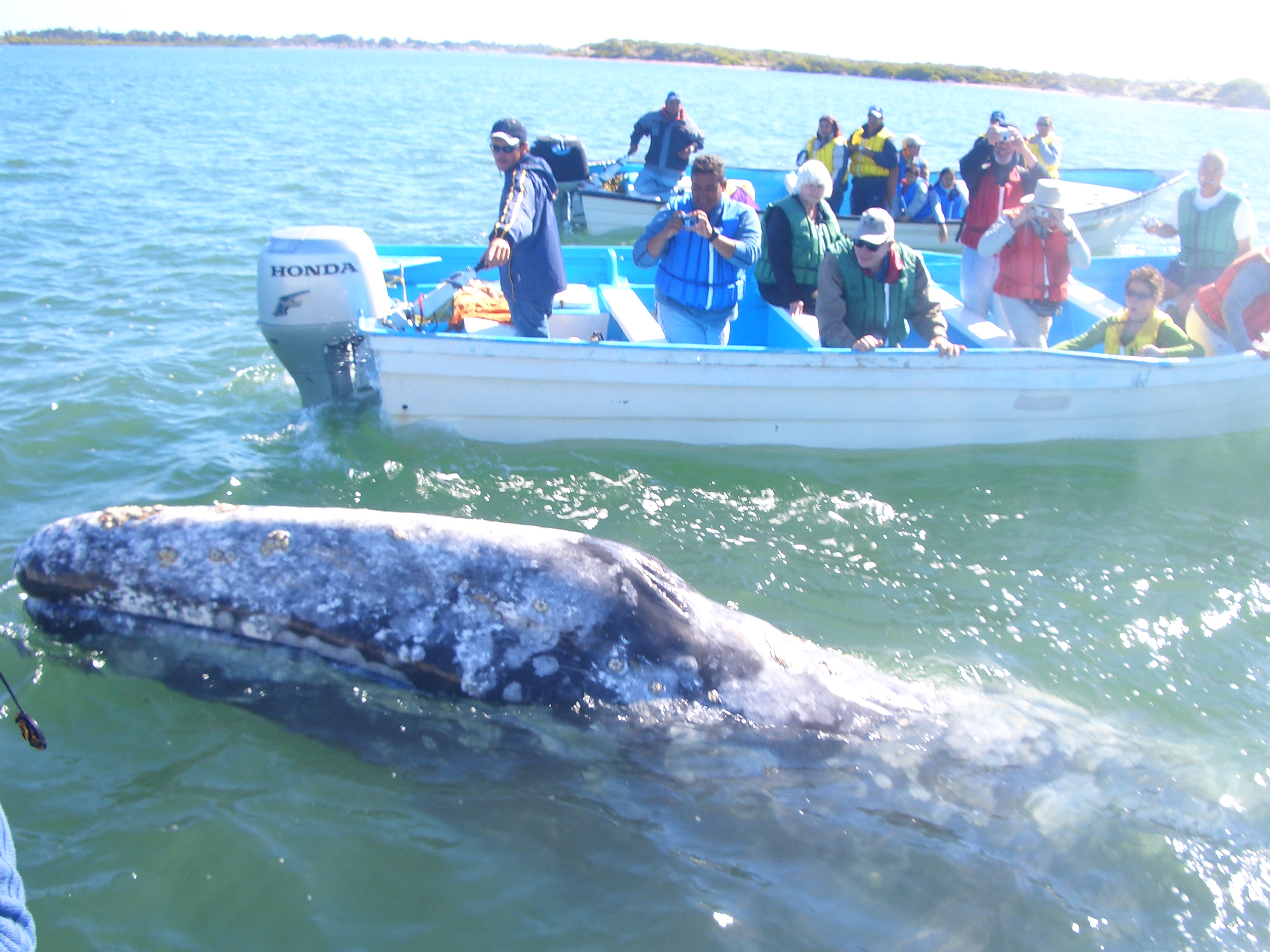
Within minutes we were in the calm waters of the bay having our first “interaction.” A mom and her calf.   The mom stayed about 20 yards off our starboard but the calf…all 15 feet of it…seemed curious.


Our captain suggested we all splash our hands in the water. Little by little, the baby got closer . Until…it was right next to the boat.


Eager hands reached out to touch the “little guy.” It seemed eager itself and seemed to enjoy being petted. Cameras whirled and clicked. Video cameras jockeyed for position.   People laughed and smiled.


I did the same. For a brief moment, it’s eye came out and looked at us and I reached out and gave it a rub! I pulled back laughing as if doing something I wasn’t supposed to do. Like getting caught with the cookies.


And everyone laughed.   And it seemed to wink then moved along the side of the panga as if asking everyone to “rub me more.”


It blew a misty flume of water that showered everyone and had everyone ducking with laughter and covering their cameras. And the baby moved away under mom’s wing. “That’s enough playtime with the funny creatures in the boat, Junior.”


That day, I think I counted more than 40 whales. I would touch at least 4 or 5 and most whales were within a few yards of us all day.


One would leave and two would pop up. We’d see others glide beneath us or others spy-hopping (holding vertically in the water to see what’s going on!).


It turned out to be an amazing day.


After a few hours we returned to shore to a huge shrimp and lobster lunch that again had me wishing for a hammock siesta, but the long drive back kept me smiling. The clients were passed out behind me asleep.


The whales are here in Baja until mid-March or so. It’s the longest migration of any animal on earth as they come from the Bering Sea each year to the calm lagoons of Baja to give birth and mate.   Give it a try!


That’s our story!

Jonathan signature

_______________

Jonathan Roldan has been writing the Baja Column in Western Outdoor News since 2004.  Along with his wife and fishing buddy, Jilly, they own and run the Tailhunter International Fishing Fleet in La Paz, Baja, Mexico  www.tailhunter-international.com.  They also run their Tailhunter Restaurant Bar on the famous La Paz malecon waterfront.  If you’d like to contact him directly, his e-mail is riplipboy@tailhunter-international.com  or drop by the restaurant to say hi!

______________

Jonathan Roldan’s

Tailhunter International


TAILHUNTER FISHING FLEET #1 Rated on Trip Advisor

TAILHUNTER RESTAURANT BAR #1 Rated in La Paz on Trip Advisor


Now follow us on FACEBOOK TOO


Website: www.tailhunter-international.com

U.S. Office: 8030 La Mesa, Suite #178, La Mesa CA  91942

Mexico Office: 755 Paseo Obregon, La Paz, Baja Sur, Mexico

Phones:

from USA : 626-638-3383

from Mexico: 044-612-14-17863

.

Tailhunter Weekly Fishing Report:

http://fishreport.jonathanroldan.com/

Tailhunter YouTube Videos:

http://www.youtube.com/user/pangapirate

“When your life finally flashes before your eyes, you will have only moments to regret all the things in life you never had the courage to try.”
 

Read Full Post »

“How We Rolled Rumbled and Stumbled”


donkeys

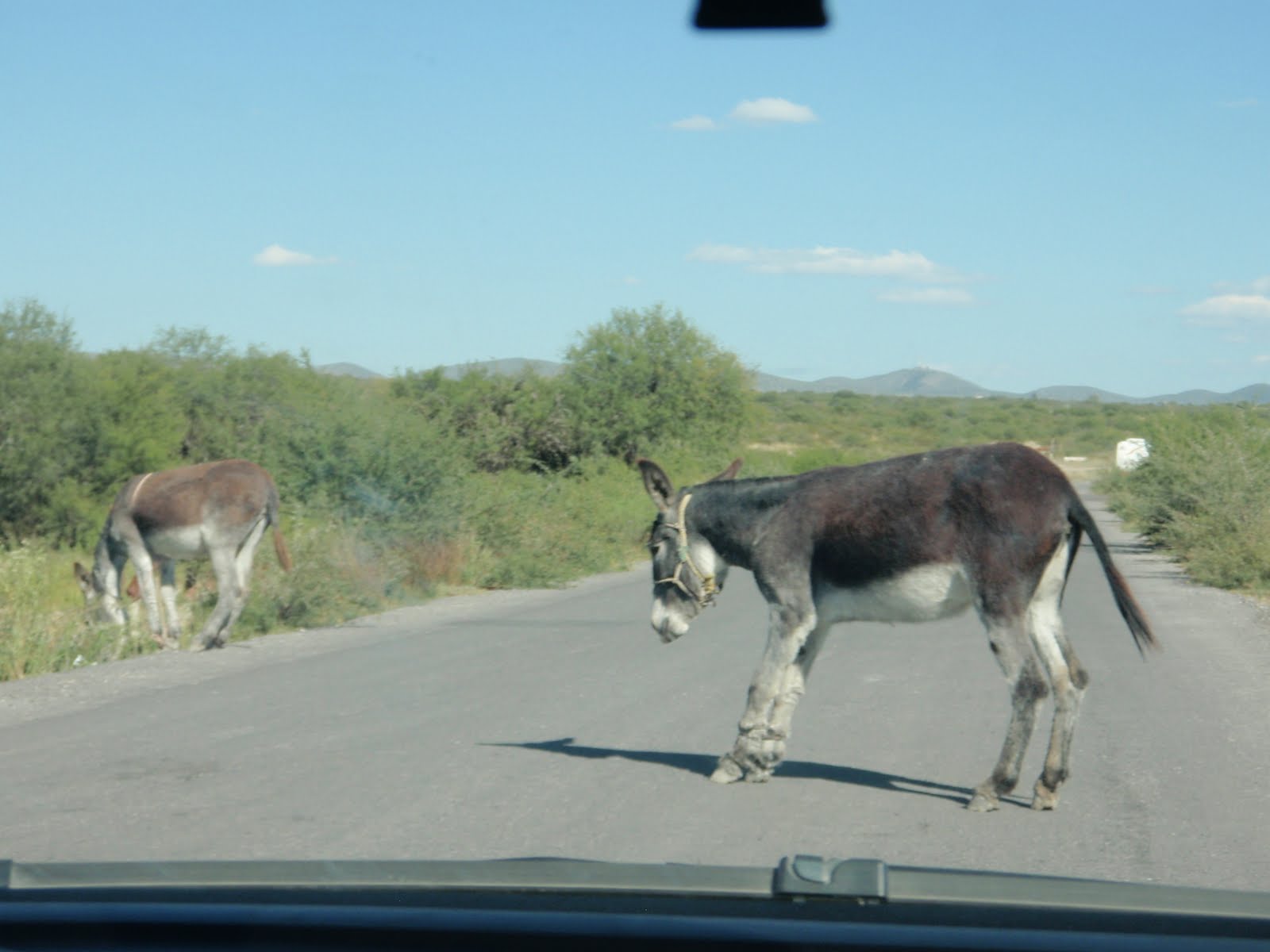
Road trips where you wrote you own captions and every curve there was something unexpected!

“HOW WE ROLLED RUMBLED AND STUMBLED”

Originally Published in Western Outdoor News the Week of January, 6, 2014

Driving the Baja…


There was a time not long ago when I actually had the time to drive up and down the Baja Transpeninsular Highway. Time was not “of the essence” and even with cheap flights, gas was still so cheap it was more economical to drive.


These were the days several decades before there were regular convenience stores and Pemex gas stations dotting the landscape.


Yes, the Transpeninsular was a relative Mexican engineering marvel for its day. Officially called Federal Highway 1, it was quite a feat.


Being in the U.S. we take highways for granted and few who visit Baja today remember what it was like before the highway. Even those first years after its completion in 1973 were a bit rugged.


Highway 1 dotted-dashed-scurried-and-ribboned the entire 1,000-mile length of the Baja corridor from Tijuana to Cabo San Lucas. No doubt, to have one solid-length of pavement was a vast improvement over the previous road(s) which required the abilities of a world-class off-road driver and a vehicle that was about as indestructible as an Abrams tank.


Even in its completed state, it was politely called a “highway” sporting just two lanes. Laughingly and affectionately, it was called a “leveled goat trail” by its fans who still saw it as a vast improvement.


But, the word “solid” is relative. Like so much in Mexico. “Pavement” has many meanings!


There were sometimes more detours around missing parts of pavement than actual pavement. That meant forays into the nearby desert.

Potholes stretched for miles and trying to navigate in-around-and-out of them was like trying to dash through a minefield.


Sooner or later, the odds were you’d get rocked. The Spanish word for “pothole” is “Hoyo” (OY-yo)…as in OH-no! Which is what you said as your suspension or axle suddenly groaned in agony as it slammed into crater after crater. And you hoped you still had an oil pan.


But, so many of us drove the trek regularly, and looked forward to it. It was an adventure of adventures. It was almost a rite of passage to tell someone, “Dude, I just DROVE the Baja.” You didn’t “drive TO Baja.” You didn’t “TRAVEL to Baja.”


You proclaimed your coolness and told folks, you “DROVE the Baja.” It was sorta like “riding the Banzai Pipeline.” Or “running with the bulls.” Or “scuba diving with sharks.”


Instant cred. Very high on the “neato scale.”  At least a 9 in the ooh-aaa factor.   A bucket list things for guys.


Yup…Us cooler dudes, “DROVE the Baja.” Back in the day, the coolest of the cool folks declared they “SURVIVED the Baja” because that was always a pre-cursor to a good story, too! Driving the Baja was one thing.  “Surviving the Baja” meant that a good tale was to follow.


The “survivors” brought back great stories and tall tales of roadside frontier adventure. There were flat tires…busted fan belts and axles and green unfiltered gas bought from a guy with a 50-gallon drum and a handpump.


How about those swarming mosquitos and flies? Sunburn…hangovers…stalling in sand-filled arroyos and waking up in strange places. And what’s a good story if it didn’t include Montezuma’s revenge… a hurricane… a sandstorm or the occasional ill-advised romantic liason?


But, there were also golden gems of deserted white sand beaches and glorious crimson sunrises…mouth watering handmade roadside tacos… ferocious fish that had never seen a hook… perfect thick-lipped waves that had never been surfed…friendly warm people…icy beers and barbecued lobster eaten with fingers and campfires under carpets of stars.


And always, there was one more dirt road off the beaten path that beckoned to be explored…begged to be explored. Every adventure started with the words…”We decided to pull off the highway…” Or “We stopped in for just one small tequila…” Or, “I was eating a greasy taco and my eyes locked on this pretty girl…”


Federal One has become bigger, better and safer after all these years. There are still stretches of the wild Mexican frontier that go for miles. But, you’ll see more gas station. More convenience stores. RV parks and hotels too.


It’s just not the same anymore. You climb on a plane in the U.S. You ride the sterilized tube through the air and maybe see a bit of dessert or ocean below. You exit into an air-conditioned terminal with a thousand other people.


The biggest adventure and closest brush with danger is running the gamut of airport vendors trying to rent you a car or get you on a time-share trip.


“Free fishing trip, Senor? Just need two hours of your time for a small presentation.”

“Eh amigo, do you need a taxi?”

“Discount snorkel trip for you and your family?”


The height of your anxiety and adrenaline level is wondering if your luggage will get searched by duty inspectors at the airport.


You remember that undeclared bottle of Jack Daniels hidden in your boxer shorts.   Your wife thinks they inspectors will pull out her lingerie in front of everyone.   Blood pressure zooms.


Or major panic. Now that you’re through customs, you can’t find the shuttle driver who was supposed to meet you at the terminal. Whew…there he is. He was hidden behind all those other shuttle drivers!


Man, that was stressful!   Gonna have a double margarita at the pool bar as soon as I dump this stuff in the room.


It’s just not the same anymore. And neither are the good stories.


“The room service didn’t have cheesecake…” is a lot different from


“Did I tell you about the time these Mexican fishermen with lobsters came to our campsite and wanted to trade for a 6 pack of Budweiser? And one guy had a guitar…and my buddy Dave pulled out a bottle of Cuervo?”


“Man…let me tell you…”


Editor’s Note:  Jonathan and Jill Roldan of Tailhunter International Sportfishing (www.tailhunter-international.com) in La Paz make the Mex 1 run often. They are at their first show of the year for them, at the ISE show in Sacramento that starts Wednesday at Cal Expo, with stops in Long Beach and Del Mar on the SoCal schedule.

That’s our story!

Jonathan signature


Jonathan

_______________

Jonathan Roldan has been writing the Baja Column in Western Outdoor News since 2004.  Along with his wife and fishing buddy, Jilly, they own and run the Tailhunter International Fishing Fleet in La Paz, Baja, Mexico  www.tailhunter-international.com.  They also run their Tailhunter Restaurant Bar on the famous La Paz malecon waterfront.  If you’d like to contact him directly, his e-mail is riplipboy@tailhunter-international.com  or drop by the restaurant to say hi!

______________

Jonathan Roldan’s

Tailhunter International


TAILHUNTER FISHING FLEET #1 Rated on Trip Advisor

TAILHUNTER RESTAURANT BAR #1 Rated in La Paz on Trip Advisor


Now follow us on FACEBOOK TOO


Website: www.tailhunter-international.com

U.S. Office: 8030 La Mesa, Suite #178, La Mesa CA  91942

Mexico Office: 755 Paseo Obregon, La Paz, Baja Sur, Mexico

Phones:

from USA : 626-638-3383

from Mexico: 044-612-14-17863

.

Tailhunter Weekly Fishing Report:

http://fishreport.jonathanroldan.com/

Tailhunter YouTube Videos:

http://www.youtube.com/user/pangapirate

“When your life finally flashes before your eyes, you will have only moments to regret all the things in life you never had the courage to try.”

Read Full Post »

GREAT TIME TO VISIT

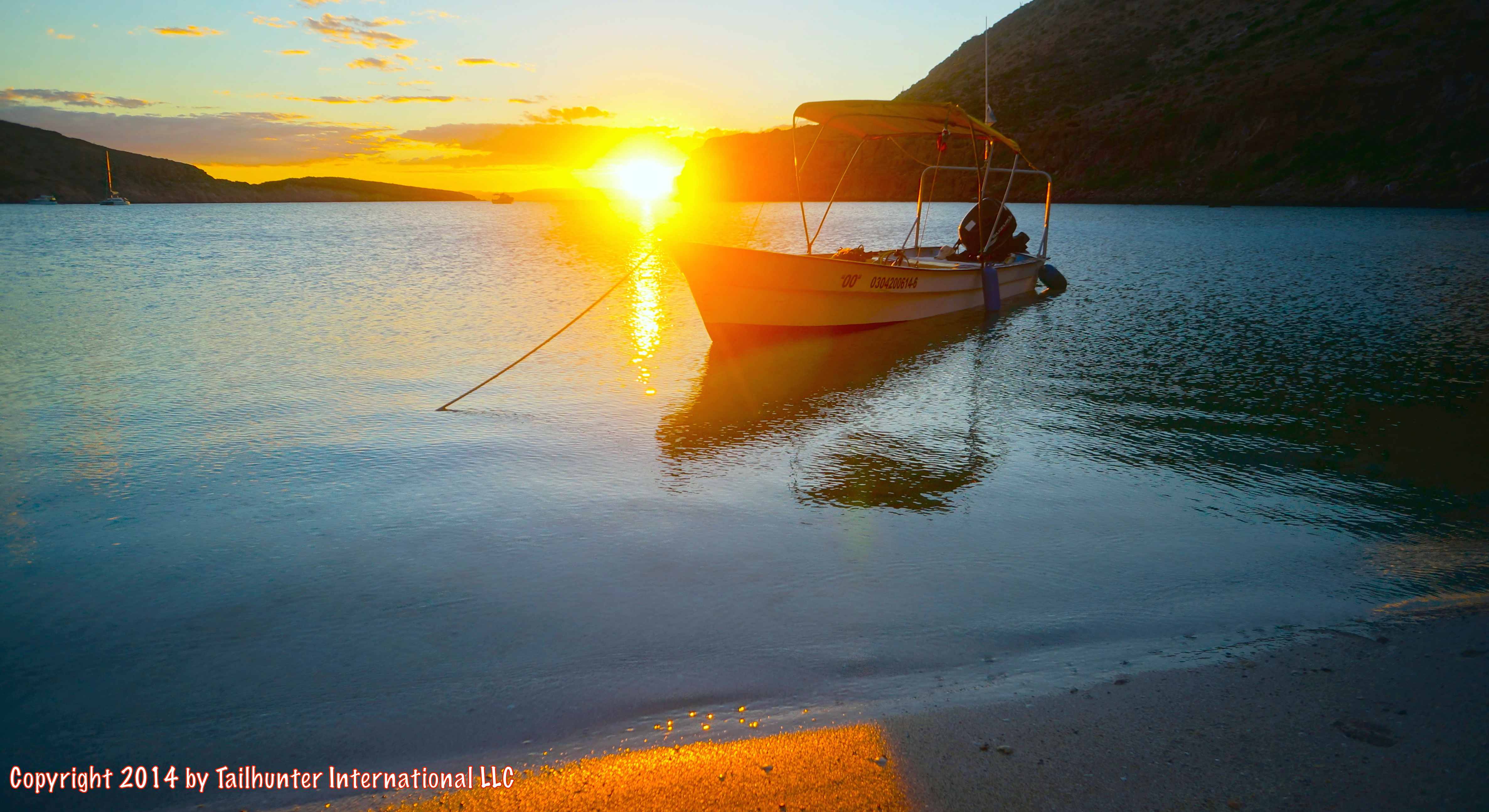
This time of year is a good time to find your own little beach...and maybe something else too!

This time of year is a good time to find your own little beach…and maybe something else too!

A GOOD TIME TO VISIT

Originally Published the Week of Nov. 25, 2014 in Western Outdoor News

I have an usual method to measure the “ changing-of-the-seasons” here in La Paz.  My sure-fire way to know that the warm-weather tourist season has ended is goofy, but simple.


I walk outside our Tailhunter Restaurant and use the street as my measuring device.


For about 8 months of the year, getting across our main street from one side to the other is an exercise in agility, patience and frustration.  The long straight “malecon” that runs along the ocean-front of our city is like a mini-dragstrip.  Perfect for parades.  Perfect for marches.  Perfect to see how fast your car accelerates.


And that’s what it’s like getting across the street.  No one stops. Pedestrians beware.  Cars have the right-of-way.  That’s the unwritten law most of the year.   There’s two kinds of folks…the” quick” and the “quicker.”


Then, about now, it changes.


The shadows get longer as the sun rises and sets at a lower angle.  The bay gets breezier.  And, for some reason, people…and drivers slow down.  In fact, there’s just less people.  And using my “measuring stick” of a street, I can cross at leisure.  As many times as I want.  I can even stand in the middle of the street and take photos.   Ho-hum…


Where’d everyone go?


About this time, except for the influx of snow-birds, tourism just kinda slows down.  There will be a spike for the holidays like Christmas, but for many areas, from November to March, Baja changes from the “land of mañana” to “the land of maybe not even mañana…maybe the -day-after-manana.”


But, it’s a great time to come down.


Depending on your perspective, winter is Baja is either warmer or cooler!


It’s surely cooler than April to October when the legendary Baja heat sends visitors cranking on their hotel air-conditioning units or spending their waking hours at the poolside swim-up bar.  Humidity is nil.  Daytime air temps in the 60-80’s are more the norm.  You night even use a blanket at night.  It might actually be a good idea to pack a pair of jeans or slacks and a sweatshirt!  Some areas of Baja actually get “cold” by Baja standards and frost is not uncommon and you’ll see us locals in down jackets and watch caps.


Conversely, if you’re from say…the Pacific Northwest…Canada…the East Coast…you’ll find the winter months to be head-and-shoulders over shoveling snow or drying out from rain.


You’ll get a grin watching us residents “bundle up” while you saunter down the marina or beach in shorts and send Instagram selfies to your envious neighbors back home while holding icy margaritas.  Bargaining for silver jewelry for your wife beats crawling under your car to put on snow chains.


Further, as I alluded to above, crowds are down.


Be the only ones in a restaurant.  The hotel staff call you by name.  The bartender remembers your favorite drink.  No lines for attractions.


Actually find a beach where you’re not dodging beach balls or forced to listen to someone else’s obnoxious boom box.   Walk downtown and around town and sit and watch and listen, immerse and discover without a time-share or t-shirt sale dogging your every move.


If you plan to fish, winter-time fishing might put a whole different spin on Baja fishing for you. Cooler waters and perhaps windier conditions might predicate completely different types of fishing for you.   Winter or inshore species you hadn’t considered like yellowtail, pargo, cabrilla, amberjack and others will surprise you.  Shoreline fishing and beach fishing can produce sierra, rooster fish, jack crevalle and pompano and perch.


And there’s a good chance the waters won’t be crowded and the shorelines will be deserted!


And there’s that aspect again…just not many folks around.


And that’s good.  There’s opportunities for bargains and deals.  Taxi drivers need fares!  Negotiate to have a personal driver for all your days.   Or negotiate for a better deal with the rental car agents who all work on commissions.


Restaurants, eager for patrons have deals on drinks and food.  Many of the smaller hotels, and oftentimes the most charming, will often negotiate as well, especially if it’s off-line and person-to-person.  Ask for a deal on an extra night or two!  All they can say is “no.”


Same with tourist vendors.  Alway wanted to try snorkeling?  Want to do that glass-bottom boat thing?  Want some horseback riding or try that off-road ATV?  Ask for a deal.   Winter is the perfect time.


Bottom line is that often you’ll see a whole different side of Baja and Mexico during the winter months.  Even for frequent visitors who usually only show up during the peak warmer months, they find a completely different complexion to their favorite Baja locations this time of year.  For many it becomes a favorite.  And a hidden secret they sometimes aren’t eager to share lest the crowds come back!

That’s our story!

Jonathan signature

_______________

Jonathan Roldan has been writing the Baja Column in Western Outdoor News since 2004.  Along with his wife and fishing buddy, Jilly, they own and run the Tailhunter International Fishing Fleet in La Paz, Baja, Mexico  www.tailhunter-international.com.  They also run their Tailhunter Restaurant Bar on the famous La Paz malecon waterfront.  If you’d like to contact him directly, his e-mail is riplipboy@tailhunter-international.com  or drop by the restaurant to say hi!

______________

Jonathan Roldan’s

Tailhunter International


TAILHUNTER FISHING FLEET #1 Rated on Trip Advisor

TAILHUNTER RESTAURANT BAR #1 Rated in La Paz on Trip Advisor


Now follow us on FACEBOOK TOO


Website: www.tailhunter-international.com

U.S. Office: 8030 La Mesa, Suite #178, La Mesa CA  91942

Mexico Office: 755 Paseo Obregon, La Paz, Baja Sur, Mexico

Phones:

from USA : 626-638-3383

from Mexico: 044-612-14-17863

.

Tailhunter Weekly Fishing Report:

http://fishreport.jonathanroldan.com/

Tailhunter YouTube Videos:

http://www.youtube.com/user/pangapirate

“When your life finally flashes before your eyes, you will have only moments to regret all the things in life you never had the courage to try.”
Read Full Post »

ODILE’s ORDEAL and THE AFTERWRATH

1410837924985_wps_24_Enrique_Cota_Cece_a_cries

He’s not lamenting a messed up fishing vacation. Many of those who had the least, lost the most. (Photo from British news) 

ODILE’s ORDEAL AND AFTERWRATH

Originally published the week of Sept. 30, 2015 in Western Outdoor News

When I wrote my last column two weeks ago about making the best out’ve your situation if your vacation gets slammed by a hurricane or other natural disaster, I had no idea. As I wrote that piece, it was your typical sunny Baja day on the beach. As I closed out, it was just starting to get a little cloudy. Rain drops were starting to fall.


I used that to underscore how quickly things can change. Especially in Baja. Especially in this el Nino year.


I was just trying to get my column out. Put some words together. I had no clue just how fast things would change. How fast life itself would change.


The “bit of rain” was part of a weather cell we had been watching half-heartedly watching for several days.  It was just another ho-hum rainfall that started our way with a roar, but like a dozen others this season, we expected it would eventually bend out to the Pacific Ocean. We might get a “little afternoon precipitation.”


It was an understatement of historic proportions.


In the span of less than 12 hours the storm did the unexpected and put Baja right in it’s crosshairs.   By midnight, Sunday the 14th, Hurricane Odile had turned into the largest and most powerful hurricane ever to hit Baja.


It slammed into Baja with Category 3 and 4 strength winds including gusts up to 140-150 miles and hour. By comparison, Hurricane Sandy that devastated the East Coast in 2012, had winds of “only” 115 miles and hour.


Those, like us with a fishing operation in La Paz, or have businesses that are affected by weather or happen to watch weather, had at least a bit of time to get ready. Get the batteries and water. Tape the windows. Get the rain gear. Tie and chain things down. Pull our boats onto dry ground.


Most of Baja was not ready.   It was the weekend. It was the start of the 4-day Independence Day weekend festivities, the largest biggest holiday in the country.   Folks were in a big-time party mode.   Most government officials and civil workers were long gone. Thousands of tourists had no idea either.

It was pretty bad. You’ve probably seen the photos or watched the news. It’s hard to describe if you’ve never been in one. It’s like being inside a vacuum cleaner. It’s THAT loud. But add the glass breaking. Trees snapping. Our ceiling collapsed. Things shattering. It’s difficult to talk. To think.


This was my 10th big one and they are never the same. Like some perverse amusement park ride you know will end, it’s fascination, panic, awe, self-preservation and terror roller-coastering with each blast of wind.


And then it passes. It whimpers; runs outta steam; and moves on.  And you sigh. And you exhale and like little Hobbits you gingerly creep out with everyone else into the light.


But, it’s not over.


In reality, it’s just starting.


The destruction is devastating. It looks like Godzilla danced on the town. Phone poles snapped in half. Giant old trees uprooted. Entire walls of buildings simply missing. Boats and yachts sunk or blown to dry land. Not a single window unbroken. Cars upended. Power lines draped limply across roads. Entire neighborhoods destroyed.   Roads and bridges submerged.   Hotels collapsed.


More than 30,000 tourists stranded with no immediate resources to handle them. An equal number of residents homeless.


And no water. No power. No electricity. No phones. Gasoline runs out. The brand new airport looks like it took an artillery barrage. It no longer exists.


Like being no a deserted island. No way out. No way in. No way to call home…or anyone else. No supplies.


One day post storm, it was shock and disbelief. Day two, it’s assessment.


By day 3, it was starting to get ugly. Tensions rising. Tourists are now ramping up the panic. Tourists and residents alike hit realization. And it’s nasty and ugly and scary.


The vacation has been trashed. The novelty has worn off. The margarita bar has been blown to Mazatlan. The fishing boats are sunk. And there’s no water, showers, food.   Everyone is sleeping on the floor.


And worse…there’s no communications. Off the grid. That is especially terrifying . In a world where everyone has their nose stuck in a smart-phone, it’s the stone age. No way to notify family and relatives. No access to news. Still no way off the island. No airport. No planes.

In the cities, the afterwrath is worse.


Wholescale looting erupts. And it’s not just the dad trying to get some milk and tortillas for the family. Mobs break down windows, doors and metal barriers. Some gleefully. Large scale jubilant Christmas looting.


The big chain stores are attacked and emptied by the hordes. TV’s…clothes…exercise equipment…alcohol. If it’s not nailed down, it’s gone. Fighting breaks out. Police and law enforcement, already strained with the disaster are powerless. Rioters barricade streets so police cannot interfere. They don’t. They can’t.


In the neighborhoods, more looting. Assaults. Rape. Gangs roam the streets with machetes and arms. Neighbors set up their own security to protect their neighborhoods with guns, rocks and re-bar. Carjackings take palce. Fires are set to illuminate the dark. Neighbors dress in white to set themselves off from the bad guys.


Families fight off looters from the roof with bricks and chunks of concrete. One group beats back several assaults from gangs attempting to breach their walls by using sticks, rocks and baseball bats against knives and clubs.


Gunfire can be heard in the darkened streets at night. As one escaped resident told me, “It was medieval and primal. Complete lawlessness.”


The army finally rolls in and things quiet down.


Two weeks post-storm, the recovery is remarkable. The government, the phone and power companies; constructions companies and many others are still working around-the-clock to get going. The phoenix rises.


They said the airport in Cabo would be out for the rest of the year. By the time you are reading this, some limited flights might already be working. The La Paz Airport is already open.


La Paz is 95% back on the grid. Most of the city is cleaning up and back to normal but dealing with the huge influx of refugees. Cabo is 15% on the grid. Some hotels are actually back in business if somewhat limited.


Cell phones were not supposed to work for a month. They were back online in about a week.

But, it’s not over yet. Far from it. Odile’s “ordeal” continues on so many levels.

Many of those who had the least, lost the most. Or everything. The poorer areas, if not destroyed, have not been high on the list to restore services.  It’s alot more than “my vacation got screwed” or “I never got to catch a fish”  or  “I went two days without a hot shower.”

Much more…


Many still have no water. Electricity is a flashlight at best. Or a candle. Food is scarce and many are in residences missing a roof…doors…windows…a wall. As one told me, “My family of 3 shares two buckets of water in the dark to wash, drink and cook.”


From others, “I have had no hot food in two weeks.  Several days there was no food.”


“We sleep in the doorway because there is no light.  By the doorway there is light from outside because we lost our doors.  It is also cooler. But now the mosquitos come.”

“Our barrio (neighborhood) has yet to see a repair truck or anyone.  They fix the tourist areas, but in two weeks we still have no electricity or water.  We are forgotten. ”

Many businesses will never recover. If it was tourist related, there’s no tourists. If the building got blown away, there’s no insurance. It doesn’t matter if your family ran it for 2 generations.   And there’s no “bailout” programs here in Mexico.


Odile shattered more than just some hotels and vacations. The most powerful storm ever to hit Baja indeed.


That’s my story

Jonathan signature


Jonathan

_______________

Jonathan Roldan has been writing the Baja Column in Western Outdoor News since 2004.  Along with his wife and fishing buddy, Jilly, they own and run the Tailhunter International Fishing Fleet in La Paz, Baja, Mexico  www.tailhunter-international.com.  They also run their Tailhunter Restaurant Bar on the famous La Paz malecon waterfront.  If you’d like to contact him directly, his e-mail is riplipboy@tailhunter-international.com  or drop by the restaurant to say hi!

______________

Jonathan Roldan’s

Tailhunter International


TAILHUNTER FISHING FLEET #1 Rated on Trip Advisor

TAILHUNTER RESTAURANT BAR #1 Rated in La Paz on Trip Advisor


Now follow us on FACEBOOK TOO


Website: www.tailhunter-international.com

U.S. Office: 8030 La Mesa, Suite #178, La Mesa CA  91942

Mexico Office: 755 Paseo Obregon, La Paz, Baja Sur, Mexico

Phones:

from USA : 626-638-3383

from Mexico: 044-612-14-17863

.

Tailhunter Weekly Fishing Report:

http://fishreport.jonathanroldan.com/

Tailhunter YouTube Videos:

http://www.youtube.com/user/pangapirate

“When your life finally flashes before your eyes, you will have only moments to regret all the things in life you never had the courage to try.”
Read Full Post »

Making Lemonade Safely

storm coming 2

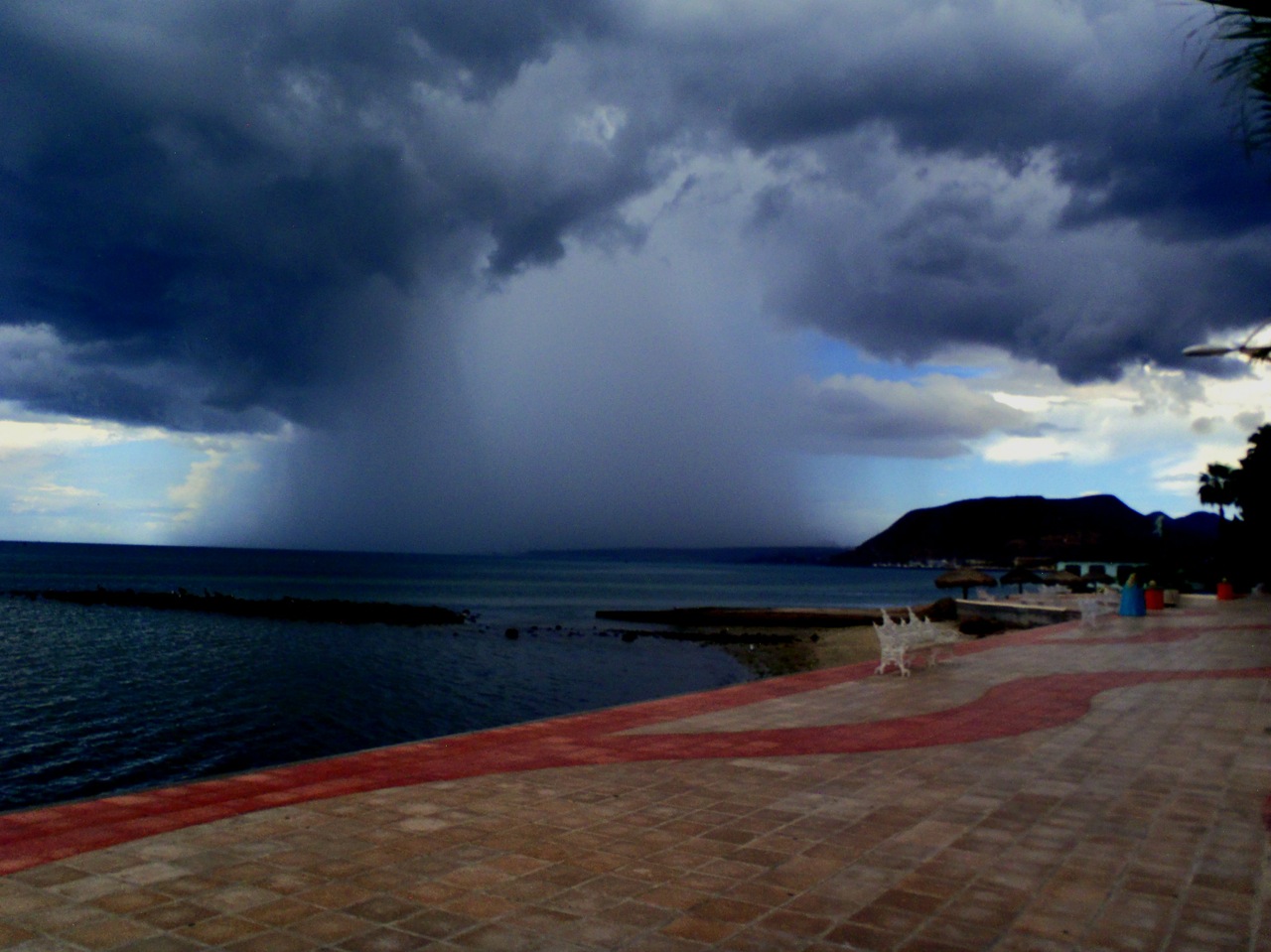
In a matter of minutes…here it comes! Out’ve a blue sky.

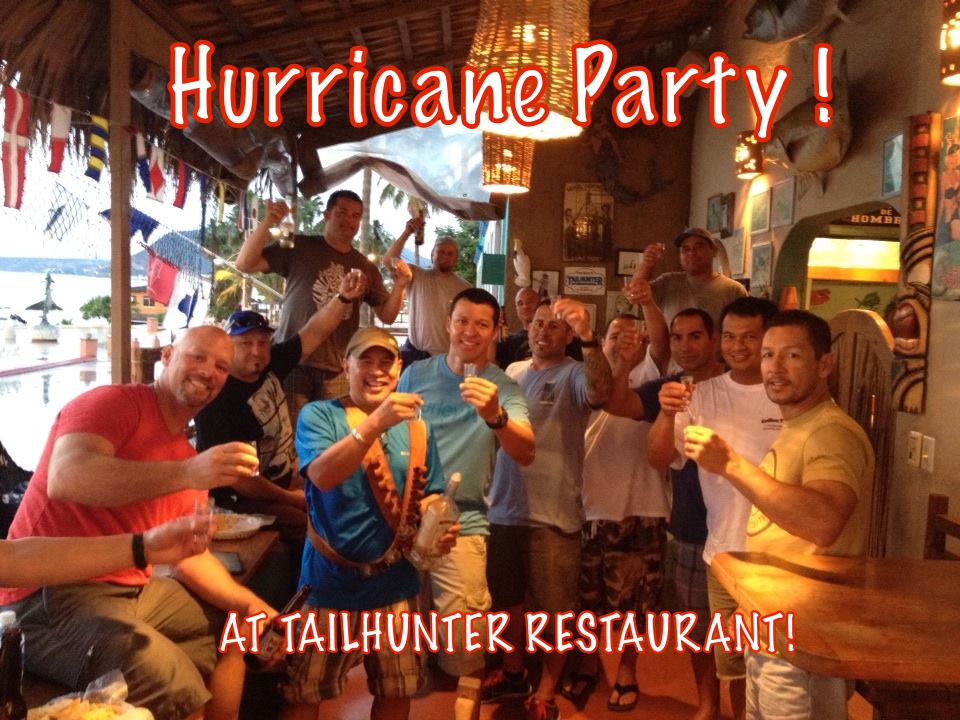
HURRICANE PARTY!

One way to handle it…


MAKING LEMONADE SAFELY

Originally Published the Week of Sept. 17, 2014 in Western Outdoor News

As I sit here writing on the 2nd story terrace of our Tailhunter Restaurant here in La Paz, it looks like a postcard.   The waters of the bay shimmer in the sunshine while I can see birds diving on a school of jacks near one of the buoys.


Sailboats and motoryachts drift on their moorings while a larger cruiser heads out. Palm fronds from the waterfront trees give a hint of the salty breeze blowing through siesta hour.   If I weren’t writing, I’d be like a few guys I see on the beach with their feet up under a shady palapa with cold ones in hand just watching the world go by.


Hard to believe that just a few days ago, Hurricane Norbert blew through here. Life returns quickly to normal once the sun comes back out. Conversely, everyone is now watching and talking about Tropical Storm / Hurricane Odile which has Baja in it’s crosshairs and might be hitting us as you’re reading this.


Actually, there’s two other storms (Tropical Depression 16-E and Invest 96E) which are yet un-named, but accompany Odile into our area. Sigh…can’t get a break! So, a trifecta might be in the making.


But that’s life in a tropical zone during an El Nino year! We expected them. By one count, these are the 14th or 15th storms of the year.   Most have fortunately glanced off and gone spinning into the Pacific with apologies to my family in Hawaii. (But Hawaii knows how to deal with rain! Baja is still working on it.)


Until Norbert last week the storms did some tremendous damage along Baja’s Pacific Coast. However, they really haven’t done much to Baja except rattle our collective tranquility.


Along with some heavy occasional downpours, street flooding and thundershowers , they remind us that Mother Nature still has a roar.   But, mostly, all we’ve had is roar.


And roaring is fine. To a point.


As long as it doesn’t screw with our vacations, right?


But, it happens sometimes. Baja is the “frontera” (frontier). It’s not some hermetically-sealed-Disneyland where everything is somehow controlled by someone behind a screen like the Wizard of Oz.


It’s beautiful and rustic and rugged. And in it’s own way, still dirty and dusty and raw. And when it rains or gets weather, it can get dirtier and muddier and wetter and uglier and yes, even dangerous.


So, what do you do if Mother Nature hangs one on you?   It’s not likely, but it CAN happen and co-incidentally, “hurricane season” just happens to be when the best fishing takes place.


You can watch the weather reports and, if you see something looming, take pre-cautions. Check with your outfitter and reservation people. Take out vacation insurance if it looks like you might not get refunded.


Don’t outright cancel your trip without first checking if the area you will be in will even be affected.   Baja is a big place. Mexico is a big place.   Weather patterns change rapidly. A storm affecting one area, might not even drop rain a few hundred miles away.


If you’re already on vacation, sometimes there’s absolutely nothing to be done. Storms can orginate from clear blue sunny skies in a matter of hours during certain times of the year.   No amount of foresight or weather scouting on your part could have predicated the onset.


If that happens, use some common sense.  Vacations are important, but nothing is more important than personal safety.


If your outfitter has to cancel a trip, so be it. See if there’s a refund or you can re-schedule.


Even if the outfitter or operator is NOT canceling the trip, ask if it’s going to be rough or even worth going out. Remember, it’s supposed to be safe and second, it’s supposed to be fun. This shouldn’t be an exercise in stamina and miserableness. Ask to re-schedule.


Some shady operators will send you out knowing full well it’s gonna be a boatride just to pocket the money. But, most aren’t like that. Especially, if you have the ability to re-schedule. They don’t want to be out there bouncing around either and happy satisfied clients are a priority.


If the hotel recommends you stay close or even indoors…by gosh…have a clue and don’t be running around outside when all heck is breaking loose.


I’m reminded of tourists I saw in the middle of a hurricane cavorting in the pool while bits of roof were spinning around like shrapnel in 80 mph winds. They were still laughing as 20-pound coconuts started dropping from coco trees like cannonballs around them. WHOOSH! WHOOSH! BOINK!


Another time, with thunderous bolts of electricity blasting La Paz Bay, I saw frustrated anglers still casting rods in horrendous wind and rai. They were trying to make-a-point to their amigos that they were “hardcore” fishermen. With every jag of lightning I expected nature to take aim at one of those “rods” and teach them something about “hardcore.” More like “burned-to-the-core!”


It’s pretty funny now, but back in the day, some other clients grabbed kayaks in the middle of the maelstrom and attempted to row around playing “kayak water polo” in a flooded parking lot where cars were submerged up to their windows.


Like the saying, “It’s all fun and games until someone gets hurt.”


The point is, stay safe. Don’t tempt the powers, curse the devil or spit into the wind. So to speak.


From a secure vantage point, try to enjoy the adventure, as it were. Nature can be pretty amazing.  Put your feet up. Crack a cold one with your other stranded travelers.   There’s not much more you can do outdoors.


I’ve seen folks organize poker parties for others. One hotel set up a DVD and casino night in the lobby.   Another hotel sent out for pizza for everyone and kept the bar open 24 hours.


Another put giant trash bags and scissors out so people could make their own “rain panchos.” Snip three appropriate holes and you’re ready to go.


Bottom line. Make the best of a crazy situation that can’t be helped. Don’t blame your travel agent, outfitter or the weatherman. It is what it is.


People get hurt during these things but MOST of the time it’s because they were doing idiotic things like trying to swim in raging surf or crossing swollen arroyos with cars. Or getting hit by flying debris.


No one ever got hurt watching a storm while eating a taco and drinking a margarita indoors.


I’m shutting my laptop right now. Three hours ago when I started typing, it was sunny and hot!   Honest…the winds suddenly came up with dark clowds and it’s staring to rain…again! Where’s my trash bag pancho? I’m out!


(Within hours of this, Category 4 Hurricane Odile hit…)

That’s our story!

Jonathan signature

Jonathan

_______________

Jonathan Roldan has been writing the Baja Column in Western Outdoor News since 2004.  Along with his wife and fishing buddy, Jilly, they own and run the Tailhunter International Fishing Fleet in La Paz, Baja, Mexico  www.tailhunter-international.com.  They also run their Tailhunter Restaurant Bar on the famous La Paz malecon waterfront.  If you’d like to contact him directly, his e-mail is riplipboy@tailhunter-international.com  or drop by the restaurant to say hi!

______________

Jonathan Roldan’s

Tailhunter International


TAILHUNTER FISHING FLEET #1 Rated on Trip Advisor

TAILHUNTER RESTAURANT BAR #1 Rated in La Paz on Trip Advisor


Now follow us on FACEBOOK TOO


Website: www.tailhunter-international.com

U.S. Office: 8030 La Mesa, Suite #178, La Mesa CA  91942

Mexico Office: 755 Paseo Obregon, La Paz, Baja Sur, Mexico

Phones:

from USA : 626-638-3383

from Mexico: 044-612-14-17863

.

Tailhunter Weekly Fishing Report:

http://fishreport.jonathanroldan.com/

Tailhunter YouTube Videos:

http://www.youtube.com/user/pangapirate

“When your life finally flashes before your eyes, you will have only moments to regret all the things in life you never had the courage to try.”
Read Full Post »

BILLFISH 101

IMAG0242

BILLFISH 101

Originally Published the Week of Sept. 2, 2014 in Western Outdoor News

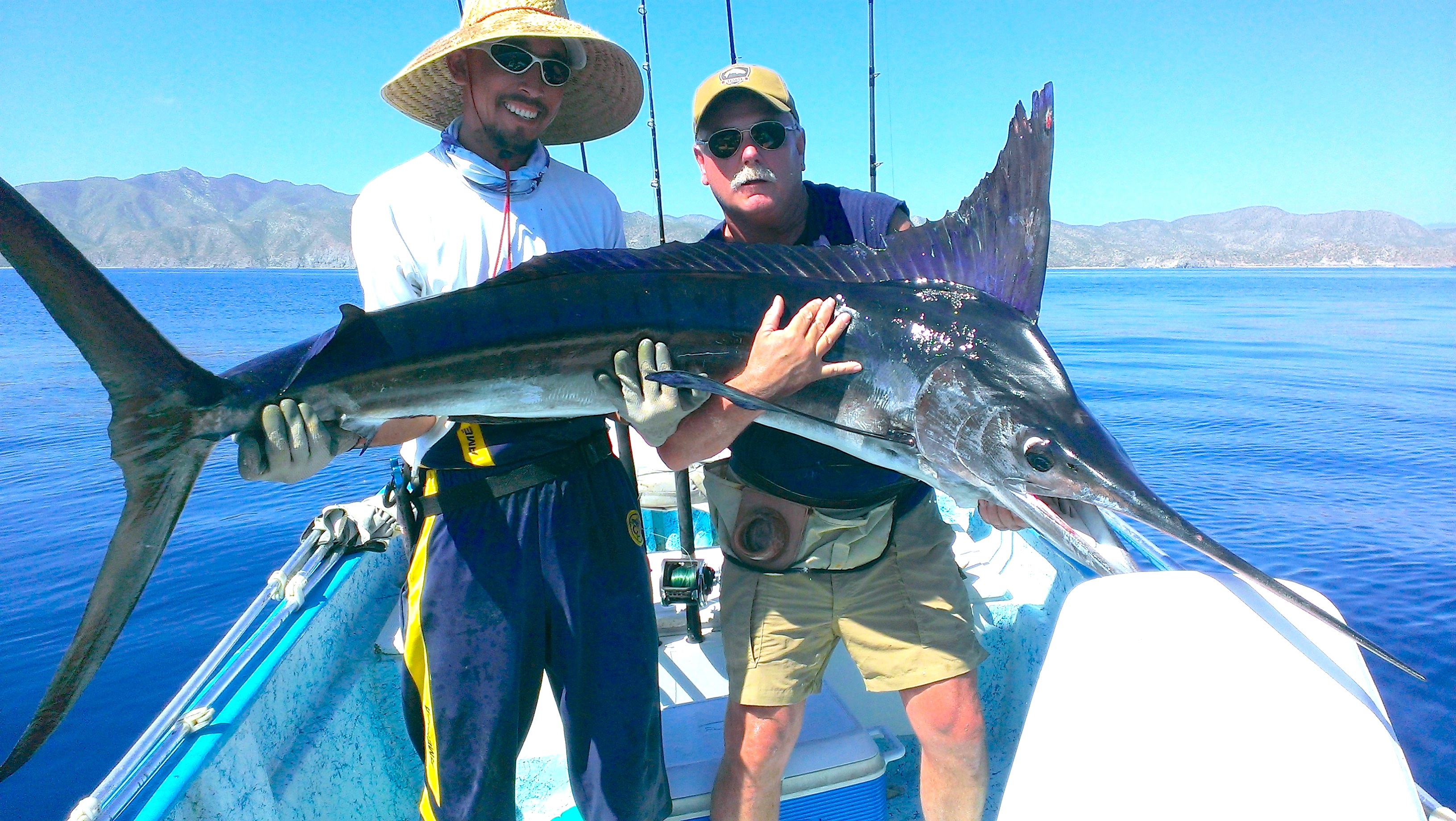
There are probably few places in the world where you have a better chance of hooking that billfish you’ve always wanted than the waters in the lower Sea of Cortez and the southern Baja Peninsula.


These “glamour” fish include both sailfish and marlin which are drawn to these waters by a number of variables. The landmass itself drops off quickly into deep water trenches that bring cool upwellings and nutrients from the abyss. These, in turn are the food source for the baitfish which attract all manners of gamefish to these waters.


Sitting at the apex of the foodchain the big billfish can attain sizes up to half-a-ton. At the lower end are the smaller sailfish. In ascending order (and size) come the striped marlin, black marlin and then blue marlin as the largest of the hunters.


Not only do they feed on the small baitfish like sardines, caballitos, jacks, mackerel and others. But, they feed in the middle of the food column as well regularly dining on the other predators such as tuna, bonito, dorado and other bluewater species. Basically, if it can fit in it’s mouth, it’s a possible meal.


So, if marlin are on your bucket list, like anything else, it’s all about “WWH” (WHEN? WHERE? HOW?).


Generally speaking, warmer months are better. But even then, that is not always the case. Every place is different.


Around Cabo, striped marlin have been known to “ball-up” in abundance just off the Pacific Coast between Bahia Magdalena and Cabo San Lucas. This takes place from November to January.


It’s a bit of a run from Cabo and it can be rough because it’s winter, but you can also catch a boat from several spots around Bahia Magdalena, but not many. Most anglers run up from Cabo.


It’s a long run, but the fishing can be incredible. It is not unheard of to hook and release dozens of marlin PER DAY! Again, food is the key. The marlin are there feeding on the huge schools of mackerel.


As the year ends, the stripers start to migrate south and around the tip of Baja and with each proceeding month start to move further and further north up into the Sea of Cortez.


So, while Cabo can see marlin year-round, the East Cape, La Paz, and to a lesser degree Loreto and cities north will see the billfish from spring to fall. But, not much in the cooler months.


So, pick your times carefully. Summer and fall are predominately the best opportunities to get into billfish in all areas.   Also waters are warm and seas tend to be calmer.


As for location…


To that end, generally speaking, the further south you go, the better. Although billfish can be caught in a multitude of spots in Southern Baja, you have a better shot at them in Cabo San Lucas, San Jose del Cabo and East Cape (Los Barriles and that area) than say Mulege or Santa Rosalia, although billfish are not out’ve the question in those great areas.


(No disrespect for northern areas which have their own spectacular fishing and their own particular claims to angling fame and shots at species not usually seen in some of the southern cities, e.g. yellowtail!)


Regarding fishing methods, there are a number of ways.


Be prepared to cover some water. So, a larger, faster boat might be preferred since these are rangy fish always looking for sources of food and capable of moving great distances very quickly.


Since you want to cover some water, trolling lures has been effective world-wide, especially, if you’re trying to locate fish.   If you’re in an area such as the East Cape or Cabo where the fish can be quite far, then a cruiser would surely be more comfortable, especially in Cabo which faces the open ocean.


However, that doesn’t mean you ALWAYS need a cruiser. Areas such as Loreto and La Paz do very well catching billfish using pangas insofar as fish are much closer to shore and the areas are less subject to big waves and rough seas.


Another method is to slow troll larger live or dead baits such as smaller bonito, larger mackerel and even small tuna properly rigged and dragged behind the boats.   There’s an old rule about “big fis-big baits” and you’ll be surprised how a huge bait that seems impossible to eat suddenly entices a big billfish to bite it!


One of my favorite methods is to simply troll a lure or dead bait behind the boat that has no hooks. This is a “teaser” method and requires that someone always keep an eye on the troll lines.


When a big billfish comes slashing at the teaser, another lighter rig with a live bait is then cast to the billfish. The live bait has a hook in it and the billfish will break off from the teaser and jump on the live bait.   Battling a big marlin or sail on this lighter live bait tackle can be incredible sport!


This same casting method can be used on a “sight-fish.” Basically, keeping a sharp eye on the water until a billfish is seen on the surface. Using some bit of stealth and a steady hand on the wheel, the boat is maneuvered so that a live bait can be properly cast directly in front of the fish…hopefully resulting in a big hookup!


Whatever you do, consider “CPR…Catch Photo Release” before you go fishing. Decide that you are going to release your billfish BEFORE you’re in the heat of battle. No matter what your captain tells you. Let him know that you plan to release your billfish and that his tips are NOT dependent on him killing the fish.


Try to keep the fish in the water to release it. Bringing the fish aboard not only damages the slime protection on it’s skin, but without the negative buoyancy of the water, internal organs can also be damaged by hauling it into the boat no matter how well intended.


Get as good a photos as possible then release it. All the best taxidermists now do fiberglass mounts that are incredible. All they need are a good photo or, in many case, not even that. All they need is an estimation of size to make that perfect keepsake trophy for your den!

That’s our story!

Jonathan signature


Jonathan

_______________

Jonathan Roldan has been writing the Baja Column in Western Outdoor News since 2004.  Along with his wife and fishing buddy, Jilly, they own and run the Tailhunter International Fishing Fleet in La Paz, Baja, Mexico  www.tailhunter-international.com.  They also run their Tailhunter Restaurant Bar on the famous La Paz malecon waterfront.  If you’d like to contact him directly, his e-mail is riplipboy@tailhunter-international.com  or drop by the restaurant to say hi!

______________

Jonathan Roldan’s

Tailhunter International


TAILHUNTER FISHING FLEET #1 Rated on Trip Advisor

TAILHUNTER RESTAURANT BAR #1 Rated in La Paz on Trip Advisor


Now follow us on FACEBOOK TOO


Website: www.tailhunter-international.com

U.S. Office: 8030 La Mesa, Suite #178, La Mesa CA  91942

Mexico Office: 755 Paseo Obregon, La Paz, Baja Sur, Mexico

Phones:

from USA : 626-638-3383

from Mexico: 044-612-14-17863

.

Tailhunter Weekly Fishing Report:

http://fishreport.jonathanroldan.com/

Tailhunter YouTube Videos:

http://www.youtube.com/user/pangapirate

“When your life finally flashes before your eyes, you will have only moments to regret all the things in life you never had the courage to try.”
Read Full Post »

RAMPED DOWN EL NINO?

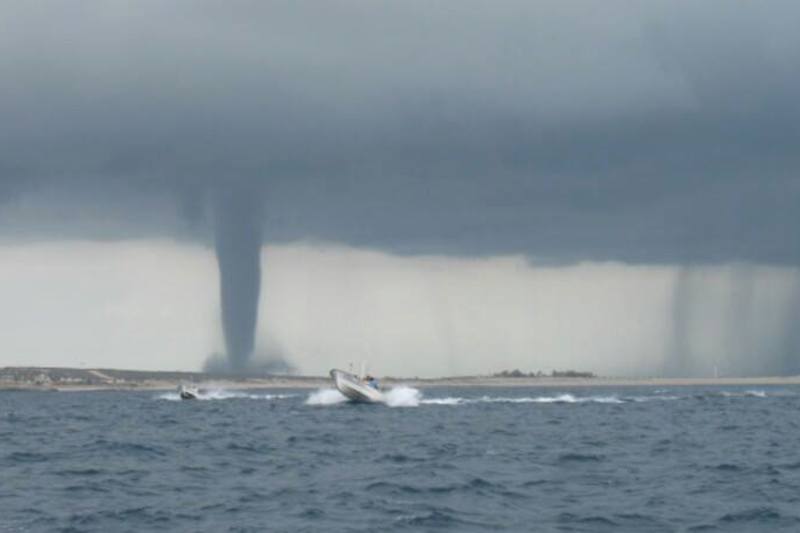
tromba-marina-la-paz-4

UH…yea! I think it’s time to crank up the lines and get the heck ou’tve the way! It only took minutes for the skies to darken and go from blue…to grey…to black and put down this incredible waterspout!

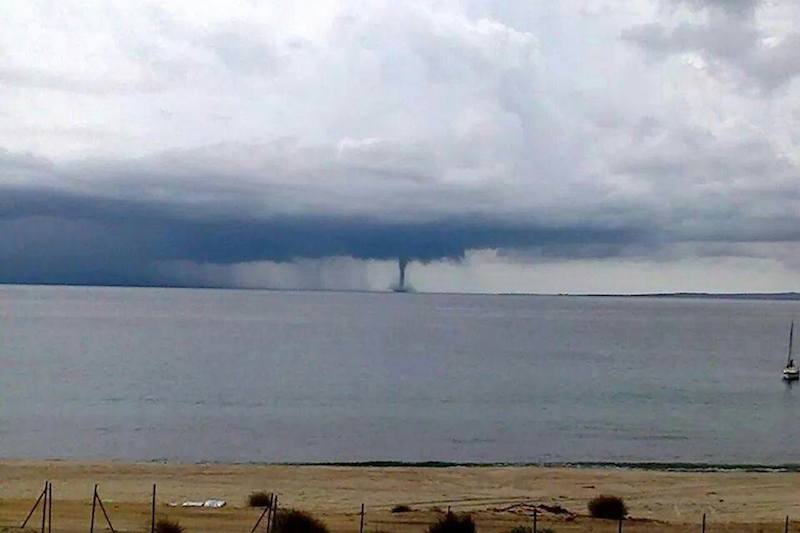
tromba-marina-la-paz- el sargento

They can come out’e nowhere in a matter of minutes. You can see the huge waterspout and the rain coming! Best to let it pass. It can be over in minutes.

RAMPED DOWN EL NINO?

Originally Published the Week of Aug. 5, 2014 in Western Outdoor News

At the mid-year mark of the calendar as well as the Baja fishing season, maybe it’s time to take another look at the El Nino phenom we may…or may not be having.


At the onset of the season, many of us, me included, wrote about predications that this would be an El Nino season. In fact, scientists strongly suggested 2014 to possibly be one of the largest, if not the biggest one in recorded history.


In a nutshell, the El Nino event is characterized by abnormally higher water temperatures, higher rainfall (including hurricanes), higher air temperatures and humidity, and for us fishermen, big differences in the fishing season along the eastern side of the Pacific ocean. Basically, the western side of Mexico and the U.S. are affected.


Early in the season, it was looking pretty ominous. When so many of us down here in Baja and along the Mexican coast base our livlihoods on nature, the weather and the fishing, it’s hard to ignore the predictions.


According to the experts, all the signs were there for a whopper of an el Nino on it’s way. Understandably, it was with some trepidation that many of us kicked off our respective seasons.


Well, now several months into the season, an assessment of sorts can be made. Yes, the waters got really warm really fast. In many places they are higher than normal.   In fact, in some spots, it never cooled down from last year. The cold waters never materialized.


No doubt, it doesn’t take a meterolgist to tell you it surely seems a lot warmer and a lot more humid this year. Just walk outside. It blazes. The air is thick and heavy in the heat.


And the fish?


I think I can speak for a lot of us down here and a lot of folks who have visited. It’s really weird. It’s really crazy.


At the base…there’s very little live bait. That’s all I seem to hear folks talking about. Well, you see, when there’s an el Nino, the cooler waters from the deep carrying all the nutrients don’t make it up.


The nutrients bring the bait. No food. No bait. Or, the waters are so warm, the bait goes elsewhere…or dies.   It’s just part of the cycle.


If there’s no bait, that’s gonna eliminate a food source for the gamefish, not to mention make life a little difficult for sportfishermen. Certain species don’t show up…or they show up someplace different.


Like slow tuna in Mexico, but tuna show up in big numbers in California and strays of tuna, dorado and marlin make their way up as high as Washington state! Talk about getting lost!


But, now at the mid-way point, the pros are saying, maybe it’s NOT going to be a record-breaking el Nino. They are revising their predictions.    Yes, it’s here, but well…maybe it’s not the BIG one!


That’s good news and bad news.


Bad news…like all weather, El Nino is cyclical. It’s the way of the world so-to-speak.


Yes, it brings more rain, but that’s exactly what so many places need along the west coast continents to break extreme drought conditions. In fact, I saw where one meteorologist called it the “Great Wet Hope.” Lord knows rain is needed.


If it’s true that we’re not going to see the historical El Nino, I guess many of us can breathe a little easier knowing that the likelihood of hurricanes is diminished. However, truth be told, even ONE hurricane/ chubasco can be a deal breaker here in Mexico.


Mexico needs water as much, it not more than anyone. And it’s not for golf courses and swimming pools and watering lawns and washing cars. Just basic drinking water is in short supply as well as water for crops.


A little rain here and there or short burst in the afternoons are great. It’s perfect.


But even a good “tropical storm” of any intensity would be devastating in a country where drainage is a problem as well as basic construction. Arroyos become deadly rivers in minutes. Streets become lakes. Neighborhoods become isolated islands.   Mexico’s infrastructure doesn’t do well with rain.


A similar storm in the U.S. would generate some fender benders on the freeway. Surfers in Orange Co. would rush to catch “the gnarly break.” And the evening news would show someone trying to kayak down the concrete “Los Angeles River.”


Here… A realatively minor storm of moderate intensity in a few minutes can wipe someone out…destroy businesses…kill people.  Let alone screw up the fishing day.

So, if you’re coming down in the next few months, don’t alter your plans. But be prepared.   It might just rain.


If there’s something on the radar and the local port captains close the port or put out warnings, common sense dictates that you might be better served sitting by the pool with a cold one.   Don’t chance it.


Fishing is supposed to be fun. Safety first.   It’s not supposed to be an exercise in survival or miserableness or futility. Many of these “storms” are short-lived, but can be strong. We call them “toritos” (little bulls) that hit with the intensity of a hurricane.   In fact, these toritos can come up in minutes and there will never be a warning.


If that happens, by all means, clear the water. If you’re close enough to cover go wait it out. You can go back out later. If you’re that’s not an option, call it a day.


Two weeks ago, we had a waterspout come up that was the size of a city block and sounded like a freight train from several miles away.   You could see water gushing up off the ocean. It took a matter of minutes for that to form!


The other side of these storms is that it washes a lot of debris into the water. This includes mud, trash, and vegetation like trees and bushes.


Let it all settle and waters clear. Then look for the temperature and current breaks holding all this floating stuff. You’ll find some of the best fishing around these areas!


Just go with the flow. Be safe. Be prepared.

That’s my story!


Jonathan signature

Jonathan

___________

Jonathan Roldan has been writing the Baja Column in Western Outdoor News since 2004.  Along with his wife and fishing buddy, Jilly, they own and run the Tailhunter International Fishing Fleet in La Paz, Baja, Mexico  www.tailhunter-international.com.  They also run their Tailhunter Restaurant Bar on the famous La Paz malecon waterfront.  If you’d like to contact him directly, his e-mail is riplipboy@tailhunter-international.com  or drop by the restaurant to say hi!

______________

Jonathan Roldan’s

Tailhunter International


TAILHUNTER FISHING FLEET #1 Rated on Trip Advisor

TAILHUNTER RESTAURANT BAR #1 Rated in La Paz on Trip Advisor


Now follow us on FACEBOOK TOO


Website: www.tailhunter-international.com

U.S. Office: 8030 La Mesa, Suite #178, La Mesa CA  91942

Mexico Office: 755 Paseo Obregon, La Paz, Baja Sur, Mexico

Phones:

from USA : 626-638-3383

from Mexico: 044-612-14-17863

.

Tailhunter Weekly Fishing Report:

http://fishreport.jonathanroldan.com/

Tailhunter YouTube Videos:

http://www.youtube.com/user/pangapirate

“When your life finally flashes before your eyes, you will have only moments to regret all the things in life you never had the courage to try.”
Read Full Post »

“More than Potato Salad and Fried Chicken”

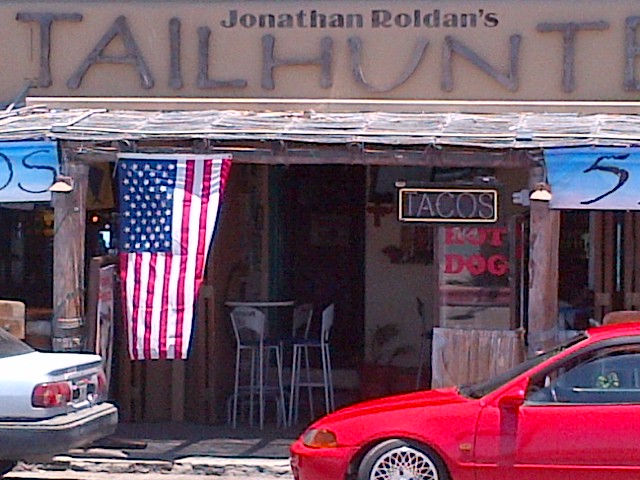
U.S. Flag Tailhunter

“MORE THAN POTATO SALAD AND FRIED CHICKEN”

Originally Published the Week of July 10, 2014 in Western Outdoor News

One of our fishing clients down here in La Paz was sipping a cold one in our restaurant and asked if I missed 4th of July.


Having been down here in Mexico working now almost 20 years, yea, I really do. I miss it a lot. Being that July 4th is always smack in the height of the summer fishing season, it’s been a long time since I’ve been part of the celebration “back home.”   But, this is where work requires that I be down here and so-be-it.


Superficially, man…I miss a good parade and watching the kids and the floats and the music…and most of all standing with hand-over-heart as I watch our vets and service folks marching tall and proud. I get choked up over that.


I miss the smell of green summer grass-in-the-park and that smell of barbecued burgers and saucy ribs and ducking the occasional errant Frisbee. I miss the sand between my toes and a paper plate of fresh potato salad, sloppy pork-n-beans, fried chicken and a beach fire in the dark as fireworks burst over the water to the oohs-and ahhs of the crowd. I miss hearing the Star Spangled Banner played.


So many things parked in my memory banks.


But, I get a completely different perspective living outside the U.S. and looking in from afar…from Mexico. And, although the two countries share borders and so many other things in common, they are still so far apart. And it makes me appreciate the U.S. even moreso and what the 4th of July means.


For one, I take fewer things for granted. Simple things.


Like water.


Back home, you flipped on the faucet. Bad as it might taste, you take for granted that water comes out. You can cook with it. Wash clothes. Come home from work and take that long easy hot shower. Wash your car. Water your lawn. Gasp…fillyour hot tub and swimming pool!


Here, in Mexico, water is at a premium. What we call “drought” in the U.S. is almost comical in Mexico. Sometimes nothing comes out’ve the faucet…for days!


Here in La Paz, often water is only sent to your home or business through the city pipes every-other-day or every two days. And even then, pretty much at a slow drip.


That’s why you see these huge black plastic “tinacos” (storage cylinders) on top of business and houses. That’s to save the water when it’s available and running. If you run out, you have to wait until the city opens the spigots again.


The tourists never see that because the hotels and golf courses and swimming pools are always full. But, I saw a report once that said the fresh water daily allotment for the average Baja citizen is less than one-gallon-a-day. And getting smaller.


And more…


As a former attorney back in California, I don’t take justice or the U.S. legal system for granted anymore. Nor am I so quick to make fun of it’s many problems.   I still challenge someone to come up with a better way to do things.   It still has a fundamental premise, that you are “innocent until proven guilty.” And there’s nothing the government can do about that.


Here in Mexico, they still operate under the archaic Napoleanic code from the days when France ran Mexico.    Under those laws, the state “presumes you are guilty and it’s up to you to prove you are innocent.”


I have seen the damages up-close-and-personal here.   We’ve been victimized ourselves.


Prove you didn’t steal from your neighbor. Prove your kid didn’t start the fight that broke another kid’s nose. Prove your wife didn’t crash into someone else’s car. Prove you didn’t hurt someone’s reputation by something you said. Prove you didn’t sexually accost a fellow employee.

All it takes is an accusation and a report to authorities by someone who doesn’t like you. And now it’s YOUR problem. It’s YOUR burden to prove you’re innocent.


Another thing is that I don’t take the ability to work so lightly. I know in the U.S. we have a serious crisis in employment.   I have several college degrees plus a law degree, but I’ve been unemployed. I’ve quit jobs. I’ve been fired from jobs.


But, I always had options. I always had hope that I could find another job.


I’m here in Mexico now because of a choice I made years ago, not because I wanted to live outside the U.S. but because there was a business opportunity that presented itself. But, it was a choice I had because I had options.   I had that independence. And I was lucky and blessed.


We have so many good friends, employees and associates and acquaintances after almost 2 decades here.


I look at them and I’m grateful for what we have as Americans roving this planet who at least have opportunities and options.


Here in Mexico, if you’re a dishwasher or you’re a taxi driver, that’s probably what you will be the rest of your life. That’s it. No upward mobility.


There might be some lateral mobility in that instead of a dishwasher you might get to be a truck driver, but not likely. You will live and die a dishwasher or waiter or farmer. That’s it. Same for your kids. What’s a career?


There’s no “correspondence school” or “next big opportunity.” You are what you are. My amigo is a floor cleaner. He will be a floor cleaner his whole life until he dies or his back gives out. Whichever comes first.


Education is mandatory to only 8th grade. How far would you have gotten on an 8th grade education?


Having education, even a college education, could still mean you’re now qualified to work in a retail store selling shoes or in an office filing papers. You can keep your hands clean. Maybe.


And, if you lose your job, that could be it as well.


We know a very good accountant working for a company. She’s 35-years-old. She told us if she ever loses her job, she is no longer employable because she is “too old” and companies don’t hire “old people.” She supports a family of 4.


Truthfully, when you hit 65-years-old here, you are forcefully retired. No matter how good, valuable or healthy you are. No matter that you’re the sole earner in your household, you’re out’ve the work force.


Just yesterday, a single-parent friend told me her son missed a job interview because he didn’t have shoes.


Last week, another friend told me he had to quit a job as a maintenance man because it was too hard to walk 5 miles to work and back six-days-a-week. He’s 62-years-old and supports a family of 5.


We might share borders, but we are so far apart. And every 4th of July away from home, I’m ever more grateful for the opportunities and freedoms I’ve enjoyed and been blessed with. For all it’s problems, the U.S. still enjoys so much that the rest of the world never has or will.


Can someone pass me another piece of fried chicken…

That’s my story

Jonathan signature

Jonathan


_______________

Jonathan Roldan has been writing the Baja Column in Western Outdoor News since 2004.  Along with his wife and fishing buddy, Jilly, they own and run the Tailhunter International Fishing Fleet in La Paz, Baja, Mexico  www.tailhunter-international.com.  They also run their Tailhunter Restaurant Bar on the famous La Paz malecon waterfront.  If you’d like to contact him directly, his e-mail is riplipboy@tailhunter-international.com  or drop by the restaurant to say hi!

______________

Jonathan Roldan’s

Tailhunter International


TAILHUNTER FISHING FLEET #1 Rated on Trip Advisor

TAILHUNTER RESTAURANT BAR #1 Rated in La Paz on Trip Advisor


Now follow us on FACEBOOK TOO


Website: www.tailhunter-international.com

U.S. Office: 8030 La Mesa, Suite #178, La Mesa CA  91942

Mexico Office: 755 Paseo Obregon, La Paz, Baja Sur, Mexico

Phones:

from USA : 626-638-3383

from Mexico: 044-612-14-17863

.

Tailhunter Weekly Fishing Report:

http://fishreport.jonathanroldan.com/

Tailhunter YouTube Videos:

http://www.youtube.com/user/pangapirate

“When your life finally flashes before your eyes, you will have only moments to regret all the things in life you never had the courage to try.”
 

Read Full Post »

A DEARTH of ‘DINES

OLYMPUS DIGITAL CAMERA

NO MAS????

A DEARTH of ‘DINES


Originally Published the Week of May 27, 2014 in Western Outdoor News


It’s an early Baja morning and the sun was just starting to light up with golden blue hues against the western horizon. The heat would soon follow, but for now, the dawn was still freshly-tinged with the salty residue of the retreating night.


It is early enough that skippers and anglers alike still hunched shoulders in windbreakers and sweatshirts against the nippy breeze and spray knowing full-well that the sun would soon throw open the furnace blast of another Mexican day. But, there was no hiding the anxious anticipation of another grand fishing day in the Sea of Cortez.


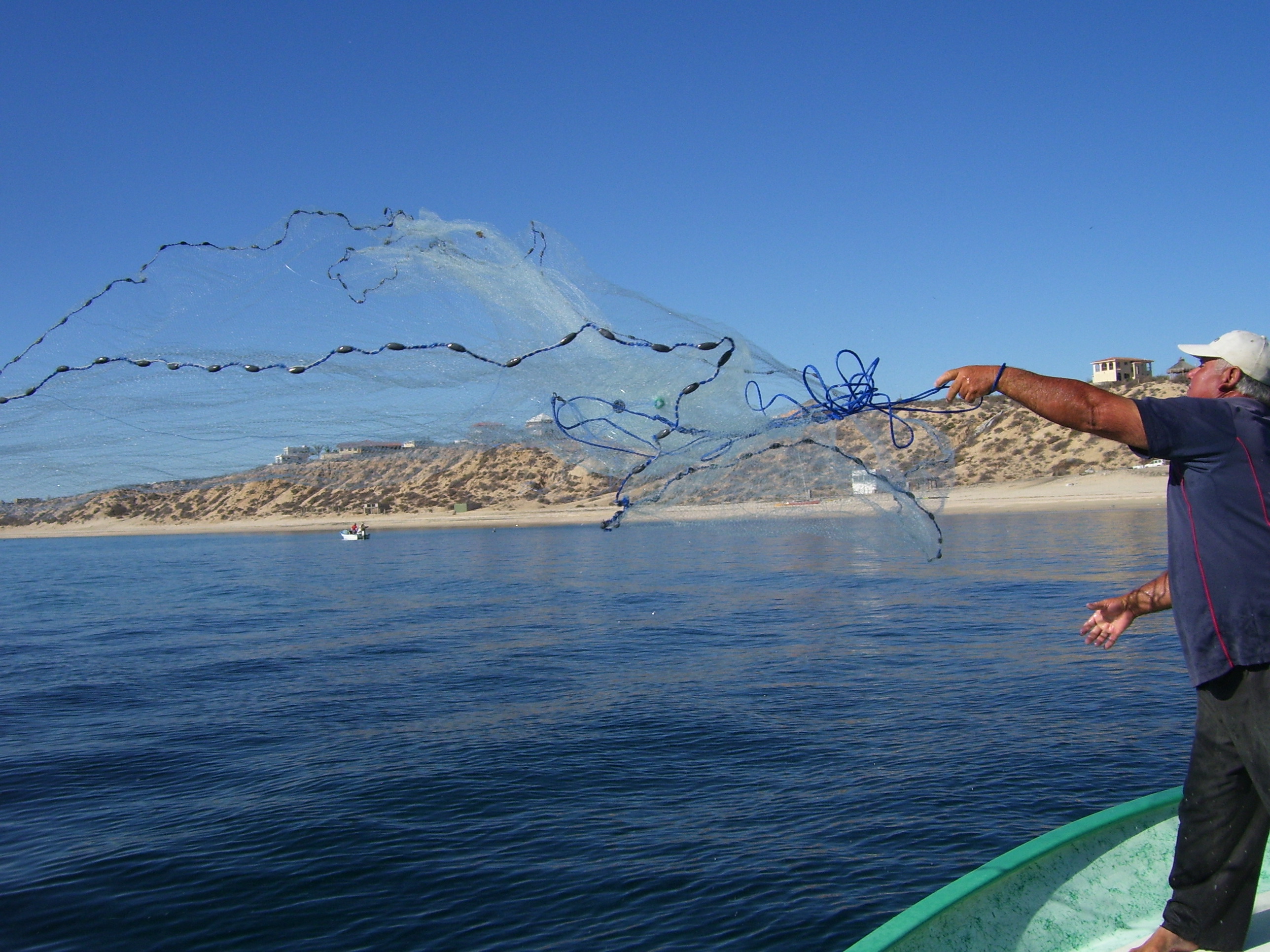
The panga motored as quietly as possible into the little rocky cove. Several other pangas were already up against the craggy shoreline of the island. In the bows, a skipper or assistant could be seen with cast nets draped over shoulders and squinting sunglassed-covered eyes into the shallow waters.


The captain of this particular launch cut the motor and drifted toward a little warren of rocks. He jumped lightly forward to the prow.  Readied his net and with a circular fling; expertly tossed the cast net into the air where it hung; pancaked open; and fell flatly into the waters.

20110621_72


As the captains pulled the drawstring of the net enclosing the snare and drew it towards the waiting panga and anxious anglers, something appeared wrong. Usually, the “pull” of the net would be evidenced by some bit of strain and effort by the captain.


But, he pulled the net effortlessly up.


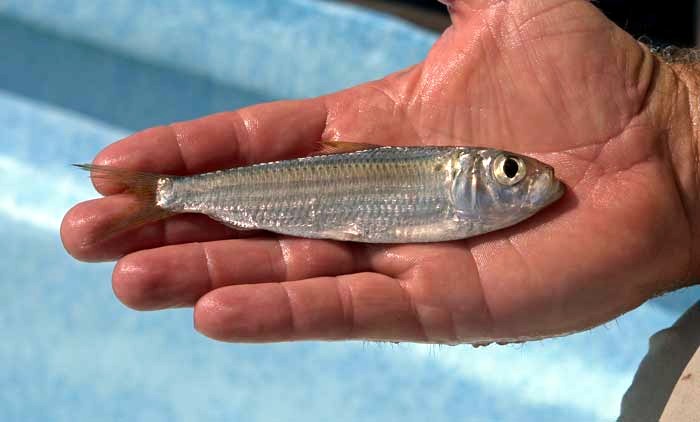
Normally, with a grunt, the skipper would heave the bulging net up-and-over above the live bait well and with another pull a “zillion trillion” thrashing, splashing, struggling dark-backed sardines (‘dines) would tumble en masse into the waiting waters of the bait tank.

Two or three quick tosses more and the panga would be loaded. Then it would be a sprint to the fishing grounds heavily bulging with hook-sized bait and high on anticipation for another day of bent-rods and bloody decks.


But, this time there was no grunt-and-heave. The net came up virtually empty. Four mini-sardines…FOUR…were released into the bait tank. A dozen more net tosses and 90 minutes of searching and scouring produced only a handful of baits for their efforts.


Each fruitloss toss-and-retrieve caused shoulders to sag.


Nothing like starting the fishing day where elation and anticipation backslids into deflation. No bait?


The other pangas did not do much better. They would end up making the best of the day with sliced bonito; a few live ballyhoo; some scrounged mackerel and some chopped-up squid. Just not quite the same as being able to chum handfuls of sardines into the water to get the fish going.

bait


It’s been happening with increased frequency in Baja waters. Especially this year as a combination of variables seems to be combining for a “perfect storm” in terms of bait.


Part of it can’t be helped. It’s nature. Nature does what nature does and it’s like trying to stop sand from getting in your hot dog at the beach. It’s gonna happen.


This appears to be an El Nino season. But, moreso, the scientists are saying maybe it’s a “super” El Nino season with the warmest water and air temperatures in the history of recording el Nino conditions.


The cycle pops up every few years and, in a nutshell, means warmer ocean conditions along the Eastern Pacific coast along the western side of the U.S., Canada and Mexico. Warmer waters mean more storms; higher incidence of hurricane.   It’s the reason folks in Washington encounter stray dorado and tuna that lose their way in the warm currents and head far more north than their usual comfort zone.


But, these warmer waters mean the colder waters from the deep trenches don’t come to the surface. The cooler waters bring the nutrients. The nutrients bring the bait fish. The bait fish provide food for the sportfish. Are you following this? One big circle of nature. And tag…this is us this year. Warm waters = less bait.


The other side of the equation is perhaps more ominous. Some would say even a bit sinister. Because we’re doing it to ourselves. We can’t do much about El Nino.   But, us humans aren’t doing much to help ourselves either.


It’s the fish pens. You’ve heard of them. The controversial but apparently successful capture of juvenile tuna and yellowtail in huge nets then raising them in a net-like corral. Grow ‘em big and sell ‘em off. It works. It’s great. It’s economical.


Supply and demand. The planet craves seafood. Heck, it needs food period! The fish pens help fill the need. If it didn’t work, they wouldn’t be using it.


Here’s the rub. Everyone gets the impression that fishing farms are “green.” And there’s a lot of controversy about that. I guess it depends who you’re reading.


But, I’ve read that it takes anywhere from 3-10 pounds of “bait food” to grow a tuna one pound bigger. . So, let’s see…to grow a 50 pound tuna? Do the simple math. Hmmmm…that’s a lot of food.   It has to come from somewhere.


Arguably, wherever they have set up these “pens” they have depleted the bait stocks.   Pretty much raided everything in the waters that could be used or ground up into fish meal. It reminds me of those days when the cattle or sheep came to an area and ate all the grass that held the soil. Resulting in dust bowls. Are we headed for a “toilet bowl?” Are we destined to be live-sized versions of the Tidy Bowl man adrift in blue water?


Here, in La Paz, the head of La Paz Tourism, Sr. Pedro Aguilar told me that the fishfarmers are prohibited from taking bait in the bay and around our two islands. However, our local sportfishing captains tell me that the bait guys from the pens are out at night scouring those very areas capturing all the bait they can get.


The other side is that all the “waste” product has to go somewhere and it’s going right into the waters and creating a whole separate ecological issue. Tons of “fish poo” isn’t a good thing, especially in these shallow areas where the pens are located and ocean currents aren’t there to sluice out the after-product.


If you’ve ever even seen what your kid’s goldfish can do to a home fish bowl after a few days of not changing the water, imagine what a net load of fat tuna can squeeze out.


It’s not just here. It seems to be happening all over. And again, we have the challenge of balancing the need for food; the ecosystem; the sportsmen…and then, of course the corporate interests.


So…a double whammy curse on us. And I don’t know what to do about it. Awfully discouraging.

That’s our story!

Jonathan signature


_______________

Jonathan Roldan has been writing the Baja Column in Western Outdoor News since 2004.  Along with his wife and fishing buddy, Jilly, they own and run the Tailhunter International Fishing Fleet in La Paz, Baja, Mexico  www.tailhunter-international.com.  They also run their Tailhunter Restaurant Bar on the famous La Paz malecon waterfront.  If you’d like to contact him directly, his e-mail is riplipboy@tailhunter-international.com  or drop by the restaurant to say hi!

______________

Jonathan Roldan’s

Tailhunter International


TAILHUNTER FISHING FLEET #1 Rated on Trip Advisor

TAILHUNTER RESTAURANT BAR #1 Rated in La Paz on Trip Advisor


Now follow us on FACEBOOK TOO


Website: www.tailhunter-international.com

U.S. Office: 8030 La Mesa, Suite #178, La Mesa CA  91942

Mexico Office: 755 Paseo Obregon, La Paz, Baja Sur, Mexico

Phones:

from USA : 626-638-3383

from Mexico: 044-612-14-17863

.

Tailhunter Weekly Fishing Report:

http://fishreport.jonathanroldan.com/

Tailhunter YouTube Videos:

http://www.youtube.com/user/pangapirate

“When your life finally flashes before your eyes, you will have only moments to regret all the things in life you never had the courage to try.”


Read Full Post »

« Newer Posts - Older Posts »