Feeds:
Posts
Comments

Posts Tagged ‘package’

Making Lemonade Safely

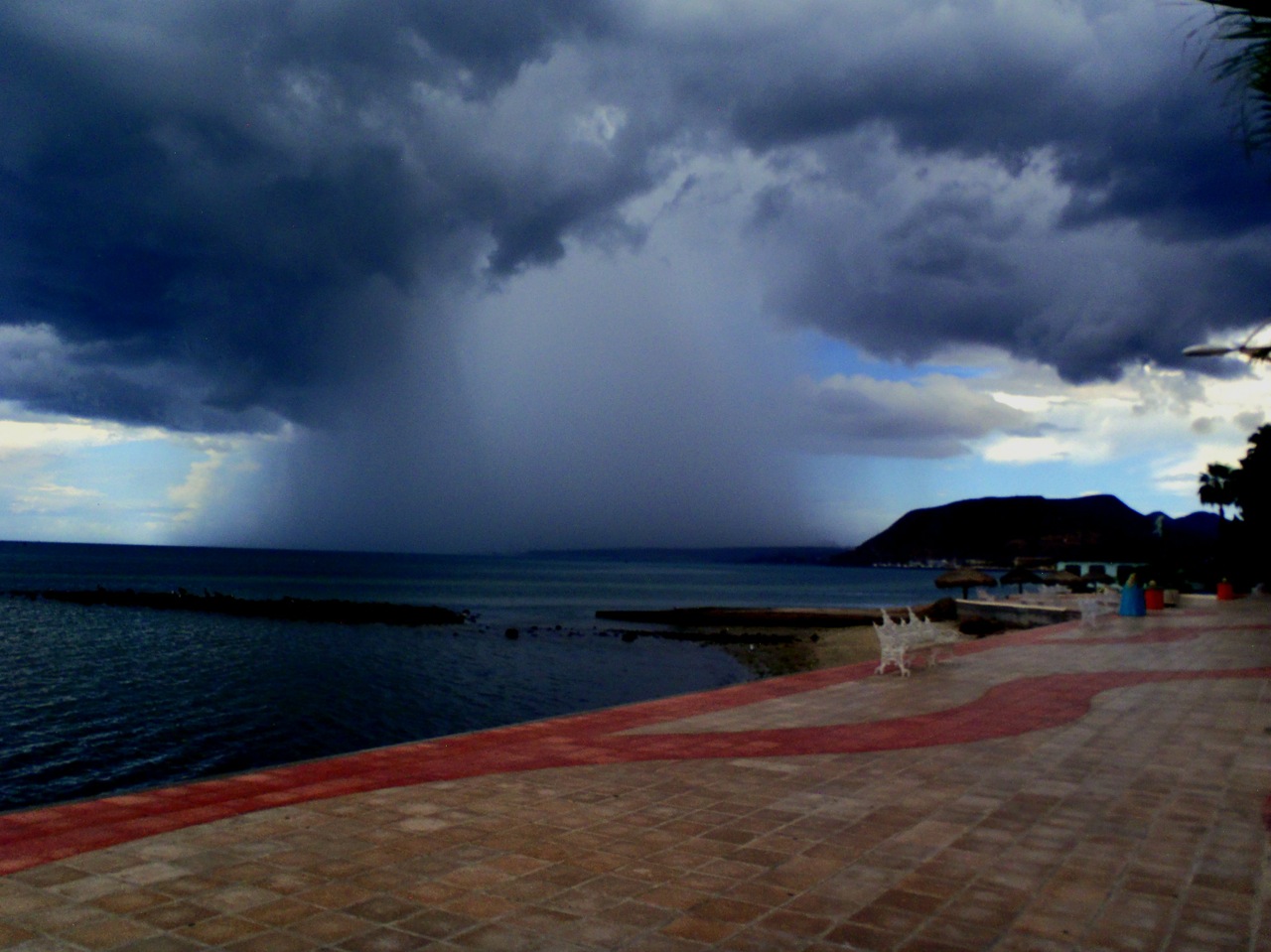
storm coming 2

In a matter of minutes…here it comes! Out’ve a blue sky.

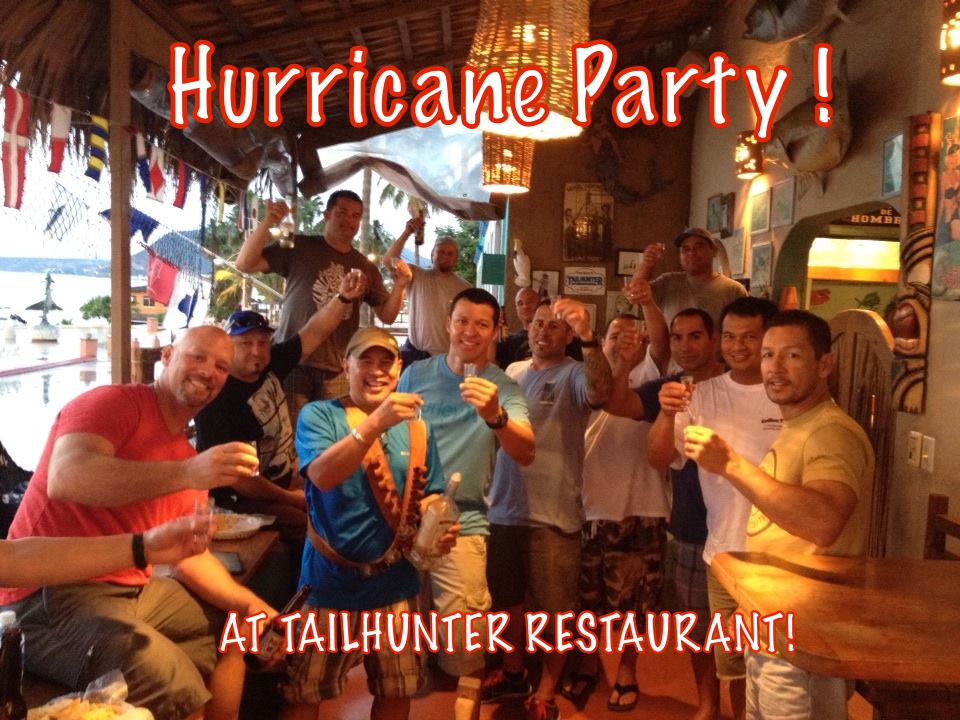
HURRICANE PARTY!

One way to handle it…


MAKING LEMONADE SAFELY

Originally Published the Week of Sept. 17, 2014 in Western Outdoor News

As I sit here writing on the 2nd story terrace of our Tailhunter Restaurant here in La Paz, it looks like a postcard.   The waters of the bay shimmer in the sunshine while I can see birds diving on a school of jacks near one of the buoys.


Sailboats and motoryachts drift on their moorings while a larger cruiser heads out. Palm fronds from the waterfront trees give a hint of the salty breeze blowing through siesta hour.   If I weren’t writing, I’d be like a few guys I see on the beach with their feet up under a shady palapa with cold ones in hand just watching the world go by.


Hard to believe that just a few days ago, Hurricane Norbert blew through here. Life returns quickly to normal once the sun comes back out. Conversely, everyone is now watching and talking about Tropical Storm / Hurricane Odile which has Baja in it’s crosshairs and might be hitting us as you’re reading this.


Actually, there’s two other storms (Tropical Depression 16-E and Invest 96E) which are yet un-named, but accompany Odile into our area. Sigh…can’t get a break! So, a trifecta might be in the making.


But that’s life in a tropical zone during an El Nino year! We expected them. By one count, these are the 14th or 15th storms of the year.   Most have fortunately glanced off and gone spinning into the Pacific with apologies to my family in Hawaii. (But Hawaii knows how to deal with rain! Baja is still working on it.)


Until Norbert last week the storms did some tremendous damage along Baja’s Pacific Coast. However, they really haven’t done much to Baja except rattle our collective tranquility.


Along with some heavy occasional downpours, street flooding and thundershowers , they remind us that Mother Nature still has a roar.   But, mostly, all we’ve had is roar.


And roaring is fine. To a point.


As long as it doesn’t screw with our vacations, right?


But, it happens sometimes. Baja is the “frontera” (frontier). It’s not some hermetically-sealed-Disneyland where everything is somehow controlled by someone behind a screen like the Wizard of Oz.


It’s beautiful and rustic and rugged. And in it’s own way, still dirty and dusty and raw. And when it rains or gets weather, it can get dirtier and muddier and wetter and uglier and yes, even dangerous.


So, what do you do if Mother Nature hangs one on you?   It’s not likely, but it CAN happen and co-incidentally, “hurricane season” just happens to be when the best fishing takes place.


You can watch the weather reports and, if you see something looming, take pre-cautions. Check with your outfitter and reservation people. Take out vacation insurance if it looks like you might not get refunded.


Don’t outright cancel your trip without first checking if the area you will be in will even be affected.   Baja is a big place. Mexico is a big place.   Weather patterns change rapidly. A storm affecting one area, might not even drop rain a few hundred miles away.


If you’re already on vacation, sometimes there’s absolutely nothing to be done. Storms can orginate from clear blue sunny skies in a matter of hours during certain times of the year.   No amount of foresight or weather scouting on your part could have predicated the onset.


If that happens, use some common sense.  Vacations are important, but nothing is more important than personal safety.


If your outfitter has to cancel a trip, so be it. See if there’s a refund or you can re-schedule.


Even if the outfitter or operator is NOT canceling the trip, ask if it’s going to be rough or even worth going out. Remember, it’s supposed to be safe and second, it’s supposed to be fun. This shouldn’t be an exercise in stamina and miserableness. Ask to re-schedule.


Some shady operators will send you out knowing full well it’s gonna be a boatride just to pocket the money. But, most aren’t like that. Especially, if you have the ability to re-schedule. They don’t want to be out there bouncing around either and happy satisfied clients are a priority.


If the hotel recommends you stay close or even indoors…by gosh…have a clue and don’t be running around outside when all heck is breaking loose.


I’m reminded of tourists I saw in the middle of a hurricane cavorting in the pool while bits of roof were spinning around like shrapnel in 80 mph winds. They were still laughing as 20-pound coconuts started dropping from coco trees like cannonballs around them. WHOOSH! WHOOSH! BOINK!


Another time, with thunderous bolts of electricity blasting La Paz Bay, I saw frustrated anglers still casting rods in horrendous wind and rai. They were trying to make-a-point to their amigos that they were “hardcore” fishermen. With every jag of lightning I expected nature to take aim at one of those “rods” and teach them something about “hardcore.” More like “burned-to-the-core!”


It’s pretty funny now, but back in the day, some other clients grabbed kayaks in the middle of the maelstrom and attempted to row around playing “kayak water polo” in a flooded parking lot where cars were submerged up to their windows.


Like the saying, “It’s all fun and games until someone gets hurt.”


The point is, stay safe. Don’t tempt the powers, curse the devil or spit into the wind. So to speak.


From a secure vantage point, try to enjoy the adventure, as it were. Nature can be pretty amazing.  Put your feet up. Crack a cold one with your other stranded travelers.   There’s not much more you can do outdoors.


I’ve seen folks organize poker parties for others. One hotel set up a DVD and casino night in the lobby.   Another hotel sent out for pizza for everyone and kept the bar open 24 hours.


Another put giant trash bags and scissors out so people could make their own “rain panchos.” Snip three appropriate holes and you’re ready to go.


Bottom line. Make the best of a crazy situation that can’t be helped. Don’t blame your travel agent, outfitter or the weatherman. It is what it is.


People get hurt during these things but MOST of the time it’s because they were doing idiotic things like trying to swim in raging surf or crossing swollen arroyos with cars. Or getting hit by flying debris.


No one ever got hurt watching a storm while eating a taco and drinking a margarita indoors.


I’m shutting my laptop right now. Three hours ago when I started typing, it was sunny and hot!   Honest…the winds suddenly came up with dark clowds and it’s staring to rain…again! Where’s my trash bag pancho? I’m out!


(Within hours of this, Category 4 Hurricane Odile hit…)

That’s our story!

Jonathan signature

Jonathan

_______________

Jonathan Roldan has been writing the Baja Column in Western Outdoor News since 2004.  Along with his wife and fishing buddy, Jilly, they own and run the Tailhunter International Fishing Fleet in La Paz, Baja, Mexico  www.tailhunter-international.com.  They also run their Tailhunter Restaurant Bar on the famous La Paz malecon waterfront.  If you’d like to contact him directly, his e-mail is riplipboy@tailhunter-international.com  or drop by the restaurant to say hi!

______________

Jonathan Roldan’s

Tailhunter International


TAILHUNTER FISHING FLEET #1 Rated on Trip Advisor

TAILHUNTER RESTAURANT BAR #1 Rated in La Paz on Trip Advisor


Now follow us on FACEBOOK TOO


Website: www.tailhunter-international.com

U.S. Office: 8030 La Mesa, Suite #178, La Mesa CA  91942

Mexico Office: 755 Paseo Obregon, La Paz, Baja Sur, Mexico

Phones:

from USA : 626-638-3383

from Mexico: 044-612-14-17863

.

Tailhunter Weekly Fishing Report:

http://fishreport.jonathanroldan.com/

Tailhunter YouTube Videos:

http://www.youtube.com/user/pangapirate

“When your life finally flashes before your eyes, you will have only moments to regret all the things in life you never had the courage to try.”

Read Full Post »

BILLFISH 101

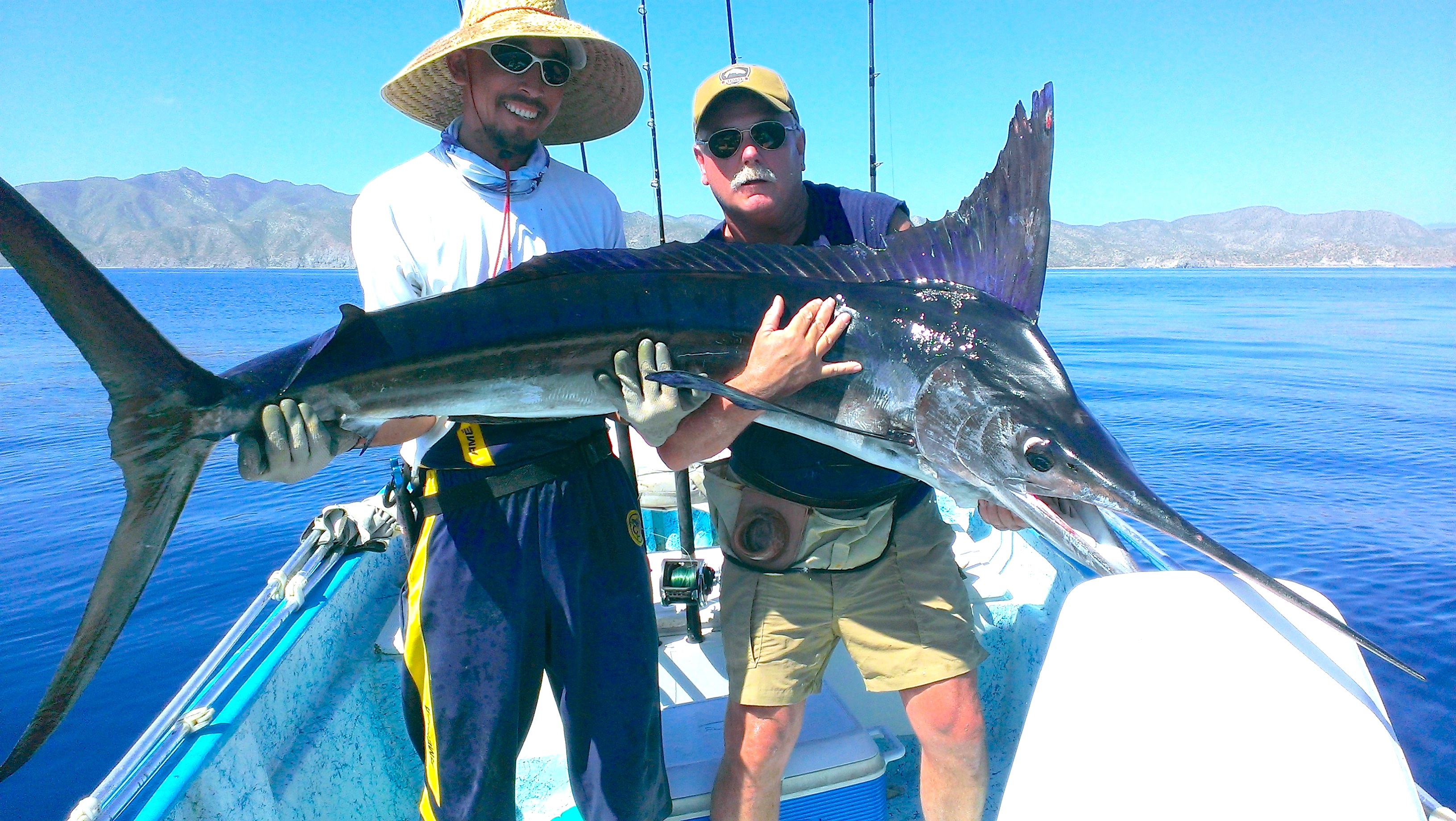
IMAG0242

BILLFISH 101

Originally Published the Week of Sept. 2, 2014 in Western Outdoor News

There are probably few places in the world where you have a better chance of hooking that billfish you’ve always wanted than the waters in the lower Sea of Cortez and the southern Baja Peninsula.


These “glamour” fish include both sailfish and marlin which are drawn to these waters by a number of variables. The landmass itself drops off quickly into deep water trenches that bring cool upwellings and nutrients from the abyss. These, in turn are the food source for the baitfish which attract all manners of gamefish to these waters.


Sitting at the apex of the foodchain the big billfish can attain sizes up to half-a-ton. At the lower end are the smaller sailfish. In ascending order (and size) come the striped marlin, black marlin and then blue marlin as the largest of the hunters.


Not only do they feed on the small baitfish like sardines, caballitos, jacks, mackerel and others. But, they feed in the middle of the food column as well regularly dining on the other predators such as tuna, bonito, dorado and other bluewater species. Basically, if it can fit in it’s mouth, it’s a possible meal.


So, if marlin are on your bucket list, like anything else, it’s all about “WWH” (WHEN? WHERE? HOW?).


Generally speaking, warmer months are better. But even then, that is not always the case. Every place is different.


Around Cabo, striped marlin have been known to “ball-up” in abundance just off the Pacific Coast between Bahia Magdalena and Cabo San Lucas. This takes place from November to January.


It’s a bit of a run from Cabo and it can be rough because it’s winter, but you can also catch a boat from several spots around Bahia Magdalena, but not many. Most anglers run up from Cabo.


It’s a long run, but the fishing can be incredible. It is not unheard of to hook and release dozens of marlin PER DAY! Again, food is the key. The marlin are there feeding on the huge schools of mackerel.


As the year ends, the stripers start to migrate south and around the tip of Baja and with each proceeding month start to move further and further north up into the Sea of Cortez.


So, while Cabo can see marlin year-round, the East Cape, La Paz, and to a lesser degree Loreto and cities north will see the billfish from spring to fall. But, not much in the cooler months.


So, pick your times carefully. Summer and fall are predominately the best opportunities to get into billfish in all areas.   Also waters are warm and seas tend to be calmer.


As for location…


To that end, generally speaking, the further south you go, the better. Although billfish can be caught in a multitude of spots in Southern Baja, you have a better shot at them in Cabo San Lucas, San Jose del Cabo and East Cape (Los Barriles and that area) than say Mulege or Santa Rosalia, although billfish are not out’ve the question in those great areas.


(No disrespect for northern areas which have their own spectacular fishing and their own particular claims to angling fame and shots at species not usually seen in some of the southern cities, e.g. yellowtail!)


Regarding fishing methods, there are a number of ways.


Be prepared to cover some water. So, a larger, faster boat might be preferred since these are rangy fish always looking for sources of food and capable of moving great distances very quickly.


Since you want to cover some water, trolling lures has been effective world-wide, especially, if you’re trying to locate fish.   If you’re in an area such as the East Cape or Cabo where the fish can be quite far, then a cruiser would surely be more comfortable, especially in Cabo which faces the open ocean.


However, that doesn’t mean you ALWAYS need a cruiser. Areas such as Loreto and La Paz do very well catching billfish using pangas insofar as fish are much closer to shore and the areas are less subject to big waves and rough seas.


Another method is to slow troll larger live or dead baits such as smaller bonito, larger mackerel and even small tuna properly rigged and dragged behind the boats.   There’s an old rule about “big fis-big baits” and you’ll be surprised how a huge bait that seems impossible to eat suddenly entices a big billfish to bite it!


One of my favorite methods is to simply troll a lure or dead bait behind the boat that has no hooks. This is a “teaser” method and requires that someone always keep an eye on the troll lines.


When a big billfish comes slashing at the teaser, another lighter rig with a live bait is then cast to the billfish. The live bait has a hook in it and the billfish will break off from the teaser and jump on the live bait.   Battling a big marlin or sail on this lighter live bait tackle can be incredible sport!


This same casting method can be used on a “sight-fish.” Basically, keeping a sharp eye on the water until a billfish is seen on the surface. Using some bit of stealth and a steady hand on the wheel, the boat is maneuvered so that a live bait can be properly cast directly in front of the fish…hopefully resulting in a big hookup!


Whatever you do, consider “CPR…Catch Photo Release” before you go fishing. Decide that you are going to release your billfish BEFORE you’re in the heat of battle. No matter what your captain tells you. Let him know that you plan to release your billfish and that his tips are NOT dependent on him killing the fish.


Try to keep the fish in the water to release it. Bringing the fish aboard not only damages the slime protection on it’s skin, but without the negative buoyancy of the water, internal organs can also be damaged by hauling it into the boat no matter how well intended.


Get as good a photos as possible then release it. All the best taxidermists now do fiberglass mounts that are incredible. All they need are a good photo or, in many case, not even that. All they need is an estimation of size to make that perfect keepsake trophy for your den!

That’s our story!

Jonathan signature


Jonathan

_______________

Jonathan Roldan has been writing the Baja Column in Western Outdoor News since 2004.  Along with his wife and fishing buddy, Jilly, they own and run the Tailhunter International Fishing Fleet in La Paz, Baja, Mexico  www.tailhunter-international.com.  They also run their Tailhunter Restaurant Bar on the famous La Paz malecon waterfront.  If you’d like to contact him directly, his e-mail is riplipboy@tailhunter-international.com  or drop by the restaurant to say hi!

______________

Jonathan Roldan’s

Tailhunter International


TAILHUNTER FISHING FLEET #1 Rated on Trip Advisor

TAILHUNTER RESTAURANT BAR #1 Rated in La Paz on Trip Advisor


Now follow us on FACEBOOK TOO


Website: www.tailhunter-international.com

U.S. Office: 8030 La Mesa, Suite #178, La Mesa CA  91942

Mexico Office: 755 Paseo Obregon, La Paz, Baja Sur, Mexico

Phones:

from USA : 626-638-3383

from Mexico: 044-612-14-17863

.

Tailhunter Weekly Fishing Report:

http://fishreport.jonathanroldan.com/

Tailhunter YouTube Videos:

http://www.youtube.com/user/pangapirate

“When your life finally flashes before your eyes, you will have only moments to regret all the things in life you never had the courage to try.”
Read Full Post »

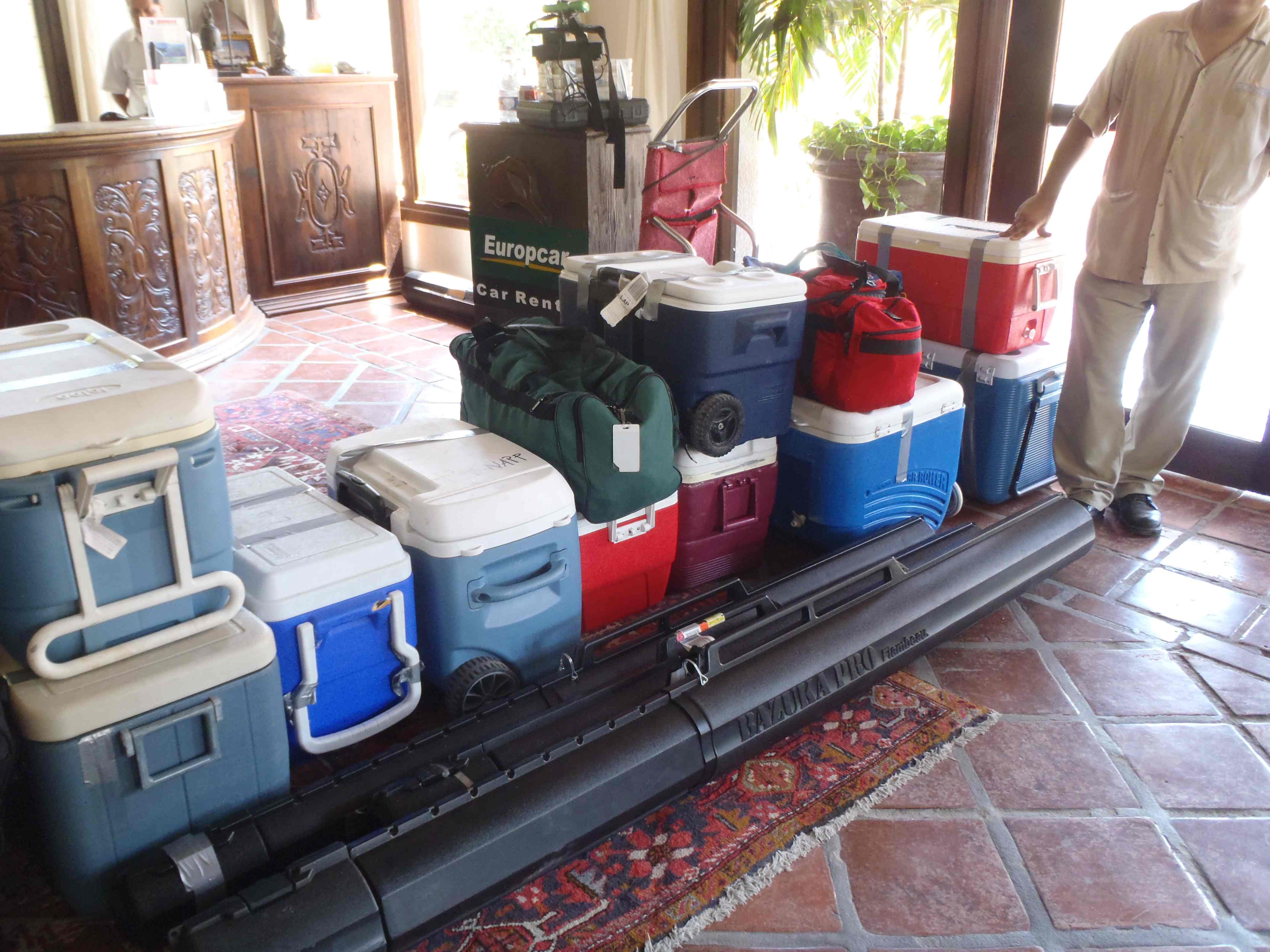
Tackle Packing & Juggling

OLYMPUS DIGITAL CAMERA

There’s a right way and a wrong way to pack for a fishing trip to Baja. And then, there’s EASIER ways to do it right!


“TACKLE PACKING & JUGGLING”

Originally Published the Week of Feb. 18, 2014 in Western Outdoor News

It’s an irritation, but something we’ve gotta learn to live with these days.  Like taking your shoes off at the airport.   Like having your expensive shampoo taken away at check-in.

I’m sure greater and bigger minds than ours have figured out why they are important aspects of airline travel these days.   We empty  and open our bags and pass our stinky shoes through the conveyer belt and do our little spin in the x-ray scanner.  Like the hokey-pokey.  That’s what it’s all about.

One thing for sure is that the days of free luggage are something we use with words like “back in the day” and “in the olden days.”   The more you bring, the more you’ll get charged.

It kinda makes you cry as you stand in your garage and you look at all your custom rods, reels, feathers, jigs and other toys.   You want to bring them ALL!

Almost 30 years ago, I remember my first trip flying to Baja.  I took 10 rods and reels  (two tubes); a tackle box that weighed about 50 pounds and almost 30 marlin lures (that my buddy had borrowed from WON editor Pat McDonell who didn’t know who I was at the time!).   Oh, and two 85-quart ice chests as well.  And this was for fishing in a panga for only 2 days!

Nowadays, you get one piece of luggage.  If you’re lucky.

Economy airlines charge for each piece of luggage.

Rod tubes are oversize.  Pay extra.  Cha-ching!

Reel bags too heavy.  Pay extra.  Cha-ching!

Ice chest…even with nothing in it.  Pay extra.  Cha-ching!

But, a man must do what a man must do and the fish are calling!  So, we just have to think from a different angle.  Consolidate and downsize.

Before purchasing your airline tickets, find out if the airlines has a special luggage allowance you can purchase.  Some airlines (Volaris comes to mind) allows you to pay a little extra up-front when you purchase your tickets online.

This allows you to bring more luggage and more weight for a fraction of the cost.  If you just walk up to the counter with all the extra weight, they charge BY THE POUND!

For example, we had some clients who purchased $200 round trip tickets to fish with us in La Paz.  We told them to purchase the extra luggage allowance.  They declined to do so.

When they flew back to the U.S. they had several very full ice chests.  It cost them almost $600 to fly the fish back.   OUCH!

For practical purposes, take a look at your own gear, if you’re planning to travel.

“Back in the day” multi-piece travel rods were junk.  Nowadays several very good manufacturers and a number of custom rod wrappers are making some super 2 and 3-piece travel rods in varying lengths and strengths.

Many of them come with handy cases and can literally be carried in the overheads or packed into suitcases.  They even make break-down trolling rods.

For reels, here’s my suggestion.  Pair it down to some essential reels.  Match your reels to what you’ll be fishing for.  You don’t need a bowling ball-heavy 5/0 wide reel if you’re going to be fishing inshore in 100 feet of water.  With the new aluminum reels and their horse-strong drags, you can use smaller/lighter reels to get the job done.  Even for trolling.

I would also suggest putting spectra on the reels then put 150 yards of mono top-shot on them.  That way if, for example, the 40-pound test mono isn’t working, all you have to do is change the top-shot to whatever line is the hot ticket for the bite.   You won’t need a separate reel for that.

For terminal gear, be practical.  If you’re only fishing 3 days, you don’t really need 500 hooks of all sizes.  You don’t need 20 throwing irons.  You don’t need 10 feathers of all colors.   If you can, contact your outfitter ahead of time and find out what’s really working.  Bring the essentials.

While you’re at it, pow-wow with your fishing partner.  Consider packing all your rods together.  In one tube.  Each of you doesn’t need to bring a whole set of lures, hooks and other essentials either.  You can both share and thereby cut down on weight and gear.

As for bringing the fish home,  if you’re like me, it always irritated me to pay to bring an empty ice chest down to Mexico.  Paying for air?  C’mon!

What I’ve been suggesting lately is using the newer soft-sided coolers that are airline rated heavy duty;  keeps things frozen for days; and can be folded and packed into your suitcase on the way down.

We’ve had one made by American Outdoors that has worked like a champ for about 5 seasons.   Another nice thing is that these weigh less than a traditional cooler.  Since most airlines limit you to 50 pounds on luggage,  you can get more actual frozen fish in a soft-cooler than a hard-sided cooler that weighs 8-20 pounds with wheels on them.

One last thing.  In the old days,  my buddies and I brought down one or two sets of shorts and t-shirts with us.  That was it.  Our motto was, “if you can’t wash it in the sink, don’t bring it.”  That was a great way to save room for more tackle.

Of course, that was in the days when my buddies and I were all bachelors.

That’s our story!

Jonathan signature

Jonathan Roldan has been writing the Baja Column in Western Outdoor News since 2004.  Along with his wife and fishing buddy, Jilly, they own and run the Tailhunter International Fishing Fleet in La Paz, Baja, Mexico  www.tailhunter-international.com.  They also run their Tailhunter Restaurant Bar on the famous La Paz malecon waterfront.  If you’d like to contact him directly, his e-mail is riplipboy@tailhunter-international.com  or drop by the restaurant to say hi!

______________

Jonathan Roldan’s

Tailhunter International


TAILHUNTER FISHING FLEET #1 Rated on Trip Advisor

TAILHUNTER RESTAURANT BAR #1 Rated in La Paz on Trip Advisor


Now follow us on FACEBOOK TOO

Website: www.tailhunter-international.com

U.S. Office: 8030 La Mesa, Suite #178, La Mesa CA  91942

Mexico Office: 755 Paseo Obregon, La Paz, Baja Sur, Mexico

Phones:

from USA : 626-638-3383

from Mexico: 044-612-14-17863

.

Tailhunter Weekly Fishing Report:

http://fishreport.jonathanroldan.com/

Tailhunter YouTube Videos:

http://www.youtube.com/user/pangapirate

“When your life finally flashes before your eyes, you will have only moments to regret all the things in life you never had the courage to try.”
Read Full Post »

« Newer Posts