Feeds:
Posts
Comments

Posts Tagged ‘outfitter’

ODILE’s ORDEAL and THE AFTERWRATH

1410837924985_wps_24_Enrique_Cota_Cece_a_cries

He’s not lamenting a messed up fishing vacation. Many of those who had the least, lost the most. (Photo from British news) 

ODILE’s ORDEAL AND AFTERWRATH

Originally published the week of Sept. 30, 2015 in Western Outdoor News

When I wrote my last column two weeks ago about making the best out’ve your situation if your vacation gets slammed by a hurricane or other natural disaster, I had no idea. As I wrote that piece, it was your typical sunny Baja day on the beach. As I closed out, it was just starting to get a little cloudy. Rain drops were starting to fall.


I used that to underscore how quickly things can change. Especially in Baja. Especially in this el Nino year.


I was just trying to get my column out. Put some words together. I had no clue just how fast things would change. How fast life itself would change.


The “bit of rain” was part of a weather cell we had been watching half-heartedly watching for several days.  It was just another ho-hum rainfall that started our way with a roar, but like a dozen others this season, we expected it would eventually bend out to the Pacific Ocean. We might get a “little afternoon precipitation.”


It was an understatement of historic proportions.


In the span of less than 12 hours the storm did the unexpected and put Baja right in it’s crosshairs.   By midnight, Sunday the 14th, Hurricane Odile had turned into the largest and most powerful hurricane ever to hit Baja.


It slammed into Baja with Category 3 and 4 strength winds including gusts up to 140-150 miles and hour. By comparison, Hurricane Sandy that devastated the East Coast in 2012, had winds of “only” 115 miles and hour.


Those, like us with a fishing operation in La Paz, or have businesses that are affected by weather or happen to watch weather, had at least a bit of time to get ready. Get the batteries and water. Tape the windows. Get the rain gear. Tie and chain things down. Pull our boats onto dry ground.


Most of Baja was not ready.   It was the weekend. It was the start of the 4-day Independence Day weekend festivities, the largest biggest holiday in the country.   Folks were in a big-time party mode.   Most government officials and civil workers were long gone. Thousands of tourists had no idea either.

It was pretty bad. You’ve probably seen the photos or watched the news. It’s hard to describe if you’ve never been in one. It’s like being inside a vacuum cleaner. It’s THAT loud. But add the glass breaking. Trees snapping. Our ceiling collapsed. Things shattering. It’s difficult to talk. To think.


This was my 10th big one and they are never the same. Like some perverse amusement park ride you know will end, it’s fascination, panic, awe, self-preservation and terror roller-coastering with each blast of wind.


And then it passes. It whimpers; runs outta steam; and moves on.  And you sigh. And you exhale and like little Hobbits you gingerly creep out with everyone else into the light.


But, it’s not over.


In reality, it’s just starting.


The destruction is devastating. It looks like Godzilla danced on the town. Phone poles snapped in half. Giant old trees uprooted. Entire walls of buildings simply missing. Boats and yachts sunk or blown to dry land. Not a single window unbroken. Cars upended. Power lines draped limply across roads. Entire neighborhoods destroyed.   Roads and bridges submerged.   Hotels collapsed.


More than 30,000 tourists stranded with no immediate resources to handle them. An equal number of residents homeless.


And no water. No power. No electricity. No phones. Gasoline runs out. The brand new airport looks like it took an artillery barrage. It no longer exists.


Like being no a deserted island. No way out. No way in. No way to call home…or anyone else. No supplies.


One day post storm, it was shock and disbelief. Day two, it’s assessment.


By day 3, it was starting to get ugly. Tensions rising. Tourists are now ramping up the panic. Tourists and residents alike hit realization. And it’s nasty and ugly and scary.


The vacation has been trashed. The novelty has worn off. The margarita bar has been blown to Mazatlan. The fishing boats are sunk. And there’s no water, showers, food.   Everyone is sleeping on the floor.


And worse…there’s no communications. Off the grid. That is especially terrifying . In a world where everyone has their nose stuck in a smart-phone, it’s the stone age. No way to notify family and relatives. No access to news. Still no way off the island. No airport. No planes.

In the cities, the afterwrath is worse.


Wholescale looting erupts. And it’s not just the dad trying to get some milk and tortillas for the family. Mobs break down windows, doors and metal barriers. Some gleefully. Large scale jubilant Christmas looting.


The big chain stores are attacked and emptied by the hordes. TV’s…clothes…exercise equipment…alcohol. If it’s not nailed down, it’s gone. Fighting breaks out. Police and law enforcement, already strained with the disaster are powerless. Rioters barricade streets so police cannot interfere. They don’t. They can’t.


In the neighborhoods, more looting. Assaults. Rape. Gangs roam the streets with machetes and arms. Neighbors set up their own security to protect their neighborhoods with guns, rocks and re-bar. Carjackings take palce. Fires are set to illuminate the dark. Neighbors dress in white to set themselves off from the bad guys.


Families fight off looters from the roof with bricks and chunks of concrete. One group beats back several assaults from gangs attempting to breach their walls by using sticks, rocks and baseball bats against knives and clubs.


Gunfire can be heard in the darkened streets at night. As one escaped resident told me, “It was medieval and primal. Complete lawlessness.”


The army finally rolls in and things quiet down.


Two weeks post-storm, the recovery is remarkable. The government, the phone and power companies; constructions companies and many others are still working around-the-clock to get going. The phoenix rises.


They said the airport in Cabo would be out for the rest of the year. By the time you are reading this, some limited flights might already be working. The La Paz Airport is already open.


La Paz is 95% back on the grid. Most of the city is cleaning up and back to normal but dealing with the huge influx of refugees. Cabo is 15% on the grid. Some hotels are actually back in business if somewhat limited.


Cell phones were not supposed to work for a month. They were back online in about a week.

But, it’s not over yet. Far from it. Odile’s “ordeal” continues on so many levels.

Many of those who had the least, lost the most. Or everything. The poorer areas, if not destroyed, have not been high on the list to restore services.  It’s alot more than “my vacation got screwed” or “I never got to catch a fish”  or  “I went two days without a hot shower.”

Much more…


Many still have no water. Electricity is a flashlight at best. Or a candle. Food is scarce and many are in residences missing a roof…doors…windows…a wall. As one told me, “My family of 3 shares two buckets of water in the dark to wash, drink and cook.”


From others, “I have had no hot food in two weeks.  Several days there was no food.”


“We sleep in the doorway because there is no light.  By the doorway there is light from outside because we lost our doors.  It is also cooler. But now the mosquitos come.”

“Our barrio (neighborhood) has yet to see a repair truck or anyone.  They fix the tourist areas, but in two weeks we still have no electricity or water.  We are forgotten. ”

Many businesses will never recover. If it was tourist related, there’s no tourists. If the building got blown away, there’s no insurance. It doesn’t matter if your family ran it for 2 generations.   And there’s no “bailout” programs here in Mexico.


Odile shattered more than just some hotels and vacations. The most powerful storm ever to hit Baja indeed.


That’s my story

Jonathan signature


Jonathan

_______________

Jonathan Roldan has been writing the Baja Column in Western Outdoor News since 2004.  Along with his wife and fishing buddy, Jilly, they own and run the Tailhunter International Fishing Fleet in La Paz, Baja, Mexico  www.tailhunter-international.com.  They also run their Tailhunter Restaurant Bar on the famous La Paz malecon waterfront.  If you’d like to contact him directly, his e-mail is riplipboy@tailhunter-international.com  or drop by the restaurant to say hi!

______________

Jonathan Roldan’s

Tailhunter International


TAILHUNTER FISHING FLEET #1 Rated on Trip Advisor

TAILHUNTER RESTAURANT BAR #1 Rated in La Paz on Trip Advisor


Now follow us on FACEBOOK TOO


Website: www.tailhunter-international.com

U.S. Office: 8030 La Mesa, Suite #178, La Mesa CA  91942

Mexico Office: 755 Paseo Obregon, La Paz, Baja Sur, Mexico

Phones:

from USA : 626-638-3383

from Mexico: 044-612-14-17863

.

Tailhunter Weekly Fishing Report:

http://fishreport.jonathanroldan.com/

Tailhunter YouTube Videos:

http://www.youtube.com/user/pangapirate

“When your life finally flashes before your eyes, you will have only moments to regret all the things in life you never had the courage to try.”
Read Full Post »

Making Lemonade Safely

storm coming 2

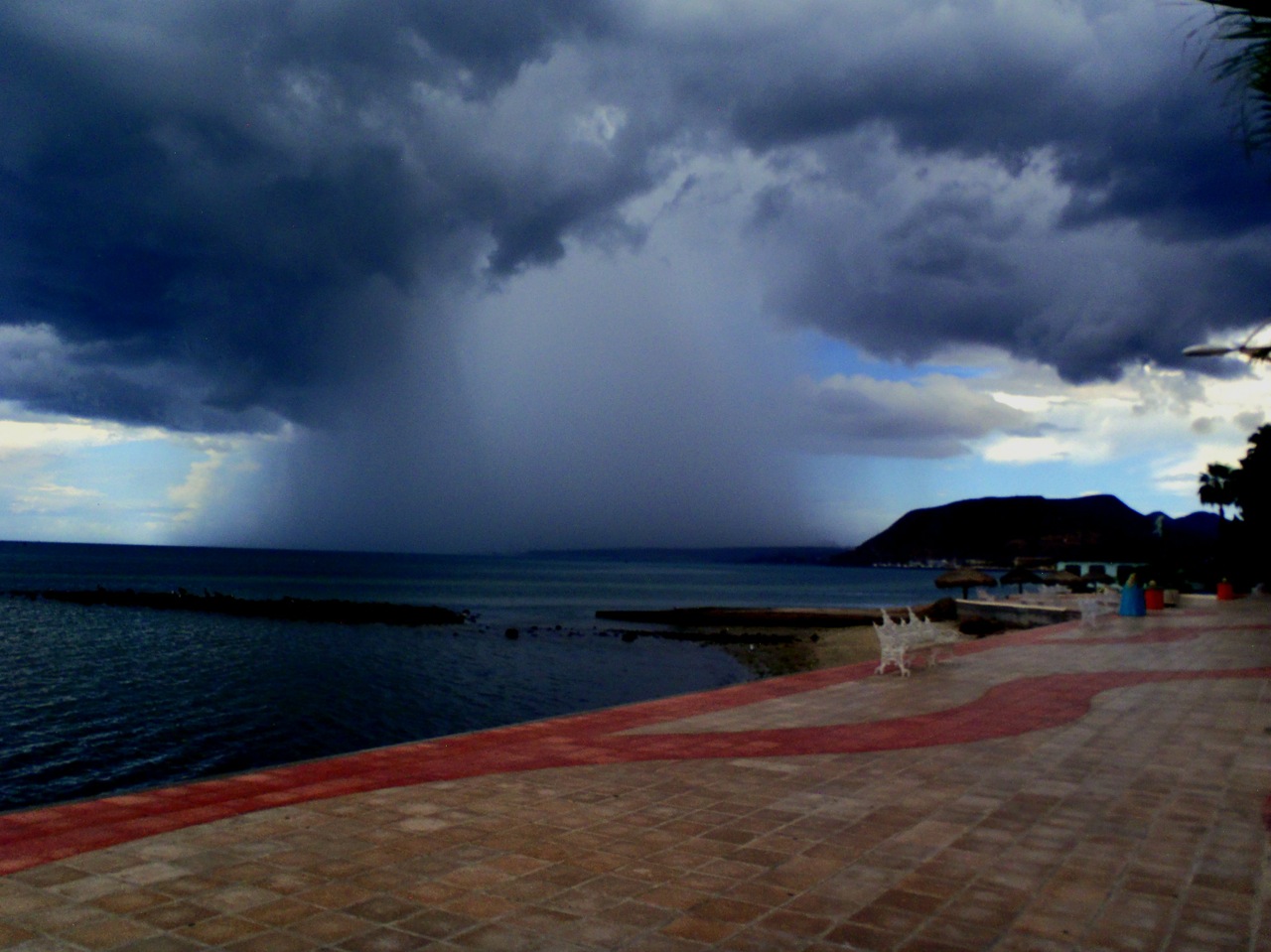
In a matter of minutes…here it comes! Out’ve a blue sky.

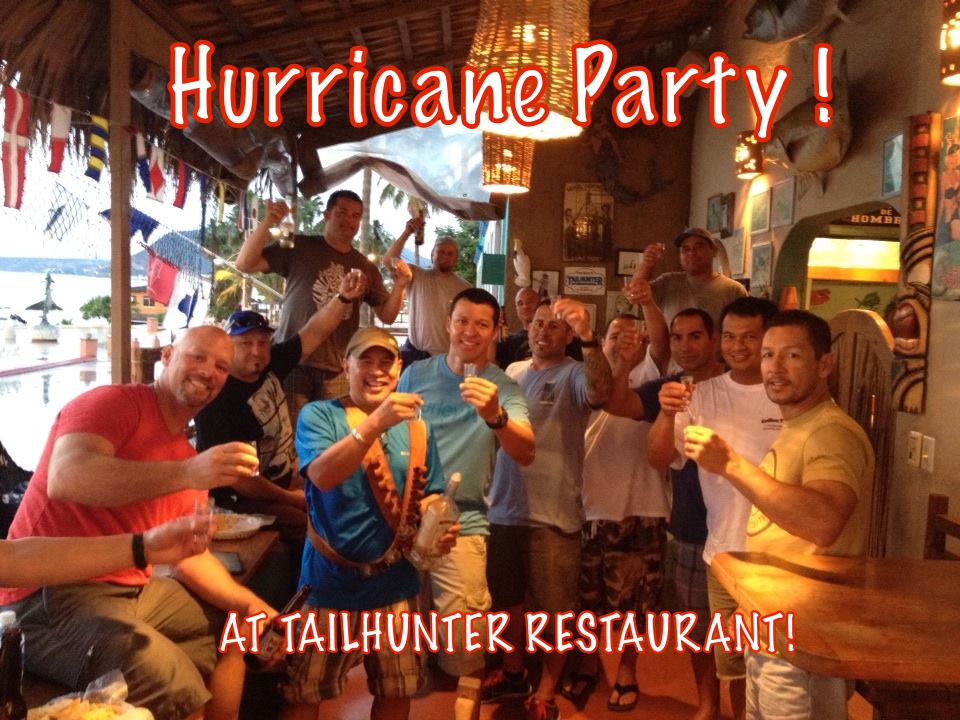
HURRICANE PARTY!

One way to handle it…


MAKING LEMONADE SAFELY

Originally Published the Week of Sept. 17, 2014 in Western Outdoor News

As I sit here writing on the 2nd story terrace of our Tailhunter Restaurant here in La Paz, it looks like a postcard.   The waters of the bay shimmer in the sunshine while I can see birds diving on a school of jacks near one of the buoys.


Sailboats and motoryachts drift on their moorings while a larger cruiser heads out. Palm fronds from the waterfront trees give a hint of the salty breeze blowing through siesta hour.   If I weren’t writing, I’d be like a few guys I see on the beach with their feet up under a shady palapa with cold ones in hand just watching the world go by.


Hard to believe that just a few days ago, Hurricane Norbert blew through here. Life returns quickly to normal once the sun comes back out. Conversely, everyone is now watching and talking about Tropical Storm / Hurricane Odile which has Baja in it’s crosshairs and might be hitting us as you’re reading this.


Actually, there’s two other storms (Tropical Depression 16-E and Invest 96E) which are yet un-named, but accompany Odile into our area. Sigh…can’t get a break! So, a trifecta might be in the making.


But that’s life in a tropical zone during an El Nino year! We expected them. By one count, these are the 14th or 15th storms of the year.   Most have fortunately glanced off and gone spinning into the Pacific with apologies to my family in Hawaii. (But Hawaii knows how to deal with rain! Baja is still working on it.)


Until Norbert last week the storms did some tremendous damage along Baja’s Pacific Coast. However, they really haven’t done much to Baja except rattle our collective tranquility.


Along with some heavy occasional downpours, street flooding and thundershowers , they remind us that Mother Nature still has a roar.   But, mostly, all we’ve had is roar.


And roaring is fine. To a point.


As long as it doesn’t screw with our vacations, right?


But, it happens sometimes. Baja is the “frontera” (frontier). It’s not some hermetically-sealed-Disneyland where everything is somehow controlled by someone behind a screen like the Wizard of Oz.


It’s beautiful and rustic and rugged. And in it’s own way, still dirty and dusty and raw. And when it rains or gets weather, it can get dirtier and muddier and wetter and uglier and yes, even dangerous.


So, what do you do if Mother Nature hangs one on you?   It’s not likely, but it CAN happen and co-incidentally, “hurricane season” just happens to be when the best fishing takes place.


You can watch the weather reports and, if you see something looming, take pre-cautions. Check with your outfitter and reservation people. Take out vacation insurance if it looks like you might not get refunded.


Don’t outright cancel your trip without first checking if the area you will be in will even be affected.   Baja is a big place. Mexico is a big place.   Weather patterns change rapidly. A storm affecting one area, might not even drop rain a few hundred miles away.


If you’re already on vacation, sometimes there’s absolutely nothing to be done. Storms can orginate from clear blue sunny skies in a matter of hours during certain times of the year.   No amount of foresight or weather scouting on your part could have predicated the onset.


If that happens, use some common sense.  Vacations are important, but nothing is more important than personal safety.


If your outfitter has to cancel a trip, so be it. See if there’s a refund or you can re-schedule.


Even if the outfitter or operator is NOT canceling the trip, ask if it’s going to be rough or even worth going out. Remember, it’s supposed to be safe and second, it’s supposed to be fun. This shouldn’t be an exercise in stamina and miserableness. Ask to re-schedule.


Some shady operators will send you out knowing full well it’s gonna be a boatride just to pocket the money. But, most aren’t like that. Especially, if you have the ability to re-schedule. They don’t want to be out there bouncing around either and happy satisfied clients are a priority.


If the hotel recommends you stay close or even indoors…by gosh…have a clue and don’t be running around outside when all heck is breaking loose.


I’m reminded of tourists I saw in the middle of a hurricane cavorting in the pool while bits of roof were spinning around like shrapnel in 80 mph winds. They were still laughing as 20-pound coconuts started dropping from coco trees like cannonballs around them. WHOOSH! WHOOSH! BOINK!


Another time, with thunderous bolts of electricity blasting La Paz Bay, I saw frustrated anglers still casting rods in horrendous wind and rai. They were trying to make-a-point to their amigos that they were “hardcore” fishermen. With every jag of lightning I expected nature to take aim at one of those “rods” and teach them something about “hardcore.” More like “burned-to-the-core!”


It’s pretty funny now, but back in the day, some other clients grabbed kayaks in the middle of the maelstrom and attempted to row around playing “kayak water polo” in a flooded parking lot where cars were submerged up to their windows.


Like the saying, “It’s all fun and games until someone gets hurt.”


The point is, stay safe. Don’t tempt the powers, curse the devil or spit into the wind. So to speak.


From a secure vantage point, try to enjoy the adventure, as it were. Nature can be pretty amazing.  Put your feet up. Crack a cold one with your other stranded travelers.   There’s not much more you can do outdoors.


I’ve seen folks organize poker parties for others. One hotel set up a DVD and casino night in the lobby.   Another hotel sent out for pizza for everyone and kept the bar open 24 hours.


Another put giant trash bags and scissors out so people could make their own “rain panchos.” Snip three appropriate holes and you’re ready to go.


Bottom line. Make the best of a crazy situation that can’t be helped. Don’t blame your travel agent, outfitter or the weatherman. It is what it is.


People get hurt during these things but MOST of the time it’s because they were doing idiotic things like trying to swim in raging surf or crossing swollen arroyos with cars. Or getting hit by flying debris.


No one ever got hurt watching a storm while eating a taco and drinking a margarita indoors.


I’m shutting my laptop right now. Three hours ago when I started typing, it was sunny and hot!   Honest…the winds suddenly came up with dark clowds and it’s staring to rain…again! Where’s my trash bag pancho? I’m out!


(Within hours of this, Category 4 Hurricane Odile hit…)

That’s our story!

Jonathan signature

Jonathan

_______________

Jonathan Roldan has been writing the Baja Column in Western Outdoor News since 2004.  Along with his wife and fishing buddy, Jilly, they own and run the Tailhunter International Fishing Fleet in La Paz, Baja, Mexico  www.tailhunter-international.com.  They also run their Tailhunter Restaurant Bar on the famous La Paz malecon waterfront.  If you’d like to contact him directly, his e-mail is riplipboy@tailhunter-international.com  or drop by the restaurant to say hi!

______________

Jonathan Roldan’s

Tailhunter International


TAILHUNTER FISHING FLEET #1 Rated on Trip Advisor

TAILHUNTER RESTAURANT BAR #1 Rated in La Paz on Trip Advisor


Now follow us on FACEBOOK TOO


Website: www.tailhunter-international.com

U.S. Office: 8030 La Mesa, Suite #178, La Mesa CA  91942

Mexico Office: 755 Paseo Obregon, La Paz, Baja Sur, Mexico

Phones:

from USA : 626-638-3383

from Mexico: 044-612-14-17863

.

Tailhunter Weekly Fishing Report:

http://fishreport.jonathanroldan.com/

Tailhunter YouTube Videos:

http://www.youtube.com/user/pangapirate

“When your life finally flashes before your eyes, you will have only moments to regret all the things in life you never had the courage to try.”

Read Full Post »

BILLFISH 101

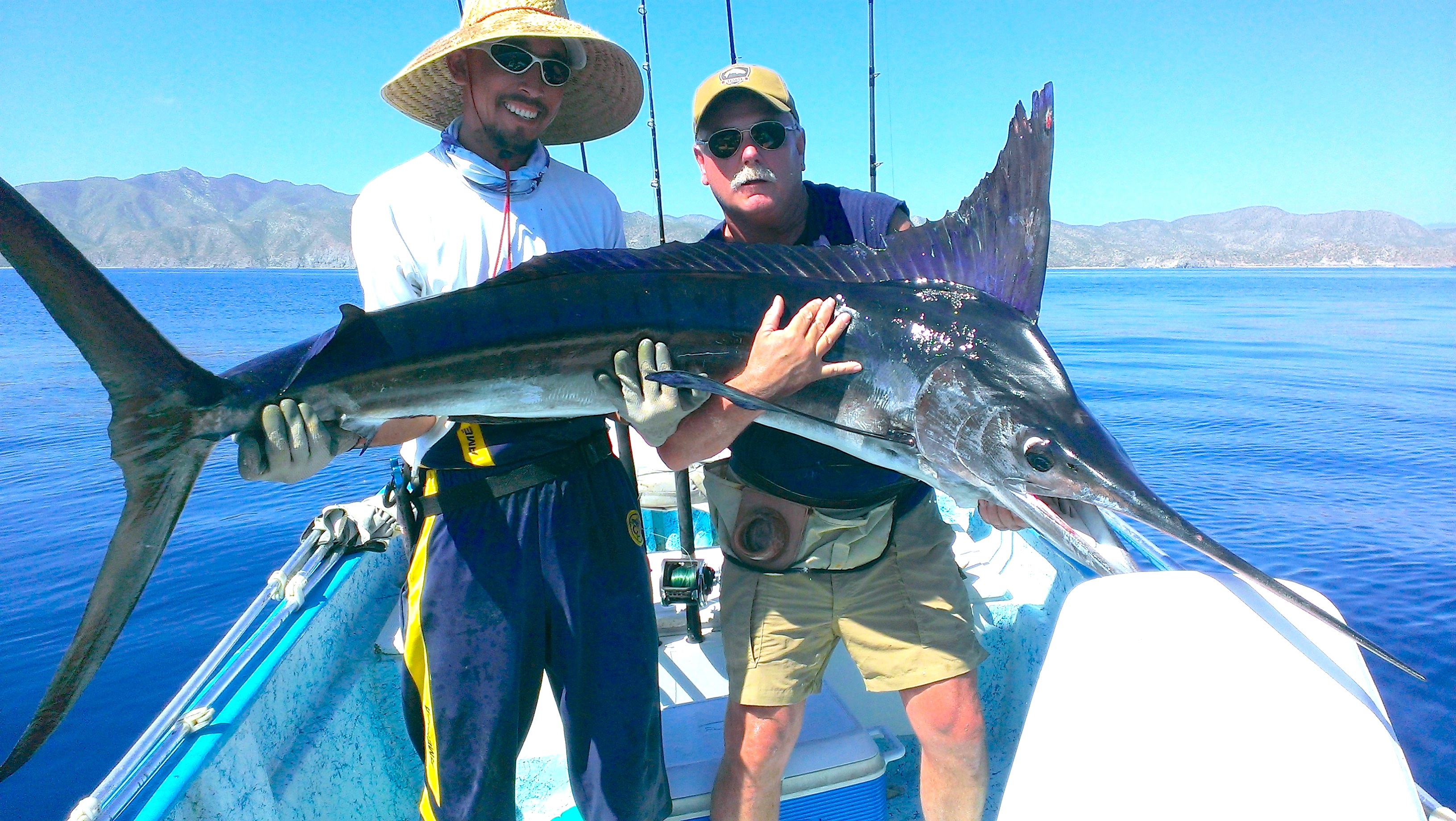
IMAG0242

BILLFISH 101

Originally Published the Week of Sept. 2, 2014 in Western Outdoor News

There are probably few places in the world where you have a better chance of hooking that billfish you’ve always wanted than the waters in the lower Sea of Cortez and the southern Baja Peninsula.


These “glamour” fish include both sailfish and marlin which are drawn to these waters by a number of variables. The landmass itself drops off quickly into deep water trenches that bring cool upwellings and nutrients from the abyss. These, in turn are the food source for the baitfish which attract all manners of gamefish to these waters.


Sitting at the apex of the foodchain the big billfish can attain sizes up to half-a-ton. At the lower end are the smaller sailfish. In ascending order (and size) come the striped marlin, black marlin and then blue marlin as the largest of the hunters.


Not only do they feed on the small baitfish like sardines, caballitos, jacks, mackerel and others. But, they feed in the middle of the food column as well regularly dining on the other predators such as tuna, bonito, dorado and other bluewater species. Basically, if it can fit in it’s mouth, it’s a possible meal.


So, if marlin are on your bucket list, like anything else, it’s all about “WWH” (WHEN? WHERE? HOW?).


Generally speaking, warmer months are better. But even then, that is not always the case. Every place is different.


Around Cabo, striped marlin have been known to “ball-up” in abundance just off the Pacific Coast between Bahia Magdalena and Cabo San Lucas. This takes place from November to January.


It’s a bit of a run from Cabo and it can be rough because it’s winter, but you can also catch a boat from several spots around Bahia Magdalena, but not many. Most anglers run up from Cabo.


It’s a long run, but the fishing can be incredible. It is not unheard of to hook and release dozens of marlin PER DAY! Again, food is the key. The marlin are there feeding on the huge schools of mackerel.


As the year ends, the stripers start to migrate south and around the tip of Baja and with each proceeding month start to move further and further north up into the Sea of Cortez.


So, while Cabo can see marlin year-round, the East Cape, La Paz, and to a lesser degree Loreto and cities north will see the billfish from spring to fall. But, not much in the cooler months.


So, pick your times carefully. Summer and fall are predominately the best opportunities to get into billfish in all areas.   Also waters are warm and seas tend to be calmer.


As for location…


To that end, generally speaking, the further south you go, the better. Although billfish can be caught in a multitude of spots in Southern Baja, you have a better shot at them in Cabo San Lucas, San Jose del Cabo and East Cape (Los Barriles and that area) than say Mulege or Santa Rosalia, although billfish are not out’ve the question in those great areas.


(No disrespect for northern areas which have their own spectacular fishing and their own particular claims to angling fame and shots at species not usually seen in some of the southern cities, e.g. yellowtail!)


Regarding fishing methods, there are a number of ways.


Be prepared to cover some water. So, a larger, faster boat might be preferred since these are rangy fish always looking for sources of food and capable of moving great distances very quickly.


Since you want to cover some water, trolling lures has been effective world-wide, especially, if you’re trying to locate fish.   If you’re in an area such as the East Cape or Cabo where the fish can be quite far, then a cruiser would surely be more comfortable, especially in Cabo which faces the open ocean.


However, that doesn’t mean you ALWAYS need a cruiser. Areas such as Loreto and La Paz do very well catching billfish using pangas insofar as fish are much closer to shore and the areas are less subject to big waves and rough seas.


Another method is to slow troll larger live or dead baits such as smaller bonito, larger mackerel and even small tuna properly rigged and dragged behind the boats.   There’s an old rule about “big fis-big baits” and you’ll be surprised how a huge bait that seems impossible to eat suddenly entices a big billfish to bite it!


One of my favorite methods is to simply troll a lure or dead bait behind the boat that has no hooks. This is a “teaser” method and requires that someone always keep an eye on the troll lines.


When a big billfish comes slashing at the teaser, another lighter rig with a live bait is then cast to the billfish. The live bait has a hook in it and the billfish will break off from the teaser and jump on the live bait.   Battling a big marlin or sail on this lighter live bait tackle can be incredible sport!


This same casting method can be used on a “sight-fish.” Basically, keeping a sharp eye on the water until a billfish is seen on the surface. Using some bit of stealth and a steady hand on the wheel, the boat is maneuvered so that a live bait can be properly cast directly in front of the fish…hopefully resulting in a big hookup!


Whatever you do, consider “CPR…Catch Photo Release” before you go fishing. Decide that you are going to release your billfish BEFORE you’re in the heat of battle. No matter what your captain tells you. Let him know that you plan to release your billfish and that his tips are NOT dependent on him killing the fish.


Try to keep the fish in the water to release it. Bringing the fish aboard not only damages the slime protection on it’s skin, but without the negative buoyancy of the water, internal organs can also be damaged by hauling it into the boat no matter how well intended.


Get as good a photos as possible then release it. All the best taxidermists now do fiberglass mounts that are incredible. All they need are a good photo or, in many case, not even that. All they need is an estimation of size to make that perfect keepsake trophy for your den!

That’s our story!

Jonathan signature


Jonathan

_______________

Jonathan Roldan has been writing the Baja Column in Western Outdoor News since 2004.  Along with his wife and fishing buddy, Jilly, they own and run the Tailhunter International Fishing Fleet in La Paz, Baja, Mexico  www.tailhunter-international.com.  They also run their Tailhunter Restaurant Bar on the famous La Paz malecon waterfront.  If you’d like to contact him directly, his e-mail is riplipboy@tailhunter-international.com  or drop by the restaurant to say hi!

______________

Jonathan Roldan’s

Tailhunter International


TAILHUNTER FISHING FLEET #1 Rated on Trip Advisor

TAILHUNTER RESTAURANT BAR #1 Rated in La Paz on Trip Advisor


Now follow us on FACEBOOK TOO


Website: www.tailhunter-international.com

U.S. Office: 8030 La Mesa, Suite #178, La Mesa CA  91942

Mexico Office: 755 Paseo Obregon, La Paz, Baja Sur, Mexico

Phones:

from USA : 626-638-3383

from Mexico: 044-612-14-17863

.

Tailhunter Weekly Fishing Report:

http://fishreport.jonathanroldan.com/

Tailhunter YouTube Videos:

http://www.youtube.com/user/pangapirate

“When your life finally flashes before your eyes, you will have only moments to regret all the things in life you never had the courage to try.”
Read Full Post »

LESS IS MORE…or MORE THAN ENOUGH?

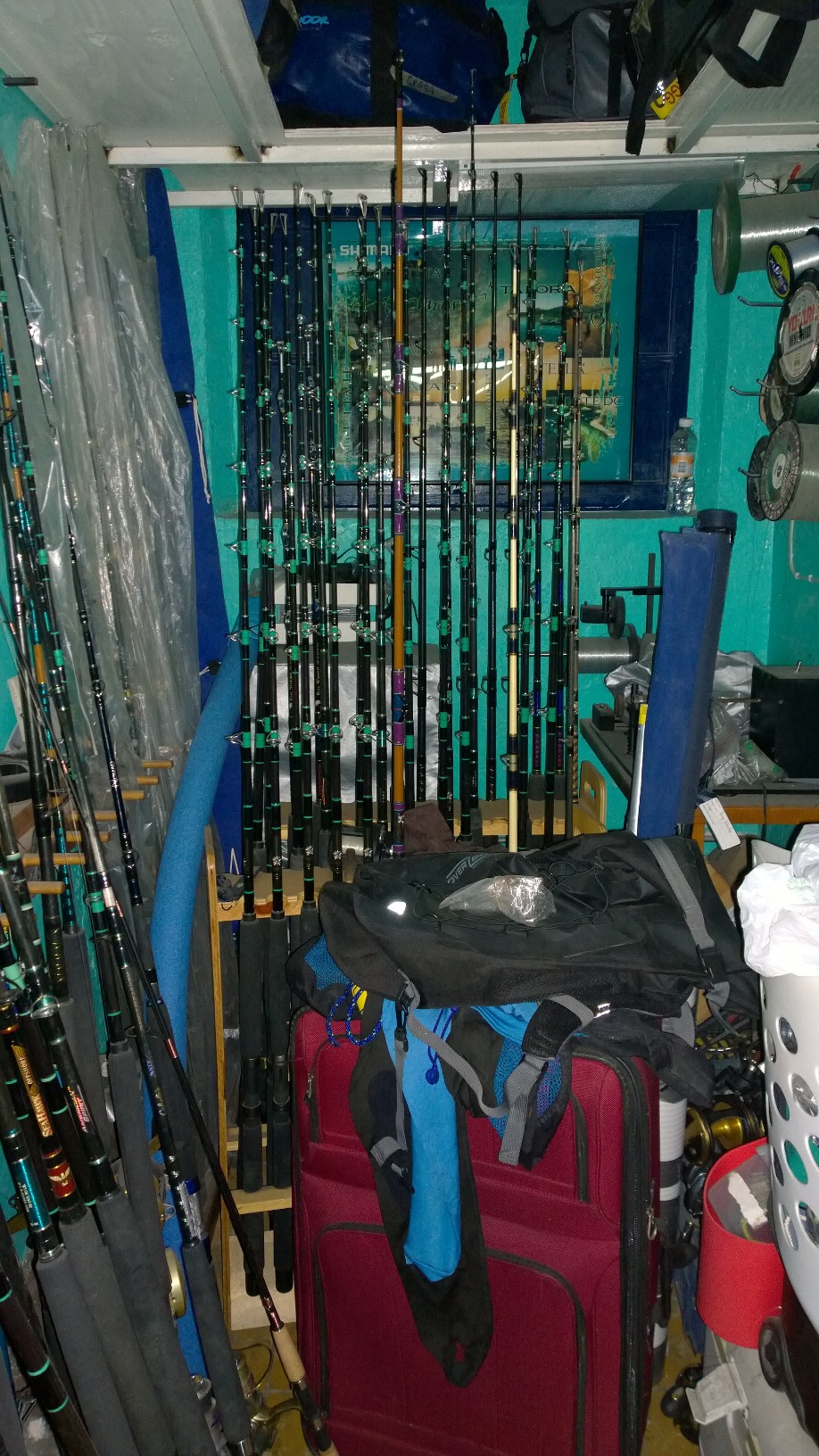
So so so many toys!  But we can only fish with one-at-a-time!

So so so many toys! But we can only fish with one-at-a-time!

LESS IS MORE…OR MORE THAN ENOUGH?

Originally Published the Week of Aug. 20th, 2014 in Western Outdoor News

It was almost comical and I didn’t want to say anything. After all, they were our fishing clients.   But it took 4 of us to load all their fishing gear on the panga. It reminded me of an Everest expedition where the intrepid explorers are followed by a line of sherpas.


Artic ice chest…spinning rods…fly rods…bass rods…conventional rods…three jumbo tackle boxes…video camera case…Gopro camera water proof case…underwater extension rods…special seat cushions that had beer holders in them…even “catch flags” they planned to fly from rods for when they returned to shore.


Ahhh…God bless ‘em.


They were so excited. First time Baja fishermen. They were like little kids. It was like Christmas. They had a list of all the species they planned to catch. They had a GPS pre-programmed with all the “hot spots” they had read about. They had waterproof maps and fish i.d. charts.


So much enthusiasm. Between my captains, deckhands, drivers and other fishermen, it was hard to suppress the chuckles.   I really wanted to say something. But what could I say?   They had all the toys and they planned to use them.


They took to heart the saying, “Better to have it and not need it than to need it and not have it. “


Here’s the rub…I was supposed to go out on the panga that day with them. I rolled my eyes.


My captain had to leap over all the gear to get to the tiller on the motor. There was barely any room to sit. I squeezed on top of an ice chest as we headed out. This was gonna be interesting, but I was grinning. Whatever. Let’s go fishing, guys!


With all the rods jutting out, we looked like a CIA boat bedecked with prickly porcupine radar antennas as we zoomed to the fishing grounds.   I counted…1, 2, 3…8…11…15…19…20…26 rods! Custom wrapped. The latest hi-tech reels. Spooled full of shiny new line.


When we got to the spot, it got a little awkward.


Do remember watching your kids at Christmas barrel into the goodies under the tree? Ripping and shredding and laughing…oh the carnage! Oh the humanity!


Well, the gear boxes opened and out came hooks and lures and feathers of all shapes and sizes. Leaders and gadgets and wires and do-dads and thing-a-ma-jigs and watcha-ma-callits and chingaderas came pouring out. ! Many still in their wrappers.


All organized. Color-coded. Size-coded. Species evaluated. Things for tuna. Things for dorado. Things for dorado AND tuna. Things for wahoo. Need a purple pink speckled marlin lure? Got it! Surface lures…bottom lures…mid-water lures. Everything had a pouch or pocket. Everything in it’s place!


I’ve done plenty of long range trips for 12 and 14 days where I didn’t have this much stuff. We were only going a mile offshore for a few hours. Fishing 2 days total!


And stuff for their belts…pliers, dikes, hook disgorgers, hook pouches, sunscreen holders.


My gosh, they must have accumulated enough points on their Cabela a dn Bass Pro visa cards to fly around the world!


And just like kids oooh-ing and ahhh-ing…each guy was as eager to show off his “toys” to me and the captain.   Simultaneously, he was in showing them to his fishing buddy and also seeing what his buddy had brought along.   Like opening two picnic baskets at the church luncheon!


I just stood back. Tried to look really really realy gosh darn excited! I mean, I hate to discourage or curb anyone’s enthusiasm. So, I smiled and gritted my teeth.


“Wow…that’s uh… really great you found one of those lures.”

“You got 4 of them in each color?”

“You bought 100 hooks of each size too? No way!”


But, we were burning daylight. I could tell on the radio that some of our pangas were already into fish.


There was stuff scattered all over the decks!


I finally said, “Guys, time’s-a-wasting. Let’s get fishing.”


They looked at me. They looked at the captain like eager kids. The captain shrugged his shoulders and dropped a bomb.


“Tie on a hook. We will fish with bait.”


Silence. They looked at me. I looked at them.


I said, “Yup…bait’s working. No leader. Let’s just tie on hooks. Maybe later we’ll get to use some of that great gear you brought.”


They looked at each other and I could sense the puzzlement and disappointment from their quizzical looks.


“C’mon, guys, “ I tried to say gently with as much enthusiasm as I could muster. “The fish are biting so let’s get in on it. Get out some hooks and stow the rest of the gear for now so we don’t miss the bite.”


While they stashed all their stuff, the captain and I tied on hooks for them to save time. I didn’t want to look them in the eyes. I felt like I had taken away their toys. Or had told them there is no Easter Bunny.


But, the fish bit. The sun came out. The water was blue. And the fish bit again. And the icy beer and lunches always taste double-good outdoors on the water.


There was a point later in the day when their fish box was filling and the fish were swarming and I asked if they’d like to try out some of their fancy gear. But, they laughed and were too busy hooked up to want to change.


The whole day, they ended up using one rod each. And maybe half-a-dozen hooks. And were happy. Beyond happy.


As one of the guys laughingly said to me headed back, “Somehow, I still have to explain to my wife why I needed to buy all this gear.”


His buddy said, “I once asked my wife why she needed so many shoes.”


“What did she say?”


“Because I say so, Dear. Because I say so…”


“I don’t think that will work on my wife.”


We all laughed.


That’s my story!

Jonathan signature

Jonathan

_______________

Jonathan Roldan has been writing the Baja Column in Western Outdoor News since 2004.  Along with his wife and fishing buddy, Jilly, they own and run the Tailhunter International Fishing Fleet in La Paz, Baja, Mexico  www.tailhunter-international.com.  They also run their Tailhunter Restaurant Bar on the famous La Paz malecon waterfront.  If you’d like to contact him directly, his e-mail is riplipboy@tailhunter-international.com  or drop by the restaurant to say hi!

______________

Jonathan Roldan’s

Tailhunter International


TAILHUNTER FISHING FLEET #1 Rated on Trip Advisor

TAILHUNTER RESTAURANT BAR #1 Rated in La Paz on Trip Advisor


Now follow us on FACEBOOK TOO


Website: www.tailhunter-international.com

U.S. Office: 8030 La Mesa, Suite #178, La Mesa CA  91942

Mexico Office: 755 Paseo Obregon, La Paz, Baja Sur, Mexico

Phones:

from USA : 626-638-3383

from Mexico: 044-612-14-17863

.

Tailhunter Weekly Fishing Report:

http://fishreport.jonathanroldan.com/

Tailhunter YouTube Videos:

http://www.youtube.com/user/pangapirate

“When your life finally flashes before your eyes, you will have only moments to regret all the things in life you never had the courage to try.”
Read Full Post »

“LA PAZ EVENT TARGETS IGFA RECORDS AND ROOSTER RELEASES!”

Burgess 1 rooster 6-14 PMT

Fish like this huge roosterfish caught and released by Ron Burgess at Las Arenas last year have made the Las Arenas/ La Paz area famous and known as the “roosterfish capital of the world.” Last year in 4 days, Ron and his amigos caught and released 29 roosters between 40 and 90 pounds!

WP_20140327_14_48_39_Pro

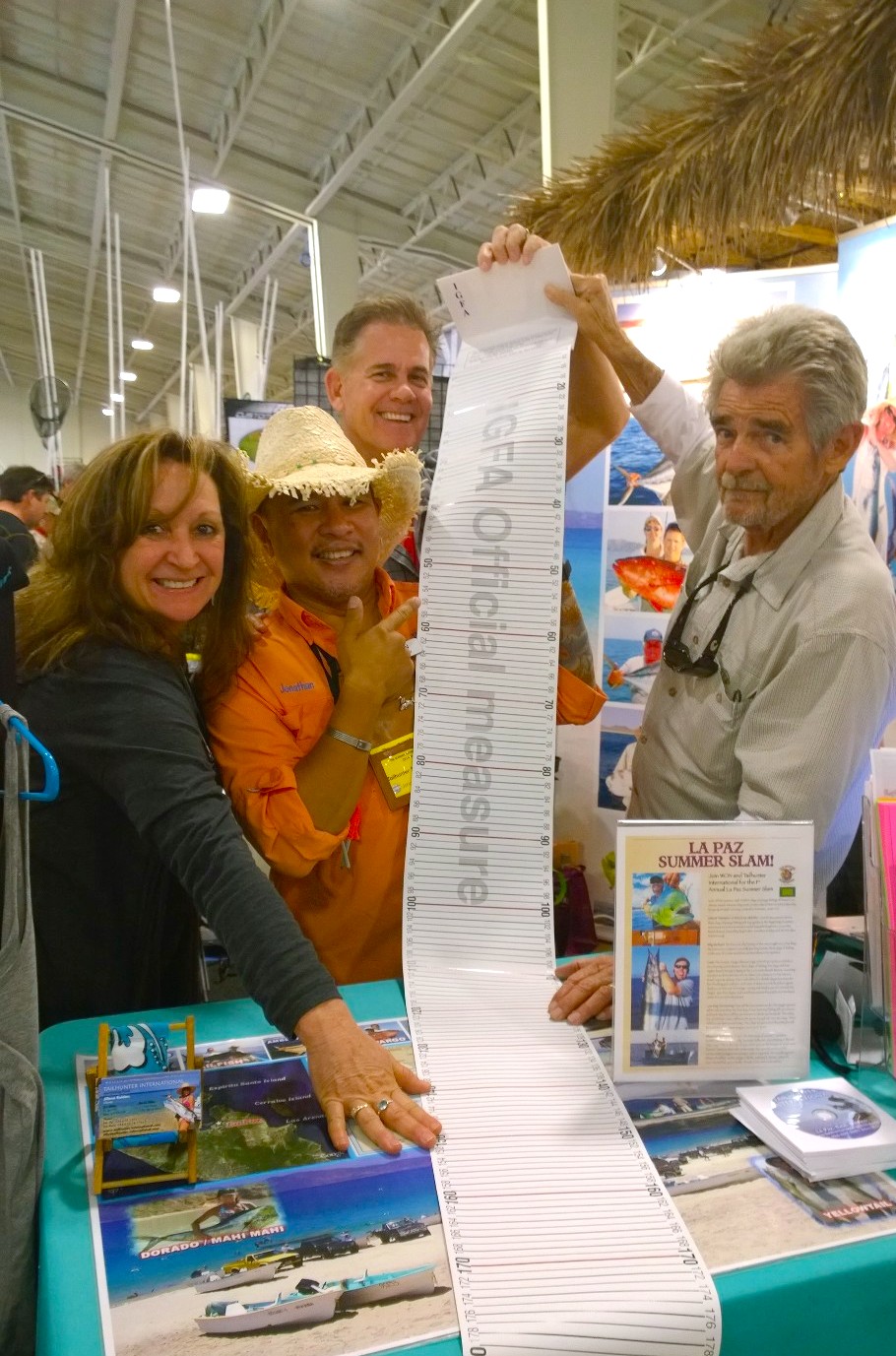
A sample of the new IGFA “release measuring devices” which will allow anglers to officially measure and release fish and still be eligible for world records! This new “category” for records is a big boost for catch-and-release of species! Shown here with Jilly and Jonathan Roldan, Pat McDonell, editor for Western Outdoor News, and Gary Graham (holding the tape!) who is not only a multi-IGFA record holder, but also an IGFA rep plus famous author and journalist. All will be at the event!


LA PAZ EVENT TARGETS IGFA RECORDS AND ROOSTER RELEASES!

Originally Published in Western Outdoor News the Week of April 29, 2014


In what appears to be a first, Western Outdoor News and Tailhunter International Sportfishing in La Paz are having the first certified tag-and-release roosterfish event this summer


The “Summer Panga Slam” will be held June 17-21 in La Paz. It promises to be quite an event.


Originally slated as a 3-day light tackle panga tournament among friends, the event has grown tremendously. It has sprouted some “legs” since it’s inception several months ago.


For one, Tailhunter International in La Paz now has a certified I.G.F.A. scale on hand and is a registered IGFA center. This means, Tailhunters and it’s clients can legitimately target world-record fish.


This is significant given that they fish the famous waters of La Paz and Las Arenas as well as the northern East Cape where arguably more world records have been set over the decades than anywhere else. Many consider it to be one of the top light-tackle fisheries in the world.


Additionally, the area has been known as the “roosterfish capital of the world” famous for it’s slugger-sized rooster populations. In fact, in 1987, the world record roosterfish was caught on these very beaches. It weighed in ta 114-pounds. Larger ones have been caught and released.


Last year, the area had a banner roosterfish season where roosters averaged 40-90 pounds and a number of fish over 100-pounds were tallied and released including one estimated over 150-pounds!


All of this is important to the “Panga Slam” event for two reasons:


  1. The IGFA now has “release” categories that were previously not available. That means you can now become a world-record holder and not have to kill your fish. Last year, a world-record release rooster was produced in La Paz waters! There are categories for men, women and children! However, you MUST have a special IGFA measuring device of which this event will have several on hand!


  1. Tailhunter International is part of the newly formed Roosterfish Foundation dedicated to preserving the exotic rooster and monitoring the health of the species. To that end, tag-and-release devices are now available so that released fish can now be tagged before we let them go.


So, what all this means is that the “Summer Panga Slam” now gives participating anglers not only a shot a getting a record fish that can actually be weighed. But, it’s also an opportunity to release a world-record fish and get into the record books as well as help to proliferate the roosterfish species for everyone!


It’s going to be a lot of fun and, as mentioned, the event has grown. WON editor Pat McDonell himself will be down to help host the event. WON columnist, journalist and famous author Gary Graham will be on hand as well to record the event. Gary is himself also a multi-record IGFA record holder and the IGFA representative.


On board as well are a growing number of sponsor with lots of goodies for the participants.


The event is limited to 40 anglers in 20 two-person panga teams. There are still a few spots left! Here’s the rest of the details:


  • Sponsors aboard now include:  Okuma Reels, Costa Sunglasses, Yo-Zuri, Sufix, Turners Outdoors and Lazer Trokar Hooks!
  • Three full days of panga fishing at Las Arenas  (gear, breakfast and lunches included) 
  • 4 nights La Concha Beach Resort in ocean-facing room
  • Welcome dinner and Awards Dinner
  • Taco feed night and live music at famous Tailhunter Restaurant
  • One day open fun fishing and then two days jackpot tournament (cash entry $100 in La Paz per team) 
  • Event t-shirts
  • Cabo San Lucas Airport Shuttles 

Cost is $1350 per person. Space is limited and going fast. For more information, you can contact Western Outdoor News and talk with Mike Flynn at FLYNN@wonews.com or call him at 949-366-0030.


We’re looking forward to having you join us!

That’s our story

Jonathan signature

Jonathan

_______________


Jonathan Roldan has been writing the Baja Column in Western Outdoor News since 2004.  Along with his wife and fishing buddy, Jilly, they own and run the Tailhunter International Fishing Fleet in La Paz, Baja, Mexico  www.tailhunter-international.com.  They also run their Tailhunter Restaurant Bar on the famous La Paz malecon waterfront.  If you’d like to contact him directly, his e-mail is riplipboy@tailhunter-international.com  or drop by the restaurant to say hi!

______________

Jonathan Roldan’s

Tailhunter International


TAILHUNTER FISHING FLEET #1 Rated on Trip Advisor

TAILHUNTER RESTAURANT BAR #1 Rated in La Paz on Trip Advisor


Now follow us on FACEBOOK TOO


Website: www.tailhunter-international.com

U.S. Office: 8030 La Mesa, Suite #178, La Mesa CA  91942

Mexico Office: 755 Paseo Obregon, La Paz, Baja Sur, Mexico

Phones:

from USA : 626-638-3383

from Mexico: 044-612-14-17863

.

Tailhunter Weekly Fishing Report:

http://fishreport.jonathanroldan.com/

Tailhunter YouTube Videos:

http://www.youtube.com/user/pangapirate

“When your life finally flashes before your eyes, you will have only moments to regret all the things in life you never had the courage to try.”


Read Full Post »

“No Off-Road Means No Off-Road!

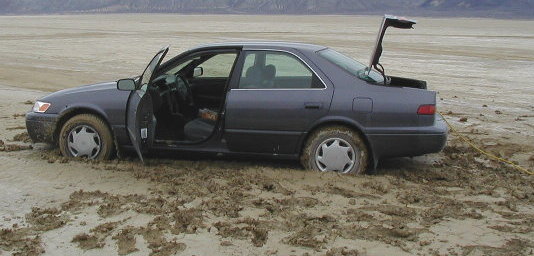
OLYMPUS DIGITAL CAMERA

There’s no Auto Club to call out here, amigo! Oh…and you say your cell phone doesn’t get a signal either?

“NO OFF ROAD MEANS NO OFF ROAD!”

Originally published the Week of February 5, 2014 in Western Outdoor News

It was time to put these two guys outta their misery.  For about 30 minutes a group of my captains and I had watched two poor boobs trying to get their rental car out’ve the mud flats.

Standing on a little rise looking down about 100 yards to the flats,  it was hard to suppress the laughs and high entertainment at the expense of the clown show in the sludge.

Earlier in the day, we had seen the small sedan up to it’s axles in the goo.   Stuck.  There looked to be some foot tracks leading away, but no one was around.  We had pangas to put out and clients to attend to so we shrugged.  None of our business.

But this afternoon, now that the fishing was done, the car was still there.  And the occupants were back.   And  a group of  my captains watching the comedic scene. Cervezas in hand.  Arms crossed.  Leaning against their pickup trucks.  Grinning.

One guy was in the car revving for all it was worth.  Mud shot skyward.  The other guy was doing all he could to pry the car loose…from behind! It was like a blender exploding.   Covered head to toe in layers of sludge.

Little bits of white poked out around his lower torso indicating that he was out there in his tidy-whitey-underwear getting shot-gun blasted by gobs of mud looking like he got dipped in chocolate goo!  These guys had no clue.  And we had no idea why he had taken his clothes off!

But it was getting late. We had to get home. Wives and kids were waiting.   Good hearts prevailed and finally one of the captains said he couldn’t take it anymore.  He and several other guys got their trucks and some rope and pulled the grateful guys outta the muck.

It’s not the first time.  I’m sure it won’t be the last we give first aid to a rental car.

Car rentals in a foreign country can be quite an adventure.  Most of it is great!  Don’t get me wrong.  We do it all the time in our own travels.

But, Mexico has it’s own caveats it’s good to keep in mind.

For one, the fine print that says, “Don’t take the car off-road” means “Hey, idiot, keep the car on the pavement!”

Mexico isn’t exactly known for having great streets to start. Sometimes it’s just as treacherous navigating the potholes as the Baja 1000,   so don’t even think about trying to cross that patch of sand or salt marsh or stretch of solid-looking mud!

Especially in Baja, it doesn’t take much to suddenly find yourself in the middle of nowhere.  I mean, that’s part of the beauty of Baja.  Having broken down myself over the years, remember, there’s no Auto Club to call.  Heck, your cell phone might not even work ‘en la frontera’ (in the frontier)!

So, don’t get caught like these guys trying to dig your car out in your underwear.  Personally, in the days before cell phones, I once hiked over 30 miles to get help when my own car busted an axle.   I could swear the buzzards were just waiting for me to give it up as their next road kill.

Here’s some tips when renting a car.

For one, rent from someplace that has a recognizable name.  You get what you pay for.  “Jose’s Beach Tours and Car Rental” is probably not what you’re looking for.

Secondly, ask if they have another office in the places you’re going to visit.  For example, if you’re renting in Cabo San Lucas but you plan to drive to La Paz (100 miles away) or Loreto (another 5 hours) and you break down or lock your keys inside (you only get 1 key), there’s no one to help.  You’ll have to wait for someone to come with assistance and that can take hours…or days.  And you don’t get refunded for the days you can’t drive.

Very importantly, know what you’re getting charged for.  So often, I hear clients get “great rates” but then when they return the car, they get surcharged to death for several hundred dollars more.  Know how much the tax will be.  Know about the insurance rates.   Get it all in writing.  Nothing leaves a bad taste after a great vacation like getting stuck with a big bill.

On that subject, if you’re in doubt about insurance, get it.  Don’t drive without insurance!  It’s not that expensive and heaven forbid you’re the one in a zillion drivers who gets in an accident.

Keep in mind, in Mexico, you are guilty until you prove your innocence!  Repeat that 10 times! It’s not like the U.S. where your innocence is presumed.   In Mexico, you are presumed GUILTY!

If you’re in a bender, most times the other guy will have NO insurance.  Locals can’t afford it.   He will say it’s YOUR fault.   You will say it’s HIS fault.  Of course.

Police have little recourse but to sort it out since technically you’re both GUILTY and you can both be detained at the police station until it’s ironed out.  (See the part about making sure the rental agency has an office at the destination you’re visiting…you really don’t want to be waiting at the police station until someone shows up!).

The police aren’t bad guys.  They’re not out to stick it to the gringo.  They would do the same if it were two locals.  It’s just the way the law is written.  Deal with it or do your best to avoid it.

Finally, no matter what you think you may have rented, stay on the pavement!

Even if you rent a Jeep…believe me…it’s probably NOT 4-wheel-drive.  I’ve yet to actually see a 4-wheel drive rental Jeep, but I see yahoos off-roading through the sand dunes and rocks all the time.

If you do take it off-road, look for me and my boys.  We’ll be up on the hill laughing.  Wear good underwear.

That’s our story!

Jonathan signature

_______________

Jonathan Roldan has been writing the Baja Column in Western Outdoor News since 2004.  Along with his wife and fishing buddy, Jilly, they own and run the Tailhunter International Fishing Fleet in La Paz, Baja, Mexico  www.tailhunter-international.com.  They also run their Tailhunter Restaurant Bar on the famous La Paz malecon waterfront.  If you’d like to contact him directly, his e-mail is riplipboy@tailhunter-international.com  or drop by the restaurant to say hi!

______________

Jonathan Roldan’s

Tailhunter International


TAILHUNTER FISHING FLEET #1 Rated on Trip Advisor

TAILHUNTER RESTAURANT BAR #1 Rated in La Paz on Trip Advisor


Now follow us on FACEBOOK TOO


Website: www.tailhunter-international.com

U.S. Office: 8030 La Mesa, Suite #178, La Mesa CA  91942

Mexico Office: 755 Paseo Obregon, La Paz, Baja Sur, Mexico

Phones:

from USA : 626-638-3383

from Mexico: 044-612-14-17863

.

Tailhunter Weekly Fishing Report:

http://fishreport.jonathanroldan.com/

Tailhunter YouTube Videos:

http://www.youtube.com/user/pangapirate

“When your life finally flashes before your eyes, you will have only moments to regret all the things in life you never had the courage to try.”
Read Full Post »

“CIRCULARLY SPEAKING”

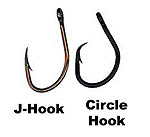
circlehook_jhook

The conventional “J” style hook and the obvious differences in the “circle” hook.

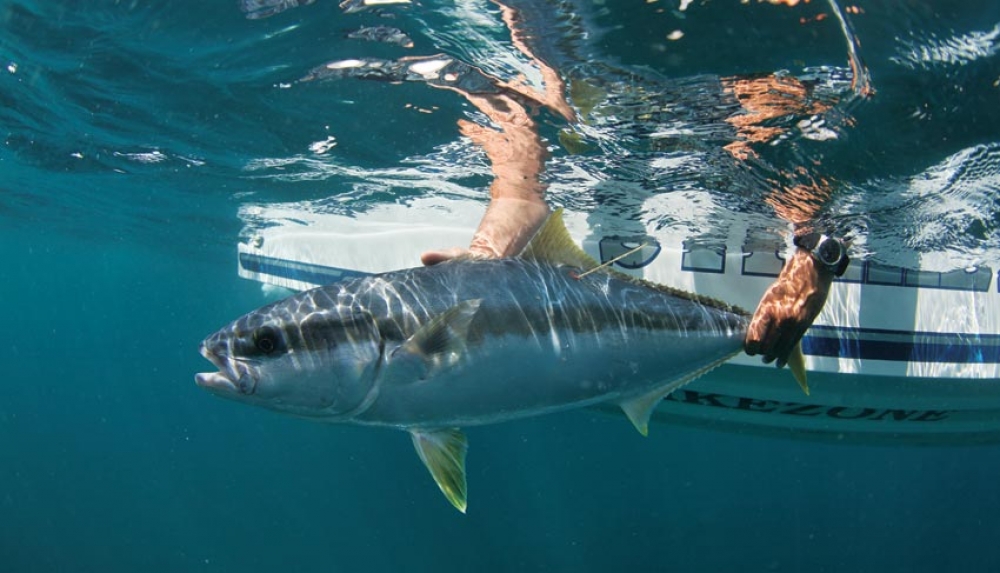
release-right-main

Circle hooks make it easier to set the hook on fish resulting in more hook-ups but even moreso, make it easier to release your catch!

CIRCULARLY SPEAKING

Originally Published in Western Outdoor News the Week of January 9, 2014

Over the years, I get a lot of e-mails with comments and criticism about things I’ve  written or suggestions for things I should write about.   In all the years I’ve been writing this column, I don’t think I’ve ever actually responded publically to some of the questions.

There’s some really good ones too.  And I ALWAYS respond.  But, it occurred to me that if one person is asking something, then there’s probably a number of folks who have the same questions.  So, maybe it would be good to sometimes put it all in the column.

A recent e-mail is what got me thinking.   It came from “Jerry” from Aptos CA.

He said, “ In so many fishing magazines , the writers always write as if all the readers are experienced.  I’m not a rookie, but I recently got into salt water fishing and want to learn more.  I just made my first trip to Baja and guys were talking about ‘circle hooks.’ What are they and do I need them?”

It’s actually a question I get more often than you think.   So, if you know all about circle hooks,  this is one time you can just internet surf to something more entertaining to read!

Let’s see…what are circle hooks and what do you do with them?

Circle hooks are distinguished from “J” style hooks that have a long straight shank, by a shank that’s curved. Plus the sharpened point faces towards the shank.  Hence the “circle hook” moniker.

They have been in use for ages by commercial fishermen, but only in say the last 10 or 15 years have they really caught on with sportfishermen.   In Baja, they’ve taken a little longer to get a toehold, but their use is growing.

Their popularity can be attributed to the growing interest in catch-and-release fishing.  Basically, fish hooked with a circle hook have a much higher incidence of survival when taken in this manner.

Here’s the deal.  With a regular “J” style hook, fish get hooked in the lip, the gill, the gut and deep in the throat.  Deep enough and it’s a chore to get that hook out without damaging the fish.

Or, the hook outright kills the fish.

Damaged fish,  just don’t do well once released.  Even the time spent handling the fish and removing the hook is detrimental to it’s survival.

It’s tired.  It’s suffocating.  It’s losing important protective slime and scales.   Put it back in the water and it’s gonna be a floater, no matter how well-intentioned you are as an angler.

Now, with the circle hook, the nifty part is that 99% of the time, the hooks slides right into the corner of the mouth when it’s set.   It’s not damaging organs.  The hook comes out relatively easily and the fish has a much better chance when returned to the water.

Often without even touching the fish, grasping the hook with pliers allows one to shake the fish right back into the water without actually handling the fish.  Pretty cool.

The trick is the hook set.

When setting the hook using a circle hook, the trick is “not to set the hook!” One must actually act counter-intuitively.    Circle chooks literally set themselves.   It’s a great mistake newbies make with the circle hooks.  Setting the hook yourself screws it up!

With a traditional hook, the angler “swings” the rod back and “sticks” the fish to set the hook.  With a circle hook, the hookset is virtually automatic.

When the fish picks up the bait, the angler merely puts a little pressure on the spool.  Then point the tip of the rod at the running fish and flip the brake.  The line will come tight.  A slight lift of the rod sets the hook!  Just like that.   You’re on!

There’s no dramatic swing of the rod as in using a conventional hook.   And that’s where the experience comes in.  The newbie gets nervous or excited and when he or she feels the bait picked up, they set the hook with a big swing of the rod.   That’s what their intuition tells them.  SET THE HOOK!

FAIL!

What that does is jerk the hook right out of the fish’s mouth.  Adios pescado!

Take your time.  Calm down.  A little patience and you’ll get the fish resulting in more hookups…even if you plan to keep the fish…since the hook up is automatic.  Then, if you plan to release the fish, the hook design allows for an easier release.  What could be better?

In my experience, many captains I’ve known in Baja were reluctant to use the circle hook or frowned on clients using the hooks.  There were two reasons.

One is that the captains and crews themselves didn’t understand the funny looking hook that actually looked like a defective design.  I’ve seen them cut them off client’s lines and toss them away with disdain.  And tie on a regular hook!

Second, and perhaps more importantly, is that clients would miss fish by incorrectly setting the hook.  That resulted in less fish.  Unhappy clients.  Less tip money.   An economical reason!   Remember, every captain out there is also a businessman too!

But, over the last few years, the popularity of the circle hook has grown.   Captains and crews themselves, especially the younger ones, understand the importance of catch-and-release.  It’s a matter of preserving their own livelihoods and the resource.

However, more anglers are also becoming more knowledgeable as well.  And with that, the stigma of using them appears to be diminishing.

Give them a try next time!

That’s our story!

Jonathan signature

_______________

Jonathan Roldan has been writing the Baja Column in Western Outdoor News since 2004.  Along with his wife and fishing buddy, Jilly, they own and run the Tailhunter International Fishing Fleet in La Paz, Baja, Mexico  www.tailhunter-international.com.  They also run their Tailhunter Restaurant Bar on the famous La Paz malecon waterfront.  If you’d like to contact him directly, his e-mail is riplipboy@tailhunter-international.com  or drop by the restaurant to say hi!

______________

Jonathan Roldan’s

Tailhunter International


TAILHUNTER FISHING FLEET #1 Rated on Trip Advisor

TAILHUNTER RESTAURANT BAR #1 Rated in La Paz on Trip Advisor


Now follow us on FACEBOOK TOO

Website: www.tailhunter-international.com

U.S. Office: 8030 La Mesa, Suite #178, La Mesa CA  91942

Mexico Office: 755 Paseo Obregon, La Paz, Baja Sur, Mexico

Phones:

from USA : 626-638-3383

from Mexico: 044-612-14-17863

.

Tailhunter Weekly Fishing Report:

http://fishreport.jonathanroldan.com/

Tailhunter YouTube Videos:

http://www.youtube.com/user/pangapirate

“When your life finally flashes before your eyes, you will have only moments to regret all the things in life you never had the courage to try.”


Read Full Post »

Salt Lake City-20120210-00078

From January to March of each year for almost 20 years, we criss-cross the western U.S. promoting our fishing operation in La Paz and often become an impromptu clearing-house of many general questions about travel to Baja and Mexico in general.

“BAJA FAQ 2013”

Originally Published the Week of Feb. 13, 2013 in Western Outdoor News

As I’m writing this, we’re just wrapping up our 3rd day here at the Pacific Northwest Sportsmens Show here in Portland, Oregon.  We’ve been on the road now for more than a month as we do our annual show-hopping promo tour across the country.

So far, we’ve done fishing/ hunting shows in Sacramento, Denver, Seattle before this one.  Only 2 more months to go and about 12,000 more miles of driving.

As we stand here in our booth, promoting our La Paz fishing operation for 8, 10…12 hours a day, we talk to hundreds of people a show.  We often hear many of the same questions.  Year-after-year.  Although the questions might be the same, very often the answers might change based on changing conditions in Baja.

I thought I’d share some of the most common questions.  Some might seem pretty simple…or silly…or obvious…but as mentioned, sometimes answers might surprise you.  Also, we get asked these questions ALOT so obviously, alot of folks don’t know these answers!

Q:  Where is Baja, Mexico?

A:  It’s the 1000 mile-long-peninsula extending from the border at San Diego/ Tijuana and going south to lands-end at Cabo San Lucas.  It is bordered by the Pacific Ocean to the West and is separated from the Mexican mainland to the east by the Sea of Cortez.

Q:  Is it safe?

A:  The  VERY short answer.  Yes.  Mexico is a huge country.  Generally as safe as most cities in the U.S. and in some respects even safer.  Yes, there are serious problems, but much of that is only in certain areas and in border areas and tourists are not generally targeted anymore than tourists are targeted by crime in the U.S.  In any given city, just like most U.S. cities, there are good and bad parts of town.  Stay out’ve the bad parts.

Q:  Is it OK to drive?

A:  On any given day, there are thousands of tourists on Baja roads having un-eventful drives.  Thousands cross the border daily and routinely.   Observe the laws.  Make sure you have insurance. Drive with care and common sense as you would anywhere.

Q:  Can we buy property?

Yes, you can.  Who do you think is buying all these parcels, condos, houses and lots along the beachfronts! Sometimes it seems that Americans are buying up all of Baja.

Q:  Is it always good fishing?

A:  Historically,  Baja is one of the most famous fishing areas in the world.  But…Baja is 1000 miles long.  It has over 2000 miles of coastline.  It has incredible fishing and over 700 identified species of fish in the Sea of Cortez.  That being said, fishing is as different as the species, location and variables such as  season, weather, current, bait, etc.  Every places is not great 100% of the time.  There’s such a thing as a bad day of fishing.

Q:  Can we bring our fish home?

A:  As long as you’re within limits and observe regulations, it would be a shame if you didn’t.

Q:  Is the water safe to drink?

Most places very much so!  But, like many places in the U.S.,  municipal water tastes bad.  Everyone drinks bottled water which is readily available.

Q:  Can we use American money?

A:  In Baja, American dollars are very welcome, but with new banking laws, making it harder for Mexican vendors to change dollars into pesos,  it makes it harder for the vendors to accept pesos…especially large denominations.  Rarely, will a vendor turn down a payment in dollars…a sale is a sale!  But increasingly, more can’t accept large denominations.  So, it’s a good idea to use smaller bills or get pesos exchanged before you come over or at an exchange house.  Many Mexican banks will not change dollars to pesos unless you have an account and, even then, only small amounts.

If you can avoid it, don’t use credit cards. But,  many places won’t accept them because of high surcharges to the vendor.

Q:  What happens if we need medical help or what happens if I have special medical needs?

If it’s  your medication, bring what you need and extra dosage.  Bring a copy of your prescription.  If it’s emergency medical care, most large Baja cities actually have pretty good first response and emergency care.  Enough to get you home after most emergencies so that your own doctor can treat you.  Credit cards  are usually welcome in lieu of insurance. Generally, emergency care is much cheaper also.

Q:  What happens if we don’t speak Spanish

English is growing.  Span-glish is universal, especially in the tourist areas.   Keep it simple and eliminate slang and most folks  will understand and everyone gets along just fine.  But, everyone appreciates any attempt to speak Spanish!

Q:  Do we need a passport?

Yes! Don’t wait until the last minute to get one.

Q:  Can we still get prescription drugs there with no prescription?

Generally no.  Not like in the old days. Generally speaking, if you need a prescription for it in the U.S., you’ll need it for most things in Mexico.

Q:  How is it to retire there?

It’s one of the fastest and most sought-after places for gringos to retire and an excellent place to make dollars stretch with a high standard of living.  You get more bang for the buck.

______________

Jonathan Roldan has been writing the Baja Column in Western Outdoor News since 2004.  Along with his wife and fishing buddy, Jilly, they own and run the Tailhunter International Fishing Fleet in La Paz, Baja, Mexico  www.tailhunter-international.com.  They also run their Tailhunter Restaurant Bar on the famous La Paz malecon waterfront.  If you’d like to contact him directly, his e-mail is riplipboy@tailhunter-international.com  or drop by the restaurant to say hi!

______________

Jonathan Roldan’s

Tailhunter International


TAILHUNTER FISHING FLEET #1 Rated on Trip Advisor

TAILHUNTER RESTAURANT BAR #1 Rated in La Paz on Trip Advisor


Now follow us on FACEBOOK TOO


Website: www.tailhunter-international.com

U.S. Office: 3319 White Cloud Drive, Suite A, Hacienda Hts. CA 91745

Mexico Office: 755 Paseo Obregon, La Paz, Baja Sur, Mexico

Phones:

from USA : 626-638-3383

from Mexico: 044-612-14-17863

.

Tailhunter Weekly Fishing Report:

http://fishreport.jonathanroldan.com/

Tailhunter YouTube Videos:

http://www.youtube.com/user/pangapirate

Read Full Post »

Denver-20130120-00281-2.jpg.

DEAFENING SILENCE

Originally Published in Western Outdoor News the Week of Jan. 31, 2013

Have you ever had something happen so quickly that you ask yourself, “Did that really happen?”  You shake your head.  You blink your eyes.

You look at others to see if they saw what you saw.  Heard what you heard.

It can be as benign as seeing a shooting star across the evening horizon or a fish jump in the distance.  Did you see that?

We’ve been on the road now for almost a month.  We’re doing our annual “road tour”  with our booth and flyers and DVD’s promoting and marketing our fishing operation as well as the City of La Paz in Baja where we’ve been at it  now for some 20 years.

It’s a fun three-month rollicking drive of 15,000 miles back and forth across the western U.S.  hitting a new fishing/ hunting show with all the hundreds of other vendors.  Modern day “carnival workers and gypsies!”

On this particular day, we had just driven about 600 long miles.   Through the snows and cold, we were tired and road-weary with at least 200 more to go before dark.

We pulled off the highway into a little faceless convenience store in a small town at the foot of a mountain range.    We walked to the counter with a few items.  The young clerk, stringy-haired under a wool hat and  trying unsuccessfully to grow a whisp of a blonde beard,  helped the folks in line ahead of us.

We moved up.  We were looked at and ignored.  The clerk went to someone else at the other end of the counter.

Then someone else.  The clerk looked at us. Then helped someone else again.

We asked if we were going to get served.  All we got was barely a look of annoyment by the clerk.  And he went to  help someone else.

My wife and I looked at each other.  Eyebrows raised.  She said, “Let’s go.” We left our items on the counter and walked out.

Jill was tight-lipped and had a slow simmer going on.  Had that really happened?

I had that “funny feeling” again.  It made me mad and saddened me at the same time.  I wasn’t quite sure it had happened.  My wife quietly confirmed that surely it had.

We climbed into our cargo van and drove off.

Several seasons ago, not far from this  same town, we had pulled off the road for the evening after another long drive.  We found a little hole-in-the-wall motel and dumped our gear.

We found an old brick and stone building  in the historic part of town with a neon sign advertising “Famous Fried Chicken since 1962.”  We parked and walked in.

It was more like a saloon.  Tables full of folks having a good time. Clanking dishes and laughs.  Cowboy rodeo photos all over the wall.  Western memorabilia everywhere in the low light.

A good looking bar lined  with beer taps and guys in John Deere hats and working-Stetsons.  No Levis.  This was  a Wrangler jeans crowd.  No posers here.

Scuffed Roper boots and workman steel-toed leathers on feet.  Guys and gals in loose Pendletons and faded denim jackets.  Frankly, we weren’t dressed much differently.

We bee-lined and deposited our tired selves in a a cozy-looking booth.  Having lived in many rural areas, I loved a good cowboy bar.  I’ve had some of my best meals in down-home places like that!  Good buzz and vibe.

Only problem is…the place went rather quiet as we walked in.  Perceptibly.  I would swear even the volume of the juke box dropped a few notches.  Maybe it was because we let in the cold rainy air from outside.

It picked up again a bit but as we waited for service,  nothing happened.  We sat.  And we sat.  No water.  No menus.  The waitress saw us.  But nothing.

Jill said, “I have funny feeling about this place. “

My perceptive skills aren’t so articulated.  I’m not paranoid.   But, Jill’s got a better radar than me.

“I don’t think we’re wanted here.”

“Nah,” I responded.  “You’re just imagining it.”

But I’ve been in a few dark bars in my time and now my own radar was humming. Senses ramped up a tetch like the hairs on my neck.

As we faced each other in the booth, I watched behind Jill’s back.  She watched over mine.

People were watching us. Glances that were held a fraction too long before turning away.  The waitress would cast an eye at us, but not make eye-contact.  Other people were getting waited on.  But not us.

Jill used to live in Mississippi.  She went to Ole’ Miss University back-in-the-day and was the only Caucasion gal in an all-black sorority.  Being from California, she didn’t think anything of it, but was warned by some debutantes that “ ‘proper’ girls just don’t do thing like that!”

So, she’s tuned a little better to this stuff than this Hawaiian-island boy who never ran into stuff like this before. But, I have spent some time in dark bars.  I’ve seen trouble.  This was different.  It was eerie.

Too late to go anywhere else and (maybe stupidly trying to make a point), we finally got our waitress to come over and grudgingly take our order.

She delivered it wordlessly.  And she never came back except to put a bill on the table.  No queries about how it was or whether we wanted to order anything else.

We ate our fried chicken huddled over our plates while the eyes watched. We ate.   Quickly, quietly and got out.  Backing out actually.

With an  ugly feeling we walked rapidly  back to our van  in the darkened street half looking over our shoulders.  Expectantly.  Anxiously.

I still wasn’t quite sure it had even happened, but we mentioned it to one of our colleagues.  He’s American of Japanese ancestry from S. California and is a famous  international outfitter and guide.

He said it was only our imagination, but  he  passed through the same town a few weeks later.  Like us, he pulled over for the night after a long drive at a little motel.

He was told, “We’re full.”  He pointed out that couldn’t be possible since the parking lot was almost empty.  He was grudgingly given a key to the room.  When he went to a coffee shop to eat, he encountered similar unspoken hostility.

Another colleague of ours is a famous Baja flyfishing guide.  He passed through several months later a few towns over.  He encountered similar resistance and quickly left the area.  He’s of Japanese-American ancestry.  Born in Hawaii.  A three-tour decorated Vietnam war veteran.  “I will never ever go back into that area,”  he told me.

As I write this, it’s been five days since  our incident at the convenience store, I still roll back the mental video tape.  Trying to find a loophole.  An escape.  A way to convince myself that it didn’t happen.

Was I really refused service because of what I looked like?  Was my wife refused service because she was with me?  Or because we’re married?  Because I’m brown and dark?  I look Asian or Latino?  She’s white with red hair?  Really? Are you kidding me?

This isn’t the south.   It’s not 1930…or 40…or even 1968.

As I lay in bed that evening many miles down the road…in another motel…in another town, I realized.  It was Monday, January 21, 2013…Martin Luther King day.   Ironic.

Silence can be deafening and I had trouble sleeping.

________________________

Jonathan Roldan has been writing the Baja Column in Western Outdoor News since 2004.  Along with his wife and fishing buddy, Jilly, they own and run the Tailhunter International Fishing Fleet in La Paz, Baja, Mexico  www.tailhunter-international.com.  They also run their Tailhunter Restaurant Bar on the famous La Paz malecon waterfront.  If you’d like to contact him directly, his e-mail is riplipboy@tailhunter-international.com  or drop by the restaurant to say hi!

______________

Jonathan Roldan’s

Tailhunter International


TAILHUNTER FISHING FLEET #1 Rated on Trip Advisor

TAILHUNTER RESTAURANT BAR #1 Rated in La Paz on Trip Advisor


Now follow us on FACEBOOK TOO


Website: www.tailhunter-international.com

U.S. Office: 3319 White Cloud Drive, Suite A, Hacienda Hts. CA 91745

Mexico Office: 755 Paseo Obregon, La Paz, Baja Sur, Mexico

Phones:

from USA : 626-638-3383

from Mexico: 044-612-14-17863

.

Tailhunter Weekly Fishing Report:

http://fishreport.jonathanroldan.com/

Tailhunter YouTube Videos:

http://www.youtube.com/user/pangapirate

“When your life finally flashes before your eyes, you will have only moments to regret all the things in life you never had the courage to try.”
Read Full Post »

« Newer Posts