Feeds:
Posts
Comments

Posts Tagged ‘outfitter’

“CIRCULARLY SPEAKING”

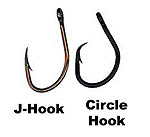
circlehook_jhook

The conventional “J” style hook and the obvious differences in the “circle” hook.

release-right-main

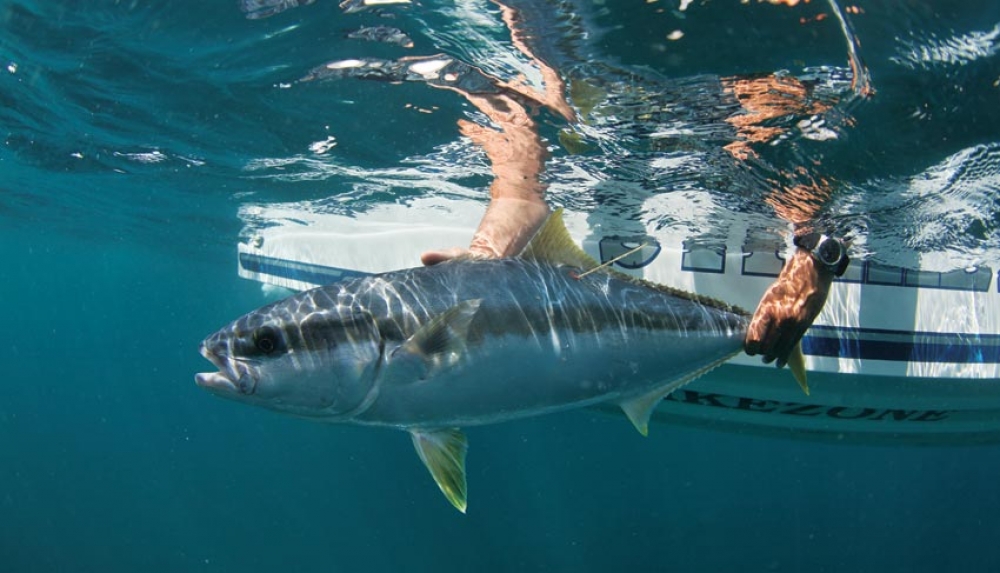
Circle hooks make it easier to set the hook on fish resulting in more hook-ups but even moreso, make it easier to release your catch!

CIRCULARLY SPEAKING

Originally Published in Western Outdoor News the Week of January 9, 2014

Over the years, I get a lot of e-mails with comments and criticism about things I’ve  written or suggestions for things I should write about.   In all the years I’ve been writing this column, I don’t think I’ve ever actually responded publically to some of the questions.

There’s some really good ones too.  And I ALWAYS respond.  But, it occurred to me that if one person is asking something, then there’s probably a number of folks who have the same questions.  So, maybe it would be good to sometimes put it all in the column.

A recent e-mail is what got me thinking.   It came from “Jerry” from Aptos CA.

He said, “ In so many fishing magazines , the writers always write as if all the readers are experienced.  I’m not a rookie, but I recently got into salt water fishing and want to learn more.  I just made my first trip to Baja and guys were talking about ‘circle hooks.’ What are they and do I need them?”

It’s actually a question I get more often than you think.   So, if you know all about circle hooks,  this is one time you can just internet surf to something more entertaining to read!

Let’s see…what are circle hooks and what do you do with them?

Circle hooks are distinguished from “J” style hooks that have a long straight shank, by a shank that’s curved. Plus the sharpened point faces towards the shank.  Hence the “circle hook” moniker.

They have been in use for ages by commercial fishermen, but only in say the last 10 or 15 years have they really caught on with sportfishermen.   In Baja, they’ve taken a little longer to get a toehold, but their use is growing.

Their popularity can be attributed to the growing interest in catch-and-release fishing.  Basically, fish hooked with a circle hook have a much higher incidence of survival when taken in this manner.

Here’s the deal.  With a regular “J” style hook, fish get hooked in the lip, the gill, the gut and deep in the throat.  Deep enough and it’s a chore to get that hook out without damaging the fish.

Or, the hook outright kills the fish.

Damaged fish,  just don’t do well once released.  Even the time spent handling the fish and removing the hook is detrimental to it’s survival.

It’s tired.  It’s suffocating.  It’s losing important protective slime and scales.   Put it back in the water and it’s gonna be a floater, no matter how well-intentioned you are as an angler.

Now, with the circle hook, the nifty part is that 99% of the time, the hooks slides right into the corner of the mouth when it’s set.   It’s not damaging organs.  The hook comes out relatively easily and the fish has a much better chance when returned to the water.

Often without even touching the fish, grasping the hook with pliers allows one to shake the fish right back into the water without actually handling the fish.  Pretty cool.

The trick is the hook set.

When setting the hook using a circle hook, the trick is “not to set the hook!” One must actually act counter-intuitively.    Circle chooks literally set themselves.   It’s a great mistake newbies make with the circle hooks.  Setting the hook yourself screws it up!

With a traditional hook, the angler “swings” the rod back and “sticks” the fish to set the hook.  With a circle hook, the hookset is virtually automatic.

When the fish picks up the bait, the angler merely puts a little pressure on the spool.  Then point the tip of the rod at the running fish and flip the brake.  The line will come tight.  A slight lift of the rod sets the hook!  Just like that.   You’re on!

There’s no dramatic swing of the rod as in using a conventional hook.   And that’s where the experience comes in.  The newbie gets nervous or excited and when he or she feels the bait picked up, they set the hook with a big swing of the rod.   That’s what their intuition tells them.  SET THE HOOK!

FAIL!

What that does is jerk the hook right out of the fish’s mouth.  Adios pescado!

Take your time.  Calm down.  A little patience and you’ll get the fish resulting in more hookups…even if you plan to keep the fish…since the hook up is automatic.  Then, if you plan to release the fish, the hook design allows for an easier release.  What could be better?

In my experience, many captains I’ve known in Baja were reluctant to use the circle hook or frowned on clients using the hooks.  There were two reasons.

One is that the captains and crews themselves didn’t understand the funny looking hook that actually looked like a defective design.  I’ve seen them cut them off client’s lines and toss them away with disdain.  And tie on a regular hook!

Second, and perhaps more importantly, is that clients would miss fish by incorrectly setting the hook.  That resulted in less fish.  Unhappy clients.  Less tip money.   An economical reason!   Remember, every captain out there is also a businessman too!

But, over the last few years, the popularity of the circle hook has grown.   Captains and crews themselves, especially the younger ones, understand the importance of catch-and-release.  It’s a matter of preserving their own livelihoods and the resource.

However, more anglers are also becoming more knowledgeable as well.  And with that, the stigma of using them appears to be diminishing.

Give them a try next time!

That’s our story!

Jonathan signature

_______________

Jonathan Roldan has been writing the Baja Column in Western Outdoor News since 2004.  Along with his wife and fishing buddy, Jilly, they own and run the Tailhunter International Fishing Fleet in La Paz, Baja, Mexico  www.tailhunter-international.com.  They also run their Tailhunter Restaurant Bar on the famous La Paz malecon waterfront.  If you’d like to contact him directly, his e-mail is riplipboy@tailhunter-international.com  or drop by the restaurant to say hi!

______________

Jonathan Roldan’s

Tailhunter International


TAILHUNTER FISHING FLEET #1 Rated on Trip Advisor

TAILHUNTER RESTAURANT BAR #1 Rated in La Paz on Trip Advisor


Now follow us on FACEBOOK TOO

Website: www.tailhunter-international.com

U.S. Office: 8030 La Mesa, Suite #178, La Mesa CA  91942

Mexico Office: 755 Paseo Obregon, La Paz, Baja Sur, Mexico

Phones:

from USA : 626-638-3383

from Mexico: 044-612-14-17863

.

Tailhunter Weekly Fishing Report:

http://fishreport.jonathanroldan.com/

Tailhunter YouTube Videos:

http://www.youtube.com/user/pangapirate

“When your life finally flashes before your eyes, you will have only moments to regret all the things in life you never had the courage to try.”
 

Read Full Post »

Salt Lake City-20120210-00078

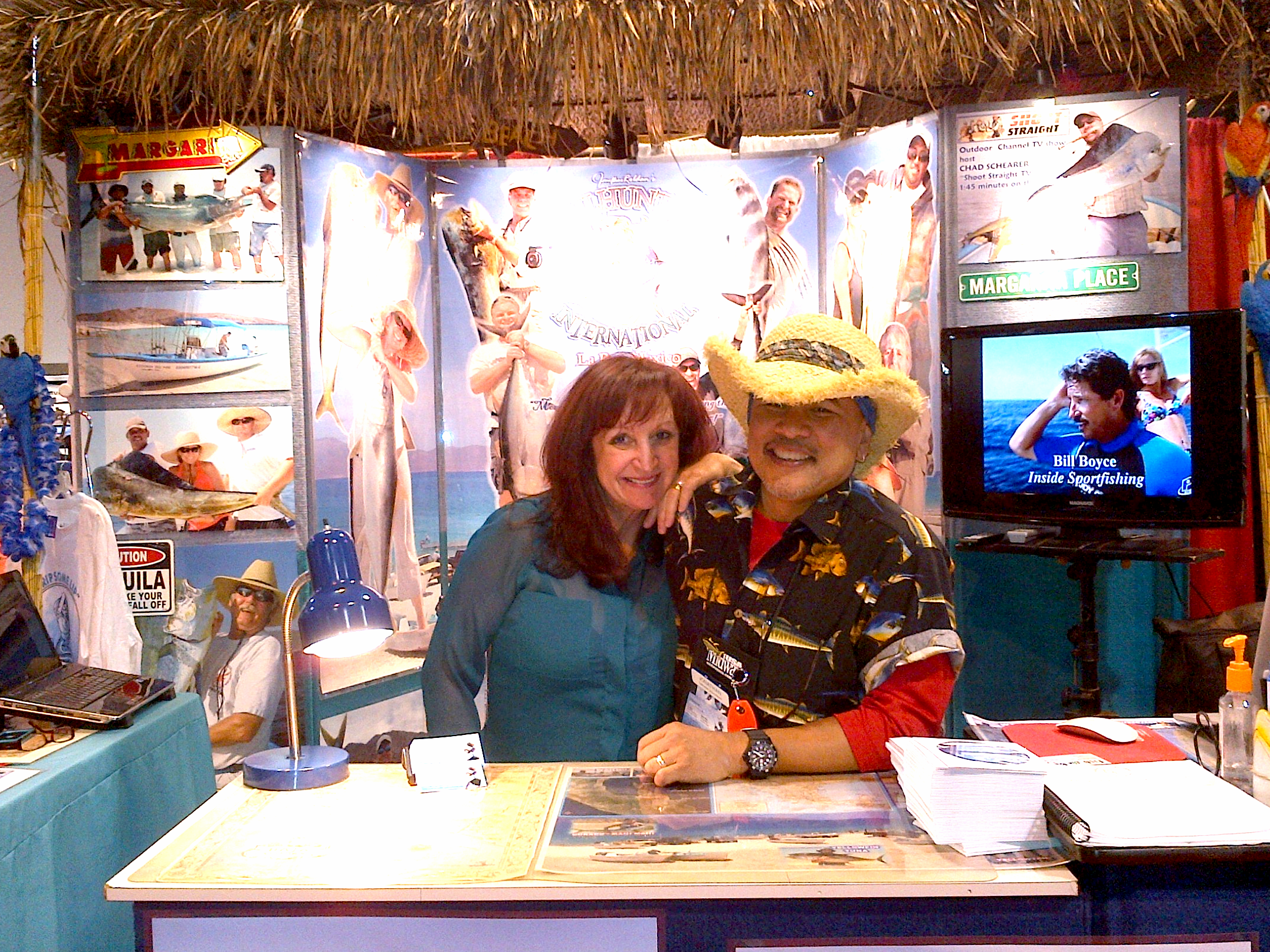
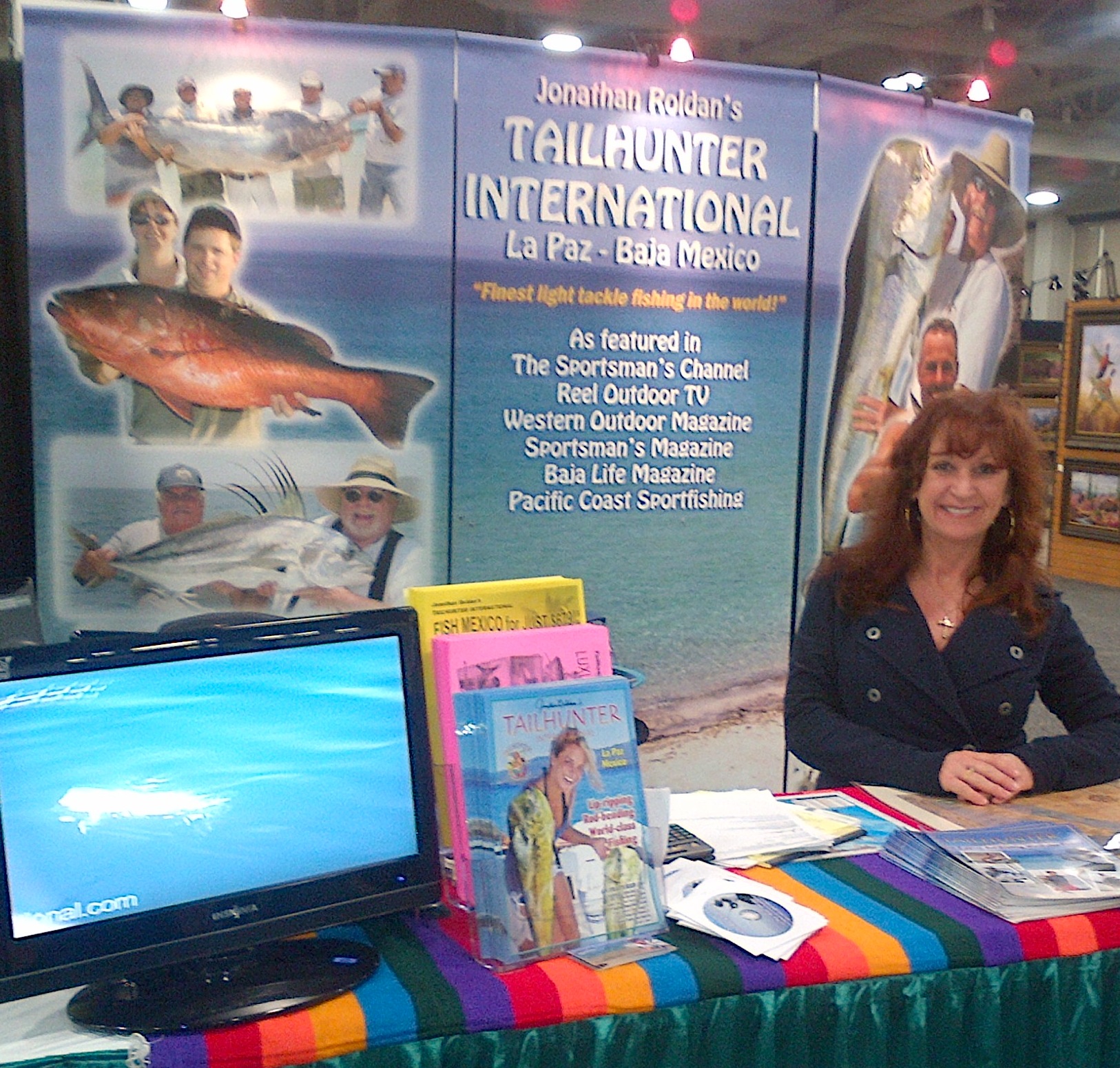
From January to March of each year for almost 20 years, we criss-cross the western U.S. promoting our fishing operation in La Paz and often become an impromptu clearing-house of many general questions about travel to Baja and Mexico in general.

“BAJA FAQ 2013”

Originally Published the Week of Feb. 13, 2013 in Western Outdoor News

As I’m writing this, we’re just wrapping up our 3rd day here at the Pacific Northwest Sportsmens Show here in Portland, Oregon.  We’ve been on the road now for more than a month as we do our annual show-hopping promo tour across the country.

So far, we’ve done fishing/ hunting shows in Sacramento, Denver, Seattle before this one.  Only 2 more months to go and about 12,000 more miles of driving.

As we stand here in our booth, promoting our La Paz fishing operation for 8, 10…12 hours a day, we talk to hundreds of people a show.  We often hear many of the same questions.  Year-after-year.  Although the questions might be the same, very often the answers might change based on changing conditions in Baja.

I thought I’d share some of the most common questions.  Some might seem pretty simple…or silly…or obvious…but as mentioned, sometimes answers might surprise you.  Also, we get asked these questions ALOT so obviously, alot of folks don’t know these answers!

Q:  Where is Baja, Mexico?

A:  It’s the 1000 mile-long-peninsula extending from the border at San Diego/ Tijuana and going south to lands-end at Cabo San Lucas.  It is bordered by the Pacific Ocean to the West and is separated from the Mexican mainland to the east by the Sea of Cortez.

Q:  Is it safe?

A:  The  VERY short answer.  Yes.  Mexico is a huge country.  Generally as safe as most cities in the U.S. and in some respects even safer.  Yes, there are serious problems, but much of that is only in certain areas and in border areas and tourists are not generally targeted anymore than tourists are targeted by crime in the U.S.  In any given city, just like most U.S. cities, there are good and bad parts of town.  Stay out’ve the bad parts.

Q:  Is it OK to drive?

A:  On any given day, there are thousands of tourists on Baja roads having un-eventful drives.  Thousands cross the border daily and routinely.   Observe the laws.  Make sure you have insurance. Drive with care and common sense as you would anywhere.

Q:  Can we buy property?

Yes, you can.  Who do you think is buying all these parcels, condos, houses and lots along the beachfronts! Sometimes it seems that Americans are buying up all of Baja.

Q:  Is it always good fishing?

A:  Historically,  Baja is one of the most famous fishing areas in the world.  But…Baja is 1000 miles long.  It has over 2000 miles of coastline.  It has incredible fishing and over 700 identified species of fish in the Sea of Cortez.  That being said, fishing is as different as the species, location and variables such as  season, weather, current, bait, etc.  Every places is not great 100% of the time.  There’s such a thing as a bad day of fishing.

Q:  Can we bring our fish home?

A:  As long as you’re within limits and observe regulations, it would be a shame if you didn’t.

Q:  Is the water safe to drink?

Most places very much so!  But, like many places in the U.S.,  municipal water tastes bad.  Everyone drinks bottled water which is readily available.

Q:  Can we use American money?

A:  In Baja, American dollars are very welcome, but with new banking laws, making it harder for Mexican vendors to change dollars into pesos,  it makes it harder for the vendors to accept pesos…especially large denominations.  Rarely, will a vendor turn down a payment in dollars…a sale is a sale!  But increasingly, more can’t accept large denominations.  So, it’s a good idea to use smaller bills or get pesos exchanged before you come over or at an exchange house.  Many Mexican banks will not change dollars to pesos unless you have an account and, even then, only small amounts.

If you can avoid it, don’t use credit cards. But,  many places won’t accept them because of high surcharges to the vendor.

Q:  What happens if we need medical help or what happens if I have special medical needs?

If it’s  your medication, bring what you need and extra dosage.  Bring a copy of your prescription.  If it’s emergency medical care, most large Baja cities actually have pretty good first response and emergency care.  Enough to get you home after most emergencies so that your own doctor can treat you.  Credit cards  are usually welcome in lieu of insurance. Generally, emergency care is much cheaper also.

Q:  What happens if we don’t speak Spanish

English is growing.  Span-glish is universal, especially in the tourist areas.   Keep it simple and eliminate slang and most folks  will understand and everyone gets along just fine.  But, everyone appreciates any attempt to speak Spanish!

Q:  Do we need a passport?

Yes! Don’t wait until the last minute to get one.

Q:  Can we still get prescription drugs there with no prescription?

Generally no.  Not like in the old days. Generally speaking, if you need a prescription for it in the U.S., you’ll need it for most things in Mexico.

Q:  How is it to retire there?

It’s one of the fastest and most sought-after places for gringos to retire and an excellent place to make dollars stretch with a high standard of living.  You get more bang for the buck.

______________

Jonathan Roldan has been writing the Baja Column in Western Outdoor News since 2004.  Along with his wife and fishing buddy, Jilly, they own and run the Tailhunter International Fishing Fleet in La Paz, Baja, Mexico  www.tailhunter-international.com.  They also run their Tailhunter Restaurant Bar on the famous La Paz malecon waterfront.  If you’d like to contact him directly, his e-mail is riplipboy@tailhunter-international.com  or drop by the restaurant to say hi!

______________

Jonathan Roldan’s

Tailhunter International


TAILHUNTER FISHING FLEET #1 Rated on Trip Advisor

TAILHUNTER RESTAURANT BAR #1 Rated in La Paz on Trip Advisor


Now follow us on FACEBOOK TOO


Website: www.tailhunter-international.com

U.S. Office: 3319 White Cloud Drive, Suite A, Hacienda Hts. CA 91745

Mexico Office: 755 Paseo Obregon, La Paz, Baja Sur, Mexico

Phones:

from USA : 626-638-3383

from Mexico: 044-612-14-17863

.

Tailhunter Weekly Fishing Report:

http://fishreport.jonathanroldan.com/

Tailhunter YouTube Videos:

http://www.youtube.com/user/pangapirate

Read Full Post »

Denver-20130120-00281-2.jpg.

DEAFENING SILENCE

Originally Published in Western Outdoor News the Week of Jan. 31, 2013

Have you ever had something happen so quickly that you ask yourself, “Did that really happen?”  You shake your head.  You blink your eyes.

You look at others to see if they saw what you saw.  Heard what you heard.

It can be as benign as seeing a shooting star across the evening horizon or a fish jump in the distance.  Did you see that?

We’ve been on the road now for almost a month.  We’re doing our annual “road tour”  with our booth and flyers and DVD’s promoting and marketing our fishing operation as well as the City of La Paz in Baja where we’ve been at it  now for some 20 years.

It’s a fun three-month rollicking drive of 15,000 miles back and forth across the western U.S.  hitting a new fishing/ hunting show with all the hundreds of other vendors.  Modern day “carnival workers and gypsies!”

On this particular day, we had just driven about 600 long miles.   Through the snows and cold, we were tired and road-weary with at least 200 more to go before dark.

We pulled off the highway into a little faceless convenience store in a small town at the foot of a mountain range.    We walked to the counter with a few items.  The young clerk, stringy-haired under a wool hat and  trying unsuccessfully to grow a whisp of a blonde beard,  helped the folks in line ahead of us.

We moved up.  We were looked at and ignored.  The clerk went to someone else at the other end of the counter.

Then someone else.  The clerk looked at us. Then helped someone else again.

We asked if we were going to get served.  All we got was barely a look of annoyment by the clerk.  And he went to  help someone else.

My wife and I looked at each other.  Eyebrows raised.  She said, “Let’s go.” We left our items on the counter and walked out.

Jill was tight-lipped and had a slow simmer going on.  Had that really happened?

I had that “funny feeling” again.  It made me mad and saddened me at the same time.  I wasn’t quite sure it had happened.  My wife quietly confirmed that surely it had.

We climbed into our cargo van and drove off.

Several seasons ago, not far from this  same town, we had pulled off the road for the evening after another long drive.  We found a little hole-in-the-wall motel and dumped our gear.

We found an old brick and stone building  in the historic part of town with a neon sign advertising “Famous Fried Chicken since 1962.”  We parked and walked in.

It was more like a saloon.  Tables full of folks having a good time. Clanking dishes and laughs.  Cowboy rodeo photos all over the wall.  Western memorabilia everywhere in the low light.

A good looking bar lined  with beer taps and guys in John Deere hats and working-Stetsons.  No Levis.  This was  a Wrangler jeans crowd.  No posers here.

Scuffed Roper boots and workman steel-toed leathers on feet.  Guys and gals in loose Pendletons and faded denim jackets.  Frankly, we weren’t dressed much differently.

We bee-lined and deposited our tired selves in a a cozy-looking booth.  Having lived in many rural areas, I loved a good cowboy bar.  I’ve had some of my best meals in down-home places like that!  Good buzz and vibe.

Only problem is…the place went rather quiet as we walked in.  Perceptibly.  I would swear even the volume of the juke box dropped a few notches.  Maybe it was because we let in the cold rainy air from outside.

It picked up again a bit but as we waited for service,  nothing happened.  We sat.  And we sat.  No water.  No menus.  The waitress saw us.  But nothing.

Jill said, “I have funny feeling about this place. “

My perceptive skills aren’t so articulated.  I’m not paranoid.   But, Jill’s got a better radar than me.

“I don’t think we’re wanted here.”

“Nah,” I responded.  “You’re just imagining it.”

But I’ve been in a few dark bars in my time and now my own radar was humming. Senses ramped up a tetch like the hairs on my neck.

As we faced each other in the booth, I watched behind Jill’s back.  She watched over mine.

People were watching us. Glances that were held a fraction too long before turning away.  The waitress would cast an eye at us, but not make eye-contact.  Other people were getting waited on.  But not us.

Jill used to live in Mississippi.  She went to Ole’ Miss University back-in-the-day and was the only Caucasion gal in an all-black sorority.  Being from California, she didn’t think anything of it, but was warned by some debutantes that “ ‘proper’ girls just don’t do thing like that!”

So, she’s tuned a little better to this stuff than this Hawaiian-island boy who never ran into stuff like this before. But, I have spent some time in dark bars.  I’ve seen trouble.  This was different.  It was eerie.

Too late to go anywhere else and (maybe stupidly trying to make a point), we finally got our waitress to come over and grudgingly take our order.

She delivered it wordlessly.  And she never came back except to put a bill on the table.  No queries about how it was or whether we wanted to order anything else.

We ate our fried chicken huddled over our plates while the eyes watched. We ate.   Quickly, quietly and got out.  Backing out actually.

With an  ugly feeling we walked rapidly  back to our van  in the darkened street half looking over our shoulders.  Expectantly.  Anxiously.

I still wasn’t quite sure it had even happened, but we mentioned it to one of our colleagues.  He’s American of Japanese ancestry from S. California and is a famous  international outfitter and guide.

He said it was only our imagination, but  he  passed through the same town a few weeks later.  Like us, he pulled over for the night after a long drive at a little motel.

He was told, “We’re full.”  He pointed out that couldn’t be possible since the parking lot was almost empty.  He was grudgingly given a key to the room.  When he went to a coffee shop to eat, he encountered similar unspoken hostility.

Another colleague of ours is a famous Baja flyfishing guide.  He passed through several months later a few towns over.  He encountered similar resistance and quickly left the area.  He’s of Japanese-American ancestry.  Born in Hawaii.  A three-tour decorated Vietnam war veteran.  “I will never ever go back into that area,”  he told me.

As I write this, it’s been five days since  our incident at the convenience store, I still roll back the mental video tape.  Trying to find a loophole.  An escape.  A way to convince myself that it didn’t happen.

Was I really refused service because of what I looked like?  Was my wife refused service because she was with me?  Or because we’re married?  Because I’m brown and dark?  I look Asian or Latino?  She’s white with red hair?  Really? Are you kidding me?

This isn’t the south.   It’s not 1930…or 40…or even 1968.

As I lay in bed that evening many miles down the road…in another motel…in another town, I realized.  It was Monday, January 21, 2013…Martin Luther King day.   Ironic.

Silence can be deafening and I had trouble sleeping.

________________________

Jonathan Roldan has been writing the Baja Column in Western Outdoor News since 2004.  Along with his wife and fishing buddy, Jilly, they own and run the Tailhunter International Fishing Fleet in La Paz, Baja, Mexico  www.tailhunter-international.com.  They also run their Tailhunter Restaurant Bar on the famous La Paz malecon waterfront.  If you’d like to contact him directly, his e-mail is riplipboy@tailhunter-international.com  or drop by the restaurant to say hi!

______________

Jonathan Roldan’s

Tailhunter International


TAILHUNTER FISHING FLEET #1 Rated on Trip Advisor

TAILHUNTER RESTAURANT BAR #1 Rated in La Paz on Trip Advisor


Now follow us on FACEBOOK TOO


Website: www.tailhunter-international.com

U.S. Office: 3319 White Cloud Drive, Suite A, Hacienda Hts. CA 91745

Mexico Office: 755 Paseo Obregon, La Paz, Baja Sur, Mexico

Phones:

from USA : 626-638-3383

from Mexico: 044-612-14-17863

.

Tailhunter Weekly Fishing Report:

http://fishreport.jonathanroldan.com/

Tailhunter YouTube Videos:

http://www.youtube.com/user/pangapirate

“When your life finally flashes before your eyes, you will have only moments to regret all the things in life you never had the courage to try.”
Read Full Post »

« Newer Posts