Feeds:
Posts
Comments

Posts Tagged ‘holidays’

LESS IS MORE…or MORE THAN ENOUGH?

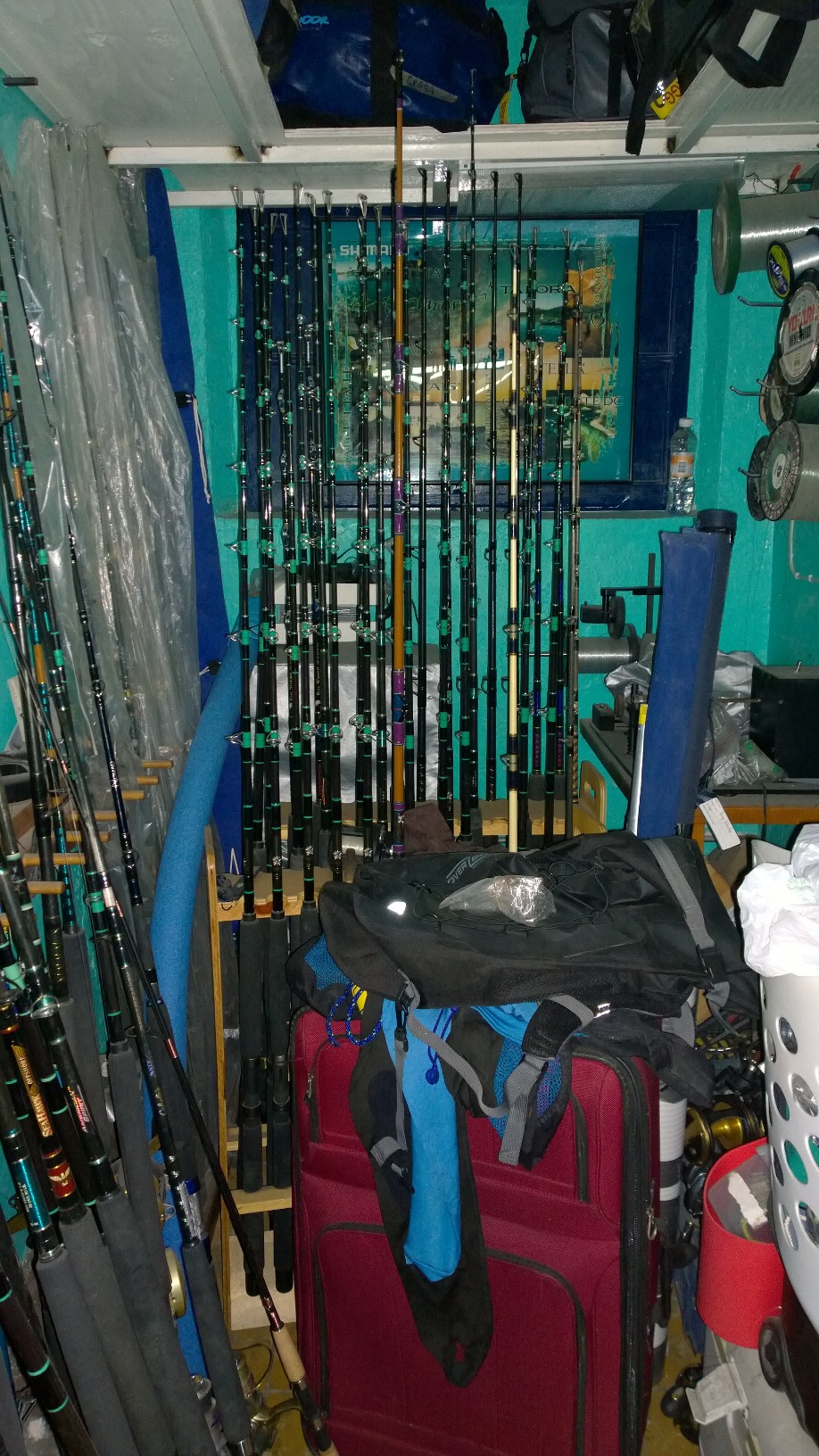
So so so many toys!  But we can only fish with one-at-a-time!

So so so many toys! But we can only fish with one-at-a-time!

LESS IS MORE…OR MORE THAN ENOUGH?

Originally Published the Week of Aug. 20th, 2014 in Western Outdoor News

It was almost comical and I didn’t want to say anything. After all, they were our fishing clients.   But it took 4 of us to load all their fishing gear on the panga. It reminded me of an Everest expedition where the intrepid explorers are followed by a line of sherpas.


Artic ice chest…spinning rods…fly rods…bass rods…conventional rods…three jumbo tackle boxes…video camera case…Gopro camera water proof case…underwater extension rods…special seat cushions that had beer holders in them…even “catch flags” they planned to fly from rods for when they returned to shore.


Ahhh…God bless ‘em.


They were so excited. First time Baja fishermen. They were like little kids. It was like Christmas. They had a list of all the species they planned to catch. They had a GPS pre-programmed with all the “hot spots” they had read about. They had waterproof maps and fish i.d. charts.


So much enthusiasm. Between my captains, deckhands, drivers and other fishermen, it was hard to suppress the chuckles.   I really wanted to say something. But what could I say?   They had all the toys and they planned to use them.


They took to heart the saying, “Better to have it and not need it than to need it and not have it. “


Here’s the rub…I was supposed to go out on the panga that day with them. I rolled my eyes.


My captain had to leap over all the gear to get to the tiller on the motor. There was barely any room to sit. I squeezed on top of an ice chest as we headed out. This was gonna be interesting, but I was grinning. Whatever. Let’s go fishing, guys!


With all the rods jutting out, we looked like a CIA boat bedecked with prickly porcupine radar antennas as we zoomed to the fishing grounds.   I counted…1, 2, 3…8…11…15…19…20…26 rods! Custom wrapped. The latest hi-tech reels. Spooled full of shiny new line.


When we got to the spot, it got a little awkward.


Do remember watching your kids at Christmas barrel into the goodies under the tree? Ripping and shredding and laughing…oh the carnage! Oh the humanity!


Well, the gear boxes opened and out came hooks and lures and feathers of all shapes and sizes. Leaders and gadgets and wires and do-dads and thing-a-ma-jigs and watcha-ma-callits and chingaderas came pouring out. ! Many still in their wrappers.


All organized. Color-coded. Size-coded. Species evaluated. Things for tuna. Things for dorado. Things for dorado AND tuna. Things for wahoo. Need a purple pink speckled marlin lure? Got it! Surface lures…bottom lures…mid-water lures. Everything had a pouch or pocket. Everything in it’s place!


I’ve done plenty of long range trips for 12 and 14 days where I didn’t have this much stuff. We were only going a mile offshore for a few hours. Fishing 2 days total!


And stuff for their belts…pliers, dikes, hook disgorgers, hook pouches, sunscreen holders.


My gosh, they must have accumulated enough points on their Cabela a dn Bass Pro visa cards to fly around the world!


And just like kids oooh-ing and ahhh-ing…each guy was as eager to show off his “toys” to me and the captain.   Simultaneously, he was in showing them to his fishing buddy and also seeing what his buddy had brought along.   Like opening two picnic baskets at the church luncheon!


I just stood back. Tried to look really really realy gosh darn excited! I mean, I hate to discourage or curb anyone’s enthusiasm. So, I smiled and gritted my teeth.


“Wow…that’s uh… really great you found one of those lures.”

“You got 4 of them in each color?”

“You bought 100 hooks of each size too? No way!”


But, we were burning daylight. I could tell on the radio that some of our pangas were already into fish.


There was stuff scattered all over the decks!


I finally said, “Guys, time’s-a-wasting. Let’s get fishing.”


They looked at me. They looked at the captain like eager kids. The captain shrugged his shoulders and dropped a bomb.


“Tie on a hook. We will fish with bait.”


Silence. They looked at me. I looked at them.


I said, “Yup…bait’s working. No leader. Let’s just tie on hooks. Maybe later we’ll get to use some of that great gear you brought.”


They looked at each other and I could sense the puzzlement and disappointment from their quizzical looks.


“C’mon, guys, “ I tried to say gently with as much enthusiasm as I could muster. “The fish are biting so let’s get in on it. Get out some hooks and stow the rest of the gear for now so we don’t miss the bite.”


While they stashed all their stuff, the captain and I tied on hooks for them to save time. I didn’t want to look them in the eyes. I felt like I had taken away their toys. Or had told them there is no Easter Bunny.


But, the fish bit. The sun came out. The water was blue. And the fish bit again. And the icy beer and lunches always taste double-good outdoors on the water.


There was a point later in the day when their fish box was filling and the fish were swarming and I asked if they’d like to try out some of their fancy gear. But, they laughed and were too busy hooked up to want to change.


The whole day, they ended up using one rod each. And maybe half-a-dozen hooks. And were happy. Beyond happy.


As one of the guys laughingly said to me headed back, “Somehow, I still have to explain to my wife why I needed to buy all this gear.”


His buddy said, “I once asked my wife why she needed so many shoes.”


“What did she say?”


“Because I say so, Dear. Because I say so…”


“I don’t think that will work on my wife.”


We all laughed.


That’s my story!

Jonathan signature

Jonathan

_______________

Jonathan Roldan has been writing the Baja Column in Western Outdoor News since 2004.  Along with his wife and fishing buddy, Jilly, they own and run the Tailhunter International Fishing Fleet in La Paz, Baja, Mexico  www.tailhunter-international.com.  They also run their Tailhunter Restaurant Bar on the famous La Paz malecon waterfront.  If you’d like to contact him directly, his e-mail is riplipboy@tailhunter-international.com  or drop by the restaurant to say hi!

______________

Jonathan Roldan’s

Tailhunter International


TAILHUNTER FISHING FLEET #1 Rated on Trip Advisor

TAILHUNTER RESTAURANT BAR #1 Rated in La Paz on Trip Advisor


Now follow us on FACEBOOK TOO


Website: www.tailhunter-international.com

U.S. Office: 8030 La Mesa, Suite #178, La Mesa CA  91942

Mexico Office: 755 Paseo Obregon, La Paz, Baja Sur, Mexico

Phones:

from USA : 626-638-3383

from Mexico: 044-612-14-17863

.

Tailhunter Weekly Fishing Report:

http://fishreport.jonathanroldan.com/

Tailhunter YouTube Videos:

http://www.youtube.com/user/pangapirate

“When your life finally flashes before your eyes, you will have only moments to regret all the things in life you never had the courage to try.”

Read Full Post »

“LA PAZ EVENT TARGETS IGFA RECORDS AND ROOSTER RELEASES!”

Burgess 1 rooster 6-14 PMT

Fish like this huge roosterfish caught and released by Ron Burgess at Las Arenas last year have made the Las Arenas/ La Paz area famous and known as the “roosterfish capital of the world.” Last year in 4 days, Ron and his amigos caught and released 29 roosters between 40 and 90 pounds!

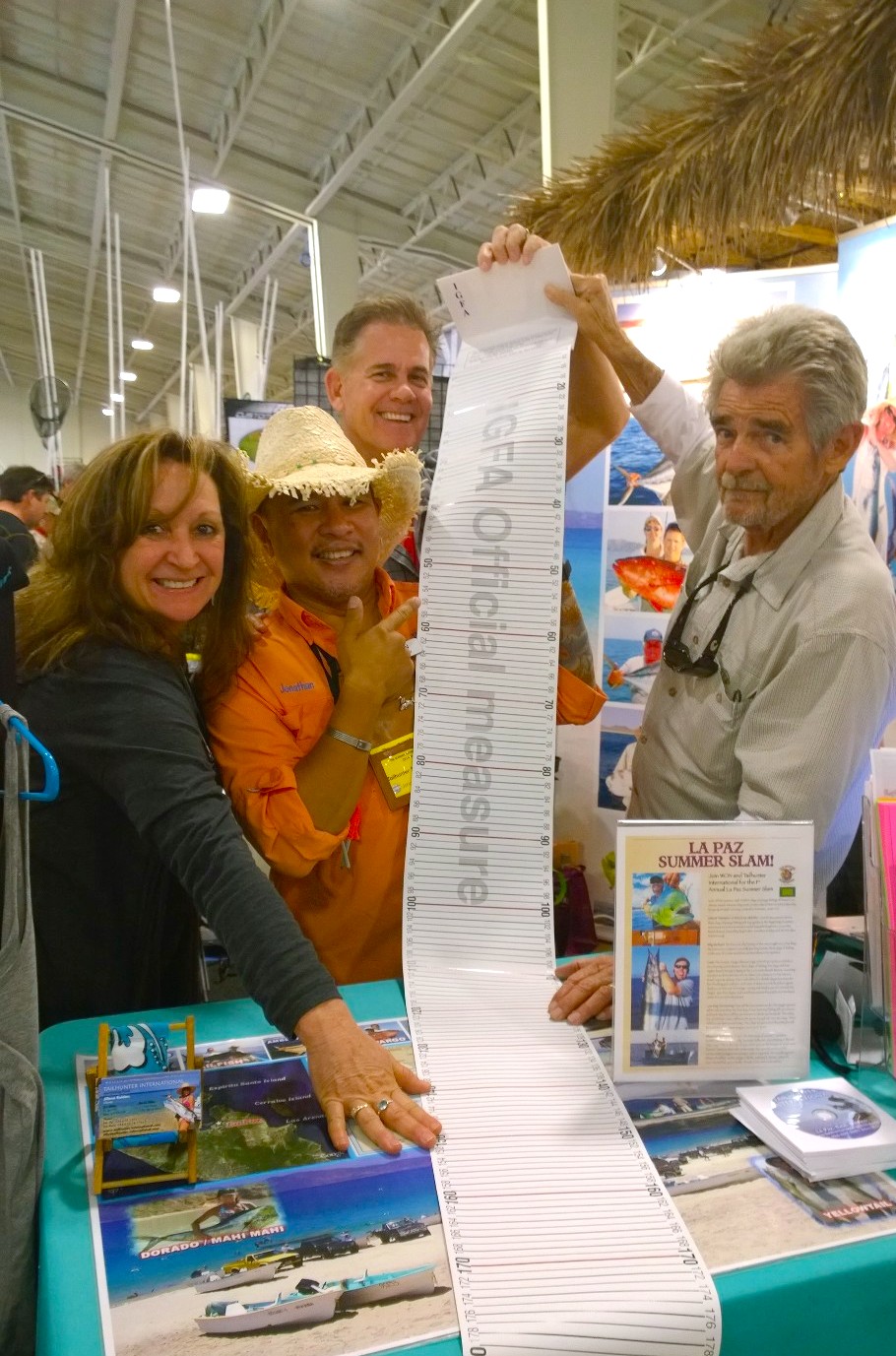
WP_20140327_14_48_39_Pro

A sample of the new IGFA “release measuring devices” which will allow anglers to officially measure and release fish and still be eligible for world records! This new “category” for records is a big boost for catch-and-release of species! Shown here with Jilly and Jonathan Roldan, Pat McDonell, editor for Western Outdoor News, and Gary Graham (holding the tape!) who is not only a multi-IGFA record holder, but also an IGFA rep plus famous author and journalist. All will be at the event!


LA PAZ EVENT TARGETS IGFA RECORDS AND ROOSTER RELEASES!

Originally Published in Western Outdoor News the Week of April 29, 2014


In what appears to be a first, Western Outdoor News and Tailhunter International Sportfishing in La Paz are having the first certified tag-and-release roosterfish event this summer


The “Summer Panga Slam” will be held June 17-21 in La Paz. It promises to be quite an event.


Originally slated as a 3-day light tackle panga tournament among friends, the event has grown tremendously. It has sprouted some “legs” since it’s inception several months ago.


For one, Tailhunter International in La Paz now has a certified I.G.F.A. scale on hand and is a registered IGFA center. This means, Tailhunters and it’s clients can legitimately target world-record fish.


This is significant given that they fish the famous waters of La Paz and Las Arenas as well as the northern East Cape where arguably more world records have been set over the decades than anywhere else. Many consider it to be one of the top light-tackle fisheries in the world.


Additionally, the area has been known as the “roosterfish capital of the world” famous for it’s slugger-sized rooster populations. In fact, in 1987, the world record roosterfish was caught on these very beaches. It weighed in ta 114-pounds. Larger ones have been caught and released.


Last year, the area had a banner roosterfish season where roosters averaged 40-90 pounds and a number of fish over 100-pounds were tallied and released including one estimated over 150-pounds!


All of this is important to the “Panga Slam” event for two reasons:


  1. The IGFA now has “release” categories that were previously not available. That means you can now become a world-record holder and not have to kill your fish. Last year, a world-record release rooster was produced in La Paz waters! There are categories for men, women and children! However, you MUST have a special IGFA measuring device of which this event will have several on hand!


  1. Tailhunter International is part of the newly formed Roosterfish Foundation dedicated to preserving the exotic rooster and monitoring the health of the species. To that end, tag-and-release devices are now available so that released fish can now be tagged before we let them go.


So, what all this means is that the “Summer Panga Slam” now gives participating anglers not only a shot a getting a record fish that can actually be weighed. But, it’s also an opportunity to release a world-record fish and get into the record books as well as help to proliferate the roosterfish species for everyone!


It’s going to be a lot of fun and, as mentioned, the event has grown. WON editor Pat McDonell himself will be down to help host the event. WON columnist, journalist and famous author Gary Graham will be on hand as well to record the event. Gary is himself also a multi-record IGFA record holder and the IGFA representative.


On board as well are a growing number of sponsor with lots of goodies for the participants.


The event is limited to 40 anglers in 20 two-person panga teams. There are still a few spots left! Here’s the rest of the details:


  • Sponsors aboard now include:  Okuma Reels, Costa Sunglasses, Yo-Zuri, Sufix, Turners Outdoors and Lazer Trokar Hooks!
  • Three full days of panga fishing at Las Arenas  (gear, breakfast and lunches included) 
  • 4 nights La Concha Beach Resort in ocean-facing room
  • Welcome dinner and Awards Dinner
  • Taco feed night and live music at famous Tailhunter Restaurant
  • One day open fun fishing and then two days jackpot tournament (cash entry $100 in La Paz per team) 
  • Event t-shirts
  • Cabo San Lucas Airport Shuttles 

Cost is $1350 per person. Space is limited and going fast. For more information, you can contact Western Outdoor News and talk with Mike Flynn at FLYNN@wonews.com or call him at 949-366-0030.


We’re looking forward to having you join us!

That’s our story

Jonathan signature

Jonathan

_______________


Jonathan Roldan has been writing the Baja Column in Western Outdoor News since 2004.  Along with his wife and fishing buddy, Jilly, they own and run the Tailhunter International Fishing Fleet in La Paz, Baja, Mexico  www.tailhunter-international.com.  They also run their Tailhunter Restaurant Bar on the famous La Paz malecon waterfront.  If you’d like to contact him directly, his e-mail is riplipboy@tailhunter-international.com  or drop by the restaurant to say hi!

______________

Jonathan Roldan’s

Tailhunter International


TAILHUNTER FISHING FLEET #1 Rated on Trip Advisor

TAILHUNTER RESTAURANT BAR #1 Rated in La Paz on Trip Advisor


Now follow us on FACEBOOK TOO


Website: www.tailhunter-international.com

U.S. Office: 8030 La Mesa, Suite #178, La Mesa CA  91942

Mexico Office: 755 Paseo Obregon, La Paz, Baja Sur, Mexico

Phones:

from USA : 626-638-3383

from Mexico: 044-612-14-17863

.

Tailhunter Weekly Fishing Report:

http://fishreport.jonathanroldan.com/

Tailhunter YouTube Videos:

http://www.youtube.com/user/pangapirate

“When your life finally flashes before your eyes, you will have only moments to regret all the things in life you never had the courage to try.”


Read Full Post »

“But Will They Eat a Yo-Yo Jig?

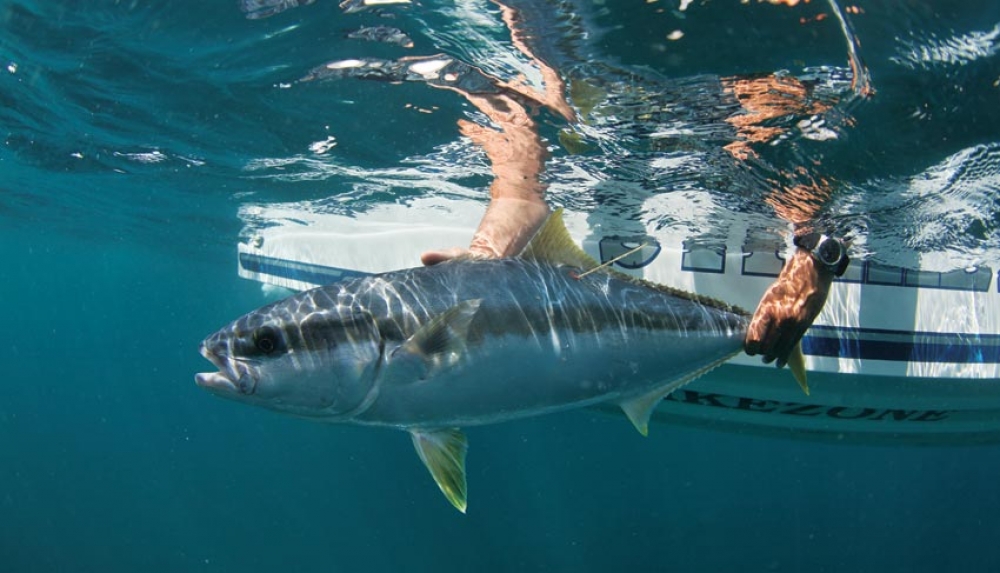
Seriola_lalandi,I_RR1005

YELLOWTAIL FARMING?

BUT WILL THEY EAT A YO-YO JIG?

Originally Published the Week of March 20, 2014 in Western Outdoor News

While at the Long Beach Fred Hall Fishing Show a few weeks ago, I was directed to an interesting article by a friend who is a commercial fisherman and sportfisherman.  The title kinda piqued my interest:

“NEW FARMED YELLOWTAIL HITS U.S. MARKET”

According to the article published in Seafood Source.com on March 7, 2014 (http://www.seafoodsource.com/en/news/aquaculture/25678-new-farmed-yellowtail-hits-us-market),  these forkies are being formed right in Baja out’ve Bahia Magdalena.  Yes, real yellowtail ranches!

Here’s the article:

“California-based seafood distributor Catalina Offshore Products, and Baja Seas have partnered to bring a new farmed yellowtail to the U.S. market.

Baja Seas will officially introduce its Baja farmed yellowtail, also known as Baja hiramasa, at Seafood Expo North America in Boston on 16 to 18 March. Catalina Offshore Products has been test marketing the fish and it has already appeared on menus in from San Diego and Chicago.

The original stock was bred for Baja Seas from fingerlings produced at Hubbs-SeaWorld Research Institute. The fingerlings were transferred to Baja Seas’ grow out facility on Bahia Magdalena, a bay in southern Baja California. Future seed will be sourced from Baja Seas’ own hatchery, Ocean Baja Labs.

Baja Seas uses Recirculating Aquaculture Systems (RAS) to create a small water footprint by diminishing pollution and disease; fish are fed sustainable protein- and omega-rich meal derived from sardines in a low Fish In-Fish Out (FIFO) ratio; the fish are raised without antibiotics or paraciticides; and semi-automated feeders and feed cameras prevent overfeeding.

“With consumers demanding more seafood and pressures on wild harvests increasing, we believe aquaculture is the one true sustainable model,” said Luis Astiazarán, Baja Seas’ director general. “Because of their growth rate when compared to other species, marine finfish are the future of aquaculture.”

“The debut of this Baja hiramasa is very exciting for us as it marks a major milestone for Mexico and for the U.S.,” said Dave Rudie, Catalina Offshore CEO. “It is not only a great, local alternative to Japanese or Hawaiian yellowtail, its presence in the domestic market will increase people’s access to a highly valued food source while decreasing pressure on our wild populations.”

It sounds like a good deal.  I like eating yellowtail.  I like catching yellowtail.  I don’t know about the taste, but I have a feeling that the wild fresh stuff is gonna taste a lot better.   I know wild salmon blows away farmed salmon.

But, I’m pickier than most because I grew up on Pacific coast fish.  But, most folks I know wouldn’t know the difference.

I doubt that 90% of those ordering yellowtail in say, Red Lobster in the mid-west, would know the difference between wild or farmed yellowtail either.  It’s probably going to taste just dandy to them.

Just like my friends from Montana and Idaho and Wyoming who are hunters.  They can tell the difference between wild elk and ranch-raised elk meat.  To me, it’s just good eating!

However, if there’s a viable way to take the pressure off the wild stocks so us sportsfishers can still throw an iron or dropper loop a bait yet help meet the demand of the market, I’m all for it.  Win-win!

I’m especially interested in the aspect of this “farmed” yellowtail (no pun intended) if they’re raised with a small ecological footprint.  Not using additives and anti-biotics in their food means the “fish poo” (excuse my Spanish), isn’t polluting the water.

That has been an issue in other aquaculture situations.  Especially, since fish eat a tremendous amount of food to grow.  What goes in…has to come out!

Additionally, if they’ve found a new way to feed these fish and NOT deplete the local bait situation, that’s a major plus for anglers.  No bait…no fish!  No fish…no fishing!

I talked to an amigo of mine, Scott McKenzie, Director of Quality Assurance at the huge American Seafoods in Seattle WA.  Scott is also an avid Baja angler.

Here’s his take:

“The vast majority of Yellowtail consumed globally is farmed. Most of the farmed yellowtail comes out of Japan, with some small production in Australia and New Zealand. From what I’ve heard it is typically a 5:1  feed fish, meaning 5 lbs. of feed to return 1lb of  fish weight. Not the most ideal species to farm with regard to feed conversion rates as those are typically down around 3:1, some are even down close to 1:1 these days.

One of the unsavory part of a lot of these farmed fish operations is they are often using low trophic species as the feed (sardines, mackerel, menhaden, anchoveta,…). The feed coming out of global fisheries that are nothing more than rendering fisheries ( primary products being fish oil, meal) rather than a by-product of a food fishery. In a nut shell, the ocean gets stripped of bait fish to be converted into feed for a farmed fish somewhere around the world.

The amount of antibiotics and crap that can go into them I will leave for another day…

Sad thing, most consumers get all warm and fuzzy thinking they are making green decisions when they opt for a farmed fish to eat- in so many ways, it is more environmentally detrimental than the wild caught equal.”

The world is growing.  There’s more people to feed.  Yet,  we want a balance with our recreational activities.  Everyone has an interest and a stake in things.  It will be interesting to see how it plays out.

I wonder if farm-raised yellowtail can be released into the wild?  I know they do it with salmon!

And, I for one, wouldn’t mind giving it a whirl on my dinner plate too!

That’s my story!

Jonathan

Jonathan signature

_______________

Jonathan Roldan has been writing the Baja Column in Western Outdoor News since 2004.  Along with his wife and fishing buddy, Jilly, they own and run the Tailhunter International Fishing Fleet in La Paz, Baja, Mexico  www.tailhunter-international.com.  They also run their Tailhunter Restaurant Bar on the famous La Paz malecon waterfront.  If you’d like to contact him directly, his e-mail is riplipboy@tailhunter-international.com  or drop by the restaurant to say hi!

______________

Jonathan Roldan’s

Tailhunter International


TAILHUNTER FISHING FLEET #1 Rated on Trip Advisor

TAILHUNTER RESTAURANT BAR #1 Rated in La Paz on Trip Advisor


Now follow us on FACEBOOK TOO


Website: www.tailhunter-international.com

U.S. Office: 8030 La Mesa, Suite #178, La Mesa CA  91942

Mexico Office: 755 Paseo Obregon, La Paz, Baja Sur, Mexico

Phones:

from USA : 626-638-3383

from Mexico: 044-612-14-17863

.

Tailhunter Weekly Fishing Report:

http://fishreport.jonathanroldan.com/

Tailhunter YouTube Videos:

http://www.youtube.com/user/pangapirate

“When your life finally flashes before your eyes, you will have only moments to regret all the things in life you never had the courage to try.”
Read Full Post »

“IN THE PRESENCE OF GIANTS”

Deb_&_whale

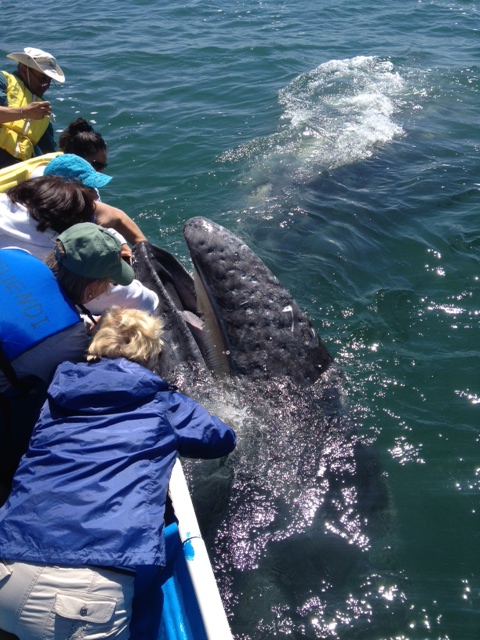
A moment of clarity ?

IN THE PRESENCE OF GIANTS

Originally Published in Western Outdoor Publications the Week of March 5, 2014

“Look deep into nature and you will understand everything better.”

Albert Einstein

Oooo!  Wow!  Oh my!  Lookit!  It’s coming right to us!

Squeels.  More ooo’s and ahhhs!

But, then everyone jostled to the starboard side of the panga. Whoa!  For a moment there was an air of apprehension as everyone hung on.

But Mexican pangas are built for stability and although there was a bit of a list, attention quickly focused on what was making it’s way towards us.

For most of us, we grow knowing we’re at the top of the heap.  We are the  apex of intelligence, power and the food chain.  Master of all we see.  Conquerors of time, space and dimension.

That is, until we’re suddenly faced with the fact that there are creatures larger and stronger than us.

That is, until those creatures are not behind some cage in the zoo giving us a false sense of security.

That is, until one of those creatures is right next to us and literally smack in our laps!

Looking at us.  And we touch it. And in some cases, it tries to touch us.  And maybe communicate with us?

Something like a whale.  Even a 15-foot baby…and it’s uh…its 40 foot mom!

And both were rising and approaching like two big grey submarines towards our awestruck panga full wide-eyed-cellphone-camera-snapping eco-tourists.

You feel small.  And vulnerable.  And utterly amazed.

This isn’t a video.  This isn’t the Discovery Channel or Animal Planet or National Geographic.  Or Sea World.

We’re not in the safety of our Lazy-Boy lounger in the living room in front of the big-screen.

We’re in Mexico. The light hum of the panga outboard is real.   The water and the salt air is real. The sun and breeze on your cheeks isn’t virtual reality. The smell of damp things from the ocean is real.

We’re not outside the aquarium.  We’re on the other side of the glass today.    And we’re in the presence of giants!

And then, the magic happens.

The mom stops just a few feet from our panga.  And the calf comes right up.  And stops and raises his head.  And it’s eye opens and you can swear it’s looking right at you with seemingly the same wonder that that you have for it!

And you reach out and you touch the rough skin and other hands also touch and scratch the youngster.  And in those few moments, you feel like you’re doing more than just touching.  It seems to transcend just a touch.

Two seeming intelligent creatures from different worlds…one above and one below the waters… reach across the abyss of eons and it’s unlike anything you have ever experienced.

Is the little calf really smiling and enjoying the scratches.  Is it wondering about the funny creatures in the floating panga as much as we wonder about it?  Can it sense us?  In some cosmic way, are we communicating?  Will we ever?

Whether one believes in a divine being or creator, I’ve never known anyone to come away from the experience without feeling something very special and different has happened or feeling humbled by the magnificence.   For many, it certainly gives new perspective to our place on the planet.

Every year from approximately, January to March, the gray whales arrive at in Baja at the end of the longest migration of any animal on earth.  Starting at the Bering Sea up by the Arctic Circle, they arrive in Bahia Magdalena, Scammons Lagoon and San Ignacio, three warm water lagoons on the Pacific Coast of Baja.

Once, almost hunted to extinction, they now arrive by the thousands, to breed, mate and give birth.  It is estimated that some 20,000 whales now make the seasonal migration to these protected areas.  In the 1800’s it was once suggested that they exceeded more than 100,000 in population.

But, these areas provide an incredible opportunity to get close to observe these magnificent creatures.  For many, it’s a once-in-a-lifetime experience and the calm, protected sanctuaries make an ideal place to see dozens of whales a day on many occasions.

Baja is currently experiencing perhaps one of it’s best whale-watching seasons in years.  If you have a chance, take a trip.  Look into an inquisitive eye of a creature larger than yourself.  Be in the presence of gentle giants.  And perhaps come away understanding a little bit more about so much more.

That’s our story!

Jonathan

Jonathan signature

_______________

Jonathan Roldan has been writing the Baja Column in Western Outdoor News since 2004.  Along with his wife and fishing buddy, Jilly, they own and run the Tailhunter International Fishing Fleet in La Paz, Baja, Mexico  www.tailhunter-international.com.  They also run their Tailhunter Restaurant Bar on the famous La Paz malecon waterfront.  If you’d like to contact him directly, his e-mail is riplipboy@tailhunter-international.com  or drop by the restaurant to say hi!

______________

Jonathan Roldan’s

Tailhunter International


TAILHUNTER FISHING FLEET #1 Rated on Trip Advisor

TAILHUNTER RESTAURANT BAR #1 Rated in La Paz on Trip Advisor


Now follow us on FACEBOOK TOO


Website: www.tailhunter-international.com

U.S. Office: 8030 La Mesa, Suite #178, La Mesa CA  91942

Mexico Office: 755 Paseo Obregon, La Paz, Baja Sur, Mexico

Phones:

from USA : 626-638-3383

from Mexico: 044-612-14-17863

.

Tailhunter Weekly Fishing Report:

http://fishreport.jonathanroldan.com/

Tailhunter YouTube Videos:

http://www.youtube.com/user/pangapirate

“When your life finally flashes before your eyes, you will have only moments to regret all the things in life you never had the courage to try.”
Read Full Post »

“CIRCULARLY SPEAKING”

circlehook_jhook

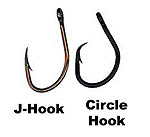
The conventional “J” style hook and the obvious differences in the “circle” hook.

release-right-main

Circle hooks make it easier to set the hook on fish resulting in more hook-ups but even moreso, make it easier to release your catch!

CIRCULARLY SPEAKING

Originally Published in Western Outdoor News the Week of January 9, 2014

Over the years, I get a lot of e-mails with comments and criticism about things I’ve  written or suggestions for things I should write about.   In all the years I’ve been writing this column, I don’t think I’ve ever actually responded publically to some of the questions.

There’s some really good ones too.  And I ALWAYS respond.  But, it occurred to me that if one person is asking something, then there’s probably a number of folks who have the same questions.  So, maybe it would be good to sometimes put it all in the column.

A recent e-mail is what got me thinking.   It came from “Jerry” from Aptos CA.

He said, “ In so many fishing magazines , the writers always write as if all the readers are experienced.  I’m not a rookie, but I recently got into salt water fishing and want to learn more.  I just made my first trip to Baja and guys were talking about ‘circle hooks.’ What are they and do I need them?”

It’s actually a question I get more often than you think.   So, if you know all about circle hooks,  this is one time you can just internet surf to something more entertaining to read!

Let’s see…what are circle hooks and what do you do with them?

Circle hooks are distinguished from “J” style hooks that have a long straight shank, by a shank that’s curved. Plus the sharpened point faces towards the shank.  Hence the “circle hook” moniker.

They have been in use for ages by commercial fishermen, but only in say the last 10 or 15 years have they really caught on with sportfishermen.   In Baja, they’ve taken a little longer to get a toehold, but their use is growing.

Their popularity can be attributed to the growing interest in catch-and-release fishing.  Basically, fish hooked with a circle hook have a much higher incidence of survival when taken in this manner.

Here’s the deal.  With a regular “J” style hook, fish get hooked in the lip, the gill, the gut and deep in the throat.  Deep enough and it’s a chore to get that hook out without damaging the fish.

Or, the hook outright kills the fish.

Damaged fish,  just don’t do well once released.  Even the time spent handling the fish and removing the hook is detrimental to it’s survival.

It’s tired.  It’s suffocating.  It’s losing important protective slime and scales.   Put it back in the water and it’s gonna be a floater, no matter how well-intentioned you are as an angler.

Now, with the circle hook, the nifty part is that 99% of the time, the hooks slides right into the corner of the mouth when it’s set.   It’s not damaging organs.  The hook comes out relatively easily and the fish has a much better chance when returned to the water.

Often without even touching the fish, grasping the hook with pliers allows one to shake the fish right back into the water without actually handling the fish.  Pretty cool.

The trick is the hook set.

When setting the hook using a circle hook, the trick is “not to set the hook!” One must actually act counter-intuitively.    Circle chooks literally set themselves.   It’s a great mistake newbies make with the circle hooks.  Setting the hook yourself screws it up!

With a traditional hook, the angler “swings” the rod back and “sticks” the fish to set the hook.  With a circle hook, the hookset is virtually automatic.

When the fish picks up the bait, the angler merely puts a little pressure on the spool.  Then point the tip of the rod at the running fish and flip the brake.  The line will come tight.  A slight lift of the rod sets the hook!  Just like that.   You’re on!

There’s no dramatic swing of the rod as in using a conventional hook.   And that’s where the experience comes in.  The newbie gets nervous or excited and when he or she feels the bait picked up, they set the hook with a big swing of the rod.   That’s what their intuition tells them.  SET THE HOOK!

FAIL!

What that does is jerk the hook right out of the fish’s mouth.  Adios pescado!

Take your time.  Calm down.  A little patience and you’ll get the fish resulting in more hookups…even if you plan to keep the fish…since the hook up is automatic.  Then, if you plan to release the fish, the hook design allows for an easier release.  What could be better?

In my experience, many captains I’ve known in Baja were reluctant to use the circle hook or frowned on clients using the hooks.  There were two reasons.

One is that the captains and crews themselves didn’t understand the funny looking hook that actually looked like a defective design.  I’ve seen them cut them off client’s lines and toss them away with disdain.  And tie on a regular hook!

Second, and perhaps more importantly, is that clients would miss fish by incorrectly setting the hook.  That resulted in less fish.  Unhappy clients.  Less tip money.   An economical reason!   Remember, every captain out there is also a businessman too!

But, over the last few years, the popularity of the circle hook has grown.   Captains and crews themselves, especially the younger ones, understand the importance of catch-and-release.  It’s a matter of preserving their own livelihoods and the resource.

However, more anglers are also becoming more knowledgeable as well.  And with that, the stigma of using them appears to be diminishing.

Give them a try next time!

That’s our story!

Jonathan signature

_______________

Jonathan Roldan has been writing the Baja Column in Western Outdoor News since 2004.  Along with his wife and fishing buddy, Jilly, they own and run the Tailhunter International Fishing Fleet in La Paz, Baja, Mexico  www.tailhunter-international.com.  They also run their Tailhunter Restaurant Bar on the famous La Paz malecon waterfront.  If you’d like to contact him directly, his e-mail is riplipboy@tailhunter-international.com  or drop by the restaurant to say hi!

______________

Jonathan Roldan’s

Tailhunter International


TAILHUNTER FISHING FLEET #1 Rated on Trip Advisor

TAILHUNTER RESTAURANT BAR #1 Rated in La Paz on Trip Advisor


Now follow us on FACEBOOK TOO

Website: www.tailhunter-international.com

U.S. Office: 8030 La Mesa, Suite #178, La Mesa CA  91942

Mexico Office: 755 Paseo Obregon, La Paz, Baja Sur, Mexico

Phones:

from USA : 626-638-3383

from Mexico: 044-612-14-17863

.

Tailhunter Weekly Fishing Report:

http://fishreport.jonathanroldan.com/

Tailhunter YouTube Videos:

http://www.youtube.com/user/pangapirate

“When your life finally flashes before your eyes, you will have only moments to regret all the things in life you never had the courage to try.”
 

Read Full Post »

“Small Space Little Effort Big Impact”

So little goes a long way with so little effort!

So little goes a long way with so little effort!

It starts building up pretty fast!

It starts building up pretty fast!

SMALL SPACE LITTLE EFFORT BIG IMPACT

Originally Published the Week of December 11, 2013 in Western Outdoor News

A few months ago, I got a call from a friend here in La Paz who does some wonderful work with destitute Mexican kids that truly live on the fringe of our little city in more ways than one.   Many were in an orphanage.

She said, she was having a fiesta of sorts for the kids to celebrate that some of them were going to their First Communion which was a big step.  It wasn’t much, but she was putting all her heart into giving them something nice.  She was reaching out to some of the businesses in town for help.  There would be about 80 kids to feed.

On the phone,  she told me that one dive shop was donating several cakes.  Another fishing operator was pitching in for cookies.  A store had several dozen donuts.  All good and wonderful.

My first thoughts were GACK and CHOKE!

She asked if we could help and if she could put me down for about 5 pounds of candy!

I told her that I couldn’t do that.  The last thing they need is sugar.   Especially, poor kids.  Actually… It’s the last thing any kid needs.

Hey…look at my belt line and I’m no stranger to donuts and cake and cookies, but I asked her, “C’mon!  Is there any other food going to be served?”

I was being a Grinch.  There was a pause.  Then, I told her I’d buy 100 apples instead.

There was another pause.  Apples?  For a fiesta?  She said no one had ever passed out apples.  This was a FIESTA!  Would we donate some pan dulce (sweet rolls) maybe?

Sorry.  I told her, I’d go buy some apples and I’d bring them by her office that weekend.  And that’s what I did.  No big deal.  Go to store.  Fill bags with apples.  She thanked me when I saw her, but  could tell, it was a reluctant thanks.

I mean, I get it.  Sure.  When you and I opened our Halloween bags…apples weren’t exactly high on the list, right?

I didn’t think any thing else of it.  Apples.  Yea.  Next project.  Did my good dead.  Yawn.

On Monday, she called me.  She told me to check my e-mail right away.  She was excited.  OK…open…click…here we go…

Pictures came up on my computer screen.  It showed  a party and little Mexican kids running around a hardscrabble concrete and dirt floor…delightedly chasing…APPLES!!!  There were more photos of kids sitting in the dirt leaning against walls…eating APPLES!!! Laughing kids with apples in their hands!

To all this was a note, “Jonathan, muchas gracias for the apples!  They were the big hit of the party.  Many of these children had NEVER eaten an apple before.  Thanks for the great idea!”

Never eaten an apple?  Kids…7…8…9 years old.  Never eaten an apple.  Think about that.

I told my wife.  She thinks about stuff like that all the time.  She’s got the big heart.  I’ve got the fat head.  She wants to save every kid.  Every bunny.  Every puppy.

She thinks I don’t know that she’s got all kinds of secret donations going.  I know we’ve adopted some kids.  She sponsored a goat for one village.  A cow to another.  She’d held charity functions at our restaurant.  God bless her.

She heard the story of the apples and wanted to do more.  She came into our office one day and said she signed our business in La Paz up as members of “Pack for a Purpose.”

Oh-oh…what has she gotten us into?

Actually, it’s pretty easy.  She said it’s a loose organization geared toward travelers.  You find out where you’re going.  You find out what folks need.  You stuff a little extra in the extra space in the luggage.

Extra toothbrushes…deflated balls and a pump…pencils and notebooks…Things we take for granted (the apple idea) that mean so much to others.

She said our Baja fishing clients bring down empty ice chests all the time. They fill them with their frozen fish to bring home.

Clients still have to pay the airlines for them as luggage.  Even if they are empty.  So, why not put something “IN THEM?”

She arranged for little notes to be put into all the envelopes we send to our fishing clients when they book with us.  It told them all about her idea to “Pack for a Purpose.”

I can’t take credit for what happened over the next few months.

But, in about 3 months, Jill collected and distributed close to 300 pounds of  notebooks, papers, colored pencils, crayons, bike helmets, pumps, baby clothes, backpacks, toothbrushes, baseball hats, balls,  t-shirts, tennis shoes, kids books, teddy bears, sweaters, and more.

Pretty much all of it new.  Just “extra” stuff that clients and friends had around the house like sweaters that were never used or that pair of shoes that never fit or the 20 boxes of #2 pencils from the closet.

Or from the dentist who gets boxes of toothpaste samples or the restaurant guy who ordered 5 dozen too many t-shirts with his logo on them…all medium!  The elementary school teacher who has a drawer load of extra colored pens and pencils and the end of the year.

There are times when we have a pretty good pile of stuff in the office!

Thanks to the generous hearts and empty ice chests of our clients.  And my wife playing Santa during the year.

Making little parts of the world better.  Small spaces.  Big impacts.  Little efforts.  One apple at a time.

God bless for a safe and happy Christmas and holidays!

If you’d like more info:  www.packforapurpose.org.  Or, if you’re coming to visit us in La Paz, give my wife Jill and shout:  tailhuntress@tailhunter-international.com

That’s my story!

Jonathan signature

_______________

Jonathan Roldan has been writing the Baja Column in Western Outdoor News since 2004.  Along with his wife and fishing buddy, Jilly, they own and run the Tailhunter International Fishing Fleet in La Paz, Baja, Mexico  www.tailhunter-international.com.  They also run their Tailhunter Restaurant Bar on the famous La Paz malecon waterfront.  If you’d like to contact him directly, his e-mail is riplipboy@tailhunter-international.com  or drop by the restaurant to say hi!

______________

Jonathan Roldan’s

Tailhunter International

Website: 

http://www.tailhunter-international.com

Mexico Office: Tailhunter International, 755 Paseo Obregon, La Paz, Baja Sur, Mexico

U.S. Mailing Address:  Tailhunter International, 8030 La Mesa Blvd. #178, La Mesa CA  91942

Phones:

from USA : 626-638-3383

from Mexico: 044-612-14-17863

.

Tailhunter Weekly Fishing Report:  http://fishreport.jonathanroldan.com/

Tailhunter YouTube Videoshttp://www.youtube.com/user/pangapirate

“When your life finally flashes before your eyes, you will have only moments to regret all the things in life you never had the courage to try.”

Read Full Post »

“You Mean I Can Keep It?”

What do you think?  It looks to me like Aiden's self-esteem is just fine!

Yes…I think we can bring this one home!

You Mean I Can Keep It?

Originally Published the Week of September 20, 2013 in Western Outdoor News

You Baja veterans should probably just web surf something else.  This might be old stuff to you.

But, often when you do something so long or something is “old hat” you forget that there’s still newbies out there who have valid questions about things that old Baja rats like us take for granted.

It’s a simple, but important issue.  I receive enough e-mails and phone calls asking if it’s OK to bring home fish.

Sometimes, my auto-response in my brain says, “Well..duh…that’s kinda dumb!  That’s like asking me if it’s OK to dip you chips in salsa!”

Of course, I can’t and would never say that because there are no such thing as dumb questions.  It’s a legitimate question and well-asked.   I mean, if you’re coming fishing in Baja, one would need to know if it’s OK to keep your catch.  Corollary to that, is it OK to bring some home!

But, I get asked about it enough as new folks are discovering Baja that I figured it was time to do another column about it and update my thoughts.

The question used to surprise me more.  But, having been in the industry now for almost 2 decades, us west-coast anglers might be surprised to learn that  there are many world-class fishing destinations that severely limit what you can keep.

Pay several thousand dollars a day and you get to keep say…one fish!  Or, you must release all fish.   Yes, it’s true!   For most of us who have fished the Baja since the age-of-dirt,  we pretty much always assume that as long as we’re within limits, everything hooked is coming home.

There may come a day when severe limits will be enforced, but that’s the subject of another column and someone with a lot bigger brain and bigger column than mine.

For now, the simple answer is yes, you may bring home your fish that you catch here in Baja.   As long as you’re within limits, by all means, bring some home.  Or have some cooked up while you’re still on vacation.  Nothing will taste better than fresh caught fish that was swimming around earlier that day!

Bringing fish home starts with taking care of the catch.  Treat it well and you’ll preserve the quality.

Once the fish is caught, if you can, have your captain or deckhand bleed it.  That’s not always possible when the action is fast-and-furious and lines are flying and it’s a three-ringed-water-circus out there.  However,  bled-fish…even lower-grade meat fish like bonito or skipjack will taste world’s better if it’s freshly bled.

Maybe the most important thing whether it’s bled or not is to keep it cold.  Warm water fish are…well…they’re warm!  As soon as they’re dead, like anything, they start to deteriorate.   And the hot Baja sun is not a friend to your future dinner!  Leaving a fish on the deck or even in a fish box without ice is pretty much like putting the fish in the oven.

So, at all levels from catch-to-stove or barbecue…keep your fish cold.  Ice is your buddy.   It’s a good question to ask when you book your trip if there’s ice aboard to keep your fish chilled.

After that, you need to store your fish while you’re still on vacation.

I see two cardinal sins all the time.  One is rinsing your fish in fresh water.  Or, even soaking it in fresh water.  That takes out all the flavor.  Secondly, the fresh water gets in and then freezes and now your have fresh water crystals in your fish which detracts from the quality and flavor.

Additionally, I often see people rinsing their fish in warm or tepid water.  Especially in Baja!  Water coming from pipes here is often very warm…or hot!  Amigo…not only is it fresh water, but moreso, you’re cooking your fish in the warm water.  If you have to use fresh water, make sure it’s cool water!    Ideally, clean saltwater is best.

The ideal method is to have your fish vacuum sealed.  It’s worth it!  Nothing is worse than beautiful fish fillets in a big giant frozen ball in your freezer.  You take it out and it’s either freezer burned or you now have a 10-pound ball of thawed fish.  And you really only need two fillets for dinner!  The rest get wasted.  Or the cats get it.

Vacuum sealing is the difference between fish that lasts a few weeks or fish that can last many months in your freezer so that your dorado caught in June tastes great in December!

If you can’t vacuum seal it, at least put it in good quality zip-lock style freezer bags.   Only put in what you’re planning to thaw for a meal.

An old Mexico trick is to put fillets in the freezer bag then lowering the bag into a bucket or sink of water.  The water forces the air out and then press the seal.  You get instant Mexican vacuum sealing!

Lastly, it’s really important to keep your fish in a good place while you enjoy the rest of your vacation.  As crazy as it sounds, we often encounter folks here who book their hotels and either do NOT have freezer or do not allow fishermen to store their catch.   That’s gonna be a buzz-kill.

Others, simply put, have crappy freezers that aren’t worth a hoot.   So, check on that.  The places that cater to fishermen or have a reputation for good fishing also have good storage facilities.  Or, if you’re booking through a charter operation, ask them about storing your fish in freezers.

Remember, that warm fish often takes awhile to freeze.  Or the freezers at a given hotel get a load of fish every night from all the anglers.  In even the best freezers it sometimes takes 24-hours to get solid.

If you’re leaving the next day, that could seem like a problem.  It’s not.  Put your least frozen fish on the bottom of your cooler.  Put your most frozen fish on the top (cold travels down).  Add extra insulation with crushed crumpled newspaper or your dirty fishing clothes and your fish will be fine!

That’s our story!

Jonathan

_______________

Jonathan Roldan has been writing the Baja Column in Western Outdoor News since 2004.  Along with his wife and fishing buddy, Jilly, they own and run the Tailhunter International Fishing Fleet in La Paz, Baja, Mexico  www.tailhunter-international.com.  They also run their Tailhunter Restaurant Bar on the famous La Paz malecon waterfront.  If you’d like to contact him directly, his e-mail is riplipboy@tailhunter-international.com  or drop by the restaurant to say hi!

______________

Jonathan Roldan’s

Tailhunter International


TAILHUNTER FISHING FLEET #1 Rated on Trip Advisor

TAILHUNTER RESTAURANT BAR #1 Rated in La Paz on Trip Advisor


Now follow us on FACEBOOK TOO

Website: www.tailhunter-international.com

U.S. Office: Box 1149, Alpine CA  91903-1149

Mexico Office: 755 Paseo Obregon, La Paz, Baja Sur, Mexico

Phones:

from USA : 626-638-3383

from Mexico: 044-612-14-17863

.

Tailhunter Weekly Fishing Report:

http://fishreport.jonathanroldan.com/

Tailhunter YouTube Videos:

http://www.youtube.com/user/pangapirate

“When your life finally flashes before your eyes, you will have only moments to regret all the things in life you never had the courage to try.”

Read Full Post »

“Meet My New Fishing Buddy”

Diane on rod

Fishing “buddies” are changing a bit these days!

“MEET MY NEW FISHING BUDDY!”

Originally Published the Week of September 6, 2013 in Western Outdoor News

We always try to make a point of personally greeting each and every fishing clients who comes to visit us when they come from the airport.   After so many e-mails and phone calls prior to the trip, it’s great to finally put faces and names together…for all of us…clients included.

Several weeks ago, we were waiting at the hotel for two sets of brothers.  Bob and Pat Brown  and John and Terry Terrell were coming fishing together.  Super.

But, what a surprise when they stepped out of the airport van to greet us.  “Pat” turned out to be “Patricia” and “Terry” was “Teresa!”  Two couples!

After a laugh and some quick scrambling to re-arrange their hotel rooms to get king beds, I had some thoughts.  Several days before, half our fleet of pangas was occupied by couples.  Even one of my long-time captains commented about it.

As I sit here and write this, I would say 40 percent of our clients fishing with us this very moment are women…that includes several wives…two sets of sisters…a daughter-in-law…and two single gals getting away from their guys for a quick fishing trip (tables turned!)

And this is panga fishing!  That means no big shiny cruisers.  It’s an open boat pushed off the beach old-school style!

Times are changing.

Fishing and Mexico aren’t just a guy’s domain anymore.  But, with increasing frequency, we’re seeing an increasing number of couples and women in general.  I attribute it to three things.

First, I think the ladies themselves have changed.  They are much more outgoing.  They’re used to travel. They’re used to a little adventure.  They’re up for it.  The younger ones grew up being outdoors and active.  The older ones, don’t sit at home on the couch anymore either now that the kids are out-of-the-house!  They’re on the move!

Many of the ladies can hang with the guys anyday and can keep up with them…and then some!  They fish…they hunt…they camp…they shoot…theyswim and dive!

They can be as hardcore as the boys!  Just try to elbow one trying to get to a screaming rod and you’re likely to get elbowed right back!  And do NOT ask them if they need help!  They’re just fine thank you!

Secondly, Mexico is changing.  Facilities are better.  Roads are better.  Hotels are nicer.  Heck…10 years ago, we were still wondering if we would have ice, let alone air-conditioning.  Now there are spas and white-tablecloth restaurants.  They can fish like crazy and still get a massage and pedicure in the afternoon right before pool time and happy hour.  Oh…and there’s shopping.  (most places!)

Also, Mexico itself is more welcoming.  It’s exotically close.  It’s a familiar culture, language and food.  It’s easy to travel to and easy to get around.  The country caters very well to visitors.

Lastly, I think us guys have changed too. We still love and need our “man-cations” with the bros, but it’s good knowing our ladies can hang with us too and frankly, from what I’m seeing we like hanging with them also.

Honestly, when I met my wife, Jilly, about 11 years ago, and found out she liked “football, fishing and beer…”   Whoa!  I had to buck up a bit.  She was definitely worth a 2nd look and, as one of my buddies advised me, “Jonathan, she’s a keeper!”

So, I kept her…and so far she hasn’t tossed me back either!  And I wouldn’t think of going fishing, camping, diving or traveling without her.

I’ve taken her rapelling on cliffs, whitewater rafting, horseback riding, paddleboarding, surfing and hiking.    She’s about to get her scuba certification and she’s asked many times when we’ll have time so I can take her on a “real long range fishing trip of at least 10 days!” She’s working up to run her first 10K.  She’s the one who wants to take ME to fish for peacock bass on the Amazon River and fish for catfish in SE Asia plus hiking Italy (while taking cooking schools). Amen!

I was talking to one couple that came into our restaurant after a great day of fishing.  The wife just gushed and gushed about what a fun day she had and how she couldn’t wait to go out again the next day.   It was the first time she had ever gone fishing.  It was the first time she had been on the ocean.  It was the first time she had been to Mexico.

She pulled out her camera to show me that she had caught the biggest fish of the day…even bigger than her husband’s fish!  He grinned and rolled his eyes, but you could tell he was beaming as well.

I asked her how come she had never gone fishing with him before.  She smiled.  She said she always wanted to and quietly was always envious of all his fishing trips.  She then took his hand.  She looked at him and said, “It’s because he never asked me!”

Gents…it might be worth asking.  Find yourself a new fishing buddy!

That’s our story!

Jonathan

_______________

Jonathan Roldan has been writing the Baja Column in Western Outdoor News since 2004.  Along with his wife and fishing buddy, Jilly, they own and run the Tailhunter International Fishing Fleet in La Paz, Baja, Mexico  www.tailhunter-international.com.  They also run their Tailhunter Restaurant Bar on the famous La Paz malecon waterfront.  If you’d like to contact him directly, his e-mail is riplipboy@tailhunter-international.com  or drop by the restaurant to say hi!

______________

Jonathan Roldan’s

Tailhunter International


TAILHUNTER FISHING FLEET #1 Rated on Trip Advisor

TAILHUNTER RESTAURANT BAR #1 Rated in La Paz on Trip Advisor


Now follow us on FACEBOOK TOO


Website: www.tailhunter-international.com

U.S. Office: Box 1149, Alpine CA  91903-1149

Mexico Office: 755 Paseo Obregon, La Paz, Baja Sur, Mexico

Phones:

from USA : 626-638-3383

from Mexico: 044-612-14-17863

.

Tailhunter Weekly Fishing Report:

http://fishreport.jonathanroldan.com/

Tailhunter YouTube Videos:

http://www.youtube.com/user/pangapirate

“When your life finally flashes before your eyes, you will have only moments to regret all the things in life you never had the courage to try.”
Read Full Post »

“COVERING THE SPREAD”

“COVERING THE SPREAD”

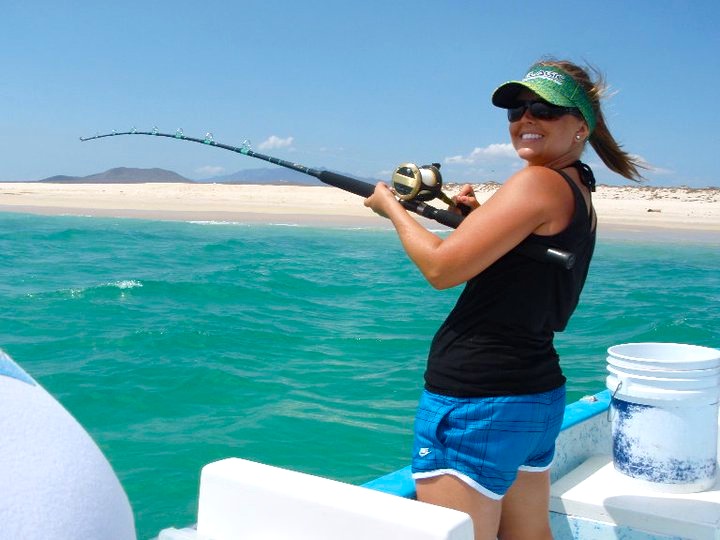
Originally Published the Week of Aug. 8, 2013 in Western Outdoor News

Lately, at least here in Southern Baja, there seems to be a dearth of live, or even dead bait.  It happens.  You still have to do your best to raise fish.  I mean, you’re already here.  It’s no one’s fault that the bait gods just didn’t happen to smile on your particular vacation dates.  So be it.

Be prepared.  Get ready to troll.  Cover some water.  I get asked all the time what would I recommend.

I usually don’t get hung up on having every color in the rainbow.  The days when I neede  two kinds of every conceivable lure is long gone and disappeared with the days of cheap airline tickets.  Besides, I’m too lazy and too old to carry that much gear anymore.

Now, I bring one dark and one light colored trolling feather in small, medium and large.  That’s it.  If my fishing partner or partners is bringing gear, I cut it back even further.   Let them carry the extra and pay for it!

But, honestly, agree among yourselves who is bringing what.  Gear can be shared as can the weight and the cost.

No sense in duplicating efforts and, given the penchance for airlines to charge for every extra bit of weight, it’s ridiculous to bring tons of stuff that will never get used.  Besides, you can only troll a limited number of lures at a time.  There’s no logic in bringing 20 or 30 lures!  Fight the urge.  You can do it!

Once you’re on the water, there’s a number of schools of thought on how to drag your lures and presenting a spread to the fish.  Veterans have their own multitude of theories and mine is just one guy’s opinion.

I used to subscribe to the technique of running light-colored lures during the brighter hours and the darker lures in the darker hours. Lots of fishermen do well with that.  But, for many years, now, I’ve been most productive with staggering my lure colors.

I run my brighter lures further back in the pattern.  I run my darker lures closer to the white prop wash.  If I have the ability to run more than 2 lures, I stagger them where one dark lure is right in the wash.  Another dark one on the edge of the wash and then two brighter ones staggered further back beyond says the 3rd and 5th wave behind the boat.

I believe the darker lures have a better presentation in the white water or near the white water where they create a more visible silhouette to the fish.

Regarding trolling speed, my general rule of thumb is somewhere in the neighborhood of 6-8 knots.  But I vary that.  The important thing is how the lures are swimming behind the boat.

I want the most action I can get from them so they create some kind of commotion.  I am also often reminding folks that pretty much any fish that has the ability to bite one of these feathers has the ability to swim way faster than the boat.  So goosing the throttle a few nudges to get the lures swimming correctly is a no-brainer.

That brings up another important variable.  Not all lures are created equal.  There are pusher heads (flat faced/ concave faced) .  Bullet heads (shaped like bullets natch).  Bubble/Jet heads (drilled with holes to make “smoke” bubble trails).  Slant heads (cut on an angle to dart back and forth or jump).  And others.

All of them have different characteristics.  Some work better at different times than others.

My general rule is the rougher the water, the more action I want from my lure to cut through all the surface disturbance on top of the water.  I want them to stand out as something “different” up there to potential predators.

To that end, again, trying to save space and weight is to pack bubble/jet heads or pusher head designs.  I like dragging them behind the boat so that they come jumping out of the face of trailing waves then dive back into the water with lots of splash and action.

Several stray suggestions:

If you only have small feathers or lures, consider making larger lures simply by sticking one inside of another.  Also, if you want to get down deeper, especially when nothing is close to the surface, either stick a torpedo sinker or egg sinker behind the head of the lure or simply tie a torpedo sinker to a leader ahead of the lure to make it swim deeper.

Give it a try!

That’s our story!

Jonathan

_______________

Jonathan Roldan has been writing the Baja Column in Western Outdoor News since 2004.  Along with his wife and fishing buddy, Jilly, they own and run the Tailhunter International Fishing Fleet in La Paz, Baja, Mexico  www.tailhunter-international.com.  They also run their Tailhunter Restaurant Bar on the famous La Paz malecon waterfront.  If you’d like to contact him directly, his e-mail is riplipboy@tailhunter-international.com  or drop by the restaurant to say hi!

______________

Jonathan Roldan’s

Tailhunter International


TAILHUNTER FISHING FLEET #1 Rated on Trip Advisor

TAILHUNTER RESTAURANT BAR #1 Rated in La Paz on Trip Advisor


Now follow us on FACEBOOK TOO


Website: www.tailhunter-international.com

U.S. Office: Box 1149, Alpine CA  91903-1149

Mexico Office: 755 Paseo Obregon, La Paz, Baja Sur, Mexico

Phones:

from USA : 626-638-3383

from Mexico: 044-612-14-17863

.

Tailhunter Weekly Fishing Report:

http://fishreport.jonathanroldan.com/

Tailhunter YouTube Videos:

http://www.youtube.com/user/pangapirate

“When your life finally flashes before your eyes, you will have only moments to regret all the things in life you never had the courage to try.”
Read Full Post »

“KING JACK”

Amberjack Junior Azores tags

Big and tough…amberjack in the Baja…cousins to yellowtail, the Spanish name for them is “Pez Fuerte” which means “strong fish!” No kidding. They get over 100 pounds!

KING JACK!

Originally Published the Week of May 15, 2013 in Western Outdoor News

It had been a pretty decent morning off the northern end of the island.   Dropping blue and white irons and jigging,  some heavy “winding and grinding” and elbow grease had produced a  nice brace of  five solid  20-pound-class yellowtail in the box.

Danny just finished pulling his jig out of the water and took a break to wipe his brow and crack a chilly Pacifico can from the ice chest.   The sun was at it’s mid-morning blaze already promising to get hotter.

“Whew!” he sighed with a laugh.  “This is hard work fishing the yo-yo iron for these yellows.  These things are tough fish!”  he added with a bit of exasperation.

“And the faster your crank the better the chance to hook-up!” responded Tony as he dropped his jig over the side and watched it flutter into the indigo blue water.  “It’s still better than working!”

Tony’s jig stopped slipping down.  Tony quickly put the reel into gear  and took a few cranks up off the bottom so as not to hang the jig on the craggy reef below.
“Here we go again, “ he grinned as he started the strenuous arm-aching crank back to the boat.

One crank…two cranks…three cranks…

SLAM!  The rod doubles over in an abrupt halt.  It’s  almost yanked from Tony’s hands. He adjusts and is nearly jackpoled over the side ramming his knees into the side of the panga to anchor himself in!  The rod is bucked straining on the gunwale of the boat and Tony is almost crouching down to get leverage unable to turn the handle of the reel.

Danny drops his beer which clatters to the deck…

“Oh man! This has gotta be a monster yellowtail! WHOA!!!” grimaces Tony as he struggles to get upright and get the butt of his rod into his rod belt still unable to get a turn on the reel handle.  It’s all he can do to hold onto the rod and keep his feet in the panga.

Pez fuerte!” says their panga captain excitedly .  “Amberjack grande.  Jale! Jale! Pull hard!”

Pez fuerte means ‘strong fish’ said Danny as he watched his buddy.

“Uh yea…no kidding…yea..this is a horse!” replies a tight-lipped Tony as he struggles to turn the big fish one slow lift and turn of the handle of his reel at a time.  Repeatedly, the rod would dip again and the exhausted sweating angler would have to lean into the stick to keep the fish turned.

After 15 grueling minutes, the big fish came up and a quick gaff was put to the fish.

“Dang, that looks like a yellowtail on steroids! Holy cow, it’s golden copper what a pig of a fish!”

“Maybe 30 kilos…60 pounds,”  says the captain grinning.

There’s a lot of confusion over amberjack.  People either “sorta heard of them” or  scratch their heads because they’ve “never heard of them.”  Or it’s quickly followed by the question, “Is that kinda like a yellowfin tuna?”

Well, Elmer…no it’s not.  But, it’s a fair question nonetheless.

They’re actually part of the jack family.  It’s that same feisty set of brawling sportfish that give us the jack crevalle (“toro”),  roosterfish (“pez gallo”), pompano (“pompano”…of course) and a whole host of other fish with  “jack” in their names.  Including the much-prized yellowtail (“jurel”).

The amberjack (“pez fuerte…which does indeed mean “strong fish” in Spanish) is the king of them all.  He’s the big boy cousin.  Broader and deeper in body, shoulders and head with a copper-orange-yellow-silver patina, they’re impressive.  And yes, powerful.

Where we are here in La Paz, they range as small as 10-20 pounds, but 40-50 pounders are not unusual and the bigger models will go 80 or more pounds.  We’ve taken several fish over 100 pounds in recent years and have lost many large fish over the years that broke tackle as well as the hearts of some very strong anglers.

We seem to get them during that “shoulder time” when the waters aren’t really spring and aren’t quite summer…like May or June…just as our yellowtail bite starts to taper off because of warmer waters.

It’a almost like the yellowtail move on and the amberjack move into those same spots.  These include high spots like reefs and shallow seamounts as well as boulder and rocky areas plus the edges of drop offs.

Basically, you won’t usually find them in open water, but rather in areas of structure.  The largest one I ever saw was while scuba diving a wreck and I saw several ambers in the dark hold that were well over 100 pounds.

Like their smaller cousins, the yellowtail, amberjacks will often school so, where there’s one you’ll often find others.  Additionally, you fish them in much the same way.  That’s why anglers dunking for yellowtail are often surprised when they get slammed by something much bigger and more powerful…an amberjack.

The fish readily take a yo-yo jig in the traditional colors of blue/white,  green/yellow, brown/white and others dropped down and taken in on an ultra fast retrieve…like the two guys fishing at the beginning of this column.

As well, they love baits like sardines, mackerel, squid and especially zebra fish for some reason which are the little blue baitfish with black stripes we catch on reefs with mackerel rigs.  When I have some zebras and the amberjack are in the area, it’s almost instant hook up!

Best of all, they eat just like yellowtail…only better!

That’s my story!

Jonathan

_______________

Jonathan Roldan has been writing the Baja Column in Western Outdoor News since 2004.  Along with his wife and fishing buddy, Jilly, they own and run the Tailhunter International Fishing Fleet in La Paz, Baja, Mexico  www.tailhunter-international.com.  They also run their Tailhunter Restaurant Bar on the famous La Paz malecon waterfront.  If you’d like to contact him directly, his e-mail is riplipboy@tailhunter-international.com  or drop by the restaurant to say hi!

______________

Jonathan Roldan’s

Tailhunter International


TAILHUNTER FISHING FLEET #1 Rated on Trip Advisor

TAILHUNTER RESTAURANT BAR #1 Rated in La Paz on Trip Advisor


Now follow us on FACEBOOK TOO

Website: www.tailhunter-international.com

U.S. Office: Box 1149, Alpine CA  91903-1149

Mexico Office: 755 Paseo Obregon, La Paz, Baja Sur, Mexico

Phones:

from USA : 626-638-3383

from Mexico: 044-612-14-17863

Read Full Post »

« Newer Posts - Older Posts »