Feeds:
Posts
Comments

Archive for the ‘Dehydration’ Category

ODILE’s ORDEAL and THE AFTERWRATH

1410837924985_wps_24_Enrique_Cota_Cece_a_cries

He’s not lamenting a messed up fishing vacation. Many of those who had the least, lost the most. (Photo from British news) 

ODILE’s ORDEAL AND AFTERWRATH

Originally published the week of Sept. 30, 2015 in Western Outdoor News

When I wrote my last column two weeks ago about making the best out’ve your situation if your vacation gets slammed by a hurricane or other natural disaster, I had no idea. As I wrote that piece, it was your typical sunny Baja day on the beach. As I closed out, it was just starting to get a little cloudy. Rain drops were starting to fall.


I used that to underscore how quickly things can change. Especially in Baja. Especially in this el Nino year.


I was just trying to get my column out. Put some words together. I had no clue just how fast things would change. How fast life itself would change.


The “bit of rain” was part of a weather cell we had been watching half-heartedly watching for several days.  It was just another ho-hum rainfall that started our way with a roar, but like a dozen others this season, we expected it would eventually bend out to the Pacific Ocean. We might get a “little afternoon precipitation.”


It was an understatement of historic proportions.


In the span of less than 12 hours the storm did the unexpected and put Baja right in it’s crosshairs.   By midnight, Sunday the 14th, Hurricane Odile had turned into the largest and most powerful hurricane ever to hit Baja.


It slammed into Baja with Category 3 and 4 strength winds including gusts up to 140-150 miles and hour. By comparison, Hurricane Sandy that devastated the East Coast in 2012, had winds of “only” 115 miles and hour.


Those, like us with a fishing operation in La Paz, or have businesses that are affected by weather or happen to watch weather, had at least a bit of time to get ready. Get the batteries and water. Tape the windows. Get the rain gear. Tie and chain things down. Pull our boats onto dry ground.


Most of Baja was not ready.   It was the weekend. It was the start of the 4-day Independence Day weekend festivities, the largest biggest holiday in the country.   Folks were in a big-time party mode.   Most government officials and civil workers were long gone. Thousands of tourists had no idea either.

It was pretty bad. You’ve probably seen the photos or watched the news. It’s hard to describe if you’ve never been in one. It’s like being inside a vacuum cleaner. It’s THAT loud. But add the glass breaking. Trees snapping. Our ceiling collapsed. Things shattering. It’s difficult to talk. To think.


This was my 10th big one and they are never the same. Like some perverse amusement park ride you know will end, it’s fascination, panic, awe, self-preservation and terror roller-coastering with each blast of wind.


And then it passes. It whimpers; runs outta steam; and moves on.  And you sigh. And you exhale and like little Hobbits you gingerly creep out with everyone else into the light.


But, it’s not over.


In reality, it’s just starting.


The destruction is devastating. It looks like Godzilla danced on the town. Phone poles snapped in half. Giant old trees uprooted. Entire walls of buildings simply missing. Boats and yachts sunk or blown to dry land. Not a single window unbroken. Cars upended. Power lines draped limply across roads. Entire neighborhoods destroyed.   Roads and bridges submerged.   Hotels collapsed.


More than 30,000 tourists stranded with no immediate resources to handle them. An equal number of residents homeless.


And no water. No power. No electricity. No phones. Gasoline runs out. The brand new airport looks like it took an artillery barrage. It no longer exists.


Like being no a deserted island. No way out. No way in. No way to call home…or anyone else. No supplies.


One day post storm, it was shock and disbelief. Day two, it’s assessment.


By day 3, it was starting to get ugly. Tensions rising. Tourists are now ramping up the panic. Tourists and residents alike hit realization. And it’s nasty and ugly and scary.


The vacation has been trashed. The novelty has worn off. The margarita bar has been blown to Mazatlan. The fishing boats are sunk. And there’s no water, showers, food.   Everyone is sleeping on the floor.


And worse…there’s no communications. Off the grid. That is especially terrifying . In a world where everyone has their nose stuck in a smart-phone, it’s the stone age. No way to notify family and relatives. No access to news. Still no way off the island. No airport. No planes.

In the cities, the afterwrath is worse.


Wholescale looting erupts. And it’s not just the dad trying to get some milk and tortillas for the family. Mobs break down windows, doors and metal barriers. Some gleefully. Large scale jubilant Christmas looting.


The big chain stores are attacked and emptied by the hordes. TV’s…clothes…exercise equipment…alcohol. If it’s not nailed down, it’s gone. Fighting breaks out. Police and law enforcement, already strained with the disaster are powerless. Rioters barricade streets so police cannot interfere. They don’t. They can’t.


In the neighborhoods, more looting. Assaults. Rape. Gangs roam the streets with machetes and arms. Neighbors set up their own security to protect their neighborhoods with guns, rocks and re-bar. Carjackings take palce. Fires are set to illuminate the dark. Neighbors dress in white to set themselves off from the bad guys.


Families fight off looters from the roof with bricks and chunks of concrete. One group beats back several assaults from gangs attempting to breach their walls by using sticks, rocks and baseball bats against knives and clubs.


Gunfire can be heard in the darkened streets at night. As one escaped resident told me, “It was medieval and primal. Complete lawlessness.”


The army finally rolls in and things quiet down.


Two weeks post-storm, the recovery is remarkable. The government, the phone and power companies; constructions companies and many others are still working around-the-clock to get going. The phoenix rises.


They said the airport in Cabo would be out for the rest of the year. By the time you are reading this, some limited flights might already be working. The La Paz Airport is already open.


La Paz is 95% back on the grid. Most of the city is cleaning up and back to normal but dealing with the huge influx of refugees. Cabo is 15% on the grid. Some hotels are actually back in business if somewhat limited.


Cell phones were not supposed to work for a month. They were back online in about a week.

But, it’s not over yet. Far from it. Odile’s “ordeal” continues on so many levels.

Many of those who had the least, lost the most. Or everything. The poorer areas, if not destroyed, have not been high on the list to restore services.  It’s alot more than “my vacation got screwed” or “I never got to catch a fish”  or  “I went two days without a hot shower.”

Much more…


Many still have no water. Electricity is a flashlight at best. Or a candle. Food is scarce and many are in residences missing a roof…doors…windows…a wall. As one told me, “My family of 3 shares two buckets of water in the dark to wash, drink and cook.”


From others, “I have had no hot food in two weeks.  Several days there was no food.”


“We sleep in the doorway because there is no light.  By the doorway there is light from outside because we lost our doors.  It is also cooler. But now the mosquitos come.”

“Our barrio (neighborhood) has yet to see a repair truck or anyone.  They fix the tourist areas, but in two weeks we still have no electricity or water.  We are forgotten. ”

Many businesses will never recover. If it was tourist related, there’s no tourists. If the building got blown away, there’s no insurance. It doesn’t matter if your family ran it for 2 generations.   And there’s no “bailout” programs here in Mexico.


Odile shattered more than just some hotels and vacations. The most powerful storm ever to hit Baja indeed.


That’s my story

Jonathan signature


Jonathan

_______________

Jonathan Roldan has been writing the Baja Column in Western Outdoor News since 2004.  Along with his wife and fishing buddy, Jilly, they own and run the Tailhunter International Fishing Fleet in La Paz, Baja, Mexico  www.tailhunter-international.com.  They also run their Tailhunter Restaurant Bar on the famous La Paz malecon waterfront.  If you’d like to contact him directly, his e-mail is riplipboy@tailhunter-international.com  or drop by the restaurant to say hi!

______________

Jonathan Roldan’s

Tailhunter International


TAILHUNTER FISHING FLEET #1 Rated on Trip Advisor

TAILHUNTER RESTAURANT BAR #1 Rated in La Paz on Trip Advisor


Now follow us on FACEBOOK TOO


Website: www.tailhunter-international.com

U.S. Office: 8030 La Mesa, Suite #178, La Mesa CA  91942

Mexico Office: 755 Paseo Obregon, La Paz, Baja Sur, Mexico

Phones:

from USA : 626-638-3383

from Mexico: 044-612-14-17863

.

Tailhunter Weekly Fishing Report:

http://fishreport.jonathanroldan.com/

Tailhunter YouTube Videos:

http://www.youtube.com/user/pangapirate

“When your life finally flashes before your eyes, you will have only moments to regret all the things in life you never had the courage to try.”

Read Full Post »

Making Lemonade Safely

storm coming 2

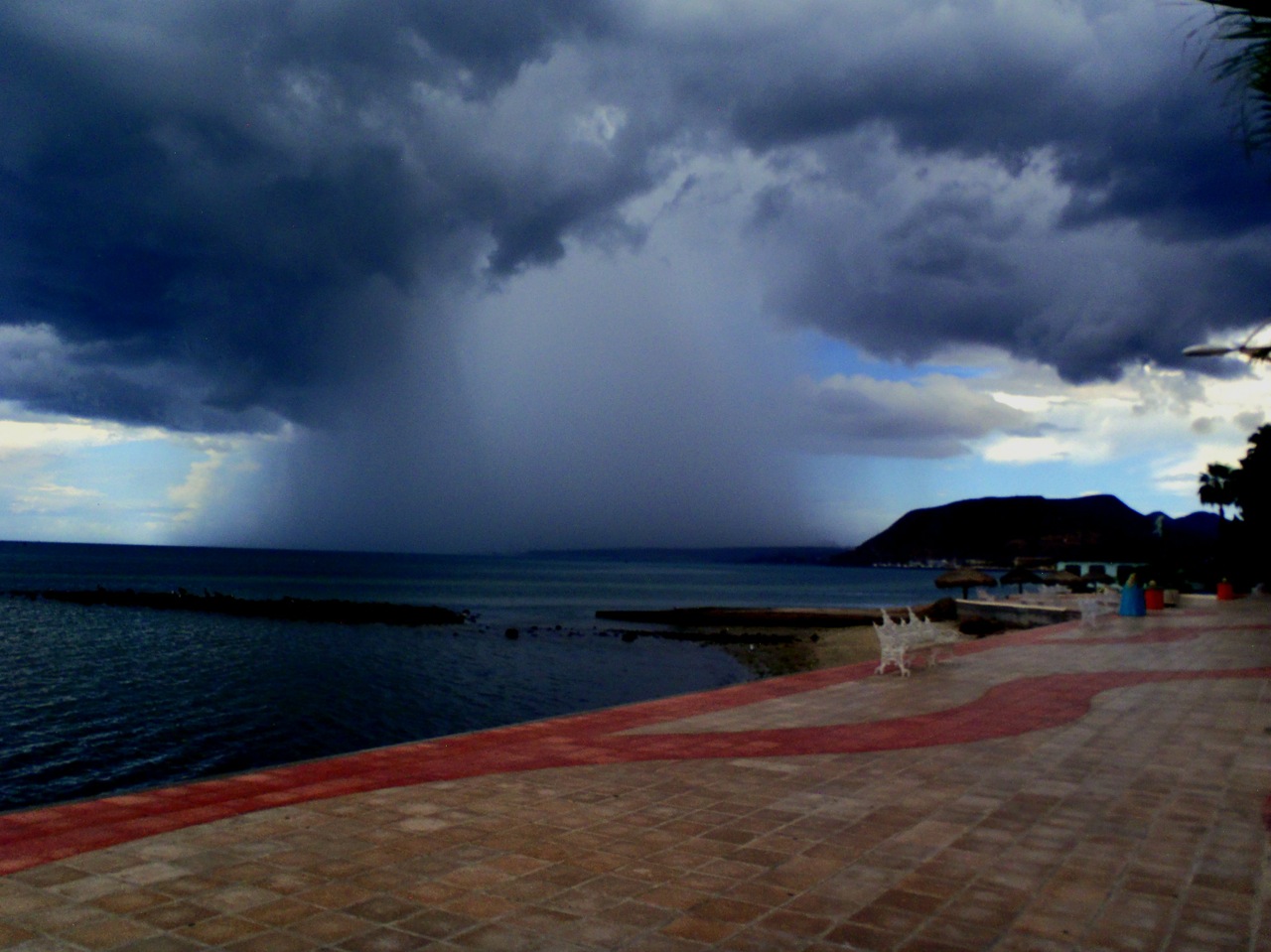
In a matter of minutes…here it comes! Out’ve a blue sky.

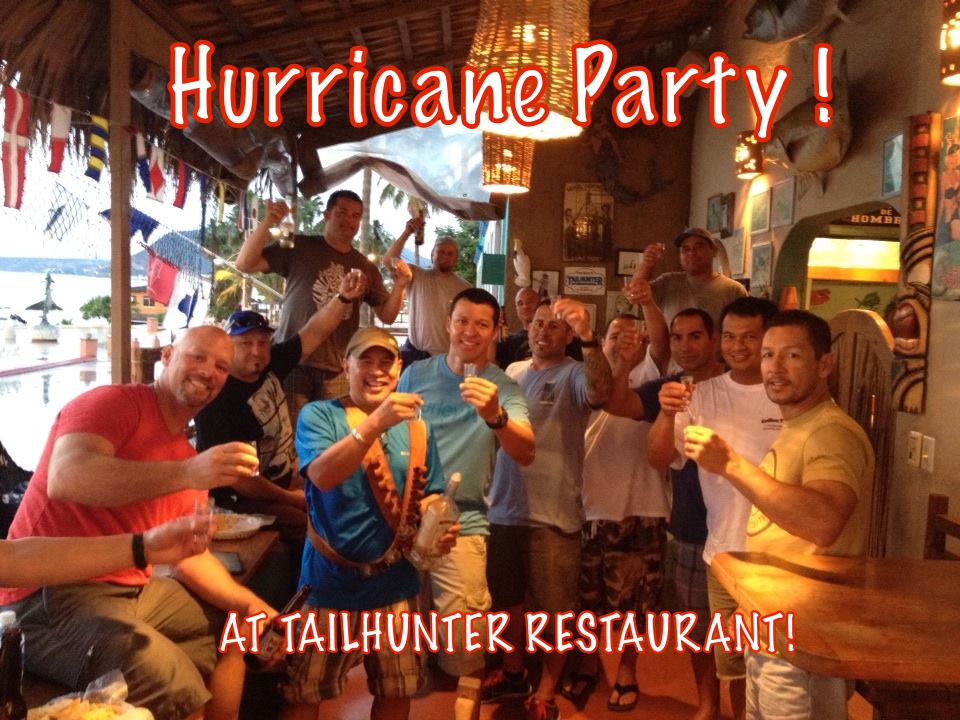
HURRICANE PARTY!

One way to handle it…


MAKING LEMONADE SAFELY

Originally Published the Week of Sept. 17, 2014 in Western Outdoor News

As I sit here writing on the 2nd story terrace of our Tailhunter Restaurant here in La Paz, it looks like a postcard.   The waters of the bay shimmer in the sunshine while I can see birds diving on a school of jacks near one of the buoys.


Sailboats and motoryachts drift on their moorings while a larger cruiser heads out. Palm fronds from the waterfront trees give a hint of the salty breeze blowing through siesta hour.   If I weren’t writing, I’d be like a few guys I see on the beach with their feet up under a shady palapa with cold ones in hand just watching the world go by.


Hard to believe that just a few days ago, Hurricane Norbert blew through here. Life returns quickly to normal once the sun comes back out. Conversely, everyone is now watching and talking about Tropical Storm / Hurricane Odile which has Baja in it’s crosshairs and might be hitting us as you’re reading this.


Actually, there’s two other storms (Tropical Depression 16-E and Invest 96E) which are yet un-named, but accompany Odile into our area. Sigh…can’t get a break! So, a trifecta might be in the making.


But that’s life in a tropical zone during an El Nino year! We expected them. By one count, these are the 14th or 15th storms of the year.   Most have fortunately glanced off and gone spinning into the Pacific with apologies to my family in Hawaii. (But Hawaii knows how to deal with rain! Baja is still working on it.)


Until Norbert last week the storms did some tremendous damage along Baja’s Pacific Coast. However, they really haven’t done much to Baja except rattle our collective tranquility.


Along with some heavy occasional downpours, street flooding and thundershowers , they remind us that Mother Nature still has a roar.   But, mostly, all we’ve had is roar.


And roaring is fine. To a point.


As long as it doesn’t screw with our vacations, right?


But, it happens sometimes. Baja is the “frontera” (frontier). It’s not some hermetically-sealed-Disneyland where everything is somehow controlled by someone behind a screen like the Wizard of Oz.


It’s beautiful and rustic and rugged. And in it’s own way, still dirty and dusty and raw. And when it rains or gets weather, it can get dirtier and muddier and wetter and uglier and yes, even dangerous.


So, what do you do if Mother Nature hangs one on you?   It’s not likely, but it CAN happen and co-incidentally, “hurricane season” just happens to be when the best fishing takes place.


You can watch the weather reports and, if you see something looming, take pre-cautions. Check with your outfitter and reservation people. Take out vacation insurance if it looks like you might not get refunded.


Don’t outright cancel your trip without first checking if the area you will be in will even be affected.   Baja is a big place. Mexico is a big place.   Weather patterns change rapidly. A storm affecting one area, might not even drop rain a few hundred miles away.


If you’re already on vacation, sometimes there’s absolutely nothing to be done. Storms can orginate from clear blue sunny skies in a matter of hours during certain times of the year.   No amount of foresight or weather scouting on your part could have predicated the onset.


If that happens, use some common sense.  Vacations are important, but nothing is more important than personal safety.


If your outfitter has to cancel a trip, so be it. See if there’s a refund or you can re-schedule.


Even if the outfitter or operator is NOT canceling the trip, ask if it’s going to be rough or even worth going out. Remember, it’s supposed to be safe and second, it’s supposed to be fun. This shouldn’t be an exercise in stamina and miserableness. Ask to re-schedule.


Some shady operators will send you out knowing full well it’s gonna be a boatride just to pocket the money. But, most aren’t like that. Especially, if you have the ability to re-schedule. They don’t want to be out there bouncing around either and happy satisfied clients are a priority.


If the hotel recommends you stay close or even indoors…by gosh…have a clue and don’t be running around outside when all heck is breaking loose.


I’m reminded of tourists I saw in the middle of a hurricane cavorting in the pool while bits of roof were spinning around like shrapnel in 80 mph winds. They were still laughing as 20-pound coconuts started dropping from coco trees like cannonballs around them. WHOOSH! WHOOSH! BOINK!


Another time, with thunderous bolts of electricity blasting La Paz Bay, I saw frustrated anglers still casting rods in horrendous wind and rai. They were trying to make-a-point to their amigos that they were “hardcore” fishermen. With every jag of lightning I expected nature to take aim at one of those “rods” and teach them something about “hardcore.” More like “burned-to-the-core!”


It’s pretty funny now, but back in the day, some other clients grabbed kayaks in the middle of the maelstrom and attempted to row around playing “kayak water polo” in a flooded parking lot where cars were submerged up to their windows.


Like the saying, “It’s all fun and games until someone gets hurt.”


The point is, stay safe. Don’t tempt the powers, curse the devil or spit into the wind. So to speak.


From a secure vantage point, try to enjoy the adventure, as it were. Nature can be pretty amazing.  Put your feet up. Crack a cold one with your other stranded travelers.   There’s not much more you can do outdoors.


I’ve seen folks organize poker parties for others. One hotel set up a DVD and casino night in the lobby.   Another hotel sent out for pizza for everyone and kept the bar open 24 hours.


Another put giant trash bags and scissors out so people could make their own “rain panchos.” Snip three appropriate holes and you’re ready to go.


Bottom line. Make the best of a crazy situation that can’t be helped. Don’t blame your travel agent, outfitter or the weatherman. It is what it is.


People get hurt during these things but MOST of the time it’s because they were doing idiotic things like trying to swim in raging surf or crossing swollen arroyos with cars. Or getting hit by flying debris.


No one ever got hurt watching a storm while eating a taco and drinking a margarita indoors.


I’m shutting my laptop right now. Three hours ago when I started typing, it was sunny and hot!   Honest…the winds suddenly came up with dark clowds and it’s staring to rain…again! Where’s my trash bag pancho? I’m out!


(Within hours of this, Category 4 Hurricane Odile hit…)

That’s our story!

Jonathan signature

Jonathan

_______________

Jonathan Roldan has been writing the Baja Column in Western Outdoor News since 2004.  Along with his wife and fishing buddy, Jilly, they own and run the Tailhunter International Fishing Fleet in La Paz, Baja, Mexico  www.tailhunter-international.com.  They also run their Tailhunter Restaurant Bar on the famous La Paz malecon waterfront.  If you’d like to contact him directly, his e-mail is riplipboy@tailhunter-international.com  or drop by the restaurant to say hi!

______________

Jonathan Roldan’s

Tailhunter International


TAILHUNTER FISHING FLEET #1 Rated on Trip Advisor

TAILHUNTER RESTAURANT BAR #1 Rated in La Paz on Trip Advisor


Now follow us on FACEBOOK TOO


Website: www.tailhunter-international.com

U.S. Office: 8030 La Mesa, Suite #178, La Mesa CA  91942

Mexico Office: 755 Paseo Obregon, La Paz, Baja Sur, Mexico

Phones:

from USA : 626-638-3383

from Mexico: 044-612-14-17863

.

Tailhunter Weekly Fishing Report:

http://fishreport.jonathanroldan.com/

Tailhunter YouTube Videos:

http://www.youtube.com/user/pangapirate

“When your life finally flashes before your eyes, you will have only moments to regret all the things in life you never had the courage to try.”

Read Full Post »

BILLFISH 101

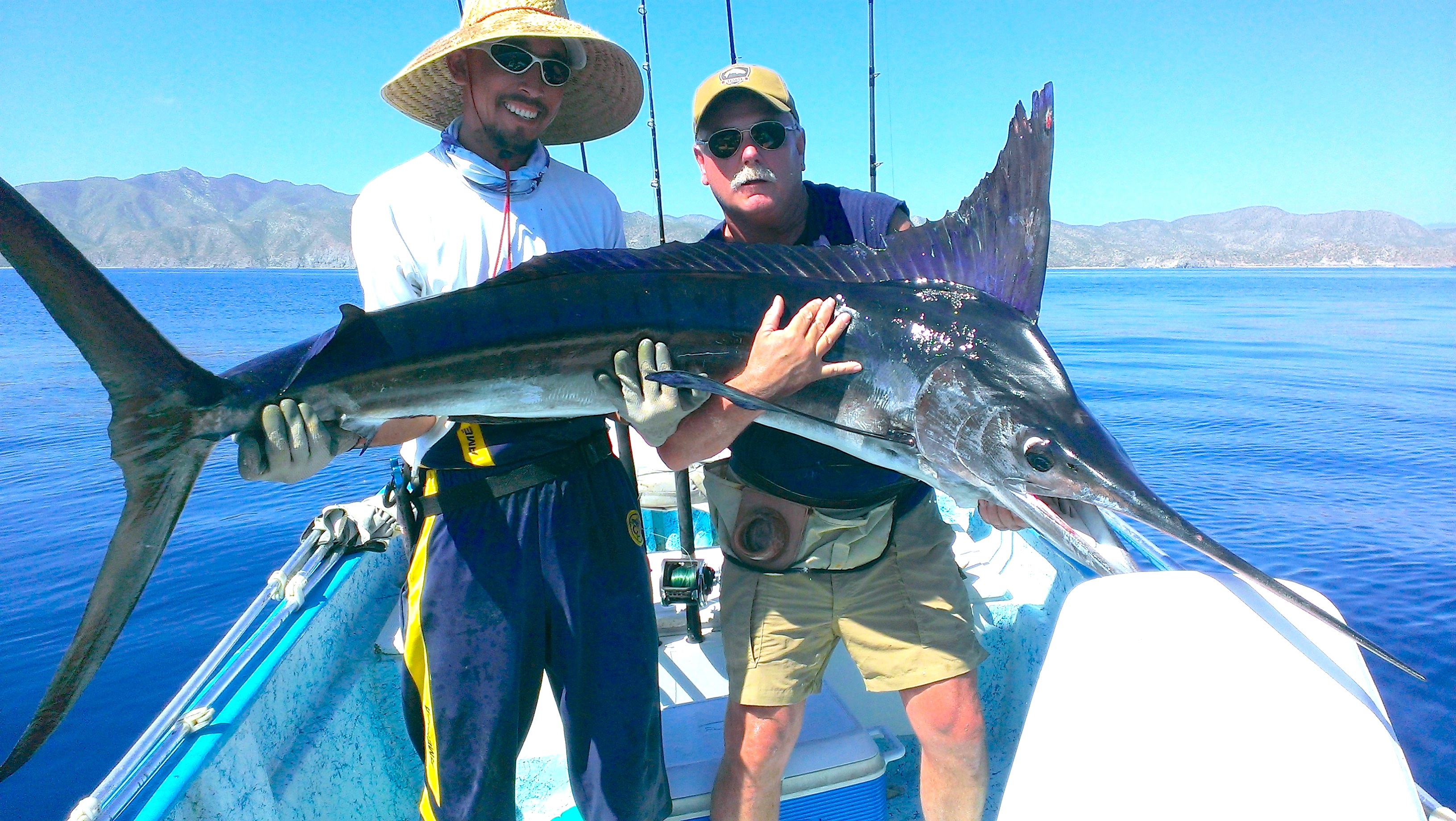
IMAG0242

BILLFISH 101

Originally Published the Week of Sept. 2, 2014 in Western Outdoor News

There are probably few places in the world where you have a better chance of hooking that billfish you’ve always wanted than the waters in the lower Sea of Cortez and the southern Baja Peninsula.


These “glamour” fish include both sailfish and marlin which are drawn to these waters by a number of variables. The landmass itself drops off quickly into deep water trenches that bring cool upwellings and nutrients from the abyss. These, in turn are the food source for the baitfish which attract all manners of gamefish to these waters.


Sitting at the apex of the foodchain the big billfish can attain sizes up to half-a-ton. At the lower end are the smaller sailfish. In ascending order (and size) come the striped marlin, black marlin and then blue marlin as the largest of the hunters.


Not only do they feed on the small baitfish like sardines, caballitos, jacks, mackerel and others. But, they feed in the middle of the food column as well regularly dining on the other predators such as tuna, bonito, dorado and other bluewater species. Basically, if it can fit in it’s mouth, it’s a possible meal.


So, if marlin are on your bucket list, like anything else, it’s all about “WWH” (WHEN? WHERE? HOW?).


Generally speaking, warmer months are better. But even then, that is not always the case. Every place is different.


Around Cabo, striped marlin have been known to “ball-up” in abundance just off the Pacific Coast between Bahia Magdalena and Cabo San Lucas. This takes place from November to January.


It’s a bit of a run from Cabo and it can be rough because it’s winter, but you can also catch a boat from several spots around Bahia Magdalena, but not many. Most anglers run up from Cabo.


It’s a long run, but the fishing can be incredible. It is not unheard of to hook and release dozens of marlin PER DAY! Again, food is the key. The marlin are there feeding on the huge schools of mackerel.


As the year ends, the stripers start to migrate south and around the tip of Baja and with each proceeding month start to move further and further north up into the Sea of Cortez.


So, while Cabo can see marlin year-round, the East Cape, La Paz, and to a lesser degree Loreto and cities north will see the billfish from spring to fall. But, not much in the cooler months.


So, pick your times carefully. Summer and fall are predominately the best opportunities to get into billfish in all areas.   Also waters are warm and seas tend to be calmer.


As for location…


To that end, generally speaking, the further south you go, the better. Although billfish can be caught in a multitude of spots in Southern Baja, you have a better shot at them in Cabo San Lucas, San Jose del Cabo and East Cape (Los Barriles and that area) than say Mulege or Santa Rosalia, although billfish are not out’ve the question in those great areas.


(No disrespect for northern areas which have their own spectacular fishing and their own particular claims to angling fame and shots at species not usually seen in some of the southern cities, e.g. yellowtail!)


Regarding fishing methods, there are a number of ways.


Be prepared to cover some water. So, a larger, faster boat might be preferred since these are rangy fish always looking for sources of food and capable of moving great distances very quickly.


Since you want to cover some water, trolling lures has been effective world-wide, especially, if you’re trying to locate fish.   If you’re in an area such as the East Cape or Cabo where the fish can be quite far, then a cruiser would surely be more comfortable, especially in Cabo which faces the open ocean.


However, that doesn’t mean you ALWAYS need a cruiser. Areas such as Loreto and La Paz do very well catching billfish using pangas insofar as fish are much closer to shore and the areas are less subject to big waves and rough seas.


Another method is to slow troll larger live or dead baits such as smaller bonito, larger mackerel and even small tuna properly rigged and dragged behind the boats.   There’s an old rule about “big fis-big baits” and you’ll be surprised how a huge bait that seems impossible to eat suddenly entices a big billfish to bite it!


One of my favorite methods is to simply troll a lure or dead bait behind the boat that has no hooks. This is a “teaser” method and requires that someone always keep an eye on the troll lines.


When a big billfish comes slashing at the teaser, another lighter rig with a live bait is then cast to the billfish. The live bait has a hook in it and the billfish will break off from the teaser and jump on the live bait.   Battling a big marlin or sail on this lighter live bait tackle can be incredible sport!


This same casting method can be used on a “sight-fish.” Basically, keeping a sharp eye on the water until a billfish is seen on the surface. Using some bit of stealth and a steady hand on the wheel, the boat is maneuvered so that a live bait can be properly cast directly in front of the fish…hopefully resulting in a big hookup!


Whatever you do, consider “CPR…Catch Photo Release” before you go fishing. Decide that you are going to release your billfish BEFORE you’re in the heat of battle. No matter what your captain tells you. Let him know that you plan to release your billfish and that his tips are NOT dependent on him killing the fish.


Try to keep the fish in the water to release it. Bringing the fish aboard not only damages the slime protection on it’s skin, but without the negative buoyancy of the water, internal organs can also be damaged by hauling it into the boat no matter how well intended.


Get as good a photos as possible then release it. All the best taxidermists now do fiberglass mounts that are incredible. All they need are a good photo or, in many case, not even that. All they need is an estimation of size to make that perfect keepsake trophy for your den!

That’s our story!

Jonathan signature


Jonathan

_______________

Jonathan Roldan has been writing the Baja Column in Western Outdoor News since 2004.  Along with his wife and fishing buddy, Jilly, they own and run the Tailhunter International Fishing Fleet in La Paz, Baja, Mexico  www.tailhunter-international.com.  They also run their Tailhunter Restaurant Bar on the famous La Paz malecon waterfront.  If you’d like to contact him directly, his e-mail is riplipboy@tailhunter-international.com  or drop by the restaurant to say hi!

______________

Jonathan Roldan’s

Tailhunter International


TAILHUNTER FISHING FLEET #1 Rated on Trip Advisor

TAILHUNTER RESTAURANT BAR #1 Rated in La Paz on Trip Advisor


Now follow us on FACEBOOK TOO


Website: www.tailhunter-international.com

U.S. Office: 8030 La Mesa, Suite #178, La Mesa CA  91942

Mexico Office: 755 Paseo Obregon, La Paz, Baja Sur, Mexico

Phones:

from USA : 626-638-3383

from Mexico: 044-612-14-17863

.

Tailhunter Weekly Fishing Report:

http://fishreport.jonathanroldan.com/

Tailhunter YouTube Videos:

http://www.youtube.com/user/pangapirate

“When your life finally flashes before your eyes, you will have only moments to regret all the things in life you never had the courage to try.”
Read Full Post »

“More than Potato Salad and Fried Chicken”

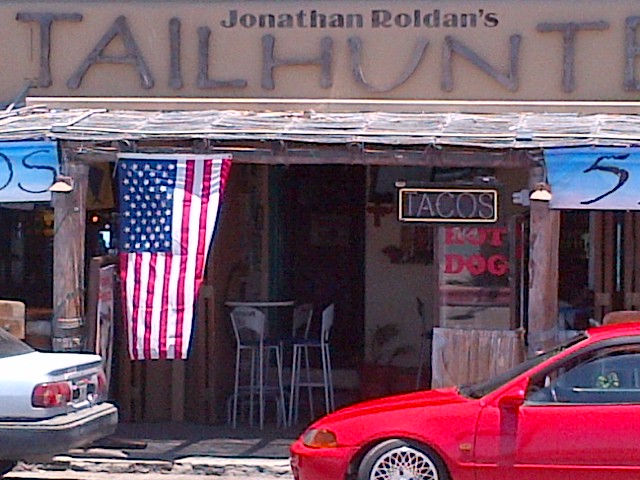
U.S. Flag Tailhunter

“MORE THAN POTATO SALAD AND FRIED CHICKEN”

Originally Published the Week of July 10, 2014 in Western Outdoor News

One of our fishing clients down here in La Paz was sipping a cold one in our restaurant and asked if I missed 4th of July.


Having been down here in Mexico working now almost 20 years, yea, I really do. I miss it a lot. Being that July 4th is always smack in the height of the summer fishing season, it’s been a long time since I’ve been part of the celebration “back home.”   But, this is where work requires that I be down here and so-be-it.


Superficially, man…I miss a good parade and watching the kids and the floats and the music…and most of all standing with hand-over-heart as I watch our vets and service folks marching tall and proud. I get choked up over that.


I miss the smell of green summer grass-in-the-park and that smell of barbecued burgers and saucy ribs and ducking the occasional errant Frisbee. I miss the sand between my toes and a paper plate of fresh potato salad, sloppy pork-n-beans, fried chicken and a beach fire in the dark as fireworks burst over the water to the oohs-and ahhs of the crowd. I miss hearing the Star Spangled Banner played.


So many things parked in my memory banks.


But, I get a completely different perspective living outside the U.S. and looking in from afar…from Mexico. And, although the two countries share borders and so many other things in common, they are still so far apart. And it makes me appreciate the U.S. even moreso and what the 4th of July means.


For one, I take fewer things for granted. Simple things.


Like water.


Back home, you flipped on the faucet. Bad as it might taste, you take for granted that water comes out. You can cook with it. Wash clothes. Come home from work and take that long easy hot shower. Wash your car. Water your lawn. Gasp…fillyour hot tub and swimming pool!


Here, in Mexico, water is at a premium. What we call “drought” in the U.S. is almost comical in Mexico. Sometimes nothing comes out’ve the faucet…for days!


Here in La Paz, often water is only sent to your home or business through the city pipes every-other-day or every two days. And even then, pretty much at a slow drip.


That’s why you see these huge black plastic “tinacos” (storage cylinders) on top of business and houses. That’s to save the water when it’s available and running. If you run out, you have to wait until the city opens the spigots again.


The tourists never see that because the hotels and golf courses and swimming pools are always full. But, I saw a report once that said the fresh water daily allotment for the average Baja citizen is less than one-gallon-a-day. And getting smaller.


And more…


As a former attorney back in California, I don’t take justice or the U.S. legal system for granted anymore. Nor am I so quick to make fun of it’s many problems.   I still challenge someone to come up with a better way to do things.   It still has a fundamental premise, that you are “innocent until proven guilty.” And there’s nothing the government can do about that.


Here in Mexico, they still operate under the archaic Napoleanic code from the days when France ran Mexico.    Under those laws, the state “presumes you are guilty and it’s up to you to prove you are innocent.”


I have seen the damages up-close-and-personal here.   We’ve been victimized ourselves.


Prove you didn’t steal from your neighbor. Prove your kid didn’t start the fight that broke another kid’s nose. Prove your wife didn’t crash into someone else’s car. Prove you didn’t hurt someone’s reputation by something you said. Prove you didn’t sexually accost a fellow employee.

All it takes is an accusation and a report to authorities by someone who doesn’t like you. And now it’s YOUR problem. It’s YOUR burden to prove you’re innocent.


Another thing is that I don’t take the ability to work so lightly. I know in the U.S. we have a serious crisis in employment.   I have several college degrees plus a law degree, but I’ve been unemployed. I’ve quit jobs. I’ve been fired from jobs.


But, I always had options. I always had hope that I could find another job.


I’m here in Mexico now because of a choice I made years ago, not because I wanted to live outside the U.S. but because there was a business opportunity that presented itself. But, it was a choice I had because I had options.   I had that independence. And I was lucky and blessed.


We have so many good friends, employees and associates and acquaintances after almost 2 decades here.


I look at them and I’m grateful for what we have as Americans roving this planet who at least have opportunities and options.


Here in Mexico, if you’re a dishwasher or you’re a taxi driver, that’s probably what you will be the rest of your life. That’s it. No upward mobility.


There might be some lateral mobility in that instead of a dishwasher you might get to be a truck driver, but not likely. You will live and die a dishwasher or waiter or farmer. That’s it. Same for your kids. What’s a career?


There’s no “correspondence school” or “next big opportunity.” You are what you are. My amigo is a floor cleaner. He will be a floor cleaner his whole life until he dies or his back gives out. Whichever comes first.


Education is mandatory to only 8th grade. How far would you have gotten on an 8th grade education?


Having education, even a college education, could still mean you’re now qualified to work in a retail store selling shoes or in an office filing papers. You can keep your hands clean. Maybe.


And, if you lose your job, that could be it as well.


We know a very good accountant working for a company. She’s 35-years-old. She told us if she ever loses her job, she is no longer employable because she is “too old” and companies don’t hire “old people.” She supports a family of 4.


Truthfully, when you hit 65-years-old here, you are forcefully retired. No matter how good, valuable or healthy you are. No matter that you’re the sole earner in your household, you’re out’ve the work force.


Just yesterday, a single-parent friend told me her son missed a job interview because he didn’t have shoes.


Last week, another friend told me he had to quit a job as a maintenance man because it was too hard to walk 5 miles to work and back six-days-a-week. He’s 62-years-old and supports a family of 5.


We might share borders, but we are so far apart. And every 4th of July away from home, I’m ever more grateful for the opportunities and freedoms I’ve enjoyed and been blessed with. For all it’s problems, the U.S. still enjoys so much that the rest of the world never has or will.


Can someone pass me another piece of fried chicken…

That’s my story

Jonathan signature

Jonathan


_______________

Jonathan Roldan has been writing the Baja Column in Western Outdoor News since 2004.  Along with his wife and fishing buddy, Jilly, they own and run the Tailhunter International Fishing Fleet in La Paz, Baja, Mexico  www.tailhunter-international.com.  They also run their Tailhunter Restaurant Bar on the famous La Paz malecon waterfront.  If you’d like to contact him directly, his e-mail is riplipboy@tailhunter-international.com  or drop by the restaurant to say hi!

______________

Jonathan Roldan’s

Tailhunter International


TAILHUNTER FISHING FLEET #1 Rated on Trip Advisor

TAILHUNTER RESTAURANT BAR #1 Rated in La Paz on Trip Advisor


Now follow us on FACEBOOK TOO


Website: www.tailhunter-international.com

U.S. Office: 8030 La Mesa, Suite #178, La Mesa CA  91942

Mexico Office: 755 Paseo Obregon, La Paz, Baja Sur, Mexico

Phones:

from USA : 626-638-3383

from Mexico: 044-612-14-17863

.

Tailhunter Weekly Fishing Report:

http://fishreport.jonathanroldan.com/

Tailhunter YouTube Videos:

http://www.youtube.com/user/pangapirate

“When your life finally flashes before your eyes, you will have only moments to regret all the things in life you never had the courage to try.”
 

Read Full Post »

“FIRST TIMER CHECKLIST”

couple on beach


FIRST TIMER CHECKLIST FOR BAJA MEXICO

Originally Published the in Western Outdoor News the Week of May 14, 2014

Despite the media blitz about violence…despite past warnings of swine flu…and a downturned economy, Mexico has one of the fastest growing tourism economies in the world right now. In fact, it’s breaking records with something like 24 million visitors last year.


World-wide, folks are simply realizing that Mexico is a great value for a vacation destination whether they are coming from Europe, Asia or even just coming across the border whether flying from Portland or driving from Phoenix or San Diego.


For many of us, who have been visiting or actually live in Mexico, we’ve come to just take it for granted on so many levels. Especially, for fishermen in the southwestern states of the U.S. going to Mexico is about as routine as taking a camping trip to Yosemite or a run to Vegas.


But, from the perspective of someone who lives and runs a sportfishing business here in Mexico that specifically caters to tourists and sportsmen and women, we’re seeing an increased number of first-timers! Great for us, but so many questions show a commonality of interest.


You might even think that many folks who read this publication must surely know about fishing in Mexico, but there’s many who have never been south and are thinking about it.


So, a few things to think about:


First, yes, you MUST have a passport. I get this question all the time. The old days of simply having your drivers license and a copy of your birth certificate won’t work these days, especially after 9-11.   For sure, you want to be sure they let you back INTO the United States after your vacation!


They are relatively easy to obtain and you can get the process started online by just hitting your search engine for U.S. passports. Or check this: http://travel.state.gov/content/passports/english/passports/information/costs.html


The thing is, just don’t wait until the last minute! Especially, as vacations times like summer…Thanksgiving…Christmas… get near. It only takes a few weeks, but slows down during high seasons and you don’t want to be “sweating bullets” waiting for the mailman as your own vacation gets closer.


Next, do some research. It can be confusing. There’s almost TOO MUCH info out there, but better to have too much than too little.


Do some research about the destination itself. Just because all of your neighbors have been there, it might not be your cup of tea.   If you’re not into jet-skis and paragliding and crowds then maybe you want to check out a slower-paced place to put your toes-in-the-sand.


Or, if your wife is really into gourmet dining and shopping, then find a place that has those things. If you’re trying to use some of your time-share weeks, not all places have time shares, nor do all airlines fly every day of the week to all destinations.


Next…


Another advisory…don’t believe everything you read online.   Like anything else, online websites are heavy into self-promotion. Good or bad…that’s just the way it is.


For example, if a place says it’s “near the beach” that can be two blocks; a 10 minute walk; or one mile. What exactly does “near the beach” mean?


You might also ask or find out what’s nearby to wherever you’re staying. It might look great in the online photos, but of course, they might not tell you that there’s a raucous nightclub next door that goes until 4 a.m. every morning.   They might not tell you that there’s a fish processing plant upwind that provides some wonderful fragrances in the afternoon breeze.


Or, if it says, “near the beach” or “on the beach” is that a beach you can swim at? Or is that a beach that they have “no swimming signs/ no fishing signs” posted?


If you’re going to be fishing is there a freezer? If you plan to bikeride, do they have rentals? If you’re going to be windsurfing, is there a place to store your gear or will you have to carry your rig on a burro down to the beach?


If you can’t walk stairs (Mexico is a land of stairs and very few elevators) find out if there’s an elevator or do they have first-floor rooms.


Or it’s going to be too windy. Or too hot. Of it’s too far from town.   The more you do ahead of time, the less you’ll have to worry about later when you’re supposed to be on vacation.


Figure out what you want to do. If you plan to fish, then go to a place where they have fishing. And find out specifically, if it’s the type of fishing you want to do at the time you want to go there.


I once got asked, “When is the salmon run in La Paz?” No lie.


I hope you’re not planning to fish for salmon in Mexico, but seriously, it makes no sense to book a place in February expecting to catch marlin. Then, you find out there’s no marlin until July!


Another time, I had a family all set asking to take surfing lessons…in Loreto…which is about 350 miles from the nearest shore break.   They were sure disappointed when I had to give them a small lesson in geography.


A little research goes a long way. All places are not created equally and Mexico runs a wonderful gamut of places that are very touristy to places where you’ll be the only tourist in town! Lots of folks are finding exactly what they’re looking for south of the border.


That’s my story!

Jonathan signature


_______________

Jonathan Roldan has been writing the Baja Column in Western Outdoor News since 2004.  Along with his wife and fishing buddy, Jilly, they own and run the Tailhunter International Fishing Fleet in La Paz, Baja, Mexico  www.tailhunter-international.com.  They also run their Tailhunter Restaurant Bar on the famous La Paz malecon waterfront.  If you’d like to contact him directly, his e-mail is riplipboy@tailhunter-international.com  or drop by the restaurant to say hi!

______________

Jonathan Roldan’s

Tailhunter International


TAILHUNTER FISHING FLEET #1 Rated on Trip Advisor

TAILHUNTER RESTAURANT BAR #1 Rated in La Paz on Trip Advisor


Now follow us on FACEBOOK TOO


Website: www.tailhunter-international.com

U.S. Office: 8030 La Mesa, Suite #178, La Mesa CA  91942

Mexico Office: 755 Paseo Obregon, La Paz, Baja Sur, Mexico

Phones:

from USA : 626-638-3383

from Mexico: 044-612-14-17863

.

Tailhunter Weekly Fishing Report:

http://fishreport.jonathanroldan.com/

Tailhunter YouTube Videos:

http://www.youtube.com/user/pangapirate

“When your life finally flashes before your eyes, you will have only moments to regret all the things in life you never had the courage to try.”
 

Read Full Post »

“LA PAZ EVENT TARGETS IGFA RECORDS AND ROOSTER RELEASES!”

Burgess 1 rooster 6-14 PMT

Fish like this huge roosterfish caught and released by Ron Burgess at Las Arenas last year have made the Las Arenas/ La Paz area famous and known as the “roosterfish capital of the world.” Last year in 4 days, Ron and his amigos caught and released 29 roosters between 40 and 90 pounds!

WP_20140327_14_48_39_Pro

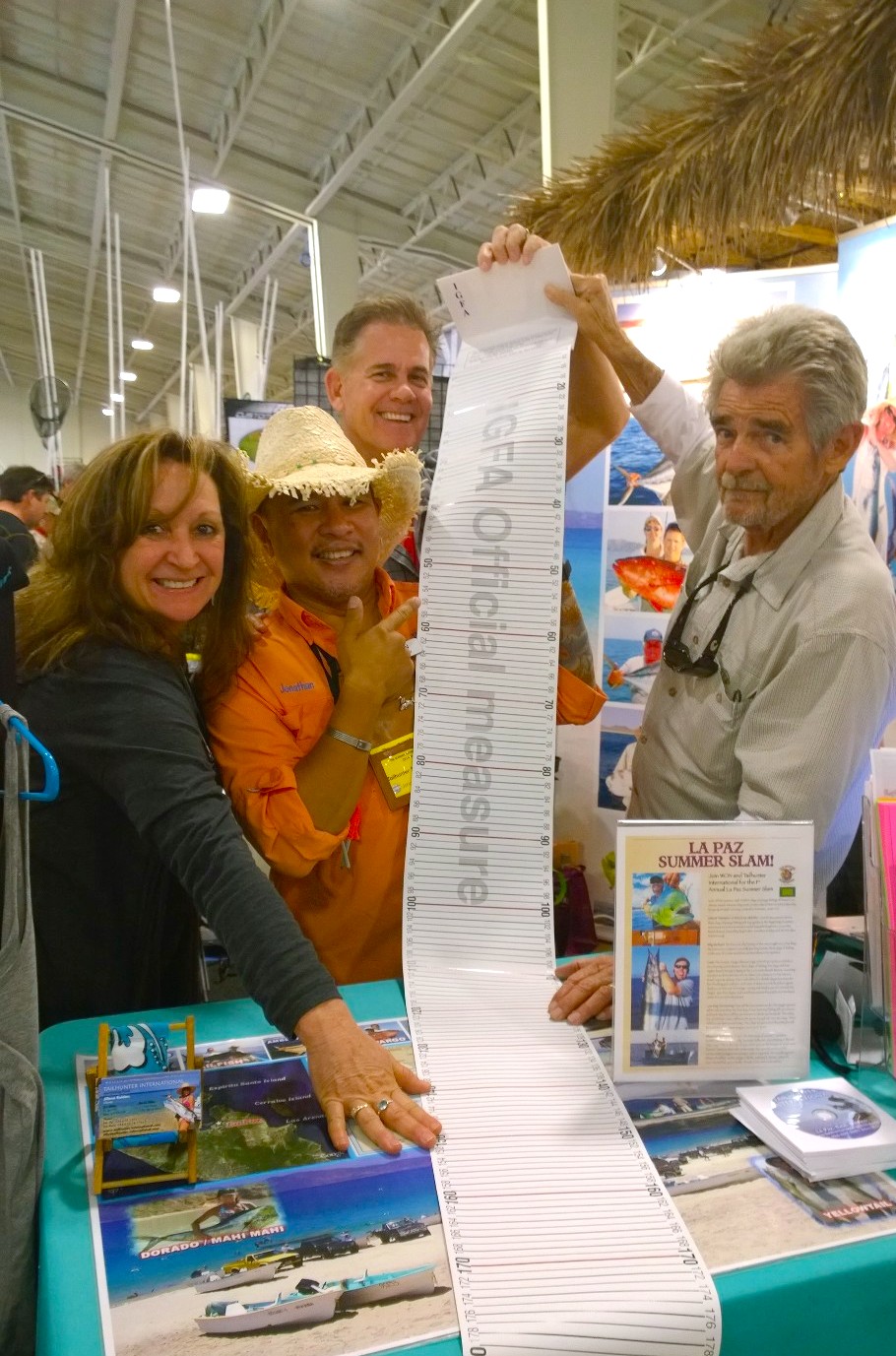
A sample of the new IGFA “release measuring devices” which will allow anglers to officially measure and release fish and still be eligible for world records! This new “category” for records is a big boost for catch-and-release of species! Shown here with Jilly and Jonathan Roldan, Pat McDonell, editor for Western Outdoor News, and Gary Graham (holding the tape!) who is not only a multi-IGFA record holder, but also an IGFA rep plus famous author and journalist. All will be at the event!


LA PAZ EVENT TARGETS IGFA RECORDS AND ROOSTER RELEASES!

Originally Published in Western Outdoor News the Week of April 29, 2014


In what appears to be a first, Western Outdoor News and Tailhunter International Sportfishing in La Paz are having the first certified tag-and-release roosterfish event this summer


The “Summer Panga Slam” will be held June 17-21 in La Paz. It promises to be quite an event.


Originally slated as a 3-day light tackle panga tournament among friends, the event has grown tremendously. It has sprouted some “legs” since it’s inception several months ago.


For one, Tailhunter International in La Paz now has a certified I.G.F.A. scale on hand and is a registered IGFA center. This means, Tailhunters and it’s clients can legitimately target world-record fish.


This is significant given that they fish the famous waters of La Paz and Las Arenas as well as the northern East Cape where arguably more world records have been set over the decades than anywhere else. Many consider it to be one of the top light-tackle fisheries in the world.


Additionally, the area has been known as the “roosterfish capital of the world” famous for it’s slugger-sized rooster populations. In fact, in 1987, the world record roosterfish was caught on these very beaches. It weighed in ta 114-pounds. Larger ones have been caught and released.


Last year, the area had a banner roosterfish season where roosters averaged 40-90 pounds and a number of fish over 100-pounds were tallied and released including one estimated over 150-pounds!


All of this is important to the “Panga Slam” event for two reasons:


  1. The IGFA now has “release” categories that were previously not available. That means you can now become a world-record holder and not have to kill your fish. Last year, a world-record release rooster was produced in La Paz waters! There are categories for men, women and children! However, you MUST have a special IGFA measuring device of which this event will have several on hand!


  1. Tailhunter International is part of the newly formed Roosterfish Foundation dedicated to preserving the exotic rooster and monitoring the health of the species. To that end, tag-and-release devices are now available so that released fish can now be tagged before we let them go.


So, what all this means is that the “Summer Panga Slam” now gives participating anglers not only a shot a getting a record fish that can actually be weighed. But, it’s also an opportunity to release a world-record fish and get into the record books as well as help to proliferate the roosterfish species for everyone!


It’s going to be a lot of fun and, as mentioned, the event has grown. WON editor Pat McDonell himself will be down to help host the event. WON columnist, journalist and famous author Gary Graham will be on hand as well to record the event. Gary is himself also a multi-record IGFA record holder and the IGFA representative.


On board as well are a growing number of sponsor with lots of goodies for the participants.


The event is limited to 40 anglers in 20 two-person panga teams. There are still a few spots left! Here’s the rest of the details:


  • Sponsors aboard now include:  Okuma Reels, Costa Sunglasses, Yo-Zuri, Sufix, Turners Outdoors and Lazer Trokar Hooks!
  • Three full days of panga fishing at Las Arenas  (gear, breakfast and lunches included) 
  • 4 nights La Concha Beach Resort in ocean-facing room
  • Welcome dinner and Awards Dinner
  • Taco feed night and live music at famous Tailhunter Restaurant
  • One day open fun fishing and then two days jackpot tournament (cash entry $100 in La Paz per team) 
  • Event t-shirts
  • Cabo San Lucas Airport Shuttles 

Cost is $1350 per person. Space is limited and going fast. For more information, you can contact Western Outdoor News and talk with Mike Flynn at FLYNN@wonews.com or call him at 949-366-0030.


We’re looking forward to having you join us!

That’s our story

Jonathan signature

Jonathan

_______________


Jonathan Roldan has been writing the Baja Column in Western Outdoor News since 2004.  Along with his wife and fishing buddy, Jilly, they own and run the Tailhunter International Fishing Fleet in La Paz, Baja, Mexico  www.tailhunter-international.com.  They also run their Tailhunter Restaurant Bar on the famous La Paz malecon waterfront.  If you’d like to contact him directly, his e-mail is riplipboy@tailhunter-international.com  or drop by the restaurant to say hi!

______________

Jonathan Roldan’s

Tailhunter International


TAILHUNTER FISHING FLEET #1 Rated on Trip Advisor

TAILHUNTER RESTAURANT BAR #1 Rated in La Paz on Trip Advisor


Now follow us on FACEBOOK TOO


Website: www.tailhunter-international.com

U.S. Office: 8030 La Mesa, Suite #178, La Mesa CA  91942

Mexico Office: 755 Paseo Obregon, La Paz, Baja Sur, Mexico

Phones:

from USA : 626-638-3383

from Mexico: 044-612-14-17863

.

Tailhunter Weekly Fishing Report:

http://fishreport.jonathanroldan.com/

Tailhunter YouTube Videos:

http://www.youtube.com/user/pangapirate

“When your life finally flashes before your eyes, you will have only moments to regret all the things in life you never had the courage to try.”


Read Full Post »

ENSO-states-viz_0

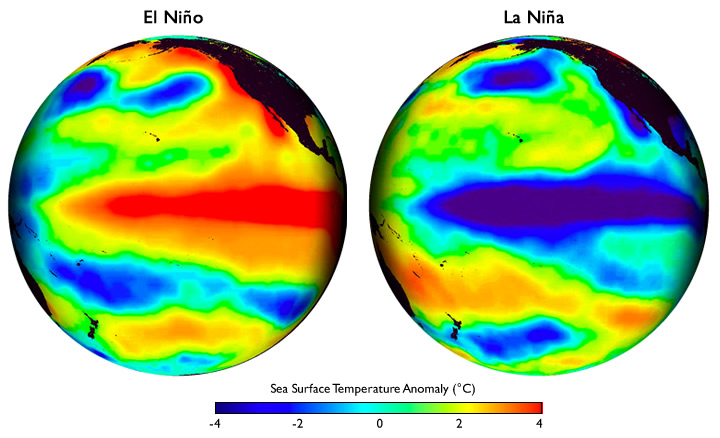
Equatorial tropical waters getting warmer and might be the vanguard of a super el nino on the way.


SUPER BABY ON THE WAY?

Originally published the Week of April 15, 2014 in Western Outdoor News

I waited for awhile to write something about this. I’m no expert and even the experts had differing opinions. But, the more I read and the more I see reported from fishing around here and in other areas of Mexico, I guess it better be addressed.


Plus, everyone is asking me as well.


Things are looking like we might have an “El Nino” on the way. In fact, it might be a Baby-Huey-sized “Super Nino,” if things continue to shape up.


Everyone talks about it but few understand what it is and what really happens. Mostly, absent all the scientific-speak, most of us just want to know how that’s going to affect the fishing, right?


Originally, it was recognized by fishermen in South America when anomalies in the water temperatures started showing up around Christmas time. Hence, “El Nino” means the “little boy” or Christ child.


According to the folks at the National Oceanic and Atmospheric Association (NOAA), in a normal year (whatever that is) trade winds blow westerly across the Pacific.   That means waters around Indonesia are warmer and as much as a half-meter higher than say, Ecuador.


In an El Nino year, it’s just the opposite.


For those of us geographically challenged, that means the Eastern Pacific, including the western U.S. and Mexico, get much warmer water temperatures. Among other things.


Whether that’s good or bad depends on your perspective.


On the bad side, it dries out places like Australia and can lead to heavy brushfires. On our side of the Pacific, rain follows the warmth. Accordingly, the likelihood liklihood of hurricanes and destructive rainstorms increases as do heatwaves in the same areas.


For those in drought-stricken western U.S. states, I guess you have to watch what you ask for.


But, what does this mean for fishing, besides maybe some having to break out the rain ponchos?


In real terms, the warmer water usually means the presence of warm water fish, much to the thrill of anglers in the western U.S. In past years, this meant “exotic” fish like marlin and dorado showing up occasionally in Seattle catches.


It means that California anglers, especially those in Southern California might not have to venture to Mexico to catch these same species. Weekend warriors on half-day boats could be taking home dorado fillets!


For us in Baja, we’re still wondering.


There’s no doubt that we’ve been experiencing much warmer than normal waters.   Since last season here in La Paz, water temperatures never did drop that much near the end of the season. To wit, we never really had “winter fishing” per se.


In fact, as in many places around Baja, the warm water species, like dorado and tuna stuck around or showed up much earlier than normal.   Here in La Paz, we encountered water surface temperatures into the 80’s several months earlier than normal.


Great for swimming. But, in terms of how this will affect the fishing season, vamos a ver…we’ll have to see.


Here’s the rub with el Nino.


With the warmer waters, the nutrient-rich cooler waters that come up from the deep-water upwellings don’t show up either Those nutrients support the bait stocks. Bait dies or moves off. That doesn’t bode well.


One other issue.


The science folks speculate that this might be the “big baby”…the super nino! The last big El Ninos was the one that bridged the 1982-1983 and the 1997-98 seasons.   With the latter being the strongest recorded.


This April, water temperature increases along the equatorial Pacific are already even higher than those previous El Nino years. So, this could be a record-buster if it happens.


So, brace yourself one way or the other.   Nothing is completely definitive at the moment, but all signs are pointing that way. Me? I’m still going fishing! It still beats working.

That’s our story!

Jonathan signature

Jonathan


_______________

Jonathan Roldan has been writing the Baja Column in Western Outdoor News since 2004.  Along with his wife and fishing buddy, Jilly, they own and run the Tailhunter International Fishing Fleet in La Paz, Baja, Mexico  www.tailhunter-international.com.  They also run their Tailhunter Restaurant Bar on the famous La Paz malecon waterfront.  If you’d like to contact him directly, his e-mail is riplipboy@tailhunter-international.com  or drop by the restaurant to say hi!

______________

Jonathan Roldan’s

Tailhunter International


TAILHUNTER FISHING FLEET #1 Rated on Trip Advisor

TAILHUNTER RESTAURANT BAR #1 Rated in La Paz on Trip Advisor


Now follow us on FACEBOOK TOO


Website: www.tailhunter-international.com

U.S. Office: 8030 La Mesa, Suite #178, La Mesa CA  91942

Mexico Office: 755 Paseo Obregon, La Paz, Baja Sur, Mexico

Phones:

from USA : 626-638-3383

from Mexico: 044-612-14-17863

.

Tailhunter Weekly Fishing Report:

http://fishreport.jonathanroldan.com/

Tailhunter YouTube Videos:

http://www.youtube.com/user/pangapirate

“When your life finally flashes before your eyes, you will have only moments to regret all the things in life you never had the courage to try.”


Read Full Post »

“You Mean I Can Keep It?”

What do you think?  It looks to me like Aiden's self-esteem is just fine!

Yes…I think we can bring this one home!

You Mean I Can Keep It?

Originally Published the Week of September 20, 2013 in Western Outdoor News

You Baja veterans should probably just web surf something else.  This might be old stuff to you.

But, often when you do something so long or something is “old hat” you forget that there’s still newbies out there who have valid questions about things that old Baja rats like us take for granted.

It’s a simple, but important issue.  I receive enough e-mails and phone calls asking if it’s OK to bring home fish.

Sometimes, my auto-response in my brain says, “Well..duh…that’s kinda dumb!  That’s like asking me if it’s OK to dip you chips in salsa!”

Of course, I can’t and would never say that because there are no such thing as dumb questions.  It’s a legitimate question and well-asked.   I mean, if you’re coming fishing in Baja, one would need to know if it’s OK to keep your catch.  Corollary to that, is it OK to bring some home!

But, I get asked about it enough as new folks are discovering Baja that I figured it was time to do another column about it and update my thoughts.

The question used to surprise me more.  But, having been in the industry now for almost 2 decades, us west-coast anglers might be surprised to learn that  there are many world-class fishing destinations that severely limit what you can keep.

Pay several thousand dollars a day and you get to keep say…one fish!  Or, you must release all fish.   Yes, it’s true!   For most of us who have fished the Baja since the age-of-dirt,  we pretty much always assume that as long as we’re within limits, everything hooked is coming home.

There may come a day when severe limits will be enforced, but that’s the subject of another column and someone with a lot bigger brain and bigger column than mine.

For now, the simple answer is yes, you may bring home your fish that you catch here in Baja.   As long as you’re within limits, by all means, bring some home.  Or have some cooked up while you’re still on vacation.  Nothing will taste better than fresh caught fish that was swimming around earlier that day!

Bringing fish home starts with taking care of the catch.  Treat it well and you’ll preserve the quality.

Once the fish is caught, if you can, have your captain or deckhand bleed it.  That’s not always possible when the action is fast-and-furious and lines are flying and it’s a three-ringed-water-circus out there.  However,  bled-fish…even lower-grade meat fish like bonito or skipjack will taste world’s better if it’s freshly bled.

Maybe the most important thing whether it’s bled or not is to keep it cold.  Warm water fish are…well…they’re warm!  As soon as they’re dead, like anything, they start to deteriorate.   And the hot Baja sun is not a friend to your future dinner!  Leaving a fish on the deck or even in a fish box without ice is pretty much like putting the fish in the oven.

So, at all levels from catch-to-stove or barbecue…keep your fish cold.  Ice is your buddy.   It’s a good question to ask when you book your trip if there’s ice aboard to keep your fish chilled.

After that, you need to store your fish while you’re still on vacation.

I see two cardinal sins all the time.  One is rinsing your fish in fresh water.  Or, even soaking it in fresh water.  That takes out all the flavor.  Secondly, the fresh water gets in and then freezes and now your have fresh water crystals in your fish which detracts from the quality and flavor.

Additionally, I often see people rinsing their fish in warm or tepid water.  Especially in Baja!  Water coming from pipes here is often very warm…or hot!  Amigo…not only is it fresh water, but moreso, you’re cooking your fish in the warm water.  If you have to use fresh water, make sure it’s cool water!    Ideally, clean saltwater is best.

The ideal method is to have your fish vacuum sealed.  It’s worth it!  Nothing is worse than beautiful fish fillets in a big giant frozen ball in your freezer.  You take it out and it’s either freezer burned or you now have a 10-pound ball of thawed fish.  And you really only need two fillets for dinner!  The rest get wasted.  Or the cats get it.

Vacuum sealing is the difference between fish that lasts a few weeks or fish that can last many months in your freezer so that your dorado caught in June tastes great in December!

If you can’t vacuum seal it, at least put it in good quality zip-lock style freezer bags.   Only put in what you’re planning to thaw for a meal.

An old Mexico trick is to put fillets in the freezer bag then lowering the bag into a bucket or sink of water.  The water forces the air out and then press the seal.  You get instant Mexican vacuum sealing!

Lastly, it’s really important to keep your fish in a good place while you enjoy the rest of your vacation.  As crazy as it sounds, we often encounter folks here who book their hotels and either do NOT have freezer or do not allow fishermen to store their catch.   That’s gonna be a buzz-kill.

Others, simply put, have crappy freezers that aren’t worth a hoot.   So, check on that.  The places that cater to fishermen or have a reputation for good fishing also have good storage facilities.  Or, if you’re booking through a charter operation, ask them about storing your fish in freezers.

Remember, that warm fish often takes awhile to freeze.  Or the freezers at a given hotel get a load of fish every night from all the anglers.  In even the best freezers it sometimes takes 24-hours to get solid.

If you’re leaving the next day, that could seem like a problem.  It’s not.  Put your least frozen fish on the bottom of your cooler.  Put your most frozen fish on the top (cold travels down).  Add extra insulation with crushed crumpled newspaper or your dirty fishing clothes and your fish will be fine!

That’s our story!

Jonathan

_______________

Jonathan Roldan has been writing the Baja Column in Western Outdoor News since 2004.  Along with his wife and fishing buddy, Jilly, they own and run the Tailhunter International Fishing Fleet in La Paz, Baja, Mexico  www.tailhunter-international.com.  They also run their Tailhunter Restaurant Bar on the famous La Paz malecon waterfront.  If you’d like to contact him directly, his e-mail is riplipboy@tailhunter-international.com  or drop by the restaurant to say hi!

______________

Jonathan Roldan’s

Tailhunter International


TAILHUNTER FISHING FLEET #1 Rated on Trip Advisor

TAILHUNTER RESTAURANT BAR #1 Rated in La Paz on Trip Advisor


Now follow us on FACEBOOK TOO

Website: www.tailhunter-international.com

U.S. Office: Box 1149, Alpine CA  91903-1149

Mexico Office: 755 Paseo Obregon, La Paz, Baja Sur, Mexico

Phones:

from USA : 626-638-3383

from Mexico: 044-612-14-17863

.

Tailhunter Weekly Fishing Report:

http://fishreport.jonathanroldan.com/

Tailhunter YouTube Videos:

http://www.youtube.com/user/pangapirate

“When your life finally flashes before your eyes, you will have only moments to regret all the things in life you never had the courage to try.”

Read Full Post »


JUST SHUT UP FOR A MOMENT. ..

Originally Published the Week of Nov. 24, 2010 in Western Outdoor News

           Having spent almost 2 decades here now in Baja, I have experienced some incredible adventures.  But some of my best experiences have happened when absolutely nothing is happening. I’ll explain.

            So often, when we have visitors or clients here, there’s a mad rush to be here…do that…experience this…cram as much excitement into a vacation as possible.  I get it.  I love it.  I’m the same way myself.  When you’re \in the tourist industry like us, it’s not bad for business either.  No complaints!

            But some of the most rewarding times have been when we just crank it down a notch from super amp down to slo-mo.

            A perfect example is when we SCUBA dive.  Everyone is in a rush to get in the water.  See the mantas.  See the sharks.  Explore. Jump in!    Get from point A to point B and go “Diver Dan” on us.

            I often tell my folks, that at some point they will see me simply stop.  I explain that “this is not a race.”  It’s supposed to be fun.  I will simply stop swimming and let myself sink to the bottom and either kneel or lie there.  And I want them to do the same.

            I get some blank and questioning looks.

            But amazing things happen when we all shut up and slow down. It’s like that both above and below the water. 

            Look up.  Watch the slow ascent of bubbles to the surface.  Stop moving.  Fish suddenly don’t view us a huge threatening shapes.  They come out to investigate.  They swim close.  Schools swirl around us.  Little sea eels poke their curious heads out of the sand that we normally would not have seen.  Coral comes alive. A sea turtle comes to check us out. A sealion pup darts playfully in and out of the divers.  We’re now IN the big aquarium and it’s a wonderful show.

            I look around and even through the dive masks I can see smiling eyes!

            When I lived on the East Cape, I would sometimes take a few of the hotel guests up in the hills just to step away from the lights; the tequila shots and hooting at the bar. 

            One nice thing about Baja.  A few steps away and you’re out in the frontier wilderness.

            We’d walk up the hills just a few hundred yards up a path I knew well.  At the top of a hill, everyone would look back down from the darkness on the hotel lights and take a breath.  But, I would tell everyone, don’t look down…look up!

            And there would be a collective gasp of surprise!

            Zillions of stars…constellations…galaxies…shooting stars…an unimaginable  light show that could never be experienced unless you were up and away from the bustle. Other than some “oohs” and “ahhh” and alot of pointing into the night sky, not much else needed to be said.  An unforgettable experience found in silence.

            Sometimes when I’m guiding, I will do the same thing.  Stop the danged boat.  Look. Listen. Put down the beer cans, boys.

            Shhhh… Look at the birds.   See the ripples there.  Flat spots and current lines.   Water colors.  Those ripples are really nervous water with bait being pushed just below the surface.  Was that a jumper? Look closely.  Is that structure below us?

             Let’s just top chasing the fish and stop for a moment.  Let’s read the signs.  Throw some bait and let the fish come to us for once.  And, if not, enjoy the moment.  The noisy world will return soon enough when we rev up the motor again.

            Even in rowdy Cabo San Lucas a few weeks ago. After one of those days packed with activities and social events and parties related to the Western Outdoor News Tuna Jackpot, I stepped out onto our little patio behind our hotel room on the marina.   It was 2 a.m. in the morning.

            And it was a quiet you don’t often experience in Cabo.  No blaring disco music.  No hawkers on the sidewalk.  The yacht motors were idle.  The tour boats were all moored.  The outboards were all asleep for once.  The marina lights were beautiful and except for the sound of rigging occasionally pinging a mast from the sway of a boat, Cabo San Lucas was incredibly serene…a description not often associated with fast-paced Cabo.

            In a few hours, it would all return to a behive, but for that moment, I pulled out a patio chair and just sat and listened.  And sighed.  And imagined what it used to be like before we brought all the noise to Mexico and grateful to find a little slice of Baja serenity. They are few and far between and it’s too bad we have to actually search it out these days.

___________________

Jonathan Roldan has been a columnist for Western Outdoor News and editor since 2004. He lives with his wife, Jill, in La Paz , Baja Mexico where they own and operate the Tailhunter Sportfishing Fleet as well as the Tailhunter Restaurant Bar on the historic La Paz waterfront.  www.tailhunter-international.com.   is their website.  If you’d like to reach Jonathan, his e-mail is riplipboy@tailhunter-international.com

Read Full Post »

This might be a popular way to "hydrate" while in Baja, but it's not the best way to keep liquid in your system and can lead to other problems besides a hangover.

DUDE…I DON’T FEEL SO GREAT…

Originally published the week of Sept. 27, 2010 in Western Outdoor News


It can happen so fast.

            The last time I saw it happen, I wasn’t even sure what I was seeing.  One moment, the guy was sitting on the terrace of our bar here in La Paz enjoying the afternoon sunshine and another cold beer and in a nano-second it suddenly changed.

            I saw the guy smiling and laughing and the next, he simply tipped over.  Like someone threw the switch. Lights out.  Chair went over.  He hit the floor.

            The next few seconds were pandemonium.  People scrambling all over.  I heard “heart attack”…”give him air”…”get an ambulance”…”the guy is out”…”someone help my husband…”

            I looked through the melee of people and all the instruction giving.  At times like that it’s a bit like herding cats.  Everyone in panic mode.  Everyone is a doctor.  People actually arguing while a guy is flat out on the floor. The wife is wailing.  She has no clue.  They’re in a foreign country and she’s not being much help either.

            Then, the guy just sits up.  Just like that.

             Kinda woozy, but grinning. “C’mon, man…” He’s pushing people away from him.  Why are you all lookin’ at me? He’s puzzled.  “What am I doing on the floor?”

            We try to keep him down and comfortable. Call the paramedics anyway.  He doesn’t want all this fuss.  Just wants to get up and get another beer.  “I’m on vacation, man!”

            But the place collectively ramps down and breathes and sighs. None larger than my wife and I since we own the place, but deep inside we suspected the problem.

            It happens quite often actually.  More than folks know.

            Call it heatstroke.  Sunstroke.  Heat exhaustion.  Whatever.  It can be pretty serious and can disguise itself pretty well.  Just this morning when we were putting out our fishermen and one guy thought he was coming down with the flu that night…

            “I was chilly and my head hurt and I was aching. My stomach was upset and I was shaking so much we turned off the air-conditioner in the hotel room.” 

            Fortunately, his buddy (who works out alot)   fed him some gatorades and water and a good night’s rest he was fine.  But both had spent the previous day fishing all day in the hot Baja sun pulling on fish.  They thought they had drank enough waters, but on afterthought figured they must have been de-hydrated.

            Two weeks ago, some of our fishing clients ate at a restaurant and complained of “food poisoning” late that night.  I got called to their hotel room.

            I’m no doctor, but food poisoning usually seems to kick-in 3 to 6 hours after eating.  The both said that they went to town for dinner came back to the hotel and went to bed exhausted right away already feeling badly.

            They had fished hard all day.  It was clear from the blazing sunburns on their shoulders and the “racoon” pattern on their faces that they had only worn sunglasses on their heads…no hats involved.   They admitted to having drunk only one or two small bottles of water, but quite a few beers.  The only food all day had been some tacos they had just eaten and a bag of chips while they were fishing.

            I had some Pedilite (given to kids when they have the “runs” to replace fluids) and Gatorade and told them to drink some and see how they felt in an hour before I called the hotel doctor about food poisoning.  An hour later, they were much better.

            “Heatstroke” is a real medical emergency and  can be extremely serious.  Basically,  the body can’t cool itself down fast enough through normal means such as dissipation through the skin or by perspiration.  You’re overheated, Bucky!  In hot conditions or under strenuous activity, e.g. fishing in the hot Baja sun, you’re wide open. 

            Symptoms can be deceiving and sound like so many other maladies…(hangover? heart attack?  bad tacos?)

  • nausea
  • vomiting
  • headache
  • cramps and muscle aches
  • dizziness
  • weakness
  • rapid pulse
  • elevated temperature
  • confusion
  • difficulty breathing
  • seizure


Caught early and recognized, it’s very treatable and very preventable.  Mostly it’s common sense. 

Get the person cooled down.  Shade.  Fan them to promote cooling and perspiration.  Liquids.  Ice packs under the armpits help too.

The best is prevention.  Stay as cool as possible. Hydrate!  Liquids with caffeine or alcohol actually help DE-HYDRATE you so take it easy.  Drink beverages that replace the electrolytes you’re losing out there in the sun.

The guy in our restaurant who fell over had traveled all day.  He was so excited about his trip that he didn’t eat.  He drank coffee on the plane.  He had lots of beer all day.  He had been sitting in the sun for several hours watching the ocean with buddies at our bar.  He was older.  He had not been drinking water.  Duh!

He got up and walked out helped by his wife, but he sure scared alot of people.

Read more:

http://www.medicinenet.com/heat_stroke/article.htm

_____________________________________

Jonathan Roldan has been the Baja Editor at Western Outdoor News since  2006.  He and his wife Jill live in La Paz and own the Tailhunter Fishing Fleet as well as run the Tailhunter Restaurant and FUBAR Cantina.  He can be reached directly at riplipboy@tailhunter-international.com  or through their website www.tailhunter-international.com

Read Full Post »

« Newer Posts