Feeds:
Posts
Comments

Posts Tagged ‘reports’

RAMPED DOWN EL NINO?

tromba-marina-la-paz-4

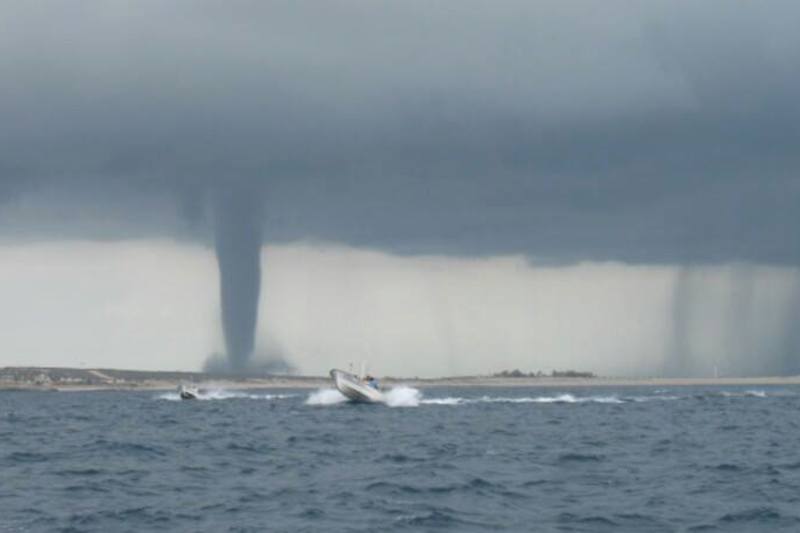
UH…yea! I think it’s time to crank up the lines and get the heck ou’tve the way! It only took minutes for the skies to darken and go from blue…to grey…to black and put down this incredible waterspout!
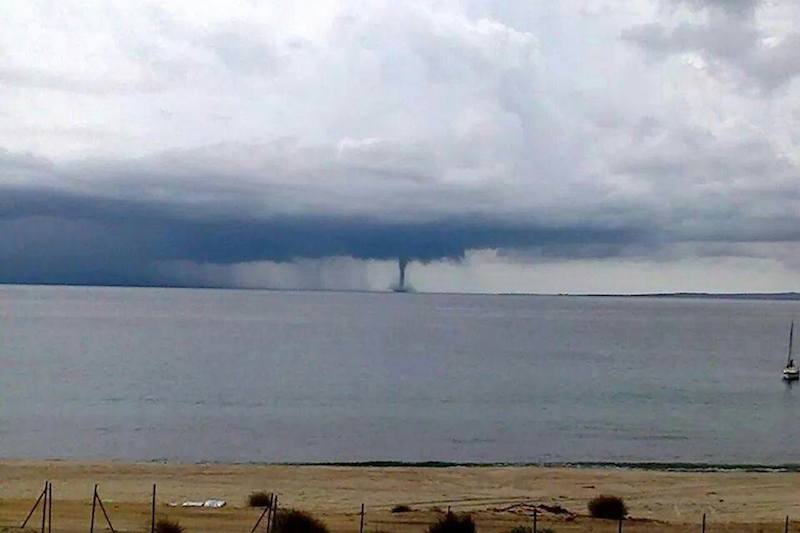
tromba-marina-la-paz- el sargento

They can come out’e nowhere in a matter of minutes. You can see the huge waterspout and the rain coming! Best to let it pass. It can be over in minutes.

RAMPED DOWN EL NINO?

Originally Published the Week of Aug. 5, 2014 in Western Outdoor News

At the mid-year mark of the calendar as well as the Baja fishing season, maybe it’s time to take another look at the El Nino phenom we may…or may not be having.


At the onset of the season, many of us, me included, wrote about predications that this would be an El Nino season. In fact, scientists strongly suggested 2014 to possibly be one of the largest, if not the biggest one in recorded history.


In a nutshell, the El Nino event is characterized by abnormally higher water temperatures, higher rainfall (including hurricanes), higher air temperatures and humidity, and for us fishermen, big differences in the fishing season along the eastern side of the Pacific ocean. Basically, the western side of Mexico and the U.S. are affected.


Early in the season, it was looking pretty ominous. When so many of us down here in Baja and along the Mexican coast base our livlihoods on nature, the weather and the fishing, it’s hard to ignore the predictions.


According to the experts, all the signs were there for a whopper of an el Nino on it’s way. Understandably, it was with some trepidation that many of us kicked off our respective seasons.


Well, now several months into the season, an assessment of sorts can be made. Yes, the waters got really warm really fast. In many places they are higher than normal.   In fact, in some spots, it never cooled down from last year. The cold waters never materialized.


No doubt, it doesn’t take a meterolgist to tell you it surely seems a lot warmer and a lot more humid this year. Just walk outside. It blazes. The air is thick and heavy in the heat.


And the fish?


I think I can speak for a lot of us down here and a lot of folks who have visited. It’s really weird. It’s really crazy.


At the base…there’s very little live bait. That’s all I seem to hear folks talking about. Well, you see, when there’s an el Nino, the cooler waters from the deep carrying all the nutrients don’t make it up.


The nutrients bring the bait. No food. No bait. Or, the waters are so warm, the bait goes elsewhere…or dies.   It’s just part of the cycle.


If there’s no bait, that’s gonna eliminate a food source for the gamefish, not to mention make life a little difficult for sportfishermen. Certain species don’t show up…or they show up someplace different.


Like slow tuna in Mexico, but tuna show up in big numbers in California and strays of tuna, dorado and marlin make their way up as high as Washington state! Talk about getting lost!


But, now at the mid-way point, the pros are saying, maybe it’s NOT going to be a record-breaking el Nino. They are revising their predictions.    Yes, it’s here, but well…maybe it’s not the BIG one!


That’s good news and bad news.


Bad news…like all weather, El Nino is cyclical. It’s the way of the world so-to-speak.


Yes, it brings more rain, but that’s exactly what so many places need along the west coast continents to break extreme drought conditions. In fact, I saw where one meteorologist called it the “Great Wet Hope.” Lord knows rain is needed.


If it’s true that we’re not going to see the historical El Nino, I guess many of us can breathe a little easier knowing that the likelihood of hurricanes is diminished. However, truth be told, even ONE hurricane/ chubasco can be a deal breaker here in Mexico.


Mexico needs water as much, it not more than anyone. And it’s not for golf courses and swimming pools and watering lawns and washing cars. Just basic drinking water is in short supply as well as water for crops.


A little rain here and there or short burst in the afternoons are great. It’s perfect.


But even a good “tropical storm” of any intensity would be devastating in a country where drainage is a problem as well as basic construction. Arroyos become deadly rivers in minutes. Streets become lakes. Neighborhoods become isolated islands.   Mexico’s infrastructure doesn’t do well with rain.


A similar storm in the U.S. would generate some fender benders on the freeway. Surfers in Orange Co. would rush to catch “the gnarly break.” And the evening news would show someone trying to kayak down the concrete “Los Angeles River.”


Here… A realatively minor storm of moderate intensity in a few minutes can wipe someone out…destroy businesses…kill people.  Let alone screw up the fishing day.

So, if you’re coming down in the next few months, don’t alter your plans. But be prepared.   It might just rain.


If there’s something on the radar and the local port captains close the port or put out warnings, common sense dictates that you might be better served sitting by the pool with a cold one.   Don’t chance it.


Fishing is supposed to be fun. Safety first.   It’s not supposed to be an exercise in survival or miserableness or futility. Many of these “storms” are short-lived, but can be strong. We call them “toritos” (little bulls) that hit with the intensity of a hurricane.   In fact, these toritos can come up in minutes and there will never be a warning.


If that happens, by all means, clear the water. If you’re close enough to cover go wait it out. You can go back out later. If you’re that’s not an option, call it a day.


Two weeks ago, we had a waterspout come up that was the size of a city block and sounded like a freight train from several miles away.   You could see water gushing up off the ocean. It took a matter of minutes for that to form!


The other side of these storms is that it washes a lot of debris into the water. This includes mud, trash, and vegetation like trees and bushes.


Let it all settle and waters clear. Then look for the temperature and current breaks holding all this floating stuff. You’ll find some of the best fishing around these areas!


Just go with the flow. Be safe. Be prepared.

That’s my story!


Jonathan signature

Jonathan

___________

Jonathan Roldan has been writing the Baja Column in Western Outdoor News since 2004.  Along with his wife and fishing buddy, Jilly, they own and run the Tailhunter International Fishing Fleet in La Paz, Baja, Mexico  www.tailhunter-international.com.  They also run their Tailhunter Restaurant Bar on the famous La Paz malecon waterfront.  If you’d like to contact him directly, his e-mail is riplipboy@tailhunter-international.com  or drop by the restaurant to say hi!

______________

Jonathan Roldan’s

Tailhunter International


TAILHUNTER FISHING FLEET #1 Rated on Trip Advisor

TAILHUNTER RESTAURANT BAR #1 Rated in La Paz on Trip Advisor


Now follow us on FACEBOOK TOO


Website: www.tailhunter-international.com

U.S. Office: 8030 La Mesa, Suite #178, La Mesa CA  91942

Mexico Office: 755 Paseo Obregon, La Paz, Baja Sur, Mexico

Phones:

from USA : 626-638-3383

from Mexico: 044-612-14-17863

.

Tailhunter Weekly Fishing Report:

http://fishreport.jonathanroldan.com/

Tailhunter YouTube Videos:

http://www.youtube.com/user/pangapirate

“When your life finally flashes before your eyes, you will have only moments to regret all the things in life you never had the courage to try.”

Read Full Post »

MEMO TO SELF – NO BAD DAYS

sunrise

SUNRISE ON THE SEA OF CORTEZ TO START THE DAY. FIRST BAITS IN THE WATER. HOW CAN THAT BE BAD?

MEMO to SELF…NO BAD DAYS!

Originally Published the Week of July 22, 2014 in Western Outdoor News

The day had not started well. I woke up grumpy. I was doing my utmost to put on my best “happy face” for the fishing clients this morning, but it was taking an effort.   Just one of those days we all have when one would be best-served to just stay in bed!


I already knew it was going to be a long day. We had problems at our restaurant with the plumbing, and several of our employees were out sick. A vehicle was broken down and required a part they just don’t make in Mexico and there was a chance of rain in the forecast too. Sheeesh. And it was only 5 a.m. in the morning!


Worse of all, the fishing had been bad. And I had grumpy fishermen. More than grumpy actually. Rude and pissed off.   The bad fishing had snowballed into complaints now about the service, the captains, the hotel, the food.


Funny how that happens. Catch fish and none of that matters. Don’t catch fish and the world is a terrible place. I could feel that target growing on my back. Anyone who has been a guide or outfitter knows what that feels like. As if we could control the wind, waves, weather and fish! But, we care about how our clients feel so you feel the crosshairs growing.


But, I guess you pay that money and it entitles you to be grumpy and growl and no amount of cheerfulness or cheerleading on our end was gonna change things.


My own mood reflected it as well as a feeling of helpless frustration. If I could make fish jump in the boat, I would. If I could wave a fishing rod in the air, I’d make the clouds go away. Doesn’t work that way.


So, we packed them into our van to the beach in the dark and could feel the tension. Yuk. Mine and theirs.


And then some of our other fishermen came down and climbed into the shuttle. All smiles. Handshakes. Backslaps. Excited to be going fishing. Looking forward to being on the water.


Introductions and greetings.   Among themselves. “Hey, didn’t I see you on the plane?” “Where’d you go to dinner last night?” “Really nice to meet you!” “You’re lucky to have your wife. Don’t let her catch all the fish!” (Laughs) The grumpy guys could care less.   Golly, is it THAT bad?


The happy folks were all long-time customers. They all came from different parts of the country.   I had known them for a long long time and knew their stories. But, all of them were coming together this morning and meeting for the first time.   Just happy to be out; happy for maybe more reasons than just going fishing.


Yes, I know their stories.


For several of them, this could be their last trip.


One has a serious kidney surgery as soon as he gets back.


The wife, they were talking about? The gal schlepping the rods and laughing with the boys? She just found out she’s got a malignant tumor in her breast. She’s got a lot on her mind, I know.


One of the other guys? He’s had several strokes. I see the changes in him. He still at it, but he can’t fish every day like he used to. I worry about him pulling on a big fish. He’s fragile, but gutty as hell and won’t let anything stop him.


Another guy in the van, he’s had 24 surgeries. TWENTY FOUR!


He had his first heart-attack at 35 years-old. His first stroke at 36.   He had a heart transplant several years ago. His face is scarred from skin cancer. Right around his mouth, lips and chin.   As soon as he gets home from La Paz, he’s got a date with the dermatologist.


He once showed me what his chest, arms and legs look like from all the surgeries. He laughing called himself “Frankenstein.” He takes several dozen pills a day to keep going.   He has to wake himself up at night to make sure he takes some of the pills on time.


He just came back from a salmon trip in Alaska. And now here he is in La Paz fishing with us.


He once told me, “I know people who are more fortunate than me and let little setbacks get to them. They are miserable.


I choose to be happy. I chose to LIVE and enjoy the time I have. I got the message early! Fishing just happens to be the vehicle that gets me off the couch and enjoying life!”


None of the folks in the shuttle van know the background of the other folks.

But there were those who were really looking forward to the day. And others who started the day already under a toxic cloud.  I guess I could be included in that group.


I want to tell the grumpy guys…”LOOK AT THESE HAPPY PEOPLE!” I want to introduce them and tell the grumpy guys the stories about the happy people.   I know it’s not my place.


But, I want to say, a bad day fishing is just that. A bad day fishing. You’re here. You’re enjoying times with friends. You’re doing something that a zillion other people will never ever get to do in their lives. See a sunrise. See the dolphin. Feel the salt spray. Crack beers on the beach.   Fishing isn’t life. Life is fishing.


I think there was a reason I saw these folks today. Wake up call. Life ain’t so bad a’tall. I’m blessed. Memo to self…no bad days allowed!


That’s my story…

Jonathan signature

Jonathan


_______________

Jonathan Roldan has been writing the Baja Column in Western Outdoor News since 2004.  Along with his wife and fishing buddy, Jilly, they own and run the Tailhunter International Fishing Fleet in La Paz, Baja, Mexico  www.tailhunter-international.com.  They also run their Tailhunter Restaurant Bar on the famous La Paz malecon waterfront.  If you’d like to contact him directly, his e-mail is riplipboy@tailhunter-international.com  or drop by the restaurant to say hi!

______________

Jonathan Roldan’s

Tailhunter International


TAILHUNTER FISHING FLEET #1 Rated on Trip Advisor

TAILHUNTER RESTAURANT BAR #1 Rated in La Paz on Trip Advisor


Now follow us on FACEBOOK TOO


Website: www.tailhunter-international.com

U.S. Office: 8030 La Mesa, Suite #178, La Mesa CA  91942

Mexico Office: 755 Paseo Obregon, La Paz, Baja Sur, Mexico

Phones:

from USA : 626-638-3383

from Mexico: 044-612-14-17863

.

Tailhunter Weekly Fishing Report:

http://fishreport.jonathanroldan.com/

Tailhunter YouTube Videos:

http://www.youtube.com/user/pangapirate

“When your life finally flashes before your eyes, you will have only moments to regret all the things in life you never had the courage to try.”


Read Full Post »

“More than Potato Salad and Fried Chicken”

U.S. Flag Tailhunter

“MORE THAN POTATO SALAD AND FRIED CHICKEN”

Originally Published the Week of July 10, 2014 in Western Outdoor News

One of our fishing clients down here in La Paz was sipping a cold one in our restaurant and asked if I missed 4th of July.


Having been down here in Mexico working now almost 20 years, yea, I really do. I miss it a lot. Being that July 4th is always smack in the height of the summer fishing season, it’s been a long time since I’ve been part of the celebration “back home.”   But, this is where work requires that I be down here and so-be-it.


Superficially, man…I miss a good parade and watching the kids and the floats and the music…and most of all standing with hand-over-heart as I watch our vets and service folks marching tall and proud. I get choked up over that.


I miss the smell of green summer grass-in-the-park and that smell of barbecued burgers and saucy ribs and ducking the occasional errant Frisbee. I miss the sand between my toes and a paper plate of fresh potato salad, sloppy pork-n-beans, fried chicken and a beach fire in the dark as fireworks burst over the water to the oohs-and ahhs of the crowd. I miss hearing the Star Spangled Banner played.


So many things parked in my memory banks.


But, I get a completely different perspective living outside the U.S. and looking in from afar…from Mexico. And, although the two countries share borders and so many other things in common, they are still so far apart. And it makes me appreciate the U.S. even moreso and what the 4th of July means.


For one, I take fewer things for granted. Simple things.


Like water.


Back home, you flipped on the faucet. Bad as it might taste, you take for granted that water comes out. You can cook with it. Wash clothes. Come home from work and take that long easy hot shower. Wash your car. Water your lawn. Gasp…fillyour hot tub and swimming pool!


Here, in Mexico, water is at a premium. What we call “drought” in the U.S. is almost comical in Mexico. Sometimes nothing comes out’ve the faucet…for days!


Here in La Paz, often water is only sent to your home or business through the city pipes every-other-day or every two days. And even then, pretty much at a slow drip.


That’s why you see these huge black plastic “tinacos” (storage cylinders) on top of business and houses. That’s to save the water when it’s available and running. If you run out, you have to wait until the city opens the spigots again.


The tourists never see that because the hotels and golf courses and swimming pools are always full. But, I saw a report once that said the fresh water daily allotment for the average Baja citizen is less than one-gallon-a-day. And getting smaller.


And more…


As a former attorney back in California, I don’t take justice or the U.S. legal system for granted anymore. Nor am I so quick to make fun of it’s many problems.   I still challenge someone to come up with a better way to do things.   It still has a fundamental premise, that you are “innocent until proven guilty.” And there’s nothing the government can do about that.


Here in Mexico, they still operate under the archaic Napoleanic code from the days when France ran Mexico.    Under those laws, the state “presumes you are guilty and it’s up to you to prove you are innocent.”


I have seen the damages up-close-and-personal here.   We’ve been victimized ourselves.


Prove you didn’t steal from your neighbor. Prove your kid didn’t start the fight that broke another kid’s nose. Prove your wife didn’t crash into someone else’s car. Prove you didn’t hurt someone’s reputation by something you said. Prove you didn’t sexually accost a fellow employee.

All it takes is an accusation and a report to authorities by someone who doesn’t like you. And now it’s YOUR problem. It’s YOUR burden to prove you’re innocent.


Another thing is that I don’t take the ability to work so lightly. I know in the U.S. we have a serious crisis in employment.   I have several college degrees plus a law degree, but I’ve been unemployed. I’ve quit jobs. I’ve been fired from jobs.


But, I always had options. I always had hope that I could find another job.


I’m here in Mexico now because of a choice I made years ago, not because I wanted to live outside the U.S. but because there was a business opportunity that presented itself. But, it was a choice I had because I had options.   I had that independence. And I was lucky and blessed.


We have so many good friends, employees and associates and acquaintances after almost 2 decades here.


I look at them and I’m grateful for what we have as Americans roving this planet who at least have opportunities and options.


Here in Mexico, if you’re a dishwasher or you’re a taxi driver, that’s probably what you will be the rest of your life. That’s it. No upward mobility.


There might be some lateral mobility in that instead of a dishwasher you might get to be a truck driver, but not likely. You will live and die a dishwasher or waiter or farmer. That’s it. Same for your kids. What’s a career?


There’s no “correspondence school” or “next big opportunity.” You are what you are. My amigo is a floor cleaner. He will be a floor cleaner his whole life until he dies or his back gives out. Whichever comes first.


Education is mandatory to only 8th grade. How far would you have gotten on an 8th grade education?


Having education, even a college education, could still mean you’re now qualified to work in a retail store selling shoes or in an office filing papers. You can keep your hands clean. Maybe.


And, if you lose your job, that could be it as well.


We know a very good accountant working for a company. She’s 35-years-old. She told us if she ever loses her job, she is no longer employable because she is “too old” and companies don’t hire “old people.” She supports a family of 4.


Truthfully, when you hit 65-years-old here, you are forcefully retired. No matter how good, valuable or healthy you are. No matter that you’re the sole earner in your household, you’re out’ve the work force.


Just yesterday, a single-parent friend told me her son missed a job interview because he didn’t have shoes.


Last week, another friend told me he had to quit a job as a maintenance man because it was too hard to walk 5 miles to work and back six-days-a-week. He’s 62-years-old and supports a family of 5.


We might share borders, but we are so far apart. And every 4th of July away from home, I’m ever more grateful for the opportunities and freedoms I’ve enjoyed and been blessed with. For all it’s problems, the U.S. still enjoys so much that the rest of the world never has or will.


Can someone pass me another piece of fried chicken…

That’s my story

Jonathan signature

Jonathan


_______________

Jonathan Roldan has been writing the Baja Column in Western Outdoor News since 2004.  Along with his wife and fishing buddy, Jilly, they own and run the Tailhunter International Fishing Fleet in La Paz, Baja, Mexico  www.tailhunter-international.com.  They also run their Tailhunter Restaurant Bar on the famous La Paz malecon waterfront.  If you’d like to contact him directly, his e-mail is riplipboy@tailhunter-international.com  or drop by the restaurant to say hi!

______________

Jonathan Roldan’s

Tailhunter International


TAILHUNTER FISHING FLEET #1 Rated on Trip Advisor

TAILHUNTER RESTAURANT BAR #1 Rated in La Paz on Trip Advisor


Now follow us on FACEBOOK TOO


Website: www.tailhunter-international.com

U.S. Office: 8030 La Mesa, Suite #178, La Mesa CA  91942

Mexico Office: 755 Paseo Obregon, La Paz, Baja Sur, Mexico

Phones:

from USA : 626-638-3383

from Mexico: 044-612-14-17863

.

Tailhunter Weekly Fishing Report:

http://fishreport.jonathanroldan.com/

Tailhunter YouTube Videos:

http://www.youtube.com/user/pangapirate

“When your life finally flashes before your eyes, you will have only moments to regret all the things in life you never had the courage to try.”
 

Read Full Post »

A DEARTH of ‘DINES

OLYMPUS DIGITAL CAMERA

NO MAS????

A DEARTH of ‘DINES


Originally Published the Week of May 27, 2014 in Western Outdoor News


It’s an early Baja morning and the sun was just starting to light up with golden blue hues against the western horizon. The heat would soon follow, but for now, the dawn was still freshly-tinged with the salty residue of the retreating night.


It is early enough that skippers and anglers alike still hunched shoulders in windbreakers and sweatshirts against the nippy breeze and spray knowing full-well that the sun would soon throw open the furnace blast of another Mexican day. But, there was no hiding the anxious anticipation of another grand fishing day in the Sea of Cortez.


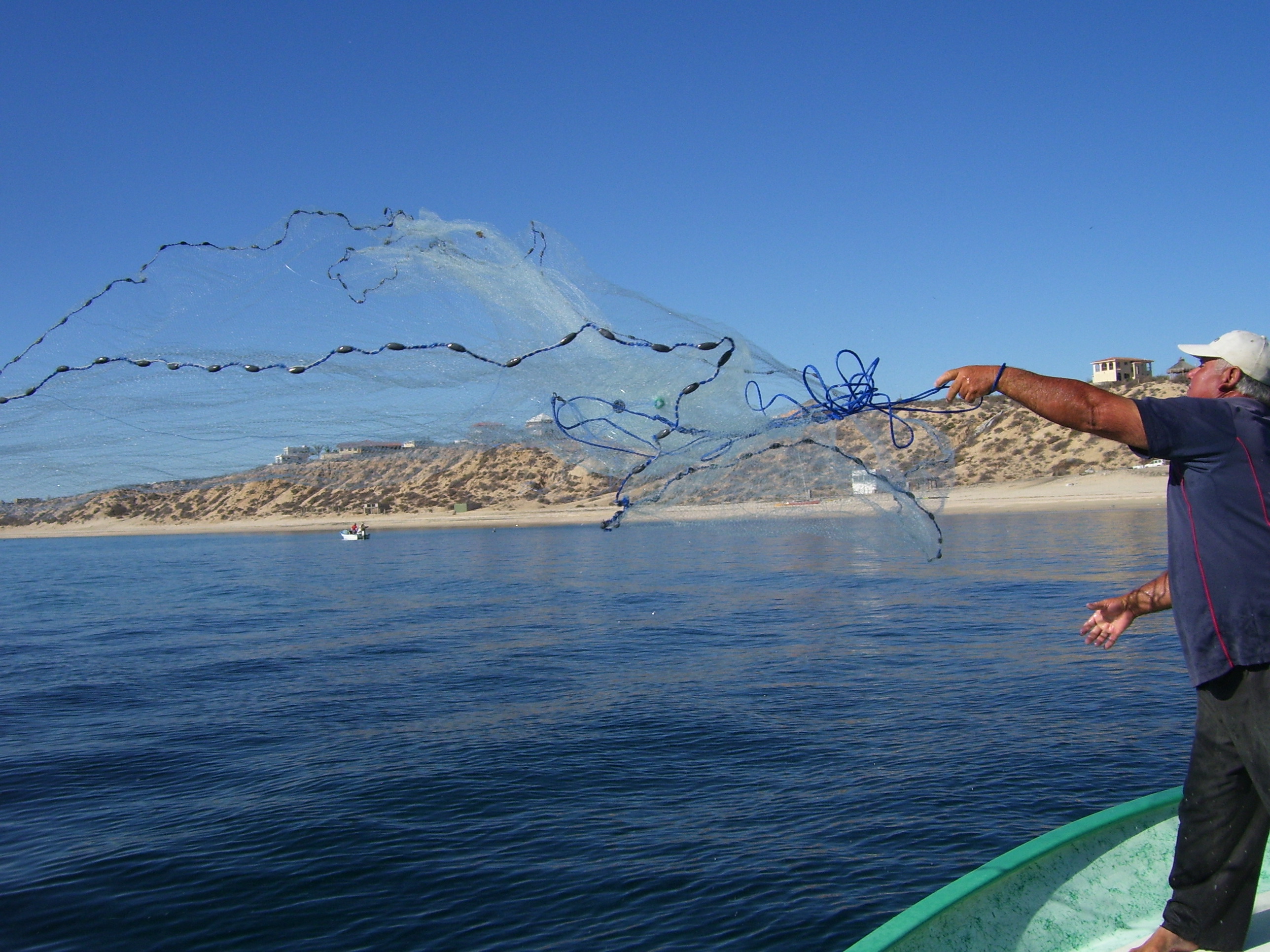
The panga motored as quietly as possible into the little rocky cove. Several other pangas were already up against the craggy shoreline of the island. In the bows, a skipper or assistant could be seen with cast nets draped over shoulders and squinting sunglassed-covered eyes into the shallow waters.


The captain of this particular launch cut the motor and drifted toward a little warren of rocks. He jumped lightly forward to the prow.  Readied his net and with a circular fling; expertly tossed the cast net into the air where it hung; pancaked open; and fell flatly into the waters.

20110621_72


As the captains pulled the drawstring of the net enclosing the snare and drew it towards the waiting panga and anxious anglers, something appeared wrong. Usually, the “pull” of the net would be evidenced by some bit of strain and effort by the captain.


But, he pulled the net effortlessly up.


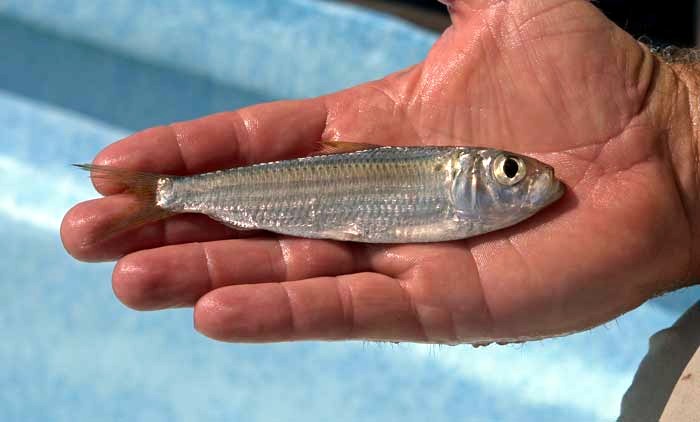
Normally, with a grunt, the skipper would heave the bulging net up-and-over above the live bait well and with another pull a “zillion trillion” thrashing, splashing, struggling dark-backed sardines (‘dines) would tumble en masse into the waiting waters of the bait tank.

Two or three quick tosses more and the panga would be loaded. Then it would be a sprint to the fishing grounds heavily bulging with hook-sized bait and high on anticipation for another day of bent-rods and bloody decks.


But, this time there was no grunt-and-heave. The net came up virtually empty. Four mini-sardines…FOUR…were released into the bait tank. A dozen more net tosses and 90 minutes of searching and scouring produced only a handful of baits for their efforts.


Each fruitloss toss-and-retrieve caused shoulders to sag.


Nothing like starting the fishing day where elation and anticipation backslids into deflation. No bait?


The other pangas did not do much better. They would end up making the best of the day with sliced bonito; a few live ballyhoo; some scrounged mackerel and some chopped-up squid. Just not quite the same as being able to chum handfuls of sardines into the water to get the fish going.

bait


It’s been happening with increased frequency in Baja waters. Especially this year as a combination of variables seems to be combining for a “perfect storm” in terms of bait.


Part of it can’t be helped. It’s nature. Nature does what nature does and it’s like trying to stop sand from getting in your hot dog at the beach. It’s gonna happen.


This appears to be an El Nino season. But, moreso, the scientists are saying maybe it’s a “super” El Nino season with the warmest water and air temperatures in the history of recording el Nino conditions.


The cycle pops up every few years and, in a nutshell, means warmer ocean conditions along the Eastern Pacific coast along the western side of the U.S., Canada and Mexico. Warmer waters mean more storms; higher incidence of hurricane.   It’s the reason folks in Washington encounter stray dorado and tuna that lose their way in the warm currents and head far more north than their usual comfort zone.


But, these warmer waters mean the colder waters from the deep trenches don’t come to the surface. The cooler waters bring the nutrients. The nutrients bring the bait fish. The bait fish provide food for the sportfish. Are you following this? One big circle of nature. And tag…this is us this year. Warm waters = less bait.


The other side of the equation is perhaps more ominous. Some would say even a bit sinister. Because we’re doing it to ourselves. We can’t do much about El Nino.   But, us humans aren’t doing much to help ourselves either.


It’s the fish pens. You’ve heard of them. The controversial but apparently successful capture of juvenile tuna and yellowtail in huge nets then raising them in a net-like corral. Grow ‘em big and sell ‘em off. It works. It’s great. It’s economical.


Supply and demand. The planet craves seafood. Heck, it needs food period! The fish pens help fill the need. If it didn’t work, they wouldn’t be using it.


Here’s the rub. Everyone gets the impression that fishing farms are “green.” And there’s a lot of controversy about that. I guess it depends who you’re reading.


But, I’ve read that it takes anywhere from 3-10 pounds of “bait food” to grow a tuna one pound bigger. . So, let’s see…to grow a 50 pound tuna? Do the simple math. Hmmmm…that’s a lot of food.   It has to come from somewhere.


Arguably, wherever they have set up these “pens” they have depleted the bait stocks.   Pretty much raided everything in the waters that could be used or ground up into fish meal. It reminds me of those days when the cattle or sheep came to an area and ate all the grass that held the soil. Resulting in dust bowls. Are we headed for a “toilet bowl?” Are we destined to be live-sized versions of the Tidy Bowl man adrift in blue water?


Here, in La Paz, the head of La Paz Tourism, Sr. Pedro Aguilar told me that the fishfarmers are prohibited from taking bait in the bay and around our two islands. However, our local sportfishing captains tell me that the bait guys from the pens are out at night scouring those very areas capturing all the bait they can get.


The other side is that all the “waste” product has to go somewhere and it’s going right into the waters and creating a whole separate ecological issue. Tons of “fish poo” isn’t a good thing, especially in these shallow areas where the pens are located and ocean currents aren’t there to sluice out the after-product.


If you’ve ever even seen what your kid’s goldfish can do to a home fish bowl after a few days of not changing the water, imagine what a net load of fat tuna can squeeze out.


It’s not just here. It seems to be happening all over. And again, we have the challenge of balancing the need for food; the ecosystem; the sportsmen…and then, of course the corporate interests.


So…a double whammy curse on us. And I don’t know what to do about it. Awfully discouraging.

That’s our story!

Jonathan signature


_______________

Jonathan Roldan has been writing the Baja Column in Western Outdoor News since 2004.  Along with his wife and fishing buddy, Jilly, they own and run the Tailhunter International Fishing Fleet in La Paz, Baja, Mexico  www.tailhunter-international.com.  They also run their Tailhunter Restaurant Bar on the famous La Paz malecon waterfront.  If you’d like to contact him directly, his e-mail is riplipboy@tailhunter-international.com  or drop by the restaurant to say hi!

______________

Jonathan Roldan’s

Tailhunter International


TAILHUNTER FISHING FLEET #1 Rated on Trip Advisor

TAILHUNTER RESTAURANT BAR #1 Rated in La Paz on Trip Advisor


Now follow us on FACEBOOK TOO


Website: www.tailhunter-international.com

U.S. Office: 8030 La Mesa, Suite #178, La Mesa CA  91942

Mexico Office: 755 Paseo Obregon, La Paz, Baja Sur, Mexico

Phones:

from USA : 626-638-3383

from Mexico: 044-612-14-17863

.

Tailhunter Weekly Fishing Report:

http://fishreport.jonathanroldan.com/

Tailhunter YouTube Videos:

http://www.youtube.com/user/pangapirate

“When your life finally flashes before your eyes, you will have only moments to regret all the things in life you never had the courage to try.”
 

Read Full Post »

“FIRST TIMER CHECKLIST”

couple on beach


FIRST TIMER CHECKLIST FOR BAJA MEXICO

Originally Published the in Western Outdoor News the Week of May 14, 2014

Despite the media blitz about violence…despite past warnings of swine flu…and a downturned economy, Mexico has one of the fastest growing tourism economies in the world right now. In fact, it’s breaking records with something like 24 million visitors last year.


World-wide, folks are simply realizing that Mexico is a great value for a vacation destination whether they are coming from Europe, Asia or even just coming across the border whether flying from Portland or driving from Phoenix or San Diego.


For many of us, who have been visiting or actually live in Mexico, we’ve come to just take it for granted on so many levels. Especially, for fishermen in the southwestern states of the U.S. going to Mexico is about as routine as taking a camping trip to Yosemite or a run to Vegas.


But, from the perspective of someone who lives and runs a sportfishing business here in Mexico that specifically caters to tourists and sportsmen and women, we’re seeing an increased number of first-timers! Great for us, but so many questions show a commonality of interest.


You might even think that many folks who read this publication must surely know about fishing in Mexico, but there’s many who have never been south and are thinking about it.


So, a few things to think about:


First, yes, you MUST have a passport. I get this question all the time. The old days of simply having your drivers license and a copy of your birth certificate won’t work these days, especially after 9-11.   For sure, you want to be sure they let you back INTO the United States after your vacation!


They are relatively easy to obtain and you can get the process started online by just hitting your search engine for U.S. passports. Or check this: http://travel.state.gov/content/passports/english/passports/information/costs.html


The thing is, just don’t wait until the last minute! Especially, as vacations times like summer…Thanksgiving…Christmas… get near. It only takes a few weeks, but slows down during high seasons and you don’t want to be “sweating bullets” waiting for the mailman as your own vacation gets closer.


Next, do some research. It can be confusing. There’s almost TOO MUCH info out there, but better to have too much than too little.


Do some research about the destination itself. Just because all of your neighbors have been there, it might not be your cup of tea.   If you’re not into jet-skis and paragliding and crowds then maybe you want to check out a slower-paced place to put your toes-in-the-sand.


Or, if your wife is really into gourmet dining and shopping, then find a place that has those things. If you’re trying to use some of your time-share weeks, not all places have time shares, nor do all airlines fly every day of the week to all destinations.


Next…


Another advisory…don’t believe everything you read online.   Like anything else, online websites are heavy into self-promotion. Good or bad…that’s just the way it is.


For example, if a place says it’s “near the beach” that can be two blocks; a 10 minute walk; or one mile. What exactly does “near the beach” mean?


You might also ask or find out what’s nearby to wherever you’re staying. It might look great in the online photos, but of course, they might not tell you that there’s a raucous nightclub next door that goes until 4 a.m. every morning.   They might not tell you that there’s a fish processing plant upwind that provides some wonderful fragrances in the afternoon breeze.


Or, if it says, “near the beach” or “on the beach” is that a beach you can swim at? Or is that a beach that they have “no swimming signs/ no fishing signs” posted?


If you’re going to be fishing is there a freezer? If you plan to bikeride, do they have rentals? If you’re going to be windsurfing, is there a place to store your gear or will you have to carry your rig on a burro down to the beach?


If you can’t walk stairs (Mexico is a land of stairs and very few elevators) find out if there’s an elevator or do they have first-floor rooms.


Or it’s going to be too windy. Or too hot. Of it’s too far from town.   The more you do ahead of time, the less you’ll have to worry about later when you’re supposed to be on vacation.


Figure out what you want to do. If you plan to fish, then go to a place where they have fishing. And find out specifically, if it’s the type of fishing you want to do at the time you want to go there.


I once got asked, “When is the salmon run in La Paz?” No lie.


I hope you’re not planning to fish for salmon in Mexico, but seriously, it makes no sense to book a place in February expecting to catch marlin. Then, you find out there’s no marlin until July!


Another time, I had a family all set asking to take surfing lessons…in Loreto…which is about 350 miles from the nearest shore break.   They were sure disappointed when I had to give them a small lesson in geography.


A little research goes a long way. All places are not created equally and Mexico runs a wonderful gamut of places that are very touristy to places where you’ll be the only tourist in town! Lots of folks are finding exactly what they’re looking for south of the border.


That’s my story!

Jonathan signature


_______________

Jonathan Roldan has been writing the Baja Column in Western Outdoor News since 2004.  Along with his wife and fishing buddy, Jilly, they own and run the Tailhunter International Fishing Fleet in La Paz, Baja, Mexico  www.tailhunter-international.com.  They also run their Tailhunter Restaurant Bar on the famous La Paz malecon waterfront.  If you’d like to contact him directly, his e-mail is riplipboy@tailhunter-international.com  or drop by the restaurant to say hi!

______________

Jonathan Roldan’s

Tailhunter International


TAILHUNTER FISHING FLEET #1 Rated on Trip Advisor

TAILHUNTER RESTAURANT BAR #1 Rated in La Paz on Trip Advisor


Now follow us on FACEBOOK TOO


Website: www.tailhunter-international.com

U.S. Office: 8030 La Mesa, Suite #178, La Mesa CA  91942

Mexico Office: 755 Paseo Obregon, La Paz, Baja Sur, Mexico

Phones:

from USA : 626-638-3383

from Mexico: 044-612-14-17863

.

Tailhunter Weekly Fishing Report:

http://fishreport.jonathanroldan.com/

Tailhunter YouTube Videos:

http://www.youtube.com/user/pangapirate

“When your life finally flashes before your eyes, you will have only moments to regret all the things in life you never had the courage to try.”


Read Full Post »

“LA PAZ EVENT TARGETS IGFA RECORDS AND ROOSTER RELEASES!”

Burgess 1 rooster 6-14 PMT

Fish like this huge roosterfish caught and released by Ron Burgess at Las Arenas last year have made the Las Arenas/ La Paz area famous and known as the “roosterfish capital of the world.” Last year in 4 days, Ron and his amigos caught and released 29 roosters between 40 and 90 pounds!

WP_20140327_14_48_39_Pro

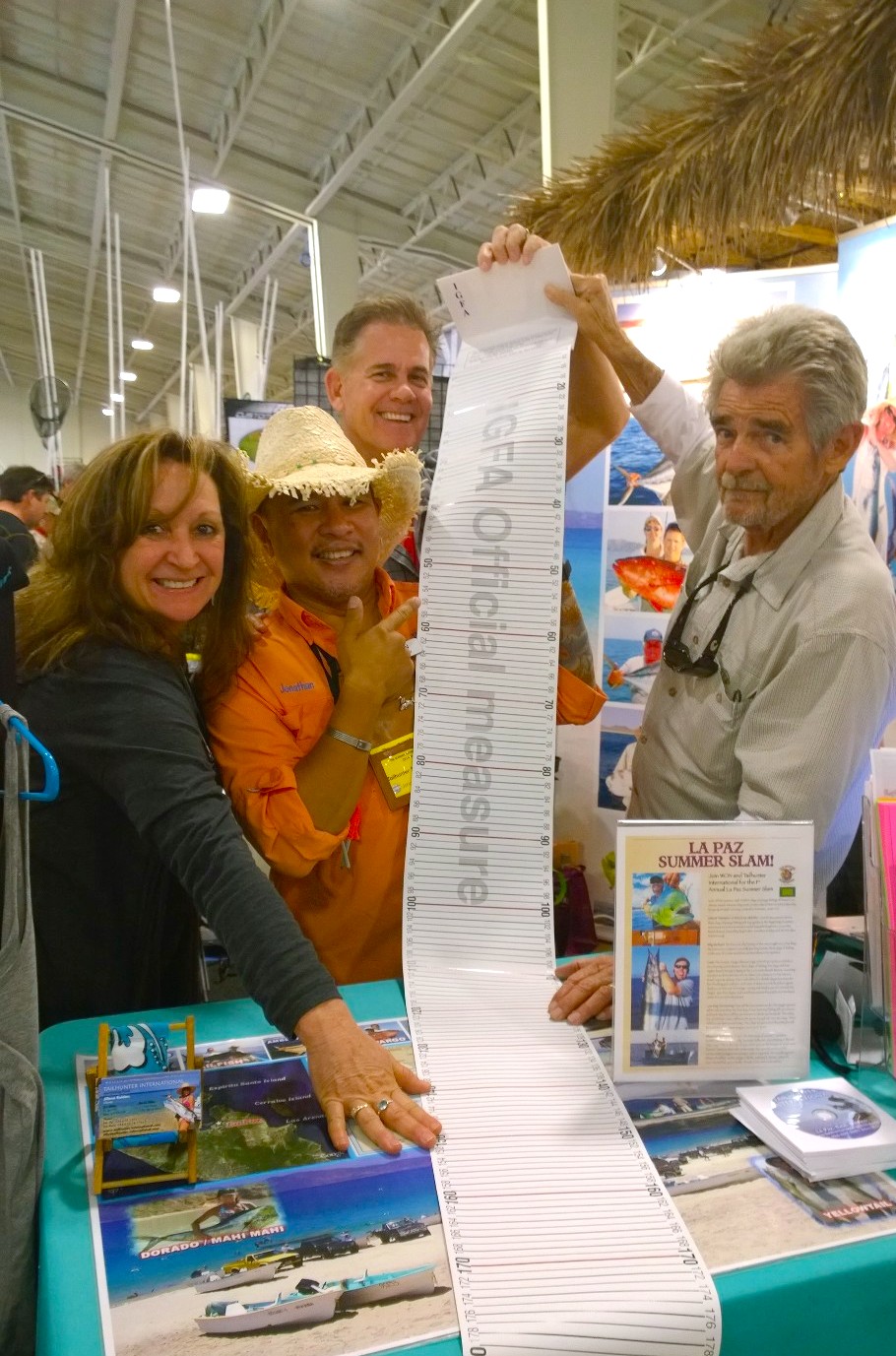
A sample of the new IGFA “release measuring devices” which will allow anglers to officially measure and release fish and still be eligible for world records! This new “category” for records is a big boost for catch-and-release of species! Shown here with Jilly and Jonathan Roldan, Pat McDonell, editor for Western Outdoor News, and Gary Graham (holding the tape!) who is not only a multi-IGFA record holder, but also an IGFA rep plus famous author and journalist. All will be at the event!


LA PAZ EVENT TARGETS IGFA RECORDS AND ROOSTER RELEASES!

Originally Published in Western Outdoor News the Week of April 29, 2014


In what appears to be a first, Western Outdoor News and Tailhunter International Sportfishing in La Paz are having the first certified tag-and-release roosterfish event this summer


The “Summer Panga Slam” will be held June 17-21 in La Paz. It promises to be quite an event.


Originally slated as a 3-day light tackle panga tournament among friends, the event has grown tremendously. It has sprouted some “legs” since it’s inception several months ago.


For one, Tailhunter International in La Paz now has a certified I.G.F.A. scale on hand and is a registered IGFA center. This means, Tailhunters and it’s clients can legitimately target world-record fish.


This is significant given that they fish the famous waters of La Paz and Las Arenas as well as the northern East Cape where arguably more world records have been set over the decades than anywhere else. Many consider it to be one of the top light-tackle fisheries in the world.


Additionally, the area has been known as the “roosterfish capital of the world” famous for it’s slugger-sized rooster populations. In fact, in 1987, the world record roosterfish was caught on these very beaches. It weighed in ta 114-pounds. Larger ones have been caught and released.


Last year, the area had a banner roosterfish season where roosters averaged 40-90 pounds and a number of fish over 100-pounds were tallied and released including one estimated over 150-pounds!


All of this is important to the “Panga Slam” event for two reasons:


  1. The IGFA now has “release” categories that were previously not available. That means you can now become a world-record holder and not have to kill your fish. Last year, a world-record release rooster was produced in La Paz waters! There are categories for men, women and children! However, you MUST have a special IGFA measuring device of which this event will have several on hand!


  1. Tailhunter International is part of the newly formed Roosterfish Foundation dedicated to preserving the exotic rooster and monitoring the health of the species. To that end, tag-and-release devices are now available so that released fish can now be tagged before we let them go.


So, what all this means is that the “Summer Panga Slam” now gives participating anglers not only a shot a getting a record fish that can actually be weighed. But, it’s also an opportunity to release a world-record fish and get into the record books as well as help to proliferate the roosterfish species for everyone!


It’s going to be a lot of fun and, as mentioned, the event has grown. WON editor Pat McDonell himself will be down to help host the event. WON columnist, journalist and famous author Gary Graham will be on hand as well to record the event. Gary is himself also a multi-record IGFA record holder and the IGFA representative.


On board as well are a growing number of sponsor with lots of goodies for the participants.


The event is limited to 40 anglers in 20 two-person panga teams. There are still a few spots left! Here’s the rest of the details:


  • Sponsors aboard now include:  Okuma Reels, Costa Sunglasses, Yo-Zuri, Sufix, Turners Outdoors and Lazer Trokar Hooks!
  • Three full days of panga fishing at Las Arenas  (gear, breakfast and lunches included) 
  • 4 nights La Concha Beach Resort in ocean-facing room
  • Welcome dinner and Awards Dinner
  • Taco feed night and live music at famous Tailhunter Restaurant
  • One day open fun fishing and then two days jackpot tournament (cash entry $100 in La Paz per team) 
  • Event t-shirts
  • Cabo San Lucas Airport Shuttles 

Cost is $1350 per person. Space is limited and going fast. For more information, you can contact Western Outdoor News and talk with Mike Flynn at FLYNN@wonews.com or call him at 949-366-0030.


We’re looking forward to having you join us!

That’s our story

Jonathan signature

Jonathan

_______________


Jonathan Roldan has been writing the Baja Column in Western Outdoor News since 2004.  Along with his wife and fishing buddy, Jilly, they own and run the Tailhunter International Fishing Fleet in La Paz, Baja, Mexico  www.tailhunter-international.com.  They also run their Tailhunter Restaurant Bar on the famous La Paz malecon waterfront.  If you’d like to contact him directly, his e-mail is riplipboy@tailhunter-international.com  or drop by the restaurant to say hi!

______________

Jonathan Roldan’s

Tailhunter International


TAILHUNTER FISHING FLEET #1 Rated on Trip Advisor

TAILHUNTER RESTAURANT BAR #1 Rated in La Paz on Trip Advisor


Now follow us on FACEBOOK TOO


Website: www.tailhunter-international.com

U.S. Office: 8030 La Mesa, Suite #178, La Mesa CA  91942

Mexico Office: 755 Paseo Obregon, La Paz, Baja Sur, Mexico

Phones:

from USA : 626-638-3383

from Mexico: 044-612-14-17863

.

Tailhunter Weekly Fishing Report:

http://fishreport.jonathanroldan.com/

Tailhunter YouTube Videos:

http://www.youtube.com/user/pangapirate

“When your life finally flashes before your eyes, you will have only moments to regret all the things in life you never had the courage to try.”


Read Full Post »

ENSO-states-viz_0

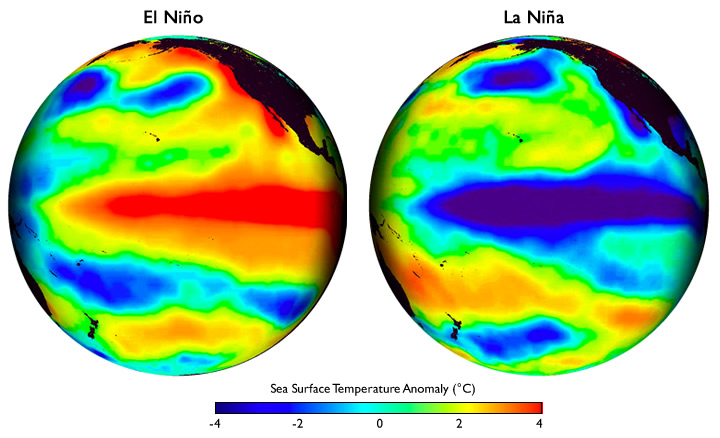
Equatorial tropical waters getting warmer and might be the vanguard of a super el nino on the way.


SUPER BABY ON THE WAY?

Originally published the Week of April 15, 2014 in Western Outdoor News

I waited for awhile to write something about this. I’m no expert and even the experts had differing opinions. But, the more I read and the more I see reported from fishing around here and in other areas of Mexico, I guess it better be addressed.


Plus, everyone is asking me as well.


Things are looking like we might have an “El Nino” on the way. In fact, it might be a Baby-Huey-sized “Super Nino,” if things continue to shape up.


Everyone talks about it but few understand what it is and what really happens. Mostly, absent all the scientific-speak, most of us just want to know how that’s going to affect the fishing, right?


Originally, it was recognized by fishermen in South America when anomalies in the water temperatures started showing up around Christmas time. Hence, “El Nino” means the “little boy” or Christ child.


According to the folks at the National Oceanic and Atmospheric Association (NOAA), in a normal year (whatever that is) trade winds blow westerly across the Pacific.   That means waters around Indonesia are warmer and as much as a half-meter higher than say, Ecuador.


In an El Nino year, it’s just the opposite.


For those of us geographically challenged, that means the Eastern Pacific, including the western U.S. and Mexico, get much warmer water temperatures. Among other things.


Whether that’s good or bad depends on your perspective.


On the bad side, it dries out places like Australia and can lead to heavy brushfires. On our side of the Pacific, rain follows the warmth. Accordingly, the likelihood liklihood of hurricanes and destructive rainstorms increases as do heatwaves in the same areas.


For those in drought-stricken western U.S. states, I guess you have to watch what you ask for.


But, what does this mean for fishing, besides maybe some having to break out the rain ponchos?


In real terms, the warmer water usually means the presence of warm water fish, much to the thrill of anglers in the western U.S. In past years, this meant “exotic” fish like marlin and dorado showing up occasionally in Seattle catches.


It means that California anglers, especially those in Southern California might not have to venture to Mexico to catch these same species. Weekend warriors on half-day boats could be taking home dorado fillets!


For us in Baja, we’re still wondering.


There’s no doubt that we’ve been experiencing much warmer than normal waters.   Since last season here in La Paz, water temperatures never did drop that much near the end of the season. To wit, we never really had “winter fishing” per se.


In fact, as in many places around Baja, the warm water species, like dorado and tuna stuck around or showed up much earlier than normal.   Here in La Paz, we encountered water surface temperatures into the 80’s several months earlier than normal.


Great for swimming. But, in terms of how this will affect the fishing season, vamos a ver…we’ll have to see.


Here’s the rub with el Nino.


With the warmer waters, the nutrient-rich cooler waters that come up from the deep-water upwellings don’t show up either Those nutrients support the bait stocks. Bait dies or moves off. That doesn’t bode well.


One other issue.


The science folks speculate that this might be the “big baby”…the super nino! The last big El Ninos was the one that bridged the 1982-1983 and the 1997-98 seasons.   With the latter being the strongest recorded.


This April, water temperature increases along the equatorial Pacific are already even higher than those previous El Nino years. So, this could be a record-buster if it happens.


So, brace yourself one way or the other.   Nothing is completely definitive at the moment, but all signs are pointing that way. Me? I’m still going fishing! It still beats working.

That’s our story!

Jonathan signature

Jonathan


_______________

Jonathan Roldan has been writing the Baja Column in Western Outdoor News since 2004.  Along with his wife and fishing buddy, Jilly, they own and run the Tailhunter International Fishing Fleet in La Paz, Baja, Mexico  www.tailhunter-international.com.  They also run their Tailhunter Restaurant Bar on the famous La Paz malecon waterfront.  If you’d like to contact him directly, his e-mail is riplipboy@tailhunter-international.com  or drop by the restaurant to say hi!

______________

Jonathan Roldan’s

Tailhunter International


TAILHUNTER FISHING FLEET #1 Rated on Trip Advisor

TAILHUNTER RESTAURANT BAR #1 Rated in La Paz on Trip Advisor


Now follow us on FACEBOOK TOO


Website: www.tailhunter-international.com

U.S. Office: 8030 La Mesa, Suite #178, La Mesa CA  91942

Mexico Office: 755 Paseo Obregon, La Paz, Baja Sur, Mexico

Phones:

from USA : 626-638-3383

from Mexico: 044-612-14-17863

.

Tailhunter Weekly Fishing Report:

http://fishreport.jonathanroldan.com/

Tailhunter YouTube Videos:

http://www.youtube.com/user/pangapirate

“When your life finally flashes before your eyes, you will have only moments to regret all the things in life you never had the courage to try.”
 

Read Full Post »

“Just Ask”

Screen-Shot-2013-10-14-at-7.50.13-PM


“JUST ASK”

Originally Published the Week of April 3, 2014 in Western Outdoor News

The pangas had all returned to the beach with happy fishermen.  Fish had been cleaned and were either getting icy in the hotel freezers or were in the kitchens getting prepped for the grill and tonite’s dinner.


Most of the guys had headed to their rooms for siestas and shower.


Others, had dragged themselves directly to the pool and the margarita bar foregoing the showers…and the siestas. But, I knew that for most, one drink and they’d be passed out contentedly in a lounge chair…dreaming of the fish they caught and the ones that got away.


I was already in the office, putting away gear and breaking down the days’ events.   I had to get ready for another group of anglers coming in that evening on the next flight.


I brisk knock on the office door turned out to be one of the dad’s who had been fishing that day.


“Jonathan, I can’t find my son, Joey.  He helped me carry gear back to the room and I went in to take a quick shower before dinner. I came out and can’t find him anywhere. I hate to be a bother. But, I looked everywhere.”


I told him not to worry. Ten-year-olds don’t usually stray too far and many of the other anglers knew or were familiar with the youngster.


We checked the restaurant and the pool.  We hit the Jacuzzi. We walked to the kid’s playground. We asked a number of other anglers. No one had seen Joey.


“Let’s walk back to the beach,” I suggested to dad.  And we took a short little hike to the little cove next to the hotel where our pangas drop off the anglers.

Sure enough, there was Joey sitting in the panga with our Captain Lorenzo.  We could see both of them had their heads down and were concentrating on something.


As we got closer, Dad said, “Joey, we’ve been looking all over for you.  What are you doing here with Lorenzo?


Both the captains and Joey looked up with big smiles.  Joey held up a hook and some line!


“I came walking back to the beach and found my friend, Lorenzo.  And I asked him to show me how to tie a fishing knot! Look dad!”


He held up the hook and proudly showed off his knot.


“I did this one all by myself!”


“Wow!,” said dad with raised eyebrows.  “Even I don’t know how to tie a fishing knot.”


Captain Lorenzo looked just as pleased.


In broken “Span-glish” he explained that Joey had just walked up and asked how to tie a knot. It reminded him of his own boys and how he had shown them many years ago how to tie a fishing knot.


“They are grown men now, but I remember those good days,” he said wistfully.


“You are lucky to fish with your father,” he said to young Joey.


“Captain Lorenzo, will you show me how to tie a knot also?” asked dad.


Claro que si…of course, mi amigo.  Es un placer…it is a pleasure!” replied the Captain.  “Here take a hook and some line…”


And with that, I backed away smiling down the beach.  The lost had been found.  And perhaps some other things had been found along the way.


An hour later, I went back down to the beach and half-a-dozen guys were surrounding the panga, all intently learning to tie knots.  Captain Lorenzo and Joey were “holding court.”


One thing I learned long ago was one of the fastest way to get a “group session” going was to tie a knot in front of a bunch of fishermen.


Whether it’s a “San Diego jam,” a “Palomar”, an “Albright special”, a “Cat’s Paw”…whatever-you-want-to-name-it…tie a knot.


And someone will say “Hey, can you show me that again?”  Or, “But, I tie it differently, like this…”


And there you go! Instant…constructive debate discussion and discovery!


It also occurred to me that one of the least utilized sources of fishing education are the Mexican captains and deckhands who take us all out fishing.


These guys fish more days in a year than most sportfishermen and women will fish in our lives. Most of them started as commercial fishermen and have been doing nothing else their entire lives.


You get pretty good when catching a fish puts food on the table and buys clothes for the family. Often, without all the fancy technology available to the rest of us, they have to be better than the fish as well as their competitor captains and crews.  Proudly so.


I talked to Captain Lorenzo a few days after the knot-tying beach party.


“Everyday, there are new gringo clients. And they all want to catch fish. They come.  They go.”


“To many, I am just the Mexican captain and the guide.  And that is fine. We have a good time and I have been doing this more than 40 years and I am proud of what I do.”


“But, sometimes the clients get angry because they want to do everything.  That is fine too.  But, then I watch them and they have many problems.   And they get angry and do not catch fish.  Angry clients are not happy.”


“It is OK if they know how to fish, but many make mistakes.  And they do not want help.”


“I wish they would ask. I like it.  I am happy to teach. Then everyone has a good time.”


“No one ever asks.” He said with a shrug.  “Except one little boy.”


That’s our story!

Jonathan


_______________

Jonathan Roldan has been writing the Baja Column in Western Outdoor News since 2004.  Along with his wife and fishing buddy, Jilly, they own and run the Tailhunter International Fishing Fleet in La Paz, Baja, Mexico  www.tailhunter-international.com.  They also run their Tailhunter Restaurant Bar on the famous La Paz malecon waterfront.  If you’d like to contact him directly, his e-mail is riplipboy@tailhunter-international.com  or drop by the restaurant to say hi!

______________

Jonathan Roldan’s

Tailhunter International


TAILHUNTER FISHING FLEET #1 Rated on Trip Advisor

TAILHUNTER RESTAURANT BAR #1 Rated in La Paz on Trip Advisor


Now follow us on FACEBOOK TOO


Website: www.tailhunter-international.com

U.S. Office: 8030 La Mesa, Suite #178, La Mesa CA  91942

Mexico Office: 755 Paseo Obregon, La Paz, Baja Sur, Mexico

Phones:

from USA : 626-638-3383

from Mexico: 044-612-14-17863

.

Tailhunter Weekly Fishing Report:

http://fishreport.jonathanroldan.com/

Tailhunter YouTube Videos:

http://www.youtube.com/user/pangapirate

“When your life finally flashes before your eyes, you will have only moments to regret all the things in life you never had the courage to try.”
 

Read Full Post »

“But Will They Eat a Yo-Yo Jig?

Seriola_lalandi,I_RR1005

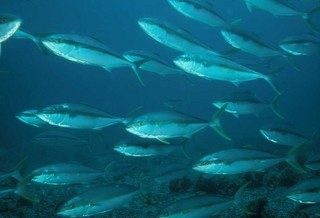
YELLOWTAIL FARMING?

BUT WILL THEY EAT A YO-YO JIG?

Originally Published the Week of March 20, 2014 in Western Outdoor News

While at the Long Beach Fred Hall Fishing Show a few weeks ago, I was directed to an interesting article by a friend who is a commercial fisherman and sportfisherman.  The title kinda piqued my interest:

“NEW FARMED YELLOWTAIL HITS U.S. MARKET”

According to the article published in Seafood Source.com on March 7, 2014 (http://www.seafoodsource.com/en/news/aquaculture/25678-new-farmed-yellowtail-hits-us-market),  these forkies are being formed right in Baja out’ve Bahia Magdalena.  Yes, real yellowtail ranches!

Here’s the article:

“California-based seafood distributor Catalina Offshore Products, and Baja Seas have partnered to bring a new farmed yellowtail to the U.S. market.

Baja Seas will officially introduce its Baja farmed yellowtail, also known as Baja hiramasa, at Seafood Expo North America in Boston on 16 to 18 March. Catalina Offshore Products has been test marketing the fish and it has already appeared on menus in from San Diego and Chicago.

The original stock was bred for Baja Seas from fingerlings produced at Hubbs-SeaWorld Research Institute. The fingerlings were transferred to Baja Seas’ grow out facility on Bahia Magdalena, a bay in southern Baja California. Future seed will be sourced from Baja Seas’ own hatchery, Ocean Baja Labs.

Baja Seas uses Recirculating Aquaculture Systems (RAS) to create a small water footprint by diminishing pollution and disease; fish are fed sustainable protein- and omega-rich meal derived from sardines in a low Fish In-Fish Out (FIFO) ratio; the fish are raised without antibiotics or paraciticides; and semi-automated feeders and feed cameras prevent overfeeding.

“With consumers demanding more seafood and pressures on wild harvests increasing, we believe aquaculture is the one true sustainable model,” said Luis Astiazarán, Baja Seas’ director general. “Because of their growth rate when compared to other species, marine finfish are the future of aquaculture.”

“The debut of this Baja hiramasa is very exciting for us as it marks a major milestone for Mexico and for the U.S.,” said Dave Rudie, Catalina Offshore CEO. “It is not only a great, local alternative to Japanese or Hawaiian yellowtail, its presence in the domestic market will increase people’s access to a highly valued food source while decreasing pressure on our wild populations.”

It sounds like a good deal.  I like eating yellowtail.  I like catching yellowtail.  I don’t know about the taste, but I have a feeling that the wild fresh stuff is gonna taste a lot better.   I know wild salmon blows away farmed salmon.

But, I’m pickier than most because I grew up on Pacific coast fish.  But, most folks I know wouldn’t know the difference.

I doubt that 90% of those ordering yellowtail in say, Red Lobster in the mid-west, would know the difference between wild or farmed yellowtail either.  It’s probably going to taste just dandy to them.

Just like my friends from Montana and Idaho and Wyoming who are hunters.  They can tell the difference between wild elk and ranch-raised elk meat.  To me, it’s just good eating!

However, if there’s a viable way to take the pressure off the wild stocks so us sportsfishers can still throw an iron or dropper loop a bait yet help meet the demand of the market, I’m all for it.  Win-win!

I’m especially interested in the aspect of this “farmed” yellowtail (no pun intended) if they’re raised with a small ecological footprint.  Not using additives and anti-biotics in their food means the “fish poo” (excuse my Spanish), isn’t polluting the water.

That has been an issue in other aquaculture situations.  Especially, since fish eat a tremendous amount of food to grow.  What goes in…has to come out!

Additionally, if they’ve found a new way to feed these fish and NOT deplete the local bait situation, that’s a major plus for anglers.  No bait…no fish!  No fish…no fishing!

I talked to an amigo of mine, Scott McKenzie, Director of Quality Assurance at the huge American Seafoods in Seattle WA.  Scott is also an avid Baja angler.

Here’s his take:

“The vast majority of Yellowtail consumed globally is farmed. Most of the farmed yellowtail comes out of Japan, with some small production in Australia and New Zealand. From what I’ve heard it is typically a 5:1  feed fish, meaning 5 lbs. of feed to return 1lb of  fish weight. Not the most ideal species to farm with regard to feed conversion rates as those are typically down around 3:1, some are even down close to 1:1 these days.

One of the unsavory part of a lot of these farmed fish operations is they are often using low trophic species as the feed (sardines, mackerel, menhaden, anchoveta,…). The feed coming out of global fisheries that are nothing more than rendering fisheries ( primary products being fish oil, meal) rather than a by-product of a food fishery. In a nut shell, the ocean gets stripped of bait fish to be converted into feed for a farmed fish somewhere around the world.

The amount of antibiotics and crap that can go into them I will leave for another day…

Sad thing, most consumers get all warm and fuzzy thinking they are making green decisions when they opt for a farmed fish to eat- in so many ways, it is more environmentally detrimental than the wild caught equal.”

The world is growing.  There’s more people to feed.  Yet,  we want a balance with our recreational activities.  Everyone has an interest and a stake in things.  It will be interesting to see how it plays out.

I wonder if farm-raised yellowtail can be released into the wild?  I know they do it with salmon!

And, I for one, wouldn’t mind giving it a whirl on my dinner plate too!

That’s my story!

Jonathan

Jonathan signature

_______________

Jonathan Roldan has been writing the Baja Column in Western Outdoor News since 2004.  Along with his wife and fishing buddy, Jilly, they own and run the Tailhunter International Fishing Fleet in La Paz, Baja, Mexico  www.tailhunter-international.com.  They also run their Tailhunter Restaurant Bar on the famous La Paz malecon waterfront.  If you’d like to contact him directly, his e-mail is riplipboy@tailhunter-international.com  or drop by the restaurant to say hi!

______________

Jonathan Roldan’s

Tailhunter International


TAILHUNTER FISHING FLEET #1 Rated on Trip Advisor

TAILHUNTER RESTAURANT BAR #1 Rated in La Paz on Trip Advisor


Now follow us on FACEBOOK TOO


Website: www.tailhunter-international.com

U.S. Office: 8030 La Mesa, Suite #178, La Mesa CA  91942

Mexico Office: 755 Paseo Obregon, La Paz, Baja Sur, Mexico

Phones:

from USA : 626-638-3383

from Mexico: 044-612-14-17863

.

Tailhunter Weekly Fishing Report:

http://fishreport.jonathanroldan.com/

Tailhunter YouTube Videos:

http://www.youtube.com/user/pangapirate

“When your life finally flashes before your eyes, you will have only moments to regret all the things in life you never had the courage to try.”

Read Full Post »

“IN THE PRESENCE OF GIANTS”

Deb_&_whale

A moment of clarity ?

IN THE PRESENCE OF GIANTS

Originally Published in Western Outdoor Publications the Week of March 5, 2014

“Look deep into nature and you will understand everything better.”

Albert Einstein

Oooo!  Wow!  Oh my!  Lookit!  It’s coming right to us!

Squeels.  More ooo’s and ahhhs!

But, then everyone jostled to the starboard side of the panga. Whoa!  For a moment there was an air of apprehension as everyone hung on.

But Mexican pangas are built for stability and although there was a bit of a list, attention quickly focused on what was making it’s way towards us.

For most of us, we grow knowing we’re at the top of the heap.  We are the  apex of intelligence, power and the food chain.  Master of all we see.  Conquerors of time, space and dimension.

That is, until we’re suddenly faced with the fact that there are creatures larger and stronger than us.

That is, until those creatures are not behind some cage in the zoo giving us a false sense of security.

That is, until one of those creatures is right next to us and literally smack in our laps!

Looking at us.  And we touch it. And in some cases, it tries to touch us.  And maybe communicate with us?

Something like a whale.  Even a 15-foot baby…and it’s uh…its 40 foot mom!

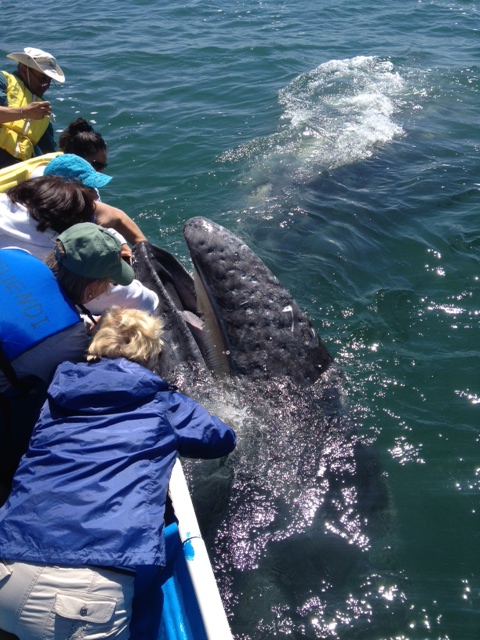
And both were rising and approaching like two big grey submarines towards our awestruck panga full wide-eyed-cellphone-camera-snapping eco-tourists.

You feel small.  And vulnerable.  And utterly amazed.

This isn’t a video.  This isn’t the Discovery Channel or Animal Planet or National Geographic.  Or Sea World.

We’re not in the safety of our Lazy-Boy lounger in the living room in front of the big-screen.

We’re in Mexico. The light hum of the panga outboard is real.   The water and the salt air is real. The sun and breeze on your cheeks isn’t virtual reality. The smell of damp things from the ocean is real.

We’re not outside the aquarium.  We’re on the other side of the glass today.    And we’re in the presence of giants!

And then, the magic happens.

The mom stops just a few feet from our panga.  And the calf comes right up.  And stops and raises his head.  And it’s eye opens and you can swear it’s looking right at you with seemingly the same wonder that that you have for it!

And you reach out and you touch the rough skin and other hands also touch and scratch the youngster.  And in those few moments, you feel like you’re doing more than just touching.  It seems to transcend just a touch.

Two seeming intelligent creatures from different worlds…one above and one below the waters… reach across the abyss of eons and it’s unlike anything you have ever experienced.

Is the little calf really smiling and enjoying the scratches.  Is it wondering about the funny creatures in the floating panga as much as we wonder about it?  Can it sense us?  In some cosmic way, are we communicating?  Will we ever?

Whether one believes in a divine being or creator, I’ve never known anyone to come away from the experience without feeling something very special and different has happened or feeling humbled by the magnificence.   For many, it certainly gives new perspective to our place on the planet.

Every year from approximately, January to March, the gray whales arrive at in Baja at the end of the longest migration of any animal on earth.  Starting at the Bering Sea up by the Arctic Circle, they arrive in Bahia Magdalena, Scammons Lagoon and San Ignacio, three warm water lagoons on the Pacific Coast of Baja.

Once, almost hunted to extinction, they now arrive by the thousands, to breed, mate and give birth.  It is estimated that some 20,000 whales now make the seasonal migration to these protected areas.  In the 1800’s it was once suggested that they exceeded more than 100,000 in population.

But, these areas provide an incredible opportunity to get close to observe these magnificent creatures.  For many, it’s a once-in-a-lifetime experience and the calm, protected sanctuaries make an ideal place to see dozens of whales a day on many occasions.

Baja is currently experiencing perhaps one of it’s best whale-watching seasons in years.  If you have a chance, take a trip.  Look into an inquisitive eye of a creature larger than yourself.  Be in the presence of gentle giants.  And perhaps come away understanding a little bit more about so much more.

That’s our story!

Jonathan

Jonathan signature

_______________

Jonathan Roldan has been writing the Baja Column in Western Outdoor News since 2004.  Along with his wife and fishing buddy, Jilly, they own and run the Tailhunter International Fishing Fleet in La Paz, Baja, Mexico  www.tailhunter-international.com.  They also run their Tailhunter Restaurant Bar on the famous La Paz malecon waterfront.  If you’d like to contact him directly, his e-mail is riplipboy@tailhunter-international.com  or drop by the restaurant to say hi!

______________

Jonathan Roldan’s

Tailhunter International


TAILHUNTER FISHING FLEET #1 Rated on Trip Advisor

TAILHUNTER RESTAURANT BAR #1 Rated in La Paz on Trip Advisor


Now follow us on FACEBOOK TOO


Website: www.tailhunter-international.com

U.S. Office: 8030 La Mesa, Suite #178, La Mesa CA  91942

Mexico Office: 755 Paseo Obregon, La Paz, Baja Sur, Mexico

Phones:

from USA : 626-638-3383

from Mexico: 044-612-14-17863

.

Tailhunter Weekly Fishing Report:

http://fishreport.jonathanroldan.com/

Tailhunter YouTube Videos:

http://www.youtube.com/user/pangapirate

“When your life finally flashes before your eyes, you will have only moments to regret all the things in life you never had the courage to try.”
Read Full Post »

« Newer Posts - Older Posts »