Feeds:
Posts
Comments

Posts Tagged ‘dog tooth’

LESS IS MORE…or MORE THAN ENOUGH?

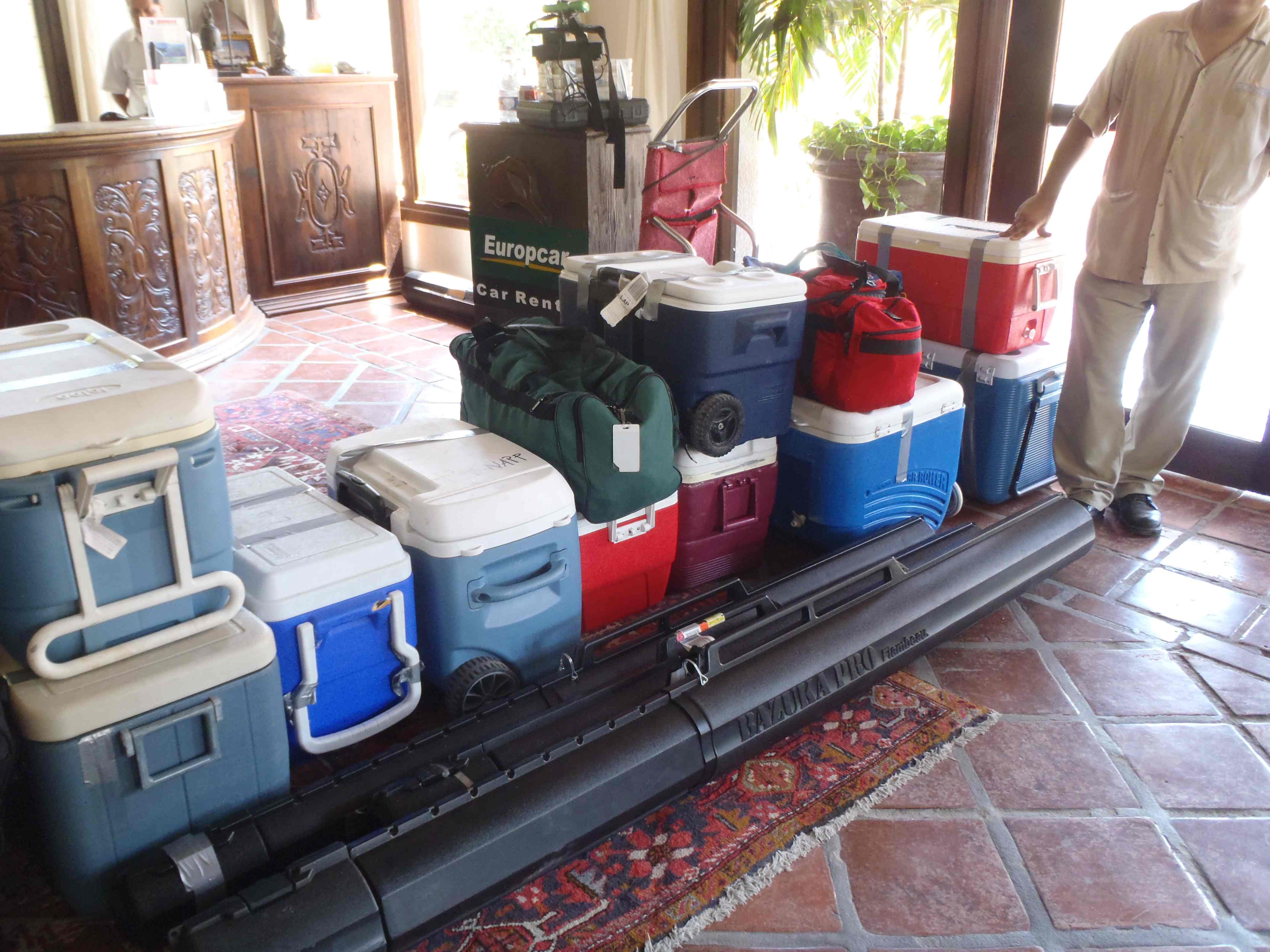
So so so many toys!  But we can only fish with one-at-a-time!

So so so many toys! But we can only fish with one-at-a-time!

LESS IS MORE…OR MORE THAN ENOUGH?

Originally Published the Week of Aug. 20th, 2014 in Western Outdoor News

It was almost comical and I didn’t want to say anything. After all, they were our fishing clients.   But it took 4 of us to load all their fishing gear on the panga. It reminded me of an Everest expedition where the intrepid explorers are followed by a line of sherpas.


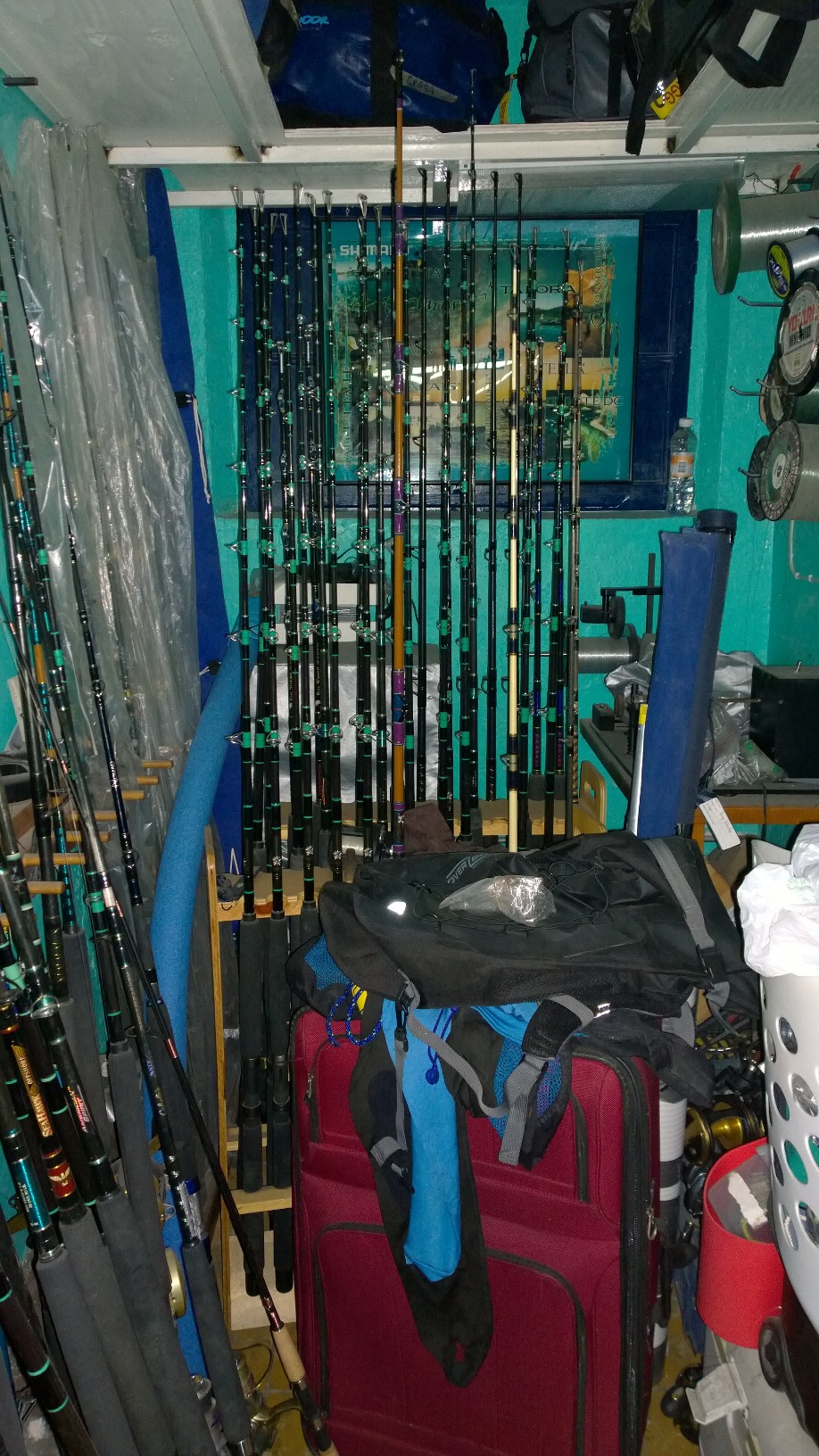
Artic ice chest…spinning rods…fly rods…bass rods…conventional rods…three jumbo tackle boxes…video camera case…Gopro camera water proof case…underwater extension rods…special seat cushions that had beer holders in them…even “catch flags” they planned to fly from rods for when they returned to shore.


Ahhh…God bless ‘em.


They were so excited. First time Baja fishermen. They were like little kids. It was like Christmas. They had a list of all the species they planned to catch. They had a GPS pre-programmed with all the “hot spots” they had read about. They had waterproof maps and fish i.d. charts.


So much enthusiasm. Between my captains, deckhands, drivers and other fishermen, it was hard to suppress the chuckles.   I really wanted to say something. But what could I say?   They had all the toys and they planned to use them.


They took to heart the saying, “Better to have it and not need it than to need it and not have it. “


Here’s the rub…I was supposed to go out on the panga that day with them. I rolled my eyes.


My captain had to leap over all the gear to get to the tiller on the motor. There was barely any room to sit. I squeezed on top of an ice chest as we headed out. This was gonna be interesting, but I was grinning. Whatever. Let’s go fishing, guys!


With all the rods jutting out, we looked like a CIA boat bedecked with prickly porcupine radar antennas as we zoomed to the fishing grounds.   I counted…1, 2, 3…8…11…15…19…20…26 rods! Custom wrapped. The latest hi-tech reels. Spooled full of shiny new line.


When we got to the spot, it got a little awkward.


Do remember watching your kids at Christmas barrel into the goodies under the tree? Ripping and shredding and laughing…oh the carnage! Oh the humanity!


Well, the gear boxes opened and out came hooks and lures and feathers of all shapes and sizes. Leaders and gadgets and wires and do-dads and thing-a-ma-jigs and watcha-ma-callits and chingaderas came pouring out. ! Many still in their wrappers.


All organized. Color-coded. Size-coded. Species evaluated. Things for tuna. Things for dorado. Things for dorado AND tuna. Things for wahoo. Need a purple pink speckled marlin lure? Got it! Surface lures…bottom lures…mid-water lures. Everything had a pouch or pocket. Everything in it’s place!


I’ve done plenty of long range trips for 12 and 14 days where I didn’t have this much stuff. We were only going a mile offshore for a few hours. Fishing 2 days total!


And stuff for their belts…pliers, dikes, hook disgorgers, hook pouches, sunscreen holders.


My gosh, they must have accumulated enough points on their Cabela a dn Bass Pro visa cards to fly around the world!


And just like kids oooh-ing and ahhh-ing…each guy was as eager to show off his “toys” to me and the captain.   Simultaneously, he was in showing them to his fishing buddy and also seeing what his buddy had brought along.   Like opening two picnic baskets at the church luncheon!


I just stood back. Tried to look really really realy gosh darn excited! I mean, I hate to discourage or curb anyone’s enthusiasm. So, I smiled and gritted my teeth.


“Wow…that’s uh… really great you found one of those lures.”

“You got 4 of them in each color?”

“You bought 100 hooks of each size too? No way!”


But, we were burning daylight. I could tell on the radio that some of our pangas were already into fish.


There was stuff scattered all over the decks!


I finally said, “Guys, time’s-a-wasting. Let’s get fishing.”


They looked at me. They looked at the captain like eager kids. The captain shrugged his shoulders and dropped a bomb.


“Tie on a hook. We will fish with bait.”


Silence. They looked at me. I looked at them.


I said, “Yup…bait’s working. No leader. Let’s just tie on hooks. Maybe later we’ll get to use some of that great gear you brought.”


They looked at each other and I could sense the puzzlement and disappointment from their quizzical looks.


“C’mon, guys, “ I tried to say gently with as much enthusiasm as I could muster. “The fish are biting so let’s get in on it. Get out some hooks and stow the rest of the gear for now so we don’t miss the bite.”


While they stashed all their stuff, the captain and I tied on hooks for them to save time. I didn’t want to look them in the eyes. I felt like I had taken away their toys. Or had told them there is no Easter Bunny.


But, the fish bit. The sun came out. The water was blue. And the fish bit again. And the icy beer and lunches always taste double-good outdoors on the water.


There was a point later in the day when their fish box was filling and the fish were swarming and I asked if they’d like to try out some of their fancy gear. But, they laughed and were too busy hooked up to want to change.


The whole day, they ended up using one rod each. And maybe half-a-dozen hooks. And were happy. Beyond happy.


As one of the guys laughingly said to me headed back, “Somehow, I still have to explain to my wife why I needed to buy all this gear.”


His buddy said, “I once asked my wife why she needed so many shoes.”


“What did she say?”


“Because I say so, Dear. Because I say so…”


“I don’t think that will work on my wife.”


We all laughed.


That’s my story!

Jonathan signature

Jonathan

_______________

Jonathan Roldan has been writing the Baja Column in Western Outdoor News since 2004.  Along with his wife and fishing buddy, Jilly, they own and run the Tailhunter International Fishing Fleet in La Paz, Baja, Mexico  www.tailhunter-international.com.  They also run their Tailhunter Restaurant Bar on the famous La Paz malecon waterfront.  If you’d like to contact him directly, his e-mail is riplipboy@tailhunter-international.com  or drop by the restaurant to say hi!

______________

Jonathan Roldan’s

Tailhunter International


TAILHUNTER FISHING FLEET #1 Rated on Trip Advisor

TAILHUNTER RESTAURANT BAR #1 Rated in La Paz on Trip Advisor


Now follow us on FACEBOOK TOO


Website: www.tailhunter-international.com

U.S. Office: 8030 La Mesa, Suite #178, La Mesa CA  91942

Mexico Office: 755 Paseo Obregon, La Paz, Baja Sur, Mexico

Phones:

from USA : 626-638-3383

from Mexico: 044-612-14-17863

.

Tailhunter Weekly Fishing Report:

http://fishreport.jonathanroldan.com/

Tailhunter YouTube Videos:

http://www.youtube.com/user/pangapirate

“When your life finally flashes before your eyes, you will have only moments to regret all the things in life you never had the courage to try.”

Read Full Post »

A DEARTH of ‘DINES

OLYMPUS DIGITAL CAMERA

NO MAS????

A DEARTH of ‘DINES


Originally Published the Week of May 27, 2014 in Western Outdoor News


It’s an early Baja morning and the sun was just starting to light up with golden blue hues against the western horizon. The heat would soon follow, but for now, the dawn was still freshly-tinged with the salty residue of the retreating night.


It is early enough that skippers and anglers alike still hunched shoulders in windbreakers and sweatshirts against the nippy breeze and spray knowing full-well that the sun would soon throw open the furnace blast of another Mexican day. But, there was no hiding the anxious anticipation of another grand fishing day in the Sea of Cortez.


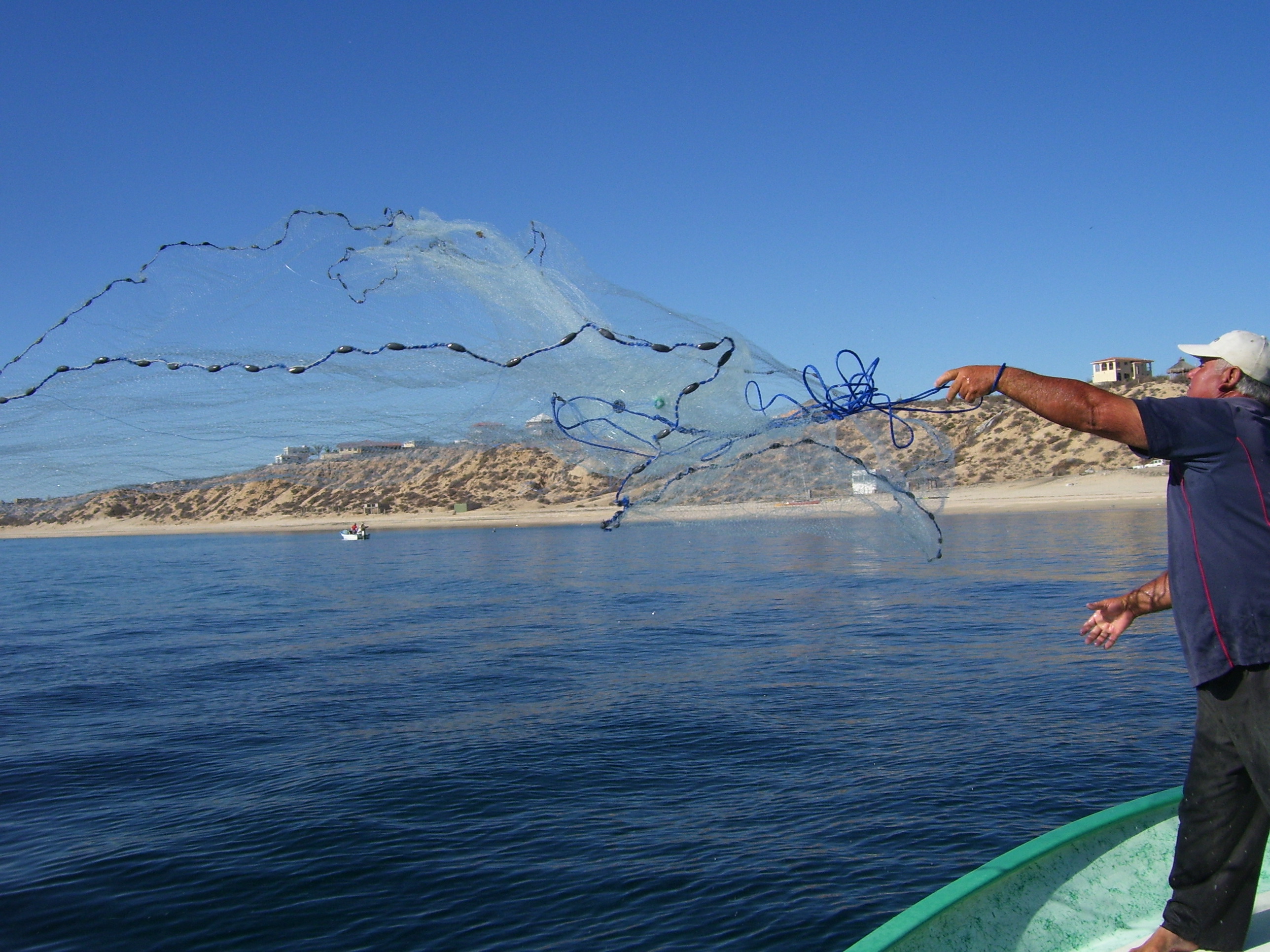
The panga motored as quietly as possible into the little rocky cove. Several other pangas were already up against the craggy shoreline of the island. In the bows, a skipper or assistant could be seen with cast nets draped over shoulders and squinting sunglassed-covered eyes into the shallow waters.


The captain of this particular launch cut the motor and drifted toward a little warren of rocks. He jumped lightly forward to the prow.  Readied his net and with a circular fling; expertly tossed the cast net into the air where it hung; pancaked open; and fell flatly into the waters.

20110621_72


As the captains pulled the drawstring of the net enclosing the snare and drew it towards the waiting panga and anxious anglers, something appeared wrong. Usually, the “pull” of the net would be evidenced by some bit of strain and effort by the captain.


But, he pulled the net effortlessly up.


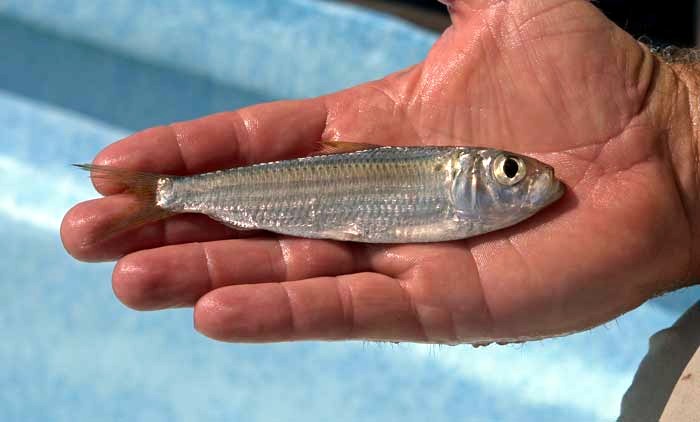
Normally, with a grunt, the skipper would heave the bulging net up-and-over above the live bait well and with another pull a “zillion trillion” thrashing, splashing, struggling dark-backed sardines (‘dines) would tumble en masse into the waiting waters of the bait tank.

Two or three quick tosses more and the panga would be loaded. Then it would be a sprint to the fishing grounds heavily bulging with hook-sized bait and high on anticipation for another day of bent-rods and bloody decks.


But, this time there was no grunt-and-heave. The net came up virtually empty. Four mini-sardines…FOUR…were released into the bait tank. A dozen more net tosses and 90 minutes of searching and scouring produced only a handful of baits for their efforts.


Each fruitloss toss-and-retrieve caused shoulders to sag.


Nothing like starting the fishing day where elation and anticipation backslids into deflation. No bait?


The other pangas did not do much better. They would end up making the best of the day with sliced bonito; a few live ballyhoo; some scrounged mackerel and some chopped-up squid. Just not quite the same as being able to chum handfuls of sardines into the water to get the fish going.

bait


It’s been happening with increased frequency in Baja waters. Especially this year as a combination of variables seems to be combining for a “perfect storm” in terms of bait.


Part of it can’t be helped. It’s nature. Nature does what nature does and it’s like trying to stop sand from getting in your hot dog at the beach. It’s gonna happen.


This appears to be an El Nino season. But, moreso, the scientists are saying maybe it’s a “super” El Nino season with the warmest water and air temperatures in the history of recording el Nino conditions.


The cycle pops up every few years and, in a nutshell, means warmer ocean conditions along the Eastern Pacific coast along the western side of the U.S., Canada and Mexico. Warmer waters mean more storms; higher incidence of hurricane.   It’s the reason folks in Washington encounter stray dorado and tuna that lose their way in the warm currents and head far more north than their usual comfort zone.


But, these warmer waters mean the colder waters from the deep trenches don’t come to the surface. The cooler waters bring the nutrients. The nutrients bring the bait fish. The bait fish provide food for the sportfish. Are you following this? One big circle of nature. And tag…this is us this year. Warm waters = less bait.


The other side of the equation is perhaps more ominous. Some would say even a bit sinister. Because we’re doing it to ourselves. We can’t do much about El Nino.   But, us humans aren’t doing much to help ourselves either.


It’s the fish pens. You’ve heard of them. The controversial but apparently successful capture of juvenile tuna and yellowtail in huge nets then raising them in a net-like corral. Grow ‘em big and sell ‘em off. It works. It’s great. It’s economical.


Supply and demand. The planet craves seafood. Heck, it needs food period! The fish pens help fill the need. If it didn’t work, they wouldn’t be using it.


Here’s the rub. Everyone gets the impression that fishing farms are “green.” And there’s a lot of controversy about that. I guess it depends who you’re reading.


But, I’ve read that it takes anywhere from 3-10 pounds of “bait food” to grow a tuna one pound bigger. . So, let’s see…to grow a 50 pound tuna? Do the simple math. Hmmmm…that’s a lot of food.   It has to come from somewhere.


Arguably, wherever they have set up these “pens” they have depleted the bait stocks.   Pretty much raided everything in the waters that could be used or ground up into fish meal. It reminds me of those days when the cattle or sheep came to an area and ate all the grass that held the soil. Resulting in dust bowls. Are we headed for a “toilet bowl?” Are we destined to be live-sized versions of the Tidy Bowl man adrift in blue water?


Here, in La Paz, the head of La Paz Tourism, Sr. Pedro Aguilar told me that the fishfarmers are prohibited from taking bait in the bay and around our two islands. However, our local sportfishing captains tell me that the bait guys from the pens are out at night scouring those very areas capturing all the bait they can get.


The other side is that all the “waste” product has to go somewhere and it’s going right into the waters and creating a whole separate ecological issue. Tons of “fish poo” isn’t a good thing, especially in these shallow areas where the pens are located and ocean currents aren’t there to sluice out the after-product.


If you’ve ever even seen what your kid’s goldfish can do to a home fish bowl after a few days of not changing the water, imagine what a net load of fat tuna can squeeze out.


It’s not just here. It seems to be happening all over. And again, we have the challenge of balancing the need for food; the ecosystem; the sportsmen…and then, of course the corporate interests.


So…a double whammy curse on us. And I don’t know what to do about it. Awfully discouraging.

That’s our story!

Jonathan signature


_______________

Jonathan Roldan has been writing the Baja Column in Western Outdoor News since 2004.  Along with his wife and fishing buddy, Jilly, they own and run the Tailhunter International Fishing Fleet in La Paz, Baja, Mexico  www.tailhunter-international.com.  They also run their Tailhunter Restaurant Bar on the famous La Paz malecon waterfront.  If you’d like to contact him directly, his e-mail is riplipboy@tailhunter-international.com  or drop by the restaurant to say hi!

______________

Jonathan Roldan’s

Tailhunter International


TAILHUNTER FISHING FLEET #1 Rated on Trip Advisor

TAILHUNTER RESTAURANT BAR #1 Rated in La Paz on Trip Advisor


Now follow us on FACEBOOK TOO


Website: www.tailhunter-international.com

U.S. Office: 8030 La Mesa, Suite #178, La Mesa CA  91942

Mexico Office: 755 Paseo Obregon, La Paz, Baja Sur, Mexico

Phones:

from USA : 626-638-3383

from Mexico: 044-612-14-17863

.

Tailhunter Weekly Fishing Report:

http://fishreport.jonathanroldan.com/

Tailhunter YouTube Videos:

http://www.youtube.com/user/pangapirate

“When your life finally flashes before your eyes, you will have only moments to regret all the things in life you never had the courage to try.”
 

Read Full Post »

“FIRST TIMER CHECKLIST”

couple on beach


FIRST TIMER CHECKLIST FOR BAJA MEXICO

Originally Published the in Western Outdoor News the Week of May 14, 2014

Despite the media blitz about violence…despite past warnings of swine flu…and a downturned economy, Mexico has one of the fastest growing tourism economies in the world right now. In fact, it’s breaking records with something like 24 million visitors last year.


World-wide, folks are simply realizing that Mexico is a great value for a vacation destination whether they are coming from Europe, Asia or even just coming across the border whether flying from Portland or driving from Phoenix or San Diego.


For many of us, who have been visiting or actually live in Mexico, we’ve come to just take it for granted on so many levels. Especially, for fishermen in the southwestern states of the U.S. going to Mexico is about as routine as taking a camping trip to Yosemite or a run to Vegas.


But, from the perspective of someone who lives and runs a sportfishing business here in Mexico that specifically caters to tourists and sportsmen and women, we’re seeing an increased number of first-timers! Great for us, but so many questions show a commonality of interest.


You might even think that many folks who read this publication must surely know about fishing in Mexico, but there’s many who have never been south and are thinking about it.


So, a few things to think about:


First, yes, you MUST have a passport. I get this question all the time. The old days of simply having your drivers license and a copy of your birth certificate won’t work these days, especially after 9-11.   For sure, you want to be sure they let you back INTO the United States after your vacation!


They are relatively easy to obtain and you can get the process started online by just hitting your search engine for U.S. passports. Or check this: http://travel.state.gov/content/passports/english/passports/information/costs.html


The thing is, just don’t wait until the last minute! Especially, as vacations times like summer…Thanksgiving…Christmas… get near. It only takes a few weeks, but slows down during high seasons and you don’t want to be “sweating bullets” waiting for the mailman as your own vacation gets closer.


Next, do some research. It can be confusing. There’s almost TOO MUCH info out there, but better to have too much than too little.


Do some research about the destination itself. Just because all of your neighbors have been there, it might not be your cup of tea.   If you’re not into jet-skis and paragliding and crowds then maybe you want to check out a slower-paced place to put your toes-in-the-sand.


Or, if your wife is really into gourmet dining and shopping, then find a place that has those things. If you’re trying to use some of your time-share weeks, not all places have time shares, nor do all airlines fly every day of the week to all destinations.


Next…


Another advisory…don’t believe everything you read online.   Like anything else, online websites are heavy into self-promotion. Good or bad…that’s just the way it is.


For example, if a place says it’s “near the beach” that can be two blocks; a 10 minute walk; or one mile. What exactly does “near the beach” mean?


You might also ask or find out what’s nearby to wherever you’re staying. It might look great in the online photos, but of course, they might not tell you that there’s a raucous nightclub next door that goes until 4 a.m. every morning.   They might not tell you that there’s a fish processing plant upwind that provides some wonderful fragrances in the afternoon breeze.


Or, if it says, “near the beach” or “on the beach” is that a beach you can swim at? Or is that a beach that they have “no swimming signs/ no fishing signs” posted?


If you’re going to be fishing is there a freezer? If you plan to bikeride, do they have rentals? If you’re going to be windsurfing, is there a place to store your gear or will you have to carry your rig on a burro down to the beach?


If you can’t walk stairs (Mexico is a land of stairs and very few elevators) find out if there’s an elevator or do they have first-floor rooms.


Or it’s going to be too windy. Or too hot. Of it’s too far from town.   The more you do ahead of time, the less you’ll have to worry about later when you’re supposed to be on vacation.


Figure out what you want to do. If you plan to fish, then go to a place where they have fishing. And find out specifically, if it’s the type of fishing you want to do at the time you want to go there.


I once got asked, “When is the salmon run in La Paz?” No lie.


I hope you’re not planning to fish for salmon in Mexico, but seriously, it makes no sense to book a place in February expecting to catch marlin. Then, you find out there’s no marlin until July!


Another time, I had a family all set asking to take surfing lessons…in Loreto…which is about 350 miles from the nearest shore break.   They were sure disappointed when I had to give them a small lesson in geography.


A little research goes a long way. All places are not created equally and Mexico runs a wonderful gamut of places that are very touristy to places where you’ll be the only tourist in town! Lots of folks are finding exactly what they’re looking for south of the border.


That’s my story!

Jonathan signature


_______________

Jonathan Roldan has been writing the Baja Column in Western Outdoor News since 2004.  Along with his wife and fishing buddy, Jilly, they own and run the Tailhunter International Fishing Fleet in La Paz, Baja, Mexico  www.tailhunter-international.com.  They also run their Tailhunter Restaurant Bar on the famous La Paz malecon waterfront.  If you’d like to contact him directly, his e-mail is riplipboy@tailhunter-international.com  or drop by the restaurant to say hi!

______________

Jonathan Roldan’s

Tailhunter International


TAILHUNTER FISHING FLEET #1 Rated on Trip Advisor

TAILHUNTER RESTAURANT BAR #1 Rated in La Paz on Trip Advisor


Now follow us on FACEBOOK TOO


Website: www.tailhunter-international.com

U.S. Office: 8030 La Mesa, Suite #178, La Mesa CA  91942

Mexico Office: 755 Paseo Obregon, La Paz, Baja Sur, Mexico

Phones:

from USA : 626-638-3383

from Mexico: 044-612-14-17863

.

Tailhunter Weekly Fishing Report:

http://fishreport.jonathanroldan.com/

Tailhunter YouTube Videos:

http://www.youtube.com/user/pangapirate

“When your life finally flashes before your eyes, you will have only moments to regret all the things in life you never had the courage to try.”


Read Full Post »

“Just Ask”

Screen-Shot-2013-10-14-at-7.50.13-PM


“JUST ASK”

Originally Published the Week of April 3, 2014 in Western Outdoor News

The pangas had all returned to the beach with happy fishermen.  Fish had been cleaned and were either getting icy in the hotel freezers or were in the kitchens getting prepped for the grill and tonite’s dinner.


Most of the guys had headed to their rooms for siestas and shower.


Others, had dragged themselves directly to the pool and the margarita bar foregoing the showers…and the siestas. But, I knew that for most, one drink and they’d be passed out contentedly in a lounge chair…dreaming of the fish they caught and the ones that got away.


I was already in the office, putting away gear and breaking down the days’ events.   I had to get ready for another group of anglers coming in that evening on the next flight.


I brisk knock on the office door turned out to be one of the dad’s who had been fishing that day.


“Jonathan, I can’t find my son, Joey.  He helped me carry gear back to the room and I went in to take a quick shower before dinner. I came out and can’t find him anywhere. I hate to be a bother. But, I looked everywhere.”


I told him not to worry. Ten-year-olds don’t usually stray too far and many of the other anglers knew or were familiar with the youngster.


We checked the restaurant and the pool.  We hit the Jacuzzi. We walked to the kid’s playground. We asked a number of other anglers. No one had seen Joey.


“Let’s walk back to the beach,” I suggested to dad.  And we took a short little hike to the little cove next to the hotel where our pangas drop off the anglers.

Sure enough, there was Joey sitting in the panga with our Captain Lorenzo.  We could see both of them had their heads down and were concentrating on something.


As we got closer, Dad said, “Joey, we’ve been looking all over for you.  What are you doing here with Lorenzo?


Both the captains and Joey looked up with big smiles.  Joey held up a hook and some line!


“I came walking back to the beach and found my friend, Lorenzo.  And I asked him to show me how to tie a fishing knot! Look dad!”


He held up the hook and proudly showed off his knot.


“I did this one all by myself!”


“Wow!,” said dad with raised eyebrows.  “Even I don’t know how to tie a fishing knot.”


Captain Lorenzo looked just as pleased.


In broken “Span-glish” he explained that Joey had just walked up and asked how to tie a knot. It reminded him of his own boys and how he had shown them many years ago how to tie a fishing knot.


“They are grown men now, but I remember those good days,” he said wistfully.


“You are lucky to fish with your father,” he said to young Joey.


“Captain Lorenzo, will you show me how to tie a knot also?” asked dad.


Claro que si…of course, mi amigo.  Es un placer…it is a pleasure!” replied the Captain.  “Here take a hook and some line…”


And with that, I backed away smiling down the beach.  The lost had been found.  And perhaps some other things had been found along the way.


An hour later, I went back down to the beach and half-a-dozen guys were surrounding the panga, all intently learning to tie knots.  Captain Lorenzo and Joey were “holding court.”


One thing I learned long ago was one of the fastest way to get a “group session” going was to tie a knot in front of a bunch of fishermen.


Whether it’s a “San Diego jam,” a “Palomar”, an “Albright special”, a “Cat’s Paw”…whatever-you-want-to-name-it…tie a knot.


And someone will say “Hey, can you show me that again?”  Or, “But, I tie it differently, like this…”


And there you go! Instant…constructive debate discussion and discovery!


It also occurred to me that one of the least utilized sources of fishing education are the Mexican captains and deckhands who take us all out fishing.


These guys fish more days in a year than most sportfishermen and women will fish in our lives. Most of them started as commercial fishermen and have been doing nothing else their entire lives.


You get pretty good when catching a fish puts food on the table and buys clothes for the family. Often, without all the fancy technology available to the rest of us, they have to be better than the fish as well as their competitor captains and crews.  Proudly so.


I talked to Captain Lorenzo a few days after the knot-tying beach party.


“Everyday, there are new gringo clients. And they all want to catch fish. They come.  They go.”


“To many, I am just the Mexican captain and the guide.  And that is fine. We have a good time and I have been doing this more than 40 years and I am proud of what I do.”


“But, sometimes the clients get angry because they want to do everything.  That is fine too.  But, then I watch them and they have many problems.   And they get angry and do not catch fish.  Angry clients are not happy.”


“It is OK if they know how to fish, but many make mistakes.  And they do not want help.”


“I wish they would ask. I like it.  I am happy to teach. Then everyone has a good time.”


“No one ever asks.” He said with a shrug.  “Except one little boy.”


That’s our story!

Jonathan


_______________

Jonathan Roldan has been writing the Baja Column in Western Outdoor News since 2004.  Along with his wife and fishing buddy, Jilly, they own and run the Tailhunter International Fishing Fleet in La Paz, Baja, Mexico  www.tailhunter-international.com.  They also run their Tailhunter Restaurant Bar on the famous La Paz malecon waterfront.  If you’d like to contact him directly, his e-mail is riplipboy@tailhunter-international.com  or drop by the restaurant to say hi!

______________

Jonathan Roldan’s

Tailhunter International


TAILHUNTER FISHING FLEET #1 Rated on Trip Advisor

TAILHUNTER RESTAURANT BAR #1 Rated in La Paz on Trip Advisor


Now follow us on FACEBOOK TOO


Website: www.tailhunter-international.com

U.S. Office: 8030 La Mesa, Suite #178, La Mesa CA  91942

Mexico Office: 755 Paseo Obregon, La Paz, Baja Sur, Mexico

Phones:

from USA : 626-638-3383

from Mexico: 044-612-14-17863

.

Tailhunter Weekly Fishing Report:

http://fishreport.jonathanroldan.com/

Tailhunter YouTube Videos:

http://www.youtube.com/user/pangapirate

“When your life finally flashes before your eyes, you will have only moments to regret all the things in life you never had the courage to try.”


Read Full Post »

Tackle Packing & Juggling

OLYMPUS DIGITAL CAMERA

There’s a right way and a wrong way to pack for a fishing trip to Baja. And then, there’s EASIER ways to do it right!


“TACKLE PACKING & JUGGLING”

Originally Published the Week of Feb. 18, 2014 in Western Outdoor News

It’s an irritation, but something we’ve gotta learn to live with these days.  Like taking your shoes off at the airport.   Like having your expensive shampoo taken away at check-in.

I’m sure greater and bigger minds than ours have figured out why they are important aspects of airline travel these days.   We empty  and open our bags and pass our stinky shoes through the conveyer belt and do our little spin in the x-ray scanner.  Like the hokey-pokey.  That’s what it’s all about.

One thing for sure is that the days of free luggage are something we use with words like “back in the day” and “in the olden days.”   The more you bring, the more you’ll get charged.

It kinda makes you cry as you stand in your garage and you look at all your custom rods, reels, feathers, jigs and other toys.   You want to bring them ALL!

Almost 30 years ago, I remember my first trip flying to Baja.  I took 10 rods and reels  (two tubes); a tackle box that weighed about 50 pounds and almost 30 marlin lures (that my buddy had borrowed from WON editor Pat McDonell who didn’t know who I was at the time!).   Oh, and two 85-quart ice chests as well.  And this was for fishing in a panga for only 2 days!

Nowadays, you get one piece of luggage.  If you’re lucky.

Economy airlines charge for each piece of luggage.

Rod tubes are oversize.  Pay extra.  Cha-ching!

Reel bags too heavy.  Pay extra.  Cha-ching!

Ice chest…even with nothing in it.  Pay extra.  Cha-ching!

But, a man must do what a man must do and the fish are calling!  So, we just have to think from a different angle.  Consolidate and downsize.

Before purchasing your airline tickets, find out if the airlines has a special luggage allowance you can purchase.  Some airlines (Volaris comes to mind) allows you to pay a little extra up-front when you purchase your tickets online.

This allows you to bring more luggage and more weight for a fraction of the cost.  If you just walk up to the counter with all the extra weight, they charge BY THE POUND!

For example, we had some clients who purchased $200 round trip tickets to fish with us in La Paz.  We told them to purchase the extra luggage allowance.  They declined to do so.

When they flew back to the U.S. they had several very full ice chests.  It cost them almost $600 to fly the fish back.   OUCH!

For practical purposes, take a look at your own gear, if you’re planning to travel.

“Back in the day” multi-piece travel rods were junk.  Nowadays several very good manufacturers and a number of custom rod wrappers are making some super 2 and 3-piece travel rods in varying lengths and strengths.

Many of them come with handy cases and can literally be carried in the overheads or packed into suitcases.  They even make break-down trolling rods.

For reels, here’s my suggestion.  Pair it down to some essential reels.  Match your reels to what you’ll be fishing for.  You don’t need a bowling ball-heavy 5/0 wide reel if you’re going to be fishing inshore in 100 feet of water.  With the new aluminum reels and their horse-strong drags, you can use smaller/lighter reels to get the job done.  Even for trolling.

I would also suggest putting spectra on the reels then put 150 yards of mono top-shot on them.  That way if, for example, the 40-pound test mono isn’t working, all you have to do is change the top-shot to whatever line is the hot ticket for the bite.   You won’t need a separate reel for that.

For terminal gear, be practical.  If you’re only fishing 3 days, you don’t really need 500 hooks of all sizes.  You don’t need 20 throwing irons.  You don’t need 10 feathers of all colors.   If you can, contact your outfitter ahead of time and find out what’s really working.  Bring the essentials.

While you’re at it, pow-wow with your fishing partner.  Consider packing all your rods together.  In one tube.  Each of you doesn’t need to bring a whole set of lures, hooks and other essentials either.  You can both share and thereby cut down on weight and gear.

As for bringing the fish home,  if you’re like me, it always irritated me to pay to bring an empty ice chest down to Mexico.  Paying for air?  C’mon!

What I’ve been suggesting lately is using the newer soft-sided coolers that are airline rated heavy duty;  keeps things frozen for days; and can be folded and packed into your suitcase on the way down.

We’ve had one made by American Outdoors that has worked like a champ for about 5 seasons.   Another nice thing is that these weigh less than a traditional cooler.  Since most airlines limit you to 50 pounds on luggage,  you can get more actual frozen fish in a soft-cooler than a hard-sided cooler that weighs 8-20 pounds with wheels on them.

One last thing.  In the old days,  my buddies and I brought down one or two sets of shorts and t-shirts with us.  That was it.  Our motto was, “if you can’t wash it in the sink, don’t bring it.”  That was a great way to save room for more tackle.

Of course, that was in the days when my buddies and I were all bachelors.

That’s our story!

Jonathan signature

Jonathan Roldan has been writing the Baja Column in Western Outdoor News since 2004.  Along with his wife and fishing buddy, Jilly, they own and run the Tailhunter International Fishing Fleet in La Paz, Baja, Mexico  www.tailhunter-international.com.  They also run their Tailhunter Restaurant Bar on the famous La Paz malecon waterfront.  If you’d like to contact him directly, his e-mail is riplipboy@tailhunter-international.com  or drop by the restaurant to say hi!

______________

Jonathan Roldan’s

Tailhunter International


TAILHUNTER FISHING FLEET #1 Rated on Trip Advisor

TAILHUNTER RESTAURANT BAR #1 Rated in La Paz on Trip Advisor


Now follow us on FACEBOOK TOO

Website: www.tailhunter-international.com

U.S. Office: 8030 La Mesa, Suite #178, La Mesa CA  91942

Mexico Office: 755 Paseo Obregon, La Paz, Baja Sur, Mexico

Phones:

from USA : 626-638-3383

from Mexico: 044-612-14-17863

.

Tailhunter Weekly Fishing Report:

http://fishreport.jonathanroldan.com/

Tailhunter YouTube Videos:

http://www.youtube.com/user/pangapirate

“When your life finally flashes before your eyes, you will have only moments to regret all the things in life you never had the courage to try.”
Read Full Post »

“No Off-Road Means No Off-Road!

OLYMPUS DIGITAL CAMERA

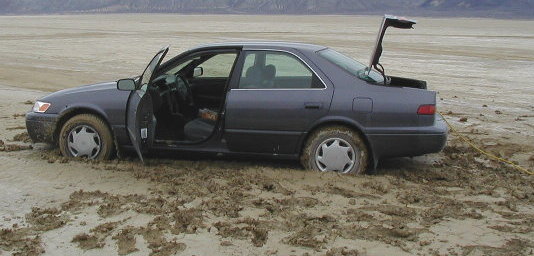
There’s no Auto Club to call out here, amigo! Oh…and you say your cell phone doesn’t get a signal either?

“NO OFF ROAD MEANS NO OFF ROAD!”

Originally published the Week of February 5, 2014 in Western Outdoor News

It was time to put these two guys outta their misery.  For about 30 minutes a group of my captains and I had watched two poor boobs trying to get their rental car out’ve the mud flats.

Standing on a little rise looking down about 100 yards to the flats,  it was hard to suppress the laughs and high entertainment at the expense of the clown show in the sludge.

Earlier in the day, we had seen the small sedan up to it’s axles in the goo.   Stuck.  There looked to be some foot tracks leading away, but no one was around.  We had pangas to put out and clients to attend to so we shrugged.  None of our business.

But this afternoon, now that the fishing was done, the car was still there.  And the occupants were back.   And  a group of  my captains watching the comedic scene. Cervezas in hand.  Arms crossed.  Leaning against their pickup trucks.  Grinning.

One guy was in the car revving for all it was worth.  Mud shot skyward.  The other guy was doing all he could to pry the car loose…from behind! It was like a blender exploding.   Covered head to toe in layers of sludge.

Little bits of white poked out around his lower torso indicating that he was out there in his tidy-whitey-underwear getting shot-gun blasted by gobs of mud looking like he got dipped in chocolate goo!  These guys had no clue.  And we had no idea why he had taken his clothes off!

But it was getting late. We had to get home. Wives and kids were waiting.   Good hearts prevailed and finally one of the captains said he couldn’t take it anymore.  He and several other guys got their trucks and some rope and pulled the grateful guys outta the muck.

It’s not the first time.  I’m sure it won’t be the last we give first aid to a rental car.

Car rentals in a foreign country can be quite an adventure.  Most of it is great!  Don’t get me wrong.  We do it all the time in our own travels.

But, Mexico has it’s own caveats it’s good to keep in mind.

For one, the fine print that says, “Don’t take the car off-road” means “Hey, idiot, keep the car on the pavement!”

Mexico isn’t exactly known for having great streets to start. Sometimes it’s just as treacherous navigating the potholes as the Baja 1000,   so don’t even think about trying to cross that patch of sand or salt marsh or stretch of solid-looking mud!

Especially in Baja, it doesn’t take much to suddenly find yourself in the middle of nowhere.  I mean, that’s part of the beauty of Baja.  Having broken down myself over the years, remember, there’s no Auto Club to call.  Heck, your cell phone might not even work ‘en la frontera’ (in the frontier)!

So, don’t get caught like these guys trying to dig your car out in your underwear.  Personally, in the days before cell phones, I once hiked over 30 miles to get help when my own car busted an axle.   I could swear the buzzards were just waiting for me to give it up as their next road kill.

Here’s some tips when renting a car.

For one, rent from someplace that has a recognizable name.  You get what you pay for.  “Jose’s Beach Tours and Car Rental” is probably not what you’re looking for.

Secondly, ask if they have another office in the places you’re going to visit.  For example, if you’re renting in Cabo San Lucas but you plan to drive to La Paz (100 miles away) or Loreto (another 5 hours) and you break down or lock your keys inside (you only get 1 key), there’s no one to help.  You’ll have to wait for someone to come with assistance and that can take hours…or days.  And you don’t get refunded for the days you can’t drive.

Very importantly, know what you’re getting charged for.  So often, I hear clients get “great rates” but then when they return the car, they get surcharged to death for several hundred dollars more.  Know how much the tax will be.  Know about the insurance rates.   Get it all in writing.  Nothing leaves a bad taste after a great vacation like getting stuck with a big bill.

On that subject, if you’re in doubt about insurance, get it.  Don’t drive without insurance!  It’s not that expensive and heaven forbid you’re the one in a zillion drivers who gets in an accident.

Keep in mind, in Mexico, you are guilty until you prove your innocence!  Repeat that 10 times! It’s not like the U.S. where your innocence is presumed.   In Mexico, you are presumed GUILTY!

If you’re in a bender, most times the other guy will have NO insurance.  Locals can’t afford it.   He will say it’s YOUR fault.   You will say it’s HIS fault.  Of course.

Police have little recourse but to sort it out since technically you’re both GUILTY and you can both be detained at the police station until it’s ironed out.  (See the part about making sure the rental agency has an office at the destination you’re visiting…you really don’t want to be waiting at the police station until someone shows up!).

The police aren’t bad guys.  They’re not out to stick it to the gringo.  They would do the same if it were two locals.  It’s just the way the law is written.  Deal with it or do your best to avoid it.

Finally, no matter what you think you may have rented, stay on the pavement!

Even if you rent a Jeep…believe me…it’s probably NOT 4-wheel-drive.  I’ve yet to actually see a 4-wheel drive rental Jeep, but I see yahoos off-roading through the sand dunes and rocks all the time.

If you do take it off-road, look for me and my boys.  We’ll be up on the hill laughing.  Wear good underwear.

That’s our story!

Jonathan signature

_______________

Jonathan Roldan has been writing the Baja Column in Western Outdoor News since 2004.  Along with his wife and fishing buddy, Jilly, they own and run the Tailhunter International Fishing Fleet in La Paz, Baja, Mexico  www.tailhunter-international.com.  They also run their Tailhunter Restaurant Bar on the famous La Paz malecon waterfront.  If you’d like to contact him directly, his e-mail is riplipboy@tailhunter-international.com  or drop by the restaurant to say hi!

______________

Jonathan Roldan’s

Tailhunter International


TAILHUNTER FISHING FLEET #1 Rated on Trip Advisor

TAILHUNTER RESTAURANT BAR #1 Rated in La Paz on Trip Advisor


Now follow us on FACEBOOK TOO


Website: www.tailhunter-international.com

U.S. Office: 8030 La Mesa, Suite #178, La Mesa CA  91942

Mexico Office: 755 Paseo Obregon, La Paz, Baja Sur, Mexico

Phones:

from USA : 626-638-3383

from Mexico: 044-612-14-17863

.

Tailhunter Weekly Fishing Report:

http://fishreport.jonathanroldan.com/

Tailhunter YouTube Videos:

http://www.youtube.com/user/pangapirate

“When your life finally flashes before your eyes, you will have only moments to regret all the things in life you never had the courage to try.”
Read Full Post »

“That’s How We Rolled”

BeachVW_t670

“That’s How We Rolled”      

Originally Published the Week of October 2, 2013 in Western Outdoor News

You can always tell when people think you’re a knucklehead.  Their voice goes up at the end of their sentence.   Try it.

“You’re going… SKYDIVING?”

“You ate …SUSHI?”

“You’re going to school in…THAT ?

“You went to Vegas and did… WHAT?”

And my favorite:

“You’re going to drive to…MEXICO?”

Followed by the leave-no-doubt-affirmation:

“Are you a knucklehead, or what?”

Love the, “Or what” part.

To true Baja rats, “driving the  Baja” evokes some great sensorial memories. Having taken the wheel several dozen times from border-to-tip and back, to me, the drives were truly an adventure back in the day.

Once you passed the border checkpoint, you could just feel that you had left everything unimportant behind.  Back there…back with freeways and office buildings…crowds and social vampires sucking out your essence.

Now you were in “the Baja.”

Cassettes or 8-track cartridges littered the  inside of the  truck.  Jackson Brown or the Eagles eased me down the highway and my dog cocked an eyebrow every time I hit a s sloppy high note.  Generally, he was more interested in the bag of Doritos on my lap while I sipped out of a real Coke bottle picked up at a roadside Mexican mercadito.  “I’ve got 7 women on my mind…”

Stashed among my fishing, diving and camping gear were cans of motor oil, rope, duct tape, gas can, flashlights, ice chest, tarp, flares, two extra tires, a shovel, extra hoses and, the most important thing…toilet paper!  “Well, I’m standing on a corner in Winslow, Arizona, I’m such a fine site to see…”

You prepared for the worst.  You hoped for the best.  Better to have it and not need it than to need it and not have it.

And everything including me, powdered with a good layer of Baja dust.  On the dashboard.  On the seats.  On my lips.  On the dog.  The grit of La Frontera   “It’s a girl my Lord in a flatbed Ford…”

You got there when you got there.  If your head was right, you realized that you’re south of the border so you’re already there.  No stress, Dude.  Already there.

You stopped when you stopped.  Slept in the truck, pitched a tent or paid a few bucks for a room with a single lightbulb and a great taco stand out front with plastic seats and a smiling senora searing chunks of beef and spooning up salsa to die for.

You had a general idea of where you needed to be but often a side road beckoned to a deserted beach or spectacular vista.  Sometimes the side road was a necessity.  You had no choice as parts of the highway simply weren’t there.  Washed out or under construction.  Potholes the size of your car.  Rocks and goats.  Cows and arroyos.  You got used to the word, “Desviacion” (Detour) posted on a makeshift sign.

Time was measured by the sun coming up and the sun going down and the growl in your tummy or the thirst in your mouth.  The sun gave no quarter.

Gas was sold by a guy with a hand pump and a 55-gallon drum.  You strained it through a t-shirt and were grateful it was available.  You didn’t argue about the price.  No, he didn’t offer to wash your window or check under the hood.

You drove as fast or as slow as you dared.  There were no shoulders.  Wrecks could be seen at the bottom or deep canyons where other intrepid vehicle before you didn’t make the turn.  Trucks coming the opposite way came close enough to see the color of the other drive’s eyes.  Your fingers always tightened on the steering wheel reflexively.  And eased as you continued past.  You also stopped holding your breath.

And that’s how we rolled back in the day.   The trip WAS the destination. It was the whole point…being on the road.  Whether you reached your destination was almost secondary.  You KNEW you’d be seeing gorgeous beaches and incredible mountains.  You were going to eat some great street food and make new friends along the way.  Every day was going to be it’s own “Kodak moment!”

But now…fast forward in the time machine.

There’s now pretty much a super highway from border to tip.  Mostly four-lanes of good highway.   And there’s mini-super markets along the way.  And actual gas stations with real pumps.  The Mexican government has “green angels” driving up and down the peninsula checking for and offering mechanical aid to tourist cards that might have problems along the way.  In the major towns, you’ll find the golden arches and the colonel from Kentucky smiles down from his red and white bucket .

Chain hotels dot the landscape and if that’s not your style actual developed campgrounds beckon your stay.  Police along the way greet you with smiles and are instructed in “tourism sensitivity.”  “Tenga un buen viaje senor.  Bienvenidos a Baja.” (Have a great trip and welcome to Baja, Sir!”)

Car parts?  If you need them, Walmart and Auto Zone are here now.

It’s just the way it is now …for better or worse.

But, in between all of that, there’s still adventure.  There are still deserted white beaches and aqua waters.  Somewhere along the way is a palm tree next to a palapa with a hammock waiting.  Just for you.  And you know it as you tool down the road.  You have no doubt.

And, the only snow you see will be in your ice chest or in a margarita glass.  Shoes not optional.  Shoes are discouraged!

“You’re going to…MEXICO?”

“Yea, I’m going to Mexico.  And I’m driving.  Don’t be a knucklehead.  Come with me!”

And the DVD player kicks in…”Take it Easy…”

Let’s roll.

That’s my story!

Jonathan

_______________

Jonathan Roldan has been writing the Baja Column in Western Outdoor News since 2004.  Along with his wife and fishing buddy, Jilly, they own and run the Tailhunter International Fishing Fleet in La Paz, Baja, Mexico  www.tailhunter-international.com.  They also run their Tailhunter Restaurant Bar on the famous La Paz malecon waterfront.  If you’d like to contact him directly, his e-mail is riplipboy@tailhunter-international.com  or drop by the restaurant to say hi!

______________

Jonathan Roldan’s

Tailhunter International


TAILHUNTER FISHING FLEET #1 Rated on Trip Advisor

TAILHUNTER RESTAURANT BAR #1 Rated in La Paz on Trip Advisor


Now follow us on FACEBOOK TOO


Website: www.tailhunter-international.com

U.S. Office: Box 1149, Alpine CA  91903-1149

Mexico Office: 755 Paseo Obregon, La Paz, Baja Sur, Mexico

Phones:

from USA : 626-638-3383

from Mexico: 044-612-14-17863

.

Tailhunter Weekly Fishing Report:

http://fishreport.jonathanroldan.com/

Tailhunter YouTube Videos:

http://www.youtube.com/user/pangapirate

“When your life finally flashes before your eyes, you will have only moments to regret all the things in life you never had the courage to try.”

Read Full Post »

“You Mean I Can Keep It?”

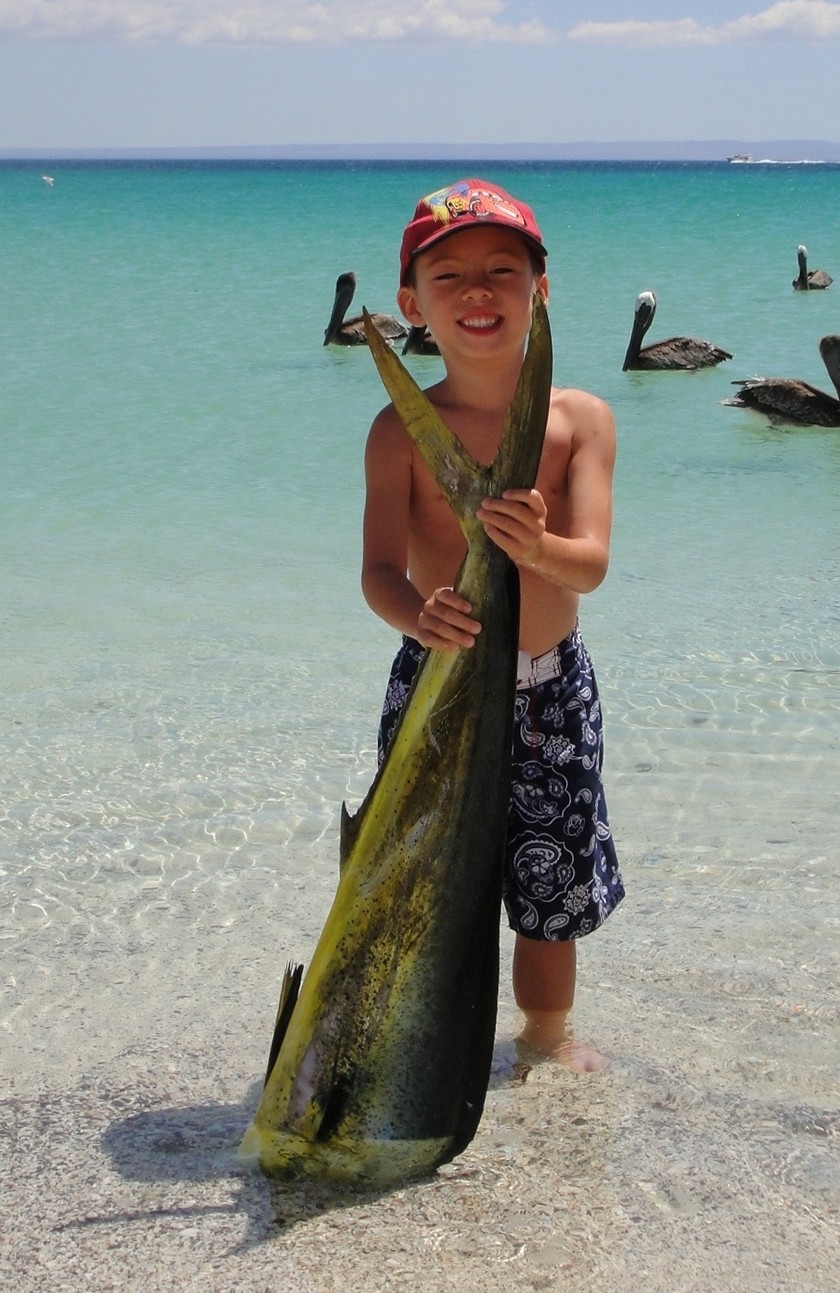
What do you think?  It looks to me like Aiden's self-esteem is just fine!

Yes…I think we can bring this one home!

You Mean I Can Keep It?

Originally Published the Week of September 20, 2013 in Western Outdoor News

You Baja veterans should probably just web surf something else.  This might be old stuff to you.

But, often when you do something so long or something is “old hat” you forget that there’s still newbies out there who have valid questions about things that old Baja rats like us take for granted.

It’s a simple, but important issue.  I receive enough e-mails and phone calls asking if it’s OK to bring home fish.

Sometimes, my auto-response in my brain says, “Well..duh…that’s kinda dumb!  That’s like asking me if it’s OK to dip you chips in salsa!”

Of course, I can’t and would never say that because there are no such thing as dumb questions.  It’s a legitimate question and well-asked.   I mean, if you’re coming fishing in Baja, one would need to know if it’s OK to keep your catch.  Corollary to that, is it OK to bring some home!

But, I get asked about it enough as new folks are discovering Baja that I figured it was time to do another column about it and update my thoughts.

The question used to surprise me more.  But, having been in the industry now for almost 2 decades, us west-coast anglers might be surprised to learn that  there are many world-class fishing destinations that severely limit what you can keep.

Pay several thousand dollars a day and you get to keep say…one fish!  Or, you must release all fish.   Yes, it’s true!   For most of us who have fished the Baja since the age-of-dirt,  we pretty much always assume that as long as we’re within limits, everything hooked is coming home.

There may come a day when severe limits will be enforced, but that’s the subject of another column and someone with a lot bigger brain and bigger column than mine.

For now, the simple answer is yes, you may bring home your fish that you catch here in Baja.   As long as you’re within limits, by all means, bring some home.  Or have some cooked up while you’re still on vacation.  Nothing will taste better than fresh caught fish that was swimming around earlier that day!

Bringing fish home starts with taking care of the catch.  Treat it well and you’ll preserve the quality.

Once the fish is caught, if you can, have your captain or deckhand bleed it.  That’s not always possible when the action is fast-and-furious and lines are flying and it’s a three-ringed-water-circus out there.  However,  bled-fish…even lower-grade meat fish like bonito or skipjack will taste world’s better if it’s freshly bled.

Maybe the most important thing whether it’s bled or not is to keep it cold.  Warm water fish are…well…they’re warm!  As soon as they’re dead, like anything, they start to deteriorate.   And the hot Baja sun is not a friend to your future dinner!  Leaving a fish on the deck or even in a fish box without ice is pretty much like putting the fish in the oven.

So, at all levels from catch-to-stove or barbecue…keep your fish cold.  Ice is your buddy.   It’s a good question to ask when you book your trip if there’s ice aboard to keep your fish chilled.

After that, you need to store your fish while you’re still on vacation.

I see two cardinal sins all the time.  One is rinsing your fish in fresh water.  Or, even soaking it in fresh water.  That takes out all the flavor.  Secondly, the fresh water gets in and then freezes and now your have fresh water crystals in your fish which detracts from the quality and flavor.

Additionally, I often see people rinsing their fish in warm or tepid water.  Especially in Baja!  Water coming from pipes here is often very warm…or hot!  Amigo…not only is it fresh water, but moreso, you’re cooking your fish in the warm water.  If you have to use fresh water, make sure it’s cool water!    Ideally, clean saltwater is best.

The ideal method is to have your fish vacuum sealed.  It’s worth it!  Nothing is worse than beautiful fish fillets in a big giant frozen ball in your freezer.  You take it out and it’s either freezer burned or you now have a 10-pound ball of thawed fish.  And you really only need two fillets for dinner!  The rest get wasted.  Or the cats get it.

Vacuum sealing is the difference between fish that lasts a few weeks or fish that can last many months in your freezer so that your dorado caught in June tastes great in December!

If you can’t vacuum seal it, at least put it in good quality zip-lock style freezer bags.   Only put in what you’re planning to thaw for a meal.

An old Mexico trick is to put fillets in the freezer bag then lowering the bag into a bucket or sink of water.  The water forces the air out and then press the seal.  You get instant Mexican vacuum sealing!

Lastly, it’s really important to keep your fish in a good place while you enjoy the rest of your vacation.  As crazy as it sounds, we often encounter folks here who book their hotels and either do NOT have freezer or do not allow fishermen to store their catch.   That’s gonna be a buzz-kill.

Others, simply put, have crappy freezers that aren’t worth a hoot.   So, check on that.  The places that cater to fishermen or have a reputation for good fishing also have good storage facilities.  Or, if you’re booking through a charter operation, ask them about storing your fish in freezers.

Remember, that warm fish often takes awhile to freeze.  Or the freezers at a given hotel get a load of fish every night from all the anglers.  In even the best freezers it sometimes takes 24-hours to get solid.

If you’re leaving the next day, that could seem like a problem.  It’s not.  Put your least frozen fish on the bottom of your cooler.  Put your most frozen fish on the top (cold travels down).  Add extra insulation with crushed crumpled newspaper or your dirty fishing clothes and your fish will be fine!

That’s our story!

Jonathan

_______________

Jonathan Roldan has been writing the Baja Column in Western Outdoor News since 2004.  Along with his wife and fishing buddy, Jilly, they own and run the Tailhunter International Fishing Fleet in La Paz, Baja, Mexico  www.tailhunter-international.com.  They also run their Tailhunter Restaurant Bar on the famous La Paz malecon waterfront.  If you’d like to contact him directly, his e-mail is riplipboy@tailhunter-international.com  or drop by the restaurant to say hi!

______________

Jonathan Roldan’s

Tailhunter International


TAILHUNTER FISHING FLEET #1 Rated on Trip Advisor

TAILHUNTER RESTAURANT BAR #1 Rated in La Paz on Trip Advisor


Now follow us on FACEBOOK TOO

Website: www.tailhunter-international.com

U.S. Office: Box 1149, Alpine CA  91903-1149

Mexico Office: 755 Paseo Obregon, La Paz, Baja Sur, Mexico

Phones:

from USA : 626-638-3383

from Mexico: 044-612-14-17863

.

Tailhunter Weekly Fishing Report:

http://fishreport.jonathanroldan.com/

Tailhunter YouTube Videos:

http://www.youtube.com/user/pangapirate

“When your life finally flashes before your eyes, you will have only moments to regret all the things in life you never had the courage to try.”
Read Full Post »

THE BAJA HANDFUL OF KNOTS

They come in all shapes and sizes!

They come in all shapes and sizes!

MY BAJA HANDFUL OF KNOTS

Originally Published the Week of June 26, 2013 in Western Outdoor News Publications

If you ever want to start up a conversation among a group of fishermen or suddenly get a room of yakking party-ing guys to stop talking and gather around, there’s one sure-fire way that I’ve found.  It never fails.  Instant focus.

Just start talking about fishing knots.

Instant Pavlov’s dog and the dinner bells with 100-percent success.   It works even better if you happen to have a spool of line and some hooks.   If the crowd is relatively inexperienced, there’s almost a hush.

If the gathering has more veteran fishermen, it’s instant debate.  It’s like throwing bloody chum in the water or handfuls of  live bait into boiling tuna.  No one can resist plugging into the conversation!

I’m not even going to touch opening the subject with flyfishermen who’s knowledge and propensity toward complicated knot tying requires a PhD. In physics.

But for your average fresh and saltwater  weekend warrior and occasional Baja and long-range guy, everyone has an opinion on knot tying or is certainly “all-ears” to see what’s new and exciting or missing in their knot-tying arsenal.

I think almost all of us who have spent even a little time on the water know or, at some time back-in-the-day, learned the clinch knot or the improved clinch knot.  It’s the one they use to print on the back of packs of hooks and other accessories.  If  my fuzzy memory serves,  it was printed on a lot of Berkely produces and some still call it the Trilene knot.

I’m pretty sure it’s the one my dad first showed me.  Boy, did I practice and practice that one.  In fact, I remember mom catching me in my bedroom  floor long after bed-time.  I was  tying knots by the light of a flashlight  and using my 2nd grade scissors to trim off the tag ends! Mom just said, “Oh Jonathan…” and left me alone! I know when she told dad, he cracked up.

I guess in the passing of time, I’ve learned quite a few knots.   All serve their purposes.  What great names!  They sound like cocktails…The Bimini Twist…the Cat’s Paw…the Arbor…the Australian Braid…the Bristol…the Nail…the Blood knot…the Albright Special…the Orvis.  There are hundreds!

I once had a friend who would spend hours trying to develop some new knot just so he could claim it and have his name on it…forever…his legacy sealed in angling lore.  Terrible fisherman, but he sure knew how to tie knots!

Anyway, between you and me…frankly…the only reason to know that many knots is to impress people.  Like a name-dropper at a cocktail party.  People’s ears perk up when they hear names like the Palomar and the Spider Hitch.  And, I admit, when I want to direct attention to myself…like I said, start talking about knots and throw in some fancy names and it’s like a magnet!  Try it sometime.

Go get yourself a knot tying book or look up on the internet or youtube and there’s some great stuff to learn.  Then pull out some fancy names next time you’re among friends.  Like some guy who learned some card tricks, every fisherman within ear-short will be listening to you!

But, in full disclosure, for the several dozen knots I know,  there’s maybe only a handful that I ever really use and maybe only 3 or 4 that I use 95 percent of the time.  These are knots that you SHOULD know and with them under your belt, there’s not too much you can’t do.

It’s like rock ‘n’ roll.  If you know 3 simple chords and a decent 12-bar progression, you can probably play…well…just about anything!

The most important knot that I use is the San Diego knot.  I call it the most important because it’s the knot that joins my line to the hook.  It’s the last line of  attack and the part that attaches me to the fish.  So it better be a good knot!

It’s a variation of the Uni knot (you can look all of these up) and I’ve also seen it called the Duncan knot and the San Diego Jam knot.   It takes a few minutes to grasp the concept and a few more to learn it well.  But it’s worth it.

It has never failed.  The line might break but, in my experience, the knot has never broken, even on the largest fish I’ve tangled with.   I’ve seen tests run and it’s pretty hard to beat it’s breaking strength.  It’s variation called the  Double San Diego knot (merely doubling the lines) is even better and a standard knot here in Baja and on the long range San Diego fleet.

If you learn it well, it is also a handy knot to join to lines together like a mainline to a leader.

Which leads to my 2nd most important knot which is the Overhand knot.  It’s my personal favorite not only for joining lines, but especially to join lines of dissimilar diameter.  When you’re in a hurry to join  mono leader to braided line (not the best, but serviceable) it’s also handy.  If you know how to tie your shoe, this knot is that easy.  Learn it and remember it!

My last knot would be the Surgeon’s Loop.  It’s pretty much as easy as over…under…and through.  And you’re done!  Like the ads on TV…”even a caveman could do it.”  It’s great for …well…making loops to hold sinkers…to hold hooks.   I use it a lot.  I use it a lot more than the  dropper loop if I’m tying the loop to a sinker.

Fishing in rocks, if the sinker gets stuck on the bottom, the dropper will break easier than the dropper loop and at least let you get your main line back.

If I need a loop to tie the hook to…then the Dropper loop is my choice.

And that’s it!  Not much you can’t do with this handful!  Learn them and it will cover almost everything but the most specialized situations.

That’s my story

Jonathan

_______________

Jonathan Roldan has been writing the Baja Column in Western Outdoor News since 2004.  Along with his wife and fishing buddy, Jilly, they own and run the Tailhunter International Fishing Fleet in La Paz, Baja, Mexico  www.tailhunter-international.com.  They also run their Tailhunter Restaurant Bar on the famous La Paz malecon waterfront.  If you’d like to contact him directly, his e-mail is riplipboy@tailhunter-international.com  or drop by the restaurant to say hi!

______________

Jonathan Roldan’s

Tailhunter International

Website: 

http://www.tailhunter-international.com

Mexico Office: Tailhunter International, 755 Paseo Obregon, La Paz, Baja Sur, Mexico

U.S. Mailing Address:  Tailhunter International, P.O. Box 1149, Alpine  CA  91903-1149

Phones:

from USA : 626-638-3383

from Mexico: 044-612-14-17863

.

Tailhunter Weekly Fishing Report:  http://fishreport.jonathanroldan.com/

Tailhunter YouTube Videoshttp://www.youtube.com/user/pangapirate

“When your life finally flashes before your eyes, you will have only moments to regret all the things in life you never had the courage to try.”

Read Full Post »

« Newer Posts