Feeds:
Posts
Comments

Posts Tagged ‘safety’

BILLFISH 101

IMAG0242

BILLFISH 101

Originally Published the Week of Sept. 2, 2014 in Western Outdoor News

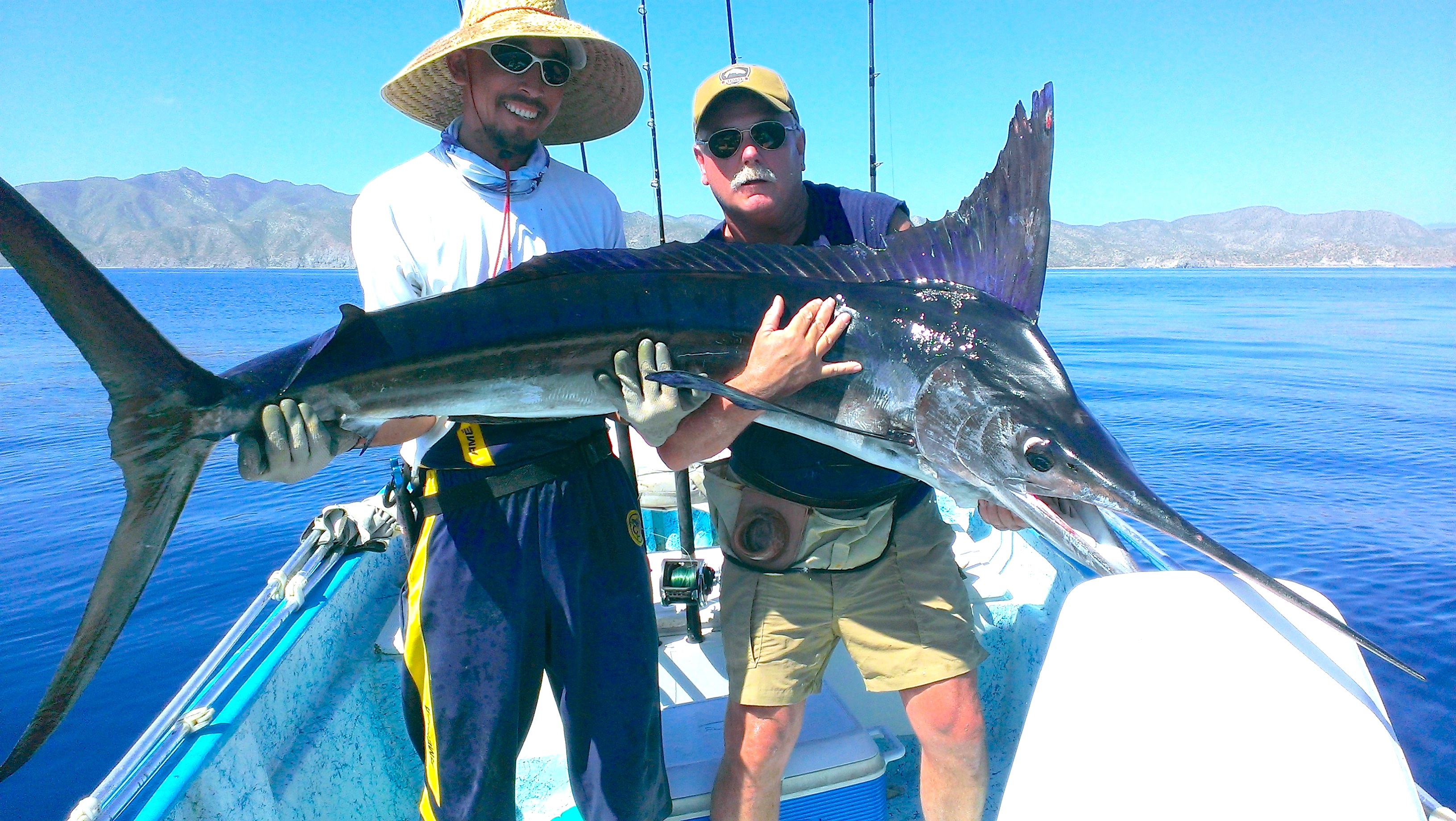
There are probably few places in the world where you have a better chance of hooking that billfish you’ve always wanted than the waters in the lower Sea of Cortez and the southern Baja Peninsula.


These “glamour” fish include both sailfish and marlin which are drawn to these waters by a number of variables. The landmass itself drops off quickly into deep water trenches that bring cool upwellings and nutrients from the abyss. These, in turn are the food source for the baitfish which attract all manners of gamefish to these waters.


Sitting at the apex of the foodchain the big billfish can attain sizes up to half-a-ton. At the lower end are the smaller sailfish. In ascending order (and size) come the striped marlin, black marlin and then blue marlin as the largest of the hunters.


Not only do they feed on the small baitfish like sardines, caballitos, jacks, mackerel and others. But, they feed in the middle of the food column as well regularly dining on the other predators such as tuna, bonito, dorado and other bluewater species. Basically, if it can fit in it’s mouth, it’s a possible meal.


So, if marlin are on your bucket list, like anything else, it’s all about “WWH” (WHEN? WHERE? HOW?).


Generally speaking, warmer months are better. But even then, that is not always the case. Every place is different.


Around Cabo, striped marlin have been known to “ball-up” in abundance just off the Pacific Coast between Bahia Magdalena and Cabo San Lucas. This takes place from November to January.


It’s a bit of a run from Cabo and it can be rough because it’s winter, but you can also catch a boat from several spots around Bahia Magdalena, but not many. Most anglers run up from Cabo.


It’s a long run, but the fishing can be incredible. It is not unheard of to hook and release dozens of marlin PER DAY! Again, food is the key. The marlin are there feeding on the huge schools of mackerel.


As the year ends, the stripers start to migrate south and around the tip of Baja and with each proceeding month start to move further and further north up into the Sea of Cortez.


So, while Cabo can see marlin year-round, the East Cape, La Paz, and to a lesser degree Loreto and cities north will see the billfish from spring to fall. But, not much in the cooler months.


So, pick your times carefully. Summer and fall are predominately the best opportunities to get into billfish in all areas.   Also waters are warm and seas tend to be calmer.


As for location…


To that end, generally speaking, the further south you go, the better. Although billfish can be caught in a multitude of spots in Southern Baja, you have a better shot at them in Cabo San Lucas, San Jose del Cabo and East Cape (Los Barriles and that area) than say Mulege or Santa Rosalia, although billfish are not out’ve the question in those great areas.


(No disrespect for northern areas which have their own spectacular fishing and their own particular claims to angling fame and shots at species not usually seen in some of the southern cities, e.g. yellowtail!)


Regarding fishing methods, there are a number of ways.


Be prepared to cover some water. So, a larger, faster boat might be preferred since these are rangy fish always looking for sources of food and capable of moving great distances very quickly.


Since you want to cover some water, trolling lures has been effective world-wide, especially, if you’re trying to locate fish.   If you’re in an area such as the East Cape or Cabo where the fish can be quite far, then a cruiser would surely be more comfortable, especially in Cabo which faces the open ocean.


However, that doesn’t mean you ALWAYS need a cruiser. Areas such as Loreto and La Paz do very well catching billfish using pangas insofar as fish are much closer to shore and the areas are less subject to big waves and rough seas.


Another method is to slow troll larger live or dead baits such as smaller bonito, larger mackerel and even small tuna properly rigged and dragged behind the boats.   There’s an old rule about “big fis-big baits” and you’ll be surprised how a huge bait that seems impossible to eat suddenly entices a big billfish to bite it!


One of my favorite methods is to simply troll a lure or dead bait behind the boat that has no hooks. This is a “teaser” method and requires that someone always keep an eye on the troll lines.


When a big billfish comes slashing at the teaser, another lighter rig with a live bait is then cast to the billfish. The live bait has a hook in it and the billfish will break off from the teaser and jump on the live bait.   Battling a big marlin or sail on this lighter live bait tackle can be incredible sport!


This same casting method can be used on a “sight-fish.” Basically, keeping a sharp eye on the water until a billfish is seen on the surface. Using some bit of stealth and a steady hand on the wheel, the boat is maneuvered so that a live bait can be properly cast directly in front of the fish…hopefully resulting in a big hookup!


Whatever you do, consider “CPR…Catch Photo Release” before you go fishing. Decide that you are going to release your billfish BEFORE you’re in the heat of battle. No matter what your captain tells you. Let him know that you plan to release your billfish and that his tips are NOT dependent on him killing the fish.


Try to keep the fish in the water to release it. Bringing the fish aboard not only damages the slime protection on it’s skin, but without the negative buoyancy of the water, internal organs can also be damaged by hauling it into the boat no matter how well intended.


Get as good a photos as possible then release it. All the best taxidermists now do fiberglass mounts that are incredible. All they need are a good photo or, in many case, not even that. All they need is an estimation of size to make that perfect keepsake trophy for your den!

That’s our story!

Jonathan signature


Jonathan

_______________

Jonathan Roldan has been writing the Baja Column in Western Outdoor News since 2004.  Along with his wife and fishing buddy, Jilly, they own and run the Tailhunter International Fishing Fleet in La Paz, Baja, Mexico  www.tailhunter-international.com.  They also run their Tailhunter Restaurant Bar on the famous La Paz malecon waterfront.  If you’d like to contact him directly, his e-mail is riplipboy@tailhunter-international.com  or drop by the restaurant to say hi!

______________

Jonathan Roldan’s

Tailhunter International


TAILHUNTER FISHING FLEET #1 Rated on Trip Advisor

TAILHUNTER RESTAURANT BAR #1 Rated in La Paz on Trip Advisor


Now follow us on FACEBOOK TOO


Website: www.tailhunter-international.com

U.S. Office: 8030 La Mesa, Suite #178, La Mesa CA  91942

Mexico Office: 755 Paseo Obregon, La Paz, Baja Sur, Mexico

Phones:

from USA : 626-638-3383

from Mexico: 044-612-14-17863

.

Tailhunter Weekly Fishing Report:

http://fishreport.jonathanroldan.com/

Tailhunter YouTube Videos:

http://www.youtube.com/user/pangapirate

“When your life finally flashes before your eyes, you will have only moments to regret all the things in life you never had the courage to try.”
Read Full Post »

“You Mean I Can Keep It?”

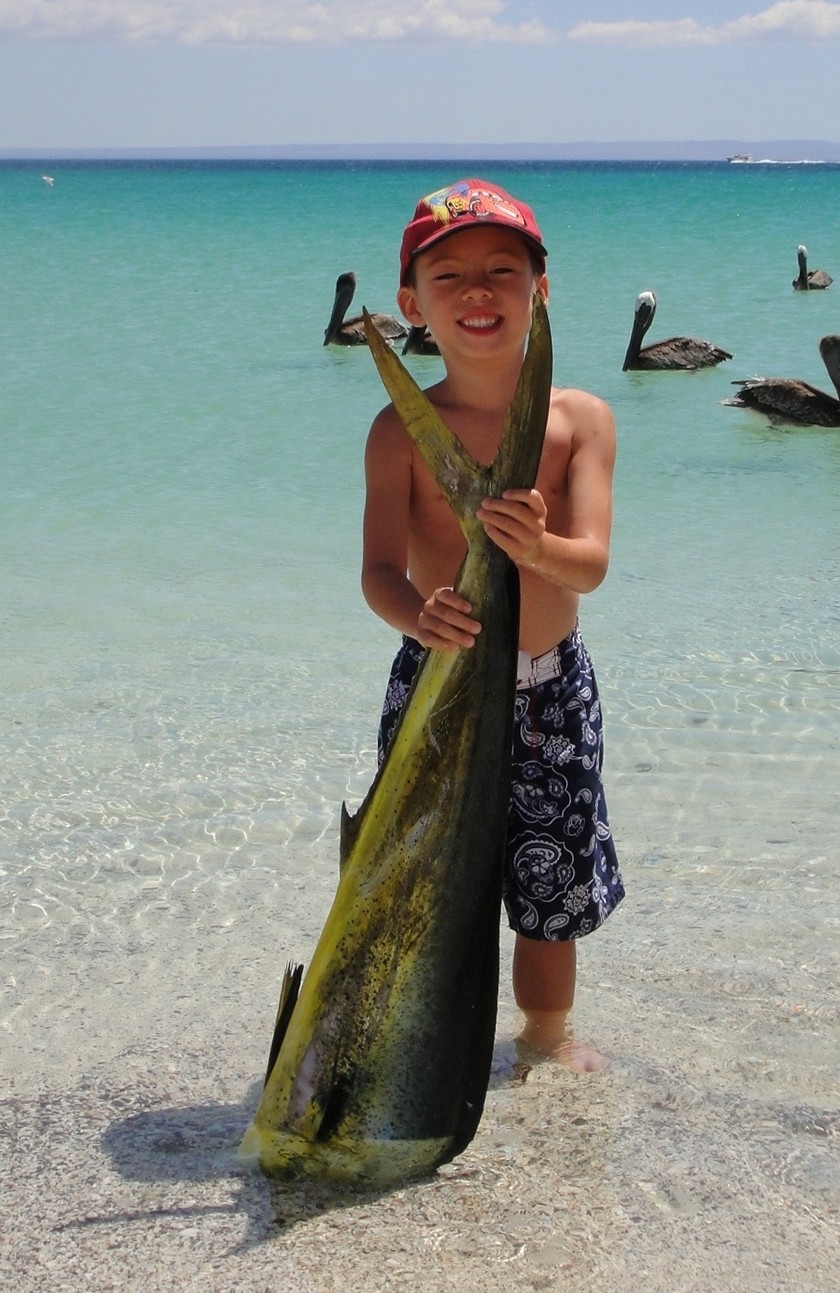
What do you think?  It looks to me like Aiden's self-esteem is just fine!

Yes…I think we can bring this one home!

You Mean I Can Keep It?

Originally Published the Week of September 20, 2013 in Western Outdoor News

You Baja veterans should probably just web surf something else.  This might be old stuff to you.

But, often when you do something so long or something is “old hat” you forget that there’s still newbies out there who have valid questions about things that old Baja rats like us take for granted.

It’s a simple, but important issue.  I receive enough e-mails and phone calls asking if it’s OK to bring home fish.

Sometimes, my auto-response in my brain says, “Well..duh…that’s kinda dumb!  That’s like asking me if it’s OK to dip you chips in salsa!”

Of course, I can’t and would never say that because there are no such thing as dumb questions.  It’s a legitimate question and well-asked.   I mean, if you’re coming fishing in Baja, one would need to know if it’s OK to keep your catch.  Corollary to that, is it OK to bring some home!

But, I get asked about it enough as new folks are discovering Baja that I figured it was time to do another column about it and update my thoughts.

The question used to surprise me more.  But, having been in the industry now for almost 2 decades, us west-coast anglers might be surprised to learn that  there are many world-class fishing destinations that severely limit what you can keep.

Pay several thousand dollars a day and you get to keep say…one fish!  Or, you must release all fish.   Yes, it’s true!   For most of us who have fished the Baja since the age-of-dirt,  we pretty much always assume that as long as we’re within limits, everything hooked is coming home.

There may come a day when severe limits will be enforced, but that’s the subject of another column and someone with a lot bigger brain and bigger column than mine.

For now, the simple answer is yes, you may bring home your fish that you catch here in Baja.   As long as you’re within limits, by all means, bring some home.  Or have some cooked up while you’re still on vacation.  Nothing will taste better than fresh caught fish that was swimming around earlier that day!

Bringing fish home starts with taking care of the catch.  Treat it well and you’ll preserve the quality.

Once the fish is caught, if you can, have your captain or deckhand bleed it.  That’s not always possible when the action is fast-and-furious and lines are flying and it’s a three-ringed-water-circus out there.  However,  bled-fish…even lower-grade meat fish like bonito or skipjack will taste world’s better if it’s freshly bled.

Maybe the most important thing whether it’s bled or not is to keep it cold.  Warm water fish are…well…they’re warm!  As soon as they’re dead, like anything, they start to deteriorate.   And the hot Baja sun is not a friend to your future dinner!  Leaving a fish on the deck or even in a fish box without ice is pretty much like putting the fish in the oven.

So, at all levels from catch-to-stove or barbecue…keep your fish cold.  Ice is your buddy.   It’s a good question to ask when you book your trip if there’s ice aboard to keep your fish chilled.

After that, you need to store your fish while you’re still on vacation.

I see two cardinal sins all the time.  One is rinsing your fish in fresh water.  Or, even soaking it in fresh water.  That takes out all the flavor.  Secondly, the fresh water gets in and then freezes and now your have fresh water crystals in your fish which detracts from the quality and flavor.

Additionally, I often see people rinsing their fish in warm or tepid water.  Especially in Baja!  Water coming from pipes here is often very warm…or hot!  Amigo…not only is it fresh water, but moreso, you’re cooking your fish in the warm water.  If you have to use fresh water, make sure it’s cool water!    Ideally, clean saltwater is best.

The ideal method is to have your fish vacuum sealed.  It’s worth it!  Nothing is worse than beautiful fish fillets in a big giant frozen ball in your freezer.  You take it out and it’s either freezer burned or you now have a 10-pound ball of thawed fish.  And you really only need two fillets for dinner!  The rest get wasted.  Or the cats get it.

Vacuum sealing is the difference between fish that lasts a few weeks or fish that can last many months in your freezer so that your dorado caught in June tastes great in December!

If you can’t vacuum seal it, at least put it in good quality zip-lock style freezer bags.   Only put in what you’re planning to thaw for a meal.

An old Mexico trick is to put fillets in the freezer bag then lowering the bag into a bucket or sink of water.  The water forces the air out and then press the seal.  You get instant Mexican vacuum sealing!

Lastly, it’s really important to keep your fish in a good place while you enjoy the rest of your vacation.  As crazy as it sounds, we often encounter folks here who book their hotels and either do NOT have freezer or do not allow fishermen to store their catch.   That’s gonna be a buzz-kill.

Others, simply put, have crappy freezers that aren’t worth a hoot.   So, check on that.  The places that cater to fishermen or have a reputation for good fishing also have good storage facilities.  Or, if you’re booking through a charter operation, ask them about storing your fish in freezers.

Remember, that warm fish often takes awhile to freeze.  Or the freezers at a given hotel get a load of fish every night from all the anglers.  In even the best freezers it sometimes takes 24-hours to get solid.

If you’re leaving the next day, that could seem like a problem.  It’s not.  Put your least frozen fish on the bottom of your cooler.  Put your most frozen fish on the top (cold travels down).  Add extra insulation with crushed crumpled newspaper or your dirty fishing clothes and your fish will be fine!

That’s our story!

Jonathan

_______________

Jonathan Roldan has been writing the Baja Column in Western Outdoor News since 2004.  Along with his wife and fishing buddy, Jilly, they own and run the Tailhunter International Fishing Fleet in La Paz, Baja, Mexico  www.tailhunter-international.com.  They also run their Tailhunter Restaurant Bar on the famous La Paz malecon waterfront.  If you’d like to contact him directly, his e-mail is riplipboy@tailhunter-international.com  or drop by the restaurant to say hi!

______________

Jonathan Roldan’s

Tailhunter International


TAILHUNTER FISHING FLEET #1 Rated on Trip Advisor

TAILHUNTER RESTAURANT BAR #1 Rated in La Paz on Trip Advisor


Now follow us on FACEBOOK TOO

Website: www.tailhunter-international.com

U.S. Office: Box 1149, Alpine CA  91903-1149

Mexico Office: 755 Paseo Obregon, La Paz, Baja Sur, Mexico

Phones:

from USA : 626-638-3383

from Mexico: 044-612-14-17863

.

Tailhunter Weekly Fishing Report:

http://fishreport.jonathanroldan.com/

Tailhunter YouTube Videos:

http://www.youtube.com/user/pangapirate

“When your life finally flashes before your eyes, you will have only moments to regret all the things in life you never had the courage to try.”

Read Full Post »

Salt Lake City-20120210-00078

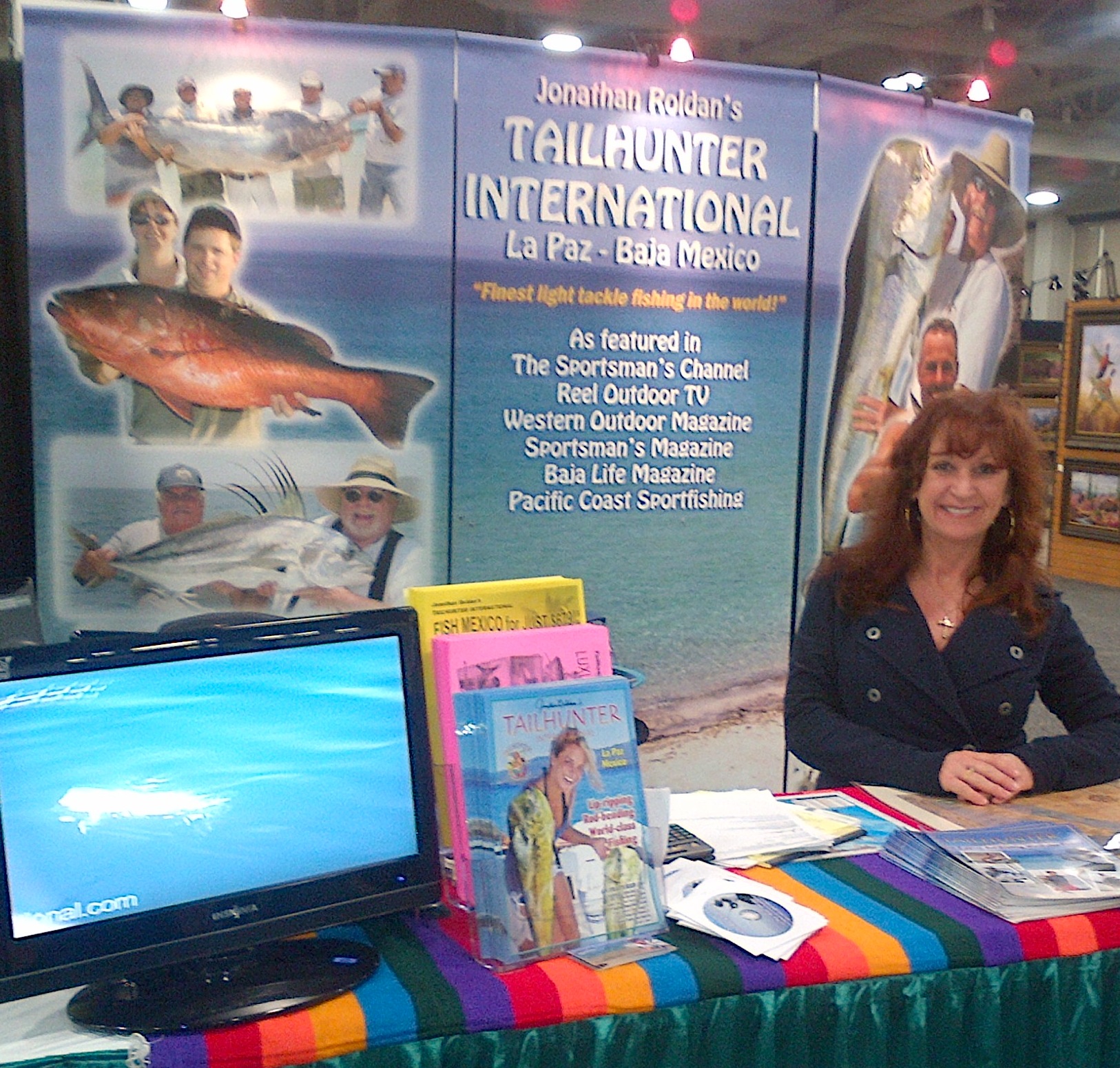
From January to March of each year for almost 20 years, we criss-cross the western U.S. promoting our fishing operation in La Paz and often become an impromptu clearing-house of many general questions about travel to Baja and Mexico in general.

“BAJA FAQ 2013”

Originally Published the Week of Feb. 13, 2013 in Western Outdoor News

As I’m writing this, we’re just wrapping up our 3rd day here at the Pacific Northwest Sportsmens Show here in Portland, Oregon.  We’ve been on the road now for more than a month as we do our annual show-hopping promo tour across the country.

So far, we’ve done fishing/ hunting shows in Sacramento, Denver, Seattle before this one.  Only 2 more months to go and about 12,000 more miles of driving.

As we stand here in our booth, promoting our La Paz fishing operation for 8, 10…12 hours a day, we talk to hundreds of people a show.  We often hear many of the same questions.  Year-after-year.  Although the questions might be the same, very often the answers might change based on changing conditions in Baja.

I thought I’d share some of the most common questions.  Some might seem pretty simple…or silly…or obvious…but as mentioned, sometimes answers might surprise you.  Also, we get asked these questions ALOT so obviously, alot of folks don’t know these answers!

Q:  Where is Baja, Mexico?

A:  It’s the 1000 mile-long-peninsula extending from the border at San Diego/ Tijuana and going south to lands-end at Cabo San Lucas.  It is bordered by the Pacific Ocean to the West and is separated from the Mexican mainland to the east by the Sea of Cortez.

Q:  Is it safe?

A:  The  VERY short answer.  Yes.  Mexico is a huge country.  Generally as safe as most cities in the U.S. and in some respects even safer.  Yes, there are serious problems, but much of that is only in certain areas and in border areas and tourists are not generally targeted anymore than tourists are targeted by crime in the U.S.  In any given city, just like most U.S. cities, there are good and bad parts of town.  Stay out’ve the bad parts.

Q:  Is it OK to drive?

A:  On any given day, there are thousands of tourists on Baja roads having un-eventful drives.  Thousands cross the border daily and routinely.   Observe the laws.  Make sure you have insurance. Drive with care and common sense as you would anywhere.

Q:  Can we buy property?

Yes, you can.  Who do you think is buying all these parcels, condos, houses and lots along the beachfronts! Sometimes it seems that Americans are buying up all of Baja.

Q:  Is it always good fishing?

A:  Historically,  Baja is one of the most famous fishing areas in the world.  But…Baja is 1000 miles long.  It has over 2000 miles of coastline.  It has incredible fishing and over 700 identified species of fish in the Sea of Cortez.  That being said, fishing is as different as the species, location and variables such as  season, weather, current, bait, etc.  Every places is not great 100% of the time.  There’s such a thing as a bad day of fishing.

Q:  Can we bring our fish home?

A:  As long as you’re within limits and observe regulations, it would be a shame if you didn’t.

Q:  Is the water safe to drink?

Most places very much so!  But, like many places in the U.S.,  municipal water tastes bad.  Everyone drinks bottled water which is readily available.

Q:  Can we use American money?

A:  In Baja, American dollars are very welcome, but with new banking laws, making it harder for Mexican vendors to change dollars into pesos,  it makes it harder for the vendors to accept pesos…especially large denominations.  Rarely, will a vendor turn down a payment in dollars…a sale is a sale!  But increasingly, more can’t accept large denominations.  So, it’s a good idea to use smaller bills or get pesos exchanged before you come over or at an exchange house.  Many Mexican banks will not change dollars to pesos unless you have an account and, even then, only small amounts.

If you can avoid it, don’t use credit cards. But,  many places won’t accept them because of high surcharges to the vendor.

Q:  What happens if we need medical help or what happens if I have special medical needs?

If it’s  your medication, bring what you need and extra dosage.  Bring a copy of your prescription.  If it’s emergency medical care, most large Baja cities actually have pretty good first response and emergency care.  Enough to get you home after most emergencies so that your own doctor can treat you.  Credit cards  are usually welcome in lieu of insurance. Generally, emergency care is much cheaper also.

Q:  What happens if we don’t speak Spanish

English is growing.  Span-glish is universal, especially in the tourist areas.   Keep it simple and eliminate slang and most folks  will understand and everyone gets along just fine.  But, everyone appreciates any attempt to speak Spanish!

Q:  Do we need a passport?

Yes! Don’t wait until the last minute to get one.

Q:  Can we still get prescription drugs there with no prescription?

Generally no.  Not like in the old days. Generally speaking, if you need a prescription for it in the U.S., you’ll need it for most things in Mexico.

Q:  How is it to retire there?

It’s one of the fastest and most sought-after places for gringos to retire and an excellent place to make dollars stretch with a high standard of living.  You get more bang for the buck.

______________

Jonathan Roldan has been writing the Baja Column in Western Outdoor News since 2004.  Along with his wife and fishing buddy, Jilly, they own and run the Tailhunter International Fishing Fleet in La Paz, Baja, Mexico  www.tailhunter-international.com.  They also run their Tailhunter Restaurant Bar on the famous La Paz malecon waterfront.  If you’d like to contact him directly, his e-mail is riplipboy@tailhunter-international.com  or drop by the restaurant to say hi!

______________

Jonathan Roldan’s

Tailhunter International


TAILHUNTER FISHING FLEET #1 Rated on Trip Advisor

TAILHUNTER RESTAURANT BAR #1 Rated in La Paz on Trip Advisor


Now follow us on FACEBOOK TOO


Website: www.tailhunter-international.com

U.S. Office: 3319 White Cloud Drive, Suite A, Hacienda Hts. CA 91745

Mexico Office: 755 Paseo Obregon, La Paz, Baja Sur, Mexico

Phones:

from USA : 626-638-3383

from Mexico: 044-612-14-17863

.

Tailhunter Weekly Fishing Report:

http://fishreport.jonathanroldan.com/

Tailhunter YouTube Videos:

http://www.youtube.com/user/pangapirate

Read Full Post »