Feeds:
Posts
Comments

Archive for the ‘Sun stroke’ Category

A DEARTH of ‘DINES

OLYMPUS DIGITAL CAMERA

NO MAS????

A DEARTH of ‘DINES


Originally Published the Week of May 27, 2014 in Western Outdoor News


It’s an early Baja morning and the sun was just starting to light up with golden blue hues against the western horizon. The heat would soon follow, but for now, the dawn was still freshly-tinged with the salty residue of the retreating night.


It is early enough that skippers and anglers alike still hunched shoulders in windbreakers and sweatshirts against the nippy breeze and spray knowing full-well that the sun would soon throw open the furnace blast of another Mexican day. But, there was no hiding the anxious anticipation of another grand fishing day in the Sea of Cortez.


The panga motored as quietly as possible into the little rocky cove. Several other pangas were already up against the craggy shoreline of the island. In the bows, a skipper or assistant could be seen with cast nets draped over shoulders and squinting sunglassed-covered eyes into the shallow waters.


The captain of this particular launch cut the motor and drifted toward a little warren of rocks. He jumped lightly forward to the prow.  Readied his net and with a circular fling; expertly tossed the cast net into the air where it hung; pancaked open; and fell flatly into the waters.
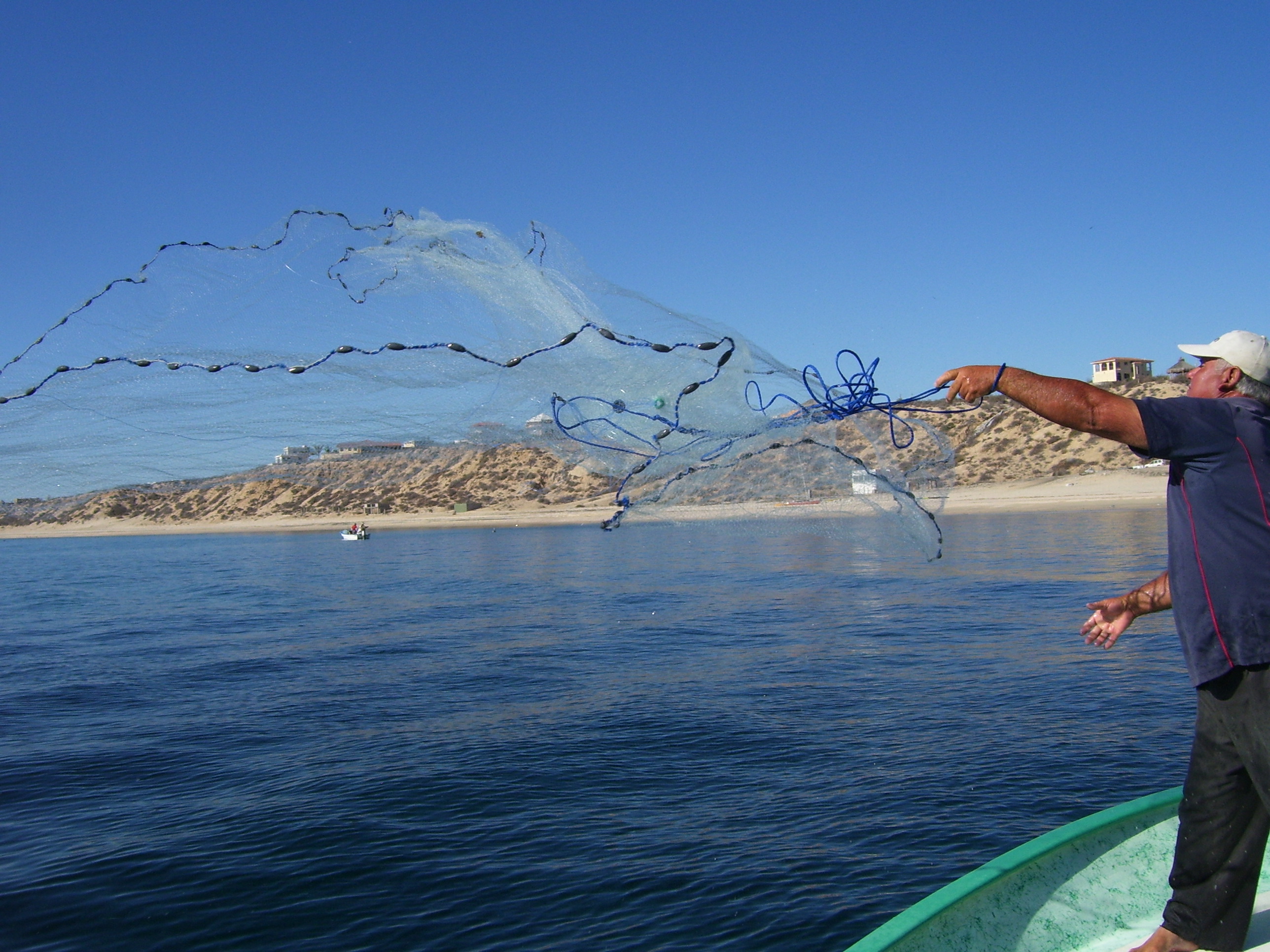
20110621_72


As the captains pulled the drawstring of the net enclosing the snare and drew it towards the waiting panga and anxious anglers, something appeared wrong. Usually, the “pull” of the net would be evidenced by some bit of strain and effort by the captain.


But, he pulled the net effortlessly up.


Normally, with a grunt, the skipper would heave the bulging net up-and-over above the live bait well and with another pull a “zillion trillion” thrashing, splashing, struggling dark-backed sardines (‘dines) would tumble en masse into the waiting waters of the bait tank.

Two or three quick tosses more and the panga would be loaded. Then it would be a sprint to the fishing grounds heavily bulging with hook-sized bait and high on anticipation for another day of bent-rods and bloody decks.


But, this time there was no grunt-and-heave. The net came up virtually empty. Four mini-sardines…FOUR…were released into the bait tank. A dozen more net tosses and 90 minutes of searching and scouring produced only a handful of baits for their efforts.


Each fruitloss toss-and-retrieve caused shoulders to sag.


Nothing like starting the fishing day where elation and anticipation backslids into deflation. No bait?


The other pangas did not do much better. They would end up making the best of the day with sliced bonito; a few live ballyhoo; some scrounged mackerel and some chopped-up squid. Just not quite the same as being able to chum handfuls of sardines into the water to get the fish going.
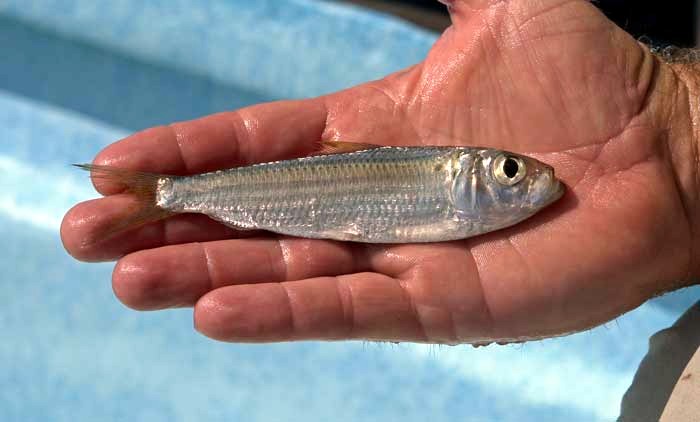
bait


It’s been happening with increased frequency in Baja waters. Especially this year as a combination of variables seems to be combining for a “perfect storm” in terms of bait.


Part of it can’t be helped. It’s nature. Nature does what nature does and it’s like trying to stop sand from getting in your hot dog at the beach. It’s gonna happen.


This appears to be an El Nino season. But, moreso, the scientists are saying maybe it’s a “super” El Nino season with the warmest water and air temperatures in the history of recording el Nino conditions.


The cycle pops up every few years and, in a nutshell, means warmer ocean conditions along the Eastern Pacific coast along the western side of the U.S., Canada and Mexico. Warmer waters mean more storms; higher incidence of hurricane.   It’s the reason folks in Washington encounter stray dorado and tuna that lose their way in the warm currents and head far more north than their usual comfort zone.


But, these warmer waters mean the colder waters from the deep trenches don’t come to the surface. The cooler waters bring the nutrients. The nutrients bring the bait fish. The bait fish provide food for the sportfish. Are you following this? One big circle of nature. And tag…this is us this year. Warm waters = less bait.


The other side of the equation is perhaps more ominous. Some would say even a bit sinister. Because we’re doing it to ourselves. We can’t do much about El Nino.   But, us humans aren’t doing much to help ourselves either.


It’s the fish pens. You’ve heard of them. The controversial but apparently successful capture of juvenile tuna and yellowtail in huge nets then raising them in a net-like corral. Grow ‘em big and sell ‘em off. It works. It’s great. It’s economical.


Supply and demand. The planet craves seafood. Heck, it needs food period! The fish pens help fill the need. If it didn’t work, they wouldn’t be using it.


Here’s the rub. Everyone gets the impression that fishing farms are “green.” And there’s a lot of controversy about that. I guess it depends who you’re reading.


But, I’ve read that it takes anywhere from 3-10 pounds of “bait food” to grow a tuna one pound bigger. . So, let’s see…to grow a 50 pound tuna? Do the simple math. Hmmmm…that’s a lot of food.   It has to come from somewhere.


Arguably, wherever they have set up these “pens” they have depleted the bait stocks.   Pretty much raided everything in the waters that could be used or ground up into fish meal. It reminds me of those days when the cattle or sheep came to an area and ate all the grass that held the soil. Resulting in dust bowls. Are we headed for a “toilet bowl?” Are we destined to be live-sized versions of the Tidy Bowl man adrift in blue water?


Here, in La Paz, the head of La Paz Tourism, Sr. Pedro Aguilar told me that the fishfarmers are prohibited from taking bait in the bay and around our two islands. However, our local sportfishing captains tell me that the bait guys from the pens are out at night scouring those very areas capturing all the bait they can get.


The other side is that all the “waste” product has to go somewhere and it’s going right into the waters and creating a whole separate ecological issue. Tons of “fish poo” isn’t a good thing, especially in these shallow areas where the pens are located and ocean currents aren’t there to sluice out the after-product.


If you’ve ever even seen what your kid’s goldfish can do to a home fish bowl after a few days of not changing the water, imagine what a net load of fat tuna can squeeze out.


It’s not just here. It seems to be happening all over. And again, we have the challenge of balancing the need for food; the ecosystem; the sportsmen…and then, of course the corporate interests.


So…a double whammy curse on us. And I don’t know what to do about it. Awfully discouraging.

That’s our story!

Jonathan signature


_______________

Jonathan Roldan has been writing the Baja Column in Western Outdoor News since 2004.  Along with his wife and fishing buddy, Jilly, they own and run the Tailhunter International Fishing Fleet in La Paz, Baja, Mexico  www.tailhunter-international.com.  They also run their Tailhunter Restaurant Bar on the famous La Paz malecon waterfront.  If you’d like to contact him directly, his e-mail is riplipboy@tailhunter-international.com  or drop by the restaurant to say hi!

______________

Jonathan Roldan’s

Tailhunter International


TAILHUNTER FISHING FLEET #1 Rated on Trip Advisor

TAILHUNTER RESTAURANT BAR #1 Rated in La Paz on Trip Advisor


Now follow us on FACEBOOK TOO


Website: www.tailhunter-international.com

U.S. Office: 8030 La Mesa, Suite #178, La Mesa CA  91942

Mexico Office: 755 Paseo Obregon, La Paz, Baja Sur, Mexico

Phones:

from USA : 626-638-3383

from Mexico: 044-612-14-17863

.

Tailhunter Weekly Fishing Report:

http://fishreport.jonathanroldan.com/

Tailhunter YouTube Videos:

http://www.youtube.com/user/pangapirate

“When your life finally flashes before your eyes, you will have only moments to regret all the things in life you never had the courage to try.”


Read Full Post »

“FIRST TIMER CHECKLIST”

couple on beach


FIRST TIMER CHECKLIST FOR BAJA MEXICO

Originally Published the in Western Outdoor News the Week of May 14, 2014

Despite the media blitz about violence…despite past warnings of swine flu…and a downturned economy, Mexico has one of the fastest growing tourism economies in the world right now. In fact, it’s breaking records with something like 24 million visitors last year.


World-wide, folks are simply realizing that Mexico is a great value for a vacation destination whether they are coming from Europe, Asia or even just coming across the border whether flying from Portland or driving from Phoenix or San Diego.


For many of us, who have been visiting or actually live in Mexico, we’ve come to just take it for granted on so many levels. Especially, for fishermen in the southwestern states of the U.S. going to Mexico is about as routine as taking a camping trip to Yosemite or a run to Vegas.


But, from the perspective of someone who lives and runs a sportfishing business here in Mexico that specifically caters to tourists and sportsmen and women, we’re seeing an increased number of first-timers! Great for us, but so many questions show a commonality of interest.


You might even think that many folks who read this publication must surely know about fishing in Mexico, but there’s many who have never been south and are thinking about it.


So, a few things to think about:


First, yes, you MUST have a passport. I get this question all the time. The old days of simply having your drivers license and a copy of your birth certificate won’t work these days, especially after 9-11.   For sure, you want to be sure they let you back INTO the United States after your vacation!


They are relatively easy to obtain and you can get the process started online by just hitting your search engine for U.S. passports. Or check this: http://travel.state.gov/content/passports/english/passports/information/costs.html


The thing is, just don’t wait until the last minute! Especially, as vacations times like summer…Thanksgiving…Christmas… get near. It only takes a few weeks, but slows down during high seasons and you don’t want to be “sweating bullets” waiting for the mailman as your own vacation gets closer.


Next, do some research. It can be confusing. There’s almost TOO MUCH info out there, but better to have too much than too little.


Do some research about the destination itself. Just because all of your neighbors have been there, it might not be your cup of tea.   If you’re not into jet-skis and paragliding and crowds then maybe you want to check out a slower-paced place to put your toes-in-the-sand.


Or, if your wife is really into gourmet dining and shopping, then find a place that has those things. If you’re trying to use some of your time-share weeks, not all places have time shares, nor do all airlines fly every day of the week to all destinations.


Next…


Another advisory…don’t believe everything you read online.   Like anything else, online websites are heavy into self-promotion. Good or bad…that’s just the way it is.


For example, if a place says it’s “near the beach” that can be two blocks; a 10 minute walk; or one mile. What exactly does “near the beach” mean?


You might also ask or find out what’s nearby to wherever you’re staying. It might look great in the online photos, but of course, they might not tell you that there’s a raucous nightclub next door that goes until 4 a.m. every morning.   They might not tell you that there’s a fish processing plant upwind that provides some wonderful fragrances in the afternoon breeze.


Or, if it says, “near the beach” or “on the beach” is that a beach you can swim at? Or is that a beach that they have “no swimming signs/ no fishing signs” posted?


If you’re going to be fishing is there a freezer? If you plan to bikeride, do they have rentals? If you’re going to be windsurfing, is there a place to store your gear or will you have to carry your rig on a burro down to the beach?


If you can’t walk stairs (Mexico is a land of stairs and very few elevators) find out if there’s an elevator or do they have first-floor rooms.


Or it’s going to be too windy. Or too hot. Of it’s too far from town.   The more you do ahead of time, the less you’ll have to worry about later when you’re supposed to be on vacation.


Figure out what you want to do. If you plan to fish, then go to a place where they have fishing. And find out specifically, if it’s the type of fishing you want to do at the time you want to go there.


I once got asked, “When is the salmon run in La Paz?” No lie.


I hope you’re not planning to fish for salmon in Mexico, but seriously, it makes no sense to book a place in February expecting to catch marlin. Then, you find out there’s no marlin until July!


Another time, I had a family all set asking to take surfing lessons…in Loreto…which is about 350 miles from the nearest shore break.   They were sure disappointed when I had to give them a small lesson in geography.


A little research goes a long way. All places are not created equally and Mexico runs a wonderful gamut of places that are very touristy to places where you’ll be the only tourist in town! Lots of folks are finding exactly what they’re looking for south of the border.


That’s my story!

Jonathan signature


_______________

Jonathan Roldan has been writing the Baja Column in Western Outdoor News since 2004.  Along with his wife and fishing buddy, Jilly, they own and run the Tailhunter International Fishing Fleet in La Paz, Baja, Mexico  www.tailhunter-international.com.  They also run their Tailhunter Restaurant Bar on the famous La Paz malecon waterfront.  If you’d like to contact him directly, his e-mail is riplipboy@tailhunter-international.com  or drop by the restaurant to say hi!

______________

Jonathan Roldan’s

Tailhunter International


TAILHUNTER FISHING FLEET #1 Rated on Trip Advisor

TAILHUNTER RESTAURANT BAR #1 Rated in La Paz on Trip Advisor


Now follow us on FACEBOOK TOO


Website: www.tailhunter-international.com

U.S. Office: 8030 La Mesa, Suite #178, La Mesa CA  91942

Mexico Office: 755 Paseo Obregon, La Paz, Baja Sur, Mexico

Phones:

from USA : 626-638-3383

from Mexico: 044-612-14-17863

.

Tailhunter Weekly Fishing Report:

http://fishreport.jonathanroldan.com/

Tailhunter YouTube Videos:

http://www.youtube.com/user/pangapirate

“When your life finally flashes before your eyes, you will have only moments to regret all the things in life you never had the courage to try.”
 

Read Full Post »

“LA PAZ EVENT TARGETS IGFA RECORDS AND ROOSTER RELEASES!”

Burgess 1 rooster 6-14 PMT

Fish like this huge roosterfish caught and released by Ron Burgess at Las Arenas last year have made the Las Arenas/ La Paz area famous and known as the “roosterfish capital of the world.” Last year in 4 days, Ron and his amigos caught and released 29 roosters between 40 and 90 pounds!

WP_20140327_14_48_39_Pro

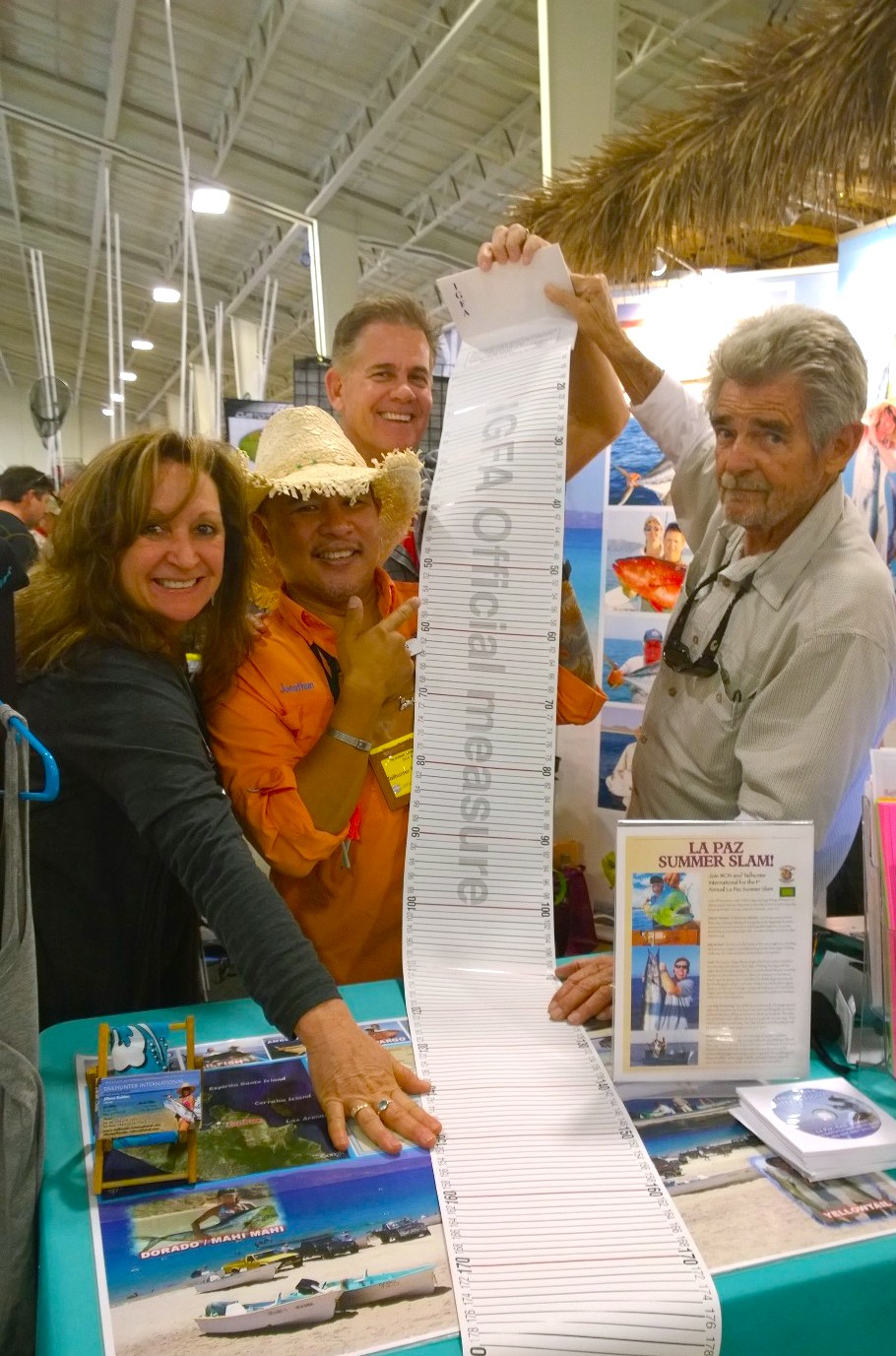
A sample of the new IGFA “release measuring devices” which will allow anglers to officially measure and release fish and still be eligible for world records! This new “category” for records is a big boost for catch-and-release of species! Shown here with Jilly and Jonathan Roldan, Pat McDonell, editor for Western Outdoor News, and Gary Graham (holding the tape!) who is not only a multi-IGFA record holder, but also an IGFA rep plus famous author and journalist. All will be at the event!


LA PAZ EVENT TARGETS IGFA RECORDS AND ROOSTER RELEASES!

Originally Published in Western Outdoor News the Week of April 29, 2014


In what appears to be a first, Western Outdoor News and Tailhunter International Sportfishing in La Paz are having the first certified tag-and-release roosterfish event this summer


The “Summer Panga Slam” will be held June 17-21 in La Paz. It promises to be quite an event.


Originally slated as a 3-day light tackle panga tournament among friends, the event has grown tremendously. It has sprouted some “legs” since it’s inception several months ago.


For one, Tailhunter International in La Paz now has a certified I.G.F.A. scale on hand and is a registered IGFA center. This means, Tailhunters and it’s clients can legitimately target world-record fish.


This is significant given that they fish the famous waters of La Paz and Las Arenas as well as the northern East Cape where arguably more world records have been set over the decades than anywhere else. Many consider it to be one of the top light-tackle fisheries in the world.


Additionally, the area has been known as the “roosterfish capital of the world” famous for it’s slugger-sized rooster populations. In fact, in 1987, the world record roosterfish was caught on these very beaches. It weighed in ta 114-pounds. Larger ones have been caught and released.


Last year, the area had a banner roosterfish season where roosters averaged 40-90 pounds and a number of fish over 100-pounds were tallied and released including one estimated over 150-pounds!


All of this is important to the “Panga Slam” event for two reasons:


  1. The IGFA now has “release” categories that were previously not available. That means you can now become a world-record holder and not have to kill your fish. Last year, a world-record release rooster was produced in La Paz waters! There are categories for men, women and children! However, you MUST have a special IGFA measuring device of which this event will have several on hand!


  1. Tailhunter International is part of the newly formed Roosterfish Foundation dedicated to preserving the exotic rooster and monitoring the health of the species. To that end, tag-and-release devices are now available so that released fish can now be tagged before we let them go.


So, what all this means is that the “Summer Panga Slam” now gives participating anglers not only a shot a getting a record fish that can actually be weighed. But, it’s also an opportunity to release a world-record fish and get into the record books as well as help to proliferate the roosterfish species for everyone!


It’s going to be a lot of fun and, as mentioned, the event has grown. WON editor Pat McDonell himself will be down to help host the event. WON columnist, journalist and famous author Gary Graham will be on hand as well to record the event. Gary is himself also a multi-record IGFA record holder and the IGFA representative.


On board as well are a growing number of sponsor with lots of goodies for the participants.


The event is limited to 40 anglers in 20 two-person panga teams. There are still a few spots left! Here’s the rest of the details:


  • Sponsors aboard now include:  Okuma Reels, Costa Sunglasses, Yo-Zuri, Sufix, Turners Outdoors and Lazer Trokar Hooks!
  • Three full days of panga fishing at Las Arenas  (gear, breakfast and lunches included) 
  • 4 nights La Concha Beach Resort in ocean-facing room
  • Welcome dinner and Awards Dinner
  • Taco feed night and live music at famous Tailhunter Restaurant
  • One day open fun fishing and then two days jackpot tournament (cash entry $100 in La Paz per team) 
  • Event t-shirts
  • Cabo San Lucas Airport Shuttles 

Cost is $1350 per person. Space is limited and going fast. For more information, you can contact Western Outdoor News and talk with Mike Flynn at FLYNN@wonews.com or call him at 949-366-0030.


We’re looking forward to having you join us!

That’s our story

Jonathan signature

Jonathan

_______________


Jonathan Roldan has been writing the Baja Column in Western Outdoor News since 2004.  Along with his wife and fishing buddy, Jilly, they own and run the Tailhunter International Fishing Fleet in La Paz, Baja, Mexico  www.tailhunter-international.com.  They also run their Tailhunter Restaurant Bar on the famous La Paz malecon waterfront.  If you’d like to contact him directly, his e-mail is riplipboy@tailhunter-international.com  or drop by the restaurant to say hi!

______________

Jonathan Roldan’s

Tailhunter International


TAILHUNTER FISHING FLEET #1 Rated on Trip Advisor

TAILHUNTER RESTAURANT BAR #1 Rated in La Paz on Trip Advisor


Now follow us on FACEBOOK TOO


Website: www.tailhunter-international.com

U.S. Office: 8030 La Mesa, Suite #178, La Mesa CA  91942

Mexico Office: 755 Paseo Obregon, La Paz, Baja Sur, Mexico

Phones:

from USA : 626-638-3383

from Mexico: 044-612-14-17863

.

Tailhunter Weekly Fishing Report:

http://fishreport.jonathanroldan.com/

Tailhunter YouTube Videos:

http://www.youtube.com/user/pangapirate

“When your life finally flashes before your eyes, you will have only moments to regret all the things in life you never had the courage to try.”


Read Full Post »

ENSO-states-viz_0

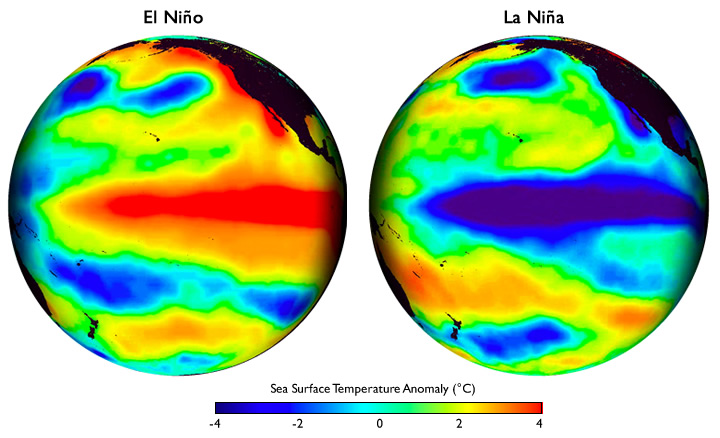
Equatorial tropical waters getting warmer and might be the vanguard of a super el nino on the way.


SUPER BABY ON THE WAY?

Originally published the Week of April 15, 2014 in Western Outdoor News

I waited for awhile to write something about this. I’m no expert and even the experts had differing opinions. But, the more I read and the more I see reported from fishing around here and in other areas of Mexico, I guess it better be addressed.


Plus, everyone is asking me as well.


Things are looking like we might have an “El Nino” on the way. In fact, it might be a Baby-Huey-sized “Super Nino,” if things continue to shape up.


Everyone talks about it but few understand what it is and what really happens. Mostly, absent all the scientific-speak, most of us just want to know how that’s going to affect the fishing, right?


Originally, it was recognized by fishermen in South America when anomalies in the water temperatures started showing up around Christmas time. Hence, “El Nino” means the “little boy” or Christ child.


According to the folks at the National Oceanic and Atmospheric Association (NOAA), in a normal year (whatever that is) trade winds blow westerly across the Pacific.   That means waters around Indonesia are warmer and as much as a half-meter higher than say, Ecuador.


In an El Nino year, it’s just the opposite.


For those of us geographically challenged, that means the Eastern Pacific, including the western U.S. and Mexico, get much warmer water temperatures. Among other things.


Whether that’s good or bad depends on your perspective.


On the bad side, it dries out places like Australia and can lead to heavy brushfires. On our side of the Pacific, rain follows the warmth. Accordingly, the likelihood liklihood of hurricanes and destructive rainstorms increases as do heatwaves in the same areas.


For those in drought-stricken western U.S. states, I guess you have to watch what you ask for.


But, what does this mean for fishing, besides maybe some having to break out the rain ponchos?


In real terms, the warmer water usually means the presence of warm water fish, much to the thrill of anglers in the western U.S. In past years, this meant “exotic” fish like marlin and dorado showing up occasionally in Seattle catches.


It means that California anglers, especially those in Southern California might not have to venture to Mexico to catch these same species. Weekend warriors on half-day boats could be taking home dorado fillets!


For us in Baja, we’re still wondering.


There’s no doubt that we’ve been experiencing much warmer than normal waters.   Since last season here in La Paz, water temperatures never did drop that much near the end of the season. To wit, we never really had “winter fishing” per se.


In fact, as in many places around Baja, the warm water species, like dorado and tuna stuck around or showed up much earlier than normal.   Here in La Paz, we encountered water surface temperatures into the 80’s several months earlier than normal.


Great for swimming. But, in terms of how this will affect the fishing season, vamos a ver…we’ll have to see.


Here’s the rub with el Nino.


With the warmer waters, the nutrient-rich cooler waters that come up from the deep-water upwellings don’t show up either Those nutrients support the bait stocks. Bait dies or moves off. That doesn’t bode well.


One other issue.


The science folks speculate that this might be the “big baby”…the super nino! The last big El Ninos was the one that bridged the 1982-1983 and the 1997-98 seasons.   With the latter being the strongest recorded.


This April, water temperature increases along the equatorial Pacific are already even higher than those previous El Nino years. So, this could be a record-buster if it happens.


So, brace yourself one way or the other.   Nothing is completely definitive at the moment, but all signs are pointing that way. Me? I’m still going fishing! It still beats working.

That’s our story!

Jonathan signature

Jonathan


_______________

Jonathan Roldan has been writing the Baja Column in Western Outdoor News since 2004.  Along with his wife and fishing buddy, Jilly, they own and run the Tailhunter International Fishing Fleet in La Paz, Baja, Mexico  www.tailhunter-international.com.  They also run their Tailhunter Restaurant Bar on the famous La Paz malecon waterfront.  If you’d like to contact him directly, his e-mail is riplipboy@tailhunter-international.com  or drop by the restaurant to say hi!

______________

Jonathan Roldan’s

Tailhunter International


TAILHUNTER FISHING FLEET #1 Rated on Trip Advisor

TAILHUNTER RESTAURANT BAR #1 Rated in La Paz on Trip Advisor


Now follow us on FACEBOOK TOO


Website: www.tailhunter-international.com

U.S. Office: 8030 La Mesa, Suite #178, La Mesa CA  91942

Mexico Office: 755 Paseo Obregon, La Paz, Baja Sur, Mexico

Phones:

from USA : 626-638-3383

from Mexico: 044-612-14-17863

.

Tailhunter Weekly Fishing Report:

http://fishreport.jonathanroldan.com/

Tailhunter YouTube Videos:

http://www.youtube.com/user/pangapirate

“When your life finally flashes before your eyes, you will have only moments to regret all the things in life you never had the courage to try.”
 

Read Full Post »

Tackle Packing & Juggling

OLYMPUS DIGITAL CAMERA

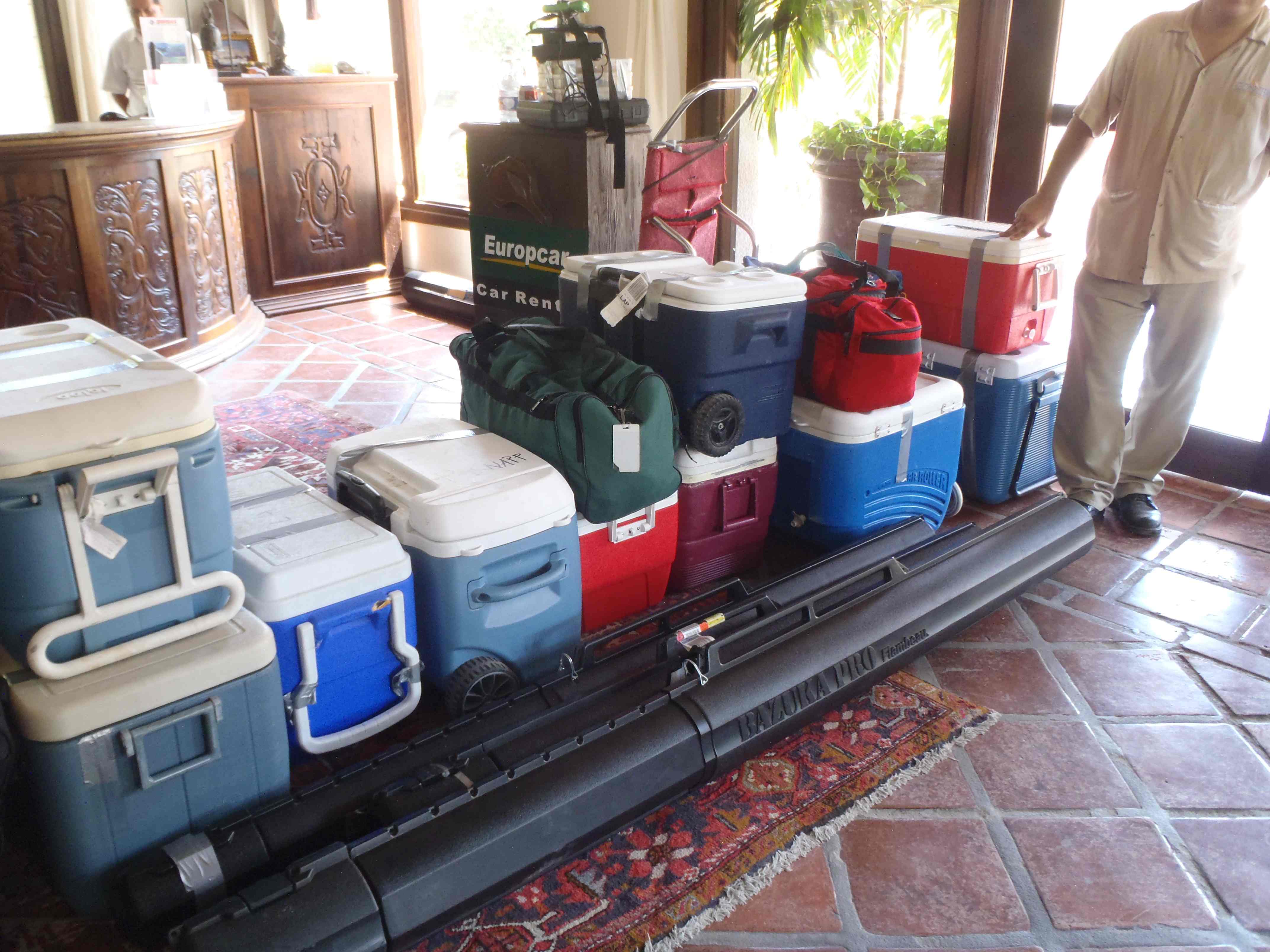
There’s a right way and a wrong way to pack for a fishing trip to Baja. And then, there’s EASIER ways to do it right!


“TACKLE PACKING & JUGGLING”

Originally Published the Week of Feb. 18, 2014 in Western Outdoor News

It’s an irritation, but something we’ve gotta learn to live with these days.  Like taking your shoes off at the airport.   Like having your expensive shampoo taken away at check-in.

I’m sure greater and bigger minds than ours have figured out why they are important aspects of airline travel these days.   We empty  and open our bags and pass our stinky shoes through the conveyer belt and do our little spin in the x-ray scanner.  Like the hokey-pokey.  That’s what it’s all about.

One thing for sure is that the days of free luggage are something we use with words like “back in the day” and “in the olden days.”   The more you bring, the more you’ll get charged.

It kinda makes you cry as you stand in your garage and you look at all your custom rods, reels, feathers, jigs and other toys.   You want to bring them ALL!

Almost 30 years ago, I remember my first trip flying to Baja.  I took 10 rods and reels  (two tubes); a tackle box that weighed about 50 pounds and almost 30 marlin lures (that my buddy had borrowed from WON editor Pat McDonell who didn’t know who I was at the time!).   Oh, and two 85-quart ice chests as well.  And this was for fishing in a panga for only 2 days!

Nowadays, you get one piece of luggage.  If you’re lucky.

Economy airlines charge for each piece of luggage.

Rod tubes are oversize.  Pay extra.  Cha-ching!

Reel bags too heavy.  Pay extra.  Cha-ching!

Ice chest…even with nothing in it.  Pay extra.  Cha-ching!

But, a man must do what a man must do and the fish are calling!  So, we just have to think from a different angle.  Consolidate and downsize.

Before purchasing your airline tickets, find out if the airlines has a special luggage allowance you can purchase.  Some airlines (Volaris comes to mind) allows you to pay a little extra up-front when you purchase your tickets online.

This allows you to bring more luggage and more weight for a fraction of the cost.  If you just walk up to the counter with all the extra weight, they charge BY THE POUND!

For example, we had some clients who purchased $200 round trip tickets to fish with us in La Paz.  We told them to purchase the extra luggage allowance.  They declined to do so.

When they flew back to the U.S. they had several very full ice chests.  It cost them almost $600 to fly the fish back.   OUCH!

For practical purposes, take a look at your own gear, if you’re planning to travel.

“Back in the day” multi-piece travel rods were junk.  Nowadays several very good manufacturers and a number of custom rod wrappers are making some super 2 and 3-piece travel rods in varying lengths and strengths.

Many of them come with handy cases and can literally be carried in the overheads or packed into suitcases.  They even make break-down trolling rods.

For reels, here’s my suggestion.  Pair it down to some essential reels.  Match your reels to what you’ll be fishing for.  You don’t need a bowling ball-heavy 5/0 wide reel if you’re going to be fishing inshore in 100 feet of water.  With the new aluminum reels and their horse-strong drags, you can use smaller/lighter reels to get the job done.  Even for trolling.

I would also suggest putting spectra on the reels then put 150 yards of mono top-shot on them.  That way if, for example, the 40-pound test mono isn’t working, all you have to do is change the top-shot to whatever line is the hot ticket for the bite.   You won’t need a separate reel for that.

For terminal gear, be practical.  If you’re only fishing 3 days, you don’t really need 500 hooks of all sizes.  You don’t need 20 throwing irons.  You don’t need 10 feathers of all colors.   If you can, contact your outfitter ahead of time and find out what’s really working.  Bring the essentials.

While you’re at it, pow-wow with your fishing partner.  Consider packing all your rods together.  In one tube.  Each of you doesn’t need to bring a whole set of lures, hooks and other essentials either.  You can both share and thereby cut down on weight and gear.

As for bringing the fish home,  if you’re like me, it always irritated me to pay to bring an empty ice chest down to Mexico.  Paying for air?  C’mon!

What I’ve been suggesting lately is using the newer soft-sided coolers that are airline rated heavy duty;  keeps things frozen for days; and can be folded and packed into your suitcase on the way down.

We’ve had one made by American Outdoors that has worked like a champ for about 5 seasons.   Another nice thing is that these weigh less than a traditional cooler.  Since most airlines limit you to 50 pounds on luggage,  you can get more actual frozen fish in a soft-cooler than a hard-sided cooler that weighs 8-20 pounds with wheels on them.

One last thing.  In the old days,  my buddies and I brought down one or two sets of shorts and t-shirts with us.  That was it.  Our motto was, “if you can’t wash it in the sink, don’t bring it.”  That was a great way to save room for more tackle.

Of course, that was in the days when my buddies and I were all bachelors.

That’s our story!

Jonathan signature

Jonathan Roldan has been writing the Baja Column in Western Outdoor News since 2004.  Along with his wife and fishing buddy, Jilly, they own and run the Tailhunter International Fishing Fleet in La Paz, Baja, Mexico  www.tailhunter-international.com.  They also run their Tailhunter Restaurant Bar on the famous La Paz malecon waterfront.  If you’d like to contact him directly, his e-mail is riplipboy@tailhunter-international.com  or drop by the restaurant to say hi!

______________

Jonathan Roldan’s

Tailhunter International


TAILHUNTER FISHING FLEET #1 Rated on Trip Advisor

TAILHUNTER RESTAURANT BAR #1 Rated in La Paz on Trip Advisor


Now follow us on FACEBOOK TOO

Website: www.tailhunter-international.com

U.S. Office: 8030 La Mesa, Suite #178, La Mesa CA  91942

Mexico Office: 755 Paseo Obregon, La Paz, Baja Sur, Mexico

Phones:

from USA : 626-638-3383

from Mexico: 044-612-14-17863

.

Tailhunter Weekly Fishing Report:

http://fishreport.jonathanroldan.com/

Tailhunter YouTube Videos:

http://www.youtube.com/user/pangapirate

“When your life finally flashes before your eyes, you will have only moments to regret all the things in life you never had the courage to try.”
Read Full Post »

“No Off-Road Means No Off-Road!

OLYMPUS DIGITAL CAMERA

There’s no Auto Club to call out here, amigo! Oh…and you say your cell phone doesn’t get a signal either?

“NO OFF ROAD MEANS NO OFF ROAD!”

Originally published the Week of February 5, 2014 in Western Outdoor News

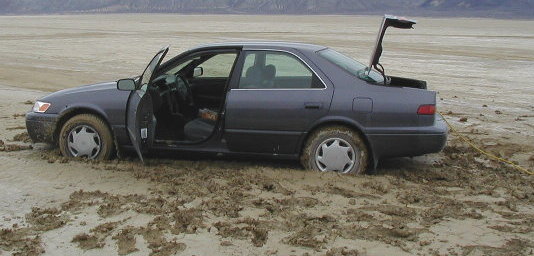
It was time to put these two guys outta their misery.  For about 30 minutes a group of my captains and I had watched two poor boobs trying to get their rental car out’ve the mud flats.

Standing on a little rise looking down about 100 yards to the flats,  it was hard to suppress the laughs and high entertainment at the expense of the clown show in the sludge.

Earlier in the day, we had seen the small sedan up to it’s axles in the goo.   Stuck.  There looked to be some foot tracks leading away, but no one was around.  We had pangas to put out and clients to attend to so we shrugged.  None of our business.

But this afternoon, now that the fishing was done, the car was still there.  And the occupants were back.   And  a group of  my captains watching the comedic scene. Cervezas in hand.  Arms crossed.  Leaning against their pickup trucks.  Grinning.

One guy was in the car revving for all it was worth.  Mud shot skyward.  The other guy was doing all he could to pry the car loose…from behind! It was like a blender exploding.   Covered head to toe in layers of sludge.

Little bits of white poked out around his lower torso indicating that he was out there in his tidy-whitey-underwear getting shot-gun blasted by gobs of mud looking like he got dipped in chocolate goo!  These guys had no clue.  And we had no idea why he had taken his clothes off!

But it was getting late. We had to get home. Wives and kids were waiting.   Good hearts prevailed and finally one of the captains said he couldn’t take it anymore.  He and several other guys got their trucks and some rope and pulled the grateful guys outta the muck.

It’s not the first time.  I’m sure it won’t be the last we give first aid to a rental car.

Car rentals in a foreign country can be quite an adventure.  Most of it is great!  Don’t get me wrong.  We do it all the time in our own travels.

But, Mexico has it’s own caveats it’s good to keep in mind.

For one, the fine print that says, “Don’t take the car off-road” means “Hey, idiot, keep the car on the pavement!”

Mexico isn’t exactly known for having great streets to start. Sometimes it’s just as treacherous navigating the potholes as the Baja 1000,   so don’t even think about trying to cross that patch of sand or salt marsh or stretch of solid-looking mud!

Especially in Baja, it doesn’t take much to suddenly find yourself in the middle of nowhere.  I mean, that’s part of the beauty of Baja.  Having broken down myself over the years, remember, there’s no Auto Club to call.  Heck, your cell phone might not even work ‘en la frontera’ (in the frontier)!

So, don’t get caught like these guys trying to dig your car out in your underwear.  Personally, in the days before cell phones, I once hiked over 30 miles to get help when my own car busted an axle.   I could swear the buzzards were just waiting for me to give it up as their next road kill.

Here’s some tips when renting a car.

For one, rent from someplace that has a recognizable name.  You get what you pay for.  “Jose’s Beach Tours and Car Rental” is probably not what you’re looking for.

Secondly, ask if they have another office in the places you’re going to visit.  For example, if you’re renting in Cabo San Lucas but you plan to drive to La Paz (100 miles away) or Loreto (another 5 hours) and you break down or lock your keys inside (you only get 1 key), there’s no one to help.  You’ll have to wait for someone to come with assistance and that can take hours…or days.  And you don’t get refunded for the days you can’t drive.

Very importantly, know what you’re getting charged for.  So often, I hear clients get “great rates” but then when they return the car, they get surcharged to death for several hundred dollars more.  Know how much the tax will be.  Know about the insurance rates.   Get it all in writing.  Nothing leaves a bad taste after a great vacation like getting stuck with a big bill.

On that subject, if you’re in doubt about insurance, get it.  Don’t drive without insurance!  It’s not that expensive and heaven forbid you’re the one in a zillion drivers who gets in an accident.

Keep in mind, in Mexico, you are guilty until you prove your innocence!  Repeat that 10 times! It’s not like the U.S. where your innocence is presumed.   In Mexico, you are presumed GUILTY!

If you’re in a bender, most times the other guy will have NO insurance.  Locals can’t afford it.   He will say it’s YOUR fault.   You will say it’s HIS fault.  Of course.

Police have little recourse but to sort it out since technically you’re both GUILTY and you can both be detained at the police station until it’s ironed out.  (See the part about making sure the rental agency has an office at the destination you’re visiting…you really don’t want to be waiting at the police station until someone shows up!).

The police aren’t bad guys.  They’re not out to stick it to the gringo.  They would do the same if it were two locals.  It’s just the way the law is written.  Deal with it or do your best to avoid it.

Finally, no matter what you think you may have rented, stay on the pavement!

Even if you rent a Jeep…believe me…it’s probably NOT 4-wheel-drive.  I’ve yet to actually see a 4-wheel drive rental Jeep, but I see yahoos off-roading through the sand dunes and rocks all the time.

If you do take it off-road, look for me and my boys.  We’ll be up on the hill laughing.  Wear good underwear.

That’s our story!

Jonathan signature

_______________

Jonathan Roldan has been writing the Baja Column in Western Outdoor News since 2004.  Along with his wife and fishing buddy, Jilly, they own and run the Tailhunter International Fishing Fleet in La Paz, Baja, Mexico  www.tailhunter-international.com.  They also run their Tailhunter Restaurant Bar on the famous La Paz malecon waterfront.  If you’d like to contact him directly, his e-mail is riplipboy@tailhunter-international.com  or drop by the restaurant to say hi!

______________

Jonathan Roldan’s

Tailhunter International


TAILHUNTER FISHING FLEET #1 Rated on Trip Advisor

TAILHUNTER RESTAURANT BAR #1 Rated in La Paz on Trip Advisor


Now follow us on FACEBOOK TOO


Website: www.tailhunter-international.com

U.S. Office: 8030 La Mesa, Suite #178, La Mesa CA  91942

Mexico Office: 755 Paseo Obregon, La Paz, Baja Sur, Mexico

Phones:

from USA : 626-638-3383

from Mexico: 044-612-14-17863

.

Tailhunter Weekly Fishing Report:

http://fishreport.jonathanroldan.com/

Tailhunter YouTube Videos:

http://www.youtube.com/user/pangapirate

“When your life finally flashes before your eyes, you will have only moments to regret all the things in life you never had the courage to try.”

Read Full Post »

“That’s How We Rolled”

BeachVW_t670

“That’s How We Rolled”      

Originally Published the Week of October 2, 2013 in Western Outdoor News

You can always tell when people think you’re a knucklehead.  Their voice goes up at the end of their sentence.   Try it.

“You’re going… SKYDIVING?”

“You ate …SUSHI?”

“You’re going to school in…THAT ?

“You went to Vegas and did… WHAT?”

And my favorite:

“You’re going to drive to…MEXICO?”

Followed by the leave-no-doubt-affirmation:

“Are you a knucklehead, or what?”

Love the, “Or what” part.

To true Baja rats, “driving the  Baja” evokes some great sensorial memories. Having taken the wheel several dozen times from border-to-tip and back, to me, the drives were truly an adventure back in the day.

Once you passed the border checkpoint, you could just feel that you had left everything unimportant behind.  Back there…back with freeways and office buildings…crowds and social vampires sucking out your essence.

Now you were in “the Baja.”

Cassettes or 8-track cartridges littered the  inside of the  truck.  Jackson Brown or the Eagles eased me down the highway and my dog cocked an eyebrow every time I hit a s sloppy high note.  Generally, he was more interested in the bag of Doritos on my lap while I sipped out of a real Coke bottle picked up at a roadside Mexican mercadito.  “I’ve got 7 women on my mind…”

Stashed among my fishing, diving and camping gear were cans of motor oil, rope, duct tape, gas can, flashlights, ice chest, tarp, flares, two extra tires, a shovel, extra hoses and, the most important thing…toilet paper!  “Well, I’m standing on a corner in Winslow, Arizona, I’m such a fine site to see…”

You prepared for the worst.  You hoped for the best.  Better to have it and not need it than to need it and not have it.

And everything including me, powdered with a good layer of Baja dust.  On the dashboard.  On the seats.  On my lips.  On the dog.  The grit of La Frontera   “It’s a girl my Lord in a flatbed Ford…”

You got there when you got there.  If your head was right, you realized that you’re south of the border so you’re already there.  No stress, Dude.  Already there.

You stopped when you stopped.  Slept in the truck, pitched a tent or paid a few bucks for a room with a single lightbulb and a great taco stand out front with plastic seats and a smiling senora searing chunks of beef and spooning up salsa to die for.

You had a general idea of where you needed to be but often a side road beckoned to a deserted beach or spectacular vista.  Sometimes the side road was a necessity.  You had no choice as parts of the highway simply weren’t there.  Washed out or under construction.  Potholes the size of your car.  Rocks and goats.  Cows and arroyos.  You got used to the word, “Desviacion” (Detour) posted on a makeshift sign.

Time was measured by the sun coming up and the sun going down and the growl in your tummy or the thirst in your mouth.  The sun gave no quarter.

Gas was sold by a guy with a hand pump and a 55-gallon drum.  You strained it through a t-shirt and were grateful it was available.  You didn’t argue about the price.  No, he didn’t offer to wash your window or check under the hood.

You drove as fast or as slow as you dared.  There were no shoulders.  Wrecks could be seen at the bottom or deep canyons where other intrepid vehicle before you didn’t make the turn.  Trucks coming the opposite way came close enough to see the color of the other drive’s eyes.  Your fingers always tightened on the steering wheel reflexively.  And eased as you continued past.  You also stopped holding your breath.

And that’s how we rolled back in the day.   The trip WAS the destination. It was the whole point…being on the road.  Whether you reached your destination was almost secondary.  You KNEW you’d be seeing gorgeous beaches and incredible mountains.  You were going to eat some great street food and make new friends along the way.  Every day was going to be it’s own “Kodak moment!”

But now…fast forward in the time machine.

There’s now pretty much a super highway from border to tip.  Mostly four-lanes of good highway.   And there’s mini-super markets along the way.  And actual gas stations with real pumps.  The Mexican government has “green angels” driving up and down the peninsula checking for and offering mechanical aid to tourist cards that might have problems along the way.  In the major towns, you’ll find the golden arches and the colonel from Kentucky smiles down from his red and white bucket .

Chain hotels dot the landscape and if that’s not your style actual developed campgrounds beckon your stay.  Police along the way greet you with smiles and are instructed in “tourism sensitivity.”  “Tenga un buen viaje senor.  Bienvenidos a Baja.” (Have a great trip and welcome to Baja, Sir!”)

Car parts?  If you need them, Walmart and Auto Zone are here now.

It’s just the way it is now …for better or worse.

But, in between all of that, there’s still adventure.  There are still deserted white beaches and aqua waters.  Somewhere along the way is a palm tree next to a palapa with a hammock waiting.  Just for you.  And you know it as you tool down the road.  You have no doubt.

And, the only snow you see will be in your ice chest or in a margarita glass.  Shoes not optional.  Shoes are discouraged!

“You’re going to…MEXICO?”

“Yea, I’m going to Mexico.  And I’m driving.  Don’t be a knucklehead.  Come with me!”

And the DVD player kicks in…”Take it Easy…”

Let’s roll.

That’s my story!

Jonathan

_______________

Jonathan Roldan has been writing the Baja Column in Western Outdoor News since 2004.  Along with his wife and fishing buddy, Jilly, they own and run the Tailhunter International Fishing Fleet in La Paz, Baja, Mexico  www.tailhunter-international.com.  They also run their Tailhunter Restaurant Bar on the famous La Paz malecon waterfront.  If you’d like to contact him directly, his e-mail is riplipboy@tailhunter-international.com  or drop by the restaurant to say hi!

______________

Jonathan Roldan’s

Tailhunter International


TAILHUNTER FISHING FLEET #1 Rated on Trip Advisor

TAILHUNTER RESTAURANT BAR #1 Rated in La Paz on Trip Advisor


Now follow us on FACEBOOK TOO


Website: www.tailhunter-international.com

U.S. Office: Box 1149, Alpine CA  91903-1149

Mexico Office: 755 Paseo Obregon, La Paz, Baja Sur, Mexico

Phones:

from USA : 626-638-3383

from Mexico: 044-612-14-17863

.

Tailhunter Weekly Fishing Report:

http://fishreport.jonathanroldan.com/

Tailhunter YouTube Videos:

http://www.youtube.com/user/pangapirate

“When your life finally flashes before your eyes, you will have only moments to regret all the things in life you never had the courage to try.”
Read Full Post »

“You Mean I Can Keep It?”

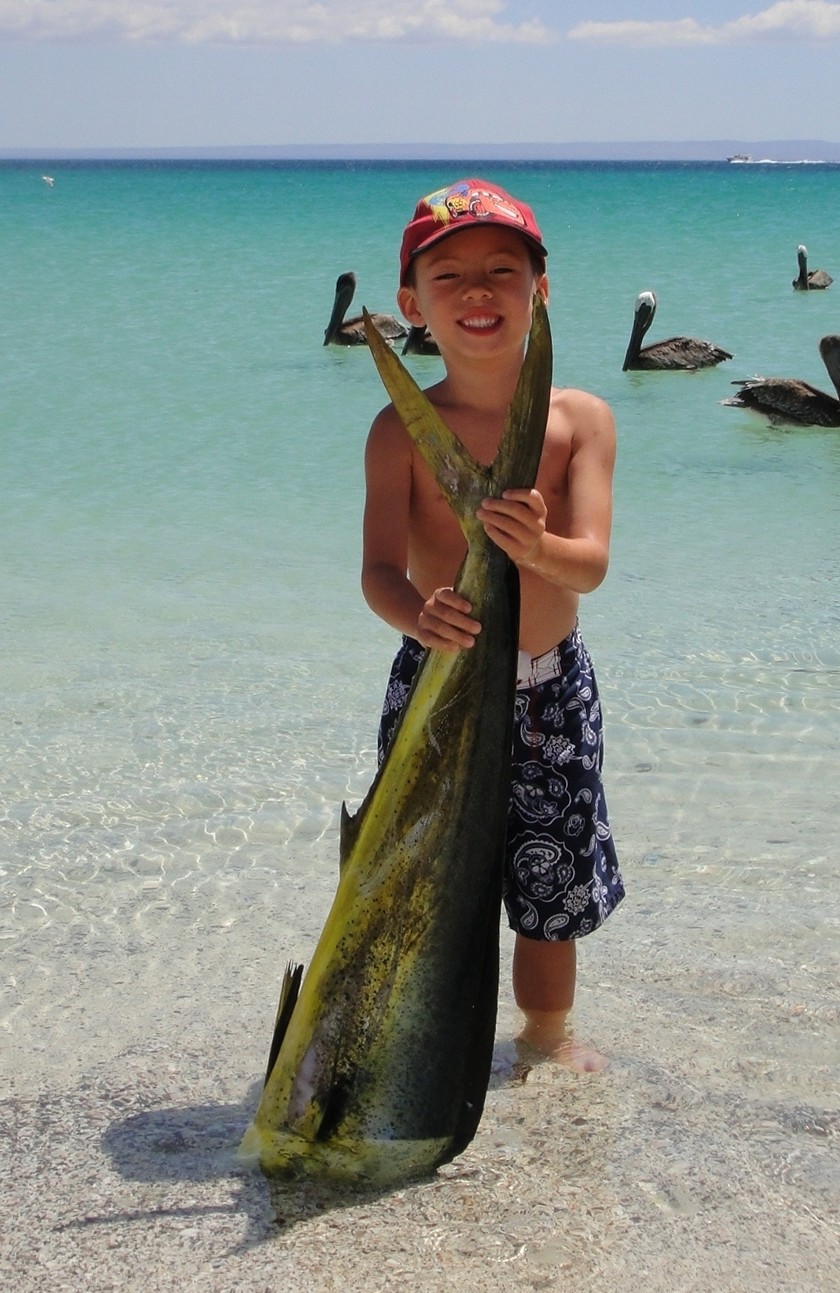
What do you think?  It looks to me like Aiden's self-esteem is just fine!

Yes…I think we can bring this one home!

You Mean I Can Keep It?

Originally Published the Week of September 20, 2013 in Western Outdoor News

You Baja veterans should probably just web surf something else.  This might be old stuff to you.

But, often when you do something so long or something is “old hat” you forget that there’s still newbies out there who have valid questions about things that old Baja rats like us take for granted.

It’s a simple, but important issue.  I receive enough e-mails and phone calls asking if it’s OK to bring home fish.

Sometimes, my auto-response in my brain says, “Well..duh…that’s kinda dumb!  That’s like asking me if it’s OK to dip you chips in salsa!”

Of course, I can’t and would never say that because there are no such thing as dumb questions.  It’s a legitimate question and well-asked.   I mean, if you’re coming fishing in Baja, one would need to know if it’s OK to keep your catch.  Corollary to that, is it OK to bring some home!

But, I get asked about it enough as new folks are discovering Baja that I figured it was time to do another column about it and update my thoughts.

The question used to surprise me more.  But, having been in the industry now for almost 2 decades, us west-coast anglers might be surprised to learn that  there are many world-class fishing destinations that severely limit what you can keep.

Pay several thousand dollars a day and you get to keep say…one fish!  Or, you must release all fish.   Yes, it’s true!   For most of us who have fished the Baja since the age-of-dirt,  we pretty much always assume that as long as we’re within limits, everything hooked is coming home.

There may come a day when severe limits will be enforced, but that’s the subject of another column and someone with a lot bigger brain and bigger column than mine.

For now, the simple answer is yes, you may bring home your fish that you catch here in Baja.   As long as you’re within limits, by all means, bring some home.  Or have some cooked up while you’re still on vacation.  Nothing will taste better than fresh caught fish that was swimming around earlier that day!

Bringing fish home starts with taking care of the catch.  Treat it well and you’ll preserve the quality.

Once the fish is caught, if you can, have your captain or deckhand bleed it.  That’s not always possible when the action is fast-and-furious and lines are flying and it’s a three-ringed-water-circus out there.  However,  bled-fish…even lower-grade meat fish like bonito or skipjack will taste world’s better if it’s freshly bled.

Maybe the most important thing whether it’s bled or not is to keep it cold.  Warm water fish are…well…they’re warm!  As soon as they’re dead, like anything, they start to deteriorate.   And the hot Baja sun is not a friend to your future dinner!  Leaving a fish on the deck or even in a fish box without ice is pretty much like putting the fish in the oven.

So, at all levels from catch-to-stove or barbecue…keep your fish cold.  Ice is your buddy.   It’s a good question to ask when you book your trip if there’s ice aboard to keep your fish chilled.

After that, you need to store your fish while you’re still on vacation.

I see two cardinal sins all the time.  One is rinsing your fish in fresh water.  Or, even soaking it in fresh water.  That takes out all the flavor.  Secondly, the fresh water gets in and then freezes and now your have fresh water crystals in your fish which detracts from the quality and flavor.

Additionally, I often see people rinsing their fish in warm or tepid water.  Especially in Baja!  Water coming from pipes here is often very warm…or hot!  Amigo…not only is it fresh water, but moreso, you’re cooking your fish in the warm water.  If you have to use fresh water, make sure it’s cool water!    Ideally, clean saltwater is best.

The ideal method is to have your fish vacuum sealed.  It’s worth it!  Nothing is worse than beautiful fish fillets in a big giant frozen ball in your freezer.  You take it out and it’s either freezer burned or you now have a 10-pound ball of thawed fish.  And you really only need two fillets for dinner!  The rest get wasted.  Or the cats get it.

Vacuum sealing is the difference between fish that lasts a few weeks or fish that can last many months in your freezer so that your dorado caught in June tastes great in December!

If you can’t vacuum seal it, at least put it in good quality zip-lock style freezer bags.   Only put in what you’re planning to thaw for a meal.

An old Mexico trick is to put fillets in the freezer bag then lowering the bag into a bucket or sink of water.  The water forces the air out and then press the seal.  You get instant Mexican vacuum sealing!

Lastly, it’s really important to keep your fish in a good place while you enjoy the rest of your vacation.  As crazy as it sounds, we often encounter folks here who book their hotels and either do NOT have freezer or do not allow fishermen to store their catch.   That’s gonna be a buzz-kill.

Others, simply put, have crappy freezers that aren’t worth a hoot.   So, check on that.  The places that cater to fishermen or have a reputation for good fishing also have good storage facilities.  Or, if you’re booking through a charter operation, ask them about storing your fish in freezers.

Remember, that warm fish often takes awhile to freeze.  Or the freezers at a given hotel get a load of fish every night from all the anglers.  In even the best freezers it sometimes takes 24-hours to get solid.

If you’re leaving the next day, that could seem like a problem.  It’s not.  Put your least frozen fish on the bottom of your cooler.  Put your most frozen fish on the top (cold travels down).  Add extra insulation with crushed crumpled newspaper or your dirty fishing clothes and your fish will be fine!

That’s our story!

Jonathan

_______________

Jonathan Roldan has been writing the Baja Column in Western Outdoor News since 2004.  Along with his wife and fishing buddy, Jilly, they own and run the Tailhunter International Fishing Fleet in La Paz, Baja, Mexico  www.tailhunter-international.com.  They also run their Tailhunter Restaurant Bar on the famous La Paz malecon waterfront.  If you’d like to contact him directly, his e-mail is riplipboy@tailhunter-international.com  or drop by the restaurant to say hi!

______________

Jonathan Roldan’s

Tailhunter International


TAILHUNTER FISHING FLEET #1 Rated on Trip Advisor

TAILHUNTER RESTAURANT BAR #1 Rated in La Paz on Trip Advisor


Now follow us on FACEBOOK TOO

Website: www.tailhunter-international.com

U.S. Office: Box 1149, Alpine CA  91903-1149

Mexico Office: 755 Paseo Obregon, La Paz, Baja Sur, Mexico

Phones:

from USA : 626-638-3383

from Mexico: 044-612-14-17863

.

Tailhunter Weekly Fishing Report:

http://fishreport.jonathanroldan.com/

Tailhunter YouTube Videos:

http://www.youtube.com/user/pangapirate

“When your life finally flashes before your eyes, you will have only moments to regret all the things in life you never had the courage to try.”
Read Full Post »

“THEY ARE LISTENING”

Originally Published the Week of May 18, 2011 in Western Outdoor News

I am a terrible eavesdropper.  I can’t help it.  Especially here in Mexico when I am usually immersed in Spanish around me, my radar cannot help but pick up on English when it drifts through my zone.

A word here…a word there…it’s not easy to tune it out.  But it’s interesting what you pick up.  Restaurants are good place.  Airplanes are another good spot. Usually confined spaces where it’s hard to miss certain conversations.  Even tho’ I try NOT to listen, Americans tend to speak loud and sometimes I think they want everyone to hear.

We can sound pretty ridiculous sometimes.  Embarrassing at other times.  Do we listen to ourselves and how we sound to others?

At a nice  restaurant several nights ago, three slightly enebriated guys wearing the de-rigueur Tommy Bahama shirts and designer sunglasses perched on their heads were escalating their conversation.

It was bad enough that they were all talking “money deals” and how they were going to do this and that and how one guy was the “CEO of this” and “everyone does what I tell ’em to do.” 

But, it wasn’t difficult to pick out that every other word was an “F” bomb.  “F-ing” this and “F-ing that.”  The universal adjective at it’s finest.  My “F-ing yacht”.  My “F-ing condo on the beach.”  What an “F-ing great fishing day!”

Whoa.  Most of the patrons, many of whom were locals,  in the restaurant were there for a nice quiet dinner at the marina and  knew what they were saying and it got uncomfortable. It was embarrassing for my wife and myself.  Many people migrated away.  The three gringos kept right on smoking the big cigars and downing the brews.

We moved to another table.

A gringo couple was close by.  Again, hard not to hear the conversation.  The woman was speaking quite loudly as she asked the water, ” We love the service here at this restaurant. So why do YOU people make such good waiters and house cleaners?” 

My wife and I stopped with our forks in mid-air. Choke.  Gaaack!

 She was serious and said it with a smile on her face, as she sipped her white wine with her manicured fingernails and gold wrist bling.  She was just trying to make conversation with the waiter who happens to be a good friend of ours.

We cringed.

The husband said non-sequitur and oblivious to his wife’s previous statement, “If YOU people would just get more education, you can really move up in the world like us.”

Double cringe.  The waiter just professionally gave a laugh and walked away as if he had to attend another table.  I mean…how do you answer that?

As he walked away he looked at us and rolled his eyes and raised an eyebrow. 

On the other side of the restaurant, we could still her the “F bombs” by the three men.  It continued to be an uncomfortable dinner.

Then a group of two families with kids and nannys in tow entered.  Kids as loud as parents.  Running around the tables.  Saying what they wanted.  Called their parents by their first names.  Nannys doing their best. Restaurant staff trying to keep everyone happy.

Again…couldn’t help but eavesdrop…they were loud enough…

“We just LOVE La Paz because it’s just NOT like Cabo or Mazatlan where there’s so much noise and traffic and so “gringo-fied.'”

“Got 18 holes to play tomorrow.”

“Glad we finally got Wi-fi. But the signal is so bad here in Mexico. You would think…”   

“I can’t believe this place doesn’t have diet de-caf Pepsi, but I did find the best little coffee place that has double latte mocha!”

“When is your hair appointment? I have a pedicure at 9 a.m. then aromatherapy at 10.”

“This restaurant has the BEST chile rellenos stuffed with shrimp cooked by REAL Mexican cooks.  Look you can even see them back there in the kitchen!”

“Next time, let’s rent a Hummer so we can don’t feel all those bumps in the roads here.  Why don’t THESE people fix the roads?  You would think they would get tired of bumpy roads and broken cement.”

“Still can’t get an electricion to fix that light in the jacuzzi.  I hate this “manana” atittude here.  Must be someone like the Better Business Bureau we can complain to.”

Sometimes I wish there was someone we could complain to. I admit that even I probably sound like this as well at times. I try not to.   We keep reminding ourselves that we’re guests here in Mexico.  Whether we live here or are just visiting.  People are listening. We represent down here and our ears sometimes don’t hear what our mouths are saying.

_______________________________________

            Jonathan Roldan has been writing the Baja Column in Western Outdoor News since 2004.  Along with his wife, Jill, they own and run the Tailhunter International Fishing Fleet in La Paz, Baja, Mexico  www.tailhunter-international.com.  They also run their Tailhunter Restaurant Bar on the famous La Paz malecon waterfront.  If you’d like to contact him directly, his e-mail is riplipboy@tailhunter-international.com  or drop by the restaurant to say hi!           

Jonathan Roldan’s
Tailhunter International


TAILHUNTER FISHING FLEET #1 Rated on Trip Advisor

TAILHUNTER RESTAURANT BAR #1 Rated in La Paz on Trip Advisor


Now follow us on FACEBOOK TOO

 
Website: www.tailhunter-international.com
U.S. Office: 3319 White Cloud Drive, Suite A, Hacienda Hts. CA 91745
Mexico Office: 755 Paseo Obregon, La Paz, Baja Sur, Mexico
Phones:
from USA : 626-638-3383
from Mexico: 044-612-14-17863

.
Tailhunter Weekly Fishing Report:
http://fishreport.jonathanroldan.com/

Tailhunter YouTube Videos:
http://www.youtube.com/user/pangapirate


“When your life finally flashes before your eyes, you will have only moments to regret all the things in life you never had the courage to try.”

Read Full Post »

Often it ends up in the garden under the rose bushes or turned into cat food, but the bonito can actually be good eating if you know what to look for! (note the belly has no markings to distinguish it from the lesser tasting skipjack).

“One Man’s Cat Food…Is Not A Bad Dinner”

 
Originally published in Western Outdoor News the Week of May 4, 2011
 

You say Po-TAY-toe.  I say poe-TAH-toe.  Semantics can screw with you.

One man’s bonito is another man’s skipjack and is another man’s catfood and another man’s gourmet dinner!

It was a number of years ago that I was sitting with a group of fishermen in a little  palm-frond palapa bar/restaurant just north…or south of Loreto.  Details are fuzzy.   I remember the beer was chilly.  The sandy floor between my toes felt good and we were all a little wind and sunburned from a good day on the water.  A little fishing.  A little diving.  Some stupid pull-my-finger horseplay between fellow goofballs.

We sat in those scuffed -white -plastic chairs with the beer logo that every Mexican beer company gives to every restaurant with the equally scuffed-up white plastic table.  No matter.  We were hungry and ordered up some fish tacos and a plate of “filete al mojo de ajo” (grilled fish with garlic.)

It arrived on mis-matched plastic plates and served with bent forks but the tortillas were warm; the salsa spicy and the beer so cold that “smoke” came out the mouth  when popped open.  And the fish could not have tasted better!  RIQUISIMO!

We wolfed down taco after taco and plate after plate.  Shoveled it in like chipmunks stuffing our cheeks!  Lime juice squirted all over.

Then someone asked the waiter… “Que clase de pescado es? Tan sabrosa!” (What kind of fish is this?  It’s delicious!”

The waiter said with a smile…”BONITO!”

AAACK!!!!

Six guys nearly hurled and choked in unison!  Everyone stopped eating to look up and at each other. Salsa dripping from fingers and corners of mouths. More than one eye-brow arched.

Bonito?  You gotta be kidding me!  We’re eating junk fish?  Isn’t that the stuff we throw away?  Give to the cats?  Put in the garden for fertilizer?  Man…if it is…that’s danged good!

Just another chapter in my enlightenment of Mexican fish! Another fish “epiphany” as it were.

 Just as I had come to enjoy eating such fish like triggerfish and sierra mackerel over the years after thinking they were also “junk fish,” I got schooled about bonito.

Highly-prized as a sport fish, but much maligned as table fare, it’s easy to get confused.  Many of us who grew up or did any fishing on the Pacific Coast came to stereotype bonito as a throw-away species. Catch a ton, but throw them back or give them away!

But, in Mexico the lines get blurred.  Everyone runs into species confusion.  Everyone calls the tuna-look-alike-fish that has trips on it a “bonito.” But, in reality, they’re usually talking about two kinds of fish…black skipjack and real bonito!

They look very identical.  Both are hard-charging members of the tuna family and if you didn’t know better, you’d think they were tuna.  They grow to about 8-12 pounds but fight like 20 pounders. 

Easily caught on live bait, lures, trolled feathers…they’re not real fussy.  Fun at first but after-awhile, if you’re really trying to catch something else like dorado or real tuna, they’re pests!

But that’s the rub.

Most captains will say “bonito” and immediately the stigma is attached.  They make no distinction between bonito and skipjack.  So, the gringo  anglers just toss the fish back and get increasingly frustrated. 

However, a good captain knows the distinction. 

Skipjack have dots or stripes on their silver/white bellies.  Meat is dark red and frankly terrible eating. 

On the other hand, bonito have no marks on their bellies. They have white/silver bellies.   Meat is not only light color, but if bled quickly and all dark meat and blood lines are removed, will fool many into thinking they are eating tuna!

So next time, take a closer look before tossing your “bonito” back !  Or convince your buddy that you really do want those bonito he planned to throw away!  Remember, yesterdays “junk fish” is often today’s dinner. 

 Just remember the prices at your local seafood restaurant for such “junk fish” as …catfish…whitefish…shark…mackerel (yes mackerel!)…tilapia (in Hawaii, they used to bring in tilapia to eat the sewage and mosquitos in the irrigation canals for the sugar cane fields!) Now they call them “African Perch” at 2o bucks a plate.  Believe it or not…even albacore was considered a “throwaway” fish at the turn of the century!

As for us eating that day on the beach…we were just hungry!  Dos mas platos por favor!  (two more plates please!) And more tortillas!

_______________________________________

            Jonathan Roldan has been writing the Baja Column in Western Outdoor News since 2004.  Along with his wife, Jill, they own and run the Tailhunter International Fishing Fleet in La Paz, Baja, Mexico  www.tailhunter-international.com.  They also run their Tailhunter Restaurant Bar on the famous La Paz malecon waterfront.  If you’d like to contact him directly, his e-mail is riplipboy@tailhunter-international.com  or drop by the restaurant to say hi!           

Jonathan

Jonathan Roldan’s
Tailhunter International


TAILHUNTER FISHING FLEET #1 Rated on Trip Advisor

TAILHUNTER RESTAURANT BAR #1 Rated in La Paz on Trip Advisor


Now follow us on FACEBOOK TOO

 
Website: www.tailhunter-international.com
U.S. Office: 3319 White Cloud Drive, Suite A, Hacienda Hts. CA 91745
Mexico Office: 755 Paseo Obregon, La Paz, Baja Sur, Mexico
Phones:
from USA : 626-638-3383
from Mexico: 044-612-14-17863

.
Tailhunter Weekly Fishing Report:
http://fishreport.jonathanroldan.com/

Tailhunter YouTube Videos:
http://www.youtube.com/user/pangapirate


“When your life finally flashes before your eyes, you will have only moments to regret all the things in life you never had the courage to try.”
 

Read Full Post »

« Newer Posts - Older Posts »