Feeds:
Posts
Comments

Archive for the ‘fishing tournaments’ Category

When Fishing Is Not So A-Peeling!

bananas1

When Fishing Is Not So A-Peeling!

Originally Published the Week of Feb. 1, 2019 in Western Outdoor Publications

“Life is full of banana skins. You slip, you carry on.”
—Daphne Guinness

It’s been about 15 years since I last wrote about a subject that seems to keep popping up. And lately, I’ve had several folks ask about it.

Most folks say they’re not superstitious.

But, they’ll still wear their raggedy “good luck” basketball socks. They refuse to throw away their best bowling shirt.

Do you still have a pair of “tidy-whitey” underwear in your drawer that’s you won’t throw away even if it has no more elastic and your wife nags you about it?

Do you refuse to open your eyes when your team’s kicker lines up for the game-winning field goal because it’s “bad luck?” Still have your bloody-splattered fishing t-shirt from when you were in college when you were 100 pounds lighter?

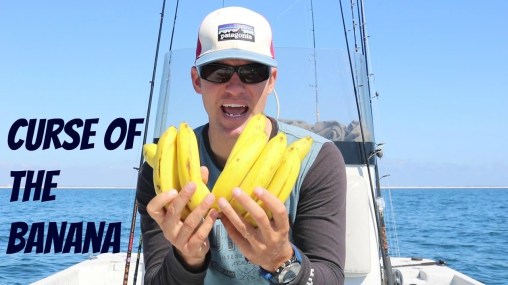
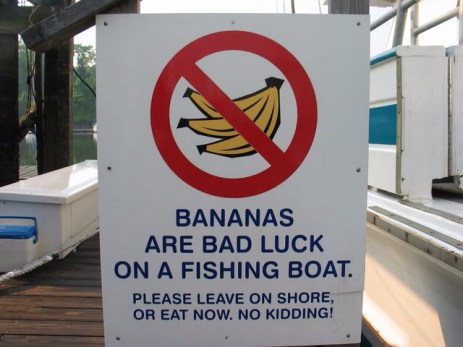
So, what’s the deal about bad luck bananas and fishing?

To some, it’s just something to goof with and talk smack about.

I’ve seen guys “plant” bananas in their buddy’s tackle box or fishing boots. I’ve seen guys tie a banana on hotel-room doors or toss a banana onto a buddy’s boat.

To other’s it’s deadly serious. It’s grounds for fighting words and coming to blows.

I’ve seen boats catch fire. Bananas were later found in the galley.

I’ve been on boats where everyone is catching fish except the boat with bananas but start catching fish when bananas were tossed overboard.

I was working as a deckhand where a guy broke his leg in a freak accident . Bananas were in an ice chest on deck. Another time a guy had to be air-lifted after having a heart attack on a boat that had bananas.

If bananas were found in the galley of any boat that I worked on or had chartered they were quickly discarded or discreetly “disappeared” at night when the boat was underway.

Rumor has it that Fruit of the Loom underwear used to have a banana on their label, but the banana was eliminated.

maxresdefault

So, what’s the source of the superstitious myth?

There’s a number of theories.

Bananas Stink

Back in the days of sailing ships, fresh fruit and vegetables were pretty important. Having bananas aboard, the bananas ripen pretty quickly and emit a gas and odor that can quickly ruin the food stores of a crew. Lacking fresh produce on those long voyages could lead to malnourishment at best. At worst, death.

No Slowing Down

The fact that bananas ripen quite quickly could also give credence to the lack of fish caught on board. Speed was essential to cargo ships carrying bananas.

Normal ships could travel at regular speeds. Often crews would fish to supplement their diets and the diets of passengers.

Banana boats did not have that luxury. They had to scoot. No slowing down to troll. It was essential to get from point A to point B.

Word got out that you didn’t want to crew or travel on a ship carrying bananas because those ships “never caught fish!” Seems logical.

Hidden Critters
Bunches of bananas could often hide snakes, spiders and other creepy-crawlers that could get loose aboard a ship. Many areas in Africa also were home to a voracious wood-eating termite that could get loose when bananas were brought about those old wooden sailing ships.

A Dark Chapter

If you remember your history, banana boats were often used as slave ships. If you suddenly woke up manacled, crowded and in a dark place smelling of bananas, life was about to take a turn for the worse.

post-154343-13958883064994

Davey’s Locker

Similarly, bananas float. When a ship would sink, among other things, floating bananas would often be indicative of the final resting place of a vessel.

Here’s another one…

Good to Be King

From my part of the world where my family originated, in Hawaii, only royalty were permitted to have bananas. A commoner found in possession of bananas could be grounds for execution…the ultimate bad luck!

So, what do you think?

I’m not superstitious, but you’d still better not bring bananas on any boat that I’m on! Why tempt luck?

That’s my story~!

signature June '18 two 1

Jonathan

______________

Jonathan Roldan has been writing the Baja Column in Western Outdoor News since 2004.  Along with his wife and fishing buddy, Jilly, they own and run the Tailhunter International Fishing Fleet in La Paz, Baja, Mexico  www.tailhunter.com.

They also run their Tailhunter Restaurant Bar on the famous La Paz malecon waterfront.  If you’d like to contact him directly, his e-mail is: jonathan@tailhunter.com

Or drop by the restaurant to say hi.  It’s right on the La Paz waterfront!

_____________


Jonathan Roldan’s
Tailhunter International


Website: 

www.tailhunter-international.com

Mexico Office: Tailhunter International, 755 Paseo Obregon, La Paz, Baja Sur, Mexico
U.S. Mailing Address:  Tailhunter International, 8030 La Mesa Blvd. #178, La Mesa CA  91942

Phones:
from USA : 626-638-3383
from Mexico: 044-612-14-17863
.

Tailhunter Weekly Fishing Report:  http://fishreport.jonathanroldan.com/

Tailhunter YouTube Video Channel:

https://www.youtube.com/channel/UCBLvdHL_p4-OAu3HfiVzW0g


“When your life finally flashes before your eyes, you will have only moments to regret all the things in life you never had the courage to try.”


Read Full Post »

GOOD ENUFF

nolan and me 2 edit

GOOD ENUFF

Originally Published the Week of Jan. 16, 2019 in Western Outdoor Publications

In addition to our fishing fleet, we have a little bar and restaurant in La Paz where lots of our fishermen trade stories; watch sports; and have a few cold ones.  Most will tell you it’s a fun little place.


We also have live music a few nights a week.  Our guys are pretty good.  But anyone is welcome to join in.


If you think you can strum a guitar; carry a tune or bang two tin cups together, step on up.  Put your beer down or bring it with you.


I guarantee, alone or with the band no matter.  We love it.  The band loves it.  The crowd loves it.  You’ll love it.


Enthusiasm counts for a lot more than talent, skill or ability.


I’ve played guitar for years.  I’ve played in bands.  I’ve been in front of crowds.  But, by my own standards, I’m a hack.  I get by if I have to.


But,  I was hesitant to play with our guys at first.   I don’t know why, but I didn’t think I was good enough.


It was the leader of our house band who finally said, “Are you good enough to have fun? If the answer is ‘yes’ then come on up to the stage.”


And that kinda did it.  I’m not as good as these guys, but I’m good enough to play WITH these guys and I have a world of fun.   And they have fun with me on stage and the crowd seems to enjoy it too.


For some reason, I got two e-mails this week from two different dads. In both cases, they wanted to come fish with us in La Paz.


One wanted to bring his young son.


Another was going to bring a son and an older daughter, but not his youngest daughter.


I also got a phone call from guy who had never fished in salt water, but was hesitant.


In all three situations, “not good enough” was mentioned.


I had to think about that for a moment before responding to each situation.


I rarely hear that someone “isn’t good enough.” Not about fishing.  How good do you have to be?


No matter how much someone tries to make of it, I’ll tell ya a secret.  In almost 5 decades of fishing, it’s NOT rocket science.  Fishing is not curing cancer.  Fishing is not winning the Nobel Peace Prize.


We often forget that.


And for some reason, I remembered about my guitar playing.  I only have to be good enough to have fun.  That’s all.  Have a good time.


I asked each father if their kids enjoyed the outdoors?  Did the kids like fishing at all? Do they have fun?  Did the fathers have fun with their kids?


Both answered in the affirmative.


I put the same question to the freshwater guy that was nervous about saltwater fishing.  He didn’t want to look foolish or under-gunned if he came to fish with us.


“Well, do you have fun fishing?”


“Yes, I love it!”


Well, what’s stopping you?  Step on up.  If it’s a kid, they’ll never get good at all if you don’t start ‘em somewhere.   Same with the freshwater guy.


If you’re good enough to have fun, you’re good enough.  That’s all you need to know.


You don’t need to be stronger or bigger.  You don’t need to have all the best equipment. You don’t need more experience. That will come.


I’m in my 60’s now.  I have a new first grandson myself.  He’s not even two-years-old yet but we’ve already taken him fishing.


Some would say he’s not old enough.


Heck, he’s not even potti-trained yet!  That will come, right?


But, he had fun so that means he’s already “good enough” and I can’t wait to take him again.  Or the younger sister that just got born two months ago.


We’ll have her on the water in good time and I have no doubts she’ll have fun.


I won’t be around to see either of them fishing when they’re  60.  But, I hope they remember their grandpa taking them out.


Time is precious.  Moments are precious.  Get those kids out.  Get yourself out.  Tomorrow is already here.


You’re good enough.  Jump up.  Jump in.  The water is fine!

That’s my story!


signature June '18 two 1


Jonathan


______________

Jonathan Roldan has been writing the Baja Column in Western Outdoor News since 2004.  Along with his wife and fishing buddy, Jilly, they own and run the Tailhunter International Fishing Fleet in La Paz, Baja, Mexico  www.tailhunter.com.

They also run their Tailhunter Restaurant Bar on the famous La Paz malecon waterfront.  If you’d like to contact him directly, his e-mail is: jonathan@tailhunter.com

Or drop by the restaurant to say hi.  It’s right on the La Paz waterfront!

_____________


Jonathan Roldan’s
Tailhunter International


Website: 

www.tailhunter-international.com

Mexico Office: Tailhunter International, 755 Paseo Obregon, La Paz, Baja Sur, Mexico
U.S. Mailing Address:  Tailhunter International, 8030 La Mesa Blvd. #178, La Mesa CA  91942

Phones:
from USA : 626-638-3383
from Mexico: 044-612-14-17863
.

Tailhunter Weekly Fishing Report:  http://fishreport.jonathanroldan.com/

Tailhunter YouTube Video Channel:

https://www.youtube.com/channel/UCBLvdHL_p4-OAu3HfiVzW0g


“When your life finally flashes before your eyes, you will have only moments to regret all the things in life you never had the courage to try.”

Read Full Post »

CAN’T HAVE TOO MUCH

images (1)

CAN’T HAVE TOO MUCH

Originally Published the Week of Dec 18, 2018 in Western Outdoor Publications

In my last column, I had written about the fact that when fishing in Mexico, live bait sometimes just isn’t available.  This can be especially true during the winter months due to weather or other variables that can’t be controlled.


So, what do you do?  Cancel the trip and go back to your hotel room?  Throw or troll lures all day?


Over the years, I’ve often been asked about bringing down frozen bait like squid.  Frankly, I never say no.  Even if there’s plenty of live bait available, if someone wants to bring some down or buy some, that’s fine by me.


It’s one of those things like being rich…or being too skinny…you can’t be too rich or too skinny.  Relatively speaking.


And in my book, bait is one of those things that it’s better to have it and not need it than to need it and not have it.  I’d rather have too much than not enough.


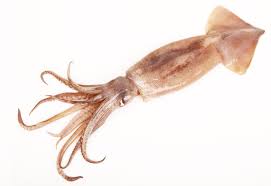
To me, the best universal bait in Baja is squid.  Pretty much everything eats squid.  There are even times when squid works better than live bait.  For example, I’ve hooked some of my largest tuna, on squid.


Trolled, chunked, cast, jigged…it all works.  And it’s better than nothing and sometimes it’s better than anything.


But, you don’t just want any kind of squid.


Leave that frozen stuff they sell at the bait shop home.  Fresh dead squid is the best.  Believe me, fish know the difference.


If it’s fresh caught and never been frozen, all the better.  That would be my first choice.


Rather than bring it down to your Baja destination, see if one of the local markets has some fresh squid or the fish sellers at the farmer’s market in town.  It’s not only fresh, but it’s as cheap as you’ll find it short of catching your own.


Absent that, if you’re bringing some from home, again hit up the fresh stuff from the seafood market or fish counter at the supermarkt.  If it has to be frozen stuff, make sure it’s table quality squid that’s for human consumption.


To bring it down, you’ll have to freeze it anyway.  If you have a vacuum sealer, great. If not, use small ziplock-style freezer bags and portion it out, so you use only what you need for the day.


There’s nothing worse than defrosting a 5-pound chunk of frozen squid on a boat in an ice chest, bait tank or…in the sun!!!


It’s not only going to make a stinky mess, but at the end of the day, you’ll have issues with the un-used squid and storing the goopy glop for the next day’s fishing.


Year’s ago, I had some fishing clients who forgot their defrosted squid in the trunk of their rental car.  By the time they remembered it, it was late and after a few dinner margaritas.


They figured it would be OK.  It was night.


Well, nights in Baja are still 85 degrees and the plastic bag leaked right into the trunk carpeting…right under the rear seats and into the floorboards.


Come morning, they couldn’t even get into the rental car without gagging.  Good thing they bought insurance!


Once you have the squid ready to use, there’s no end to the techniques.


Slow troll a whole squid behind the boat.


Pin a whole squid or strips of squid to a trolling lure for scent and action and drag it behind the boat.


Pin some on a lure and cast or jig with it.


Send some down on a hook with a weight, dropper loop style, and a half-dozen reef beasts will be all over it including, pargo, cabrilla, grouper, snapper and more.


Chunk with it.


Cut it into chunks and toss handfuls into a slow current as you drift.  In the middle of the sinking chunks bait up another chunk of whole squid on a hook.


With your line slack and in freespool, let your baited hook drift down with the rest of the chunks.  This is a dynamite way to get hooked up.


Keep your line slack and in freespool so it stays with the rest of the chunks.  If your line suddenly starts ripping up, remember “dead bait doesn’t swim.” Flip the brake and set the hook!


There’s some fish, like dorado, that specifically like live bait. Dead stuff doesn’t get them too interested unless they are already in a frenzy.


But, you can use the chunked squid as chum. It gets the dorado coming to the boat so you can toss a lure or a whole squid and them and “swim” it back to the boat.


You can also cut up and pulverize a bunch of squid and make a chum bucket using a small mesh bag hung over the side of the boat or weighted down and hung at depth to attract fish.


If you want to supercharge it, add in some commercially bought fish scent to the bag as well.  It’ll leave a nice slick of scent in the water and you never know what might show up!


If you have limited live bait, there’s one really nifty trick I learned years ago from one of my captains.  You can put a live bait into the body cavity of a squid.  It will swim!  Just put a hook into it and let it do it’s stuff.


And, as a fallback…if all else fails!


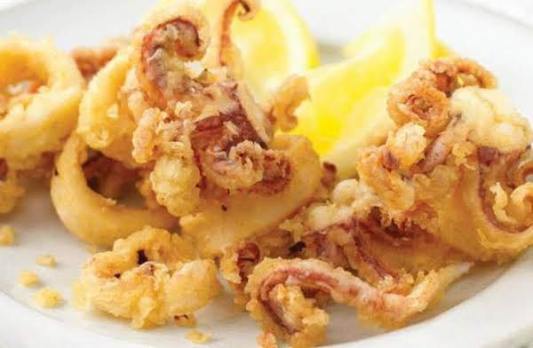
Fresh squid great deep fried or made into calamari salad!

unnamed

That’s my story!

signature June '18 two 1

Jonathan

______________

Jonathan Roldan has been writing the Baja Column in Western Outdoor News since 2004.  Along with his wife and fishing buddy, Jilly, they own and run the Tailhunter International Fishing Fleet in La Paz, Baja, Mexico  www.tailhunter.com.

They also run their Tailhunter Restaurant Bar on the famous La Paz malecon waterfront.  If you’d like to contact him directly, his e-mail is: jonathan@tailhunter.com

Or drop by the restaurant to say hi.  It’s right on the La Paz waterfront!

_____________


Jonathan Roldan’s
Tailhunter International


Website: 

www.tailhunter-international.com

Mexico Office: Tailhunter International, 755 Paseo Obregon, La Paz, Baja Sur, Mexico
U.S. Mailing Address:  Tailhunter International, 8030 La Mesa Blvd. #178, La Mesa CA  91942

Phones:
from USA : 626-638-3383
from Mexico: 044-612-14-17863
.

Tailhunter Weekly Fishing Report:  http://fishreport.jonathanroldan.com/

Tailhunter YouTube Video Channel:

https://www.youtube.com/channel/UCBLvdHL_p4-OAu3HfiVzW0g


“When your life finally flashes before your eyes, you will have only moments to regret all the things in life you never had the courage to try.”


Read Full Post »

NOT A SURE THING

Big yellowtail roger 6-13 tags

Bait…it is what it is and you make the best of it!

NOT A SURE THING

Originally Published the Week of Dec. 4, 2018, in Western Outdoor Publications

With the cooler months descending rapidly over the Baja, a fisherman recently asked me, “Where’s all the live bait that was around all summer?”


Good question.  In many areas, live bait gets harder to acquire during the winter months and for good reason.


Many “warm month” fishermen who visit Baja assume that bait is ALWAYS around and ALWAYS available to either catch or purchase. They come down in the other times of the year and it’s a different ballgame.


For many reasons.


First, it’s the weather and conditions.  During the cooler months in the Baja, winds are stronger.  There’s a lot more wave action and rougher water.


As many of you regulars know, there are some days when it’s impossible to launch a panga.  Even in a big cruiser, you can go out and just get beat up getting tossed and bounced on an angry ocean.


Maybe in my younger days, I’d be out there.  I’m older and smarter now.  Fishing is supposed to be fun…especially in Baja.


It’s not an exercise in endurance.  So much nicer to hang out at the pool with a cold one and work on that tan!


But those same waves and winds batter the bait areas.  Bait tends to stick together, especially if you’re talking sardines or mackerel.  It’s all about survival.


To that end, they like shallow sheltered areas or areas where there’s structure be it rocks, reefs, docks, floating objects and similar. Or at least shallow areas along a beach or bay where they can feed, breed and not be subjected to as many predators.


If waves are crashing on those beaches or smashing into rocks and docks or currents are impeding their abilities to stay together, they’ll find somewhere else.


Or, alternatively, they’re so scattered so they’re difficult to locate and catch.


I often get fishing clients who say, “Two years ago, we caught tons of bait over by the wreck,” or “The south end of the island had tons of bait according to the reports.”


“How come we don’t go there to get bait?”


Or. . .

“Why is it taking so long to catch bait now?  It was easy last July!”


Yes, bait moves, amigos!


If there was someplace easier to find or easier to catch, don’t you think we’d be doing it? Duh.


Some folks think it’s like a big bait receiver out there in the ocean and you just take a big dip net; throw net; or Lucky Joe rig and get all you want.


Like going through the drive-through at McDonald’s.  You order.  You drive up.  No big deal.  It’s not like that.


There’s another aspect of the bait dilemma as well.  It’s the human element.


If the bait sellers are having a hard time finding bait, it’s gonna take awhile for them to get enough to sell.


Or, maybe that’s ALL they might have to sell for the day.  And their prices will be…well…whatever their prices will be.


It’s a seller’s market.


Better to “light one candle than curse the darkness” is the old saying.  You take what you can get and make the best of it.


If you have to wait, you wait.  If you can only get a handful of bait, you go with it. You pay the going-rate.


You’re not going to pay a couple thousand on a fishing trip then argue because bait costs $30 instead of $20.  If the bait guy doesn’t sell it to you, the next guy will surely take it.


What are you going to do, go fishing with no bait?  Troll all day?


You can’t get mad at the poor bait guy who’s been working all morning or night doing his best to have enough to sell. He needs to make a living too.


Sure, it’s frustrating.  However, believe me, getting angry with the bait guy, your captain or your outfitter won’t make bait magically appear.


The other aspect to remember is that if the bait is hard to get, the bait guys may feel it’s not even worth going out.  Why waste the energy?  No one likes to work for small returns on effort.


Conversely, during the winter, there’s a lot fewer fishermen on the water.


The bait guys might not go out at all if there’s no one to buy their bait in the morning.  You might just have shown up on one of those days. It’s like getting rained on the day YOU decide to go fishing.  No one to blame.


So, just either be patient or go with whatever is happening.  You might find yourself catching your own bait or using something unusual like chunks of bonito or squid.  Or trolling.


It is what it is. You’re still in Baja.  You’re not at work.  You’re not at your desk or whatever you do.  There’s worse places to be.


In the next column, I’ll chat about some ways to fish dead bait like squid.

That’s my story!

signature June '18 two 1

Jonathan


______________

Jonathan Roldan has been writing the Baja Column in Western Outdoor News since 2004.  Along with his wife and fishing buddy, Jilly, they own and run the Tailhunter International Fishing Fleet in La Paz, Baja, Mexico  www.tailhunter.com.

They also run their Tailhunter Restaurant Bar on the famous La Paz malecon waterfront.  If you’d like to contact him directly, his e-mail is: jonathan@tailhunter.com

Or drop by the restaurant to say hi.  It’s right on the La Paz waterfront!

_____________


Jonathan Roldan’s
Tailhunter International


Website: 

www.tailhunter-international.com

Mexico Office: Tailhunter International, 755 Paseo Obregon, La Paz, Baja Sur, Mexico
U.S. Mailing Address:  Tailhunter International, 8030 La Mesa Blvd. #178, La Mesa CA  91942

Phones:
from USA : 626-638-3383
from Mexico: 044-612-14-17863
.

Tailhunter Weekly Fishing Report:  http://fishreport.jonathanroldan.com/

Tailhunter YouTube Video Channel:

https://www.youtube.com/channel/UCBLvdHL_p4-OAu3HfiVzW0g


“When your life finally flashes before your eyes, you will have only moments to regret all the things in life you never had the courage to try.”


Read Full Post »

REALITY CHECK

REALITY CHECK

Originally Published the Week of Nov. 13, 2018 in Western Outdoor Publications

If you spend anytime watching U.S. news or surfing the internet, listening to the radio, or social media, it doesn’t take much to figure the U.S. has a lot of problems.  Yikes.


If you even got a smidgen of the TV ads for the recent elections, it was an inundation of mind-boggling battering.  It was numbing.  I happened to be in the U.S. for just two days for a family emergency and it was inescapable.


Jill and I still vote (absentee ballot) of course from down here in Baja.  But it’s easy to say at times, “Dang, I’m glad I live in Mexico!”


And we do. And we’re blessed.


But it wasn’t to escape anything back home in the U.S.  Indeed, we miss the heck out’ve it.  But, through a weird and convoluted series of happenstance, this is where work took me and the business just grew.


In fact, I was on my way out of Baja, but it grabbed me by the ankles…pulled me back… and wouldn’t let go.


And before I knew it two decades had passed.  And we’re still here.  Funny how careers are made.


But, we’re not far removed from being reminded how especially fortunate we are.  Despite all of America’s plethora of problems and shares of idiots, there’s a reason folks are desperate to get in.


I mean, I don’t see caravans of people from Chicago trying to bust into Mexico or people from Seattle trying to smuggle themselves into China.


We love our many friends and employees here and I have watched their kids grow over the years.  And I wonder what opportunity awaits.

What opportunity lies ahead when 6th grade is the highest level of mandatory education here in Mexico?  Or, even a college degree down here means you’re now qualified to work at the reception desk in a hotel.   Is that really it?


I know kids that honestly “aspire” to flip burgers at Burger King.   The bar is not very high.


Can you imagine, “When I grow up, I hope to learn to work at McDonalds.”


American tourists toss 20-dollar bills around while on vacation.


I doubt many of them realize that twenty bucks is 3-days wages for many Mexicans.  Most earn less than 10-dollars-a-day and probably paid 4 dollars to ride the bus to get to work and back home.  And probably having to feed a family.


Your own kid working that summer job at Dairy Queen is probably making 100 bucks a day for “spending money.” Not to buy food or pay the family rent.


Just the other day, I heard a gringo complain that he had been “ripped off” by a street vendor who didn’t have 75 cents change in American.  C’mon, Man.


We know a friend who just found out she has breast cancer.  Serious.  It took a MONTH between the biopsy and diagnosis and the cancer had grown tremendously.


But there’s no openings for surgery for THREE months. And even then, the date might come up and there might not be a surgeon available.


A death sentence. But, there are no other options.


And she’s “lucky.”


She has government-provided socialized “medical insurance.”


It means everyone has the right to medical care in Mexico.  It just doesn’t necessarily mean you get it “right now” when you need it or the right kind of treatment.


If you live in the outlying areas as many folks do, medical treatment means you also have to  travel to a doctor.  I asked one of our captains many years ago what do you do if you can’t get to a doctor?


He said sadly, “We just die.”


As many of you know, we drive a beat- up Honda down here.  I’m not proud. It’s a junker. But it goes forward and reverse. And the air-conditioning works…sometimes.  At a whisper and often blows dust in our faces.


Recently the door handle just fell off.  So, we duct taped it back in place,  You get the idea.


Although not stylish, we have the means to get from Point A to Point B.


As long as it’s not far.  Or involve hills.  We cannot make the 100-mile drive from La Paz to Cabo San Lucas without overheating.


Everyone has a car back home in the U.S.  Or even more than one car.  Last time in Los Angeles, I was  stuck 2 ½ hours driving 20 miles.


But, a car here is a luxury.  And we know it.  There are times when we have not had a car and it restricted every aspect of our life.


There were several of those early years here in Baja that I did not have a car.  I relied on two legs, my thumb or a generous friend.


People make fun of Mexican cars, mine included.  But, it sure beats not having one at all.


Back-in-the-day in the U.S., it was a right-of-passage at 16 to get that driver’s license and get a car, no matter how hard you had to work for it.


Most adults I know down here do not have a driver’s license. Or know how to drive.


What for?  They will never own or have a car in their lifetimes.


If you do own one..insurance? Maintenance? They can barely afford gas.  So, make all the fun you want.


I was bitching a few days ago because our apartment (once again) did not have hot water.  About 20% of the time, we don’t have hot water.


I guess you get used to it, but after a long day, you look forward to that shower and instead, there’s only cold water…it gets old.


I was going on-and-on to a friend.  He just smiled then said, “Our house never has hot water.”


“Never? “


“Not ever. “


“How do you shower?  Cook?  Wash clothes?”


“Nunca. Never, Jonathan. And sometime no electricity either.”  He shrugged and smiled.


“You get used to it.”


End of conversation. I shut up.  You take something for granted and you just assume that everyone has it.


Reality check and you say a little prayer of gratitude.


Oh…by the way, Happy Thanksgiving, everyone!

Read Full Post »

As It Should Be

d30039f22ac9eb8ccac8c656dd184b4f

As It Should Be

Originally Published the Week of Nov. 6, 2018 in Western Outdoor Publications

This is my favorite time of year.


Late September to mid-December is what I call down-time here in Baja.


Much of the crowds are gone.  Kids are back in school.  Families have other things in mind and nothing on the calendar until Thanksgiving.


Recognizing that, there’s some great bargains to be had if you work around that holiday.  Airlines consider this “off-season” and have some great rates.  Hotels are often well below capacity so they offer great discounts or can be negotiable if you dial direct.


Free breakfast? 

Sure.

Spa time? 

We’ll add that in too.

Tickets to the buffet? 

Not a problem.

How about we throw in a discount for the booze cruise?

Done deal!

And an ocean-facing room too!


It’s a pretty time to be down here too.


Lots of sunshine, but 20 degrees cooler than the summer with much less humidity.  However, waters still retain much of the summer warmth.  It can be breezy or even windy, but most times it’s postcard perfect.


In fact, we call it “non-weather.”  It’s so agreeable, you never even think about the weather.


And many oft-crowded places are often empty.  Beaches pretty much all to yourself.  Restaurant staff falling all over you with service.  No reservations needed.  Stores willing to “listen to your best offer.”


For fishing, it can be spectacular.  If you can avoid some of the major tournaments going on (or join in and have some fun!), often the waters are uncrowded with sportfishing traffic.


In fact, if you check out some of the lessor-visited destinations in Baja and Mexico, there’s very little fishing going on except for you!  However, keep an eye out for the winds and try to pick your fishing days when the forecast calls for diminished winds.


Personally, especially as you get into late October and November, there’s just less hustle and bustle.  Things slow down.  There’s fewer tourists around so I think the whole place collectively just takes it down a notch.


You take slow walks.  You ride a bike.  You linger over your meals.  You sip instead of gulp.   You watch sunsets. You stop to chat instead of a quick, “Comos estas?” then keep going to the next thing.


There’s no place you have to be right now.


The shadows are longer. The palm trees rustle in the breeze.  There’s a sparkle on the ocean.


Someone is barbecuing carne asada down the street.  Somewhere there’s the lone mariachi trumpet wafting a familiar old Spanish tune you can’t quite place.


A young couple walks by in the distance. Barefoot in the sand.  She giggles.  He affectionately punches her in the shoulder.  She giggles, tries to kick him back.  They hold hands.


That was you so many years ago.


You put your feet up. You hold your cold bottle of beer up to the setting sun and let it shine through the amber glass.  A sip of the icy golden effervescence refreshingly burns the back of your throat.  Ahhhhh…


You wonder what the rest of the world is doing.  Or not.


You start to take a selfie.  To send to the folks back at the office.  Post on Facebook.  Look where I am.!


Nah.


That takes too much energy.  Phone off and slipped back into the pocket of your cargo shorts.  Another long draw off the long-neck.  Living the dream.


No reason to move.  At some point, you might have to explore where someone is cooking up that yummy carne asada.  But not just yet.


There’s more important things to attend to.  Like ordering another cold cerveza.


For just a little while, it feels like old Mexico again.   And the world is as it should be.

That’s my story

signature June '18 two 1

______________

Jonathan Roldan has been writing the Baja Column in Western Outdoor News since 2004.  Along with his wife and fishing buddy, Jilly, they own and run the Tailhunter International Fishing Fleet in La Paz, Baja, Mexico  www.tailhunter.com.

They also run their Tailhunter Restaurant Bar on the famous La Paz malecon waterfront.  If you’d like to contact him directly, his e-mail is: jonathan@tailhunter.com

Or drop by the restaurant to say hi.  It’s right on the La Paz waterfront!

_____________


Jonathan Roldan’s
Tailhunter International


Website: 

www.tailhunter-international.com

Mexico Office: Tailhunter International, 755 Paseo Obregon, La Paz, Baja Sur, Mexico
U.S. Mailing Address:  Tailhunter International, 8030 La Mesa Blvd. #178, La Mesa CA  91942

Phones:
from USA : 626-638-3383
from Mexico: 044-612-14-17863
.

Tailhunter Weekly Fishing Report:  http://fishreport.jonathanroldan.com/

Tailhunter YouTube Video Channel:

https://www.youtube.com/channel/UCBLvdHL_p4-OAu3HfiVzW0g


“When your life finally flashes before your eyes, you will have only moments to regret all the things in life you never had the courage to try.”


Read Full Post »

WHEN BIGGER ISN’T BETTER

22788666_10214699944561595_2327381771317674817_n

WHEN BIGGER ISN’T BETTER

Originally Published the Week of Oct 22, 2018 in Western Outdoor Publications

It’s always open for discussion, but personally, I don’t think any fish down here pulls harder than a tuna.  It’s basically an explosive muscle with some fins on it.


Built for speed and shaped like a bullet, they have no swim bladders and can dive fast, swim fast, and empty a spool faster than any fish I’ve ever experienced.


Sure, wahoo have that flat-out greyhound speed of 60-70 mph bursts. But once that short burst is over, it’s not gonna rip off several hundred yards of line yards of line.


A yellowtail, amberjack, huge grouper or snapper might bullrush back to its structure or layer,  But, once you work the fish away from the protection, the big part of the battle is won.


And think about this.  Folks catch 100, 200, 300 pound marlin quite frequently.  You don’t hear of many tuna of that size being caught.


Hooked?  Yes.  Caught?  Not so much!


Most anglers I know could bring a 150-pound billfish to the boat in 15 or 20 minutes. Even a rookie.   A tuna of equal size could take an hour or two on the same tackle.


They are a special sportfish.


But, they are picky sportfish too.   And when the big boys start boiling, your first inclination is to grab your big guns too!  Big fish…big baits…big line…big rods.


And that all works fine when the fish go “ on the chew” with abandon.  When all hell is breaking loose and they’re hammering everything tossed in the water and fighting each other to grab lines, then by all means reach into your heavy arsenal.


But, often the frustration with tuna is they boil…but will have nothing to do with your offerings.  Or they stay just outside of casting distance and get nervous whenever something approaches like a boat, a jig or a tossed sardine.


That’s when you have to make a choice.  Stay with the heavy gear and be ready for the big hit…that may never come.


Or do something different.


Tuna are a per-snickity fish.


Think about this.  They never stop swimming.  The must eat.  That’s all they do is eat to keep up that pulsing swimming physiology and high metabolism.  But, how do you get them to eat YOUR stuff?


Go lighter.  Go smaller. Be stealthy.


Discard the heavy gear and the prospects of having limp line all day and go to your “small game.”


I’ve seen tuna go off when all the angler did was change from 50 to 40-pound test. Or drop from 40 to 30 pound test.  Same fish. Same area.  That’s the only difference.


That puts more of the odds in the fish’s favor, but at least you stand a better chance of getting bent.  At least you have that opportunity.


The other thing is to go for smaller baits.  Dorado don’t care about your bait size.  Wahoo and yellowtail could care less.


For some reason, tuna like the smaller baits.  Live bait is great.  Often, dead works just-as-well.


But that also involves other factors.  Smaller baits mean using smaller hooks!  Again, advantage to the fish.


Match your hook to the size of your bait.  Don’t match your hook to the size of the fish you want to catch!


If your hook is too big, it kills your bait.  If you hook is too big your bait won’t swim correctly.


And by the same token, if your line is too heavy, your bait won’t swim correctly either. Just another reason to go to lighter line.  But again, you’re stacking the odds in favor of the fish.


One other big advantage involves the eyesight of the tuna. They can see lines. They can see the reflection of light on that mono as it lies in the water and that can make the fish wary.


We found down here in La Paz, that fluorocarbon leaders can make all the difference in the world in getting bit. Virtually invisible, the line invites more strikes.  But even a few feet of fluro leader gives you a better shot.


But again, fluro is more brittle than mono.  Older fluro tends to also be more rigid and hinders the “swimability” of your bait.  And it can break!  There goes your gorilla tuna.


Choices…choices.


Heavy gear for that big fish, but maybe never get bit?


Or lighter gear and having some fun?


If your rod is never bent, then you’ll never have a chance at all.  I’d rather get bit.  It’s a lot less boring!

That’s my story…

signature June '18 two 1

Jonathan

______________

Jonathan Roldan has been writing the Baja Column in Western Outdoor News since 2004.  Along with his wife and fishing buddy, Jilly, they own and run the Tailhunter International Fishing Fleet in La Paz, Baja, Mexico  www.tailhunter.com.

They also run their Tailhunter Restaurant Bar on the famous La Paz malecon waterfront.  If you’d like to contact him directly, his e-mail is: jonathan@tailhunter.com

Or drop by the restaurant to say hi.  It’s right on the La Paz waterfront!

_____________


Jonathan Roldan’s
Tailhunter International


Website: 

www.tailhunter-international.com

Mexico Office: Tailhunter International, 755 Paseo Obregon, La Paz, Baja Sur, Mexico
U.S. Mailing Address:  Tailhunter International, 8030 La Mesa Blvd. #178, La Mesa CA  91942

Phones:
from USA : 626-638-3383
from Mexico: 044-612-14-17863
.

Tailhunter Weekly Fishing Report:  http://fishreport.jonathanroldan.com/

Tailhunter YouTube Video Channel:

https://www.youtube.com/channel/UCBLvdHL_p4-OAu3HfiVzW0g


“When your life finally flashes before your eyes, you will have only moments to regret all the things in life you never had the courage to try.”


Read Full Post »

BAJA SMORGASBORD

Victor rack 4-18 tags

SIX DIFFERENT GOOD-EATING SPECIES ON ONE DAY and OTHERS RELEASED! (Pargo mulatto…red snapper…yellowfin tuna…yellowtail…cabrilla…white bonito)

BAJA SMORGASBORD

Originally Published the Week of April 24 in Western Outdoor Publications

I was on the beach a few days ago waiting for our fishing fleet pangas to come back that afternoon.  I could see them slowly making their way towards me maybe 10 or so minutes out.


I had my toes scrunched in that fine warm Baja sand, having kicked off my flip-flops and my drivers and fish cleaners were all waiting to see what showed up.


Dang, that sun felt warm on my shoulders.  Not too hot. No humidity.  Just a slight off-shore breeze.  My legs sure need some color.  Too many days in long pants.


Just one of those awesome spring days in Mexico.


I think spring-time is my favorite time to be here.  It’s the “tweener” time between the end of March and the beginning of June.  It’s not quite winter.  Not quite summer.


It’s always sunny.  Temps in the low to mid-80’s.  Nights, you still use a blanket.  Good to have a sweatshirt or light windbreaker in the morning for fishing.  It comes off quick enough!


There can still be some strong bouts of wind, current and swells as winter doesn’t always slide out easily.  But, much of the time, it’s just something I call “non-weather,”  It’s so pleasant you don’t even think about it.


Conversations don’t center around how hot or cold it is. No one talks about how cloudy or rainy it will be.  You just know the sun is up and then it goes down and in between, it’s mighty pleasant.


After Easter and before the summer vacation, it’s also a slower easy time.  The big summer crowds aren’t here yet.  A lot of visitors are refugees from wherever they spend their colder wet winters like Canada, the Pacific Northwest and Alaska. If even for just a few days.  Or so it seems.  I can’t blame them.


When they arrive, they tell me about snow on the ground or not having seen the sun “back home” for several weeks.  They just want to see the big warm yellow “orb” in the sky.  They often don’t even care if the fish are biting or what’s biting!


And that’s one of the really special things about fishing during this time.  I thought about that as I continued to revel in the warm sun on my back waiting for the boats.


You honestly just don’t know what you’re going to catch.


There’s a lot of anglers who will argue that the hotter warmer months are their favorites.  That’s when the “glamor” fish like tuna, wahoo, billfish and dorado are centerstage.  And rightly so.


But during the springtime, there seems to be a lot of variety.


The cooler water fish are still around like yellowtail, amberjack, several varieties of pargo and snapper . You can find cabrilla as well as triggerfish and sierra.


There are some fish much more specific to this spring-time bite like roosterfish, pompano and palometta  as well.


Additonally, as the waters warm or you find the patches of warmer currents, you’ll also get shots at the aforementioned bluewater species like the sailfish, marlin, yellowfin tuna, wahoo and dorado.


Then, there are always the seemingly ever-present fish like bonito, jack crevalle, bullet tuna and others.


I’ve had our fleet come back with as many as a dozen species in a single day scattered among the various boats.  You might not catch a lot of any one species, but you might get some of these…two of those…3 of these and another of that!


And the next day might be completely different.  Even two boats next to each other might have completely different catches.


Several years ago, I had one Outdoor TV crew that wanted to see how many different species they could catch in a single day.  By the end, we tallied 16 different species of fish!


By the same token, anglers can return to a “hot spot” from the day before and find completely different fish have taken over the area the next day.  Or what was biting one day has completely changed depending on conditions.


This offers some incredible challenges to anglers.


It’s a super time to check off some fish on the bucket list, but also presents new twists on fishing.  Does one use light tackle or heavy tackle?  Spinning gear of conventional gear?  Maybe a flyrod if the winds are down?


Are you fishing the warmer water where conditions are blue and clear or will you be fishing the cloudier colder waters?  What about depths?  With both warm and colder waters mixing it up, there will be different temperature thermoclines holding different layers of fish.  Should you use weights? Jigs? Plastics?  Will the fishing be offshore or closer to shore?


Or geographically, where are you fishing?  The Pacific side of Baja or the Sea of Cortez?  Also what’s happening in Cabo San Lucas is probably way different than what’s biting in Mulege or San Quintin!


Many times during the year when fishing Baja you can get away with one or two rigs and be good for 90% of the targeted species.  But during the spring, you just never know.


It does make for some interesting decision making and trips to the tackle store.  Next time, consider a trip in the spring.  It’s a pretty fine time.


That’s my story!

Jonathan signature

Jonathan

______________

Jonathan Roldan has been writing the Baja Column in Western Outdoor News since 2004.  Along with his wife and fishing buddy, Jilly, they own and run the Tailhunter International Fishing Fleet in La Paz, Baja, Mexico  www.tailhunter-international.com.  They also run their Tailhunter Restaurant Bar on the famous La Paz malecon waterfront.  If you’d like to contact him directly, his e-mail is: jonathan@tailhunter.com

Or drop by the restaurant to say hi.  It’s right on the La Paz waterfront!

_____________ 


Jonathan Roldan’s
Tailhunter International


Website: 

www.tailhunter-international.com

Mexico Office: Tailhunter International, 755 Paseo Obregon, La Paz, Baja Sur, Mexico


U.S. Mailing Address:  Tailhunter International, 8030 La Mesa Blvd. #178, La Mesa CA  91942
 

Phones: 
from USA : 626-638-3383
from Mexico: 044-612-14-17863
.

Tailhunter Weekly Fishing Report:  http://fishreport.jonathanroldan.com/

Tailhunter YouTube Video Channel:

“When your life finally flashes before your eyes, you will have only moments to regret all the things in life you never had the courage to try.”

Read Full Post »

Tell Them Bring the Salad Next Time!

cs1_26_595_01

PEACE OFFERING or DID THE SPANISH GET PUNKED?

NEXT TIME TELL THEM TO BRING THE SALAD INSTEAD!

Originally Published the Week of March 14, 2018 in Western Outdoor News

I’m a fan of history and enjoy finding little obscure bits of historical trivia.  I recently came across a story about our own city of La Paz where we live.


If you ever have a chance to visit the city,  I hope you get  the opportunity to visit the city cathedral in the town square.  It’s not a big city.  The cathedral is not hard to find.


The first thing that will strike you is that it sure doesn’t look like your typical Spanish-style mission so common up-and-down the Baja and into California.


It is strikingly absent of the long sepia-colored arched breezeways and adobe walls usually associated with mission architecture.  On the contrary, the La Paz cathedral is kind of square and blocky-looking.


It has two atypical  massive bell towers that look more fortress-like than other mission churches.  Heavy stone blocks and concrete masonry have been described as “sober neo-classical” in design.  It doesn’t sound too exciting, but nonetheless, it’s a big church!


Indeed, it looks different because it is.


Most other missions were constructed by Spanish Jesuit missionaries and conquistadores in the 1600’s and 1700 hundreds.  La Paz didn’t complete it’s house of worship until the latter part of the 1800’s.


According to the history, when the Spanish first arrived, they didn’t come as benevolent emissaries of church and crown.  Actually, they showed up as violent buttheads and took a heavy brutal hand to the local indigenous population.  They had no problem applying armor, cannons and musket to get their point across.


The locals didn’t take kindly to it and battled back.  And won.  Booted the Spanish right out.


This happened again and again.  Something between 5 and 8 incursions by the Spanish were made in La Paz to set up a colony.  In each case, the locals either whupped up on the padres and their military escorts or simply made it difficult to for the Spanish colonists to sustain the outpost.


The natives would cut off water; damage crops; and made it impossible for supply trains and ships to replenish and re-inforce the beleaguered  colonists. Life in the New World was hard  and brutal enough let alone being harassed by belligerent tribes.


So, the Spanish would pack up and sail away.


At least until the next intrepid group of helmet-headed imperialists showed up.


According to the story, during one of these attempts, the Spanish thought they were making some headway with the locals.  Rather than attack, the tribesmen presented the Spanish with many loaves of native papaya bread.


A welcome gift and gesture indeed!  The Spanish were thrilled with this apparently peaceful overture.  So, thrilled that they decided to have a fiesta to celebrate the wondrous gift of the delicious bread. A bit like the colonists at the first Thankgiving.


It was during this fiesta that the Spanish found out that the natives had a special method to making their bread.


The natives loved papaya and would consume the entire fruit wasting nothing.  This included the skin, meat and seeds.  It was their traditional way.


So far so good.  The key words are “wasting nothing.”


The most interesting part was that the tribespeople would then gather up the “previously digested seeds.”  Use your imagination.


The seeds ground into the flour used to make this special “Baja Bread” …wasting nothing!


Upon hearing this, the Spanish pretty much choked and gagged in” mid-chew” thinking about the origins of their yummy bread.


They were mad. Fighting mad at what they perceived was a cruel and sinister joke.  No one was laughing.  The Spaniards thought they got punked big time.  Talk about a “party fail!”


And once again, hostilities broke out.  The Spanish had no sense of humor and much blood was spilled over breaking bread.


A peace offering misunderstood and gone awry?  Or a dastardly prank pulled on the Spanish masters and padres?


We will never know.


But the natives again rose up and pummeled the Spanish back to the mother country.


I love history.


That’s my story!

Jonathan signature

______________

Jonathan Roldan has been writing the Baja Column in Western Outdoor News since 2004.  Along with his wife and fishing buddy, Jilly, they own and run the Tailhunter International Fishing Fleet in La Paz, Baja, Mexico  www.tailhunter-international.com.  They also run their Tailhunter Restaurant Bar on the famous La Paz malecon waterfront.  If you’d like to contact him directly, his e-mail is: jonathan@tailhunter.com

Or drop by the restaurant to say hi.  It’s right on the La Paz waterfront!

_____________ 


Jonathan Roldan’s
Tailhunter International


Website: 

www.tailhunter-international.com

Mexico Office: Tailhunter International, 755 Paseo Obregon, La Paz, Baja Sur, Mexico


U.S. Mailing Address:  Tailhunter International, 8030 La Mesa Blvd. #178, La Mesa CA  91942
 

Phones: 
from USA : 626-638-3383
from Mexico: 044-612-14-17863
.

Tailhunter Weekly Fishing Report:  http://fishreport.jonathanroldan.com/

Tailhunter YouTube Video Channel:

“When your life finally flashes before your eyes, you will have only moments to regret all the things in life you never had the courage to try.”

Read Full Post »

FOR BETTER OR WORSE

Tony Reyes

FOR BETTER OR WORSE

Originally Published the Week of Feb. 1, 2018 in Western Outdoor Publications

We’re on the road doing our fishing/ hunting show circuit these days.  We just finished shows in Denver and Sacramento and, as I write this, my loptop is bouncing on my lap as we rumble down up the highway towards our next show in Seattle.


God bless her.  Jilly is driving our rig through the rain so I can tap away on the computer and make my deadline!


We’ve been at this now over 2 decades and I field a lot of questions at these shows while we meet-and-greet in  our booth.  At the last show, I got into a little round-robin with some old-timers and Baja rats.


A lot of the “opinions” started with…


“Back in the day…”

“I remember this time when…”

“You should have seen…”

“You would not have believed what we saw…”


Most were of the opinion that Baja fishing is not what it used to be or that it’s been ruined.  Most of these guys were fishermen that used to come down a lot and had great memories and stories of “the way it used to be.”  Most of them don’t come down much or at all these days.


Either their travel days were behind them or they just didn’t think it was worth it anymore.


Some incredible stories to listen to.


I had to agree with them…somewhat.


The days of Ray Cannon and John Steinbeck are long gone.  I’ll agree with that.  It’s not the same “frontera” of crystal waters, dirt roads and remote fishing villages.  But what is the same these days?   Everything changes.  Some for better.  Some for worse.


I’ve seen a lot of changes in my own time.  My first Baja experiences took place 40 years ago.  I’ve been running a fishing operation almost 25 years.  I think I have a pretty unique perspective.


I’m not a visitor or a tourist.  I don’t come fishing for 3 days a year every other year during the summer.


I’m at ground zero every single day.  I don’t get my reports reading the internet or fishing magazines.  My hands smell fishy every day and it’s my reports that others read!


So, yes, I do remember the days when there were so many dorado and the roosterfish were thick.  I remember those halcyon days of catching a dozen marlin before breakfast.


I remember having to siphon gas into the outboard very morning with my mouth before fishing.   I remember chasing burros off the dusty airstrip so the plane could land. I remember commercial flights for $69 and how pissed I was when it was raised to $89!  Robbery!!!


I remember days when ice was a luxury and gasoline was hand-pumped out’ve 55-gallon drums and filtered through a t-shirt.  And the gas was green!  Toilet paper and fan belt hoses were equally valuable if you were travelling.


And, I’ve straddled the “new age” when convenience stores dot the highway.  Any hotel without a foo-foo day spa isn’t worth staying it.  Cruisers with more electronics than a moon shuttle ply the ocean.  Fishermen travel with nannies and instead of Volkswagen mini-vans, Hummers and Mercedes now pull up next to me at traffic signals.


And then there’s the fishing.


I don’t think it’s bad.  It’s just different.  And it’s still spectacular.  And there’s no place else like it in the world.  This giant finger called the Sea of Cortez is still a big giant fish trap ripe for exploration and discovery.


What I tell folks is it’s all cyclical.


If you based your fishing opinons on fishing only occasionally or fishng  the last few seasons, it was honestly very very scratchy.  Those were El Nino years.  Atmospheric and meteorological phenomenon subjected the Baja to crazy ocean temperatures; tides; currents; and anamolies.   It surely affected the fishing.


If you just used that as your criterion, then Baja fishing was in the dumpster.


But, like so many things on the planet, it’s all part of a cycle.  El Nino wasn’t the first and it won’t be the last.   Mother Earth has been doing this long before T-Rex trod the dirt and will continue doing it long after you and I are gone.


But, during those same years, areas in northern Baja and S.California experienced and continue to experience some of the best tuna, wahoo, dorado catches in decades.  It’s still going on in record numbers.


Eventually, it will also end…and something new will start.  Right?


Last year, down in Baja, water conditions were more normalized.  El Nino went it’s way.  The bait came back.  The water temperatures were more conducive to the deep-water nutrients returning to the waters.


And sure enough, last year was a largely great year for much of Baja.  Fish were bigger and more plentiful.  Tuna, wahoo and giant roosterfish came on strong. Billfish moved back in.  It wasn’t like the “old old days” but by golly, it was like the “good new days.”


The other side of the equation is that I think fishermen and locals alike are taking better care of the ocean than they used to.   There’s a stronger awareness that this is a finite resource.


Seawatch groups have sprung up to monitor illegal poaching and activities.  Marine parks have flourished.  There are restricted areas where fishing is prohibited to allow species to proliferate.  There’s much more catch-and-release by sportsmen as well as locals.  Efforts are being made to keep and maintain the pristine nature of the ocean.


It’s a constant vigilance and awareness and there’s still so much to be done and there’s still a lot of bad stuff going on.  There’s a constant battle with legal and illegal commercial fishing and the political/ economic battles in a country that struggles to feed it’s people.


There’s the push-pull of development and the ecology.  There’s still pollution.  Just like every other country.


I don’t have my head in the sand and I’m not saying this because it’s my business bringing fishermen down.   Battles are being won and lost every day.  There’s some incredible problems to be faced.


But, overall, fishing in the Baja is still a place unlike any other.  There are more species than anywhere else.  You can still catch your dream fish and you can bend a rod until your arms are sore.  There’s still so much to see and discover.


I’ve seen a lot in my time here in Baja.  And there’s still not a day on the water that I’m amazed.  And blessed.

That’s my story!

Jonathan signature

Jonathan

______________

Jonathan Roldan has been writing the Baja Column in Western Outdoor News since 2004.  Along with his wife and fishing buddy, Jilly, they own and run the Tailhunter International Fishing Fleet in La Paz, Baja, Mexico  www.tailhunter-international.com.  They also run their Tailhunter Restaurant Bar on the famous La Paz malecon waterfront.  If you’d like to contact him directly, his e-mail is: jonathan@tailhunter.com

Or drop by the restaurant to say hi.  It’s right on the La Paz waterfront!

_____________ 

 
Jonathan Roldan’s
Tailhunter International
 
TAILHUNTER FISHING FLEET #1 Rated on Trip Advisor
TAILHUNTER RESTAURANT BAR Top 5 – Rated in La Paz on Trip Advisor
 
Now follow us on FACEBOOK TOO
 

U.S. Office: 8030 La Mesa, Suite #178, La Mesa CA  91942
Mexico Office: 755 Paseo Obregon, La Paz, Baja Sur, Mexico
Phones:
from USA : 626-638-3383
from Mexico: 044-612-53311
.
Tailhunter Weekly Fishing Report:
http://fishreport.jonathanroldan.com/

“When your life finally flashes before your eyes, you will have only moments to regret all the things in life you never had the courage to try.”


Read Full Post »

« Newer Posts - Older Posts »