
NO MAS????
A DEARTH of ‘DINES
Originally Published the Week of May 27, 2014 in Western Outdoor News
It’s an early Baja morning and the sun was just starting to light up with golden blue hues against the western horizon. The heat would soon follow, but for now, the dawn was still freshly-tinged with the salty residue of the retreating night.
It is early enough that skippers and anglers alike still hunched shoulders in windbreakers and sweatshirts against the nippy breeze and spray knowing full-well that the sun would soon throw open the furnace blast of another Mexican day. But, there was no hiding the anxious anticipation of another grand fishing day in the Sea of Cortez.
The panga motored as quietly as possible into the little rocky cove. Several other pangas were already up against the craggy shoreline of the island. In the bows, a skipper or assistant could be seen with cast nets draped over shoulders and squinting sunglassed-covered eyes into the shallow waters.
The captain of this particular launch cut the motor and drifted toward a little warren of rocks. He jumped lightly forward to the prow. Readied his net and with a circular fling; expertly tossed the cast net into the air where it hung; pancaked open; and fell flatly into the waters.
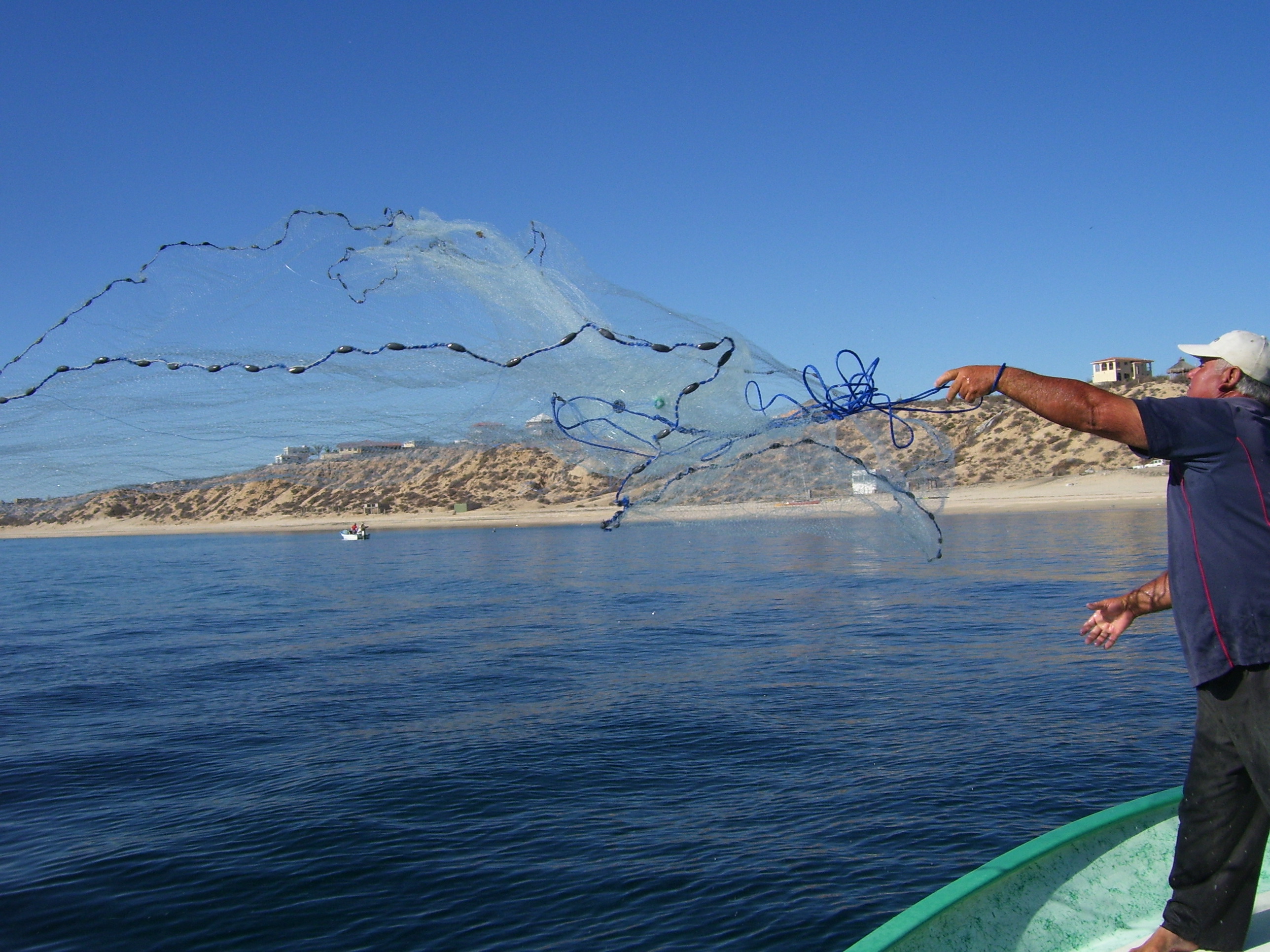
As the captains pulled the drawstring of the net enclosing the snare and drew it towards the waiting panga and anxious anglers, something appeared wrong. Usually, the “pull” of the net would be evidenced by some bit of strain and effort by the captain.
But, he pulled the net effortlessly up.
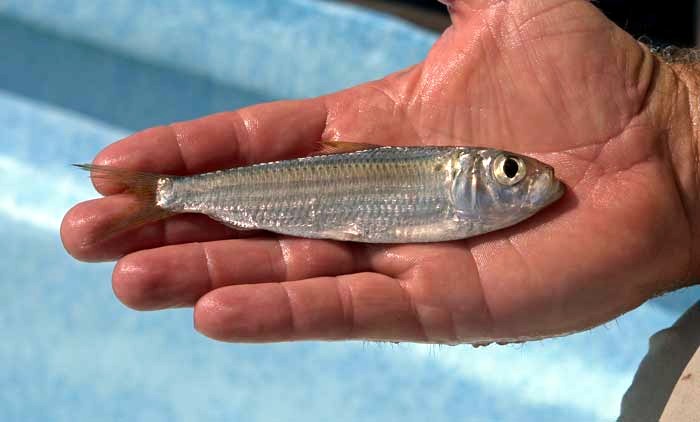
Normally, with a grunt, the skipper would heave the bulging net up-and-over above the live bait well and with another pull a “zillion trillion” thrashing, splashing, struggling dark-backed sardines (‘dines) would tumble en masse into the waiting waters of the bait tank.
Two or three quick tosses more and the panga would be loaded. Then it would be a sprint to the fishing grounds heavily bulging with hook-sized bait and high on anticipation for another day of bent-rods and bloody decks.
But, this time there was no grunt-and-heave. The net came up virtually empty. Four mini-sardines…FOUR…were released into the bait tank. A dozen more net tosses and 90 minutes of searching and scouring produced only a handful of baits for their efforts.
Each fruitloss toss-and-retrieve caused shoulders to sag.
Nothing like starting the fishing day where elation and anticipation backslids into deflation. No bait?
The other pangas did not do much better. They would end up making the best of the day with sliced bonito; a few live ballyhoo; some scrounged mackerel and some chopped-up squid. Just not quite the same as being able to chum handfuls of sardines into the water to get the fish going.
It’s been happening with increased frequency in Baja waters. Especially this year as a combination of variables seems to be combining for a “perfect storm” in terms of bait.
Part of it can’t be helped. It’s nature. Nature does what nature does and it’s like trying to stop sand from getting in your hot dog at the beach. It’s gonna happen.
This appears to be an El Nino season. But, moreso, the scientists are saying maybe it’s a “super” El Nino season with the warmest water and air temperatures in the history of recording el Nino conditions.
The cycle pops up every few years and, in a nutshell, means warmer ocean conditions along the Eastern Pacific coast along the western side of the U.S., Canada and Mexico. Warmer waters mean more storms; higher incidence of hurricane. It’s the reason folks in Washington encounter stray dorado and tuna that lose their way in the warm currents and head far more north than their usual comfort zone.
But, these warmer waters mean the colder waters from the deep trenches don’t come to the surface. The cooler waters bring the nutrients. The nutrients bring the bait fish. The bait fish provide food for the sportfish. Are you following this? One big circle of nature. And tag…this is us this year. Warm waters = less bait.
The other side of the equation is perhaps more ominous. Some would say even a bit sinister. Because we’re doing it to ourselves. We can’t do much about El Nino. But, us humans aren’t doing much to help ourselves either.
It’s the fish pens. You’ve heard of them. The controversial but apparently successful capture of juvenile tuna and yellowtail in huge nets then raising them in a net-like corral. Grow ‘em big and sell ‘em off. It works. It’s great. It’s economical.
Supply and demand. The planet craves seafood. Heck, it needs food period! The fish pens help fill the need. If it didn’t work, they wouldn’t be using it.
Here’s the rub. Everyone gets the impression that fishing farms are “green.” And there’s a lot of controversy about that. I guess it depends who you’re reading.
But, I’ve read that it takes anywhere from 3-10 pounds of “bait food” to grow a tuna one pound bigger. . So, let’s see…to grow a 50 pound tuna? Do the simple math. Hmmmm…that’s a lot of food. It has to come from somewhere.
Arguably, wherever they have set up these “pens” they have depleted the bait stocks. Pretty much raided everything in the waters that could be used or ground up into fish meal. It reminds me of those days when the cattle or sheep came to an area and ate all the grass that held the soil. Resulting in dust bowls. Are we headed for a “toilet bowl?” Are we destined to be live-sized versions of the Tidy Bowl man adrift in blue water?
Here, in La Paz, the head of La Paz Tourism, Sr. Pedro Aguilar told me that the fishfarmers are prohibited from taking bait in the bay and around our two islands. However, our local sportfishing captains tell me that the bait guys from the pens are out at night scouring those very areas capturing all the bait they can get.
The other side is that all the “waste” product has to go somewhere and it’s going right into the waters and creating a whole separate ecological issue. Tons of “fish poo” isn’t a good thing, especially in these shallow areas where the pens are located and ocean currents aren’t there to sluice out the after-product.
If you’ve ever even seen what your kid’s goldfish can do to a home fish bowl after a few days of not changing the water, imagine what a net load of fat tuna can squeeze out.
It’s not just here. It seems to be happening all over. And again, we have the challenge of balancing the need for food; the ecosystem; the sportsmen…and then, of course the corporate interests.
So…a double whammy curse on us. And I don’t know what to do about it. Awfully discouraging.
That’s our story!

_______________
Jonathan Roldan has been writing the Baja Column in Western Outdoor News since 2004. Along with his wife and fishing buddy, Jilly, they own and run the Tailhunter International Fishing Fleet in La Paz, Baja, Mexico www.tailhunter-international.com. They also run their Tailhunter Restaurant Bar on the famous La Paz malecon waterfront. If you’d like to contact him directly, his e-mail is riplipboy@tailhunter-international.com or drop by the restaurant to say hi!
______________
Jonathan Roldan’s
Tailhunter International
TAILHUNTER FISHING FLEET #1 Rated on Trip Advisor
TAILHUNTER RESTAURANT BAR #1 Rated in La Paz on Trip Advisor
Now follow us on FACEBOOK TOO
Website: www.tailhunter-international.com
U.S. Office: 8030 La Mesa, Suite #178, La Mesa CA 91942
Mexico Office: 755 Paseo Obregon, La Paz, Baja Sur, Mexico
Phones:
from USA : 626-638-3383
from Mexico: 044-612-14-17863
.
Tailhunter Weekly Fishing Report:
http://fishreport.jonathanroldan.com/
Tailhunter YouTube Videos:
http://www.youtube.com/user/pangapirate
“When your life finally flashes before your eyes, you will have only moments to regret all the things in life you never had the courage to try.”







 That's My Story