Feeds:
Posts
Comments

Posts Tagged ‘catch and release’

A DEARTH of ‘DINES

OLYMPUS DIGITAL CAMERA

NO MAS????

A DEARTH of ‘DINES


Originally Published the Week of May 27, 2014 in Western Outdoor News


It’s an early Baja morning and the sun was just starting to light up with golden blue hues against the western horizon. The heat would soon follow, but for now, the dawn was still freshly-tinged with the salty residue of the retreating night.


It is early enough that skippers and anglers alike still hunched shoulders in windbreakers and sweatshirts against the nippy breeze and spray knowing full-well that the sun would soon throw open the furnace blast of another Mexican day. But, there was no hiding the anxious anticipation of another grand fishing day in the Sea of Cortez.


The panga motored as quietly as possible into the little rocky cove. Several other pangas were already up against the craggy shoreline of the island. In the bows, a skipper or assistant could be seen with cast nets draped over shoulders and squinting sunglassed-covered eyes into the shallow waters.


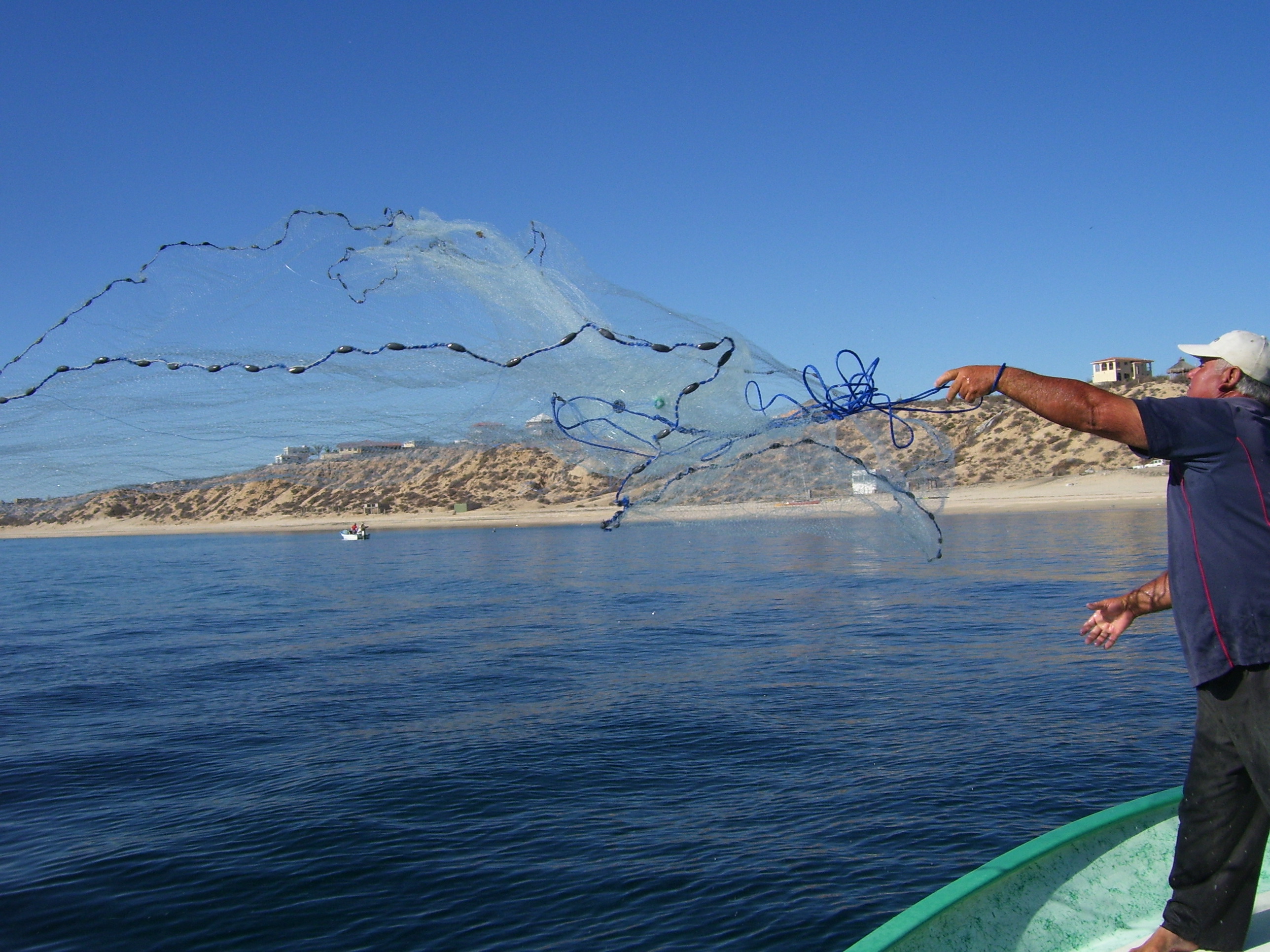
The captain of this particular launch cut the motor and drifted toward a little warren of rocks. He jumped lightly forward to the prow.  Readied his net and with a circular fling; expertly tossed the cast net into the air where it hung; pancaked open; and fell flatly into the waters.
20110621_72


As the captains pulled the drawstring of the net enclosing the snare and drew it towards the waiting panga and anxious anglers, something appeared wrong. Usually, the “pull” of the net would be evidenced by some bit of strain and effort by the captain.


But, he pulled the net effortlessly up.


Normally, with a grunt, the skipper would heave the bulging net up-and-over above the live bait well and with another pull a “zillion trillion” thrashing, splashing, struggling dark-backed sardines (‘dines) would tumble en masse into the waiting waters of the bait tank.

Two or three quick tosses more and the panga would be loaded. Then it would be a sprint to the fishing grounds heavily bulging with hook-sized bait and high on anticipation for another day of bent-rods and bloody decks.


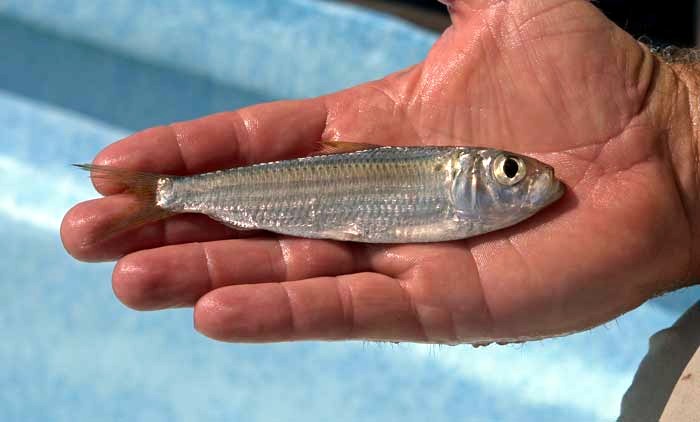
But, this time there was no grunt-and-heave. The net came up virtually empty. Four mini-sardines…FOUR…were released into the bait tank. A dozen more net tosses and 90 minutes of searching and scouring produced only a handful of baits for their efforts.


Each fruitloss toss-and-retrieve caused shoulders to sag.


Nothing like starting the fishing day where elation and anticipation backslids into deflation. No bait?


The other pangas did not do much better. They would end up making the best of the day with sliced bonito; a few live ballyhoo; some scrounged mackerel and some chopped-up squid. Just not quite the same as being able to chum handfuls of sardines into the water to get the fish going.
bait


It’s been happening with increased frequency in Baja waters. Especially this year as a combination of variables seems to be combining for a “perfect storm” in terms of bait.


Part of it can’t be helped. It’s nature. Nature does what nature does and it’s like trying to stop sand from getting in your hot dog at the beach. It’s gonna happen.


This appears to be an El Nino season. But, moreso, the scientists are saying maybe it’s a “super” El Nino season with the warmest water and air temperatures in the history of recording el Nino conditions.


The cycle pops up every few years and, in a nutshell, means warmer ocean conditions along the Eastern Pacific coast along the western side of the U.S., Canada and Mexico. Warmer waters mean more storms; higher incidence of hurricane.   It’s the reason folks in Washington encounter stray dorado and tuna that lose their way in the warm currents and head far more north than their usual comfort zone.


But, these warmer waters mean the colder waters from the deep trenches don’t come to the surface. The cooler waters bring the nutrients. The nutrients bring the bait fish. The bait fish provide food for the sportfish. Are you following this? One big circle of nature. And tag…this is us this year. Warm waters = less bait.


The other side of the equation is perhaps more ominous. Some would say even a bit sinister. Because we’re doing it to ourselves. We can’t do much about El Nino.   But, us humans aren’t doing much to help ourselves either.


It’s the fish pens. You’ve heard of them. The controversial but apparently successful capture of juvenile tuna and yellowtail in huge nets then raising them in a net-like corral. Grow ‘em big and sell ‘em off. It works. It’s great. It’s economical.


Supply and demand. The planet craves seafood. Heck, it needs food period! The fish pens help fill the need. If it didn’t work, they wouldn’t be using it.


Here’s the rub. Everyone gets the impression that fishing farms are “green.” And there’s a lot of controversy about that. I guess it depends who you’re reading.


But, I’ve read that it takes anywhere from 3-10 pounds of “bait food” to grow a tuna one pound bigger. . So, let’s see…to grow a 50 pound tuna? Do the simple math. Hmmmm…that’s a lot of food.   It has to come from somewhere.


Arguably, wherever they have set up these “pens” they have depleted the bait stocks.   Pretty much raided everything in the waters that could be used or ground up into fish meal. It reminds me of those days when the cattle or sheep came to an area and ate all the grass that held the soil. Resulting in dust bowls. Are we headed for a “toilet bowl?” Are we destined to be live-sized versions of the Tidy Bowl man adrift in blue water?


Here, in La Paz, the head of La Paz Tourism, Sr. Pedro Aguilar told me that the fishfarmers are prohibited from taking bait in the bay and around our two islands. However, our local sportfishing captains tell me that the bait guys from the pens are out at night scouring those very areas capturing all the bait they can get.


The other side is that all the “waste” product has to go somewhere and it’s going right into the waters and creating a whole separate ecological issue. Tons of “fish poo” isn’t a good thing, especially in these shallow areas where the pens are located and ocean currents aren’t there to sluice out the after-product.


If you’ve ever even seen what your kid’s goldfish can do to a home fish bowl after a few days of not changing the water, imagine what a net load of fat tuna can squeeze out.


It’s not just here. It seems to be happening all over. And again, we have the challenge of balancing the need for food; the ecosystem; the sportsmen…and then, of course the corporate interests.


So…a double whammy curse on us. And I don’t know what to do about it. Awfully discouraging.

That’s our story!

Jonathan signature


_______________

Jonathan Roldan has been writing the Baja Column in Western Outdoor News since 2004.  Along with his wife and fishing buddy, Jilly, they own and run the Tailhunter International Fishing Fleet in La Paz, Baja, Mexico  www.tailhunter-international.com.  They also run their Tailhunter Restaurant Bar on the famous La Paz malecon waterfront.  If you’d like to contact him directly, his e-mail is riplipboy@tailhunter-international.com  or drop by the restaurant to say hi!

______________

Jonathan Roldan’s

Tailhunter International


TAILHUNTER FISHING FLEET #1 Rated on Trip Advisor

TAILHUNTER RESTAURANT BAR #1 Rated in La Paz on Trip Advisor


Now follow us on FACEBOOK TOO


Website: www.tailhunter-international.com

U.S. Office: 8030 La Mesa, Suite #178, La Mesa CA  91942

Mexico Office: 755 Paseo Obregon, La Paz, Baja Sur, Mexico

Phones:

from USA : 626-638-3383

from Mexico: 044-612-14-17863

.

Tailhunter Weekly Fishing Report:

http://fishreport.jonathanroldan.com/

Tailhunter YouTube Videos:

http://www.youtube.com/user/pangapirate

“When your life finally flashes before your eyes, you will have only moments to regret all the things in life you never had the courage to try.”


 

Read Full Post »

“LA PAZ EVENT TARGETS IGFA RECORDS AND ROOSTER RELEASES!”

Burgess 1 rooster 6-14 PMT

Fish like this huge roosterfish caught and released by Ron Burgess at Las Arenas last year have made the Las Arenas/ La Paz area famous and known as the “roosterfish capital of the world.” Last year in 4 days, Ron and his amigos caught and released 29 roosters between 40 and 90 pounds!

WP_20140327_14_48_39_Pro

A sample of the new IGFA “release measuring devices” which will allow anglers to officially measure and release fish and still be eligible for world records! This new “category” for records is a big boost for catch-and-release of species! Shown here with Jilly and Jonathan Roldan, Pat McDonell, editor for Western Outdoor News, and Gary Graham (holding the tape!) who is not only a multi-IGFA record holder, but also an IGFA rep plus famous author and journalist. All will be at the event!


LA PAZ EVENT TARGETS IGFA RECORDS AND ROOSTER RELEASES!

Originally Published in Western Outdoor News the Week of April 29, 2014


In what appears to be a first, Western Outdoor News and Tailhunter International Sportfishing in La Paz are having the first certified tag-and-release roosterfish event this summer


The “Summer Panga Slam” will be held June 17-21 in La Paz. It promises to be quite an event.


Originally slated as a 3-day light tackle panga tournament among friends, the event has grown tremendously. It has sprouted some “legs” since it’s inception several months ago.


For one, Tailhunter International in La Paz now has a certified I.G.F.A. scale on hand and is a registered IGFA center. This means, Tailhunters and it’s clients can legitimately target world-record fish.


This is significant given that they fish the famous waters of La Paz and Las Arenas as well as the northern East Cape where arguably more world records have been set over the decades than anywhere else. Many consider it to be one of the top light-tackle fisheries in the world.


Additionally, the area has been known as the “roosterfish capital of the world” famous for it’s slugger-sized rooster populations. In fact, in 1987, the world record roosterfish was caught on these very beaches. It weighed in ta 114-pounds. Larger ones have been caught and released.


Last year, the area had a banner roosterfish season where roosters averaged 40-90 pounds and a number of fish over 100-pounds were tallied and released including one estimated over 150-pounds!


All of this is important to the “Panga Slam” event for two reasons:


  1. The IGFA now has “release” categories that were previously not available. That means you can now become a world-record holder and not have to kill your fish. Last year, a world-record release rooster was produced in La Paz waters! There are categories for men, women and children! However, you MUST have a special IGFA measuring device of which this event will have several on hand!


  1. Tailhunter International is part of the newly formed Roosterfish Foundation dedicated to preserving the exotic rooster and monitoring the health of the species. To that end, tag-and-release devices are now available so that released fish can now be tagged before we let them go.


So, what all this means is that the “Summer Panga Slam” now gives participating anglers not only a shot a getting a record fish that can actually be weighed. But, it’s also an opportunity to release a world-record fish and get into the record books as well as help to proliferate the roosterfish species for everyone!


It’s going to be a lot of fun and, as mentioned, the event has grown. WON editor Pat McDonell himself will be down to help host the event. WON columnist, journalist and famous author Gary Graham will be on hand as well to record the event. Gary is himself also a multi-record IGFA record holder and the IGFA representative.


On board as well are a growing number of sponsor with lots of goodies for the participants.


The event is limited to 40 anglers in 20 two-person panga teams. There are still a few spots left! Here’s the rest of the details:


  • Sponsors aboard now include:  Okuma Reels, Costa Sunglasses, Yo-Zuri, Sufix, Turners Outdoors and Lazer Trokar Hooks!
  • Three full days of panga fishing at Las Arenas  (gear, breakfast and lunches included) 
  • 4 nights La Concha Beach Resort in ocean-facing room
  • Welcome dinner and Awards Dinner
  • Taco feed night and live music at famous Tailhunter Restaurant
  • One day open fun fishing and then two days jackpot tournament (cash entry $100 in La Paz per team) 
  • Event t-shirts
  • Cabo San Lucas Airport Shuttles 

Cost is $1350 per person. Space is limited and going fast. For more information, you can contact Western Outdoor News and talk with Mike Flynn at FLYNN@wonews.com or call him at 949-366-0030.


We’re looking forward to having you join us!

That’s our story

Jonathan signature

Jonathan

_______________


Jonathan Roldan has been writing the Baja Column in Western Outdoor News since 2004.  Along with his wife and fishing buddy, Jilly, they own and run the Tailhunter International Fishing Fleet in La Paz, Baja, Mexico  www.tailhunter-international.com.  They also run their Tailhunter Restaurant Bar on the famous La Paz malecon waterfront.  If you’d like to contact him directly, his e-mail is riplipboy@tailhunter-international.com  or drop by the restaurant to say hi!

______________

Jonathan Roldan’s

Tailhunter International


TAILHUNTER FISHING FLEET #1 Rated on Trip Advisor

TAILHUNTER RESTAURANT BAR #1 Rated in La Paz on Trip Advisor


Now follow us on FACEBOOK TOO


Website: www.tailhunter-international.com

U.S. Office: 8030 La Mesa, Suite #178, La Mesa CA  91942

Mexico Office: 755 Paseo Obregon, La Paz, Baja Sur, Mexico

Phones:

from USA : 626-638-3383

from Mexico: 044-612-14-17863

.

Tailhunter Weekly Fishing Report:

http://fishreport.jonathanroldan.com/

Tailhunter YouTube Videos:

http://www.youtube.com/user/pangapirate

“When your life finally flashes before your eyes, you will have only moments to regret all the things in life you never had the courage to try.”


Read Full Post »

“CIRCULARLY SPEAKING”

circlehook_jhook

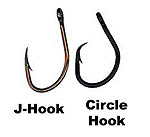
The conventional “J” style hook and the obvious differences in the “circle” hook.

release-right-main

Circle hooks make it easier to set the hook on fish resulting in more hook-ups but even moreso, make it easier to release your catch!

CIRCULARLY SPEAKING

Originally Published in Western Outdoor News the Week of January 9, 2014

Over the years, I get a lot of e-mails with comments and criticism about things I’ve  written or suggestions for things I should write about.   In all the years I’ve been writing this column, I don’t think I’ve ever actually responded publically to some of the questions.

There’s some really good ones too.  And I ALWAYS respond.  But, it occurred to me that if one person is asking something, then there’s probably a number of folks who have the same questions.  So, maybe it would be good to sometimes put it all in the column.

A recent e-mail is what got me thinking.   It came from “Jerry” from Aptos CA.

He said, “ In so many fishing magazines , the writers always write as if all the readers are experienced.  I’m not a rookie, but I recently got into salt water fishing and want to learn more.  I just made my first trip to Baja and guys were talking about ‘circle hooks.’ What are they and do I need them?”

It’s actually a question I get more often than you think.   So, if you know all about circle hooks,  this is one time you can just internet surf to something more entertaining to read!

Let’s see…what are circle hooks and what do you do with them?

Circle hooks are distinguished from “J” style hooks that have a long straight shank, by a shank that’s curved. Plus the sharpened point faces towards the shank.  Hence the “circle hook” moniker.

They have been in use for ages by commercial fishermen, but only in say the last 10 or 15 years have they really caught on with sportfishermen.   In Baja, they’ve taken a little longer to get a toehold, but their use is growing.

Their popularity can be attributed to the growing interest in catch-and-release fishing.  Basically, fish hooked with a circle hook have a much higher incidence of survival when taken in this manner.

Here’s the deal.  With a regular “J” style hook, fish get hooked in the lip, the gill, the gut and deep in the throat.  Deep enough and it’s a chore to get that hook out without damaging the fish.

Or, the hook outright kills the fish.

Damaged fish,  just don’t do well once released.  Even the time spent handling the fish and removing the hook is detrimental to it’s survival.

It’s tired.  It’s suffocating.  It’s losing important protective slime and scales.   Put it back in the water and it’s gonna be a floater, no matter how well-intentioned you are as an angler.

Now, with the circle hook, the nifty part is that 99% of the time, the hooks slides right into the corner of the mouth when it’s set.   It’s not damaging organs.  The hook comes out relatively easily and the fish has a much better chance when returned to the water.

Often without even touching the fish, grasping the hook with pliers allows one to shake the fish right back into the water without actually handling the fish.  Pretty cool.

The trick is the hook set.

When setting the hook using a circle hook, the trick is “not to set the hook!” One must actually act counter-intuitively.    Circle chooks literally set themselves.   It’s a great mistake newbies make with the circle hooks.  Setting the hook yourself screws it up!

With a traditional hook, the angler “swings” the rod back and “sticks” the fish to set the hook.  With a circle hook, the hookset is virtually automatic.

When the fish picks up the bait, the angler merely puts a little pressure on the spool.  Then point the tip of the rod at the running fish and flip the brake.  The line will come tight.  A slight lift of the rod sets the hook!  Just like that.   You’re on!

There’s no dramatic swing of the rod as in using a conventional hook.   And that’s where the experience comes in.  The newbie gets nervous or excited and when he or she feels the bait picked up, they set the hook with a big swing of the rod.   That’s what their intuition tells them.  SET THE HOOK!

FAIL!

What that does is jerk the hook right out of the fish’s mouth.  Adios pescado!

Take your time.  Calm down.  A little patience and you’ll get the fish resulting in more hookups…even if you plan to keep the fish…since the hook up is automatic.  Then, if you plan to release the fish, the hook design allows for an easier release.  What could be better?

In my experience, many captains I’ve known in Baja were reluctant to use the circle hook or frowned on clients using the hooks.  There were two reasons.

One is that the captains and crews themselves didn’t understand the funny looking hook that actually looked like a defective design.  I’ve seen them cut them off client’s lines and toss them away with disdain.  And tie on a regular hook!

Second, and perhaps more importantly, is that clients would miss fish by incorrectly setting the hook.  That resulted in less fish.  Unhappy clients.  Less tip money.   An economical reason!   Remember, every captain out there is also a businessman too!

But, over the last few years, the popularity of the circle hook has grown.   Captains and crews themselves, especially the younger ones, understand the importance of catch-and-release.  It’s a matter of preserving their own livelihoods and the resource.

However, more anglers are also becoming more knowledgeable as well.  And with that, the stigma of using them appears to be diminishing.

Give them a try next time!

That’s our story!

Jonathan signature

_______________

Jonathan Roldan has been writing the Baja Column in Western Outdoor News since 2004.  Along with his wife and fishing buddy, Jilly, they own and run the Tailhunter International Fishing Fleet in La Paz, Baja, Mexico  www.tailhunter-international.com.  They also run their Tailhunter Restaurant Bar on the famous La Paz malecon waterfront.  If you’d like to contact him directly, his e-mail is riplipboy@tailhunter-international.com  or drop by the restaurant to say hi!

______________

Jonathan Roldan’s

Tailhunter International


TAILHUNTER FISHING FLEET #1 Rated on Trip Advisor

TAILHUNTER RESTAURANT BAR #1 Rated in La Paz on Trip Advisor


Now follow us on FACEBOOK TOO

Website: www.tailhunter-international.com

U.S. Office: 8030 La Mesa, Suite #178, La Mesa CA  91942

Mexico Office: 755 Paseo Obregon, La Paz, Baja Sur, Mexico

Phones:

from USA : 626-638-3383

from Mexico: 044-612-14-17863

.

Tailhunter Weekly Fishing Report:

http://fishreport.jonathanroldan.com/

Tailhunter YouTube Videos:

http://www.youtube.com/user/pangapirate

“When your life finally flashes before your eyes, you will have only moments to regret all the things in life you never had the courage to try.”
 

Read Full Post »

With their acrobatic abiities, dorado often have a habit of “self-releasing” all on their own! But, knowing how to properly release a fish has alot to do with assuring that it lives to grow and fight another day!

“THE ART OF THE RELEASE!”

Originally published the week of Sept. 11, 2012 in Western Outdoor News

I had conflicted feelings that day.   The client and his wife just got their first ever sailfish. The “glamour fish” they had always wanted to cross off the bucket list.

Not only that, they wanted to release the fish!  Bravo!  It takes a lot for people to release that first big trophy fish…or any fish.  And I had to applaud.

But then the other side of me was in turmoil. Photo time.

Although no gaff was used, the fish was hauled out of the water and photo’d from every angle.  Everyone got to hold it.  Every possible combination of photo.  With the deckhand.  With the captain.  With both of them.  With the wife.  With the wife and captain, but not the deckhand.

I tried to impart a big of urgency to the situation about wanting to get the fish back in the water.

I can only imagine the stress on the fish.  A lot of hands were all over it, and it  had it been a long battle for the exhausted fish.   But, it was now out’ve the water as the seconds ticked by.  Even moreso, I always worry about the internal organs of the fish.

In the water, the mass of the fish and it’s innards are neutrally buoyant.  Outside of water, gravity takes effect.  Already exhausted organs collapse on each other further creating potential injury to the animal.

The fish was already turning colors from strikingly  iridescent blues and purples to the greyish pallor of a dead fish.

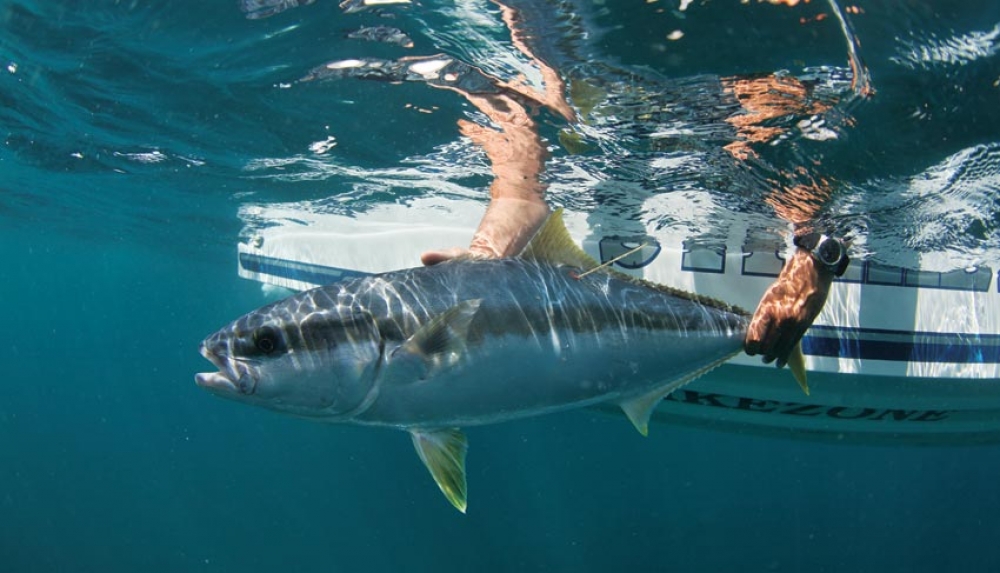
Into the water we go off the gunwale and slowly tried to work it back and forth to get water over it’s gills. It was a team effort and while at first sluggish, the fish slowly gained strength.  You could feel it surge until we couldn’t hold it any longer and we watched it sink into the blue waters and with a flick of it’s tail descend to depths.

There were lots of high-fives that were well-deserved, but deep inside I doubted.  I could only hope it wasn’t sinking to die.

Almost two decades now down here in Baja and it’s gratifying to see the increased interest in catch-and-release.  I’m all for it. We have a finite resource that is under tremendous pressure.  Keep what you need and release what you don’t.  Hell…release it all is fine with me.

But what good does it do if the fish dies later?

To me, there’s a right and a wrong way to release a fish.  It should really start BEFORE you ever hook up.  Mike Fowlkes, the award-winning  TV producer, director  of “Inside Sportfishing” said it best.

He said something to the effect, of making the decision to release your fish BEFORE you ever go out.  Don’t make the decision AFTER the heat of battle when the blood lust is going full turbo and everyone is back-slapping you and hoisting beers in the air.  I never forgot Mike’s words.

To that end, think about how you’re going to fish and the equipment you’re going to use.

If you know how to use circle hooks, use them.  They have a knack of hooking fish right on the corner of the mouth when used correctly.  The hook doesn’t go down their gullet and instead lodges perfectly where you can usually get at it easily for a fast release.  Or, as many fresh water anglers do, use barbless hooks or pinch off the barbs of your hooks!

Likewise, as much as I love light tackle, if I plan to be releasing fish that day, I tend towards heavier gear.  I want short battles so that I can get the fish to the boat faster.  Long battles stress the fish.  Exertion causes oxygen deficit in the tissues.

According to one study:  “This causes lactic acid to build up in the muscle tissue, and then to diffuse into the blood. Lactic acid acts as an acid in the blood, causing the pH of the blood to drop. Even slight changes in pH can cause major disruptions of the metabolic processes, ultimately killing the fish. If the fish is quickly released, its blood pH usually returns to normal and the fish will be unaffected. Some fish, after a long tow, may appear to live once released, but the imbalance in the blood chemistry may kill them as late as three days after being caught.”  http://seagrant.gso.uri.edu/factsheets/catch-release_fs.html

I’ll vouch for that.  I’ve seen huge marlin and tuna sometimes simply “give it up” and die while still on the line.  You definitely don’t want that to happen.

Once the fish is to the boat, the less you handle them the better.

If the fish is small enough to “lip” grabbing by the lip, this is better than sticking hands or fingers into their gills.  They’re already stressed and gasping for oxygen so lip them and use pliers or hands to quickly remove the hook or lure.

If the hook is too deep, reaching in and prying around only damages the fish.  Often I’ve seen anglers stab around and wrench hooks from deep in the gullet or reaching in through the gills to get their hooks.  Then, just because the fish is still thrashing,  toss the fish overboard thinking they executed a good “release.”

If the hook is deep, best to just cut the line as close to the hook as possible.  Studies have shown the fish are very resilient if handled correctly and hooks will often dissolve or rust out on their own, whereas huge wounds from torn-out hooks can often become infected.

It would also seem obvious to keep the fish in the water as much as possible.  But, as mentioned earlier, the urge to photo and touch the fish are sometimes just too hard to resist.  All that touching removes the protective slime from the skin of the fish making them susceptible to disease as well.  Plus, just being out of their neutrally buoyant environment can harm internal organs when lifted out of the water and gravity takes effect.   Even contact with dry and foreign surfaces like nets, decks, fish gloves and boat rails can be detrimental.

The two biggest causes of fish mortality are stress and wounds.  Keep that in mind and you’ll help insure that the fish that goes back in the water lives to battle another day!

That’s our story!

Jonathan and Jill Roldan

Tailhunter International

___________________

Jonathan Roldan has been writing the Baja Column in Western Outdoor News since 2004.  Along with his wife, Jill, they own and run the Tailhunter International Fishing Fleet in La Paz, Baja, Mexico  www.tailhunter-international.com.  They also run their Tailhunter Restaurant Bar on the famous La Paz malecon waterfront.  If you’d like to contact him directly, his e-mail is riplipboy@tailhunter-international.com  or drop by the restaurant to say hi!

Jonathan Roldan’s
Tailhunter International


TAILHUNTER FISHING FLEET #1 Rated on Trip Advisor

TAILHUNTER RESTAURANT BAR #1 Rated in La Paz on Trip Advisor


Now follow us on FACEBOOK TOO


Website: www.tailhunter-international.com
U.S. Office: 3319 White Cloud Drive, Suite A, Hacienda Hts. CA 91745
Mexico Office: 755 Paseo Obregon, La Paz, Baja Sur, Mexico
Phones:
from USA : 626-638-3383
from Mexico: 044-612-14-17863

.
Tailhunter Weekly Fishing Report:
http://fishreport.jonathanroldan.com/

Tailhunter YouTube Videos:
http://www.youtube.com/user/pangapirate


“When your life finally flashes before your eyes, you will have only moments to regret all the things in life you never had the courage to try.”

Read Full Post »

« Newer Posts