Feeds:
Posts
Comments

Posts Tagged ‘panga’

OLYMPUS DIGITAL CAMERA

Just having bait isn’t enough if you don’t know how to use it correctly!

“HOW YOU WIGGLE YOUR WORM”

Originally Published the Week of June 10, 2013 in Western Outdoor News

In the annals of bathroom graffiti, it’s probably not hall-of-fame material as far as that genre of graffiti goes.  But in our Tailhunter Restaurant here in La Paz, someone scribbled this in the men’s restroom:

“It’s not the size of the rod, it’s how your wiggle your worm.”

Any business owner knows that you have to wear many hats. Being the big-time chief executive officer and chairmain of the board and also head of bathroom graffiti eradication, I happened to be scrubbing it off the wall chuckling.   Beyond the most obvious bathroom connotations,  there’s a point of pescatory wisdom in there as well.

How one wiggles, jiggles or shakes one’s “worm” does make a difference and those nuances can make a big difference in your fishing experiences on a given day.

A perfect example is the type of fishing being experienced in many Baja locations this time of year.  We’re in a “transition” period as waters warm and we move out’ve spring and into summer conditions.  Cooler waters can still be found but there’s quite a mix of water situations both on the surface as well as vertically through the water columns with different thermoclines changing as the waters deepen.

The result is that the spring and early summer can often be a mecca of so many different varieties of fish and opportunities for anglers looking for changing angling experiences.

Here in La Paz is a perfect example.

Cool water inshore species such as yellowtail, amberjack, cabrilla, pargo, sierra and pompano can be caught while in the warmer water areas, billfish such as marlin and sailfish are starting to rev things up.  Likewise, bluewater species such as dorado, wahoo and tuna can be caught as well.  Add in roosterfish, jack crevalle, bonito and others and you probably won’t find this kind of variety during any other time of the Baja fishing season.

However, bait presentation a.k.a. “wiggling your worm” can make a big difference over what you catch.

For instance over all the decades here in Baja working and guiding plus working  on other boats out’ve S. California, I’ve noticed a few things.

Take dorado.  They don’t like dead bait as much as spirited live bait.  In fact, the livelier the better.  It’s like a cat.  If you put a ball in front of kitty, he’ll just stare at it.  But, if you roll that ball past Kitty, he pounces.  Same with dorado.

Big baits or small baits don’t matter to dorado.  I’ve seen 18-inch juveniles attack 10-inch mackerel or big caballitos.  I’ve seen 40-pound bull dorado fight each other for 4 inch sardines…as long as the sardines are moving!

On the other hand, tuna can be fussier in their own way.  The smaller ones will take anything live or dead.  But, I’ve seen a tendency for a bit of laziness.

Tuna…and especially the larger ones…in a given school prefer the smaller baits.  And, they don’t mind slurping up dead ones or parts of dead ones!  That’s why chumming and chunking are so effective.

Chunks of dead bait are just fine.  They’re lazy fish.  They don’t necessarily like to have to chase their food.   So, if you don’t have small dead baits, then chunks of bigger baits like squid, mackerel, jacks are just fine by them!

Rock fish like cabrilla, yellowtail and amberjack won’t generally eat dead baits but yellowtail and amberjack don’t want to chase too hard for their live baits.  Somewhat like larger tuna.

However, these “structure fish” tend to stick close to protection and will dart out to strike their prey.  Therefore, the closer you fish that live bait to their hiding spots like rocks, reefs, weeds and cliffs, the better your chances.

Yellowtail are a bit pickier…the FASTER and LIVLIER that bait, the more it gets their juices rolling.  That’s why yo-yo jig fishermen prefer high-speed reels when they fish their lures.  That’s to get those lures moving FAST through the water.

Beach and shore fish like jack crevalle, pompano and roosterfish have a weird tweak.  They don’t even need to be hungry to chase a bait.  They’re just aggressive fish.

But, they will take the liveliest bait and run with it and not eat it!  They will tear into sardine schools, ballyhoo, caballitos, mullet and lady fish and simply terrorize the school.  Just because!  No other reason!

I’ve seen them rip into the baitfish and leave dead and thrashing baits lying around on the surface or grab a big baitfish like a ladyfish (sabalo) and merely gnaw it up like a bit dog gnaws on socks.  Then, tosses it into the air and lets it go.

While other species might come back for injured baits, some of these “beach bullies “simply swim off and let the gulls and pelicans deal with the maimed!

So, fishing for these fish, just be prepared for the bite with the liveliest bait  but then give it time so make sure the fish also has the hook!   If it drops the bait, even if the bait seems dead and floating, some quick jerks on the line can cause the jacks to turn and erupt for a second pickup…and your hookup!

That’s my story!

Jonathan

______________

Jonathan Roldan has been writing the Baja Column in Western Outdoor News since 2004.  Along with his wife and fishing buddy, Jilly, they own and run the Tailhunter International Fishing Fleet in La Paz, Baja, Mexico  www.tailhunter-international.com.  They also run their Tailhunter Restaurant Bar on the famous La Paz malecon waterfront.  If you’d like to contact him directly, his e-mail is riplipboy@tailhunter-international.com  or drop by the restaurant to say hi!

______________

Jonathan Roldan’s

Tailhunter International


TAILHUNTER FISHING FLEET #1 Rated on Trip Advisor

TAILHUNTER RESTAURANT BAR #1 Rated in La Paz on Trip Advisor


Now follow us on FACEBOOK TOO


Website: www.tailhunter-international.com

U.S. Office: Box 1149, Alpine CA  91903-1149

Mexico Office: 755 Paseo Obregon, La Paz, Baja Sur, Mexico

Phones:

from USA : 626-638-3383

from Mexico: 044-612-14-17863

.

Tailhunter Weekly Fishing Report:

http://fishreport.jonathanroldan.com/

Tailhunter YouTube Videos:

http://www.youtube.com/user/pangapirate

“When your life finally flashes before your eyes, you will have only moments to regret all the things in life you never had the courage to try.”

Read Full Post »

“KING JACK”

Amberjack Junior Azores tags

Big and tough…amberjack in the Baja…cousins to yellowtail, the Spanish name for them is “Pez Fuerte” which means “strong fish!” No kidding. They get over 100 pounds!

KING JACK!

Originally Published the Week of May 15, 2013 in Western Outdoor News

It had been a pretty decent morning off the northern end of the island.   Dropping blue and white irons and jigging,  some heavy “winding and grinding” and elbow grease had produced a  nice brace of  five solid  20-pound-class yellowtail in the box.

Danny just finished pulling his jig out of the water and took a break to wipe his brow and crack a chilly Pacifico can from the ice chest.   The sun was at it’s mid-morning blaze already promising to get hotter.

“Whew!” he sighed with a laugh.  “This is hard work fishing the yo-yo iron for these yellows.  These things are tough fish!”  he added with a bit of exasperation.

“And the faster your crank the better the chance to hook-up!” responded Tony as he dropped his jig over the side and watched it flutter into the indigo blue water.  “It’s still better than working!”

Tony’s jig stopped slipping down.  Tony quickly put the reel into gear  and took a few cranks up off the bottom so as not to hang the jig on the craggy reef below.
“Here we go again, “ he grinned as he started the strenuous arm-aching crank back to the boat.

One crank…two cranks…three cranks…

SLAM!  The rod doubles over in an abrupt halt.  It’s  almost yanked from Tony’s hands. He adjusts and is nearly jackpoled over the side ramming his knees into the side of the panga to anchor himself in!  The rod is bucked straining on the gunwale of the boat and Tony is almost crouching down to get leverage unable to turn the handle of the reel.

Danny drops his beer which clatters to the deck…

“Oh man! This has gotta be a monster yellowtail! WHOA!!!” grimaces Tony as he struggles to get upright and get the butt of his rod into his rod belt still unable to get a turn on the reel handle.  It’s all he can do to hold onto the rod and keep his feet in the panga.

Pez fuerte!” says their panga captain excitedly .  “Amberjack grande.  Jale! Jale! Pull hard!”

Pez fuerte means ‘strong fish’ said Danny as he watched his buddy.

“Uh yea…no kidding…yea..this is a horse!” replies a tight-lipped Tony as he struggles to turn the big fish one slow lift and turn of the handle of his reel at a time.  Repeatedly, the rod would dip again and the exhausted sweating angler would have to lean into the stick to keep the fish turned.

After 15 grueling minutes, the big fish came up and a quick gaff was put to the fish.

“Dang, that looks like a yellowtail on steroids! Holy cow, it’s golden copper what a pig of a fish!”

“Maybe 30 kilos…60 pounds,”  says the captain grinning.

There’s a lot of confusion over amberjack.  People either “sorta heard of them” or  scratch their heads because they’ve “never heard of them.”  Or it’s quickly followed by the question, “Is that kinda like a yellowfin tuna?”

Well, Elmer…no it’s not.  But, it’s a fair question nonetheless.

They’re actually part of the jack family.  It’s that same feisty set of brawling sportfish that give us the jack crevalle (“toro”),  roosterfish (“pez gallo”), pompano (“pompano”…of course) and a whole host of other fish with  “jack” in their names.  Including the much-prized yellowtail (“jurel”).

The amberjack (“pez fuerte…which does indeed mean “strong fish” in Spanish) is the king of them all.  He’s the big boy cousin.  Broader and deeper in body, shoulders and head with a copper-orange-yellow-silver patina, they’re impressive.  And yes, powerful.

Where we are here in La Paz, they range as small as 10-20 pounds, but 40-50 pounders are not unusual and the bigger models will go 80 or more pounds.  We’ve taken several fish over 100 pounds in recent years and have lost many large fish over the years that broke tackle as well as the hearts of some very strong anglers.

We seem to get them during that “shoulder time” when the waters aren’t really spring and aren’t quite summer…like May or June…just as our yellowtail bite starts to taper off because of warmer waters.

It’a almost like the yellowtail move on and the amberjack move into those same spots.  These include high spots like reefs and shallow seamounts as well as boulder and rocky areas plus the edges of drop offs.

Basically, you won’t usually find them in open water, but rather in areas of structure.  The largest one I ever saw was while scuba diving a wreck and I saw several ambers in the dark hold that were well over 100 pounds.

Like their smaller cousins, the yellowtail, amberjacks will often school so, where there’s one you’ll often find others.  Additionally, you fish them in much the same way.  That’s why anglers dunking for yellowtail are often surprised when they get slammed by something much bigger and more powerful…an amberjack.

The fish readily take a yo-yo jig in the traditional colors of blue/white,  green/yellow, brown/white and others dropped down and taken in on an ultra fast retrieve…like the two guys fishing at the beginning of this column.

As well, they love baits like sardines, mackerel, squid and especially zebra fish for some reason which are the little blue baitfish with black stripes we catch on reefs with mackerel rigs.  When I have some zebras and the amberjack are in the area, it’s almost instant hook up!

Best of all, they eat just like yellowtail…only better!

That’s my story!

Jonathan

_______________

Jonathan Roldan has been writing the Baja Column in Western Outdoor News since 2004.  Along with his wife and fishing buddy, Jilly, they own and run the Tailhunter International Fishing Fleet in La Paz, Baja, Mexico  www.tailhunter-international.com.  They also run their Tailhunter Restaurant Bar on the famous La Paz malecon waterfront.  If you’d like to contact him directly, his e-mail is riplipboy@tailhunter-international.com  or drop by the restaurant to say hi!

______________

Jonathan Roldan’s

Tailhunter International


TAILHUNTER FISHING FLEET #1 Rated on Trip Advisor

TAILHUNTER RESTAURANT BAR #1 Rated in La Paz on Trip Advisor


Now follow us on FACEBOOK TOO

Website: www.tailhunter-international.com

U.S. Office: Box 1149, Alpine CA  91903-1149

Mexico Office: 755 Paseo Obregon, La Paz, Baja Sur, Mexico

Phones:

from USA : 626-638-3383

from Mexico: 044-612-14-17863

Read Full Post »

DSC_0147

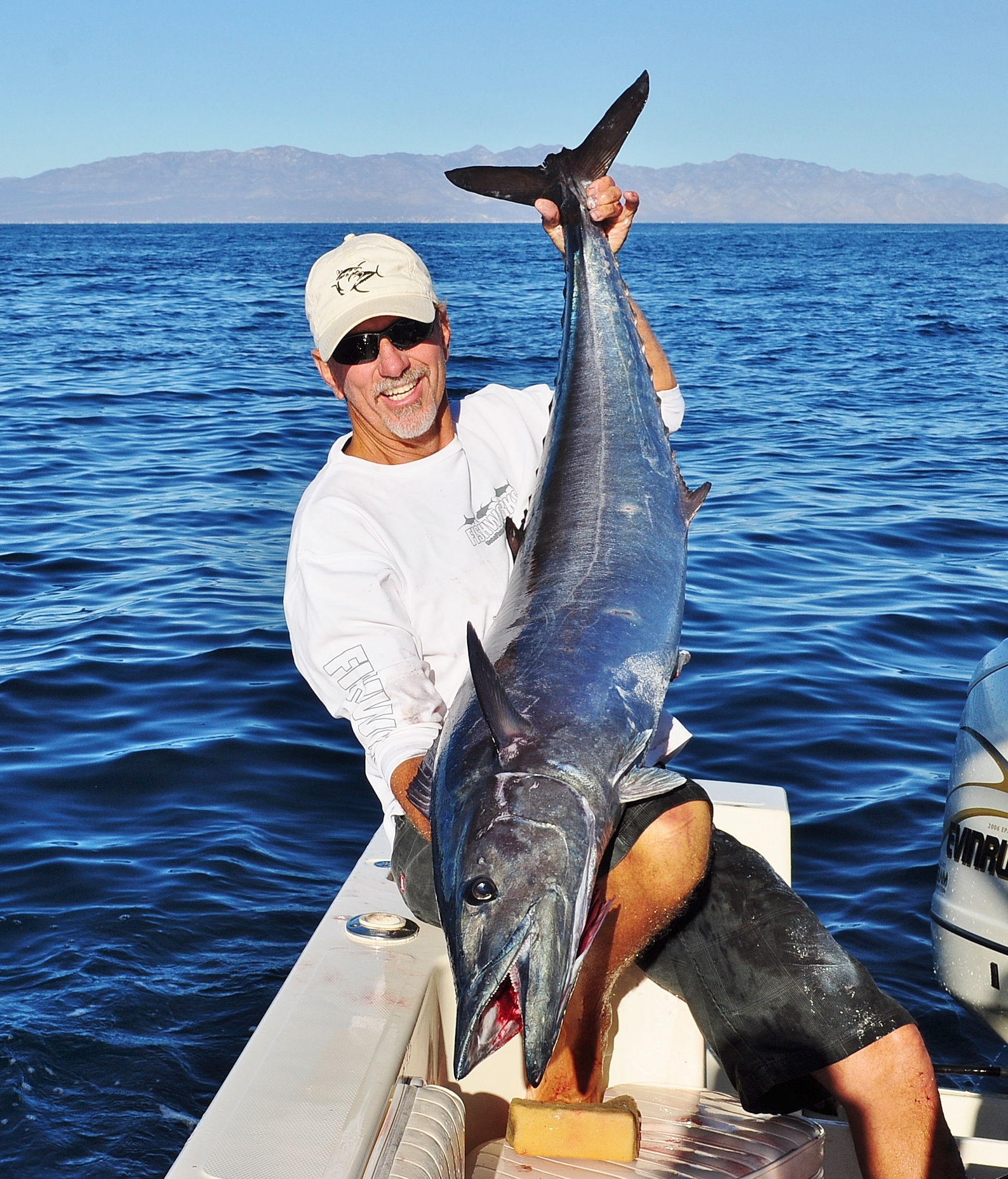
They say it’s better to be “lucky” than “good” but if you can be both, that’s even better and a few fine-tuning tips go a long way. Roger Thompson of La Ventana is very lucky but that’s because he’s very good! He makes his own “luck” as he shows off another dandy wahoo!

NEXT LEVEL WAHOO

Originally Published the Week of April 18, 2013 in Western Outdoor News Publications

This past week here in La Paz, we’ve had a sudden and unexpected run of wahoo.  Normally, at least for our area, it’s not a species we encounter so early in the year and it ended up surprising many of our anglers as well as captains.

The speedy sharp-toothed fish is incredibly-prized by anglers as one of the best eating but also one of the most ferocious fighters.  Reputedly capable of speeds up to 70 mph, they are arguably the fastest fish in the ocean.  I once described it to a client as dropping a hook and line over a freeway bridge and suddenly hooking a car passing underneath!  It’s definitely NOT a fish you would want to try to stop by putting your thumb on the spool unless you’re tired of having skin!

Fortunately, wahoo aren’t headed miles the highway but they are surely capable of blazing runs in one direction then turning on a dime and jetting off in another.  This requires anglers to keep that rod tip up and pointed in the general direction of the fish because it can go headed north one minute and seconds later go tearing west! I’ve seen guys comically sprint from bow to stern and back again trying to keep up!

Knowing how they feed and fight will increase your edge in putting one of these guys on the deck.  And that’s a big problem I saw this past week. We had lots of hookups, but the ratio of hookups-to-fish caught was unfortunate.  It seemed three of these fish were lost for everyone hooked.

For baitfishers, for all their speed, wahoo aren’t hard-charging feeders generally.  I’ve been underwater and watched them feed and have seen numerous videos.  With their razor-like teeth, wahoo will often get a bait and “scissors” it in half or into pieces.

They then come around and slurp up their food!  Like a guy who cuts up all his steak into bite-sized pieces before actually started to eat!

What I often see is someone who gets a tug on their bait.  They go “oh no!” and then start to crank it in thinking that the just got cleaned.  They pull in the bait and find their bait neatly missing it’s rearend as if someone has taken a scalpel to it.  If wahoo are in the area, best to just let it sit for a bit.  The wahoo will often come back around to “pick up the pieces.”

Many anglers enjoy throwing “iron” or “wahoo bombs” at the fish.  Great fun.  Cast and let it flutter down.  Marine biologists and lure manufacturers have told me wahoo have poor eyesight.  However, they pick up movement and vibration along those long flanks!

Therefore, the more movement you can impart to your lure or jig, the better your chances.  Shiny lures rather than painted lures have always been my preference.  My bombs are skirted with shiny metallic tinsel.  All my lure hooks have hammered little spinner leaves on them.

As they drop or on the retrieve,  twitch and jerk the lure so that it flutters as much as possible and appears like a wounded fish.  The wahoo pick up the movement and zero-in.   Then, when they get close the actual “flash” of the lure generates the strike.

I like to think of a cat.  If you put a ball in front of it, the cat can’t be bothered.  If you roll that ball or bounce it in front of the cat, it suddenly reacts!  That’s what you want with a wahoo.

As for trolling, think of the same things.  The “movement” pulls them in, but the color and presentation generate the strike.

Don’t worry about trolling too fast!  Remember, wahoo can outswim your boat!

I personally like to drag my wahoo Marauder, Rapala or heavy jet-head just inside and below the bubbles of the propwash.  I’ve seen wahoo come right up to the transom of fishing boats and still take trolled lures.  So, I don’t need to be a football field back with my lures!

Oh…and one other edge…I take treble hooks off my lures and replace them with single Siwash style hooks.  Wahoo have extremely hard jaws.   Treble hooks sometimes don’t pierce very deeply.  Single hooks jam in deeper.

Additionally, wahoo will twist and torque around when fighting.  They can torque themselves right off a hook, which I have often seen.  Again, this is an argument for the deeper-penetrating single hooks.

Sometimes just as the angler  gets “color” on the fish close to the boat and is mentally congratulating himself ADIOS!  Bye-bye, Mr. Wahoo.

Having single hooks in a lure, very often the second hook also twists around and then buries itself into the jaw or head at a different angle firmly securing the fish in an inescapable double-hook vise!

Whether you fish with bait, lures or are trolling, the biggest question is whether to use wire.    I think it comes to personal preference.

In several decades living here in Mexico and working boats and in the fishing industry, I see many captains and pros that debate the issue back and forth.  Personally, I believe I get more bites with straight mono and leave out the wire.  I lose more fish, maybe than the guy with wire.  But I do get more bites and most times, I can put the fish in the boat.   However, I use double leaders if I’m fishing mono.

First, it acts as a shock leader to take some of the strain off the initial hit.  Second, even if the wahoo cuts one side of my leader, I’ve rarely seen it cut through the other side of the leader.  And, like I said, I get more bites.  My bait and lures swim more naturally generating more strikes!  And to me, that’s what it’s about!

That’s our story!

Jonathan Roldan

_______________

Jonathan Roldan has been writing the Baja Column in Western Outdoor News since 2004.  Along with his wife and fishing buddy, Jilly, they own and run the Tailhunter International Fishing Fleet in La Paz, Baja, Mexico  www.tailhunter-international.com.  They also run their Tailhunter Restaurant Bar on the famous La Paz malecon waterfront.  If you’d like to contact him directly, his e-mail is riplipboy@tailhunter-international.com  or drop by the restaurant to say hi!

______________

Jonathan Roldan’s

Tailhunter International


TAILHUNTER FISHING FLEET #1 Rated on Trip Advisor

TAILHUNTER RESTAURANT BAR #1 Rated in La Paz on Trip Advisor


Now follow us on FACEBOOK TOO


Website: www.tailhunter-international.com

U.S. Office: 3319 White Cloud Drive, Suite A, Hacienda Hts. CA 91745

Mexico Office: 755 Paseo Obregon, La Paz, Baja Sur, Mexico

Phones:

from USA : 626-638-3383

from Mexico: 044-612-14-17863

.

Tailhunter Weekly Fishing Report:

http://fishreport.jonathanroldan.com/

Tailhunter YouTube Videos:

http://www.youtube.com/user/pangapirate

“When your life finally flashes before your eyes, you will have only moments to regret all the things in life you never had the courage to try.”
Read Full Post »

Salt Lake City-20120210-00078

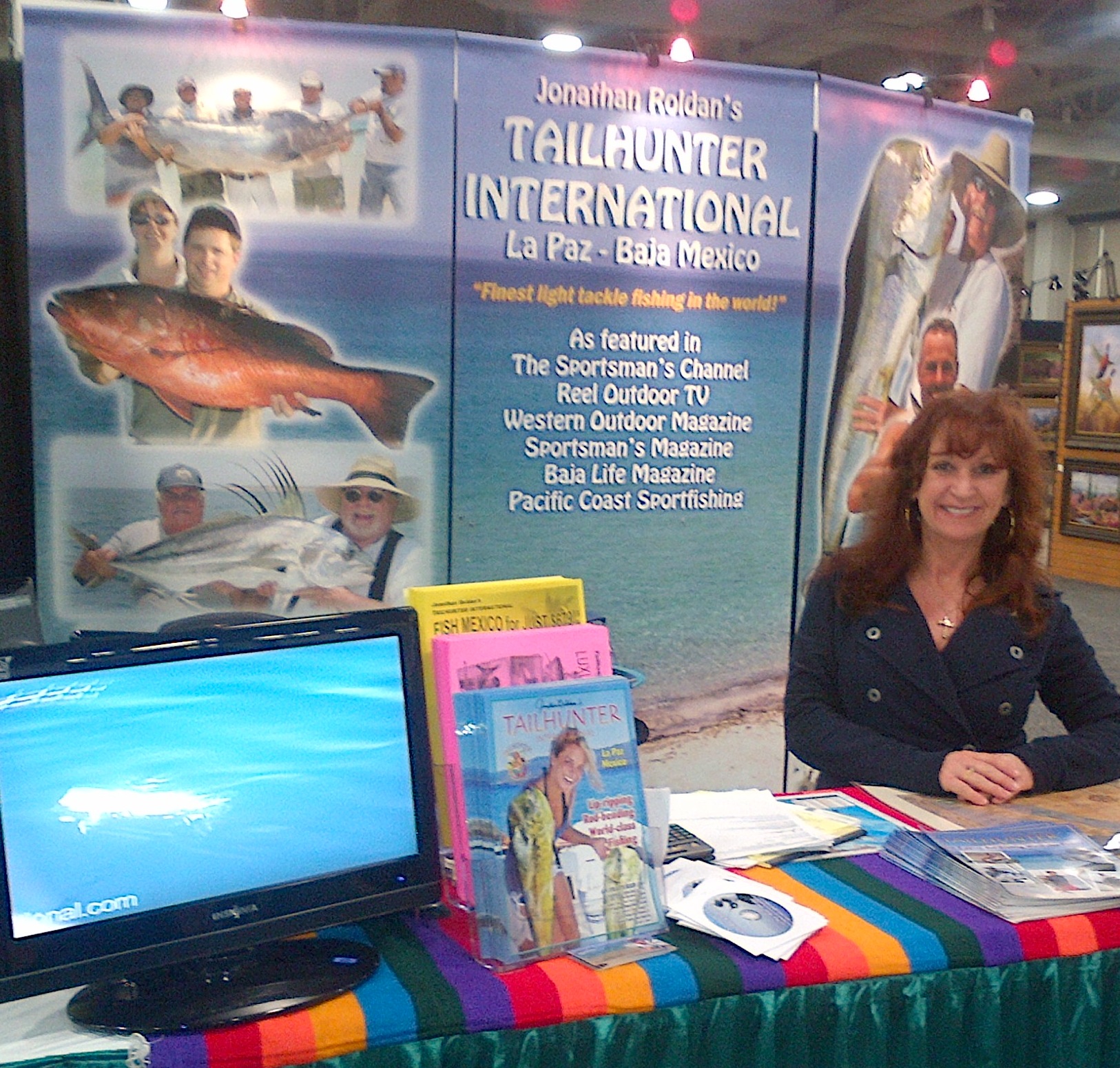
From January to March of each year for almost 20 years, we criss-cross the western U.S. promoting our fishing operation in La Paz and often become an impromptu clearing-house of many general questions about travel to Baja and Mexico in general.

“BAJA FAQ 2013”

Originally Published the Week of Feb. 13, 2013 in Western Outdoor News

As I’m writing this, we’re just wrapping up our 3rd day here at the Pacific Northwest Sportsmens Show here in Portland, Oregon.  We’ve been on the road now for more than a month as we do our annual show-hopping promo tour across the country.

So far, we’ve done fishing/ hunting shows in Sacramento, Denver, Seattle before this one.  Only 2 more months to go and about 12,000 more miles of driving.

As we stand here in our booth, promoting our La Paz fishing operation for 8, 10…12 hours a day, we talk to hundreds of people a show.  We often hear many of the same questions.  Year-after-year.  Although the questions might be the same, very often the answers might change based on changing conditions in Baja.

I thought I’d share some of the most common questions.  Some might seem pretty simple…or silly…or obvious…but as mentioned, sometimes answers might surprise you.  Also, we get asked these questions ALOT so obviously, alot of folks don’t know these answers!

Q:  Where is Baja, Mexico?

A:  It’s the 1000 mile-long-peninsula extending from the border at San Diego/ Tijuana and going south to lands-end at Cabo San Lucas.  It is bordered by the Pacific Ocean to the West and is separated from the Mexican mainland to the east by the Sea of Cortez.

Q:  Is it safe?

A:  The  VERY short answer.  Yes.  Mexico is a huge country.  Generally as safe as most cities in the U.S. and in some respects even safer.  Yes, there are serious problems, but much of that is only in certain areas and in border areas and tourists are not generally targeted anymore than tourists are targeted by crime in the U.S.  In any given city, just like most U.S. cities, there are good and bad parts of town.  Stay out’ve the bad parts.

Q:  Is it OK to drive?

A:  On any given day, there are thousands of tourists on Baja roads having un-eventful drives.  Thousands cross the border daily and routinely.   Observe the laws.  Make sure you have insurance. Drive with care and common sense as you would anywhere.

Q:  Can we buy property?

Yes, you can.  Who do you think is buying all these parcels, condos, houses and lots along the beachfronts! Sometimes it seems that Americans are buying up all of Baja.

Q:  Is it always good fishing?

A:  Historically,  Baja is one of the most famous fishing areas in the world.  But…Baja is 1000 miles long.  It has over 2000 miles of coastline.  It has incredible fishing and over 700 identified species of fish in the Sea of Cortez.  That being said, fishing is as different as the species, location and variables such as  season, weather, current, bait, etc.  Every places is not great 100% of the time.  There’s such a thing as a bad day of fishing.

Q:  Can we bring our fish home?

A:  As long as you’re within limits and observe regulations, it would be a shame if you didn’t.

Q:  Is the water safe to drink?

Most places very much so!  But, like many places in the U.S.,  municipal water tastes bad.  Everyone drinks bottled water which is readily available.

Q:  Can we use American money?

A:  In Baja, American dollars are very welcome, but with new banking laws, making it harder for Mexican vendors to change dollars into pesos,  it makes it harder for the vendors to accept pesos…especially large denominations.  Rarely, will a vendor turn down a payment in dollars…a sale is a sale!  But increasingly, more can’t accept large denominations.  So, it’s a good idea to use smaller bills or get pesos exchanged before you come over or at an exchange house.  Many Mexican banks will not change dollars to pesos unless you have an account and, even then, only small amounts.

If you can avoid it, don’t use credit cards. But,  many places won’t accept them because of high surcharges to the vendor.

Q:  What happens if we need medical help or what happens if I have special medical needs?

If it’s  your medication, bring what you need and extra dosage.  Bring a copy of your prescription.  If it’s emergency medical care, most large Baja cities actually have pretty good first response and emergency care.  Enough to get you home after most emergencies so that your own doctor can treat you.  Credit cards  are usually welcome in lieu of insurance. Generally, emergency care is much cheaper also.

Q:  What happens if we don’t speak Spanish

English is growing.  Span-glish is universal, especially in the tourist areas.   Keep it simple and eliminate slang and most folks  will understand and everyone gets along just fine.  But, everyone appreciates any attempt to speak Spanish!

Q:  Do we need a passport?

Yes! Don’t wait until the last minute to get one.

Q:  Can we still get prescription drugs there with no prescription?

Generally no.  Not like in the old days. Generally speaking, if you need a prescription for it in the U.S., you’ll need it for most things in Mexico.

Q:  How is it to retire there?

It’s one of the fastest and most sought-after places for gringos to retire and an excellent place to make dollars stretch with a high standard of living.  You get more bang for the buck.

______________

Jonathan Roldan has been writing the Baja Column in Western Outdoor News since 2004.  Along with his wife and fishing buddy, Jilly, they own and run the Tailhunter International Fishing Fleet in La Paz, Baja, Mexico  www.tailhunter-international.com.  They also run their Tailhunter Restaurant Bar on the famous La Paz malecon waterfront.  If you’d like to contact him directly, his e-mail is riplipboy@tailhunter-international.com  or drop by the restaurant to say hi!

______________

Jonathan Roldan’s

Tailhunter International


TAILHUNTER FISHING FLEET #1 Rated on Trip Advisor

TAILHUNTER RESTAURANT BAR #1 Rated in La Paz on Trip Advisor


Now follow us on FACEBOOK TOO


Website: www.tailhunter-international.com

U.S. Office: 3319 White Cloud Drive, Suite A, Hacienda Hts. CA 91745

Mexico Office: 755 Paseo Obregon, La Paz, Baja Sur, Mexico

Phones:

from USA : 626-638-3383

from Mexico: 044-612-14-17863

.

Tailhunter Weekly Fishing Report:

http://fishreport.jonathanroldan.com/

Tailhunter YouTube Videos:

http://www.youtube.com/user/pangapirate

Read Full Post »

Like any job, sometimes things get lost in the hustle an bustle and you can't see the forest for the trees...even when running a fishing business.  But, every now and then, life sends little reminders that open your eyes.

Like any job, sometimes things get lost in the hustle an bustle and you can’t see the forest for the trees…even when running a fishing business. But, every now and then, life sends little reminders that open your eyes.

LIFE’S POST-IT NOTES

Originally Published the Week of January 17, 2013 in Western Outdoor News

STORIES

At a recent fishing and hunting expo we were in our booth “meeting and greeting” the public and talking about fishing in La Paz with our fleet.

Two of our long-time clients, Rick and Harvey walked up to talk about their upcoming trip.  They quietly mentioned that Larry, one of the regulars in the fishing group had suddenly passed away the previous month.

“He was already not feeling quite right and had a biopsy just before the trip to La Paz.  The doctors told him he probably shouldn’t go on the trip,” said Rick.

“We didn’t know anything about it,” said Harvey.  “But in hindsight we think he must’ve known something  was  really bad and decided to make the trip anyway. Boy, he sure had fun and enjoyed himself fishing with you guys.”

“Sadly, it was his last trip,” reflected Rick. “None of us knew…”

________________

At another public appearance, I was approached by 3 gentleman.  One was obviously, much older than the others.  He was walking slightly bent, but had a firm handshake and a ready smile!  He also had a small oxygen tank attached.  His name was Paul.

“I’m 98 years old!” he proudly announced to me with a grin.  “Do you know why I still love to fish at 98 years old?”

“Why? we said in unison.

“For the Hal-i-but!” he laughed aloud tickled to have caught us in his playfulness.

“Wanna see my big fish?” he said opening his wallet.

“Sure,”  I said warily.  Half-thinking here-we-go.  This is gonna be a long-winded fish story.

Paul proceeds to pull out a photo of a big 125 -pound yellowfin tuna being held up by a struggling fisherman.

“Caught that in La Paz when I was ONLY 89-years old!” he beamed.  I could have sworn he pushed out his chest when he said that obviously pleased at the attention of the small crowd that had gathered.

One of his friends leaned over to me and whispered, “That’s the only photo he carries in his wallet.  He’s a war vet.  He’s been all over the world.   No photos of wife.  Or kids.  Or grandkids.  Or travel.  Only that tuna photo.  And he’ll show it off anytime he gets a chance. “

________________

Son, Ron, did a knuckle-bump with me as he hoisted himself into our shuttle van to take he and dad back to the airport.  Big smiles.  “Great time!” said Ron. “What a blast.  Best fishing ever!”

I helped toss in some of the smaller luggage in to the back.

Bob, the dad, grasped my hand in his big paw.  A two-handed handshake.  “Can’t tell ya how much this trip meant.  Thanks again.”

He handed me a note as the van pulled away from the hotel and I watched it nose out of the driveway and out onto the highway.

I opened the note handwritten on some of the hotel stationery.

“Jonathan…just wanted to tell you and your wife, what a great time we had.  I never did mention to you how important this trip was for me.  My son, Ron, is actually in the military and has just been notified he’s headed to Iraq.  You and your staff made this a trip to remember and hold onto. Thanks for everything.  Bob”

_________________

I had been guiding that day and sharing a panga with Greg and Annie, a young couple from Washington.  We had a fun day.  Got some fish. Saw whales and dolphin.  Lots of laughs and “Kodak moments” all the way around.

It was fun to watch these two.  They shined. They really enjoyed each other’s company.  It was obvious that Annie was the apple of Greg’s eye.  It was just fun to be around them.

Towards the end of the day, another dorado came aboard.

“This is the last one!” laughed Greg. “No more!  We’ve got our limits and it’s getting late. Let me just get the hook out’ve this fish.”

As I watched from the stern, Greg reached into the fish’s mouth with his pliers.  Annie wasn’t paying much attention.

“What’s this?” I heard Greg say with a laugh.

Removing his hand from the fish, he produced…a ring…a tiny shiny gold ring !

Annie and I both looked on.  Astonished yet not quite sure what Greg had found.  The little diamond gleamed in the sun.

Greg took a knee to the deck in front of Annie as the sun started to set behind him.  He held out the ring.

“Annie…I love you.  Would you like to live happily ever after?”

_______________

I’m often told that I’m “living the dream” down here working in Baja.  But often times, it’s a job like any job, no matter how much I love it.

Especially when the season is in full swing.  It can be a blur of customers and friends.  Sunshine and fish.  Luggage and equipment.  One day sometimes seems like the 10 others before it.  Frantic at times.  Boring and routine at others. Stressful and mundane and then panic and tension in a wink.

But, every now and then, an unexpected bit of reality smacks you in the head and heart.  There are amazing moments of clarity when someone says or does something and I realize how truly blessed to be able to do what we do.

We are witness to the special moments in the lives of our customers and friends.  Every day.

It’s the biggest fish.  It’s the great laughs.  It’s the family times.  It’s the first time.  It’s the only time.

It’s the last time.

Sometimes life drops these little reality checks on those of us who get to do jobs like this. And it reminds us that we truly are privileged and honored to be asked to spend this time with you “livin’ the dream.”

That’s our story…

Jonathan

_______________

Jonathan Roldan has been writing the Baja Column in Western Outdoor News since 2004.  Along with his wife and fishing buddy, Jilly, they own and run the Tailhunter International Fishing Fleet in La Paz, Baja, Mexico  www.tailhunter-international.com.  They also run their Tailhunter Restaurant Bar on the famous La Paz malecon waterfront.  If you’d like to contact him directly, his e-mail is riplipboy@tailhunter-international.com  or drop by the restaurant to say hi!

______________

Jonathan Roldan’s

Tailhunter International


TAILHUNTER FISHING FLEET #1 Rated on Trip Advisor

TAILHUNTER RESTAURANT BAR #1 Rated in La Paz on Trip Advisor


Now follow us on FACEBOOK TOO


Website: www.tailhunter-international.com

U.S. Office: 3319 White Cloud Drive, Suite A, Hacienda Hts. CA 91745

Mexico Office: 755 Paseo Obregon, La Paz, Baja Sur, Mexico

Phones:

from USA : 626-638-3383

from Mexico: 044-612-14-17863

.

Tailhunter Weekly Fishing Report:

http://fishreport.jonathanroldan.com/

Tailhunter YouTube Videos:

http://www.youtube.com/user/pangapirate

“When your life finally flashes before your eyes, you will have only moments to regret all the things in life you never had the courage to try.”

Read Full Post »

Shearer Family goofy tags 5-11

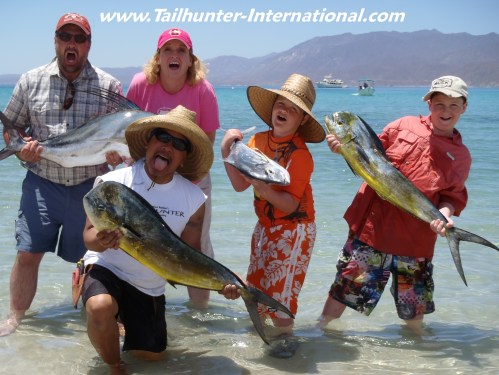
Winter is a great time in Baja and a great time to bring the family! As the our amigos, the Schearer family, from Montana found out with us, Baja is alot warmer than Montana and you don’t have to go out very far to get fish like this!

BECAUSE WE CAN!

Originally Published in Western Outdoor News the Week of Dec. 20, 2012


I’m often asked why we would fish in the winter time?

I guess the quick and wise-guy answer and knee-jerk response is “Because we can!”

But there’s more to it than that. 

During the winter time, the complexion of our Baja vistors changes.  During the regular season,  the majority of our folks are generally fishers.  Or at least have a general focus of getting on or under the water during our warmer months.

During the colder times of the year, I think we see more “escapees.”  These are folks just trying to get away from the chill, ice and wet of home.  “Just lookin’ for some sunshine…any sunshine!” is what I often hear.

While us locals are bundled up in long pants, shoes, and down vests against the “chilly” 60-70 degree weather, folks from Vancouver, Canada…Bozeman, Montana…Portland, Oregon. …happily stroll through town in tank-tops and cargo shorts.   God bless ‘em, they are in sunshine Nirvana!

But, they are often discouraged from fishing when they find out that so many places are rough, windy, or certain “glamour” species like marlin and tuna just aren’t biting in the winter. Or, if they are biting, heading off-shore to catch them can be a long rolling bumpy wet adventure more akin to the very conditions they left back home!

It’s much simplier to park it on a bar stool with a cold umbrella drink and gaze out over the sand and water or take the glass bottom boat ride in the harbor.  Yawn. Right up there with going to listen to a time-share presentation so you can get the free lunch and discount shopping coupons.

But, they shouldn’t let winter discourage time on the water.

One of the great things about fishing in Baja and Mexico is that there is always SOMETHING to catch! 

Frankly, the further south you go, the warmer it will be and the better the chances of catching a glamour fish, but even then, remember that it’s still winter and most of Mexico and Baja’s Pacific coast faces the open ocean (which is why winter surfing in Hawaii is so great!).  There’s big waves and there’s big winds.

It’s no fun being wet and cold and bounced around.

So…

Consider fishing inshore.  So few folks ask for it and so few of the outfitters or charter operators offer it, especially for someone who just walks in or walks up to sign on for a day of fishing.  Which is what so many winter visitors do.  They go fishing on a whim. 

“Honey, instead of visiting the Mayan pottery store,  let’s go ‘deep sea’ fishin’ tomorrow!”

But, chances are you’ll light up a big smile if you ask for inshore fishing.  For the captain our agent or outfitter, it’s a lot more economical since they won’t be burning up a lot of gas.

 Secondly, there’s a lot more inshore fish than offshore blue-water fish .  Therefore,  the chances or success are much greater for them to have smiling anglers at the end of the day.  Finally, believe me.  They don’t want to get beat up out there on the big water any more than you!

From the anglers perspective, waters will probably be calmer.  You’ll have more action with rods in your hands rather than long days of trolling offshore.  Pragmatically, you don’t need a big expensive sportfishing cruiser either.  You can downgrade of fish from pangas since most of the action will be closer to the shores, beaches and reefs. So, it’s less expensive!

In fact, often you’ll just be yards from the shore.  You will often see the bottom and, very often you’ll actually see the fish as they bite. 

And there’s so much variety and action to be had.  Exotic roosterfish…giant pargo…tough jack crevalle…sierra…cabrilla…pompano…are just some of the species available inshore.

And don’t think these fish are any less tough or formidable just because they inhabit the inner waters.  Pargo can be 30-50 pounds with sharp teeth and gillplates as they attack from the rocks.  Roosterfish can swarm in schools or be the big trophy sluggers between 30 and 100 pounds that have made them famous in Baja and the world.  Catch 20 five-pound sierra or a half-dozen 30 pound jack crevalle and I can guarantee your arms will still be sore!

Another bonus is that this is very pro-active fishing. Since you’re not simply dragging lures offshore waiting for hits, you’ll have a rod in your hand most of the time.  This is a great plus if you’re fishing with first-timers, family members or the kids!  Everyone participates.  Everyone has fun.

And, at the end or the day, inshore fish is among the best eating!  So, don’t let winter deter some great fishing fun!

That’s our story!

Jonathan and Jill

__________________

Jonathan Roldan has been writing the Baja Column in Western Outdoor News since 2004.  Along with his wife and fishing buddy, Jilly, they own and run the Tailhunter International Fishing Fleet in La Paz, Baja, Mexico  www.tailhunter-international.com.  They also run their Tailhunter Restaurant Bar on the famous La Paz malecon waterfront.  If you’d like to contact him directly, his e-mail is riplipboy@tailhunter-international.com  or drop by the restaurant to say hi!

______________

Jonathan Roldan’s Tailhunter International

TAILHUNTER FISHING FLEET #1 Rated on Trip Advisor

TAILHUNTER RESTAURANT BAR #1 Rated in La Paz on Trip Advisor


Now follow us on FACEBOOK TOO

Website: www.tailhunter-international.com U.S. Office: 3319 White Cloud Drive, Suite A, Hacienda Hts. CA 91745 Mexico Office: 755 Paseo Obregon, La Paz, Baja Sur, Mexico Phones: from USA : 626-638-3383 from Mexico: 044-612-14-17863

Tailhunter Weekly Fishing Report: http://fishreport.jonathanroldan.com/

Tailhunter YouTube Videos: http://www.youtube.com/user/pangapirate

“When your life finally flashes before your eyes, you will have only moments to regret all the things in life you never had the courage to try.”
Read Full Post »

“MATCH -UPS!”

Originally Published in Western Outdoor News the Week of Oct. 9, 2012

If you’re a sports fan, you understand the concept of “match ups.” 

You want to consolidate you strengths.  You want YOUR strengths against your opponents’ weaknesses.  Conversely, you want to hide or shelter your  own weaknesses.  Anaylsis of these matchups are essential to success.

Maybe your team has a height advantage but the other team is stronger.  They are better in the shortstop or the linebacker positions or have an ace goalie.  You have base-running; a faster point-guard or a quarterback who throws crisp tight short passes.  Match ups.  Accentuating your strengths over the other side’s deficiencies.

It’s like that in fishing too.

Like most things, I always guard against over-thinking some thing and becoming too fanatic, but some basic common sense things will help put some advantages your way and give you some edge.  

You have several “opponents.” 

First, of course, is the fish.  Until that fish is on the hook, it has all the advantages.  Speed, power, instinct…all those things that nature embedded in that little pea- brain. More often than not, that little pea-brain is more than enough to usually outsmart those of us that are supposedly higher up the food chain and endowed with more grey matter between the ears!

Even, once that fish is hooked, often the advantage still doesn’t necessarily tilt in the direction of the angler, although once the fish is hooked at least it’s “game on!”

Secondly, there’s your own physiology.  I refer to your personal stat sheet. Your  own endurance, power, stamina, intelligence, etc.   These are the things that nature stuck you with.   Everyone is different.  Everyone has different levels and just because you have one or more attributes, doesn’t mean you have the others or have them in abundance. 

The link between the fish and yourself is technology.  Your equipment.  Your gear.   It’s where the matchups take place in fishing.   The decisions you make regarding your “technology” is what can bring you success.  It can equalize the deficiencies or, it could cost you the game!

Starting with basics.  Taking care of yourself, especially in the harsh Baja sun and conditions would seem obvious, but I often have to remind clients to “bring water and drink water.”  Beer does not count as hydration.  (Sorry, amigos!).  Bring a hat.  Put on the sunscreen.  Keep your shirt on unless you plan to turn a painful shade of lobster red. 

I know it’s Mexico, party animals, but if you play long and hard at night, fishing the next day will also kick you in the backside.  Common sense.

If you’re not running right.  If you’re not ready to be in the game and stay in the game, at the very least, you’re not on top of your game for fishing.  It’s not fun!   At worst, you can end up with heatstroke, bad sunburn or worse.

The Baja sun and a day of fishing, while certainly relaxing, and better than sitting in traffic or at work, still takes a lot out of you.  The hot dry air alone will zap you of energy and literally sucks moisture out of you. 

Then, let’s take a specific look at your gear.  Specifically, the rod, reel, and terminal tackle.

Is it right for what you’re fishing for?  Is it right for how you fish? These are also part of “essential matchups.”

Like golf, one rod will not work in all situations.  You don’t need an armload, but a select few rods and reels will usually cover most bases.

I see spinning reels on conventional rods and conventional reels on spinning rods.  I see live bait rods used for trolling and heavy trolling rods and reels being used to fish with tiny live baits. I see jig sticks being used to troll and people trying to cast using short meat sticks meant for rock fishing.. 

I see kids and women and inexperienced anglers with gear that is far too heavy physically for them to handle, let alone have fun with.  It’s too big when a fish bites and even just standing there holding it all day, the fatigue factor sets in.  And it can stop being fun. 

As much as it’s more economical to just buy gear “off the rack” at least go to a place that knows about fishing gear and get some real recommendations from a knowledgeable salesperson.  Don’t fit yourself to your gear.  Fit your gear to yourself!

On the terminal end…that’s the stuff that’s directly connected to the fish like line, hooks, lures, etc.,  this is the critical end.

The things on the end of the line are what will essentially determine the success or failure of your fishing trip. 

When I worked in a tackle store many years ago, I sold a guy about 2 grand worth of gear for his first real long range fishing trip.   He was very excited.  Iasked him what hooks he’s like to add to the package.

“Oh, just give me the pack of 100 cheap ones. Those are as good as any,’ he said dismissively, almost as an afterthought.

I couldn’t believe it.  I said, “You just spent 2 grand on gear.  You’ve paid 4 grand for your trip and now you want to use a hook that’s worth 5 cents? That’s the part that’s connected to your fish of a lifetime!” 

He got the idea!

If you’re fishing off the pier, that’s one thing.  If you’re fishing for world class fish, that’s a different issue.  You don’t have to buy the most expensive.  Don’t bust the mortgage.  But, you do get what you pay for and the cheapest can often cost you in the long run.

Match ups are key!

That’s our story…

Jonathan and Jill

Jonathan Roldan has been writing the Baja Column in Western Outdoor News since 2004.  Along with his wife, Jill, they own and run the Tailhunter International Fishing Fleet in La Paz, Baja, Mexico  www.tailhunter-international.com.  They also run their Tailhunter Restaurant Bar on the famous La Paz malecon waterfront.  If you’d like to contact him directly, his e-mail is riplipboy@tailhunter-international.com  or drop by the restaurant to say hi!

Jonathan Roldan’s
Tailhunter International


TAILHUNTER FISHING FLEET #1 Rated on Trip Advisor

TAILHUNTER RESTAURANT BAR #1 Rated in La Paz on Trip Advisor


Now follow us on FACEBOOK TOO


Website: www.tailhunter-international.com
U.S. Office: 3319 White Cloud Drive, Suite A, Hacienda Hts. CA 91745
Mexico Office: 755 Paseo Obregon, La Paz, Baja Sur, Mexico
Phones:
from USA : 626-638-3383
from Mexico: 044-612-14-17863

.
Tailhunter Weekly Fishing Report:
http://fishreport.jonathanroldan.com/

Tailhunter YouTube Videos:
http://www.youtube.com/user/pangapirate


“When your life finally flashes before your eyes, you will have only moments to regret all the things in life you never had the courage to try.”
Read Full Post »

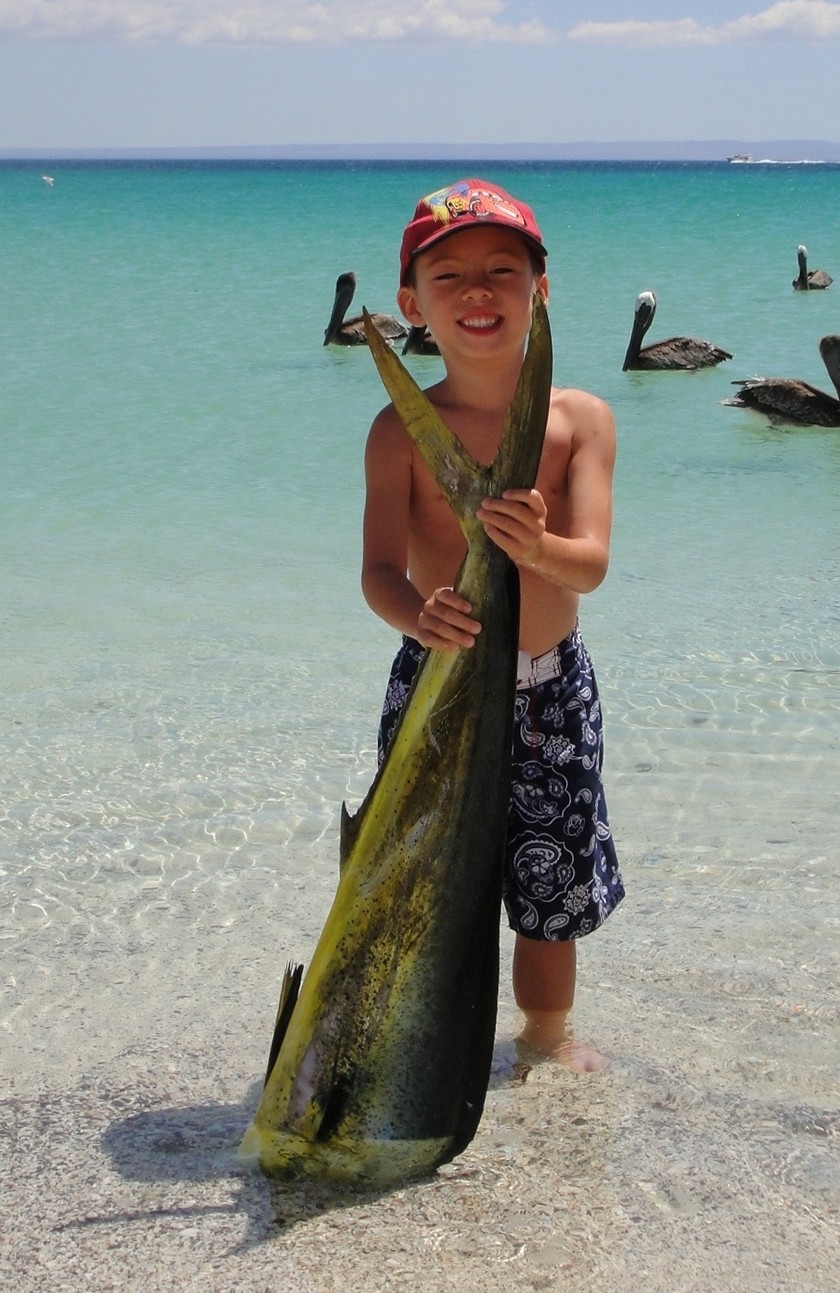
What do you think? It looks to me like Aiden’s self-esteem is just fine!

ARE YOU KIDDING ME?

Originally Published in Western Outdoor News the Week of Sept. 25, 2012

Most of you reading this column are most likely outdoor folks.  I mean, you most likely fish, hunt, camp and do other outdoors type stuff.   Right?

This could be my easiest column ever.

I hear a lot of stuff over the 17 years I’ve been in Baja.   Every now and then, something slams my ears that leaves me with my mouth open, not  because I have nothing to say.  It’s because I have too much to say and it all wants to come flying out of my piehole in a gush!  Ever have one of those moments?

So much wants to be said that my brain goes into momentary lockdown freeze.  And short of some profanity coming out, all I can say is, “Are you kidding me?”

I was talking to some parents about fishing and the parents were showing some interest in “trying fishing” but weren’t sure if it would be a good activity for their kids unless…

“. . .I could GUARANTEE fish because otherwise it might be bad for their kid’s ‘self-esteem’ if they didn’t catch fish.”

Open mouth.

Raised eyebrow.

Profane thought passing briefly through my grey brain matter

And all I could say was, “Are you kidding me?”

The scary part was they weren’t kidding.   If their kids didn’t catch fish, the aspect of “failure” might somehow irreparably damage junior’s self esteem that he’d require serious couch time with the therapist.

I exaggerate a tad, but there was genuine concern for the young-uns self-worth.  Can’t let the kids feel like a failure if he doesn’t catch a fish.

I probably did not do the right thing, but I didn’t feel like sitting down and having a lengthy philosophical discussion on child-rearing with them.  Furthermore,  I’m too smart to ever GUARANTEE that someone is going to catch a fish.

The wise-guy in me wanted to really tell them to put their kids in insulated bubbles.

Don’t let them walk down the street.  They might trip. FAIL

Don’t let them play catch with a ball and drop it.  FAIL.

Don’t let them tie their own shoes.  Might come untied.  FAIL

Oh, the things that flew threw my cockeyed brain.  But, I bit my tongue.

So, I gave them some perfunctory response and let it go at that.

I mean, if they even have to ask, then the last thing I need is to find out now junior’s psyche is permanently scarred because he didn’t catch a fish!  Oh the guilt.  I might not be able to live with myself…or something.

But, at the beginning of this, I mentioned this might be my easiest column.   I could end this by saying,
What would YOU say to them?  And leave the rest blank…Let you fill in the rest.

How many of you have ever “failed” at fishing?  How many of you are fishing BECAUSE a parent or older adult took the time to take you to wet a line.  “Failure” per se really wasn’t part of the equation.  It IS the equation!  We lose fish.  We get skunked. The fish win…most of the time!

I imagine if you’re reading this, you’ve probably come out on the short-end more often than not and still had a ball.  You  kept at it simply BECAUSE that darned fish kept fooling you.  Failure motivated you to try it again…and again…and again.  And you somehow managed to have fun!

And along the way, you  accumulated a lifetime of memories.   Life works like that.  Funny how that happens.  All that psycho-babble stuff about the “journey” being  more important than the “destination.”

Personally, I think of my father.  We don’t talk much anymore and I miss him.  And I think of all those times he took me fishing.  I didn’t know it then, but dad was a terrible fisherman.  Great dad, but   I never realized until I was older that we NEVER caught fish!

But, I was always eager to go and he was always eager to take me.  A lot of our failure might have been my fault.  I have zero patience and a narrow attention span.

It often wasn’t long before I was throwing rocks in the water (“Jon, you’re scaring the fish!) or eating all the Velveeta cheese (“You ate all the bait?” or “You fed all the anchovies to the seagulls?”) or doing something detrimental to our success (“Why didn’t you go to the bathroom BEFORE we rowed out here?”)

So, by self-esteem standards, I was a failure.  And it was dad’s fault.  He set me up for failure..and ultimately success.  And I wouldn’t change it for the world.

Obviously, given my career path, the fact that we were big fat losers, didn’t deter my enthusiasm for the sport or the outdoors.   Self-esteem?  I usually couldn’t wait to swagger up to my school chums to tell ‘em, “My dad took me fishing this weekend!”  Neener neener.  Yea, I swaggered.  Didn’t catch a fish, but I swaggered. And I was proud of having a dad who took me fishing too!

My wife, Jilly, tells me of similar circumstances as well.  Although she comes from a long line of San Diego fishermen who really DID know now to fish!

The men in her family were insightful enough to take her fishing.  Yup, take the little girl out in the woods; out on the pier; and out on the sportboats.  And it took awhile for her to catch her first fish.  But, she proudly still tells stories about being the little girl out there fishing with the boys and holding her own.  Backing down from no one!

And when she finally caught that first fish…well, it went straight into the freezer.  For six months.  And became her show-and-tell story for anyone who would listen.

Proudly.

I’m grateful our parents weren’t so worried about our self-esteem. They let us fail.  Proudly.  With swagger!  Neener neener.

That’s our story!

Jonathan

____________

Jonathan Roldan has been writing the Baja Column in Western Outdoor News since 2004.  Along with his wife, Jill, they own and run the Tailhunter International Fishing Fleet in La Paz, Baja, Mexico  www.tailhunter-international.com.  They also run their Tailhunter Restaurant Bar on the famous La Paz malecon waterfront.  If you’d like to contact him directly, his e-mail is riplipboy@tailhunter-international.com  or drop by the restaurant to say hi!

_____________

Jonathan Roldan’s
Tailhunter International


TAILHUNTER FISHING FLEET #1 Rated on Trip Advisor

TAILHUNTER RESTAURANT BAR #1 Rated in La Paz on Trip Advisor


Now follow us on FACEBOOK TOO


Website: www.tailhunter-international.com
U.S. Office: 3319 White Cloud Drive, Suite A, Hacienda Hts. CA 91745
Mexico Office: 755 Paseo Obregon, La Paz, Baja Sur, Mexico
Phones:
from USA : 626-638-3383
from Mexico: 044-612-14-17863

.
Tailhunter Weekly Fishing Report:
http://fishreport.jonathanroldan.com/

Tailhunter YouTube Videos:
http://www.youtube.com/user/pangapirate


“When your life finally flashes before your eyes, you will have only moments to regret all the things in life you never had the courage to try.”
Read Full Post »

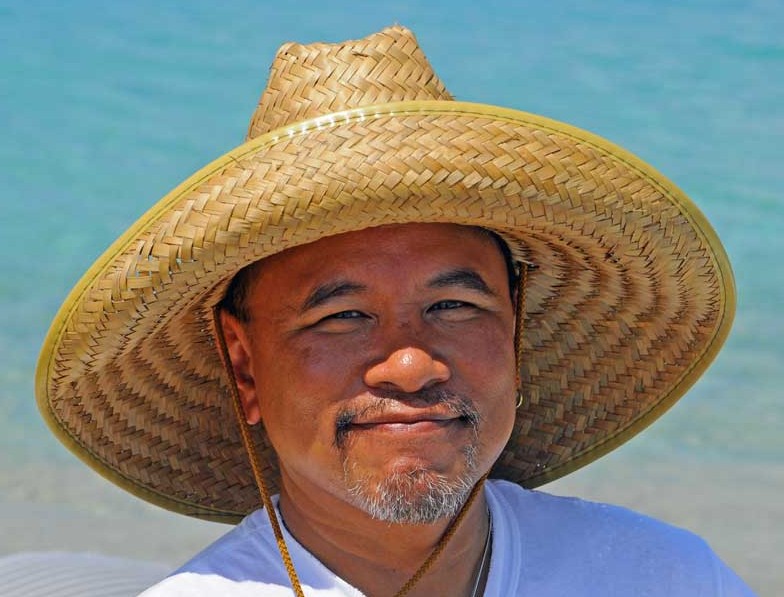
It is sometimes a narrow view from the beach and under the palapa fronds, but it’s amazing what you sometimes see and pick up!

WHAT I SEE IS WHAT YOU GET!

Originally Published the Week of July 11, 2012 in Western Outdoor News

I recently came under some criticism by a reader for what I write in my columns and how I write them.  It’s not the first and surely not the last time I got in someone’s crosshairs about it.  Oh well.

Fortunately, it’s few and far between.  I can’t please everyone and everytime someone jumps on my head it’s far outweighed by so many of you who ride in like the cavalry to offer support.  Much appreciated, amigos!  It’s gratifying to know so many of you enjoy my columns and have my back!

When I started writing this column for WON (Western Outdoor News)  in 2004 on a lark.  WON editor, Pat McDonnell  asked me to fill in “for a few weeks” until he found someone else to replace me. He knew that I was busy with my own fishing operation down here in La Paz.  No brainer.

Pat and WON have been friends and supporters for many years.  I was happy and honored to fill in although somewhat awed at filling the sandy sandals of the likes of Gene Kira, Fred Hoctor and Ray Cannon.

But, I figured for a couple of weeks, how much damage could I do? La-la-la-la-la…

Two weeks turned into eight years almost 400 columns. I jokingly tell Pat to let me know when he finds my “replacement.”

Those first two years, I wrote the column every week.  That’s 800-1000 words and, as I do now, I write the column about midnight after a full day running our La Paz operations. That’s 52 columns, plus other articles for WON as well as the Baja Beat pages in the former Western Outdoor News Magazine. Those were another 3000 or so words.

Try to come up with something new and fresh every time! Then try writing at midnight after a 20-hour-work-day and knowing that you only have a few hours to get it done with a brain that’s screaming for a pillow and a blanket!  Pat and the other great writers at WON have incredibly been doing it for years.

I have a small brain. I have limited time. I gotta get up to put out the boats in 2 hours.  I wanna go to bed!

And, as I’m sure all writers do, sometimes deadlines would loom and my brain just wouldn’t work.  Credit Pat McDonnel, Rich Holland, and Gene Kira who told me, “Just write what you know.”

I can surely write about dorado and tuna fishing and how to catch marlin.  And I do.  To a degree.

But, so does everyone else.  And they are better fishermen than me and can certainly write about it better than I can.  And honestly, how many different ways are there to catch a dorado or a billfish?  Open any fishing magazine on the rack and there’s probably half-a-dozen articles about “how-to-catch a….(fill in the blank)”

I know that’s almost heresy to even mention that, but where we are here in La Paz, we take a hook.  We put a bait on it. We put the bait in the water.  We’re now fishing!   It’s hard to fill 52 columns a year with that. I’m just not good enough for that.

And I’m not as good of a reporter as so many other writers either.  I don’t travel.  I don’t get out and about. Gary Graham does such a great job of it.  Me? I’m kinda tied to one spot. We live here in La Paz.

My view of Baja can be pretty myopic.  It’s the view through the window of the palapa.  It’s the view of walking around in the streets doing what people do here on a day-to-day basis. We shop.  We fill gas.  It’s life.

It’s the joking at the taco stand.  It’s the funny things that happen in the grocery store or the sometimes comical adventures of tourists and amigos.  It’s about running a business here in an adopted country.

It’s the interaction with visitors and friends and all of YOU who come to wet a line or put your toes in the sand.  It’s what I see on the beach or on the water. I keep a keen ear out for what I hear and what all of you say.  I’m simply an observer and your humble conduit of those experiences.

So, ultimately, yes.  I write about what I know.  And I also write for my own enjoyment.  When, I’m writing at midnight and running on fumes, it’s pretty hard to find my writing muse if the subject bores me to death!

So, I write about the whole “Baja experience.”  Because to me, a visit here is more than just fishing or diving.  That’s merely the vehicle that gets you down here.

Beyond that, it’s the sunrises and the great food. It’s that great beach you found and watching your kids light up seeing the dolphins. It’s the dusty road to the hidden cove.  It’s the little hotel you chanced upon or finding that perfect surf break or fishing or diving hole.

It’s the culture and most of all, it’s the people. The little old man who sold you the necklace.  The captain who chatted about how much he liked the Yankees.  The family who served you at the little beachside palapa and cooked your fresh fish and shared a recipe.

It’s the  smiles you bring and the smiles you take home!

That’s my story!

Jonathan

________________

Jonathan Roldan has been writing the Baja Column in Western Outdoor News since 2004.  Along with his wife, Jill, they own and run the Tailhunter International Fishing Fleet in La Paz, Baja, Mexico  www.tailhunter-international.com.  They also run their Tailhunter Restaurant Bar on the famous La Paz malecon waterfront.  If you’d like to contact him directly, his e-mail is riplipboy@tailhunter-international.com  or drop by the restaurant to say hi!

___________

Jonathan Roldan’s
Tailhunter International


TAILHUNTER FISHING FLEET #1 Rated on Trip Advisor

TAILHUNTER RESTAURANT BAR #1 Rated in La Paz on Trip Advisor


Now follow us on FACEBOOK TOO


Website: www.tailhunter-international.com
U.S. Office: 3319 White Cloud Drive, Suite A, Hacienda Hts. CA 91745
Mexico Office: 755 Paseo Obregon, La Paz, Baja Sur, Mexico
Phones:
from USA : 626-638-3383
from Mexico: 044-612-14-17863

.
Tailhunter Weekly Fishing Report:
http://fishreport.jonathanroldan.com/

Tailhunter YouTube Videos:
http://www.youtube.com/user/pangapirate


“When your life finally flashes before your eyes, you will have only moments to regret all the things in life you never had the courage to try.”
Read Full Post »

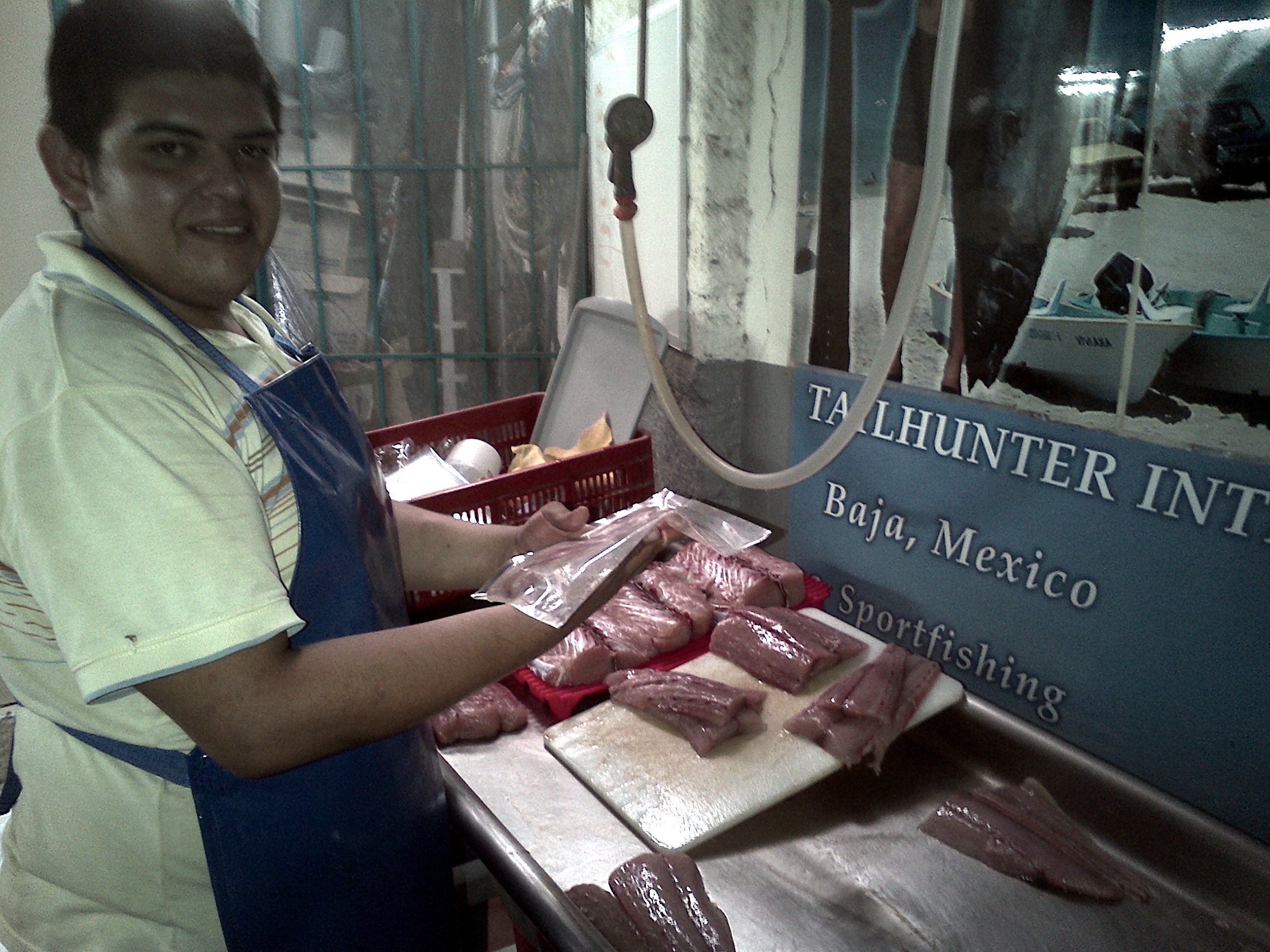
How you treat your fish makes all the difference in what it’s like when you get it home. Sherman from the Tailhunter staff prepares dorado fillets to be vacuum sealed at our facility for our fishing clients where it’s trimmed, labeled, dated and commercially vacuum sealed.  Even if you don’t have the ability to vacuum seal your fish, keep it cold and fresh as possible.

“BRING IT ON HOME!”

Originally Published in Western Outdoor News the Week of June 28, 2012

After so many years of doing this, I just assume most folks know about bringing home their catch.  Certain things are just assumed.   I shouldn’t be surprised, but I am.  Just this week alone, I think I received at least 2 dozen e-mails asking me about how to get their fish home.

Don’t get me wrong!  The  questions are great questions.  It’s my own fault for being surprised!

For you veteran Baja anglers, you just assume that fish is going home with you, but for many first timers, families, couples, etc. fishing the Baja is a new experience.

So, let’s do a primer!

Bringing home good quality fish means taking care of it as soon as it’s out’ve the water and on the deck.  Dispatch the fish as quickly as possible.  Keep in mind, as soon as your fish is dead, it’s already deteriorating.  Like any type of food, cold helps arrest deterioration a.k.a. spoilage!

So, get it in the box, ice chest or other container and off the deck and out of the sun, unless you want it cooked and spoiled right before your eyes! Nothing like blazing Baja sun to turn your fish to mush.  In the box, make sure there’s ice and keep it as cold as possible.

In most cases, your captain or deckhand won’t have time to start cleaning it on the spot, but the colder you can keep your fish, the better. Ice is the key.  In the major fishing tourist destinations, ice is a given.  Usually.  But it’s always a good question to ask your operator.  Also, is it included in the price of your trip? Many outlying areas may not have ice.  Find out! If not, do your best to keep your catch cool.

Usually, once back at the beach or dock, your catch is cleaned.  Get it bagged and cold and on ice again as soon as possible.  So often I see anglers wander away to take photos and high-five each other and not pay attention to their fillets…which might just sit in the sun on a cleaning table…cooking!  Get the fish on ice.  If you can get it vacuum sealed, it’s a plus.

As soon as you can, if you’re staying in one spot for awhile, get your catch in the freezer.  Again, a good question to ask if whether your lodging or charter operators have freezing facilities.  Don’t assume!  It’s Mexico.  Better to be certain.

Now, getting your catch home…

Let’s get this right out.  Generally speaking, there’s no way to ship your fish home.  This is not Alaska or Canada.  Unless you want to pay and arm-and-leg and get your fish on your doorstep melted and stinky a week late, don’t even consider mailing it.

The best and cheapest way is to bring your fish home in an ice chest as a piece of luggage.  Everyone does it.  Extra baggage is usually 25-50 dollars.  A bargain.  Most airlines have a limit of 50 pounds per piece before they charge you for an over-weight piece. Check with your airlines.

There is no dry ice. The airlines will also not permit you to put ice in the cooler either as it will melt and when your ice chest tumbles along the conveyor belt,  you’re gonna piss off a lot of people when it leaks fish water on their luggage.

So, this is why it’s important that your filets be frozen. Believe me, if you don’t keep opening and closing the lids, your fish can last 24-48 hours in an ice chest!

Usually a 35-42 qt. chest holds will weigh about 50 pounds when filled with fillets. Don’t forget, chests with wheels will weigh more so you don’t be able to put as much fish in the chest if you’re trying to be exactly 50 pounds.

Don’t use Styrofoam chests.  They get crushed when smacked by other luggage and make a mess!  Don’t cheap out either and put it in a cardboard box as I’ve seen some guys try it.  Not a great idea to stick extra fish in your personal luggage either! The airlines frown on it and you might have trouble getting the stink out of your clothes if the fish starts melting.

I’ve seen some anglers try to use the insulated boxes that they use in Alaska.  They don’t work as well down here.  In Mexico,  ice chests might sit on the 100+ degree tarmac or in a hot luggage room before being loaded.

Although lighter in weight, insulated boxes don’t hold up like they do in Alaska or Canad. Up there, the ambient temperature is not very warm and the boxes can be kept out or stored in cooler places.  Mexico is a cooker!

Many companies make some great soft-sided ice chests now that work incredibly well and are made for hot weather.  Worth looking into and they weigh less than conventional coolers.

If you have extra room, stuff your dirty fishing clothes around the packs or crushed newspaper for extra insulation.  Bring some duct tape to seal it up or a packing strap.

When you get home, get your fish in your home freezer and get the barbecue ready to go!

That’s our story!

Jonathan

____________

Jonathan Roldan has been writing the Baja Column in Western Outdoor News since 2004.  Along with his wife, Jill, they own and run the Tailhunter International Fishing Fleet in La Paz, Baja, Mexico  www.tailhunter-international.com.  They also run their Tailhunter Restaurant Bar on the famous La Paz malecon waterfront.  If you’d like to contact him directly, his e-mail is riplipboy@tailhunter-international.com  or drop by the restaurant to say hi!

Jonathan Roldan’s
Tailhunter International


TAILHUNTER FISHING FLEET #1 Rated on Trip Advisor

TAILHUNTER RESTAURANT BAR #1 Rated in La Paz on Trip Advisor


Now follow us on FACEBOOK TOO


Website: www.tailhunter-international.com
U.S. Office: 3319 White Cloud Drive, Suite A, Hacienda Hts. CA 91745
Mexico Office: 755 Paseo Obregon, La Paz, Baja Sur, Mexico
Phones:
from USA : 626-638-3383
from Mexico: 044-612-14-17863

.
Tailhunter Weekly Fishing Report:
http://fishreport.jonathanroldan.com/

Tailhunter YouTube Videos:
http://www.youtube.com/user/pangapirate


“When your life finally flashes before your eyes, you will have only moments to regret all the things in life you never had the courage to try.”

Read Full Post »

« Newer Posts - Older Posts »