Feeds:
Posts
Comments

Posts Tagged ‘marlin’

“COVERING THE SPREAD”

“COVERING THE SPREAD”

Originally Published the Week of Aug. 8, 2013 in Western Outdoor News

Lately, at least here in Southern Baja, there seems to be a dearth of live, or even dead bait.  It happens.  You still have to do your best to raise fish.  I mean, you’re already here.  It’s no one’s fault that the bait gods just didn’t happen to smile on your particular vacation dates.  So be it.

Be prepared.  Get ready to troll.  Cover some water.  I get asked all the time what would I recommend.

I usually don’t get hung up on having every color in the rainbow.  The days when I neede  two kinds of every conceivable lure is long gone and disappeared with the days of cheap airline tickets.  Besides, I’m too lazy and too old to carry that much gear anymore.

Now, I bring one dark and one light colored trolling feather in small, medium and large.  That’s it.  If my fishing partner or partners is bringing gear, I cut it back even further.   Let them carry the extra and pay for it!

But, honestly, agree among yourselves who is bringing what.  Gear can be shared as can the weight and the cost.

No sense in duplicating efforts and, given the penchance for airlines to charge for every extra bit of weight, it’s ridiculous to bring tons of stuff that will never get used.  Besides, you can only troll a limited number of lures at a time.  There’s no logic in bringing 20 or 30 lures!  Fight the urge.  You can do it!

Once you’re on the water, there’s a number of schools of thought on how to drag your lures and presenting a spread to the fish.  Veterans have their own multitude of theories and mine is just one guy’s opinion.

I used to subscribe to the technique of running light-colored lures during the brighter hours and the darker lures in the darker hours. Lots of fishermen do well with that.  But, for many years, now, I’ve been most productive with staggering my lure colors.

I run my brighter lures further back in the pattern.  I run my darker lures closer to the white prop wash.  If I have the ability to run more than 2 lures, I stagger them where one dark lure is right in the wash.  Another dark one on the edge of the wash and then two brighter ones staggered further back beyond says the 3rd and 5th wave behind the boat.

I believe the darker lures have a better presentation in the white water or near the white water where they create a more visible silhouette to the fish.

Regarding trolling speed, my general rule of thumb is somewhere in the neighborhood of 6-8 knots.  But I vary that.  The important thing is how the lures are swimming behind the boat.

I want the most action I can get from them so they create some kind of commotion.  I am also often reminding folks that pretty much any fish that has the ability to bite one of these feathers has the ability to swim way faster than the boat.  So goosing the throttle a few nudges to get the lures swimming correctly is a no-brainer.

That brings up another important variable.  Not all lures are created equal.  There are pusher heads (flat faced/ concave faced) .  Bullet heads (shaped like bullets natch).  Bubble/Jet heads (drilled with holes to make “smoke” bubble trails).  Slant heads (cut on an angle to dart back and forth or jump).  And others.

All of them have different characteristics.  Some work better at different times than others.

My general rule is the rougher the water, the more action I want from my lure to cut through all the surface disturbance on top of the water.  I want them to stand out as something “different” up there to potential predators.

To that end, again, trying to save space and weight is to pack bubble/jet heads or pusher head designs.  I like dragging them behind the boat so that they come jumping out of the face of trailing waves then dive back into the water with lots of splash and action.

Several stray suggestions:

If you only have small feathers or lures, consider making larger lures simply by sticking one inside of another.  Also, if you want to get down deeper, especially when nothing is close to the surface, either stick a torpedo sinker or egg sinker behind the head of the lure or simply tie a torpedo sinker to a leader ahead of the lure to make it swim deeper.

Give it a try!

That’s our story!

Jonathan

_______________

Jonathan Roldan has been writing the Baja Column in Western Outdoor News since 2004.  Along with his wife and fishing buddy, Jilly, they own and run the Tailhunter International Fishing Fleet in La Paz, Baja, Mexico  www.tailhunter-international.com.  They also run their Tailhunter Restaurant Bar on the famous La Paz malecon waterfront.  If you’d like to contact him directly, his e-mail is riplipboy@tailhunter-international.com  or drop by the restaurant to say hi!

______________

Jonathan Roldan’s

Tailhunter International


TAILHUNTER FISHING FLEET #1 Rated on Trip Advisor

TAILHUNTER RESTAURANT BAR #1 Rated in La Paz on Trip Advisor


Now follow us on FACEBOOK TOO


Website: www.tailhunter-international.com

U.S. Office: Box 1149, Alpine CA  91903-1149

Mexico Office: 755 Paseo Obregon, La Paz, Baja Sur, Mexico

Phones:

from USA : 626-638-3383

from Mexico: 044-612-14-17863

.

Tailhunter Weekly Fishing Report:

http://fishreport.jonathanroldan.com/

Tailhunter YouTube Videos:

http://www.youtube.com/user/pangapirate

“When your life finally flashes before your eyes, you will have only moments to regret all the things in life you never had the courage to try.”


Read Full Post »

“Ouch That’s Gotta Hurt!”

mexican-fishing-license-291x300

If only it was as easy as finding a KINKO’s to print them out!

OUCH THAT’S GOTTA HURT! (..again)

Originally Published the Week of July 23, 2013 in Western Outdoor News

So, often we hear the phrase “shot itself in the foot.”  So-and-so screwed up again and “shot itself in the foot.”  Sadly, when it comes to Mexico, you have to scratch your head.  Give it a shake and wonder, if it has as many feet as a centipede.   How many times can it cap a round into it’s own tootsies and keep walking?

Maybe you’ve already heard the latest.

You can’t get a Mexican fishing license in Mexico.  Chew on that for a minute.  Mexico has no fishing licenses.

You must still have a Mexican fishing license.  They inspectors are still out there.  But, you’ll be hard-pressed to find someone that will be able to sell you one down here.

Here in La Paz, at our Tailhunter operations, we normally have licenses to sell.  We sell a heap of licenses every year to our clients; our competitors clients as well as walk-in anglers.  We don’t make anything on them.  It’s a nice convenience for everyone and we’re happy to do it.

Previously, getting a fishing license was a 2-3 day ordeal and test of stamina and resilience, even here in big La Paz.  You filled out several forms.  You had to go to the CONAPESCA office.  Then off to the bank to pay the fee.  Then bring your bank receipt back to CONAPESCA.  Big difference from buying things over-the-counter at Walmart!

So, being one of the few places allowed to sell the fishing permits in 10 minutes is a wonderful convenience for everyone involved.

Several weeks ago, we were informed by CONAPESCA (Mexican Fish and Game) that they didn’t have any more licenses this year.  Not just us.  Everyone!

Loreto.  East Cape.  Cabo.  And not just us in S. Baja.  It was the WHOLE of Mexico.

We spoke with Tracy Ehrenberg from the Pisces Fleet in Cabo San Lucas and she phoned the main offices of CONAPESCA in Mazatalan.  Here’s their “We-shot-ourselves-in-the-foot” story.

Try to follow this.  According to Tracy, the new head of CONAPESCA simply “didn’t budget” for the printing of enough of the paper licenses to sell for the WHOLE COUNTRY.  Think about that one.  What no KINKO’s?

So, while some smaller outfits or out-of-the-way places might still have a stash of permits, they government is counting on YOU to purchase your fishing licenses online before you come down to Mexico!

There’s a few problems with that.   First, not everyone has computers.  Second, not everyone has printers.  Third, not everyone is computer savvy enough to navigate the Mexican website that sells the permits.  And…

Fourth, the website is about as primeval like it was built by a first-year intern as a school project.  It’s difficult to figure.  It makes mistakes.  It crashes all the time.  It sometimes takes your credit card, but gives you nothing to print out.   It’s very frustrating.

Several weeks ago when I notified our own clients about the situation, and posted the problem on our fishing reports, I must have gotten 20 phone calls and e-mails a day from livid, confused and frustrated anglers.

In fairness, eventually, with enough persistence, everyone got their licenses.  It eventually works and it seems that someone there at CONAPESCA has put the website on a larger server.  It doesn’t crash as often.

But, Mexico tourism didn’t need another SNAFU like this.  It’s supposed to be making it easier and more stress-free to visit, not throw another hurdle in the way of a vacation! How many times can it fire a round into it’s foot again?

Can you imagine the outcry if all the Fish and Wildlife operations in the U.S. “forgot” to print up enough fishing licenses or hunting tags…and yet still enforced them with inspectors out there in the field and on the water?

If you’re coming down, just make a note about the licenses and bear through it.  Here’s how to do it:

Here is the website:  https://www2.ebajacalifornia.gob.mx/Pesca/


•    Click the American flag and it will be in English

•    You want to purchase the fishing license for the “FEDERAL ZONE.”

•    Do not be alarmed at the price…it’s in pesos!!!  So just divide by 11 or 12 and that’s the rate in dollars and it will show up on your credit card statement in dollars.

•    If it’s slow or doesn’t work at first, try again later.  With this announcement, everyone in southern Baja has to purchase their licenses this way! 

There is also some other alternatives:

You can also get them from CONAPESCA San Diego, but must send a cashier’s check.  They also process the paperwork the same day and will mail you your permits.   Here’s the link:  http://www.conapescasandiego.org/.  Their phone number is: 619-233-4324

There’s a third option as well.

In Southern California, a number of well-known fishing tackle stores sell them and, if you can’t go to visit, they will take your information over the phone or via e-mail.  They will process the form for you and mail you out your fishing fishing licenses.  It’s fast, it’s easy.  But they have limited amounts as well, and after they sell their stash, they’ll be having trouble getting licenses as well.

Also many of the sportfishing landings in Southern California, especially in San Diego all have fishing licenses to sell.  That’s another alternative.

Most of the time, the website works fine these days.  Just persevere if it doesn’t work the first time.  There’s also the other aforementioned ways to get your license.

Don’t cancel your trip.  Just take a breath and know that it’s as frustrating for us down here as well and we don’t want you being surprised when you get down here and there’s no fishing licenses.

That’s my story!

Jonathan

______________

Jonathan Roldan has been writing the Baja Column in Western Outdoor News since 2004.  Along with his wife and fishing buddy, Jilly, they own and run the Tailhunter International Fishing Fleet in La Paz, Baja, Mexico  www.tailhunter-international.com.  They also run their Tailhunter Restaurant Bar on the famous La Paz malecon waterfront.  If you’d like to contact him directly, his e-mail is riplipboy@tailhunter-international.com  or drop by the restaurant to say hi!

______________

Jonathan Roldan’s

Tailhunter International

Website: 

http://www.tailhunter-international.com

Mexico Office: Tailhunter International, 755 Paseo Obregon, La Paz, Baja Sur, Mexico

U.S. Mailing Address:  Tailhunter International, P.O. Box 1149, Alpine  CA  91903-1149

Phones:

from USA : 626-638-3383

from Mexico: 044-612-14-17863

.

Tailhunter Weekly Fishing Report:  http://fishreport.jonathanroldan.com/

Tailhunter YouTube Videoshttp://www.youtube.com/user/pangapirate

“When your life finally flashes before your eyes, you will have only moments to regret all the things in life you never had the courage to try.”

Read Full Post »

THE BAJA HANDFUL OF KNOTS

They come in all shapes and sizes!

They come in all shapes and sizes!

MY BAJA HANDFUL OF KNOTS

Originally Published the Week of June 26, 2013 in Western Outdoor News Publications

If you ever want to start up a conversation among a group of fishermen or suddenly get a room of yakking party-ing guys to stop talking and gather around, there’s one sure-fire way that I’ve found.  It never fails.  Instant focus.

Just start talking about fishing knots.

Instant Pavlov’s dog and the dinner bells with 100-percent success.   It works even better if you happen to have a spool of line and some hooks.   If the crowd is relatively inexperienced, there’s almost a hush.

If the gathering has more veteran fishermen, it’s instant debate.  It’s like throwing bloody chum in the water or handfuls of  live bait into boiling tuna.  No one can resist plugging into the conversation!

I’m not even going to touch opening the subject with flyfishermen who’s knowledge and propensity toward complicated knot tying requires a PhD. In physics.

But for your average fresh and saltwater  weekend warrior and occasional Baja and long-range guy, everyone has an opinion on knot tying or is certainly “all-ears” to see what’s new and exciting or missing in their knot-tying arsenal.

I think almost all of us who have spent even a little time on the water know or, at some time back-in-the-day, learned the clinch knot or the improved clinch knot.  It’s the one they use to print on the back of packs of hooks and other accessories.  If  my fuzzy memory serves,  it was printed on a lot of Berkely produces and some still call it the Trilene knot.

I’m pretty sure it’s the one my dad first showed me.  Boy, did I practice and practice that one.  In fact, I remember mom catching me in my bedroom  floor long after bed-time.  I was  tying knots by the light of a flashlight  and using my 2nd grade scissors to trim off the tag ends! Mom just said, “Oh Jonathan…” and left me alone! I know when she told dad, he cracked up.

I guess in the passing of time, I’ve learned quite a few knots.   All serve their purposes.  What great names!  They sound like cocktails…The Bimini Twist…the Cat’s Paw…the Arbor…the Australian Braid…the Bristol…the Nail…the Blood knot…the Albright Special…the Orvis.  There are hundreds!

I once had a friend who would spend hours trying to develop some new knot just so he could claim it and have his name on it…forever…his legacy sealed in angling lore.  Terrible fisherman, but he sure knew how to tie knots!

Anyway, between you and me…frankly…the only reason to know that many knots is to impress people.  Like a name-dropper at a cocktail party.  People’s ears perk up when they hear names like the Palomar and the Spider Hitch.  And, I admit, when I want to direct attention to myself…like I said, start talking about knots and throw in some fancy names and it’s like a magnet!  Try it sometime.

Go get yourself a knot tying book or look up on the internet or youtube and there’s some great stuff to learn.  Then pull out some fancy names next time you’re among friends.  Like some guy who learned some card tricks, every fisherman within ear-short will be listening to you!

But, in full disclosure, for the several dozen knots I know,  there’s maybe only a handful that I ever really use and maybe only 3 or 4 that I use 95 percent of the time.  These are knots that you SHOULD know and with them under your belt, there’s not too much you can’t do.

It’s like rock ‘n’ roll.  If you know 3 simple chords and a decent 12-bar progression, you can probably play…well…just about anything!

The most important knot that I use is the San Diego knot.  I call it the most important because it’s the knot that joins my line to the hook.  It’s the last line of  attack and the part that attaches me to the fish.  So it better be a good knot!

It’s a variation of the Uni knot (you can look all of these up) and I’ve also seen it called the Duncan knot and the San Diego Jam knot.   It takes a few minutes to grasp the concept and a few more to learn it well.  But it’s worth it.

It has never failed.  The line might break but, in my experience, the knot has never broken, even on the largest fish I’ve tangled with.   I’ve seen tests run and it’s pretty hard to beat it’s breaking strength.  It’s variation called the  Double San Diego knot (merely doubling the lines) is even better and a standard knot here in Baja and on the long range San Diego fleet.

If you learn it well, it is also a handy knot to join to lines together like a mainline to a leader.

Which leads to my 2nd most important knot which is the Overhand knot.  It’s my personal favorite not only for joining lines, but especially to join lines of dissimilar diameter.  When you’re in a hurry to join  mono leader to braided line (not the best, but serviceable) it’s also handy.  If you know how to tie your shoe, this knot is that easy.  Learn it and remember it!

My last knot would be the Surgeon’s Loop.  It’s pretty much as easy as over…under…and through.  And you’re done!  Like the ads on TV…”even a caveman could do it.”  It’s great for …well…making loops to hold sinkers…to hold hooks.   I use it a lot.  I use it a lot more than the  dropper loop if I’m tying the loop to a sinker.

Fishing in rocks, if the sinker gets stuck on the bottom, the dropper will break easier than the dropper loop and at least let you get your main line back.

If I need a loop to tie the hook to…then the Dropper loop is my choice.

And that’s it!  Not much you can’t do with this handful!  Learn them and it will cover almost everything but the most specialized situations.

That’s my story

Jonathan

_______________

Jonathan Roldan has been writing the Baja Column in Western Outdoor News since 2004.  Along with his wife and fishing buddy, Jilly, they own and run the Tailhunter International Fishing Fleet in La Paz, Baja, Mexico  www.tailhunter-international.com.  They also run their Tailhunter Restaurant Bar on the famous La Paz malecon waterfront.  If you’d like to contact him directly, his e-mail is riplipboy@tailhunter-international.com  or drop by the restaurant to say hi!

______________

Jonathan Roldan’s

Tailhunter International

Website: 

http://www.tailhunter-international.com

Mexico Office: Tailhunter International, 755 Paseo Obregon, La Paz, Baja Sur, Mexico

U.S. Mailing Address:  Tailhunter International, P.O. Box 1149, Alpine  CA  91903-1149

Phones:

from USA : 626-638-3383

from Mexico: 044-612-14-17863

.

Tailhunter Weekly Fishing Report:  http://fishreport.jonathanroldan.com/

Tailhunter YouTube Videoshttp://www.youtube.com/user/pangapirate

“When your life finally flashes before your eyes, you will have only moments to regret all the things in life you never had the courage to try.”

Read Full Post »

OLYMPUS DIGITAL CAMERA

Just having bait isn’t enough if you don’t know how to use it correctly!

“HOW YOU WIGGLE YOUR WORM”

Originally Published the Week of June 10, 2013 in Western Outdoor News

In the annals of bathroom graffiti, it’s probably not hall-of-fame material as far as that genre of graffiti goes.  But in our Tailhunter Restaurant here in La Paz, someone scribbled this in the men’s restroom:

“It’s not the size of the rod, it’s how your wiggle your worm.”

Any business owner knows that you have to wear many hats. Being the big-time chief executive officer and chairmain of the board and also head of bathroom graffiti eradication, I happened to be scrubbing it off the wall chuckling.   Beyond the most obvious bathroom connotations,  there’s a point of pescatory wisdom in there as well.

How one wiggles, jiggles or shakes one’s “worm” does make a difference and those nuances can make a big difference in your fishing experiences on a given day.

A perfect example is the type of fishing being experienced in many Baja locations this time of year.  We’re in a “transition” period as waters warm and we move out’ve spring and into summer conditions.  Cooler waters can still be found but there’s quite a mix of water situations both on the surface as well as vertically through the water columns with different thermoclines changing as the waters deepen.

The result is that the spring and early summer can often be a mecca of so many different varieties of fish and opportunities for anglers looking for changing angling experiences.

Here in La Paz is a perfect example.

Cool water inshore species such as yellowtail, amberjack, cabrilla, pargo, sierra and pompano can be caught while in the warmer water areas, billfish such as marlin and sailfish are starting to rev things up.  Likewise, bluewater species such as dorado, wahoo and tuna can be caught as well.  Add in roosterfish, jack crevalle, bonito and others and you probably won’t find this kind of variety during any other time of the Baja fishing season.

However, bait presentation a.k.a. “wiggling your worm” can make a big difference over what you catch.

For instance over all the decades here in Baja working and guiding plus working  on other boats out’ve S. California, I’ve noticed a few things.

Take dorado.  They don’t like dead bait as much as spirited live bait.  In fact, the livelier the better.  It’s like a cat.  If you put a ball in front of kitty, he’ll just stare at it.  But, if you roll that ball past Kitty, he pounces.  Same with dorado.

Big baits or small baits don’t matter to dorado.  I’ve seen 18-inch juveniles attack 10-inch mackerel or big caballitos.  I’ve seen 40-pound bull dorado fight each other for 4 inch sardines…as long as the sardines are moving!

On the other hand, tuna can be fussier in their own way.  The smaller ones will take anything live or dead.  But, I’ve seen a tendency for a bit of laziness.

Tuna…and especially the larger ones…in a given school prefer the smaller baits.  And, they don’t mind slurping up dead ones or parts of dead ones!  That’s why chumming and chunking are so effective.

Chunks of dead bait are just fine.  They’re lazy fish.  They don’t necessarily like to have to chase their food.   So, if you don’t have small dead baits, then chunks of bigger baits like squid, mackerel, jacks are just fine by them!

Rock fish like cabrilla, yellowtail and amberjack won’t generally eat dead baits but yellowtail and amberjack don’t want to chase too hard for their live baits.  Somewhat like larger tuna.

However, these “structure fish” tend to stick close to protection and will dart out to strike their prey.  Therefore, the closer you fish that live bait to their hiding spots like rocks, reefs, weeds and cliffs, the better your chances.

Yellowtail are a bit pickier…the FASTER and LIVLIER that bait, the more it gets their juices rolling.  That’s why yo-yo jig fishermen prefer high-speed reels when they fish their lures.  That’s to get those lures moving FAST through the water.

Beach and shore fish like jack crevalle, pompano and roosterfish have a weird tweak.  They don’t even need to be hungry to chase a bait.  They’re just aggressive fish.

But, they will take the liveliest bait and run with it and not eat it!  They will tear into sardine schools, ballyhoo, caballitos, mullet and lady fish and simply terrorize the school.  Just because!  No other reason!

I’ve seen them rip into the baitfish and leave dead and thrashing baits lying around on the surface or grab a big baitfish like a ladyfish (sabalo) and merely gnaw it up like a bit dog gnaws on socks.  Then, tosses it into the air and lets it go.

While other species might come back for injured baits, some of these “beach bullies “simply swim off and let the gulls and pelicans deal with the maimed!

So, fishing for these fish, just be prepared for the bite with the liveliest bait  but then give it time so make sure the fish also has the hook!   If it drops the bait, even if the bait seems dead and floating, some quick jerks on the line can cause the jacks to turn and erupt for a second pickup…and your hookup!

That’s my story!

Jonathan

______________

Jonathan Roldan has been writing the Baja Column in Western Outdoor News since 2004.  Along with his wife and fishing buddy, Jilly, they own and run the Tailhunter International Fishing Fleet in La Paz, Baja, Mexico  www.tailhunter-international.com.  They also run their Tailhunter Restaurant Bar on the famous La Paz malecon waterfront.  If you’d like to contact him directly, his e-mail is riplipboy@tailhunter-international.com  or drop by the restaurant to say hi!

______________

Jonathan Roldan’s

Tailhunter International


TAILHUNTER FISHING FLEET #1 Rated on Trip Advisor

TAILHUNTER RESTAURANT BAR #1 Rated in La Paz on Trip Advisor


Now follow us on FACEBOOK TOO


Website: www.tailhunter-international.com

U.S. Office: Box 1149, Alpine CA  91903-1149

Mexico Office: 755 Paseo Obregon, La Paz, Baja Sur, Mexico

Phones:

from USA : 626-638-3383

from Mexico: 044-612-14-17863

.

Tailhunter Weekly Fishing Report:

http://fishreport.jonathanroldan.com/

Tailhunter YouTube Videos:

http://www.youtube.com/user/pangapirate

“When your life finally flashes before your eyes, you will have only moments to regret all the things in life you never had the courage to try.”
Read Full Post »

There are times when it's just better and safe to hang by the pool for the day, but if you're headed out,  there's a few things you can do to make it easier to fish in rough water!

There are times when it’s just better and safer to hang by the pool for the day, but if you’re headed out, there’s a few things you can do to make it easier to fish in rough water!

PLAYING ROUGH!

Originally Published the Week of January 3, 2012 in Western Outdoor News

Memories of those calm balmy days fishing the Sea of Cortez definitely weren’t going through my brain this afternoon.  On the contrary.

Although the sun was out, I was relatively “bundled” for Baja fishing.   I was still customarily barefoot, but my fishing wardrobe long loose sweat pants and a layering of t-shirt; long sleeve Pendleton and waterproof windbreaker with hood over my head.  It hardly sounded like Baja fishing couture!

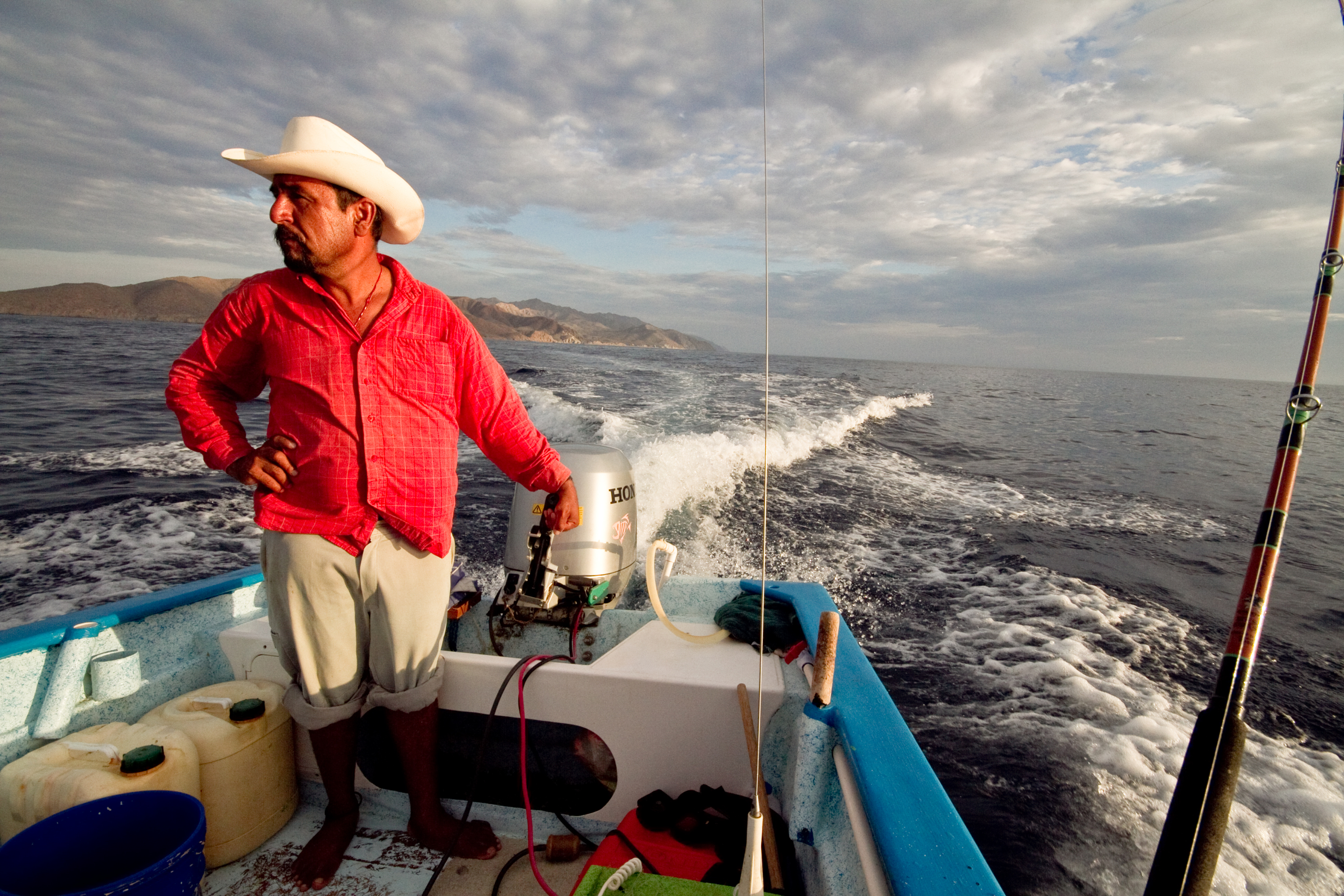
But, that being said.  I was chilly.  It was blustery and spray from the wave-tossed northern winds that sweep the Cortez had my clothes damp and my panga captain and I fishing with our hoods pulled way down!  Out of the corner of my mouth, I said in Spanish, “This is why we get paid the big money!”

He grinned and wiped the seawater that was splashing his face and he held onto the tiller!

It was choppy.  White caps tipped the waves even though we weren’t far from shore.  Brrrrr…

My client, a great guy from Oregon, used to fishing the dangerous mouth of the Columbia River was having a great time in his shorts and t-shirt!  “Heck, this is nothing… it’s cold and raining back home!” he laughed.

Well…yay.  Winter is still not my favorite time to fish, but when you gotta work, you gotta work.  Often fishing in winter in the Sea of Cortez or any of Baja waters can be a challenge.  Forget all the fancy brochures.  Weather is still weather and there are some times of the year that are better than others to fish!

That doesn’t mean there’s no fish, but you have to change your tactics a bit when playing in rougher water.

For one, there’s a good chance you might be doing more trolling than normal.  When waters are rough or when it’s off-season, it’s often difficult to purchase bait because either the bait guys aren’t working.  Or, it’s sometimes too rough to net or hook sardines, mackerel or other baitfish.

So, be prepared to troll.

If you have a water temperature gauge, at least try to find the warmer temperature breaks to work.

Also, given the turbulence on the surface,  certain lures work better.  I put away all the “bullet” headed trolling lures and reach for lures with heads that are heavier to dive beneath the chop.  I like using heads that have slanted or flat heads or have “jet holes” that will also create more action as they are pulled through the waters.

You have to be careful about your lure speeds.  It’s not like you can put it on auto pilot on the console or in your brain.  If you’re in waves and swell, your boat speed will vary constantly depending if you’re going upswell or surfing downswell or getting hit sideways.

Which brings up another point.

In heavy weather, use fewer lines.  And run them equidistant from the transom.  Some guys like to run them close.  Others far from the prop wash.  But either way, fewer lines and keeping them equidistant reduces the frequency of tangled lines, especially if you’re doing “S” patterns or the chop is really pushing the boat and the lines around.  Personally, I like running the lines a bit closer than normal.  Don’t worry about the fish.  Believe me, most fish out there can swim faster than the boat can move so if they’re inclined, they’ll hit your lures even if you’re having to run a little faster or slower than normal.

Finally…

It should go without saying to use common sense at all times.  If it’s too rough, no fishing is ever worth jeopardizing anyone’s safety.  Keep it fun!  Either stay onshore or know when to head for the beach and call it a day!

That’s our story!

Jonathan

________________

Jonathan Roldan has been writing the Baja Column in Western Outdoor News since 2004.  Along with his wife and fishing buddy, Jilly, they own and run the Tailhunter International Fishing Fleet in La Paz, Baja, Mexico  www.tailhunter-international.com.  They also run their Tailhunter Restaurant Bar on the famous La Paz malecon waterfront.  If you’d like to contact him directly, his e-mail is riplipboy@tailhunter-international.com  or drop by the restaurant to say hi!

______________
Jonathan Roldan’s
Tailhunter International
 
TAILHUNTER FISHING FLEET #1 Rated on Trip Advisor
TAILHUNTER RESTAURANT BAR #1 Rated in La Paz on Trip Advisor
 
Now follow us on FACEBOOK TOO
 
 
Website: www.tailhunter-international.com
U.S. Office: 3319 White Cloud Drive, Suite A, Hacienda Hts. CA 91745
Mexico Office: 755 Paseo Obregon, La Paz, Baja Sur, Mexico
Phones:
from USA : 626-638-3383
from Mexico: 044-612-14-17863
.
Tailhunter Weekly Fishing Report:
http://fishreport.jonathanroldan.com/

Tailhunter YouTube Videos:
http://www.youtube.com/user/pangapirate


“When your life finally flashes before your eyes, you will have only moments to regret all the things in life you never had the courage to try.”
 

Read Full Post »

Shearer Family goofy tags 5-11

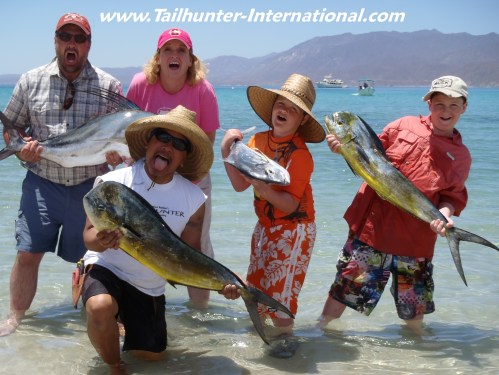
Winter is a great time in Baja and a great time to bring the family! As the our amigos, the Schearer family, from Montana found out with us, Baja is alot warmer than Montana and you don’t have to go out very far to get fish like this!

BECAUSE WE CAN!

Originally Published in Western Outdoor News the Week of Dec. 20, 2012


I’m often asked why we would fish in the winter time?

I guess the quick and wise-guy answer and knee-jerk response is “Because we can!”

But there’s more to it than that. 

During the winter time, the complexion of our Baja vistors changes.  During the regular season,  the majority of our folks are generally fishers.  Or at least have a general focus of getting on or under the water during our warmer months.

During the colder times of the year, I think we see more “escapees.”  These are folks just trying to get away from the chill, ice and wet of home.  “Just lookin’ for some sunshine…any sunshine!” is what I often hear.

While us locals are bundled up in long pants, shoes, and down vests against the “chilly” 60-70 degree weather, folks from Vancouver, Canada…Bozeman, Montana…Portland, Oregon. …happily stroll through town in tank-tops and cargo shorts.   God bless ‘em, they are in sunshine Nirvana!

But, they are often discouraged from fishing when they find out that so many places are rough, windy, or certain “glamour” species like marlin and tuna just aren’t biting in the winter. Or, if they are biting, heading off-shore to catch them can be a long rolling bumpy wet adventure more akin to the very conditions they left back home!

It’s much simplier to park it on a bar stool with a cold umbrella drink and gaze out over the sand and water or take the glass bottom boat ride in the harbor.  Yawn. Right up there with going to listen to a time-share presentation so you can get the free lunch and discount shopping coupons.

But, they shouldn’t let winter discourage time on the water.

One of the great things about fishing in Baja and Mexico is that there is always SOMETHING to catch! 

Frankly, the further south you go, the warmer it will be and the better the chances of catching a glamour fish, but even then, remember that it’s still winter and most of Mexico and Baja’s Pacific coast faces the open ocean (which is why winter surfing in Hawaii is so great!).  There’s big waves and there’s big winds.

It’s no fun being wet and cold and bounced around.

So…

Consider fishing inshore.  So few folks ask for it and so few of the outfitters or charter operators offer it, especially for someone who just walks in or walks up to sign on for a day of fishing.  Which is what so many winter visitors do.  They go fishing on a whim. 

“Honey, instead of visiting the Mayan pottery store,  let’s go ‘deep sea’ fishin’ tomorrow!”

But, chances are you’ll light up a big smile if you ask for inshore fishing.  For the captain our agent or outfitter, it’s a lot more economical since they won’t be burning up a lot of gas.

 Secondly, there’s a lot more inshore fish than offshore blue-water fish .  Therefore,  the chances or success are much greater for them to have smiling anglers at the end of the day.  Finally, believe me.  They don’t want to get beat up out there on the big water any more than you!

From the anglers perspective, waters will probably be calmer.  You’ll have more action with rods in your hands rather than long days of trolling offshore.  Pragmatically, you don’t need a big expensive sportfishing cruiser either.  You can downgrade of fish from pangas since most of the action will be closer to the shores, beaches and reefs. So, it’s less expensive!

In fact, often you’ll just be yards from the shore.  You will often see the bottom and, very often you’ll actually see the fish as they bite. 

And there’s so much variety and action to be had.  Exotic roosterfish…giant pargo…tough jack crevalle…sierra…cabrilla…pompano…are just some of the species available inshore.

And don’t think these fish are any less tough or formidable just because they inhabit the inner waters.  Pargo can be 30-50 pounds with sharp teeth and gillplates as they attack from the rocks.  Roosterfish can swarm in schools or be the big trophy sluggers between 30 and 100 pounds that have made them famous in Baja and the world.  Catch 20 five-pound sierra or a half-dozen 30 pound jack crevalle and I can guarantee your arms will still be sore!

Another bonus is that this is very pro-active fishing. Since you’re not simply dragging lures offshore waiting for hits, you’ll have a rod in your hand most of the time.  This is a great plus if you’re fishing with first-timers, family members or the kids!  Everyone participates.  Everyone has fun.

And, at the end or the day, inshore fish is among the best eating!  So, don’t let winter deter some great fishing fun!

That’s our story!

Jonathan and Jill

__________________

Jonathan Roldan has been writing the Baja Column in Western Outdoor News since 2004.  Along with his wife and fishing buddy, Jilly, they own and run the Tailhunter International Fishing Fleet in La Paz, Baja, Mexico  www.tailhunter-international.com.  They also run their Tailhunter Restaurant Bar on the famous La Paz malecon waterfront.  If you’d like to contact him directly, his e-mail is riplipboy@tailhunter-international.com  or drop by the restaurant to say hi!

______________

Jonathan Roldan’s Tailhunter International

TAILHUNTER FISHING FLEET #1 Rated on Trip Advisor

TAILHUNTER RESTAURANT BAR #1 Rated in La Paz on Trip Advisor


Now follow us on FACEBOOK TOO

Website: www.tailhunter-international.com U.S. Office: 3319 White Cloud Drive, Suite A, Hacienda Hts. CA 91745 Mexico Office: 755 Paseo Obregon, La Paz, Baja Sur, Mexico Phones: from USA : 626-638-3383 from Mexico: 044-612-14-17863

Tailhunter Weekly Fishing Report: http://fishreport.jonathanroldan.com/

Tailhunter YouTube Videos: http://www.youtube.com/user/pangapirate

“When your life finally flashes before your eyes, you will have only moments to regret all the things in life you never had the courage to try.”

Read Full Post »

To avoid a cultural faux pas FAIL, it’s important to remember which country you’re in! I forgot. HONEST!

MOTHER’S DAY FAIL!

Originally Published in Western Outdoor News the Week of May 16, 2012

I love sharing a bit of Mexican culture in these columns.

As I’m writing this, I realize I really screwed up.  Have you ever forgotten an important day of the year?  Like your anniversary?  A birthday?

Well, I forgot that today (May 10th)  is Mother’s Day!  Oops.  Fail. Scramble to make phone calls…e-greeting cards…and other face-saving measures!

You see, in my brain, Mother’s day is always the 2nd Sunday of May.  That’s May 13th in the U.S.

But here in Mexico, it’s May 10th.  Every year.  Same date.  It doesn’t matter if it’s on a Sunday, a Tuesday, a Thursday or the full moon.  May 10th is Mother’s Day and you’d better not forget it.

In Mexico, where culturally mom is the focus of pretty much everything, she is pretty much a saint.  Where the concept of the centralized family and where generations often continue to live under the same roof or everyone lives within tortilla-tossing proximity to each other, moms, grandmoms, aunties, etc. are held in high esteem.  And never so highly as on Mother’s Day.

(That’s why you NEVER EVER EVER call out a man’s mom.  Those are fighting words and one of the highest insults.  Don’t mess with a man’s mom in Mexico.)

Whereas Fathers Day barely draws a breeze, much of the country takes on a semi-holiday atmosphere.  It’s pretty much a state holiday.

Mom’s don’t go to work or take long leisurely and sometimes elegant lunches much like the Sunday brunches seen in the U.S.  Sons and family members stop working as well to enjoy the day with moms.  Offices shut down. Stores close early.  Kids sometimes play hookie and don’t go to school.  (On Mom’s day, mom is not lifting a finger…that includes driving the kids to school!).  Conversely, to keep the kids from taking the day off, many  schools hold Mother’s Day pageants and recitals and invite moms to attend.

The whole country is on the same page,  so it’s really not that big of a social impact.  It’s like the day before Christmas or that last day of school before summer vacation. No one’s head is there.  No one expects much efficiency anyway!  Not much gets done.

Some families, especially the sons, go through some elaborate expressions of adoration. Huge bouquets of flower. Rooms of flowers!  Sons will hire mariachi groups to sing outside mom’s window or all the sons will get together in the evening and serenade mom themselves accompanied by a boom box.

There will be incredible home parties either catered or home-cooked.  Often, all the guys do the cooking so the moms can have the day off.  In some homes where the mom does ALL the cooking every single meal and every single day, this might be the ONLY day of the year that the men cook or even approach the stove…sometimes to varying results!

Restaurants will have elegant brunches, lunches and dinners set out with Mothers’ Day specials and families will show up dressed in their jackets and ties, dresses and corsages as if headed for a grand social event…which is what Dia De Las Madres is in Mexico.

Historically, Dia de Las Madres was not always as we know it.  In 1922, it was brought over from the U.S, but met with significant opposition from the conservative government who attempted to use the holiday to promote the unrealistic concept of women as no more than child bearers!

Over the next decade, the powers in Mexico debated the day as either being too “patriotic” or being “too religious” with all the connotations those labels involved.   It got pretty heated and the Mexican political parties as well as the Church argued the current morals and values of the day such as empowering women, family values, country unity and basically whether women should be let out of the home!  It wasn’t just a Hallmark thing!

It wasn’t until the 40’s…to be exact in 1940, Soledad Orozco Garcia, wife of President Manuel Avilla Camacho, declared 10th May a holiday, thus making it a state-sponsored celebration  of mother’s day …and why I need to find some place that sells some quick Mothers’ Day Cards here in La Paz!  Or a boombox with a microphone!   I really messed up…

***********************

Jonathan Roldan has been writing the Baja Column in Western Outdoor News since 2004.  Along with his wife, Jill, they own and run the Tailhunter International Fishing Fleet in La Paz, Baja, Mexico  www.tailhunter-international.com.  They also run their Tailhunter Restaurant Bar on the famous La Paz malecon waterfront.  If you’d like to contact him directly, his e-mail is riplipboy@tailhunter-international.com  or drop by the restaurant to say hi!

***************************

That’s our story

Jonathan and Jilly

Jonathan Roldan’s
Tailhunter International


TAILHUNTER FISHING FLEET #1 Rated on Trip Advisor

TAILHUNTER RESTAURANT BAR #1 Rated in La Paz on Trip Advisor


Now follow us on FACEBOOK TOO


Website: www.tailhunter-international.com
U.S. Office: 3319 White Cloud Drive, Suite A, Hacienda Hts. CA 91745
Mexico Office: 755 Paseo Obregon, La Paz, Baja Sur, Mexico
Phones:
from USA : 626-638-3383
from Mexico: 044-612-14-17863

.
Tailhunter Weekly Fishing Report:
http://fishreport.jonathanroldan.com/

Tailhunter YouTube Videos:
http://www.youtube.com/user/pangapirate


“When your life finally flashes before your eyes, you will have only moments to regret all the things in life you never had the courage to try.”
Read Full Post »

The cathedral in La Paz. In the days before cranes and hydraulic lifts and electric screw drivers, someone had to be around to lift the massive stones and drag the enormous beams into place.

A LONG AND DUSTY LINE

Originally Published the Week of May 4, 2012 in Western Outdoor News

Having lived down here for quite sometime now, it always gives me pause to see how much of the country is reliant on manual labor.  There’s nothing wrong with it.

I come from a long line of manual laborers who came over to Hawaii to work the pineapple and sugarcane fields or to Central Caliornia to pick tomatoes.  Dad used to take me out to the fields to show me what it was like and tell me, “Stay in school so you don’t have to make your living hunched over in the sun.”  As I grew up, I learned to even despise pulling weeds in the yard, let alone chopping sugar cane stock or packing tomato crates.

Here, in Mexico, unskilled labor is inexpensive and folks need the work. And there’s a lot of folks here.

For instance, after a rain storm, the “broom army” materializes.  Using nothing more high-tech than garden-variety-kitchen brooms provided by the government, scores of folks  hand sweeping the streets.  No machines.  Basic sweat-of-brow technology.

Along the highways, you may have seen them.  Long lonely stretches of desert road.  Sometimes there’s a line of them. Sometimes there’s one solitary guy that makes me wonder “Did you apply for this job?”  “Are you being punished for this?”  Are you low-man on the seniority list?”

But there he is. With a shovel.  Dirty pants.  Usually a soiled t-shirt sometimes pulled up and tucked under the chest so that their tummys are exposed. A kerchief wrapped around his faces to ward off the dust.  Tennis shoes or old torn up work-boots that look like Hernando Cortez himself brought them over from Spain.  A baseball hat of some type worn “Foreign Legion” style with a t-shirt tucked and hanging down the back.

No gloves.  No supervisor.  No support truck with an orange Igloo of water. No “roach-coach” catering truck nearby.  No handy porta-potty close either.  No warning cones or vests.  Cars come dangerously close since Mexican roads have little or no shoulders.  Cows might watch from the scrub.  Probably wondering the same thing…”What the heck are you doing out here?”

But there they are, one shovel of dirt at a time.  It’s hard to tell what the project is.  Move dirt from here to there?   Shovel the dust off the highway?  Each car or breeze that passes only blows the dust right back.  Can’t you just phone it in and say you did the job?  Collect some pesos and go home?  Who would know the difference?

Often you see “gangs” of these worker standing like sardines in a stakebed truck.  Shoulder-to-shoulder.  No sitting.  Obviously, not union.

Day-after-day…same guys or just one guy. Same stretch of road.  Heat numbing.  Mind numbing.

Sometimes, I do see them nap under whatever shade a cactus or other scrub can give them.  Nothing special.  Lie down. Tilt hat over eyes.  Siesta.  Who keeps track of time?

What got me writing about this subject is a recent visit to the old mission here in La Paz.  Visiting the historic sites that dot the California, Baja and Mexican landscape is one of my favorite things.

Whether it’s Mission San Gabriel or San Diego or Santa Barbara or the Baja missions in Loreto or San Ignacio or, as I said here in La Paz, I never tire of walking into them and spending a few moments.  Or touching the old adobe or walking the paths and tiles.

There’s something about touching a bit of history.  It’s not a re-creation like going to Universal Studios or Disneyland.  This is the same water trough where the Spanish soldiers watered their horses.  Here’s the breezeway between the rectory and the church where some padre’s sandaled feet used to walk 300 years ago. And here’s the cemetery that holds so many stories.

If you get a chance to visit or ever have.  Be quite for a moment and sit still and the history will honestly talk to you!

But, the last time I was in, I was doing just that and it occurred to me.  There’s A LOT of wood in here.  Huge thick wooden beams criss-cross and support the massive ceilings.  Massive wooden doors.  Solid hard wood benches and the ornate altar and crucifix and so many other items.

Y’know, Mexico doesn’t exactly have a lot of trees.

And the huge bells and ornaments.  The  masterpiece stained glass windows and tile work.

They didn’t just hop down to Home Depot to get these in the 1600 and 1700’s.

I’m sure the Jesuit padres and the Spanish conquistadores did hard work, but I don’t envision, Sargeant Garcia and Friar Antonio making bricks or dragging huge chunks of lumber over the mountains.  They didn’t dig those irrigation aquaducts for the fields or paint the mission ceilings either.

Nope…they were built by some every-day Joe and Mary.  Born with a native name that was probably taken from them at their Christian baptismal and given  names like Jose and Maria.

And these are the folks who did the work. Who busted their backs often in the name of the spirit of Christianity and the promise of eternal salvation.  Only IF they learned to wear a pair of pants and help build the church.  Toil the fields. Build a wagon road.   Sweep up after the soldiers and padres.

They built quite an empire.  Same folks are still working. Still toiling in that hot Baja sun. Willing to work.  Needing to work.  I look at the guys on the side of the road as we speed by and wonder if they come from that long dusty line of laboral history. One shovel at a time.

_____________

Jonathan Roldan has been writing the Baja Column in Western Outdoor News since 2004.  Along with his wife, Jill, they own and run the Tailhunter International Fishing Fleet in La Paz, Baja, Mexico  www.tailhunter-international.com.  They also run their Tailhunter Restaurant Bar on the famous La Paz malecon waterfront.  If you’d like to contact him directly, his e-mail is riplipboy@tailhunter-international.com  or drop by the restaurant to say hi!

______________

That’s our story

Jonathan

Jonathan Roldan’s
Tailhunter International


TAILHUNTER FISHING FLEET #1 Rated on Trip Advisor

TAILHUNTER RESTAURANT BAR #1 Rated in La Paz on Trip Advisor


Now follow us on FACEBOOK TOO

 
Website: www.tailhunter-international.com
U.S. Office: 3319 White Cloud Drive, Suite A, Hacienda Hts. CA 91745
Mexico Office: 755 Paseo Obregon, La Paz, Baja Sur, Mexico
Phones:
from USA : 626-638-3383
from Mexico: 044-612-14-17863

.
Tailhunter Weekly Fishing Report:
http://fishreport.jonathanroldan.com/

Tailhunter YouTube Videos:
http://www.youtube.com/user/pangapirate


“When your life finally flashes before your eyes, you will have only moments to regret all the things in life you never had the courage to try.”

Read Full Post »

A ittle planning before heading out is not a bad idea!

“WINTER MAX FISHING”

Originally Published in Western Outdoor Publications the Week of January 26, 2012

I might be committing a bit of heresy. Fishing can be crap in the winter.  OK, I said it. But, hold on. Before I’m ex-communicated from the fishing brotherhood, let me explain.

We’re doing all these fishing and hunting fishing shows and expos for the next three months.  Just finished Denver and, by the time you’re reading this, we’ll have just finished the ISE show in Sacramento and are on our way to the Seattle area for the next show.  These expos are great.  It’s an incredible opportunity to chat with old amigos and folks interested in coming to fish in Baja.

But, so often, I hear:

“We’ve fished down in Mexico 3 times and didn’t catch a thing.”

“Long boat ride. Just trolled all day.”

“Five trips and no marlin. No tuna.”

“They always lie and tell us there’s a lot of fish but we never get much.  Really disappointing.”

Then, I ask them, “What time of year did you go fishing?”

So often I hear, “Uh, December.” 

“Christmas”

“January”

“Winter time.”

I kinda shake my head.  I can certainly understand when I speak to these good folks who live in the frozen, wet, cold winters of Montana, Colorado, Alaska, Canada and Washington. There’s a definite need to toss off the down jackets and thermals and bolt as fast you can to the land of flip-flops and margarita!  If you’ve ever spent any time in these beautiful places, there’s only so much you can take until you crave some sunshine and Vitamin D.

But just cuz the sun is shining south of the border doesn’t necessarily mean the fish are biting.  At least not ALL the fish!

Sure, the brochures and websites all look good with all those pretty fish and sunny beaches, but so often, folks fail to check whether those gamefish species are biting during their vacation.  Just ask!  Or they fail to take a look at fish reports (like those in Western Outdoor News) or online reports. 

Although you really never know what you might hook when you fish in Baja, historically, most species run during particular seasons.  Just like anything else and everywhere else on earth, there’s a time for the whales to migrate; a time for the salmon run; for geese to fly south and yes…for marlin, dorado and tuna to show up as well! 

Very often tourists will book a boat and just tell the captain, “We want to catch a marlin” or “Let’s go for tuna!” 

The Mexican captain and crew, anxious to please, and understandably sometimes lacking the ability properly verbalize other alternatives,  fire up the engines and off  they go with a shrug and as much enthusiasm as they can muster.   If it’s a good day, the captain is a hero.  If it’s a bad day, he’s a goat. 

The better option would have been for the clients to ask what’s biting (no matter what time of year!) and pursuing those species or just letting the captain fish.

  Give the green light. Tell him you want some action.  (It’s an easy word in Spanish…”accion!”)

 Most captains I’ve known over the years that are worth their salt and lime don’t want to go on a long boat ride anymore than you. Pragmatically, why burn the gas for nothing?  Believe me, they want to catch fish as much as you do! When our own captains in our fleet hear the word “accion,”  I usually see big smiles and hear an enthusiastic, “Vamonos!” (Let’s go!”)

 Especially, for Mexican winter-time fishing, when there can be so many variables in wind, current, tides and fish,  find out what’s going on and do a little research before booking your trip. It will be worth your effort.  Maybe you’ll find out it’s better to go another time; change your fishing strategies or even go somewhere else! 

The Baja is 1000 miles long with about 2000 miles of coastline and bordering two different oceans.  What’s biting in Cabo isn’t the same as what’s biting in Mulege.  What they’re catching in Ensenada or off Cedros Island isn’t the same as the catches in Bahia de Los Angeles.  Common sense!

I often get prospective clients telling us, they are coming in the winter and “I want to catch a marlin.”  Or, “I’ve never caught a dorado.”

I’ve found it’s better to possibly lose the booking and be up front. Better to have a happy satisfied client than disappointing a client that had unrealistic expectations. 

So,   I tell them when the optimal time would be to catch the fish they are looking for or, if their vacations are already set, I make sure to give them realistic expectations for what they are most likely to encounter.

For instance in winter it might be cabrilla…pargo…snapper…sierra…jack crevalle…bonito…yellowtail…etc.  I also throw in the kind of weather and ocean conditions that might arise as well.  Of course, Baja being Baja and the fish gods often being fickle, if they do catch some trophy blue water fish, expectations have been exceeded. We’re suddenly heroes and my captain is the best thing since the invention of the tortilla.  

But, lacking that, I encourage folks to ask what’s biting and be flexible about the fishing as the best way to avoid disappointment. Nothing is ever guaranteed in fishing, but plan your fishing as carefully as you plan your hotel and the rest of your vacation and you’ll max your vacation memories.

_________________

Jonathan Roldan has been writing the Baja Column in Western Outdoor News since 2004.  Along with his wife, Jill, they own and run the Tailhunter International Fishing Fleet in La Paz, Baja, Mexico  www.tailhunter-international.com.  They also run their Tailhunter Restaurant Bar on the famous La Paz malecon waterfront.  If you’d like to contact him directly, his e-mail is riplipboy@tailhunter-international.com  or drop by the restaurant to say hi!

Jonathan Roldan’s
Tailhunter International


TAILHUNTER FISHING FLEET #1 Rated on Trip Advisor

TAILHUNTER RESTAURANT BAR #1 Rated in La Paz on Trip Advisor


Now follow us on FACEBOOK TOO


Website: www.tailhunter-international.com
U.S. Office: 3319 White Cloud Drive, Suite A, Hacienda Hts. CA 91745
Mexico Office: 755 Paseo Obregon, La Paz, Baja Sur, Mexico
Phones:
from USA : 626-638-3383
from Mexico: 044-612-14-17863

.
Tailhunter Weekly Fishing Report:
http://fishreport.jonathanroldan.com/

Tailhunter YouTube Videos:
http://www.youtube.com/user/pangapirate


“When your life finally flashes before your eyes, you will have only moments to regret all the things in life you never had the courage to try.”
Read Full Post »

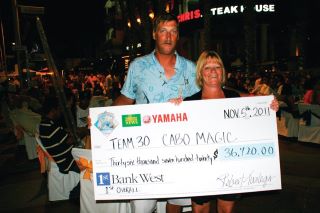
Five hours...214 pounds on 60 pound test line...one leg...alot of heart!

Big check aside, there was a larger story behind the win at the Western Outdoor News Tuna Jackpot Tournament in Cabo San Lucas

SOMEDAY IS ALREADY HERE

Originally Published in Western Outdoor News the Week of Nov. 17, 2011

If you’re in the travel / fishing business like we are, you get alot of ” We’ll get out your way someday!”  or “One of these days, we have to try doing something like that!”


You smile.  You nod.  That’s great. Sure thing. 


This past week, my wife, Jill and I spent a great time working with the wacky crazy fun crew of Western Outdoor News at the 13th Annual Los Cabos Tuna Jackpot.  Imagine throwing a five -day  party for about 600 of your best friends. 


It’s alot of work, but far outweighed by the smiles and fun.   With over 100 teams from around world participating, how can you go wrong with a tournament that has the motto, “FISH HARD!  PARTY HARDER!”


Ringmaster and WON Editor Pat McDonell pulls out all the stops as tournament director to make sure everyone has a good time.  The best thing is that you see so many of the same faces every year.  Many participants tell us this is sometimes the ONLY fishing they do all year and look forward to ONLY fishing in this event…because it’s such a kick.


This year, Jill worked the papers and stats helping to  keep the tournament central booth manned and everyone straight.  I thought I had the “easy” job of working the weigh scale with Pat. 


Not so.  There were alot of fish to weigh!  It was pretty crazy.  Drama right to the end.  As it turned out, it was historic!   More fish were weighed than ever.  There were so many fish over 100 pounds, let alone the bigger slugs.  (23 fish over 100 pounds and 3 over 200 pounds).   I was pretty much covered with fish goo by the end of the day. 


And there was the winner…214 pounds of tuna muscle.  And it was worth almost 37 grand in prize money.  Yay! 


It’s quite a story.


Oroville Henseler fought this thug fish for almost FIVE hours.  He was a FIRST TIME angler.  When we saw his rod and reel, it almost looked like a rental rod.  No fancy upgrades.  No two-speed gears.  No aircraft precision.  It was a simple out-of-the-box Penn 6/0 reel.  His rod…I dunno…a no-name-brand from what I can tell.  Better suited for 20-pound dorado than 200- pound gorilla tuna.  Granted, he had 150-pound Seagaur leader, but his mainline… only 60 -pound mono! 

He refused to pass off the rod for all five hours.  He wouldn’t hear of it.  Imagine dangling a 200-pound refrigerator over the side of a building on a string and hanging onto it…for five grueling hours in the Baja sun on a rolling boat.  That’s manning-up on a fish!


But that’s not the story…the real story.  The winning story.


See, Oroville Henseler came all the way out from Springtown, Pennsylvania.  Yes, THAT  hotbed of ocean-fishing.  Oroville had never fished in a big-time tournament.  Heck, he hadn’t even been ocean fishing before. 


Six months ago, he never imagined himself standing on the winner stage with a big fat check in one hand and his wife, Cindy, holding his other hand and holding back tears of her own.


You see, about 6 months ago, Oroville Henseler from Springtown was more concerned with staying alive and maybe walking again.  He had lost his leg in an industrial accident when his shoelace got entangled in a machine.  Surgery was unable to save his leg. 


Fitted with a prosthetic leg, he had one of those life-changing experiences you hear about.


As the story is told, just two weeks before the tournament, he decided to go.  A big -time tournament was on his new “bucket list” and he said no more “what if…” moments in his life.  He plopped down the credit card and stepped up. 


As he stood up there in the lights accepting  the roaring congratulations and applause from more than 600 people, politicians and dignitaries at the awards banquet at the Cabo marina, he was choked up.  I could see his eyes tearing up. His metal bionic leg sticking out from a pair of jeans shorts.   A Kodak moment of moments.  


Winning.  It’s not about the money. It’s about saying “No more somedays.” There might not be time for “someday.”  Someday is already here.


That’s our story!

Jonathan


______________________________________________________


Jonathan Roldan has been writing the Baja Column in Western Outdoor News since 2004.  Along with his wife, Jill, they own and run the Tailhunter International Fishing Fleet in La Paz, Baja, Mexico  www.tailhunter-international.com.  They also run their Tailhunter Restaurant Bar on the famous La Paz malecon waterfront.  If you’d like to contact him directly, his e-mail is riplipboy@tailhunter-international.com  or drop by the restaurant to say hi!    


Jonathan Roldan’s
Tailhunter International


TAILHUNTER FISHING FLEET #1 Rated on Trip Advisor

TAILHUNTER RESTAURANT BAR #1 Rated in La Paz on Trip Advisor


Now follow us on FACEBOOK TOO

 
Website: www.tailhunter-international.com
U.S. Office: 3319 White Cloud Drive, Suite A, Hacienda Hts. CA 91745
Mexico Office: 755 Paseo Obregon, La Paz, Baja Sur, Mexico
Phones:
from USA : 626-638-3383
from Mexico: 044-612-14-17863

.
Tailhunter Weekly Fishing Report:
http://fishreport.jonathanroldan.com/

Tailhunter YouTube Videos:
http://www.youtube.com/user/pangapirate


“When your life finally flashes before your eyes, you will have only moments to regret all the things in life you never had the courage to try.”

Read Full Post »

« Newer Posts - Older Posts »