Feeds:
Posts
Comments

Posts Tagged ‘fishing reports’

THE BAJA HANDFUL OF KNOTS

They come in all shapes and sizes!

They come in all shapes and sizes!

MY BAJA HANDFUL OF KNOTS

Originally Published the Week of June 26, 2013 in Western Outdoor News Publications

If you ever want to start up a conversation among a group of fishermen or suddenly get a room of yakking party-ing guys to stop talking and gather around, there’s one sure-fire way that I’ve found.  It never fails.  Instant focus.

Just start talking about fishing knots.

Instant Pavlov’s dog and the dinner bells with 100-percent success.   It works even better if you happen to have a spool of line and some hooks.   If the crowd is relatively inexperienced, there’s almost a hush.

If the gathering has more veteran fishermen, it’s instant debate.  It’s like throwing bloody chum in the water or handfuls of  live bait into boiling tuna.  No one can resist plugging into the conversation!

I’m not even going to touch opening the subject with flyfishermen who’s knowledge and propensity toward complicated knot tying requires a PhD. In physics.

But for your average fresh and saltwater  weekend warrior and occasional Baja and long-range guy, everyone has an opinion on knot tying or is certainly “all-ears” to see what’s new and exciting or missing in their knot-tying arsenal.

I think almost all of us who have spent even a little time on the water know or, at some time back-in-the-day, learned the clinch knot or the improved clinch knot.  It’s the one they use to print on the back of packs of hooks and other accessories.  If  my fuzzy memory serves,  it was printed on a lot of Berkely produces and some still call it the Trilene knot.

I’m pretty sure it’s the one my dad first showed me.  Boy, did I practice and practice that one.  In fact, I remember mom catching me in my bedroom  floor long after bed-time.  I was  tying knots by the light of a flashlight  and using my 2nd grade scissors to trim off the tag ends! Mom just said, “Oh Jonathan…” and left me alone! I know when she told dad, he cracked up.

I guess in the passing of time, I’ve learned quite a few knots.   All serve their purposes.  What great names!  They sound like cocktails…The Bimini Twist…the Cat’s Paw…the Arbor…the Australian Braid…the Bristol…the Nail…the Blood knot…the Albright Special…the Orvis.  There are hundreds!

I once had a friend who would spend hours trying to develop some new knot just so he could claim it and have his name on it…forever…his legacy sealed in angling lore.  Terrible fisherman, but he sure knew how to tie knots!

Anyway, between you and me…frankly…the only reason to know that many knots is to impress people.  Like a name-dropper at a cocktail party.  People’s ears perk up when they hear names like the Palomar and the Spider Hitch.  And, I admit, when I want to direct attention to myself…like I said, start talking about knots and throw in some fancy names and it’s like a magnet!  Try it sometime.

Go get yourself a knot tying book or look up on the internet or youtube and there’s some great stuff to learn.  Then pull out some fancy names next time you’re among friends.  Like some guy who learned some card tricks, every fisherman within ear-short will be listening to you!

But, in full disclosure, for the several dozen knots I know,  there’s maybe only a handful that I ever really use and maybe only 3 or 4 that I use 95 percent of the time.  These are knots that you SHOULD know and with them under your belt, there’s not too much you can’t do.

It’s like rock ‘n’ roll.  If you know 3 simple chords and a decent 12-bar progression, you can probably play…well…just about anything!

The most important knot that I use is the San Diego knot.  I call it the most important because it’s the knot that joins my line to the hook.  It’s the last line of  attack and the part that attaches me to the fish.  So it better be a good knot!

It’s a variation of the Uni knot (you can look all of these up) and I’ve also seen it called the Duncan knot and the San Diego Jam knot.   It takes a few minutes to grasp the concept and a few more to learn it well.  But it’s worth it.

It has never failed.  The line might break but, in my experience, the knot has never broken, even on the largest fish I’ve tangled with.   I’ve seen tests run and it’s pretty hard to beat it’s breaking strength.  It’s variation called the  Double San Diego knot (merely doubling the lines) is even better and a standard knot here in Baja and on the long range San Diego fleet.

If you learn it well, it is also a handy knot to join to lines together like a mainline to a leader.

Which leads to my 2nd most important knot which is the Overhand knot.  It’s my personal favorite not only for joining lines, but especially to join lines of dissimilar diameter.  When you’re in a hurry to join  mono leader to braided line (not the best, but serviceable) it’s also handy.  If you know how to tie your shoe, this knot is that easy.  Learn it and remember it!

My last knot would be the Surgeon’s Loop.  It’s pretty much as easy as over…under…and through.  And you’re done!  Like the ads on TV…”even a caveman could do it.”  It’s great for …well…making loops to hold sinkers…to hold hooks.   I use it a lot.  I use it a lot more than the  dropper loop if I’m tying the loop to a sinker.

Fishing in rocks, if the sinker gets stuck on the bottom, the dropper will break easier than the dropper loop and at least let you get your main line back.

If I need a loop to tie the hook to…then the Dropper loop is my choice.

And that’s it!  Not much you can’t do with this handful!  Learn them and it will cover almost everything but the most specialized situations.

That’s my story

Jonathan

_______________

Jonathan Roldan has been writing the Baja Column in Western Outdoor News since 2004.  Along with his wife and fishing buddy, Jilly, they own and run the Tailhunter International Fishing Fleet in La Paz, Baja, Mexico  www.tailhunter-international.com.  They also run their Tailhunter Restaurant Bar on the famous La Paz malecon waterfront.  If you’d like to contact him directly, his e-mail is riplipboy@tailhunter-international.com  or drop by the restaurant to say hi!

______________

Jonathan Roldan’s

Tailhunter International

Website: 

http://www.tailhunter-international.com

Mexico Office: Tailhunter International, 755 Paseo Obregon, La Paz, Baja Sur, Mexico

U.S. Mailing Address:  Tailhunter International, P.O. Box 1149, Alpine  CA  91903-1149

Phones:

from USA : 626-638-3383

from Mexico: 044-612-14-17863

.

Tailhunter Weekly Fishing Report:  http://fishreport.jonathanroldan.com/

Tailhunter YouTube Videoshttp://www.youtube.com/user/pangapirate

“When your life finally flashes before your eyes, you will have only moments to regret all the things in life you never had the courage to try.”

Read Full Post »

OLYMPUS DIGITAL CAMERA

Just having bait isn’t enough if you don’t know how to use it correctly!

“HOW YOU WIGGLE YOUR WORM”

Originally Published the Week of June 10, 2013 in Western Outdoor News

In the annals of bathroom graffiti, it’s probably not hall-of-fame material as far as that genre of graffiti goes.  But in our Tailhunter Restaurant here in La Paz, someone scribbled this in the men’s restroom:

“It’s not the size of the rod, it’s how your wiggle your worm.”

Any business owner knows that you have to wear many hats. Being the big-time chief executive officer and chairmain of the board and also head of bathroom graffiti eradication, I happened to be scrubbing it off the wall chuckling.   Beyond the most obvious bathroom connotations,  there’s a point of pescatory wisdom in there as well.

How one wiggles, jiggles or shakes one’s “worm” does make a difference and those nuances can make a big difference in your fishing experiences on a given day.

A perfect example is the type of fishing being experienced in many Baja locations this time of year.  We’re in a “transition” period as waters warm and we move out’ve spring and into summer conditions.  Cooler waters can still be found but there’s quite a mix of water situations both on the surface as well as vertically through the water columns with different thermoclines changing as the waters deepen.

The result is that the spring and early summer can often be a mecca of so many different varieties of fish and opportunities for anglers looking for changing angling experiences.

Here in La Paz is a perfect example.

Cool water inshore species such as yellowtail, amberjack, cabrilla, pargo, sierra and pompano can be caught while in the warmer water areas, billfish such as marlin and sailfish are starting to rev things up.  Likewise, bluewater species such as dorado, wahoo and tuna can be caught as well.  Add in roosterfish, jack crevalle, bonito and others and you probably won’t find this kind of variety during any other time of the Baja fishing season.

However, bait presentation a.k.a. “wiggling your worm” can make a big difference over what you catch.

For instance over all the decades here in Baja working and guiding plus working  on other boats out’ve S. California, I’ve noticed a few things.

Take dorado.  They don’t like dead bait as much as spirited live bait.  In fact, the livelier the better.  It’s like a cat.  If you put a ball in front of kitty, he’ll just stare at it.  But, if you roll that ball past Kitty, he pounces.  Same with dorado.

Big baits or small baits don’t matter to dorado.  I’ve seen 18-inch juveniles attack 10-inch mackerel or big caballitos.  I’ve seen 40-pound bull dorado fight each other for 4 inch sardines…as long as the sardines are moving!

On the other hand, tuna can be fussier in their own way.  The smaller ones will take anything live or dead.  But, I’ve seen a tendency for a bit of laziness.

Tuna…and especially the larger ones…in a given school prefer the smaller baits.  And, they don’t mind slurping up dead ones or parts of dead ones!  That’s why chumming and chunking are so effective.

Chunks of dead bait are just fine.  They’re lazy fish.  They don’t necessarily like to have to chase their food.   So, if you don’t have small dead baits, then chunks of bigger baits like squid, mackerel, jacks are just fine by them!

Rock fish like cabrilla, yellowtail and amberjack won’t generally eat dead baits but yellowtail and amberjack don’t want to chase too hard for their live baits.  Somewhat like larger tuna.

However, these “structure fish” tend to stick close to protection and will dart out to strike their prey.  Therefore, the closer you fish that live bait to their hiding spots like rocks, reefs, weeds and cliffs, the better your chances.

Yellowtail are a bit pickier…the FASTER and LIVLIER that bait, the more it gets their juices rolling.  That’s why yo-yo jig fishermen prefer high-speed reels when they fish their lures.  That’s to get those lures moving FAST through the water.

Beach and shore fish like jack crevalle, pompano and roosterfish have a weird tweak.  They don’t even need to be hungry to chase a bait.  They’re just aggressive fish.

But, they will take the liveliest bait and run with it and not eat it!  They will tear into sardine schools, ballyhoo, caballitos, mullet and lady fish and simply terrorize the school.  Just because!  No other reason!

I’ve seen them rip into the baitfish and leave dead and thrashing baits lying around on the surface or grab a big baitfish like a ladyfish (sabalo) and merely gnaw it up like a bit dog gnaws on socks.  Then, tosses it into the air and lets it go.

While other species might come back for injured baits, some of these “beach bullies “simply swim off and let the gulls and pelicans deal with the maimed!

So, fishing for these fish, just be prepared for the bite with the liveliest bait  but then give it time so make sure the fish also has the hook!   If it drops the bait, even if the bait seems dead and floating, some quick jerks on the line can cause the jacks to turn and erupt for a second pickup…and your hookup!

That’s my story!

Jonathan

______________

Jonathan Roldan has been writing the Baja Column in Western Outdoor News since 2004.  Along with his wife and fishing buddy, Jilly, they own and run the Tailhunter International Fishing Fleet in La Paz, Baja, Mexico  www.tailhunter-international.com.  They also run their Tailhunter Restaurant Bar on the famous La Paz malecon waterfront.  If you’d like to contact him directly, his e-mail is riplipboy@tailhunter-international.com  or drop by the restaurant to say hi!

______________

Jonathan Roldan’s

Tailhunter International


TAILHUNTER FISHING FLEET #1 Rated on Trip Advisor

TAILHUNTER RESTAURANT BAR #1 Rated in La Paz on Trip Advisor


Now follow us on FACEBOOK TOO


Website: www.tailhunter-international.com

U.S. Office: Box 1149, Alpine CA  91903-1149

Mexico Office: 755 Paseo Obregon, La Paz, Baja Sur, Mexico

Phones:

from USA : 626-638-3383

from Mexico: 044-612-14-17863

.

Tailhunter Weekly Fishing Report:

http://fishreport.jonathanroldan.com/

Tailhunter YouTube Videos:

http://www.youtube.com/user/pangapirate

“When your life finally flashes before your eyes, you will have only moments to regret all the things in life you never had the courage to try.”

Read Full Post »

“KING JACK”

Amberjack Junior Azores tags

Big and tough…amberjack in the Baja…cousins to yellowtail, the Spanish name for them is “Pez Fuerte” which means “strong fish!” No kidding. They get over 100 pounds!

KING JACK!

Originally Published the Week of May 15, 2013 in Western Outdoor News

It had been a pretty decent morning off the northern end of the island.   Dropping blue and white irons and jigging,  some heavy “winding and grinding” and elbow grease had produced a  nice brace of  five solid  20-pound-class yellowtail in the box.

Danny just finished pulling his jig out of the water and took a break to wipe his brow and crack a chilly Pacifico can from the ice chest.   The sun was at it’s mid-morning blaze already promising to get hotter.

“Whew!” he sighed with a laugh.  “This is hard work fishing the yo-yo iron for these yellows.  These things are tough fish!”  he added with a bit of exasperation.

“And the faster your crank the better the chance to hook-up!” responded Tony as he dropped his jig over the side and watched it flutter into the indigo blue water.  “It’s still better than working!”

Tony’s jig stopped slipping down.  Tony quickly put the reel into gear  and took a few cranks up off the bottom so as not to hang the jig on the craggy reef below.
“Here we go again, “ he grinned as he started the strenuous arm-aching crank back to the boat.

One crank…two cranks…three cranks…

SLAM!  The rod doubles over in an abrupt halt.  It’s  almost yanked from Tony’s hands. He adjusts and is nearly jackpoled over the side ramming his knees into the side of the panga to anchor himself in!  The rod is bucked straining on the gunwale of the boat and Tony is almost crouching down to get leverage unable to turn the handle of the reel.

Danny drops his beer which clatters to the deck…

“Oh man! This has gotta be a monster yellowtail! WHOA!!!” grimaces Tony as he struggles to get upright and get the butt of his rod into his rod belt still unable to get a turn on the reel handle.  It’s all he can do to hold onto the rod and keep his feet in the panga.

Pez fuerte!” says their panga captain excitedly .  “Amberjack grande.  Jale! Jale! Pull hard!”

Pez fuerte means ‘strong fish’ said Danny as he watched his buddy.

“Uh yea…no kidding…yea..this is a horse!” replies a tight-lipped Tony as he struggles to turn the big fish one slow lift and turn of the handle of his reel at a time.  Repeatedly, the rod would dip again and the exhausted sweating angler would have to lean into the stick to keep the fish turned.

After 15 grueling minutes, the big fish came up and a quick gaff was put to the fish.

“Dang, that looks like a yellowtail on steroids! Holy cow, it’s golden copper what a pig of a fish!”

“Maybe 30 kilos…60 pounds,”  says the captain grinning.

There’s a lot of confusion over amberjack.  People either “sorta heard of them” or  scratch their heads because they’ve “never heard of them.”  Or it’s quickly followed by the question, “Is that kinda like a yellowfin tuna?”

Well, Elmer…no it’s not.  But, it’s a fair question nonetheless.

They’re actually part of the jack family.  It’s that same feisty set of brawling sportfish that give us the jack crevalle (“toro”),  roosterfish (“pez gallo”), pompano (“pompano”…of course) and a whole host of other fish with  “jack” in their names.  Including the much-prized yellowtail (“jurel”).

The amberjack (“pez fuerte…which does indeed mean “strong fish” in Spanish) is the king of them all.  He’s the big boy cousin.  Broader and deeper in body, shoulders and head with a copper-orange-yellow-silver patina, they’re impressive.  And yes, powerful.

Where we are here in La Paz, they range as small as 10-20 pounds, but 40-50 pounders are not unusual and the bigger models will go 80 or more pounds.  We’ve taken several fish over 100 pounds in recent years and have lost many large fish over the years that broke tackle as well as the hearts of some very strong anglers.

We seem to get them during that “shoulder time” when the waters aren’t really spring and aren’t quite summer…like May or June…just as our yellowtail bite starts to taper off because of warmer waters.

It’a almost like the yellowtail move on and the amberjack move into those same spots.  These include high spots like reefs and shallow seamounts as well as boulder and rocky areas plus the edges of drop offs.

Basically, you won’t usually find them in open water, but rather in areas of structure.  The largest one I ever saw was while scuba diving a wreck and I saw several ambers in the dark hold that were well over 100 pounds.

Like their smaller cousins, the yellowtail, amberjacks will often school so, where there’s one you’ll often find others.  Additionally, you fish them in much the same way.  That’s why anglers dunking for yellowtail are often surprised when they get slammed by something much bigger and more powerful…an amberjack.

The fish readily take a yo-yo jig in the traditional colors of blue/white,  green/yellow, brown/white and others dropped down and taken in on an ultra fast retrieve…like the two guys fishing at the beginning of this column.

As well, they love baits like sardines, mackerel, squid and especially zebra fish for some reason which are the little blue baitfish with black stripes we catch on reefs with mackerel rigs.  When I have some zebras and the amberjack are in the area, it’s almost instant hook up!

Best of all, they eat just like yellowtail…only better!

That’s my story!

Jonathan

_______________

Jonathan Roldan has been writing the Baja Column in Western Outdoor News since 2004.  Along with his wife and fishing buddy, Jilly, they own and run the Tailhunter International Fishing Fleet in La Paz, Baja, Mexico  www.tailhunter-international.com.  They also run their Tailhunter Restaurant Bar on the famous La Paz malecon waterfront.  If you’d like to contact him directly, his e-mail is riplipboy@tailhunter-international.com  or drop by the restaurant to say hi!

______________

Jonathan Roldan’s

Tailhunter International


TAILHUNTER FISHING FLEET #1 Rated on Trip Advisor

TAILHUNTER RESTAURANT BAR #1 Rated in La Paz on Trip Advisor


Now follow us on FACEBOOK TOO

Website: www.tailhunter-international.com

U.S. Office: Box 1149, Alpine CA  91903-1149

Mexico Office: 755 Paseo Obregon, La Paz, Baja Sur, Mexico

Phones:

from USA : 626-638-3383

from Mexico: 044-612-14-17863

Read Full Post »

Jonathan boat

FACING FORWARD LOOKING BACK

Originally Published the Week of May 4, 2013 in Western Outdoor News

One of my esteemed predecessors writing this column for Western Outdoors was the famous Fred Hoctor.  People described him in many ways.  A curmudgeon.  A crank.  Crusty.  Or worse!

Even he admitted to it. Always with a laugh.

But he was a helluva writer and one of those guys who just had the knack for spinning yarns and telling stories. He wrote columns and books including the iconic, “Baja Ha Ha” that can still be found in many bookshelves.  Say what you want, but “Old Fred” was prolifically brilliant and witty and one of the original Baja rats.

I started writing outdoor pieces about 30 years ago myself.  I don’t know where Fred got a hold of me or how, but he would call me up now and then.  To me, it was like Papa Hemingway or John Steinbeck calling.  I never really knew what to say or how to engage him in conversation.

Usually, though, it seemed as though he was calling to get something off his chest.

I’d pick up the phone and I’d hear, “Kid…this is Fred. (Never give his last name unless I asked it …so the first few times, it was just “Fred” as if no one else named Fred would have called me).

He’d say, “Kid, I read what you wrote in such-and-such a magazine.”  He’d say this in a his gravelly voice that sounded like central casting for a guy who smoked too many cigarettes…sucked the dust off too many Baja backroads… and raspy from tipping the bottle…sometimes I would swear he was tipping while he was talking.

He’d usually cuss at me a bit  and then launch into a story.  The story had nothing to do with anything I’d written.  He wouldn’t even comment on my writing.  He’d laugh.  Cuss s’more  and just hang up.  Never asked my opinion or try to converse. Never said good-bye or drop a salutation.  Just hung up.  Zzzzzz…dead air.  Dial-tone.

Uh…thanks for the call, Fred.  Nice to hear from you.

But, I always liked that he called me, “kid.”  It was nice to know that I was being read by someone!   It was like knowing that someone cool was watching me.   Someone older and wiser…(Fred passed away in 2001 and I’m sure being called “wiser” makes him just spin and hoot from the other side).

Somehow, I’ve always thought of myself as “the kid.”  I was always the younger guy around.   In the industry, there were all these older guys that I looked up to and who took me under their wings.  I felt like I was always sitting at the “kids” table at Thanksgiving and the grown ups were at the big table.

But a sobering thought hit me while pondering what to write for this week’s column.  That was 20-30 years ago and I’m on the near side of 60 years old now.   I’m not a kid and somewhere and sometime, I moved up to the big boy table.  And somehow more and more spaces kept opening up there.  Little-by-little, the grown ups passed on.

Mentally, I still feel like one of the young guys, but my salt-and-pepper beard and creaky joints tell a different story.   All my friends are this old too.  And there’s not too many ahead of me.

But, the sad thing is that there aren’t too many behind me either.

The kids table isn’t very filled anymore.  My generation seems to be the YOUNG generation even tho’ we’re retiring and having kids in college and seeing grand kids.  There isn’t much of a “younger generation” filling in the gaps behind us.

At all the hunting and fishing shows we attend with our booth, most of the operators and outfitters are about my age or older.   Most of the charter boat operators are my age or older.  At the seminars I do for fishing clubs…again…my age or older.

And the ones leaving the sport and leaving the industry simply fold up.  Their kids do other things.  It’s a hard life making ends meet relying on skill and the whims of Mother Nature.    The kids of the guys who participate in the sports have other attractions…X games…video computers…social media.  Heck, how many kids these days even go outside?

Even here in La Paz.  The kids of my captains, even though many go onto other jobs and professions, don’t come back to the water let alone wanting to do what dad does.

And the same for our fishing clients.  We’re all aging together.   I saw one group of firefighters several weeks ago who have come fishing with us for over a decade.

At dinner one night, I said, “Years ago, you guys would tear up the hotel.  You’d streak through the halls and do naked cannonballs into the pool.  I’d find you on the beach in the mornings passed out and drag you onto the pangas.  Now by 8 p.m. you’re all in your rooms watching CNN and asleep by 9 o’clock!”

We all laughed through our “reader glasses” we all bought from COSTCO.  Very simply, we got older!   The telling thing is that of the 20 or so guys, not a single one of them has kids that like to go fishing, nevermind coming to Baja.

Unfortunately, I think that bodes poorly on so many levels.  Wow.  I’m close to being the last of the generations to remember when the roads were all dirt…the tumbleweeds blew across a beach without high rise hotels…ice was non-existent…air-conditioning meant opening a window or opening a tent flap…gasoline was filtered through a t-shirt…the dinner menu was tortillas and whatever you caught…and you opened a beer with your fishing pliers.

After me…after us…the ranks are thin and thinning.

That’s our story…

Jonathan

________________

Jonathan Roldan has been writing the Baja Column in Western Outdoor News since 2004.  Along with his wife and fishing buddy, Jilly, they own and run the Tailhunter International Fishing Fleet in La Paz, Baja, Mexico  www.tailhunter-international.com.  They also run their Tailhunter Restaurant Bar on the famous La Paz malecon waterfront.  If you’d like to contact him directly, his e-mail is riplipboy@tailhunter-international.com  or drop by the restaurant to say hi!

______________

Jonathan Roldan’s

Tailhunter International


TAILHUNTER FISHING FLEET #1 Rated on Trip Advisor

TAILHUNTER RESTAURANT BAR #1 Rated in La Paz on Trip Advisor


Now follow us on FACEBOOK TOO


Website: www.tailhunter-international.com

U.S. Office: 3319 White Cloud Drive, Suite A, Hacienda Hts. CA 91745

Mexico Office: 755 Paseo Obregon, La Paz, Baja Sur, Mexico

Phones:

from USA : 626-638-3383

from Mexico: 044-612-14-17863

.

Tailhunter Weekly Fishing Report:

http://fishreport.jonathanroldan.com/

Tailhunter YouTube Videos:

http://www.youtube.com/user/pangapirate

“When your life finally flashes before your eyes, you will have only moments to regret all the things in life you never had the courage to try.”

Read Full Post »

DSC_0147

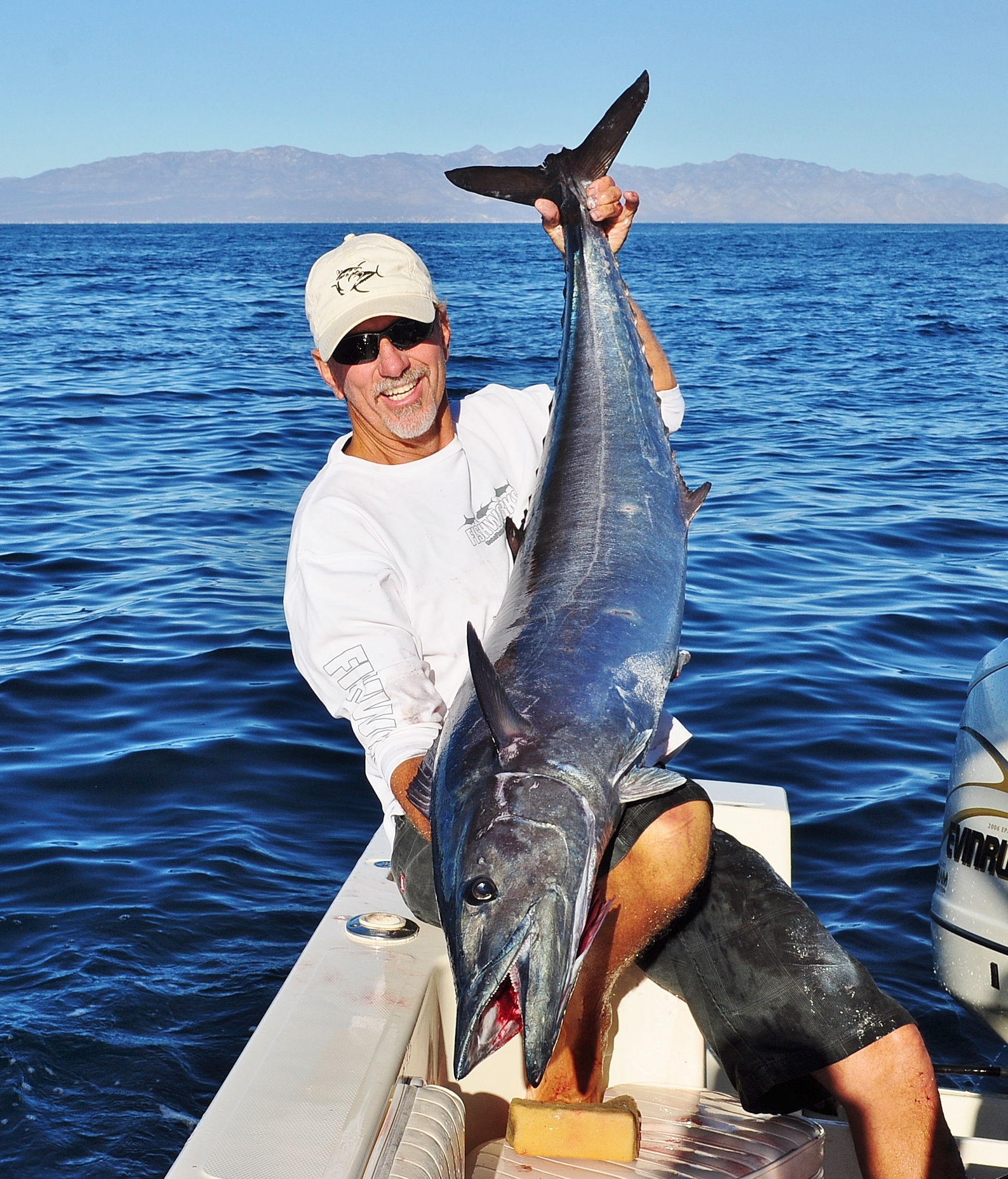
They say it’s better to be “lucky” than “good” but if you can be both, that’s even better and a few fine-tuning tips go a long way. Roger Thompson of La Ventana is very lucky but that’s because he’s very good! He makes his own “luck” as he shows off another dandy wahoo!

NEXT LEVEL WAHOO

Originally Published the Week of April 18, 2013 in Western Outdoor News Publications

This past week here in La Paz, we’ve had a sudden and unexpected run of wahoo.  Normally, at least for our area, it’s not a species we encounter so early in the year and it ended up surprising many of our anglers as well as captains.

The speedy sharp-toothed fish is incredibly-prized by anglers as one of the best eating but also one of the most ferocious fighters.  Reputedly capable of speeds up to 70 mph, they are arguably the fastest fish in the ocean.  I once described it to a client as dropping a hook and line over a freeway bridge and suddenly hooking a car passing underneath!  It’s definitely NOT a fish you would want to try to stop by putting your thumb on the spool unless you’re tired of having skin!

Fortunately, wahoo aren’t headed miles the highway but they are surely capable of blazing runs in one direction then turning on a dime and jetting off in another.  This requires anglers to keep that rod tip up and pointed in the general direction of the fish because it can go headed north one minute and seconds later go tearing west! I’ve seen guys comically sprint from bow to stern and back again trying to keep up!

Knowing how they feed and fight will increase your edge in putting one of these guys on the deck.  And that’s a big problem I saw this past week. We had lots of hookups, but the ratio of hookups-to-fish caught was unfortunate.  It seemed three of these fish were lost for everyone hooked.

For baitfishers, for all their speed, wahoo aren’t hard-charging feeders generally.  I’ve been underwater and watched them feed and have seen numerous videos.  With their razor-like teeth, wahoo will often get a bait and “scissors” it in half or into pieces.

They then come around and slurp up their food!  Like a guy who cuts up all his steak into bite-sized pieces before actually started to eat!

What I often see is someone who gets a tug on their bait.  They go “oh no!” and then start to crank it in thinking that the just got cleaned.  They pull in the bait and find their bait neatly missing it’s rearend as if someone has taken a scalpel to it.  If wahoo are in the area, best to just let it sit for a bit.  The wahoo will often come back around to “pick up the pieces.”

Many anglers enjoy throwing “iron” or “wahoo bombs” at the fish.  Great fun.  Cast and let it flutter down.  Marine biologists and lure manufacturers have told me wahoo have poor eyesight.  However, they pick up movement and vibration along those long flanks!

Therefore, the more movement you can impart to your lure or jig, the better your chances.  Shiny lures rather than painted lures have always been my preference.  My bombs are skirted with shiny metallic tinsel.  All my lure hooks have hammered little spinner leaves on them.

As they drop or on the retrieve,  twitch and jerk the lure so that it flutters as much as possible and appears like a wounded fish.  The wahoo pick up the movement and zero-in.   Then, when they get close the actual “flash” of the lure generates the strike.

I like to think of a cat.  If you put a ball in front of it, the cat can’t be bothered.  If you roll that ball or bounce it in front of the cat, it suddenly reacts!  That’s what you want with a wahoo.

As for trolling, think of the same things.  The “movement” pulls them in, but the color and presentation generate the strike.

Don’t worry about trolling too fast!  Remember, wahoo can outswim your boat!

I personally like to drag my wahoo Marauder, Rapala or heavy jet-head just inside and below the bubbles of the propwash.  I’ve seen wahoo come right up to the transom of fishing boats and still take trolled lures.  So, I don’t need to be a football field back with my lures!

Oh…and one other edge…I take treble hooks off my lures and replace them with single Siwash style hooks.  Wahoo have extremely hard jaws.   Treble hooks sometimes don’t pierce very deeply.  Single hooks jam in deeper.

Additionally, wahoo will twist and torque around when fighting.  They can torque themselves right off a hook, which I have often seen.  Again, this is an argument for the deeper-penetrating single hooks.

Sometimes just as the angler  gets “color” on the fish close to the boat and is mentally congratulating himself ADIOS!  Bye-bye, Mr. Wahoo.

Having single hooks in a lure, very often the second hook also twists around and then buries itself into the jaw or head at a different angle firmly securing the fish in an inescapable double-hook vise!

Whether you fish with bait, lures or are trolling, the biggest question is whether to use wire.    I think it comes to personal preference.

In several decades living here in Mexico and working boats and in the fishing industry, I see many captains and pros that debate the issue back and forth.  Personally, I believe I get more bites with straight mono and leave out the wire.  I lose more fish, maybe than the guy with wire.  But I do get more bites and most times, I can put the fish in the boat.   However, I use double leaders if I’m fishing mono.

First, it acts as a shock leader to take some of the strain off the initial hit.  Second, even if the wahoo cuts one side of my leader, I’ve rarely seen it cut through the other side of the leader.  And, like I said, I get more bites.  My bait and lures swim more naturally generating more strikes!  And to me, that’s what it’s about!

That’s our story!

Jonathan Roldan

_______________

Jonathan Roldan has been writing the Baja Column in Western Outdoor News since 2004.  Along with his wife and fishing buddy, Jilly, they own and run the Tailhunter International Fishing Fleet in La Paz, Baja, Mexico  www.tailhunter-international.com.  They also run their Tailhunter Restaurant Bar on the famous La Paz malecon waterfront.  If you’d like to contact him directly, his e-mail is riplipboy@tailhunter-international.com  or drop by the restaurant to say hi!

______________

Jonathan Roldan’s

Tailhunter International


TAILHUNTER FISHING FLEET #1 Rated on Trip Advisor

TAILHUNTER RESTAURANT BAR #1 Rated in La Paz on Trip Advisor


Now follow us on FACEBOOK TOO


Website: www.tailhunter-international.com

U.S. Office: 3319 White Cloud Drive, Suite A, Hacienda Hts. CA 91745

Mexico Office: 755 Paseo Obregon, La Paz, Baja Sur, Mexico

Phones:

from USA : 626-638-3383

from Mexico: 044-612-14-17863

.

Tailhunter Weekly Fishing Report:

http://fishreport.jonathanroldan.com/

Tailhunter YouTube Videos:

http://www.youtube.com/user/pangapirate

“When your life finally flashes before your eyes, you will have only moments to regret all the things in life you never had the courage to try.”
Read Full Post »

P2030008

Despite what many think, Mexico actually has one of the fastest growing tourism economies in the world as more folks are discovering Mexico as a great destination with Americans still comprising the majority of tourists with more than 24 million visitors expected this year.

“FINALLY READING BETWEEN THE LINES”

Originally Published the Week of March 20, 2013 in Western Outdoor News

It’s been an uphill battle.

Turn back the time machine about 2-3 seasons ago and it seemed that every other persons was asking me about the “violence in Mexico” or telling me they’d “Never go there again” or “I’d be in fear of my life!”

It seemed everyone had seen the news clips.  Everyone had read the headlines.  Everyone had a friend-of-neighbor-of-an-uncle-of-a-classmate who knew someone else who had been beaten, robbed, killed or eaten a bad taco.

Speaking at seminars and appearing at countless trade, travel, hunting and fishing shows over the years, it seemed the negativity was endless.  Protest as I might…how could any of us who enjoy living and working in Mexico ever overcome the omnipotent power of the broadcast and print media?

We’re just little old us…mom and pop operations in Mexico…

How does one prove a negative? How do you prove something is NOT happening?  How do we go up against CNN and FOX and the others and say, “Hey, thousands of tourists are NOT getting murdered!”  “Hey, 200,000 Americans crossed the border today and NOTHING happened to them!”

Sigh…wring hands…shrug shoulders. Exhale.   And hope.

But maybe things are changing.  Lately, people specifically ask me if Baja is safe.  Or is La Paz (where we live) or Cabo San Lucas safe.  Things like that.

I tell them yes.  Maybe show them some statistics and they’re fine with that.  “I thought so,” they’ll usually say.  Then, they move onto the good stuff like, “So, when’s the best time to come fishing?”

A few years ago, people would argue with me.  Not so now.

Or, in the alternative, they affirm what we’ve been telling everyone.

They come out and pointedly tell me, that they’ve visited Cancun and Cozumel and Puerta Vallarta and Loreto and other tourist destinations and found them to be safer or at least as safe as being home.  And enjoy travelling to Mexico.  It’s a great value.  The people are great.  Love the food.  Blah…blah…blah!  Stuff we’ve always known, right?

Now, no one is saying Mexico doesn’t have a problem.  Far from it.  Mexico has some serious crime problems.  But folks have been quick to point out that, “Hey, it’s not directed at tourists.”

“It’s in places we shouldn’t go anyway…like back alleys of Ciudad de Juarez!”

“Don’t do things you shouldn’t be doing and going to places you shouldn’t be going and you’ll be fine…like American cities.  Every place has it’s bad areas.  Don’t be an idiot.  Stay out of bad areas!”

“I go to Mexico all the time.  I feel safer there on the beach in San Carlos or Los Barriles than I do where I live in Phoenix and my car gets busted into all the time and several of my neighbors have been burglarized.”

“I’m tired of all the negativity.  It’s in the news every time an American or tourist gets his wallet stolen in Mexico.  How often does that happen in downtown New York and it never makes the news.”

It’s kind of refreshing in a strange way to have people trying to convince ME that it’s OK to be in Mexico.  People are figuring it out on their own.

Unlike many tourist destinations, Mexico took 3 big strikes to it’s travel sector.  First, was the economic downturn that seems to have hit the whole planet.

Second, of course, is the nervousness over violent crime.

Third, was the swine-flu scare.  (Don’t get me started on that fiasco!  Again… everyone knew a friend-of-a-friend-of-friend who had been stricken…sheesh).

But, Mexico’s on the rebound.

I’m not completely convinced yet that it’s due to an overall economic recovery for everyone.  There’s still alot of bad stuff going on and we’re far from over.  But, maybe folks are just adjusting to it all.  Maybe they still know Mexico’s a good value and it’s close and yea…they’ve adjusted to the fact that it’s a pretty safe place to hang out with the bro’s and the family.

Indeed, statistics show that Mexico has one of the fastest growing tourist economies in the world.  In excess of 24 million visitors take to Mexico yearly now.  Americans make up the majority of Mexico’s tourism base as something like 4-8 million Americans visit annually.  And suffer nothing more serious than a self-induced margarita hangover or a bad sunburn.

As a matter of fact, the fastest growing segment of Mexico’s tourism is coming from places like China, Russia, Columbia, Brazil and the Ukraine.  And for years, having lived in Baja, the Italians, French and Japanese have been constant visitors as well.

This is all good news for Mexico and should be an assurance to those contemplating a trip south of the border where the most violent thing you encounter might be in the salsa you spoon into your tacos! Andale!

That’s our story!

Jonathan

_______________

Jonathan Roldan has been writing the Baja Column in Western Outdoor News since 2004.  Along with his wife and fishing buddy, Jilly, they own and run the Tailhunter International Fishing Fleet in La Paz, Baja, Mexico  www.tailhunter-international.com.  They also run their Tailhunter Restaurant Bar on the famous La Paz malecon waterfront.  If you’d like to contact him directly, his e-mail is riplipboy@tailhunter-international.com  or drop by the restaurant to say hi!

______________

Jonathan Roldan’s

Tailhunter International


TAILHUNTER FISHING FLEET #1 Rated on Trip Advisor

TAILHUNTER RESTAURANT BAR #1 Rated in La Paz on Trip Advisor


Now follow us on FACEBOOK TOO

Website: www.tailhunter-international.com

U.S. Office: 3319 White Cloud Drive, Suite A, Hacienda Hts. CA 91745

Mexico Office: 755 Paseo Obregon, La Paz, Baja Sur, Mexico

Phones:

from USA : 626-638-3383

from Mexico: 044-612-14-17863

.

Tailhunter Weekly Fishing Report:

http://fishreport.jonathanroldan.com/

Tailhunter YouTube Videos:

http://www.youtube.com/user/pangapirate

“When your life finally flashes before your eyes, you will have only moments to regret all the things in life you never had the courage to try.”
Read Full Post »

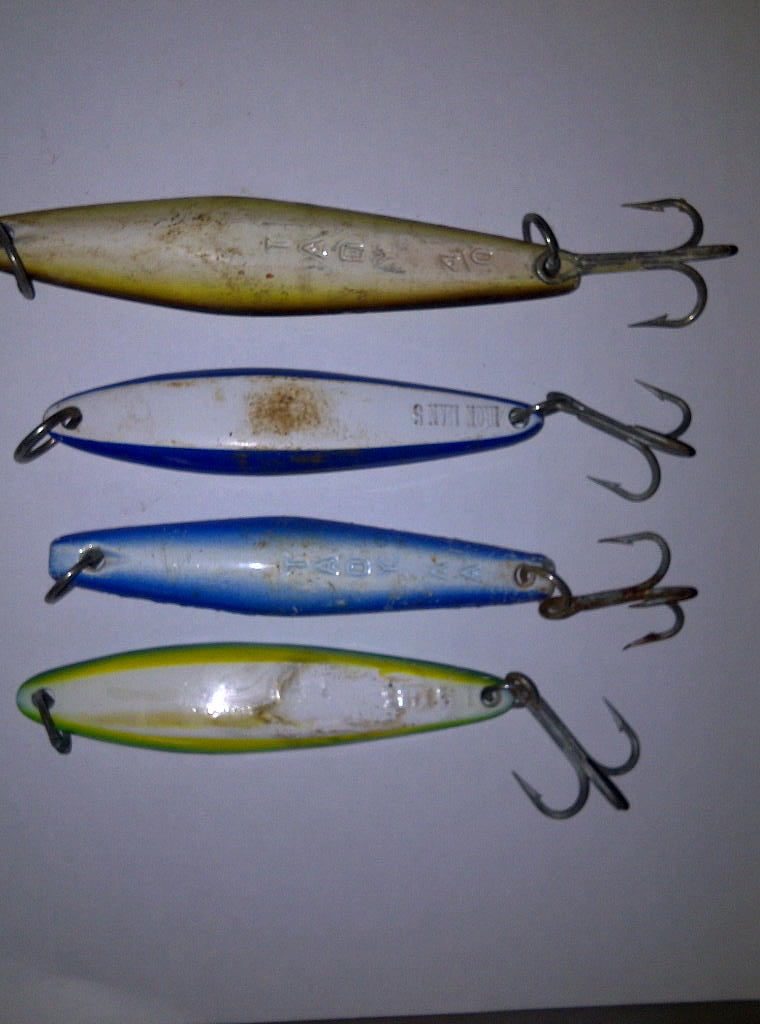
An effective line up of "iron"

An effective line up of “iron”

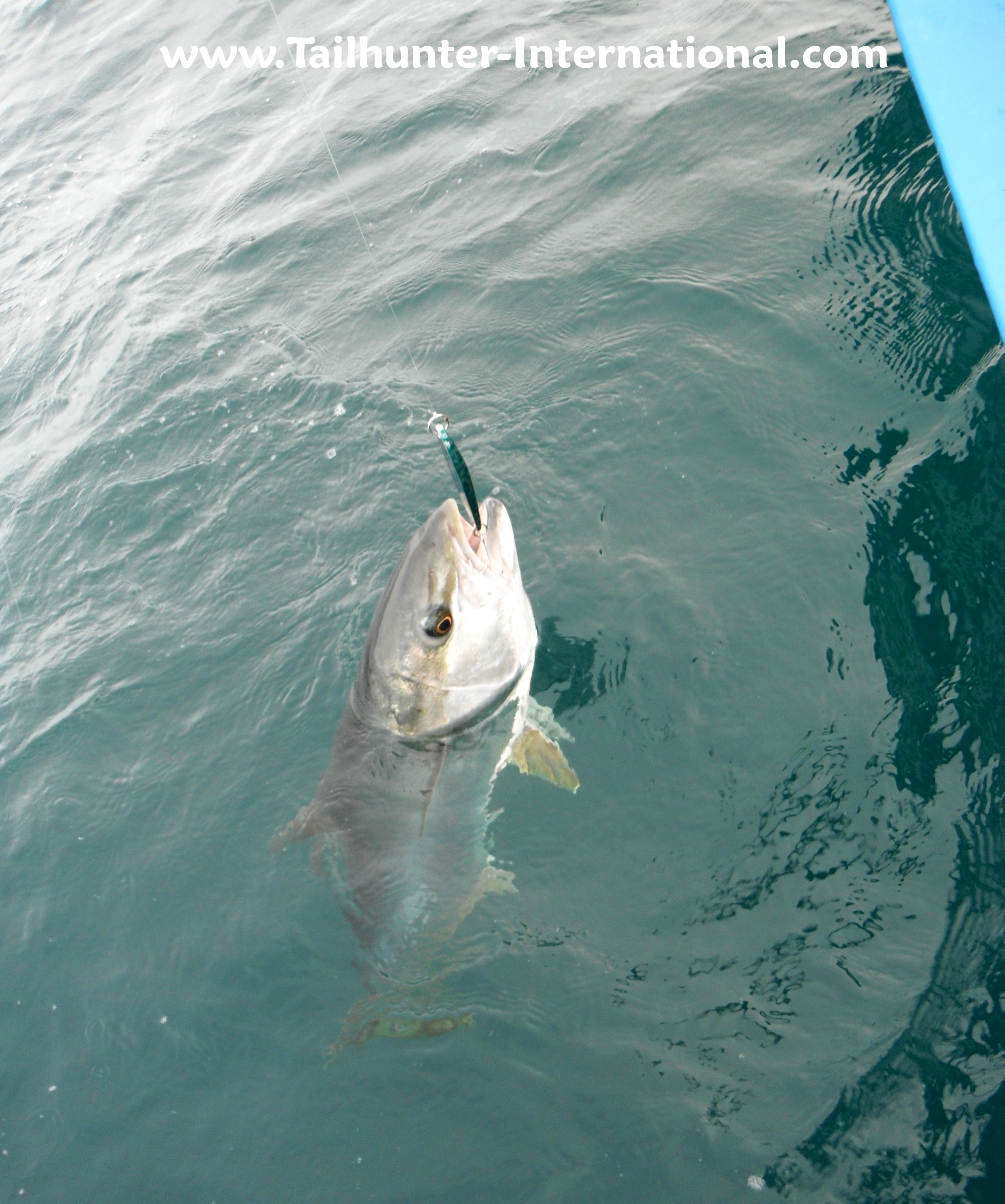
"Fresh one!"  A yellowtail hanging on the iron!  These guys will slam a fast-retrieved iron hard enough to hank the rod from your hands!

“Fresh one!” A yellowtail hanging on the iron! These guys will slam a fast-retrieved iron hard enough to hank the rod from your hands!  A chrome-pattern did the trick on this big yellow.

BAJA PRIMER – “IRON” THE NEXT STEP

Orginally Published in Western Outdoor Publications

You’re ready to try something different.  You’ve got a bit of strut in your step.  You’ve been on your share of fishing trips.  Into Mexican waters from San Diego.  Some trips from Cabo and the East Cape.  Maybe some mother-ship trips from San Felipe.

You’ve put some fish in the bag and a few fillets in the ice chest.  You’re no rookie and think you can pretty much hold your own and know how to tie a knot and which side of the reel is up.

So, now what?

You’re been watching some of the other “hot sticks.”  You realize you’ve caught all your Mexico fish with bait or trolling.  Although it’s exciting and you fill your sack,  you’re ready to step-up your fishing repertoire.

Yawn…

It dawns on you that everyone and anyone can catch fish with bait.  And it’s a no-brainer to drag lures around the ocean waiting for a bite.  In the fish-rich waters of Mexico, if the fish are hungry, they’ll eat a bait.  If you drive the boat over the right patch of water, you get bit too.

What’s the challenge in that?

But, you notice the bit of swagger and yes, maybe even cockiness in the guys they call the “ironmen.”   They’re the guys who can put a fish in the boat when nothing else is biting or no one else is getting bit.  They get the bigger fish.  They win jackpots.  Plus it looks like fun and you want a piece of that!

It does’t take much to get started.  Your local tackle shop can get you started.  Do not be afraid to ask for help and don’t be afraid to admit you’ve never fished “the iron” before.

The best thing is that many of the most popular Mexican game fish like tuna and yellowtail are not only some of the most fun to catch on the iron, but also will readily bite iron lures.

“Iron” refers the class of lures that generally  look like pieces of heavy sculpted elongated metal…a bit like a metal candy bar.  Hence the moniker “iron.”  They come in a dizzying array of shapes, sizes and colors, but just for learning sake,  you can get by with just a handful that will cover most situations:

They involve combinations of chrome/ white/ blue/ green/ yellow/ brown.  Have your tackle dealer point them out.

Manufacturers of many of the most popular include:  Tady / UFO / Fire / Salas/ Raider / Hopkins / Williamson/ and Candy Bar…just to name a few.

Unless you know how to cast already, start with the heavier jigs.  Something that will sink and cast easily like 3-6 oz lures are typical for starters.

If you don’t know how to cast yet, don’t let that stop you.  You can “fish the iron” even if you don’t know how to cast.  If you can do a simple underhand cast or sidearm cast or even just drop the jig overboard, you’ll do just fine.

The real secret in fishing the iron isn’t necessarily in how far you can cast.  The real secret is in getting the jig to “swim” imparting it with a life-like action that will entice a fish to bite.  And that’s where the fun comes in.

If you’ll notice, all lures have “edges.” These are the cuts and angles molded into the lures.  They might give it the appearance of an elongated diamond.  Or a twisted piece of metel or give it little indents or the appearance of “shoulders.”  But these little bits and cuts make the lure “swim” as it’s retrieved through the water.

Some dart and dive.  Others shimmy.  Or spin.  Or wiggle.  All have their own characteristics which change depending on how you retrieve or use the lure.  Some are even cut to flutter like a dead bait when simply sinking in the water.

There are different techniques to do all of this.  One of the most common and the easiest for a beginner is to fish “on the slide.”  While the trolling rods are out, I like to have a nice heavy chrome lure ready and tied to a shorter rod and and least 40-50 pound test.   When the trolling reel goes off, the boat usually coasts or “slides” to a stop while someone battles the hooked fish.

Fishing the “slide” simply entails taking the reel out’ve gear and letting that heavy jig flutter down behind the boat.  If there’s a school of fish, especially tuna following behind the hooked fish watch out!

This is one of the deadliest means of hooking that next fish as they swarm to the boat.  A ferocious strike often occurs as the jig falls or when the reel is suddenly put in to gear!  Hold on!

The second easiest way to learn to fish the iron is called “yo-yo” fishing.  Again, this is as simple as dropping the jig overboard from a stopped boat.  If you can do a side cast or a long under-handed cast all the better.

Let the lure fall.  Once more, don’t be surprised if the lure is hit on the drop as it flutters down through the zones.

After a reasonable time, start winding.  Now, this take a bit of watching.  With some lures, if you wind too fast, the lure “propellers” and just spins.  Not good.  Too slow and the lure doesn’t move at all.  It just hangs there as it comes back to the boat.  Not good either.

So, watch and get a good “swim” on your lure.  Some fish like yellowtail really go after a lure that’s moving fast.  The faster the better.  Others like tuna aren’t so picky.   Remember, the point is to make the lure imitate a live bait that will interest the fish in biting.

Once you have that, try different motions.  The “sweep” involves winding and lifting with the rod at the same time in a “sweep” motion.  Then stopping and letting the lure flutter down again.  Then winding again.

“Ripping” involves a fast  vertical retrieve, then stopping.  Throw the reel into free-spool and letting the lure fall back down.  Then back into gear and winding quickly again.

If you can get a short cast out, try the “Z-pattern.”  Winding back towards the boat.  Stopping and letting the lure fall…then winding again….then letting the lure fall…then winding again in a “Z pattern” back to the boat.

Practice and watch.  You’ll get better in now time and add something new to your fish-catching arsenal.

That’s my story!

Jonathan

______________

Jonathan Roldan has been writing the Baja Column in Western Outdoor News since 2004.  Along with his wife and fishing buddy, Jilly, they own and run the Tailhunter International Fishing Fleet in La Paz, Baja, Mexico  www.tailhunter-international.com.  They also run their Tailhunter Restaurant Bar on the famous La Paz malecon waterfront.  If you’d like to contact him directly, his e-mail is riplipboy@tailhunter-international.com  or drop by the restaurant to say hi!

______________

Jonathan Roldan’s

Tailhunter International


TAILHUNTER FISHING FLEET #1 Rated on Trip Advisor

TAILHUNTER RESTAURANT BAR #1 Rated in La Paz on Trip Advisor


Now follow us on FACEBOOK TOO


Website: www.tailhunter-international.com

U.S. Office: 3319 White Cloud Drive, Suite A, Hacienda Hts. CA 91745

Mexico Office: 755 Paseo Obregon, La Paz, Baja Sur, Mexico

Phones:

from USA : 626-638-3383

from Mexico: 044-612-14-17863

.

Tailhunter Weekly Fishing Report:

http://fishreport.jonathanroldan.com/

Tailhunter YouTube Videos:

http://www.youtube.com/user/pangapirate

“When your life finally flashes before your eyes, you will have only moments to regret all the things in life you never had the courage to try.”
Read Full Post »

Salt Lake City-20120210-00078

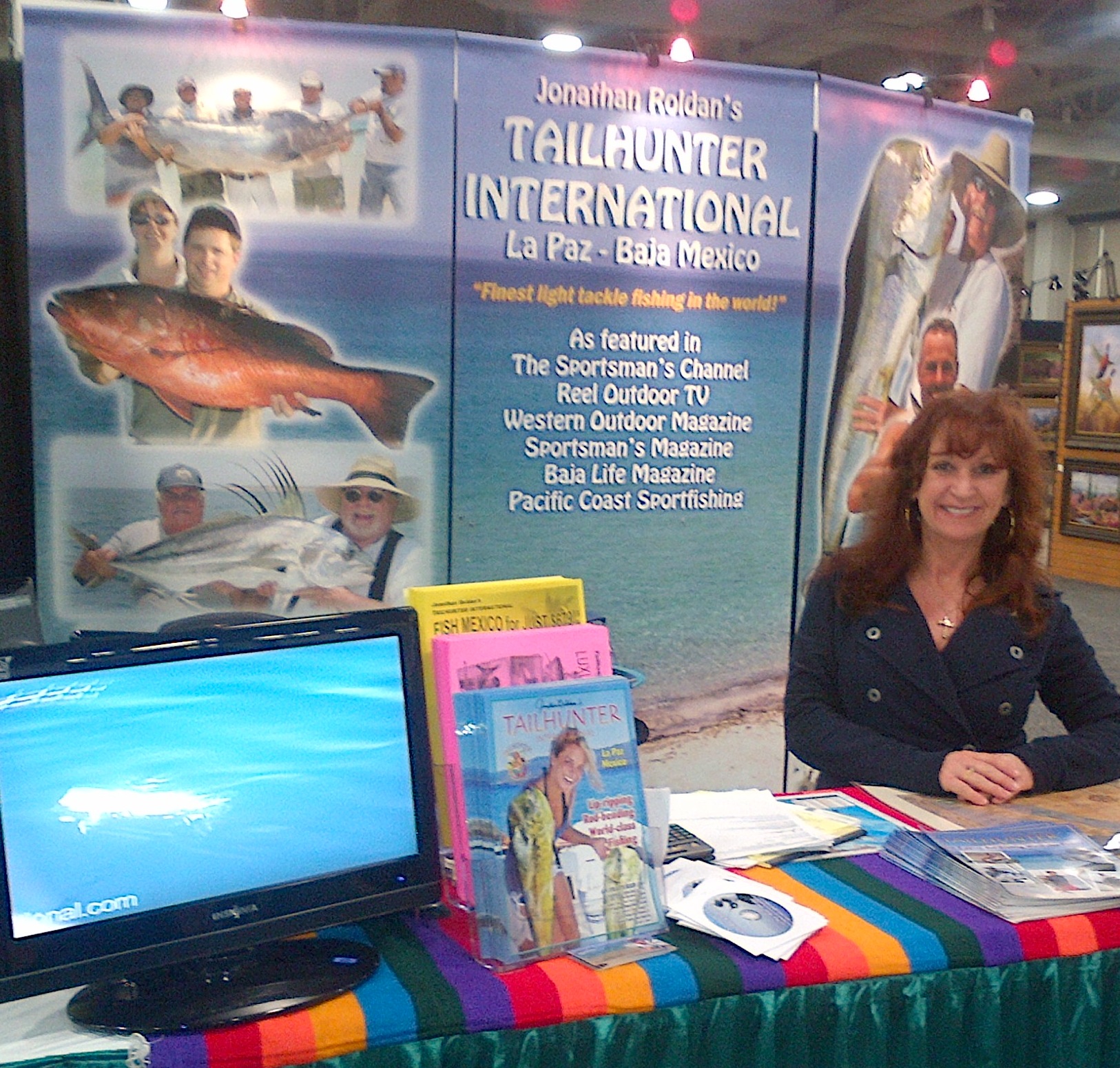
From January to March of each year for almost 20 years, we criss-cross the western U.S. promoting our fishing operation in La Paz and often become an impromptu clearing-house of many general questions about travel to Baja and Mexico in general.

“BAJA FAQ 2013”

Originally Published the Week of Feb. 13, 2013 in Western Outdoor News

As I’m writing this, we’re just wrapping up our 3rd day here at the Pacific Northwest Sportsmens Show here in Portland, Oregon.  We’ve been on the road now for more than a month as we do our annual show-hopping promo tour across the country.

So far, we’ve done fishing/ hunting shows in Sacramento, Denver, Seattle before this one.  Only 2 more months to go and about 12,000 more miles of driving.

As we stand here in our booth, promoting our La Paz fishing operation for 8, 10…12 hours a day, we talk to hundreds of people a show.  We often hear many of the same questions.  Year-after-year.  Although the questions might be the same, very often the answers might change based on changing conditions in Baja.

I thought I’d share some of the most common questions.  Some might seem pretty simple…or silly…or obvious…but as mentioned, sometimes answers might surprise you.  Also, we get asked these questions ALOT so obviously, alot of folks don’t know these answers!

Q:  Where is Baja, Mexico?

A:  It’s the 1000 mile-long-peninsula extending from the border at San Diego/ Tijuana and going south to lands-end at Cabo San Lucas.  It is bordered by the Pacific Ocean to the West and is separated from the Mexican mainland to the east by the Sea of Cortez.

Q:  Is it safe?

A:  The  VERY short answer.  Yes.  Mexico is a huge country.  Generally as safe as most cities in the U.S. and in some respects even safer.  Yes, there are serious problems, but much of that is only in certain areas and in border areas and tourists are not generally targeted anymore than tourists are targeted by crime in the U.S.  In any given city, just like most U.S. cities, there are good and bad parts of town.  Stay out’ve the bad parts.

Q:  Is it OK to drive?

A:  On any given day, there are thousands of tourists on Baja roads having un-eventful drives.  Thousands cross the border daily and routinely.   Observe the laws.  Make sure you have insurance. Drive with care and common sense as you would anywhere.

Q:  Can we buy property?

Yes, you can.  Who do you think is buying all these parcels, condos, houses and lots along the beachfronts! Sometimes it seems that Americans are buying up all of Baja.

Q:  Is it always good fishing?

A:  Historically,  Baja is one of the most famous fishing areas in the world.  But…Baja is 1000 miles long.  It has over 2000 miles of coastline.  It has incredible fishing and over 700 identified species of fish in the Sea of Cortez.  That being said, fishing is as different as the species, location and variables such as  season, weather, current, bait, etc.  Every places is not great 100% of the time.  There’s such a thing as a bad day of fishing.

Q:  Can we bring our fish home?

A:  As long as you’re within limits and observe regulations, it would be a shame if you didn’t.

Q:  Is the water safe to drink?

Most places very much so!  But, like many places in the U.S.,  municipal water tastes bad.  Everyone drinks bottled water which is readily available.

Q:  Can we use American money?

A:  In Baja, American dollars are very welcome, but with new banking laws, making it harder for Mexican vendors to change dollars into pesos,  it makes it harder for the vendors to accept pesos…especially large denominations.  Rarely, will a vendor turn down a payment in dollars…a sale is a sale!  But increasingly, more can’t accept large denominations.  So, it’s a good idea to use smaller bills or get pesos exchanged before you come over or at an exchange house.  Many Mexican banks will not change dollars to pesos unless you have an account and, even then, only small amounts.

If you can avoid it, don’t use credit cards. But,  many places won’t accept them because of high surcharges to the vendor.

Q:  What happens if we need medical help or what happens if I have special medical needs?

If it’s  your medication, bring what you need and extra dosage.  Bring a copy of your prescription.  If it’s emergency medical care, most large Baja cities actually have pretty good first response and emergency care.  Enough to get you home after most emergencies so that your own doctor can treat you.  Credit cards  are usually welcome in lieu of insurance. Generally, emergency care is much cheaper also.

Q:  What happens if we don’t speak Spanish

English is growing.  Span-glish is universal, especially in the tourist areas.   Keep it simple and eliminate slang and most folks  will understand and everyone gets along just fine.  But, everyone appreciates any attempt to speak Spanish!

Q:  Do we need a passport?

Yes! Don’t wait until the last minute to get one.

Q:  Can we still get prescription drugs there with no prescription?

Generally no.  Not like in the old days. Generally speaking, if you need a prescription for it in the U.S., you’ll need it for most things in Mexico.

Q:  How is it to retire there?

It’s one of the fastest and most sought-after places for gringos to retire and an excellent place to make dollars stretch with a high standard of living.  You get more bang for the buck.

______________

Jonathan Roldan has been writing the Baja Column in Western Outdoor News since 2004.  Along with his wife and fishing buddy, Jilly, they own and run the Tailhunter International Fishing Fleet in La Paz, Baja, Mexico  www.tailhunter-international.com.  They also run their Tailhunter Restaurant Bar on the famous La Paz malecon waterfront.  If you’d like to contact him directly, his e-mail is riplipboy@tailhunter-international.com  or drop by the restaurant to say hi!

______________

Jonathan Roldan’s

Tailhunter International


TAILHUNTER FISHING FLEET #1 Rated on Trip Advisor

TAILHUNTER RESTAURANT BAR #1 Rated in La Paz on Trip Advisor


Now follow us on FACEBOOK TOO


Website: www.tailhunter-international.com

U.S. Office: 3319 White Cloud Drive, Suite A, Hacienda Hts. CA 91745

Mexico Office: 755 Paseo Obregon, La Paz, Baja Sur, Mexico

Phones:

from USA : 626-638-3383

from Mexico: 044-612-14-17863

.

Tailhunter Weekly Fishing Report:

http://fishreport.jonathanroldan.com/

Tailhunter YouTube Videos:

http://www.youtube.com/user/pangapirate

Read Full Post »

Denver-20130120-00281-2.jpg.

DEAFENING SILENCE

Originally Published in Western Outdoor News the Week of Jan. 31, 2013

Have you ever had something happen so quickly that you ask yourself, “Did that really happen?”  You shake your head.  You blink your eyes.

You look at others to see if they saw what you saw.  Heard what you heard.

It can be as benign as seeing a shooting star across the evening horizon or a fish jump in the distance.  Did you see that?

We’ve been on the road now for almost a month.  We’re doing our annual “road tour”  with our booth and flyers and DVD’s promoting and marketing our fishing operation as well as the City of La Paz in Baja where we’ve been at it  now for some 20 years.

It’s a fun three-month rollicking drive of 15,000 miles back and forth across the western U.S.  hitting a new fishing/ hunting show with all the hundreds of other vendors.  Modern day “carnival workers and gypsies!”

On this particular day, we had just driven about 600 long miles.   Through the snows and cold, we were tired and road-weary with at least 200 more to go before dark.

We pulled off the highway into a little faceless convenience store in a small town at the foot of a mountain range.    We walked to the counter with a few items.  The young clerk, stringy-haired under a wool hat and  trying unsuccessfully to grow a whisp of a blonde beard,  helped the folks in line ahead of us.

We moved up.  We were looked at and ignored.  The clerk went to someone else at the other end of the counter.

Then someone else.  The clerk looked at us. Then helped someone else again.

We asked if we were going to get served.  All we got was barely a look of annoyment by the clerk.  And he went to  help someone else.

My wife and I looked at each other.  Eyebrows raised.  She said, “Let’s go.” We left our items on the counter and walked out.

Jill was tight-lipped and had a slow simmer going on.  Had that really happened?

I had that “funny feeling” again.  It made me mad and saddened me at the same time.  I wasn’t quite sure it had happened.  My wife quietly confirmed that surely it had.

We climbed into our cargo van and drove off.

Several seasons ago, not far from this  same town, we had pulled off the road for the evening after another long drive.  We found a little hole-in-the-wall motel and dumped our gear.

We found an old brick and stone building  in the historic part of town with a neon sign advertising “Famous Fried Chicken since 1962.”  We parked and walked in.

It was more like a saloon.  Tables full of folks having a good time. Clanking dishes and laughs.  Cowboy rodeo photos all over the wall.  Western memorabilia everywhere in the low light.

A good looking bar lined  with beer taps and guys in John Deere hats and working-Stetsons.  No Levis.  This was  a Wrangler jeans crowd.  No posers here.

Scuffed Roper boots and workman steel-toed leathers on feet.  Guys and gals in loose Pendletons and faded denim jackets.  Frankly, we weren’t dressed much differently.

We bee-lined and deposited our tired selves in a a cozy-looking booth.  Having lived in many rural areas, I loved a good cowboy bar.  I’ve had some of my best meals in down-home places like that!  Good buzz and vibe.

Only problem is…the place went rather quiet as we walked in.  Perceptibly.  I would swear even the volume of the juke box dropped a few notches.  Maybe it was because we let in the cold rainy air from outside.

It picked up again a bit but as we waited for service,  nothing happened.  We sat.  And we sat.  No water.  No menus.  The waitress saw us.  But nothing.

Jill said, “I have funny feeling about this place. “

My perceptive skills aren’t so articulated.  I’m not paranoid.   But, Jill’s got a better radar than me.

“I don’t think we’re wanted here.”

“Nah,” I responded.  “You’re just imagining it.”

But I’ve been in a few dark bars in my time and now my own radar was humming. Senses ramped up a tetch like the hairs on my neck.

As we faced each other in the booth, I watched behind Jill’s back.  She watched over mine.

People were watching us. Glances that were held a fraction too long before turning away.  The waitress would cast an eye at us, but not make eye-contact.  Other people were getting waited on.  But not us.

Jill used to live in Mississippi.  She went to Ole’ Miss University back-in-the-day and was the only Caucasion gal in an all-black sorority.  Being from California, she didn’t think anything of it, but was warned by some debutantes that “ ‘proper’ girls just don’t do thing like that!”

So, she’s tuned a little better to this stuff than this Hawaiian-island boy who never ran into stuff like this before. But, I have spent some time in dark bars.  I’ve seen trouble.  This was different.  It was eerie.

Too late to go anywhere else and (maybe stupidly trying to make a point), we finally got our waitress to come over and grudgingly take our order.

She delivered it wordlessly.  And she never came back except to put a bill on the table.  No queries about how it was or whether we wanted to order anything else.

We ate our fried chicken huddled over our plates while the eyes watched. We ate.   Quickly, quietly and got out.  Backing out actually.

With an  ugly feeling we walked rapidly  back to our van  in the darkened street half looking over our shoulders.  Expectantly.  Anxiously.

I still wasn’t quite sure it had even happened, but we mentioned it to one of our colleagues.  He’s American of Japanese ancestry from S. California and is a famous  international outfitter and guide.

He said it was only our imagination, but  he  passed through the same town a few weeks later.  Like us, he pulled over for the night after a long drive at a little motel.

He was told, “We’re full.”  He pointed out that couldn’t be possible since the parking lot was almost empty.  He was grudgingly given a key to the room.  When he went to a coffee shop to eat, he encountered similar unspoken hostility.

Another colleague of ours is a famous Baja flyfishing guide.  He passed through several months later a few towns over.  He encountered similar resistance and quickly left the area.  He’s of Japanese-American ancestry.  Born in Hawaii.  A three-tour decorated Vietnam war veteran.  “I will never ever go back into that area,”  he told me.

As I write this, it’s been five days since  our incident at the convenience store, I still roll back the mental video tape.  Trying to find a loophole.  An escape.  A way to convince myself that it didn’t happen.

Was I really refused service because of what I looked like?  Was my wife refused service because she was with me?  Or because we’re married?  Because I’m brown and dark?  I look Asian or Latino?  She’s white with red hair?  Really? Are you kidding me?

This isn’t the south.   It’s not 1930…or 40…or even 1968.

As I lay in bed that evening many miles down the road…in another motel…in another town, I realized.  It was Monday, January 21, 2013…Martin Luther King day.   Ironic.

Silence can be deafening and I had trouble sleeping.

________________________

Jonathan Roldan has been writing the Baja Column in Western Outdoor News since 2004.  Along with his wife and fishing buddy, Jilly, they own and run the Tailhunter International Fishing Fleet in La Paz, Baja, Mexico  www.tailhunter-international.com.  They also run their Tailhunter Restaurant Bar on the famous La Paz malecon waterfront.  If you’d like to contact him directly, his e-mail is riplipboy@tailhunter-international.com  or drop by the restaurant to say hi!

______________

Jonathan Roldan’s

Tailhunter International


TAILHUNTER FISHING FLEET #1 Rated on Trip Advisor

TAILHUNTER RESTAURANT BAR #1 Rated in La Paz on Trip Advisor


Now follow us on FACEBOOK TOO


Website: www.tailhunter-international.com

U.S. Office: 3319 White Cloud Drive, Suite A, Hacienda Hts. CA 91745

Mexico Office: 755 Paseo Obregon, La Paz, Baja Sur, Mexico

Phones:

from USA : 626-638-3383

from Mexico: 044-612-14-17863

.

Tailhunter Weekly Fishing Report:

http://fishreport.jonathanroldan.com/

Tailhunter YouTube Videos:

http://www.youtube.com/user/pangapirate

“When your life finally flashes before your eyes, you will have only moments to regret all the things in life you never had the courage to try.”
Read Full Post »

There are times when it's just better and safe to hang by the pool for the day, but if you're headed out,  there's a few things you can do to make it easier to fish in rough water!

There are times when it’s just better and safer to hang by the pool for the day, but if you’re headed out, there’s a few things you can do to make it easier to fish in rough water!

PLAYING ROUGH!

Originally Published the Week of January 3, 2012 in Western Outdoor News

Memories of those calm balmy days fishing the Sea of Cortez definitely weren’t going through my brain this afternoon.  On the contrary.

Although the sun was out, I was relatively “bundled” for Baja fishing.   I was still customarily barefoot, but my fishing wardrobe long loose sweat pants and a layering of t-shirt; long sleeve Pendleton and waterproof windbreaker with hood over my head.  It hardly sounded like Baja fishing couture!

But, that being said.  I was chilly.  It was blustery and spray from the wave-tossed northern winds that sweep the Cortez had my clothes damp and my panga captain and I fishing with our hoods pulled way down!  Out of the corner of my mouth, I said in Spanish, “This is why we get paid the big money!”

He grinned and wiped the seawater that was splashing his face and he held onto the tiller!

It was choppy.  White caps tipped the waves even though we weren’t far from shore.  Brrrrr…

My client, a great guy from Oregon, used to fishing the dangerous mouth of the Columbia River was having a great time in his shorts and t-shirt!  “Heck, this is nothing… it’s cold and raining back home!” he laughed.

Well…yay.  Winter is still not my favorite time to fish, but when you gotta work, you gotta work.  Often fishing in winter in the Sea of Cortez or any of Baja waters can be a challenge.  Forget all the fancy brochures.  Weather is still weather and there are some times of the year that are better than others to fish!

That doesn’t mean there’s no fish, but you have to change your tactics a bit when playing in rougher water.

For one, there’s a good chance you might be doing more trolling than normal.  When waters are rough or when it’s off-season, it’s often difficult to purchase bait because either the bait guys aren’t working.  Or, it’s sometimes too rough to net or hook sardines, mackerel or other baitfish.

So, be prepared to troll.

If you have a water temperature gauge, at least try to find the warmer temperature breaks to work.

Also, given the turbulence on the surface,  certain lures work better.  I put away all the “bullet” headed trolling lures and reach for lures with heads that are heavier to dive beneath the chop.  I like using heads that have slanted or flat heads or have “jet holes” that will also create more action as they are pulled through the waters.

You have to be careful about your lure speeds.  It’s not like you can put it on auto pilot on the console or in your brain.  If you’re in waves and swell, your boat speed will vary constantly depending if you’re going upswell or surfing downswell or getting hit sideways.

Which brings up another point.

In heavy weather, use fewer lines.  And run them equidistant from the transom.  Some guys like to run them close.  Others far from the prop wash.  But either way, fewer lines and keeping them equidistant reduces the frequency of tangled lines, especially if you’re doing “S” patterns or the chop is really pushing the boat and the lines around.  Personally, I like running the lines a bit closer than normal.  Don’t worry about the fish.  Believe me, most fish out there can swim faster than the boat can move so if they’re inclined, they’ll hit your lures even if you’re having to run a little faster or slower than normal.

Finally…

It should go without saying to use common sense at all times.  If it’s too rough, no fishing is ever worth jeopardizing anyone’s safety.  Keep it fun!  Either stay onshore or know when to head for the beach and call it a day!

That’s our story!

Jonathan

________________

Jonathan Roldan has been writing the Baja Column in Western Outdoor News since 2004.  Along with his wife and fishing buddy, Jilly, they own and run the Tailhunter International Fishing Fleet in La Paz, Baja, Mexico  www.tailhunter-international.com.  They also run their Tailhunter Restaurant Bar on the famous La Paz malecon waterfront.  If you’d like to contact him directly, his e-mail is riplipboy@tailhunter-international.com  or drop by the restaurant to say hi!

______________
Jonathan Roldan’s
Tailhunter International
 
TAILHUNTER FISHING FLEET #1 Rated on Trip Advisor
TAILHUNTER RESTAURANT BAR #1 Rated in La Paz on Trip Advisor
 
Now follow us on FACEBOOK TOO
 
 
Website: www.tailhunter-international.com
U.S. Office: 3319 White Cloud Drive, Suite A, Hacienda Hts. CA 91745
Mexico Office: 755 Paseo Obregon, La Paz, Baja Sur, Mexico
Phones:
from USA : 626-638-3383
from Mexico: 044-612-14-17863
.
Tailhunter Weekly Fishing Report:
http://fishreport.jonathanroldan.com/

Tailhunter YouTube Videos:
http://www.youtube.com/user/pangapirate


“When your life finally flashes before your eyes, you will have only moments to regret all the things in life you never had the courage to try.”
 

Read Full Post »

« Newer Posts - Older Posts »