Feeds:
Posts
Comments

Posts Tagged ‘bahia de los suenos’

“COVERING THE SPREAD”

“COVERING THE SPREAD”

Originally Published the Week of Aug. 8, 2013 in Western Outdoor News

Lately, at least here in Southern Baja, there seems to be a dearth of live, or even dead bait.  It happens.  You still have to do your best to raise fish.  I mean, you’re already here.  It’s no one’s fault that the bait gods just didn’t happen to smile on your particular vacation dates.  So be it.

Be prepared.  Get ready to troll.  Cover some water.  I get asked all the time what would I recommend.

I usually don’t get hung up on having every color in the rainbow.  The days when I neede  two kinds of every conceivable lure is long gone and disappeared with the days of cheap airline tickets.  Besides, I’m too lazy and too old to carry that much gear anymore.

Now, I bring one dark and one light colored trolling feather in small, medium and large.  That’s it.  If my fishing partner or partners is bringing gear, I cut it back even further.   Let them carry the extra and pay for it!

But, honestly, agree among yourselves who is bringing what.  Gear can be shared as can the weight and the cost.

No sense in duplicating efforts and, given the penchance for airlines to charge for every extra bit of weight, it’s ridiculous to bring tons of stuff that will never get used.  Besides, you can only troll a limited number of lures at a time.  There’s no logic in bringing 20 or 30 lures!  Fight the urge.  You can do it!

Once you’re on the water, there’s a number of schools of thought on how to drag your lures and presenting a spread to the fish.  Veterans have their own multitude of theories and mine is just one guy’s opinion.

I used to subscribe to the technique of running light-colored lures during the brighter hours and the darker lures in the darker hours. Lots of fishermen do well with that.  But, for many years, now, I’ve been most productive with staggering my lure colors.

I run my brighter lures further back in the pattern.  I run my darker lures closer to the white prop wash.  If I have the ability to run more than 2 lures, I stagger them where one dark lure is right in the wash.  Another dark one on the edge of the wash and then two brighter ones staggered further back beyond says the 3rd and 5th wave behind the boat.

I believe the darker lures have a better presentation in the white water or near the white water where they create a more visible silhouette to the fish.

Regarding trolling speed, my general rule of thumb is somewhere in the neighborhood of 6-8 knots.  But I vary that.  The important thing is how the lures are swimming behind the boat.

I want the most action I can get from them so they create some kind of commotion.  I am also often reminding folks that pretty much any fish that has the ability to bite one of these feathers has the ability to swim way faster than the boat.  So goosing the throttle a few nudges to get the lures swimming correctly is a no-brainer.

That brings up another important variable.  Not all lures are created equal.  There are pusher heads (flat faced/ concave faced) .  Bullet heads (shaped like bullets natch).  Bubble/Jet heads (drilled with holes to make “smoke” bubble trails).  Slant heads (cut on an angle to dart back and forth or jump).  And others.

All of them have different characteristics.  Some work better at different times than others.

My general rule is the rougher the water, the more action I want from my lure to cut through all the surface disturbance on top of the water.  I want them to stand out as something “different” up there to potential predators.

To that end, again, trying to save space and weight is to pack bubble/jet heads or pusher head designs.  I like dragging them behind the boat so that they come jumping out of the face of trailing waves then dive back into the water with lots of splash and action.

Several stray suggestions:

If you only have small feathers or lures, consider making larger lures simply by sticking one inside of another.  Also, if you want to get down deeper, especially when nothing is close to the surface, either stick a torpedo sinker or egg sinker behind the head of the lure or simply tie a torpedo sinker to a leader ahead of the lure to make it swim deeper.

Give it a try!

That’s our story!

Jonathan

_______________

Jonathan Roldan has been writing the Baja Column in Western Outdoor News since 2004.  Along with his wife and fishing buddy, Jilly, they own and run the Tailhunter International Fishing Fleet in La Paz, Baja, Mexico  www.tailhunter-international.com.  They also run their Tailhunter Restaurant Bar on the famous La Paz malecon waterfront.  If you’d like to contact him directly, his e-mail is riplipboy@tailhunter-international.com  or drop by the restaurant to say hi!

______________

Jonathan Roldan’s

Tailhunter International


TAILHUNTER FISHING FLEET #1 Rated on Trip Advisor

TAILHUNTER RESTAURANT BAR #1 Rated in La Paz on Trip Advisor


Now follow us on FACEBOOK TOO


Website: www.tailhunter-international.com

U.S. Office: Box 1149, Alpine CA  91903-1149

Mexico Office: 755 Paseo Obregon, La Paz, Baja Sur, Mexico

Phones:

from USA : 626-638-3383

from Mexico: 044-612-14-17863

.

Tailhunter Weekly Fishing Report:

http://fishreport.jonathanroldan.com/

Tailhunter YouTube Videos:

http://www.youtube.com/user/pangapirate

“When your life finally flashes before your eyes, you will have only moments to regret all the things in life you never had the courage to try.”

Read Full Post »

THE BAJA HANDFUL OF KNOTS

They come in all shapes and sizes!

They come in all shapes and sizes!

MY BAJA HANDFUL OF KNOTS

Originally Published the Week of June 26, 2013 in Western Outdoor News Publications

If you ever want to start up a conversation among a group of fishermen or suddenly get a room of yakking party-ing guys to stop talking and gather around, there’s one sure-fire way that I’ve found.  It never fails.  Instant focus.

Just start talking about fishing knots.

Instant Pavlov’s dog and the dinner bells with 100-percent success.   It works even better if you happen to have a spool of line and some hooks.   If the crowd is relatively inexperienced, there’s almost a hush.

If the gathering has more veteran fishermen, it’s instant debate.  It’s like throwing bloody chum in the water or handfuls of  live bait into boiling tuna.  No one can resist plugging into the conversation!

I’m not even going to touch opening the subject with flyfishermen who’s knowledge and propensity toward complicated knot tying requires a PhD. In physics.

But for your average fresh and saltwater  weekend warrior and occasional Baja and long-range guy, everyone has an opinion on knot tying or is certainly “all-ears” to see what’s new and exciting or missing in their knot-tying arsenal.

I think almost all of us who have spent even a little time on the water know or, at some time back-in-the-day, learned the clinch knot or the improved clinch knot.  It’s the one they use to print on the back of packs of hooks and other accessories.  If  my fuzzy memory serves,  it was printed on a lot of Berkely produces and some still call it the Trilene knot.

I’m pretty sure it’s the one my dad first showed me.  Boy, did I practice and practice that one.  In fact, I remember mom catching me in my bedroom  floor long after bed-time.  I was  tying knots by the light of a flashlight  and using my 2nd grade scissors to trim off the tag ends! Mom just said, “Oh Jonathan…” and left me alone! I know when she told dad, he cracked up.

I guess in the passing of time, I’ve learned quite a few knots.   All serve their purposes.  What great names!  They sound like cocktails…The Bimini Twist…the Cat’s Paw…the Arbor…the Australian Braid…the Bristol…the Nail…the Blood knot…the Albright Special…the Orvis.  There are hundreds!

I once had a friend who would spend hours trying to develop some new knot just so he could claim it and have his name on it…forever…his legacy sealed in angling lore.  Terrible fisherman, but he sure knew how to tie knots!

Anyway, between you and me…frankly…the only reason to know that many knots is to impress people.  Like a name-dropper at a cocktail party.  People’s ears perk up when they hear names like the Palomar and the Spider Hitch.  And, I admit, when I want to direct attention to myself…like I said, start talking about knots and throw in some fancy names and it’s like a magnet!  Try it sometime.

Go get yourself a knot tying book or look up on the internet or youtube and there’s some great stuff to learn.  Then pull out some fancy names next time you’re among friends.  Like some guy who learned some card tricks, every fisherman within ear-short will be listening to you!

But, in full disclosure, for the several dozen knots I know,  there’s maybe only a handful that I ever really use and maybe only 3 or 4 that I use 95 percent of the time.  These are knots that you SHOULD know and with them under your belt, there’s not too much you can’t do.

It’s like rock ‘n’ roll.  If you know 3 simple chords and a decent 12-bar progression, you can probably play…well…just about anything!

The most important knot that I use is the San Diego knot.  I call it the most important because it’s the knot that joins my line to the hook.  It’s the last line of  attack and the part that attaches me to the fish.  So it better be a good knot!

It’s a variation of the Uni knot (you can look all of these up) and I’ve also seen it called the Duncan knot and the San Diego Jam knot.   It takes a few minutes to grasp the concept and a few more to learn it well.  But it’s worth it.

It has never failed.  The line might break but, in my experience, the knot has never broken, even on the largest fish I’ve tangled with.   I’ve seen tests run and it’s pretty hard to beat it’s breaking strength.  It’s variation called the  Double San Diego knot (merely doubling the lines) is even better and a standard knot here in Baja and on the long range San Diego fleet.

If you learn it well, it is also a handy knot to join to lines together like a mainline to a leader.

Which leads to my 2nd most important knot which is the Overhand knot.  It’s my personal favorite not only for joining lines, but especially to join lines of dissimilar diameter.  When you’re in a hurry to join  mono leader to braided line (not the best, but serviceable) it’s also handy.  If you know how to tie your shoe, this knot is that easy.  Learn it and remember it!

My last knot would be the Surgeon’s Loop.  It’s pretty much as easy as over…under…and through.  And you’re done!  Like the ads on TV…”even a caveman could do it.”  It’s great for …well…making loops to hold sinkers…to hold hooks.   I use it a lot.  I use it a lot more than the  dropper loop if I’m tying the loop to a sinker.

Fishing in rocks, if the sinker gets stuck on the bottom, the dropper will break easier than the dropper loop and at least let you get your main line back.

If I need a loop to tie the hook to…then the Dropper loop is my choice.

And that’s it!  Not much you can’t do with this handful!  Learn them and it will cover almost everything but the most specialized situations.

That’s my story

Jonathan

_______________

Jonathan Roldan has been writing the Baja Column in Western Outdoor News since 2004.  Along with his wife and fishing buddy, Jilly, they own and run the Tailhunter International Fishing Fleet in La Paz, Baja, Mexico  www.tailhunter-international.com.  They also run their Tailhunter Restaurant Bar on the famous La Paz malecon waterfront.  If you’d like to contact him directly, his e-mail is riplipboy@tailhunter-international.com  or drop by the restaurant to say hi!

______________

Jonathan Roldan’s

Tailhunter International

Website: 

http://www.tailhunter-international.com

Mexico Office: Tailhunter International, 755 Paseo Obregon, La Paz, Baja Sur, Mexico

U.S. Mailing Address:  Tailhunter International, P.O. Box 1149, Alpine  CA  91903-1149

Phones:

from USA : 626-638-3383

from Mexico: 044-612-14-17863

.

Tailhunter Weekly Fishing Report:  http://fishreport.jonathanroldan.com/

Tailhunter YouTube Videoshttp://www.youtube.com/user/pangapirate

“When your life finally flashes before your eyes, you will have only moments to regret all the things in life you never had the courage to try.”

Read Full Post »

“KING JACK”

Amberjack Junior Azores tags

Big and tough…amberjack in the Baja…cousins to yellowtail, the Spanish name for them is “Pez Fuerte” which means “strong fish!” No kidding. They get over 100 pounds!

KING JACK!

Originally Published the Week of May 15, 2013 in Western Outdoor News

It had been a pretty decent morning off the northern end of the island.   Dropping blue and white irons and jigging,  some heavy “winding and grinding” and elbow grease had produced a  nice brace of  five solid  20-pound-class yellowtail in the box.

Danny just finished pulling his jig out of the water and took a break to wipe his brow and crack a chilly Pacifico can from the ice chest.   The sun was at it’s mid-morning blaze already promising to get hotter.

“Whew!” he sighed with a laugh.  “This is hard work fishing the yo-yo iron for these yellows.  These things are tough fish!”  he added with a bit of exasperation.

“And the faster your crank the better the chance to hook-up!” responded Tony as he dropped his jig over the side and watched it flutter into the indigo blue water.  “It’s still better than working!”

Tony’s jig stopped slipping down.  Tony quickly put the reel into gear  and took a few cranks up off the bottom so as not to hang the jig on the craggy reef below.
“Here we go again, “ he grinned as he started the strenuous arm-aching crank back to the boat.

One crank…two cranks…three cranks…

SLAM!  The rod doubles over in an abrupt halt.  It’s  almost yanked from Tony’s hands. He adjusts and is nearly jackpoled over the side ramming his knees into the side of the panga to anchor himself in!  The rod is bucked straining on the gunwale of the boat and Tony is almost crouching down to get leverage unable to turn the handle of the reel.

Danny drops his beer which clatters to the deck…

“Oh man! This has gotta be a monster yellowtail! WHOA!!!” grimaces Tony as he struggles to get upright and get the butt of his rod into his rod belt still unable to get a turn on the reel handle.  It’s all he can do to hold onto the rod and keep his feet in the panga.

Pez fuerte!” says their panga captain excitedly .  “Amberjack grande.  Jale! Jale! Pull hard!”

Pez fuerte means ‘strong fish’ said Danny as he watched his buddy.

“Uh yea…no kidding…yea..this is a horse!” replies a tight-lipped Tony as he struggles to turn the big fish one slow lift and turn of the handle of his reel at a time.  Repeatedly, the rod would dip again and the exhausted sweating angler would have to lean into the stick to keep the fish turned.

After 15 grueling minutes, the big fish came up and a quick gaff was put to the fish.

“Dang, that looks like a yellowtail on steroids! Holy cow, it’s golden copper what a pig of a fish!”

“Maybe 30 kilos…60 pounds,”  says the captain grinning.

There’s a lot of confusion over amberjack.  People either “sorta heard of them” or  scratch their heads because they’ve “never heard of them.”  Or it’s quickly followed by the question, “Is that kinda like a yellowfin tuna?”

Well, Elmer…no it’s not.  But, it’s a fair question nonetheless.

They’re actually part of the jack family.  It’s that same feisty set of brawling sportfish that give us the jack crevalle (“toro”),  roosterfish (“pez gallo”), pompano (“pompano”…of course) and a whole host of other fish with  “jack” in their names.  Including the much-prized yellowtail (“jurel”).

The amberjack (“pez fuerte…which does indeed mean “strong fish” in Spanish) is the king of them all.  He’s the big boy cousin.  Broader and deeper in body, shoulders and head with a copper-orange-yellow-silver patina, they’re impressive.  And yes, powerful.

Where we are here in La Paz, they range as small as 10-20 pounds, but 40-50 pounders are not unusual and the bigger models will go 80 or more pounds.  We’ve taken several fish over 100 pounds in recent years and have lost many large fish over the years that broke tackle as well as the hearts of some very strong anglers.

We seem to get them during that “shoulder time” when the waters aren’t really spring and aren’t quite summer…like May or June…just as our yellowtail bite starts to taper off because of warmer waters.

It’a almost like the yellowtail move on and the amberjack move into those same spots.  These include high spots like reefs and shallow seamounts as well as boulder and rocky areas plus the edges of drop offs.

Basically, you won’t usually find them in open water, but rather in areas of structure.  The largest one I ever saw was while scuba diving a wreck and I saw several ambers in the dark hold that were well over 100 pounds.

Like their smaller cousins, the yellowtail, amberjacks will often school so, where there’s one you’ll often find others.  Additionally, you fish them in much the same way.  That’s why anglers dunking for yellowtail are often surprised when they get slammed by something much bigger and more powerful…an amberjack.

The fish readily take a yo-yo jig in the traditional colors of blue/white,  green/yellow, brown/white and others dropped down and taken in on an ultra fast retrieve…like the two guys fishing at the beginning of this column.

As well, they love baits like sardines, mackerel, squid and especially zebra fish for some reason which are the little blue baitfish with black stripes we catch on reefs with mackerel rigs.  When I have some zebras and the amberjack are in the area, it’s almost instant hook up!

Best of all, they eat just like yellowtail…only better!

That’s my story!

Jonathan

_______________

Jonathan Roldan has been writing the Baja Column in Western Outdoor News since 2004.  Along with his wife and fishing buddy, Jilly, they own and run the Tailhunter International Fishing Fleet in La Paz, Baja, Mexico  www.tailhunter-international.com.  They also run their Tailhunter Restaurant Bar on the famous La Paz malecon waterfront.  If you’d like to contact him directly, his e-mail is riplipboy@tailhunter-international.com  or drop by the restaurant to say hi!

______________

Jonathan Roldan’s

Tailhunter International


TAILHUNTER FISHING FLEET #1 Rated on Trip Advisor

TAILHUNTER RESTAURANT BAR #1 Rated in La Paz on Trip Advisor


Now follow us on FACEBOOK TOO

Website: www.tailhunter-international.com

U.S. Office: Box 1149, Alpine CA  91903-1149

Mexico Office: 755 Paseo Obregon, La Paz, Baja Sur, Mexico

Phones:

from USA : 626-638-3383

from Mexico: 044-612-14-17863

Read Full Post »

squid martis tags

Giant Humboldt squid surprise alot of anglers when they first encounter them and find them to be voracious feeders and tough fighters when hooked!

squid

Squid can go upwards to…20, 30, 40 pounds or more…they don’t call them “giant” for nothing!

squid_beaktags

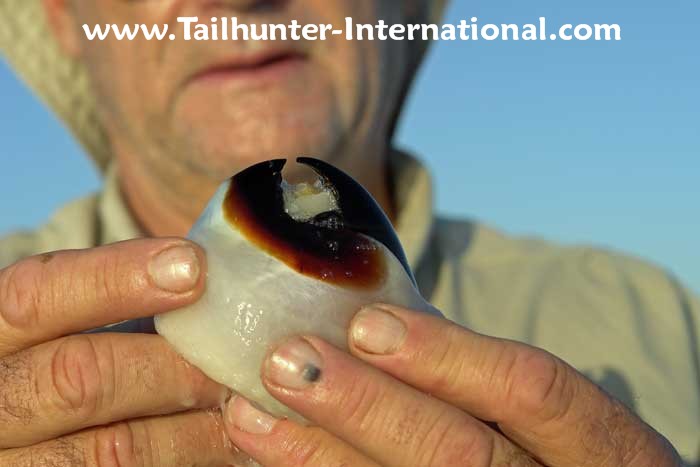
The beaks of the giant squid aren’t something to fool around with when still attached to their owners! They’re like big parrot beaks!

THE BIG UGLY

Originally Published the Week of Feb. 28, 2013 in Western Outdoor News

The Captain Victor tied on the heavy leaded lure and handed it back to the angler who looked at it curiously.   He hefted it in his hand and like a weapon.  And indeed, it looked like one.

“Pretty much looks like a medieval club or a torturing device,” he smiled. “a knight could do some damage with this sucker!”

He turned it around in his hand.  The heavy leaded pipe was about a foot long and filled with cement.  It was painted white.  The line was tied to one end.  At the other, it looked like a multi-pronged grappling hook with about a dozen 2-inch long up-turned sharpened spikes.

“Whatever bites this is gonna be interesting,” he said as he put his heavy 4/0 reel with 60 pound test into free-spool and dropped the lure over the side.  Weighing about 2 pounds, it dropped quickly into the depths about 500 yards off the rugged Baja coastline.

Mas linea..more line…more line,” said the captain with a mixture of hand gestures and broken Spang-lish.  “Muy profundo aqui…very deep here, “ as he pointed down into the cobalt morning waters.

“Ok-dokie, amigo” said the angler with a shrug.

The heavy rod and reel continued to play out line.

The captain touched the rod as a sign to stop.  The angler put the rod into gear and figured he was about 400 feet straight-up-and-down.

The Captain Victor motioned for the angler to reel slowly, but at the same time raising and lowering the rod in a sweeping motion stopping the retrieve and letting the heavy jig drop back and winding a few cranks more.

The angler took about half a dozen sweep-and-cranks and suddenly the heavy beefy rod went over double nearly pulling the angler to his feet!

“WHOA!  WHAT THE…???”

Grunting he struggled to turn the handle of the straining reel.  He looked up at the grinning captain now smiling smugly.

“Big squid! Calamar grande!” said Captain Victor with a big satisfied grin and arms folded across his chest.

Sometimes you really have to watch what you ask for.  Often folks want to know if the squid are biting and this just happens to be about that time.  They’re not always “on time” and the bite is cyclical,  but at least for us in La Paz, we get a run of squid in the spring and summer.

Like other sea creatures, it’s not like they send out a memo or anything.

But, when they show up, they generate alot of excitement.  Not only are they fun to catch and extremely feisty when hooked,  but they are just plain fascinating.  They’re the stuff of story, legend and sea-monster!

When folks come down, they normally, aren’t quite ready for what awaits.  The “Humboldt” squid we normally get can be as small as 5 pounders, but 40-100 pound beasts are not uncommon.

When the squid “float” (come near the surface from the cold depths) to where they can be caught, often many boats and pangas will pack the area.  If the big squid are there, it’s not long before heavy rods and double-bent anglers are pulling mightly as if small refrigerators are hanging on the ends…which isn’t too far from the truth!

The vessles are often quite close and once the bite starts, it can get pretty crazy as the wiggling-squirting cephalapods get close to the boats.  A good tip is to let the struggling animals finish their squirting BEFORE bringing them aboard! Between the vessels,  big firehose-sized geysers of water and ink are often seen raining down and spraying anyone within range.  Yells and laughs as well as choice bits of profanity often permeate the scene.

In fact, it’s often a good idea to dispatch the big uglies before bringing them aboard at all.  Squid are voracious and aggressive.  Just because they’re hooked doesn’t mean their beat.

A third of their body length is a mass of tentacles.  An, unlike an octopus, the “suckers” on a squid’s tentacles aren’t little suction cups.  They are concentric circles of teeth surrounding a little beak that can easily break skin when wrapped around the nearest leg, arm or finger.

Certainly, you don’t want to get an appendage near to it’s parrot-like beak which is capable of really doing damage and can take off a finger.  Or they can quickly gouge out a chunk of an angler.

Make no mistake, while small squid in a bait tank can be fun to play with, the Humboldts are dangerous critters.  They are opportunistic feeders and the large ones have been known to attack sharks, tuna and even the occasional diver…not to mention each other.

In fact, the heavy jig used to catch them is painted white to resemble a smaller squid enticing a larger squid to attack it.  Indeed, the squid are cannibalistic and many times, as you’re bringing a squid to the boat, it will often feel like it’s no longer struggling and has turned to dead weight.

If the water is clear enough, you can often see other squid attacking and hacking the one squid impaled on the jig.  There’s no fraternity below the surface.  Eat and get eaten!

It took some grunting and no shortage of sweat and elbow grease to get the big 50-pound squid to the panga.  As per the captains instructions, the angler let the big animal empty it’s jets of water and black ink before bringing it into the panga.

Wiping his brow, with the back of his fist, the angler laid down the rod in exhaustion.

Muy bueno por carnada…good for bait,” smiled Captain Victor as he hacked off one tentacle and wrapped it around a larger bait hook ready to go look for some real fish.

“Like heck!” laughed the angler, cutting off a huge chunk himself and bagging it for the ice chest.  “It’s going into some beer batter for fried squid dinner tonite!”

“But first, let’s catch a few more!” he added tossing the  heavy jig back overboard.

That’s our story!

Jonathan

_______________

Jonathan Roldan has been writing the Baja Column in Western Outdoor News since 2004.  Along with his wife and fishing buddy, Jilly, they own and run the Tailhunter International Fishing Fleet in La Paz, Baja, Mexico  www.tailhunter-international.com.  They also run their Tailhunter Restaurant Bar on the famous La Paz malecon waterfront.  If you’d like to contact him directly, his e-mail is riplipboy@tailhunter-international.com  or drop by the restaurant to say hi!

______________

Jonathan Roldan’s

Tailhunter International


TAILHUNTER FISHING FLEET #1 Rated on Trip Advisor

TAILHUNTER RESTAURANT BAR #1 Rated in La Paz on Trip Advisor


Now follow us on FACEBOOK TOO


Website: www.tailhunter-international.com

U.S. Office: 3319 White Cloud Drive, Suite A, Hacienda Hts. CA 91745

Mexico Office: 755 Paseo Obregon, La Paz, Baja Sur, Mexico

Phones:

from USA : 626-638-3383

from Mexico: 044-612-14-17863

.

Tailhunter Weekly Fishing Report:

http://fishreport.jonathanroldan.com/

Tailhunter YouTube Videos:

http://www.youtube.com/user/pangapirate

“When your life finally flashes before your eyes, you will have only moments to regret all the things in life you never had the courage to try.”

Read Full Post »

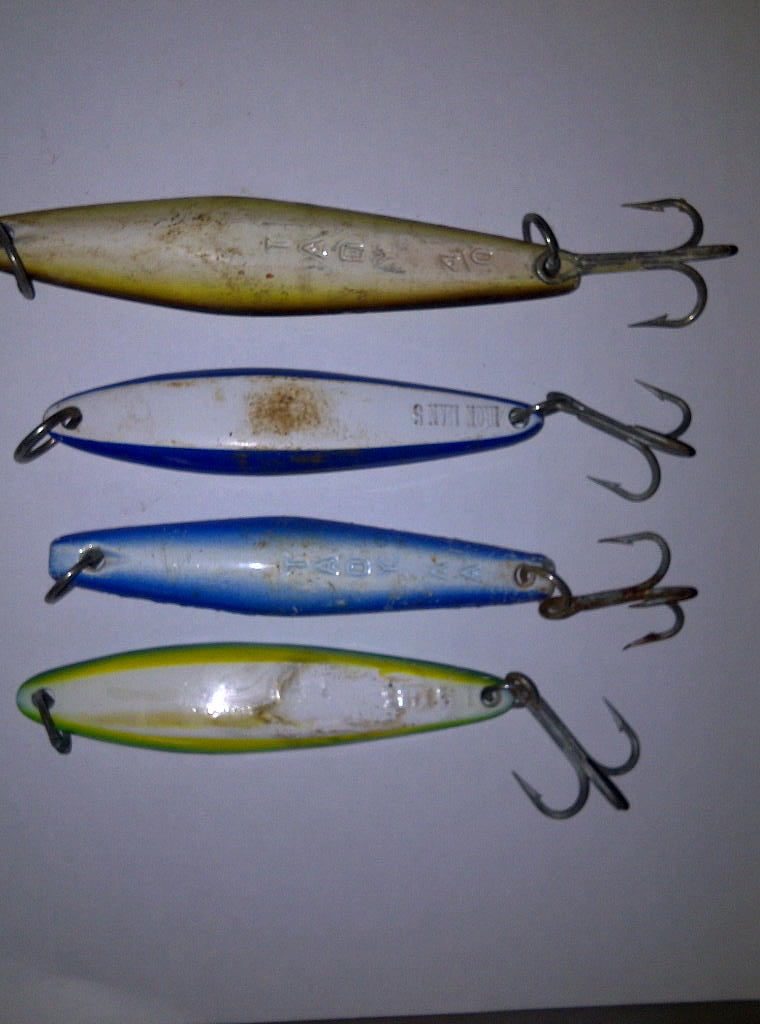
An effective line up of "iron"

An effective line up of “iron”

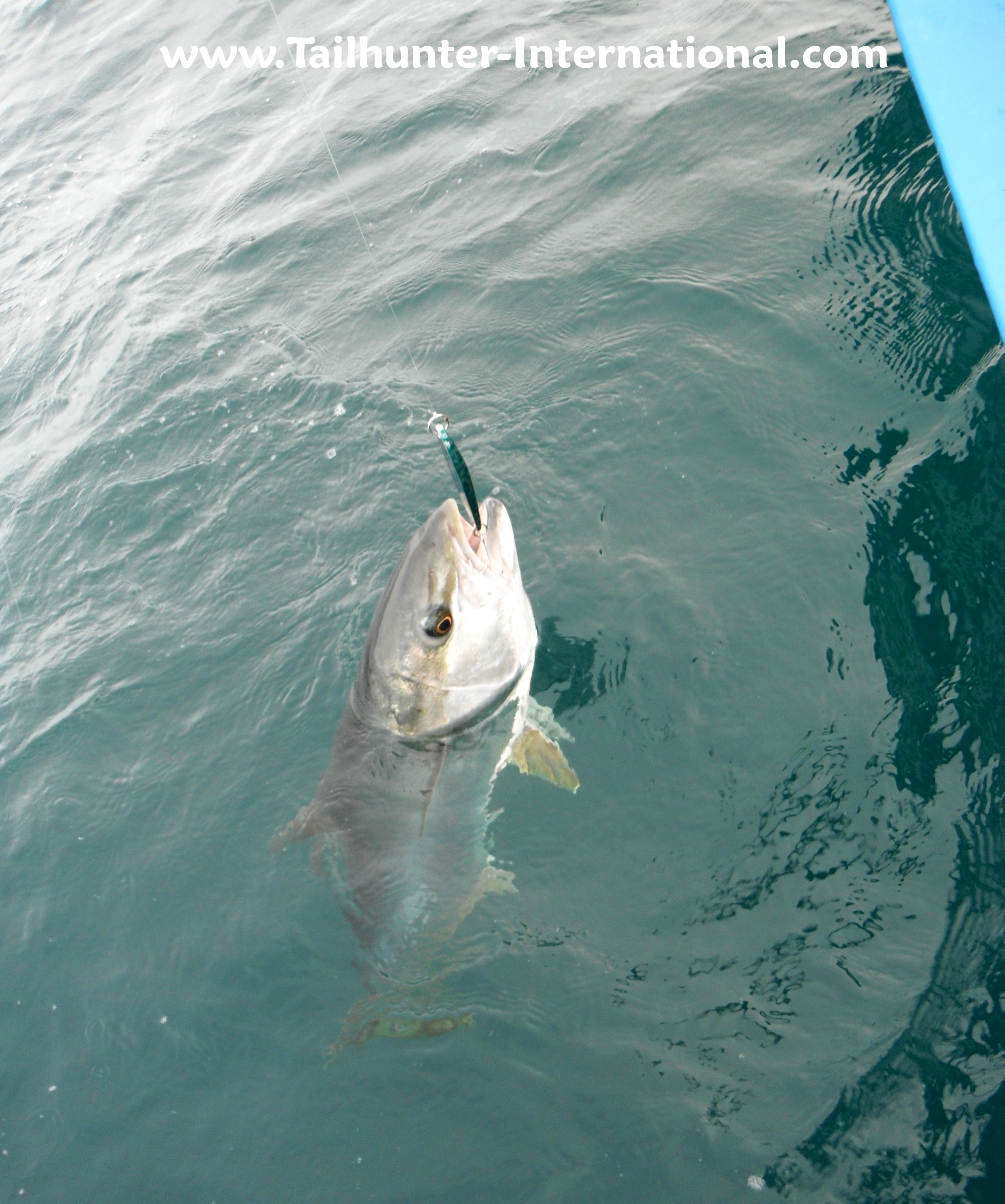
"Fresh one!"  A yellowtail hanging on the iron!  These guys will slam a fast-retrieved iron hard enough to hank the rod from your hands!

“Fresh one!” A yellowtail hanging on the iron! These guys will slam a fast-retrieved iron hard enough to hank the rod from your hands!  A chrome-pattern did the trick on this big yellow.

BAJA PRIMER – “IRON” THE NEXT STEP

Orginally Published in Western Outdoor Publications

You’re ready to try something different.  You’ve got a bit of strut in your step.  You’ve been on your share of fishing trips.  Into Mexican waters from San Diego.  Some trips from Cabo and the East Cape.  Maybe some mother-ship trips from San Felipe.

You’ve put some fish in the bag and a few fillets in the ice chest.  You’re no rookie and think you can pretty much hold your own and know how to tie a knot and which side of the reel is up.

So, now what?

You’re been watching some of the other “hot sticks.”  You realize you’ve caught all your Mexico fish with bait or trolling.  Although it’s exciting and you fill your sack,  you’re ready to step-up your fishing repertoire.

Yawn…

It dawns on you that everyone and anyone can catch fish with bait.  And it’s a no-brainer to drag lures around the ocean waiting for a bite.  In the fish-rich waters of Mexico, if the fish are hungry, they’ll eat a bait.  If you drive the boat over the right patch of water, you get bit too.

What’s the challenge in that?

But, you notice the bit of swagger and yes, maybe even cockiness in the guys they call the “ironmen.”   They’re the guys who can put a fish in the boat when nothing else is biting or no one else is getting bit.  They get the bigger fish.  They win jackpots.  Plus it looks like fun and you want a piece of that!

It does’t take much to get started.  Your local tackle shop can get you started.  Do not be afraid to ask for help and don’t be afraid to admit you’ve never fished “the iron” before.

The best thing is that many of the most popular Mexican game fish like tuna and yellowtail are not only some of the most fun to catch on the iron, but also will readily bite iron lures.

“Iron” refers the class of lures that generally  look like pieces of heavy sculpted elongated metal…a bit like a metal candy bar.  Hence the moniker “iron.”  They come in a dizzying array of shapes, sizes and colors, but just for learning sake,  you can get by with just a handful that will cover most situations:

They involve combinations of chrome/ white/ blue/ green/ yellow/ brown.  Have your tackle dealer point them out.

Manufacturers of many of the most popular include:  Tady / UFO / Fire / Salas/ Raider / Hopkins / Williamson/ and Candy Bar…just to name a few.

Unless you know how to cast already, start with the heavier jigs.  Something that will sink and cast easily like 3-6 oz lures are typical for starters.

If you don’t know how to cast yet, don’t let that stop you.  You can “fish the iron” even if you don’t know how to cast.  If you can do a simple underhand cast or sidearm cast or even just drop the jig overboard, you’ll do just fine.

The real secret in fishing the iron isn’t necessarily in how far you can cast.  The real secret is in getting the jig to “swim” imparting it with a life-like action that will entice a fish to bite.  And that’s where the fun comes in.

If you’ll notice, all lures have “edges.” These are the cuts and angles molded into the lures.  They might give it the appearance of an elongated diamond.  Or a twisted piece of metel or give it little indents or the appearance of “shoulders.”  But these little bits and cuts make the lure “swim” as it’s retrieved through the water.

Some dart and dive.  Others shimmy.  Or spin.  Or wiggle.  All have their own characteristics which change depending on how you retrieve or use the lure.  Some are even cut to flutter like a dead bait when simply sinking in the water.

There are different techniques to do all of this.  One of the most common and the easiest for a beginner is to fish “on the slide.”  While the trolling rods are out, I like to have a nice heavy chrome lure ready and tied to a shorter rod and and least 40-50 pound test.   When the trolling reel goes off, the boat usually coasts or “slides” to a stop while someone battles the hooked fish.

Fishing the “slide” simply entails taking the reel out’ve gear and letting that heavy jig flutter down behind the boat.  If there’s a school of fish, especially tuna following behind the hooked fish watch out!

This is one of the deadliest means of hooking that next fish as they swarm to the boat.  A ferocious strike often occurs as the jig falls or when the reel is suddenly put in to gear!  Hold on!

The second easiest way to learn to fish the iron is called “yo-yo” fishing.  Again, this is as simple as dropping the jig overboard from a stopped boat.  If you can do a side cast or a long under-handed cast all the better.

Let the lure fall.  Once more, don’t be surprised if the lure is hit on the drop as it flutters down through the zones.

After a reasonable time, start winding.  Now, this take a bit of watching.  With some lures, if you wind too fast, the lure “propellers” and just spins.  Not good.  Too slow and the lure doesn’t move at all.  It just hangs there as it comes back to the boat.  Not good either.

So, watch and get a good “swim” on your lure.  Some fish like yellowtail really go after a lure that’s moving fast.  The faster the better.  Others like tuna aren’t so picky.   Remember, the point is to make the lure imitate a live bait that will interest the fish in biting.

Once you have that, try different motions.  The “sweep” involves winding and lifting with the rod at the same time in a “sweep” motion.  Then stopping and letting the lure flutter down again.  Then winding again.

“Ripping” involves a fast  vertical retrieve, then stopping.  Throw the reel into free-spool and letting the lure fall back down.  Then back into gear and winding quickly again.

If you can get a short cast out, try the “Z-pattern.”  Winding back towards the boat.  Stopping and letting the lure fall…then winding again….then letting the lure fall…then winding again in a “Z pattern” back to the boat.

Practice and watch.  You’ll get better in now time and add something new to your fish-catching arsenal.

That’s my story!

Jonathan

______________

Jonathan Roldan has been writing the Baja Column in Western Outdoor News since 2004.  Along with his wife and fishing buddy, Jilly, they own and run the Tailhunter International Fishing Fleet in La Paz, Baja, Mexico  www.tailhunter-international.com.  They also run their Tailhunter Restaurant Bar on the famous La Paz malecon waterfront.  If you’d like to contact him directly, his e-mail is riplipboy@tailhunter-international.com  or drop by the restaurant to say hi!

______________

Jonathan Roldan’s

Tailhunter International


TAILHUNTER FISHING FLEET #1 Rated on Trip Advisor

TAILHUNTER RESTAURANT BAR #1 Rated in La Paz on Trip Advisor


Now follow us on FACEBOOK TOO


Website: www.tailhunter-international.com

U.S. Office: 3319 White Cloud Drive, Suite A, Hacienda Hts. CA 91745

Mexico Office: 755 Paseo Obregon, La Paz, Baja Sur, Mexico

Phones:

from USA : 626-638-3383

from Mexico: 044-612-14-17863

.

Tailhunter Weekly Fishing Report:

http://fishreport.jonathanroldan.com/

Tailhunter YouTube Videos:

http://www.youtube.com/user/pangapirate

“When your life finally flashes before your eyes, you will have only moments to regret all the things in life you never had the courage to try.”
Read Full Post »

Shearer Family goofy tags 5-11

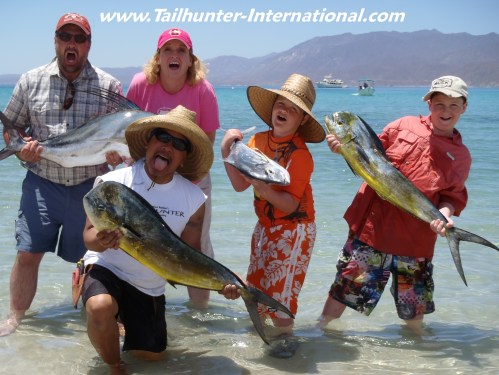
Winter is a great time in Baja and a great time to bring the family! As the our amigos, the Schearer family, from Montana found out with us, Baja is alot warmer than Montana and you don’t have to go out very far to get fish like this!

BECAUSE WE CAN!

Originally Published in Western Outdoor News the Week of Dec. 20, 2012


I’m often asked why we would fish in the winter time?

I guess the quick and wise-guy answer and knee-jerk response is “Because we can!”

But there’s more to it than that. 

During the winter time, the complexion of our Baja vistors changes.  During the regular season,  the majority of our folks are generally fishers.  Or at least have a general focus of getting on or under the water during our warmer months.

During the colder times of the year, I think we see more “escapees.”  These are folks just trying to get away from the chill, ice and wet of home.  “Just lookin’ for some sunshine…any sunshine!” is what I often hear.

While us locals are bundled up in long pants, shoes, and down vests against the “chilly” 60-70 degree weather, folks from Vancouver, Canada…Bozeman, Montana…Portland, Oregon. …happily stroll through town in tank-tops and cargo shorts.   God bless ‘em, they are in sunshine Nirvana!

But, they are often discouraged from fishing when they find out that so many places are rough, windy, or certain “glamour” species like marlin and tuna just aren’t biting in the winter. Or, if they are biting, heading off-shore to catch them can be a long rolling bumpy wet adventure more akin to the very conditions they left back home!

It’s much simplier to park it on a bar stool with a cold umbrella drink and gaze out over the sand and water or take the glass bottom boat ride in the harbor.  Yawn. Right up there with going to listen to a time-share presentation so you can get the free lunch and discount shopping coupons.

But, they shouldn’t let winter discourage time on the water.

One of the great things about fishing in Baja and Mexico is that there is always SOMETHING to catch! 

Frankly, the further south you go, the warmer it will be and the better the chances of catching a glamour fish, but even then, remember that it’s still winter and most of Mexico and Baja’s Pacific coast faces the open ocean (which is why winter surfing in Hawaii is so great!).  There’s big waves and there’s big winds.

It’s no fun being wet and cold and bounced around.

So…

Consider fishing inshore.  So few folks ask for it and so few of the outfitters or charter operators offer it, especially for someone who just walks in or walks up to sign on for a day of fishing.  Which is what so many winter visitors do.  They go fishing on a whim. 

“Honey, instead of visiting the Mayan pottery store,  let’s go ‘deep sea’ fishin’ tomorrow!”

But, chances are you’ll light up a big smile if you ask for inshore fishing.  For the captain our agent or outfitter, it’s a lot more economical since they won’t be burning up a lot of gas.

 Secondly, there’s a lot more inshore fish than offshore blue-water fish .  Therefore,  the chances or success are much greater for them to have smiling anglers at the end of the day.  Finally, believe me.  They don’t want to get beat up out there on the big water any more than you!

From the anglers perspective, waters will probably be calmer.  You’ll have more action with rods in your hands rather than long days of trolling offshore.  Pragmatically, you don’t need a big expensive sportfishing cruiser either.  You can downgrade of fish from pangas since most of the action will be closer to the shores, beaches and reefs. So, it’s less expensive!

In fact, often you’ll just be yards from the shore.  You will often see the bottom and, very often you’ll actually see the fish as they bite. 

And there’s so much variety and action to be had.  Exotic roosterfish…giant pargo…tough jack crevalle…sierra…cabrilla…pompano…are just some of the species available inshore.

And don’t think these fish are any less tough or formidable just because they inhabit the inner waters.  Pargo can be 30-50 pounds with sharp teeth and gillplates as they attack from the rocks.  Roosterfish can swarm in schools or be the big trophy sluggers between 30 and 100 pounds that have made them famous in Baja and the world.  Catch 20 five-pound sierra or a half-dozen 30 pound jack crevalle and I can guarantee your arms will still be sore!

Another bonus is that this is very pro-active fishing. Since you’re not simply dragging lures offshore waiting for hits, you’ll have a rod in your hand most of the time.  This is a great plus if you’re fishing with first-timers, family members or the kids!  Everyone participates.  Everyone has fun.

And, at the end or the day, inshore fish is among the best eating!  So, don’t let winter deter some great fishing fun!

That’s our story!

Jonathan and Jill

__________________

Jonathan Roldan has been writing the Baja Column in Western Outdoor News since 2004.  Along with his wife and fishing buddy, Jilly, they own and run the Tailhunter International Fishing Fleet in La Paz, Baja, Mexico  www.tailhunter-international.com.  They also run their Tailhunter Restaurant Bar on the famous La Paz malecon waterfront.  If you’d like to contact him directly, his e-mail is riplipboy@tailhunter-international.com  or drop by the restaurant to say hi!

______________

Jonathan Roldan’s Tailhunter International

TAILHUNTER FISHING FLEET #1 Rated on Trip Advisor

TAILHUNTER RESTAURANT BAR #1 Rated in La Paz on Trip Advisor


Now follow us on FACEBOOK TOO

Website: www.tailhunter-international.com U.S. Office: 3319 White Cloud Drive, Suite A, Hacienda Hts. CA 91745 Mexico Office: 755 Paseo Obregon, La Paz, Baja Sur, Mexico Phones: from USA : 626-638-3383 from Mexico: 044-612-14-17863

Tailhunter Weekly Fishing Report: http://fishreport.jonathanroldan.com/

Tailhunter YouTube Videos: http://www.youtube.com/user/pangapirate

“When your life finally flashes before your eyes, you will have only moments to regret all the things in life you never had the courage to try.”
Read Full Post »

« Newer Posts