Feeds:
Posts
Comments

Posts Tagged ‘fishing video’

DSC_0147

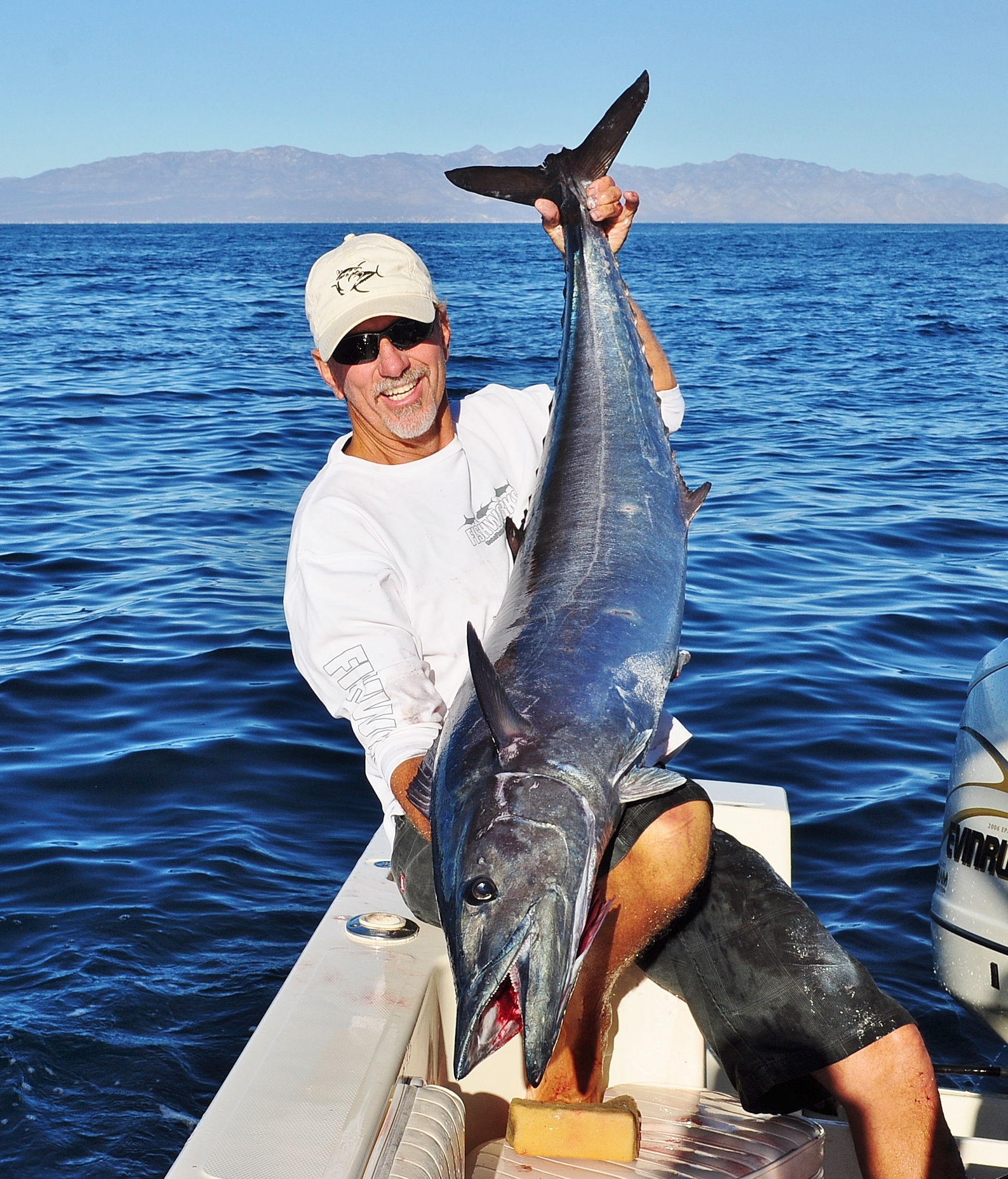
They say it’s better to be “lucky” than “good” but if you can be both, that’s even better and a few fine-tuning tips go a long way. Roger Thompson of La Ventana is very lucky but that’s because he’s very good! He makes his own “luck” as he shows off another dandy wahoo!

NEXT LEVEL WAHOO

Originally Published the Week of April 18, 2013 in Western Outdoor News Publications

This past week here in La Paz, we’ve had a sudden and unexpected run of wahoo.  Normally, at least for our area, it’s not a species we encounter so early in the year and it ended up surprising many of our anglers as well as captains.

The speedy sharp-toothed fish is incredibly-prized by anglers as one of the best eating but also one of the most ferocious fighters.  Reputedly capable of speeds up to 70 mph, they are arguably the fastest fish in the ocean.  I once described it to a client as dropping a hook and line over a freeway bridge and suddenly hooking a car passing underneath!  It’s definitely NOT a fish you would want to try to stop by putting your thumb on the spool unless you’re tired of having skin!

Fortunately, wahoo aren’t headed miles the highway but they are surely capable of blazing runs in one direction then turning on a dime and jetting off in another.  This requires anglers to keep that rod tip up and pointed in the general direction of the fish because it can go headed north one minute and seconds later go tearing west! I’ve seen guys comically sprint from bow to stern and back again trying to keep up!

Knowing how they feed and fight will increase your edge in putting one of these guys on the deck.  And that’s a big problem I saw this past week. We had lots of hookups, but the ratio of hookups-to-fish caught was unfortunate.  It seemed three of these fish were lost for everyone hooked.

For baitfishers, for all their speed, wahoo aren’t hard-charging feeders generally.  I’ve been underwater and watched them feed and have seen numerous videos.  With their razor-like teeth, wahoo will often get a bait and “scissors” it in half or into pieces.

They then come around and slurp up their food!  Like a guy who cuts up all his steak into bite-sized pieces before actually started to eat!

What I often see is someone who gets a tug on their bait.  They go “oh no!” and then start to crank it in thinking that the just got cleaned.  They pull in the bait and find their bait neatly missing it’s rearend as if someone has taken a scalpel to it.  If wahoo are in the area, best to just let it sit for a bit.  The wahoo will often come back around to “pick up the pieces.”

Many anglers enjoy throwing “iron” or “wahoo bombs” at the fish.  Great fun.  Cast and let it flutter down.  Marine biologists and lure manufacturers have told me wahoo have poor eyesight.  However, they pick up movement and vibration along those long flanks!

Therefore, the more movement you can impart to your lure or jig, the better your chances.  Shiny lures rather than painted lures have always been my preference.  My bombs are skirted with shiny metallic tinsel.  All my lure hooks have hammered little spinner leaves on them.

As they drop or on the retrieve,  twitch and jerk the lure so that it flutters as much as possible and appears like a wounded fish.  The wahoo pick up the movement and zero-in.   Then, when they get close the actual “flash” of the lure generates the strike.

I like to think of a cat.  If you put a ball in front of it, the cat can’t be bothered.  If you roll that ball or bounce it in front of the cat, it suddenly reacts!  That’s what you want with a wahoo.

As for trolling, think of the same things.  The “movement” pulls them in, but the color and presentation generate the strike.

Don’t worry about trolling too fast!  Remember, wahoo can outswim your boat!

I personally like to drag my wahoo Marauder, Rapala or heavy jet-head just inside and below the bubbles of the propwash.  I’ve seen wahoo come right up to the transom of fishing boats and still take trolled lures.  So, I don’t need to be a football field back with my lures!

Oh…and one other edge…I take treble hooks off my lures and replace them with single Siwash style hooks.  Wahoo have extremely hard jaws.   Treble hooks sometimes don’t pierce very deeply.  Single hooks jam in deeper.

Additionally, wahoo will twist and torque around when fighting.  They can torque themselves right off a hook, which I have often seen.  Again, this is an argument for the deeper-penetrating single hooks.

Sometimes just as the angler  gets “color” on the fish close to the boat and is mentally congratulating himself ADIOS!  Bye-bye, Mr. Wahoo.

Having single hooks in a lure, very often the second hook also twists around and then buries itself into the jaw or head at a different angle firmly securing the fish in an inescapable double-hook vise!

Whether you fish with bait, lures or are trolling, the biggest question is whether to use wire.    I think it comes to personal preference.

In several decades living here in Mexico and working boats and in the fishing industry, I see many captains and pros that debate the issue back and forth.  Personally, I believe I get more bites with straight mono and leave out the wire.  I lose more fish, maybe than the guy with wire.  But I do get more bites and most times, I can put the fish in the boat.   However, I use double leaders if I’m fishing mono.

First, it acts as a shock leader to take some of the strain off the initial hit.  Second, even if the wahoo cuts one side of my leader, I’ve rarely seen it cut through the other side of the leader.  And, like I said, I get more bites.  My bait and lures swim more naturally generating more strikes!  And to me, that’s what it’s about!

That’s our story!

Jonathan Roldan

_______________

Jonathan Roldan has been writing the Baja Column in Western Outdoor News since 2004.  Along with his wife and fishing buddy, Jilly, they own and run the Tailhunter International Fishing Fleet in La Paz, Baja, Mexico  www.tailhunter-international.com.  They also run their Tailhunter Restaurant Bar on the famous La Paz malecon waterfront.  If you’d like to contact him directly, his e-mail is riplipboy@tailhunter-international.com  or drop by the restaurant to say hi!

______________

Jonathan Roldan’s

Tailhunter International


TAILHUNTER FISHING FLEET #1 Rated on Trip Advisor

TAILHUNTER RESTAURANT BAR #1 Rated in La Paz on Trip Advisor


Now follow us on FACEBOOK TOO


Website: www.tailhunter-international.com

U.S. Office: 3319 White Cloud Drive, Suite A, Hacienda Hts. CA 91745

Mexico Office: 755 Paseo Obregon, La Paz, Baja Sur, Mexico

Phones:

from USA : 626-638-3383

from Mexico: 044-612-14-17863

.

Tailhunter Weekly Fishing Report:

http://fishreport.jonathanroldan.com/

Tailhunter YouTube Videos:

http://www.youtube.com/user/pangapirate

“When your life finally flashes before your eyes, you will have only moments to regret all the things in life you never had the courage to try.”

Read Full Post »

Salt Lake City-20120210-00078

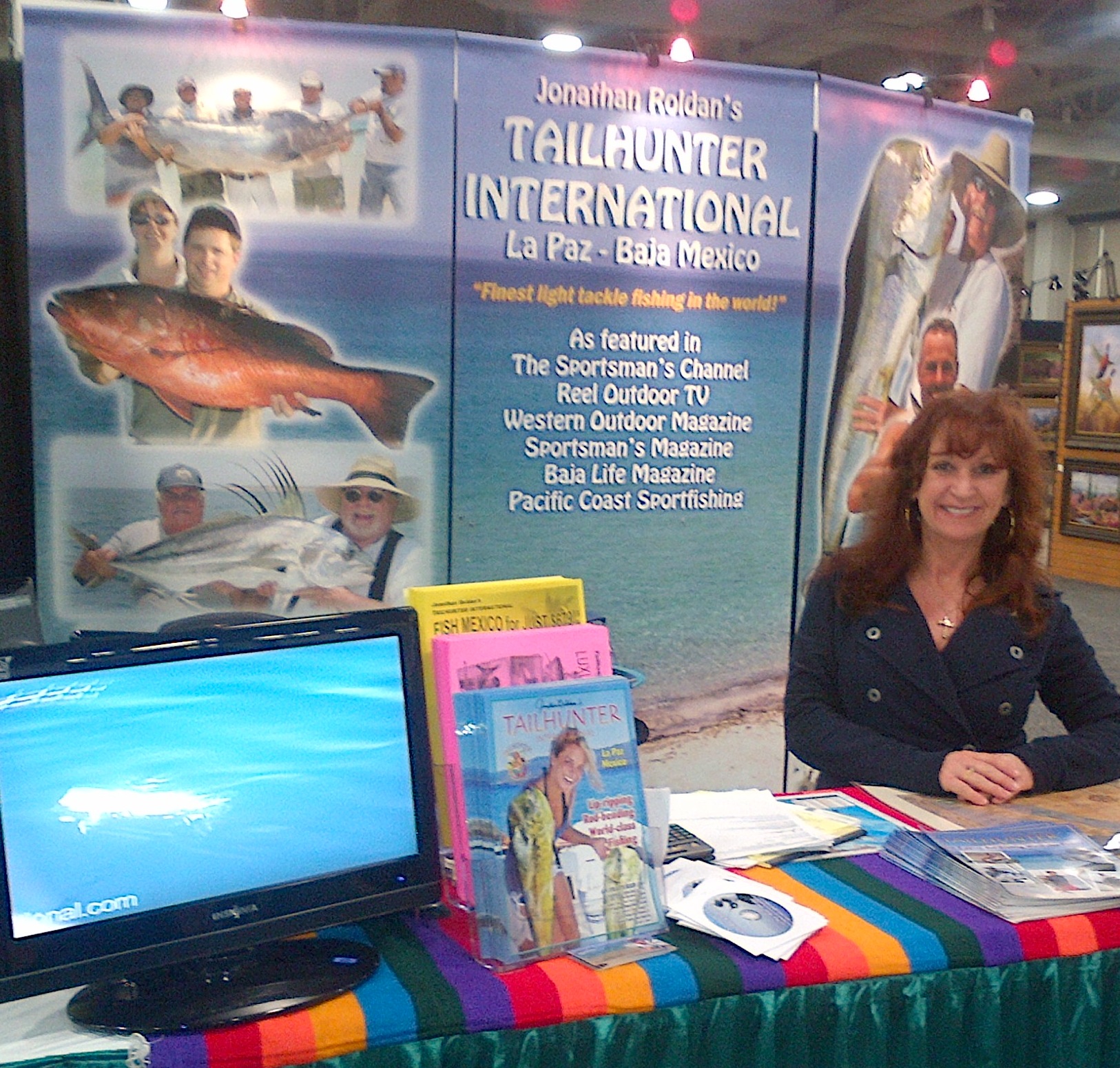
From January to March of each year for almost 20 years, we criss-cross the western U.S. promoting our fishing operation in La Paz and often become an impromptu clearing-house of many general questions about travel to Baja and Mexico in general.

“BAJA FAQ 2013”

Originally Published the Week of Feb. 13, 2013 in Western Outdoor News

As I’m writing this, we’re just wrapping up our 3rd day here at the Pacific Northwest Sportsmens Show here in Portland, Oregon.  We’ve been on the road now for more than a month as we do our annual show-hopping promo tour across the country.

So far, we’ve done fishing/ hunting shows in Sacramento, Denver, Seattle before this one.  Only 2 more months to go and about 12,000 more miles of driving.

As we stand here in our booth, promoting our La Paz fishing operation for 8, 10…12 hours a day, we talk to hundreds of people a show.  We often hear many of the same questions.  Year-after-year.  Although the questions might be the same, very often the answers might change based on changing conditions in Baja.

I thought I’d share some of the most common questions.  Some might seem pretty simple…or silly…or obvious…but as mentioned, sometimes answers might surprise you.  Also, we get asked these questions ALOT so obviously, alot of folks don’t know these answers!

Q:  Where is Baja, Mexico?

A:  It’s the 1000 mile-long-peninsula extending from the border at San Diego/ Tijuana and going south to lands-end at Cabo San Lucas.  It is bordered by the Pacific Ocean to the West and is separated from the Mexican mainland to the east by the Sea of Cortez.

Q:  Is it safe?

A:  The  VERY short answer.  Yes.  Mexico is a huge country.  Generally as safe as most cities in the U.S. and in some respects even safer.  Yes, there are serious problems, but much of that is only in certain areas and in border areas and tourists are not generally targeted anymore than tourists are targeted by crime in the U.S.  In any given city, just like most U.S. cities, there are good and bad parts of town.  Stay out’ve the bad parts.

Q:  Is it OK to drive?

A:  On any given day, there are thousands of tourists on Baja roads having un-eventful drives.  Thousands cross the border daily and routinely.   Observe the laws.  Make sure you have insurance. Drive with care and common sense as you would anywhere.

Q:  Can we buy property?

Yes, you can.  Who do you think is buying all these parcels, condos, houses and lots along the beachfronts! Sometimes it seems that Americans are buying up all of Baja.

Q:  Is it always good fishing?

A:  Historically,  Baja is one of the most famous fishing areas in the world.  But…Baja is 1000 miles long.  It has over 2000 miles of coastline.  It has incredible fishing and over 700 identified species of fish in the Sea of Cortez.  That being said, fishing is as different as the species, location and variables such as  season, weather, current, bait, etc.  Every places is not great 100% of the time.  There’s such a thing as a bad day of fishing.

Q:  Can we bring our fish home?

A:  As long as you’re within limits and observe regulations, it would be a shame if you didn’t.

Q:  Is the water safe to drink?

Most places very much so!  But, like many places in the U.S.,  municipal water tastes bad.  Everyone drinks bottled water which is readily available.

Q:  Can we use American money?

A:  In Baja, American dollars are very welcome, but with new banking laws, making it harder for Mexican vendors to change dollars into pesos,  it makes it harder for the vendors to accept pesos…especially large denominations.  Rarely, will a vendor turn down a payment in dollars…a sale is a sale!  But increasingly, more can’t accept large denominations.  So, it’s a good idea to use smaller bills or get pesos exchanged before you come over or at an exchange house.  Many Mexican banks will not change dollars to pesos unless you have an account and, even then, only small amounts.

If you can avoid it, don’t use credit cards. But,  many places won’t accept them because of high surcharges to the vendor.

Q:  What happens if we need medical help or what happens if I have special medical needs?

If it’s  your medication, bring what you need and extra dosage.  Bring a copy of your prescription.  If it’s emergency medical care, most large Baja cities actually have pretty good first response and emergency care.  Enough to get you home after most emergencies so that your own doctor can treat you.  Credit cards  are usually welcome in lieu of insurance. Generally, emergency care is much cheaper also.

Q:  What happens if we don’t speak Spanish

English is growing.  Span-glish is universal, especially in the tourist areas.   Keep it simple and eliminate slang and most folks  will understand and everyone gets along just fine.  But, everyone appreciates any attempt to speak Spanish!

Q:  Do we need a passport?

Yes! Don’t wait until the last minute to get one.

Q:  Can we still get prescription drugs there with no prescription?

Generally no.  Not like in the old days. Generally speaking, if you need a prescription for it in the U.S., you’ll need it for most things in Mexico.

Q:  How is it to retire there?

It’s one of the fastest and most sought-after places for gringos to retire and an excellent place to make dollars stretch with a high standard of living.  You get more bang for the buck.

______________

Jonathan Roldan has been writing the Baja Column in Western Outdoor News since 2004.  Along with his wife and fishing buddy, Jilly, they own and run the Tailhunter International Fishing Fleet in La Paz, Baja, Mexico  www.tailhunter-international.com.  They also run their Tailhunter Restaurant Bar on the famous La Paz malecon waterfront.  If you’d like to contact him directly, his e-mail is riplipboy@tailhunter-international.com  or drop by the restaurant to say hi!

______________

Jonathan Roldan’s

Tailhunter International


TAILHUNTER FISHING FLEET #1 Rated on Trip Advisor

TAILHUNTER RESTAURANT BAR #1 Rated in La Paz on Trip Advisor


Now follow us on FACEBOOK TOO


Website: www.tailhunter-international.com

U.S. Office: 3319 White Cloud Drive, Suite A, Hacienda Hts. CA 91745

Mexico Office: 755 Paseo Obregon, La Paz, Baja Sur, Mexico

Phones:

from USA : 626-638-3383

from Mexico: 044-612-14-17863

.

Tailhunter Weekly Fishing Report:

http://fishreport.jonathanroldan.com/

Tailhunter YouTube Videos:

http://www.youtube.com/user/pangapirate

Read Full Post »

« Newer Posts