Feeds:
Posts
Comments

Posts Tagged ‘fishing charters’

DSC_0147

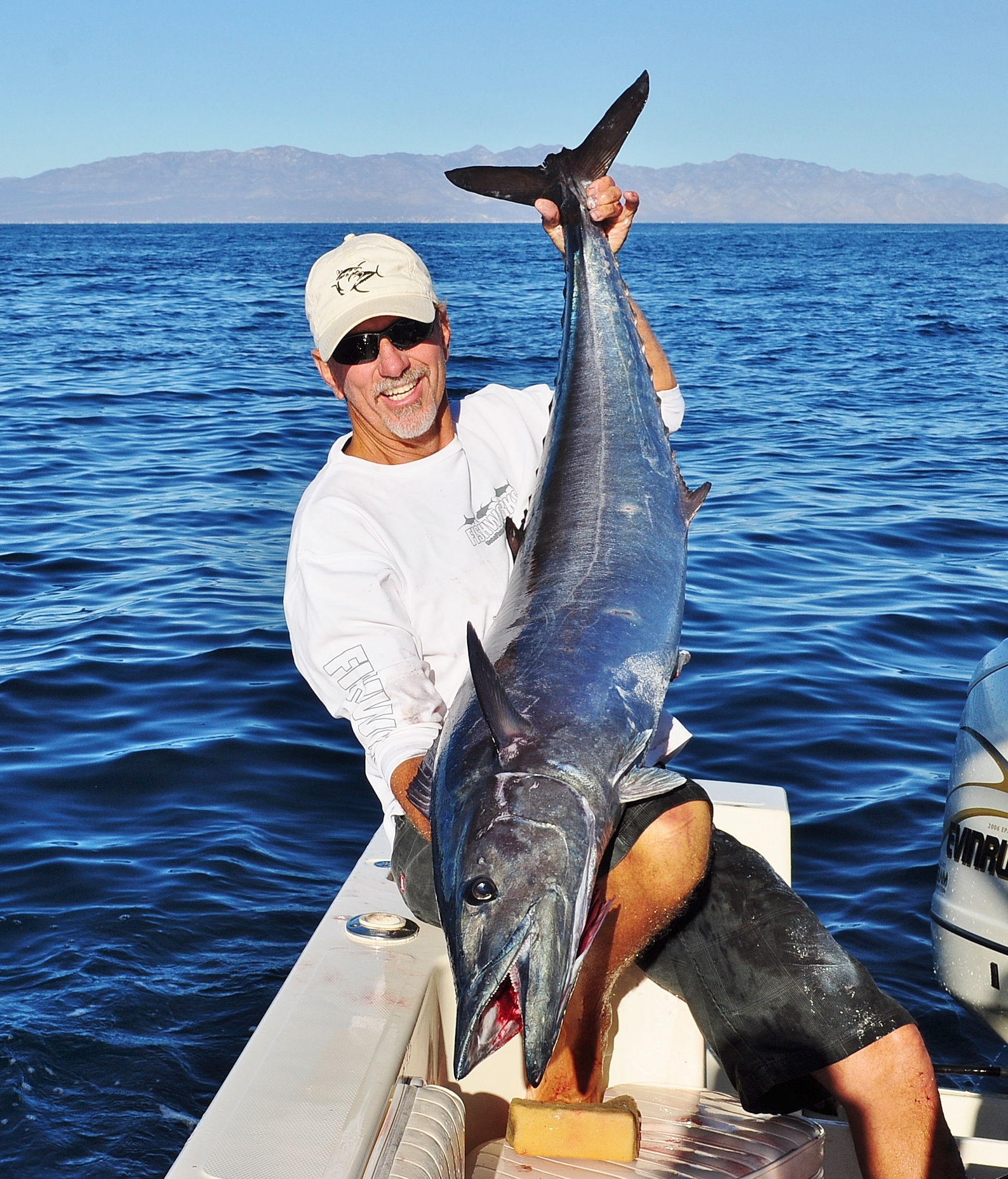
They say it’s better to be “lucky” than “good” but if you can be both, that’s even better and a few fine-tuning tips go a long way. Roger Thompson of La Ventana is very lucky but that’s because he’s very good! He makes his own “luck” as he shows off another dandy wahoo!

NEXT LEVEL WAHOO

Originally Published the Week of April 18, 2013 in Western Outdoor News Publications

This past week here in La Paz, we’ve had a sudden and unexpected run of wahoo.  Normally, at least for our area, it’s not a species we encounter so early in the year and it ended up surprising many of our anglers as well as captains.

The speedy sharp-toothed fish is incredibly-prized by anglers as one of the best eating but also one of the most ferocious fighters.  Reputedly capable of speeds up to 70 mph, they are arguably the fastest fish in the ocean.  I once described it to a client as dropping a hook and line over a freeway bridge and suddenly hooking a car passing underneath!  It’s definitely NOT a fish you would want to try to stop by putting your thumb on the spool unless you’re tired of having skin!

Fortunately, wahoo aren’t headed miles the highway but they are surely capable of blazing runs in one direction then turning on a dime and jetting off in another.  This requires anglers to keep that rod tip up and pointed in the general direction of the fish because it can go headed north one minute and seconds later go tearing west! I’ve seen guys comically sprint from bow to stern and back again trying to keep up!

Knowing how they feed and fight will increase your edge in putting one of these guys on the deck.  And that’s a big problem I saw this past week. We had lots of hookups, but the ratio of hookups-to-fish caught was unfortunate.  It seemed three of these fish were lost for everyone hooked.

For baitfishers, for all their speed, wahoo aren’t hard-charging feeders generally.  I’ve been underwater and watched them feed and have seen numerous videos.  With their razor-like teeth, wahoo will often get a bait and “scissors” it in half or into pieces.

They then come around and slurp up their food!  Like a guy who cuts up all his steak into bite-sized pieces before actually started to eat!

What I often see is someone who gets a tug on their bait.  They go “oh no!” and then start to crank it in thinking that the just got cleaned.  They pull in the bait and find their bait neatly missing it’s rearend as if someone has taken a scalpel to it.  If wahoo are in the area, best to just let it sit for a bit.  The wahoo will often come back around to “pick up the pieces.”

Many anglers enjoy throwing “iron” or “wahoo bombs” at the fish.  Great fun.  Cast and let it flutter down.  Marine biologists and lure manufacturers have told me wahoo have poor eyesight.  However, they pick up movement and vibration along those long flanks!

Therefore, the more movement you can impart to your lure or jig, the better your chances.  Shiny lures rather than painted lures have always been my preference.  My bombs are skirted with shiny metallic tinsel.  All my lure hooks have hammered little spinner leaves on them.

As they drop or on the retrieve,  twitch and jerk the lure so that it flutters as much as possible and appears like a wounded fish.  The wahoo pick up the movement and zero-in.   Then, when they get close the actual “flash” of the lure generates the strike.

I like to think of a cat.  If you put a ball in front of it, the cat can’t be bothered.  If you roll that ball or bounce it in front of the cat, it suddenly reacts!  That’s what you want with a wahoo.

As for trolling, think of the same things.  The “movement” pulls them in, but the color and presentation generate the strike.

Don’t worry about trolling too fast!  Remember, wahoo can outswim your boat!

I personally like to drag my wahoo Marauder, Rapala or heavy jet-head just inside and below the bubbles of the propwash.  I’ve seen wahoo come right up to the transom of fishing boats and still take trolled lures.  So, I don’t need to be a football field back with my lures!

Oh…and one other edge…I take treble hooks off my lures and replace them with single Siwash style hooks.  Wahoo have extremely hard jaws.   Treble hooks sometimes don’t pierce very deeply.  Single hooks jam in deeper.

Additionally, wahoo will twist and torque around when fighting.  They can torque themselves right off a hook, which I have often seen.  Again, this is an argument for the deeper-penetrating single hooks.

Sometimes just as the angler  gets “color” on the fish close to the boat and is mentally congratulating himself ADIOS!  Bye-bye, Mr. Wahoo.

Having single hooks in a lure, very often the second hook also twists around and then buries itself into the jaw or head at a different angle firmly securing the fish in an inescapable double-hook vise!

Whether you fish with bait, lures or are trolling, the biggest question is whether to use wire.    I think it comes to personal preference.

In several decades living here in Mexico and working boats and in the fishing industry, I see many captains and pros that debate the issue back and forth.  Personally, I believe I get more bites with straight mono and leave out the wire.  I lose more fish, maybe than the guy with wire.  But I do get more bites and most times, I can put the fish in the boat.   However, I use double leaders if I’m fishing mono.

First, it acts as a shock leader to take some of the strain off the initial hit.  Second, even if the wahoo cuts one side of my leader, I’ve rarely seen it cut through the other side of the leader.  And, like I said, I get more bites.  My bait and lures swim more naturally generating more strikes!  And to me, that’s what it’s about!

That’s our story!

Jonathan Roldan

_______________

Jonathan Roldan has been writing the Baja Column in Western Outdoor News since 2004.  Along with his wife and fishing buddy, Jilly, they own and run the Tailhunter International Fishing Fleet in La Paz, Baja, Mexico  www.tailhunter-international.com.  They also run their Tailhunter Restaurant Bar on the famous La Paz malecon waterfront.  If you’d like to contact him directly, his e-mail is riplipboy@tailhunter-international.com  or drop by the restaurant to say hi!

______________

Jonathan Roldan’s

Tailhunter International


TAILHUNTER FISHING FLEET #1 Rated on Trip Advisor

TAILHUNTER RESTAURANT BAR #1 Rated in La Paz on Trip Advisor


Now follow us on FACEBOOK TOO


Website: www.tailhunter-international.com

U.S. Office: 3319 White Cloud Drive, Suite A, Hacienda Hts. CA 91745

Mexico Office: 755 Paseo Obregon, La Paz, Baja Sur, Mexico

Phones:

from USA : 626-638-3383

from Mexico: 044-612-14-17863

.

Tailhunter Weekly Fishing Report:

http://fishreport.jonathanroldan.com/

Tailhunter YouTube Videos:

http://www.youtube.com/user/pangapirate

“When your life finally flashes before your eyes, you will have only moments to regret all the things in life you never had the courage to try.”

Read Full Post »

squid martis tags

Giant Humboldt squid surprise alot of anglers when they first encounter them and find them to be voracious feeders and tough fighters when hooked!

squid

Squid can go upwards to…20, 30, 40 pounds or more…they don’t call them “giant” for nothing!

squid_beaktags

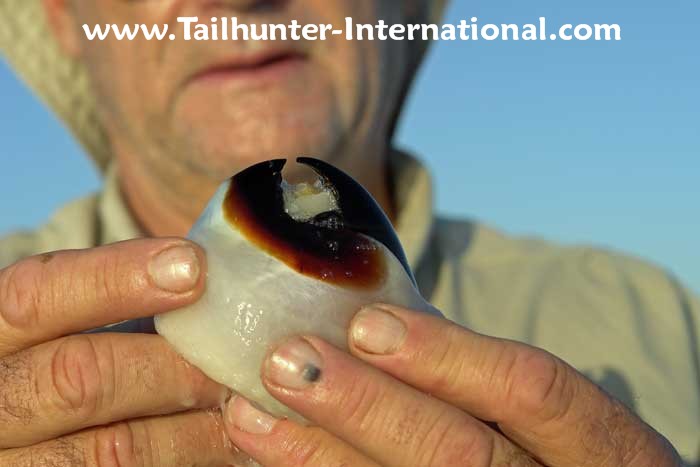
The beaks of the giant squid aren’t something to fool around with when still attached to their owners! They’re like big parrot beaks!

THE BIG UGLY

Originally Published the Week of Feb. 28, 2013 in Western Outdoor News

The Captain Victor tied on the heavy leaded lure and handed it back to the angler who looked at it curiously.   He hefted it in his hand and like a weapon.  And indeed, it looked like one.

“Pretty much looks like a medieval club or a torturing device,” he smiled. “a knight could do some damage with this sucker!”

He turned it around in his hand.  The heavy leaded pipe was about a foot long and filled with cement.  It was painted white.  The line was tied to one end.  At the other, it looked like a multi-pronged grappling hook with about a dozen 2-inch long up-turned sharpened spikes.

“Whatever bites this is gonna be interesting,” he said as he put his heavy 4/0 reel with 60 pound test into free-spool and dropped the lure over the side.  Weighing about 2 pounds, it dropped quickly into the depths about 500 yards off the rugged Baja coastline.

Mas linea..more line…more line,” said the captain with a mixture of hand gestures and broken Spang-lish.  “Muy profundo aqui…very deep here, “ as he pointed down into the cobalt morning waters.

“Ok-dokie, amigo” said the angler with a shrug.

The heavy rod and reel continued to play out line.

The captain touched the rod as a sign to stop.  The angler put the rod into gear and figured he was about 400 feet straight-up-and-down.

The Captain Victor motioned for the angler to reel slowly, but at the same time raising and lowering the rod in a sweeping motion stopping the retrieve and letting the heavy jig drop back and winding a few cranks more.

The angler took about half a dozen sweep-and-cranks and suddenly the heavy beefy rod went over double nearly pulling the angler to his feet!

“WHOA!  WHAT THE…???”

Grunting he struggled to turn the handle of the straining reel.  He looked up at the grinning captain now smiling smugly.

“Big squid! Calamar grande!” said Captain Victor with a big satisfied grin and arms folded across his chest.

Sometimes you really have to watch what you ask for.  Often folks want to know if the squid are biting and this just happens to be about that time.  They’re not always “on time” and the bite is cyclical,  but at least for us in La Paz, we get a run of squid in the spring and summer.

Like other sea creatures, it’s not like they send out a memo or anything.

But, when they show up, they generate alot of excitement.  Not only are they fun to catch and extremely feisty when hooked,  but they are just plain fascinating.  They’re the stuff of story, legend and sea-monster!

When folks come down, they normally, aren’t quite ready for what awaits.  The “Humboldt” squid we normally get can be as small as 5 pounders, but 40-100 pound beasts are not uncommon.

When the squid “float” (come near the surface from the cold depths) to where they can be caught, often many boats and pangas will pack the area.  If the big squid are there, it’s not long before heavy rods and double-bent anglers are pulling mightly as if small refrigerators are hanging on the ends…which isn’t too far from the truth!

The vessles are often quite close and once the bite starts, it can get pretty crazy as the wiggling-squirting cephalapods get close to the boats.  A good tip is to let the struggling animals finish their squirting BEFORE bringing them aboard! Between the vessels,  big firehose-sized geysers of water and ink are often seen raining down and spraying anyone within range.  Yells and laughs as well as choice bits of profanity often permeate the scene.

In fact, it’s often a good idea to dispatch the big uglies before bringing them aboard at all.  Squid are voracious and aggressive.  Just because they’re hooked doesn’t mean their beat.

A third of their body length is a mass of tentacles.  An, unlike an octopus, the “suckers” on a squid’s tentacles aren’t little suction cups.  They are concentric circles of teeth surrounding a little beak that can easily break skin when wrapped around the nearest leg, arm or finger.

Certainly, you don’t want to get an appendage near to it’s parrot-like beak which is capable of really doing damage and can take off a finger.  Or they can quickly gouge out a chunk of an angler.

Make no mistake, while small squid in a bait tank can be fun to play with, the Humboldts are dangerous critters.  They are opportunistic feeders and the large ones have been known to attack sharks, tuna and even the occasional diver…not to mention each other.

In fact, the heavy jig used to catch them is painted white to resemble a smaller squid enticing a larger squid to attack it.  Indeed, the squid are cannibalistic and many times, as you’re bringing a squid to the boat, it will often feel like it’s no longer struggling and has turned to dead weight.

If the water is clear enough, you can often see other squid attacking and hacking the one squid impaled on the jig.  There’s no fraternity below the surface.  Eat and get eaten!

It took some grunting and no shortage of sweat and elbow grease to get the big 50-pound squid to the panga.  As per the captains instructions, the angler let the big animal empty it’s jets of water and black ink before bringing it into the panga.

Wiping his brow, with the back of his fist, the angler laid down the rod in exhaustion.

Muy bueno por carnada…good for bait,” smiled Captain Victor as he hacked off one tentacle and wrapped it around a larger bait hook ready to go look for some real fish.

“Like heck!” laughed the angler, cutting off a huge chunk himself and bagging it for the ice chest.  “It’s going into some beer batter for fried squid dinner tonite!”

“But first, let’s catch a few more!” he added tossing the  heavy jig back overboard.

That’s our story!

Jonathan

_______________

Jonathan Roldan has been writing the Baja Column in Western Outdoor News since 2004.  Along with his wife and fishing buddy, Jilly, they own and run the Tailhunter International Fishing Fleet in La Paz, Baja, Mexico  www.tailhunter-international.com.  They also run their Tailhunter Restaurant Bar on the famous La Paz malecon waterfront.  If you’d like to contact him directly, his e-mail is riplipboy@tailhunter-international.com  or drop by the restaurant to say hi!

______________

Jonathan Roldan’s

Tailhunter International


TAILHUNTER FISHING FLEET #1 Rated on Trip Advisor

TAILHUNTER RESTAURANT BAR #1 Rated in La Paz on Trip Advisor


Now follow us on FACEBOOK TOO


Website: www.tailhunter-international.com

U.S. Office: 3319 White Cloud Drive, Suite A, Hacienda Hts. CA 91745

Mexico Office: 755 Paseo Obregon, La Paz, Baja Sur, Mexico

Phones:

from USA : 626-638-3383

from Mexico: 044-612-14-17863

.

Tailhunter Weekly Fishing Report:

http://fishreport.jonathanroldan.com/

Tailhunter YouTube Videos:

http://www.youtube.com/user/pangapirate

“When your life finally flashes before your eyes, you will have only moments to regret all the things in life you never had the courage to try.”
Read Full Post »

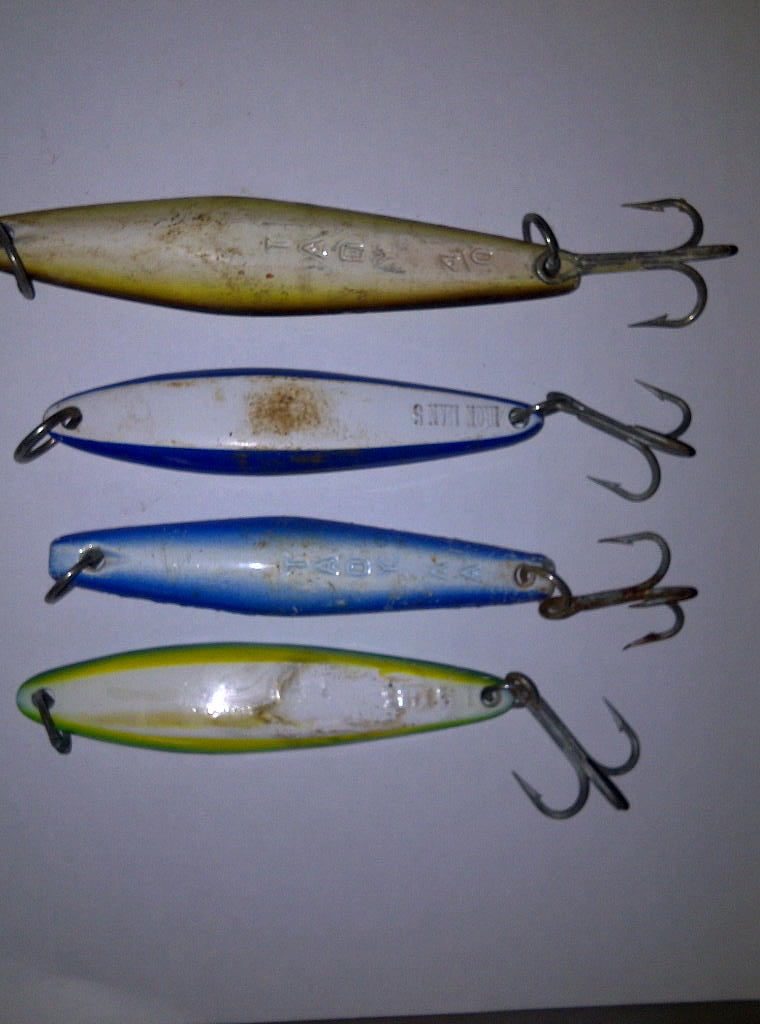
An effective line up of "iron"

An effective line up of “iron”

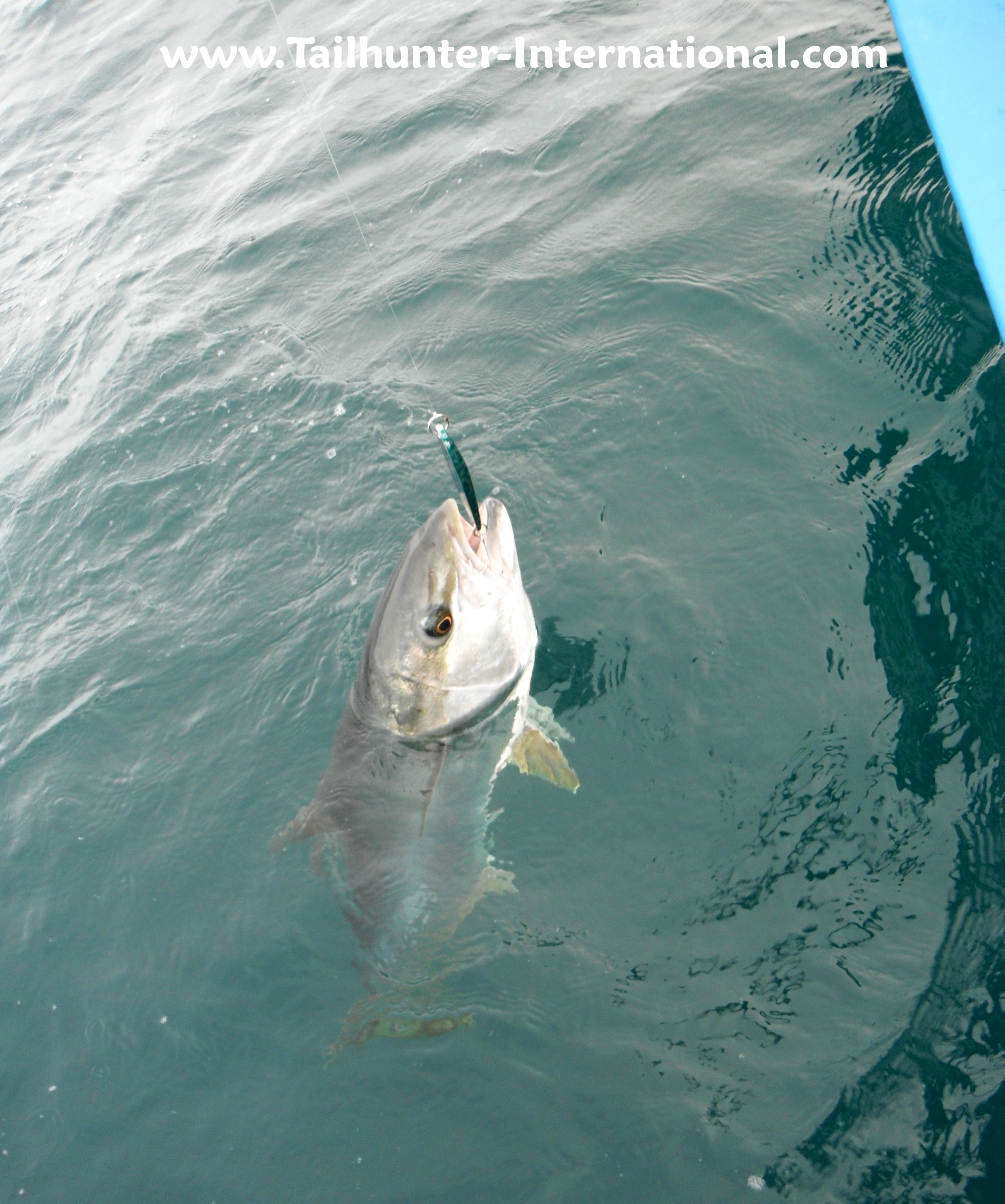
"Fresh one!"  A yellowtail hanging on the iron!  These guys will slam a fast-retrieved iron hard enough to hank the rod from your hands!

“Fresh one!” A yellowtail hanging on the iron! These guys will slam a fast-retrieved iron hard enough to hank the rod from your hands!  A chrome-pattern did the trick on this big yellow.

BAJA PRIMER – “IRON” THE NEXT STEP

Orginally Published in Western Outdoor Publications

You’re ready to try something different.  You’ve got a bit of strut in your step.  You’ve been on your share of fishing trips.  Into Mexican waters from San Diego.  Some trips from Cabo and the East Cape.  Maybe some mother-ship trips from San Felipe.

You’ve put some fish in the bag and a few fillets in the ice chest.  You’re no rookie and think you can pretty much hold your own and know how to tie a knot and which side of the reel is up.

So, now what?

You’re been watching some of the other “hot sticks.”  You realize you’ve caught all your Mexico fish with bait or trolling.  Although it’s exciting and you fill your sack,  you’re ready to step-up your fishing repertoire.

Yawn…

It dawns on you that everyone and anyone can catch fish with bait.  And it’s a no-brainer to drag lures around the ocean waiting for a bite.  In the fish-rich waters of Mexico, if the fish are hungry, they’ll eat a bait.  If you drive the boat over the right patch of water, you get bit too.

What’s the challenge in that?

But, you notice the bit of swagger and yes, maybe even cockiness in the guys they call the “ironmen.”   They’re the guys who can put a fish in the boat when nothing else is biting or no one else is getting bit.  They get the bigger fish.  They win jackpots.  Plus it looks like fun and you want a piece of that!

It does’t take much to get started.  Your local tackle shop can get you started.  Do not be afraid to ask for help and don’t be afraid to admit you’ve never fished “the iron” before.

The best thing is that many of the most popular Mexican game fish like tuna and yellowtail are not only some of the most fun to catch on the iron, but also will readily bite iron lures.

“Iron” refers the class of lures that generally  look like pieces of heavy sculpted elongated metal…a bit like a metal candy bar.  Hence the moniker “iron.”  They come in a dizzying array of shapes, sizes and colors, but just for learning sake,  you can get by with just a handful that will cover most situations:

They involve combinations of chrome/ white/ blue/ green/ yellow/ brown.  Have your tackle dealer point them out.

Manufacturers of many of the most popular include:  Tady / UFO / Fire / Salas/ Raider / Hopkins / Williamson/ and Candy Bar…just to name a few.

Unless you know how to cast already, start with the heavier jigs.  Something that will sink and cast easily like 3-6 oz lures are typical for starters.

If you don’t know how to cast yet, don’t let that stop you.  You can “fish the iron” even if you don’t know how to cast.  If you can do a simple underhand cast or sidearm cast or even just drop the jig overboard, you’ll do just fine.

The real secret in fishing the iron isn’t necessarily in how far you can cast.  The real secret is in getting the jig to “swim” imparting it with a life-like action that will entice a fish to bite.  And that’s where the fun comes in.

If you’ll notice, all lures have “edges.” These are the cuts and angles molded into the lures.  They might give it the appearance of an elongated diamond.  Or a twisted piece of metel or give it little indents or the appearance of “shoulders.”  But these little bits and cuts make the lure “swim” as it’s retrieved through the water.

Some dart and dive.  Others shimmy.  Or spin.  Or wiggle.  All have their own characteristics which change depending on how you retrieve or use the lure.  Some are even cut to flutter like a dead bait when simply sinking in the water.

There are different techniques to do all of this.  One of the most common and the easiest for a beginner is to fish “on the slide.”  While the trolling rods are out, I like to have a nice heavy chrome lure ready and tied to a shorter rod and and least 40-50 pound test.   When the trolling reel goes off, the boat usually coasts or “slides” to a stop while someone battles the hooked fish.

Fishing the “slide” simply entails taking the reel out’ve gear and letting that heavy jig flutter down behind the boat.  If there’s a school of fish, especially tuna following behind the hooked fish watch out!

This is one of the deadliest means of hooking that next fish as they swarm to the boat.  A ferocious strike often occurs as the jig falls or when the reel is suddenly put in to gear!  Hold on!

The second easiest way to learn to fish the iron is called “yo-yo” fishing.  Again, this is as simple as dropping the jig overboard from a stopped boat.  If you can do a side cast or a long under-handed cast all the better.

Let the lure fall.  Once more, don’t be surprised if the lure is hit on the drop as it flutters down through the zones.

After a reasonable time, start winding.  Now, this take a bit of watching.  With some lures, if you wind too fast, the lure “propellers” and just spins.  Not good.  Too slow and the lure doesn’t move at all.  It just hangs there as it comes back to the boat.  Not good either.

So, watch and get a good “swim” on your lure.  Some fish like yellowtail really go after a lure that’s moving fast.  The faster the better.  Others like tuna aren’t so picky.   Remember, the point is to make the lure imitate a live bait that will interest the fish in biting.

Once you have that, try different motions.  The “sweep” involves winding and lifting with the rod at the same time in a “sweep” motion.  Then stopping and letting the lure flutter down again.  Then winding again.

“Ripping” involves a fast  vertical retrieve, then stopping.  Throw the reel into free-spool and letting the lure fall back down.  Then back into gear and winding quickly again.

If you can get a short cast out, try the “Z-pattern.”  Winding back towards the boat.  Stopping and letting the lure fall…then winding again….then letting the lure fall…then winding again in a “Z pattern” back to the boat.

Practice and watch.  You’ll get better in now time and add something new to your fish-catching arsenal.

That’s my story!

Jonathan

______________

Jonathan Roldan has been writing the Baja Column in Western Outdoor News since 2004.  Along with his wife and fishing buddy, Jilly, they own and run the Tailhunter International Fishing Fleet in La Paz, Baja, Mexico  www.tailhunter-international.com.  They also run their Tailhunter Restaurant Bar on the famous La Paz malecon waterfront.  If you’d like to contact him directly, his e-mail is riplipboy@tailhunter-international.com  or drop by the restaurant to say hi!

______________

Jonathan Roldan’s

Tailhunter International


TAILHUNTER FISHING FLEET #1 Rated on Trip Advisor

TAILHUNTER RESTAURANT BAR #1 Rated in La Paz on Trip Advisor


Now follow us on FACEBOOK TOO


Website: www.tailhunter-international.com

U.S. Office: 3319 White Cloud Drive, Suite A, Hacienda Hts. CA 91745

Mexico Office: 755 Paseo Obregon, La Paz, Baja Sur, Mexico

Phones:

from USA : 626-638-3383

from Mexico: 044-612-14-17863

.

Tailhunter Weekly Fishing Report:

http://fishreport.jonathanroldan.com/

Tailhunter YouTube Videos:

http://www.youtube.com/user/pangapirate

“When your life finally flashes before your eyes, you will have only moments to regret all the things in life you never had the courage to try.”
Read Full Post »

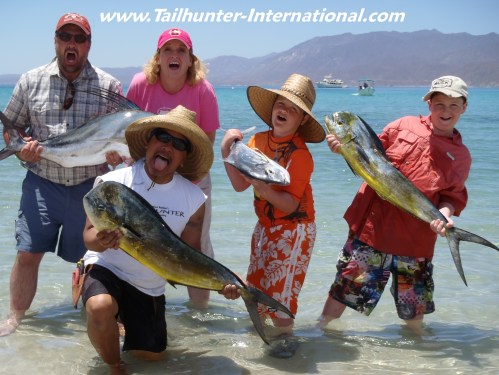
Shearer Family goofy tags 5-11

Winter is a great time in Baja and a great time to bring the family! As the our amigos, the Schearer family, from Montana found out with us, Baja is alot warmer than Montana and you don’t have to go out very far to get fish like this!

BECAUSE WE CAN!

Originally Published in Western Outdoor News the Week of Dec. 20, 2012


I’m often asked why we would fish in the winter time?

I guess the quick and wise-guy answer and knee-jerk response is “Because we can!”

But there’s more to it than that. 

During the winter time, the complexion of our Baja vistors changes.  During the regular season,  the majority of our folks are generally fishers.  Or at least have a general focus of getting on or under the water during our warmer months.

During the colder times of the year, I think we see more “escapees.”  These are folks just trying to get away from the chill, ice and wet of home.  “Just lookin’ for some sunshine…any sunshine!” is what I often hear.

While us locals are bundled up in long pants, shoes, and down vests against the “chilly” 60-70 degree weather, folks from Vancouver, Canada…Bozeman, Montana…Portland, Oregon. …happily stroll through town in tank-tops and cargo shorts.   God bless ‘em, they are in sunshine Nirvana!

But, they are often discouraged from fishing when they find out that so many places are rough, windy, or certain “glamour” species like marlin and tuna just aren’t biting in the winter. Or, if they are biting, heading off-shore to catch them can be a long rolling bumpy wet adventure more akin to the very conditions they left back home!

It’s much simplier to park it on a bar stool with a cold umbrella drink and gaze out over the sand and water or take the glass bottom boat ride in the harbor.  Yawn. Right up there with going to listen to a time-share presentation so you can get the free lunch and discount shopping coupons.

But, they shouldn’t let winter discourage time on the water.

One of the great things about fishing in Baja and Mexico is that there is always SOMETHING to catch! 

Frankly, the further south you go, the warmer it will be and the better the chances of catching a glamour fish, but even then, remember that it’s still winter and most of Mexico and Baja’s Pacific coast faces the open ocean (which is why winter surfing in Hawaii is so great!).  There’s big waves and there’s big winds.

It’s no fun being wet and cold and bounced around.

So…

Consider fishing inshore.  So few folks ask for it and so few of the outfitters or charter operators offer it, especially for someone who just walks in or walks up to sign on for a day of fishing.  Which is what so many winter visitors do.  They go fishing on a whim. 

“Honey, instead of visiting the Mayan pottery store,  let’s go ‘deep sea’ fishin’ tomorrow!”

But, chances are you’ll light up a big smile if you ask for inshore fishing.  For the captain our agent or outfitter, it’s a lot more economical since they won’t be burning up a lot of gas.

 Secondly, there’s a lot more inshore fish than offshore blue-water fish .  Therefore,  the chances or success are much greater for them to have smiling anglers at the end of the day.  Finally, believe me.  They don’t want to get beat up out there on the big water any more than you!

From the anglers perspective, waters will probably be calmer.  You’ll have more action with rods in your hands rather than long days of trolling offshore.  Pragmatically, you don’t need a big expensive sportfishing cruiser either.  You can downgrade of fish from pangas since most of the action will be closer to the shores, beaches and reefs. So, it’s less expensive!

In fact, often you’ll just be yards from the shore.  You will often see the bottom and, very often you’ll actually see the fish as they bite. 

And there’s so much variety and action to be had.  Exotic roosterfish…giant pargo…tough jack crevalle…sierra…cabrilla…pompano…are just some of the species available inshore.

And don’t think these fish are any less tough or formidable just because they inhabit the inner waters.  Pargo can be 30-50 pounds with sharp teeth and gillplates as they attack from the rocks.  Roosterfish can swarm in schools or be the big trophy sluggers between 30 and 100 pounds that have made them famous in Baja and the world.  Catch 20 five-pound sierra or a half-dozen 30 pound jack crevalle and I can guarantee your arms will still be sore!

Another bonus is that this is very pro-active fishing. Since you’re not simply dragging lures offshore waiting for hits, you’ll have a rod in your hand most of the time.  This is a great plus if you’re fishing with first-timers, family members or the kids!  Everyone participates.  Everyone has fun.

And, at the end or the day, inshore fish is among the best eating!  So, don’t let winter deter some great fishing fun!

That’s our story!

Jonathan and Jill

__________________

Jonathan Roldan has been writing the Baja Column in Western Outdoor News since 2004.  Along with his wife and fishing buddy, Jilly, they own and run the Tailhunter International Fishing Fleet in La Paz, Baja, Mexico  www.tailhunter-international.com.  They also run their Tailhunter Restaurant Bar on the famous La Paz malecon waterfront.  If you’d like to contact him directly, his e-mail is riplipboy@tailhunter-international.com  or drop by the restaurant to say hi!

______________

Jonathan Roldan’s Tailhunter International

TAILHUNTER FISHING FLEET #1 Rated on Trip Advisor

TAILHUNTER RESTAURANT BAR #1 Rated in La Paz on Trip Advisor


Now follow us on FACEBOOK TOO

Website: www.tailhunter-international.com U.S. Office: 3319 White Cloud Drive, Suite A, Hacienda Hts. CA 91745 Mexico Office: 755 Paseo Obregon, La Paz, Baja Sur, Mexico Phones: from USA : 626-638-3383 from Mexico: 044-612-14-17863

Tailhunter Weekly Fishing Report: http://fishreport.jonathanroldan.com/

Tailhunter YouTube Videos: http://www.youtube.com/user/pangapirate

“When your life finally flashes before your eyes, you will have only moments to regret all the things in life you never had the courage to try.”
Read Full Post »

BUCKET LISTS

Originally Published the Week of December 6, 2012 in Western Outdoor News Publications

“When your life finally flashes before your eyes, you will have only moments to regret all the things in life you never had the courage to try.”
Ever since the 2007 movie of the same name with Jack Nicholson and Morgan Freeman, the term “Bucket List” has become part of our lexicon.  Jack and Morgan played two escapees from the cancer ward and set off to do all the things in life they always wanted before they “kicked the proverbial bucket.”

I seem to hear that so often from friends and clients who visit us in Mexico.   I think some days hardly go by where someone doesn’t happily tell me…

“That was a great roosterfish. Been trying for years!  Cross that one off the bucket list!”

“What a great time! Always wanted to go fishing with my son and grandson!  It was on my bucket list.”

“Bucket list just got shorter.  Me and my wife just snorkeled with whale sharks this afternoon!”

Sometimes, it’s not even that complicated.

“We’ve lived our whole lives in Indiana.  We wanted to visit the ocean just once! Yessiree.   It was on the bucket list.”


When I hear something like that I realize how often I take stuff for granted.  Having grown up always outdoors in the mountains; on an island; in the water or under the water, I just don’t think twice about so many things.  Many of those things might seem dangerous or daring…or plain stupid and reckless, I suppose to some folks!

But believe me, I’m no daredevil.  I’m not crazy nor do I have a deathwish nor am I an adrenaline junkie.  There’s a difference between an “e-ticket ride” that’s a bit scary but  always ends and with  you  steppping \ off the ride laughing…and the real Evel Kneivel stuff where you can get hurt and you’d better have you medical insurance card handy.

But, it’s all relative.  My e-ticket ride is someone else’s mad crazy adventure.

Dive with sharks.  No problem.

Live off the land in a cave.  Sure.

Hang glide.  Sign me up.

Jump out of an airplane.  Safer than crossing the street.

Ride a manta ray.  In an instant.

Run through Central Park New York at midnight on a dare.  I was young and stupid.  Draw the line at that one!  Not recommended.

But…

My personal bucket list continuously keeps getting longer and longer.  Not shorter.  The more I do and see, the more I add things to the list.  This past week, I just crossed-off zip-lining through a rain forest and looking for crocodiles while I paddled through jungle mangroves off the list.  (Topics for another column!)

And, I keep hearing more and more people discuss their own personal bucket lists.  More than ever before.  Maybe, it’s just the age group I’m in.

We’re the baby boomers.  We’re not 30 or 40 anymore.  Look around and oops…how the time flew! We’re 50-plus and edging up and over 60-years-old.   Many of my friends have grown grandkids already.  Many retired or close to it.

Fifty-years-old is the new 30-years-old!  Retirement or older age doesn’t mean shopping for a rocking chair anymore.  More often, it means a new kind of freedom.  What do you do with your second wind?

I think many of  us are finding Mexico.  Despite what you might hear on the news, about the violence and other problems, tourism has been on a steady rise in Mexico.   In fact ,it’s one of the fastest growing tourist destinations in the world.

For many Americans, especially, Mexico is pretty much an easy airflight from most big U.S. cities.  It’s economic.  It’s close.  It’s filled with culture and history and  pretty much any “diversion” that would fill anyone’s bucket list.  There’s still so much adventure to be had.  And the dollar goes far!

I think the only real shame is that as we grow older, we start looking at our personal bucket lists.  And then there’s a rush to get to it!

More than 20 years ago, a retired friend pulled me aside and said , “Don’t ever get to my age and say ‘What if?’ We always says ‘Someday I’m gonna do this or that.”  Well, ‘someday’ is already here and if you have opportunities, take them!”

At the time he said this he was a “young” 62, but knew he was sick.   He passed away about a year after he said this.

“What if…?”

Start that bucket list early.  Someday, you will have only moments to regret all the things in life you never tried.  Step onto the ride.  Exit laughing!

That’s our story

Jonathan and Jilly

____________________________

Jonathan Roldan has been writing the Baja Column in Western Outdoor News since 2004.  Along with his wife, Jill, they own and run the Tailhunter International Fishing Fleet in La Paz, Baja, Mexico  www.tailhunter-international.com.  They also run their Tailhunter Restaurant Bar on the famous La Paz malecon waterfront.  If you’d like to contact him directly, his e-mail is riplipboy@tailhunter-international.com  or drop by the restaurant to say hi!

Jonathan Roldan’s

Tailhunter International


TAILHUNTER FISHING FLEET #1 Rated on Trip Advisor

TAILHUNTER RESTAURANT BAR #1 Rated in La Paz on Trip Advisor


Now follow us on FACEBOOK TOO


Website: www.tailhunter-international.com
U.S. Office: 3319 White Cloud Drive, Suite A, Hacienda Hts. CA 91745
Mexico Office: 755 Paseo Obregon, La Paz, Baja Sur, Mexico
Phones:
from USA : 626-638-3383
from Mexico: 044-612-14-17863

.
Tailhunter Weekly Fishing Report:
http://fishreport.jonathanroldan.com/

Tailhunter YouTube Videos:
http://www.youtube.com/user/pangapirate


“When your life finally flashes before your eyes, you will have only moments to regret all the things in life you never had the courage to try.”
Read Full Post »

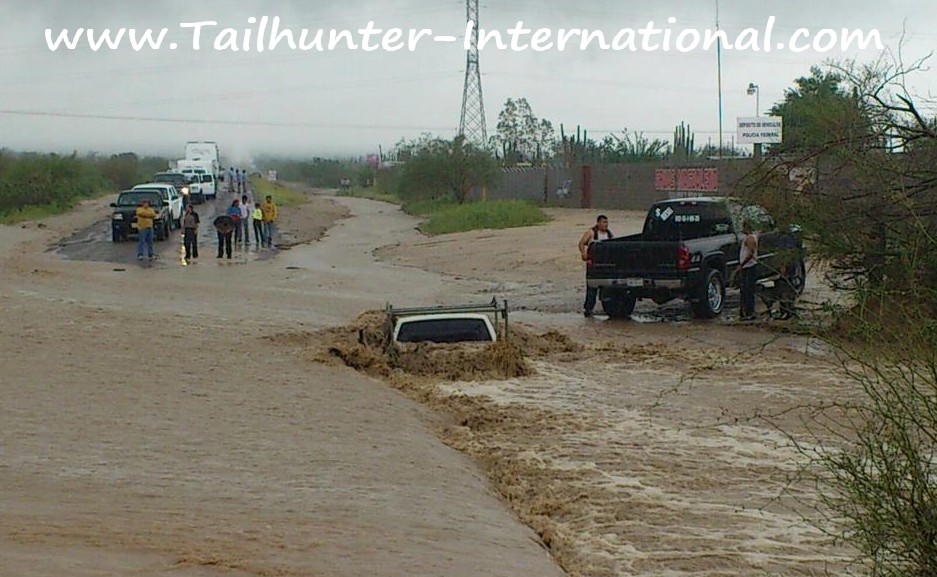
It didn’t look that deep! Huge sinkholes often appear suddenly as chunks of road just drop away when it rains!

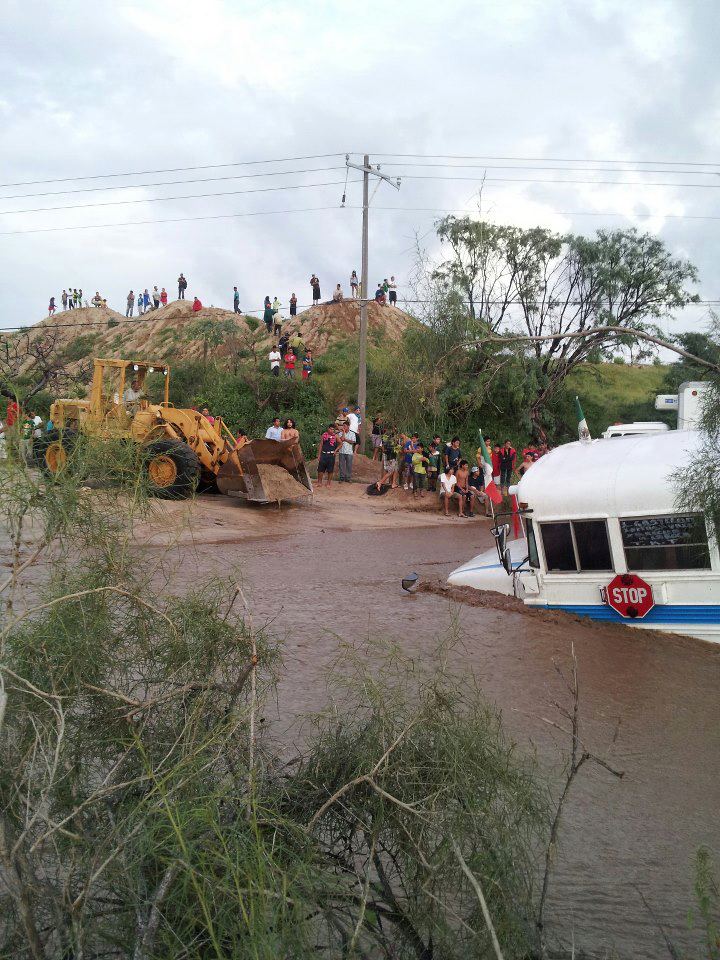
“Dry arroyos” suddenly become hazardous waterways of mud when it starts to pour.

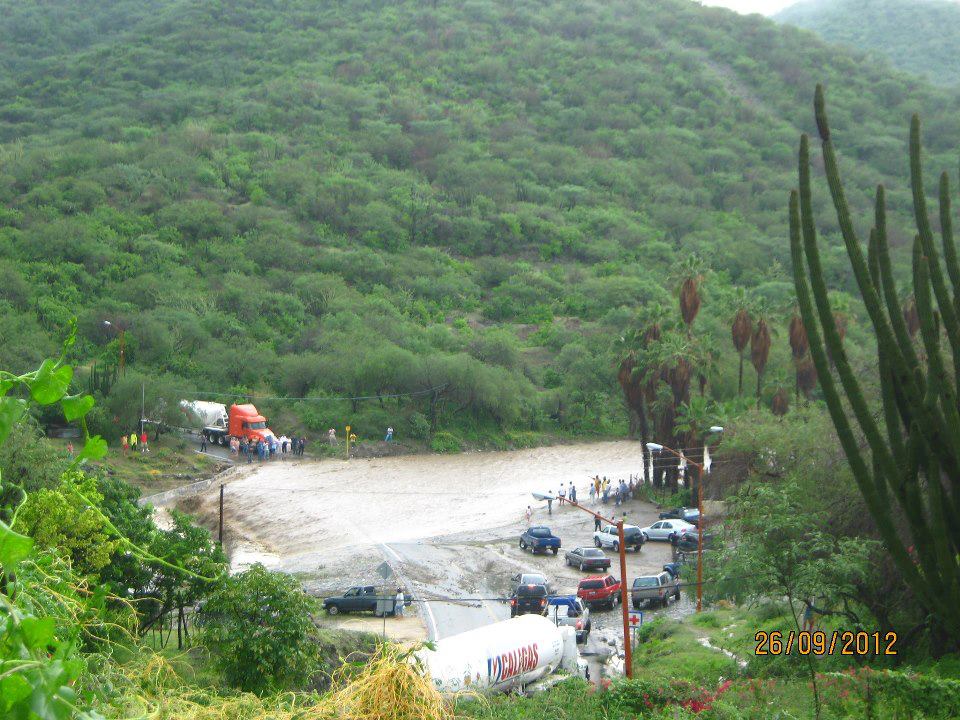
There’s normally a bridge there! Check out how green the surrounding hills have become after a few weeks of rain in the thirsty desert!

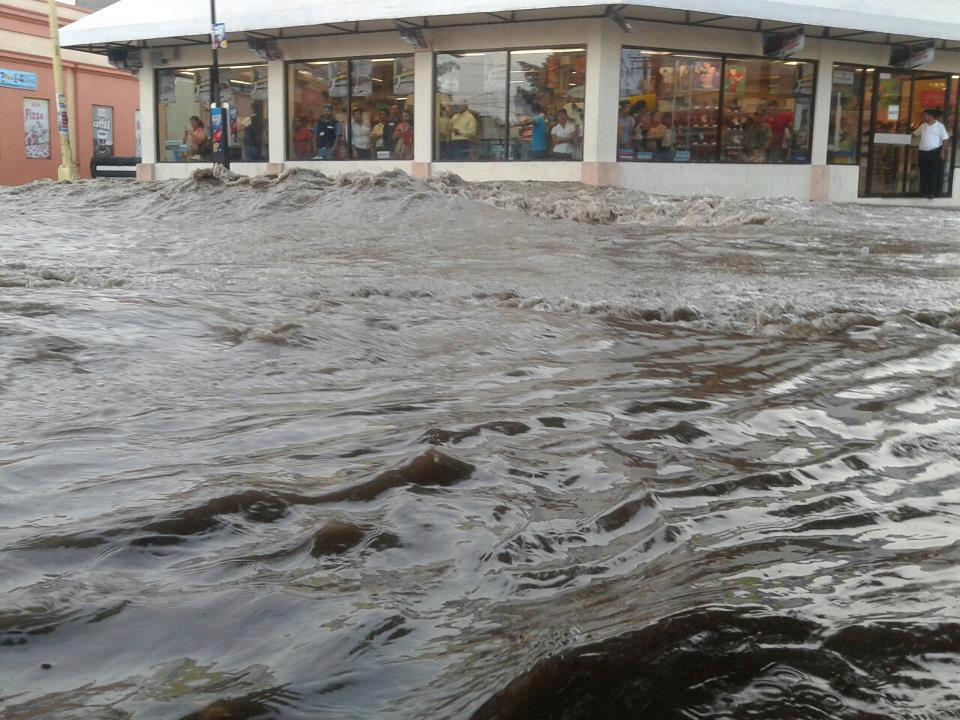
It doesn’t take much for flooding in many Baja towns and cities. This was just after a few hours in downtorwn La Paz. The “heavy rain” had not even started falling yet! Folks shopping in the windows are stranded for awhile.

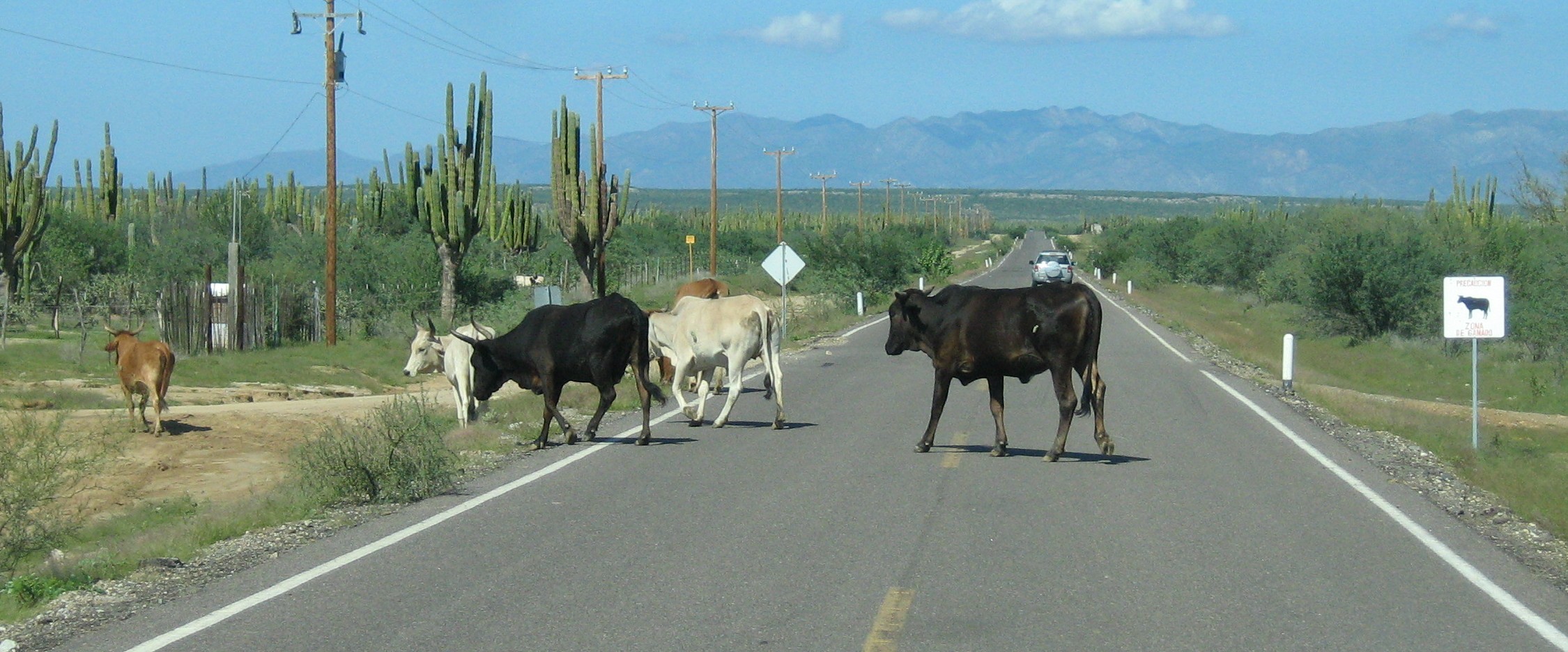
Happy cows! Getting fat on real GRASS growing along the sides of roads. Grass is an unusual sight in Baja! Note that the cows are properly observing the “cow crossing” sign.

“POST- CHUBASCO BLUES…and GREENS”

Originally Published the Week of October 24, 2012 in Western Outdoor News

I watched them clean up the street in front of our restaurant..again.  I’m losing count.

The army of street sweepers are out.  I don’t mean the big machines with the twirly-brushes like in the U.S.  I mean, the “army of sweepers.”  Literally.  The city pays hundreds of workers to walk out en masse and sweep the street with a hand brooms.  Labor is cheap and they really do a good job.

There sure is a lot of dust…clouds of it.  Kicked up by the sweepers and then by the cars that go up and down the road.

When it rains…which is rare…all the gunk that has accumulated in the streets and the drains gets sluiced out.  Maybe the better word is “flushed” out, if you get my drift, and can imagine some of the accumulation in drains that don’t see rain for years!

Well, all that stuff turns to mud.  After the storms, that mud dries up and turns to…dust!  That dust all gets kicked up into the air.

We do our best not to breathe dust or to stay out’ve the dustier zones.  People get all kinds of nasty allergies to the stuff in the dust.

Whatever is not being wisked away by the sweepers, they bring out bulldozers and backhoes and just scoop it up onto the beach or the nastier stuff into trucks.  Again, a dusty business.

The road repair boys are also in full swing.  There’s little and big rock and mud slides.  Bridges get damaged or even swept away, especially across dry arroyos that turn into raging rivers during the storms.

During rainstorms, huge potholes open up in the road.  Some of them are large enough to be classified as sinkholes.  Chunks of road just drop away.

Some of the roads that looked great a few days ago before the storms now look like the cratered surface of the moon.  They require the deft driving hand of a NASCAR driver to navigate through them swerving left and right trying to avoid them.

It’s an exercise in failure. Your teeth and kidneys get jolted and you cringe along with your car’s groaning suspension with each whack and thump as you hit another deep pothole.   Some are the size of a basketball.  Others large enough to drop a tire sideways into it.  If  you’re a tourist in a taxi that has no suspension…you just have to laugh as your head gets bounced on the inside roof of the taxi!

Others are like gaping maws waiting to swallow vehicles.  Standing water can be deceiving. Some cars going through standing water don’t realize that under that muddy water is a big sinkhole or two or a trench lying in wait.

Un-suspecting vehicles go  plowing through the water and CLANG!  It’s like watching a clown car blow up.  It rips through a front axle or, in some cases, the whole front end just disappears into the watery hole…trunk butt up in the air!

Rain is so rare down here that the Mexican infrastructure just wasn’t built for handling too much! After it’s over, we repair things as best as we can and life goes on. We may not see rain again for a long time so we don’t worry about it again until then!  Es la vida!

I think I’ve lost count of all the rainstorms we’ve had this year.  But, I was just informed that Baja has had more rain in the last month than in the last 5 years combined.  I know here in La Paz, we had one 16-hour period several weeks ago where 12 inches of rain fell on us and flooded the town.

I was once told that despite the arid nature of the state of Southern Baja, we actually get more rain in a “normal year” than say…Los Angeles.  We get about 17 inches of precipitation a year.  The only problem is that it can all fall in one day!

Hurricanes aside…dangerous and deadly…mostly what we get are thundershowers.  We call them “toritos” (little bulls) that can rise up in the afternoons and unleash the fury of the heavens for an hour or even minutes.

Huge dark storm clouds with thunder and lightning rear up from otherwise balmy afternoons and send boats scrambling for shore and folks ducking under palapas and headed indoors as the rain often comes down in warm sheets of water.

If you’re indoors or out of the rain, it’s a great show.  The thunder and lightning can be spectacular and watching the desert turn into rivers or the streets into Venetian waterways are incredible.

Then, as quickly as it starts.  It stops.  And the sun comes.  And the waters recede quickly and the heat literally steams up the standing water.  Life in the tropics.  It stops just like that.

It’s just that this year, it stops then it starts again the next day.

On the upside…

The brown countryside has been transformed into an incredible carpet of green.  Emerald green!  Grass is growing.  Flower are blooming.  Normally barren trees are covered with foliage.  In fact, the desert has been turned into a jungle.   I don’t think I’ve ever seen it so verdant.

If you’re out fishing and look back towards the land, you could easily be convinced that you’re in Hawaii or Central America.  The forrest is THAT thick!

Oh..and the fish are still biting! It’s a nice time to be down here.

I just wish they’d get done sweeping away the dust.

That’s our story

Jonathan and Jilly Roldan

__________________

Jonathan Roldan has been writing the Baja Column in Western Outdoor News since 2004.  Along with his wife, Jill, they own and run the Tailhunter International Fishing Fleet in La Paz, Baja, Mexico  www.tailhunter-international.com.  They also run their Tailhunter Restaurant Bar on the famous La Paz malecon waterfront.  If you’d like to contact him directly, his e-mail is riplipboy@tailhunter-international.com  or drop by the restaurant to say hi!

Jonathan Roldan’s
Tailhunter International


TAILHUNTER FISHING FLEET #1 Rated on Trip Advisor

TAILHUNTER RESTAURANT BAR #1 Rated in La Paz on Trip Advisor


Now follow us on FACEBOOK TOO


Website: www.tailhunter-international.com
U.S. Office: 3319 White Cloud Drive, Suite A, Hacienda Hts. CA 91745
Mexico Office: 755 Paseo Obregon, La Paz, Baja Sur, Mexico
Phones:
from USA : 626-638-3383
from Mexico: 044-612-14-17863

.
Tailhunter Weekly Fishing Report:
http://fishreport.jonathanroldan.com/

Tailhunter YouTube Videos:
http://www.youtube.com/user/pangapirate


“When your life finally flashes before your eyes, you will have only moments to regret all the things in life you never had the courage to try.”
Read Full Post »

With their acrobatic abiities, dorado often have a habit of “self-releasing” all on their own! But, knowing how to properly release a fish has alot to do with assuring that it lives to grow and fight another day!

“THE ART OF THE RELEASE!”

Originally published the week of Sept. 11, 2012 in Western Outdoor News

I had conflicted feelings that day.   The client and his wife just got their first ever sailfish. The “glamour fish” they had always wanted to cross off the bucket list.

Not only that, they wanted to release the fish!  Bravo!  It takes a lot for people to release that first big trophy fish…or any fish.  And I had to applaud.

But then the other side of me was in turmoil. Photo time.

Although no gaff was used, the fish was hauled out of the water and photo’d from every angle.  Everyone got to hold it.  Every possible combination of photo.  With the deckhand.  With the captain.  With both of them.  With the wife.  With the wife and captain, but not the deckhand.

I tried to impart a big of urgency to the situation about wanting to get the fish back in the water.

I can only imagine the stress on the fish.  A lot of hands were all over it, and it  had it been a long battle for the exhausted fish.   But, it was now out’ve the water as the seconds ticked by.  Even moreso, I always worry about the internal organs of the fish.

In the water, the mass of the fish and it’s innards are neutrally buoyant.  Outside of water, gravity takes effect.  Already exhausted organs collapse on each other further creating potential injury to the animal.

The fish was already turning colors from strikingly  iridescent blues and purples to the greyish pallor of a dead fish.

Into the water we go off the gunwale and slowly tried to work it back and forth to get water over it’s gills. It was a team effort and while at first sluggish, the fish slowly gained strength.  You could feel it surge until we couldn’t hold it any longer and we watched it sink into the blue waters and with a flick of it’s tail descend to depths.

There were lots of high-fives that were well-deserved, but deep inside I doubted.  I could only hope it wasn’t sinking to die.

Almost two decades now down here in Baja and it’s gratifying to see the increased interest in catch-and-release.  I’m all for it. We have a finite resource that is under tremendous pressure.  Keep what you need and release what you don’t.  Hell…release it all is fine with me.

But what good does it do if the fish dies later?

To me, there’s a right and a wrong way to release a fish.  It should really start BEFORE you ever hook up.  Mike Fowlkes, the award-winning  TV producer, director  of “Inside Sportfishing” said it best.

He said something to the effect, of making the decision to release your fish BEFORE you ever go out.  Don’t make the decision AFTER the heat of battle when the blood lust is going full turbo and everyone is back-slapping you and hoisting beers in the air.  I never forgot Mike’s words.

To that end, think about how you’re going to fish and the equipment you’re going to use.

If you know how to use circle hooks, use them.  They have a knack of hooking fish right on the corner of the mouth when used correctly.  The hook doesn’t go down their gullet and instead lodges perfectly where you can usually get at it easily for a fast release.  Or, as many fresh water anglers do, use barbless hooks or pinch off the barbs of your hooks!

Likewise, as much as I love light tackle, if I plan to be releasing fish that day, I tend towards heavier gear.  I want short battles so that I can get the fish to the boat faster.  Long battles stress the fish.  Exertion causes oxygen deficit in the tissues.

According to one study:  “This causes lactic acid to build up in the muscle tissue, and then to diffuse into the blood. Lactic acid acts as an acid in the blood, causing the pH of the blood to drop. Even slight changes in pH can cause major disruptions of the metabolic processes, ultimately killing the fish. If the fish is quickly released, its blood pH usually returns to normal and the fish will be unaffected. Some fish, after a long tow, may appear to live once released, but the imbalance in the blood chemistry may kill them as late as three days after being caught.”  http://seagrant.gso.uri.edu/factsheets/catch-release_fs.html

I’ll vouch for that.  I’ve seen huge marlin and tuna sometimes simply “give it up” and die while still on the line.  You definitely don’t want that to happen.

Once the fish is to the boat, the less you handle them the better.

If the fish is small enough to “lip” grabbing by the lip, this is better than sticking hands or fingers into their gills.  They’re already stressed and gasping for oxygen so lip them and use pliers or hands to quickly remove the hook or lure.

If the hook is too deep, reaching in and prying around only damages the fish.  Often I’ve seen anglers stab around and wrench hooks from deep in the gullet or reaching in through the gills to get their hooks.  Then, just because the fish is still thrashing,  toss the fish overboard thinking they executed a good “release.”

If the hook is deep, best to just cut the line as close to the hook as possible.  Studies have shown the fish are very resilient if handled correctly and hooks will often dissolve or rust out on their own, whereas huge wounds from torn-out hooks can often become infected.

It would also seem obvious to keep the fish in the water as much as possible.  But, as mentioned earlier, the urge to photo and touch the fish are sometimes just too hard to resist.  All that touching removes the protective slime from the skin of the fish making them susceptible to disease as well.  Plus, just being out of their neutrally buoyant environment can harm internal organs when lifted out of the water and gravity takes effect.   Even contact with dry and foreign surfaces like nets, decks, fish gloves and boat rails can be detrimental.

The two biggest causes of fish mortality are stress and wounds.  Keep that in mind and you’ll help insure that the fish that goes back in the water lives to battle another day!

That’s our story!

Jonathan and Jill Roldan

Tailhunter International

___________________

Jonathan Roldan has been writing the Baja Column in Western Outdoor News since 2004.  Along with his wife, Jill, they own and run the Tailhunter International Fishing Fleet in La Paz, Baja, Mexico  www.tailhunter-international.com.  They also run their Tailhunter Restaurant Bar on the famous La Paz malecon waterfront.  If you’d like to contact him directly, his e-mail is riplipboy@tailhunter-international.com  or drop by the restaurant to say hi!

Jonathan Roldan’s
Tailhunter International


TAILHUNTER FISHING FLEET #1 Rated on Trip Advisor

TAILHUNTER RESTAURANT BAR #1 Rated in La Paz on Trip Advisor


Now follow us on FACEBOOK TOO


Website: www.tailhunter-international.com
U.S. Office: 3319 White Cloud Drive, Suite A, Hacienda Hts. CA 91745
Mexico Office: 755 Paseo Obregon, La Paz, Baja Sur, Mexico
Phones:
from USA : 626-638-3383
from Mexico: 044-612-14-17863

.
Tailhunter Weekly Fishing Report:
http://fishreport.jonathanroldan.com/

Tailhunter YouTube Videos:
http://www.youtube.com/user/pangapirate


“When your life finally flashes before your eyes, you will have only moments to regret all the things in life you never had the courage to try.”
Read Full Post »

Edmond Locard was known as the “Sherlock Holmes” of forensic criminology during his time. But his principles can be applied to many things!

“LOCARD’S EXCHANGE THEORY”

Originally Published in Western Outdoor News the Week of Aug. 15, 2012

Around the turn-of-the-century, there was a famous French criminologist.  His name was Edmond Locard.   Most folks have never heard of him.  But, if you’re a fan of some of the popular TV crime dramas like “CSI” or “Law and Order” or any of those other shows that focus on forensic investigations, you’re familiar with Mssr. Locard’s work.

It was way back in the day that Locard came up with “Locard’s Exchange Principle.”  Named it after himself and everything.   Like Murphy and his “Law”.  You think of it, you get to name it!

It was Locard who believed that at every crime scene an “exchange” takes place.  Every criminal takes something.  Every criminal leaves something behind.   It’s inherent.

The TV shows focus on it all the time. The high-tech crime labs in the TV shows prove it.   A hair follicle.  Some skin cells under a fingernail.  A drop of blood.  A pebble.  The smell of perfume or aftershave.  A fingerprint.  Chemical residue.  Something leaves the scene.  Something is left at the scene.

Modern philosophy extends that a little further.

Anyone who goes into a room and leaves a room, inadvertently leaves a little bit of themselves in the room and takes something of the room with them.  Dust…dandruff…pet hair…or let’s get really touchy-feely-esoteric…a memory…a smell…

Locard’s principle in action.  An “exchange” is always taking place.  Something leaves.  Something is left behind.

I believe we can carry it even further.

I see it every day.  It’s not on purpose.  But, the “exchange” takes place nonetheless.

People come here to Baja on vacation.  The exotic Mexican fishing trip with family, friends or loved ones.

Maybe it’s a once-in-a-lifetime trip.  Maybe it’s a regular yearly holiday.   For a few days or weeks, folks come down.  They “pass through” as it were.  Through another country.  Another culture.  Another way of living.

They leave with the usual.  Maybe a cooler of fish.  A t-shirt or two.  A funny hat.  A necklace from a beach vendor.  A sunburn.  Five extra pounds from too many tacos. A hangover. A digital camera full of photos.

And those are just the tangible items.

They carry away  with them memories and thoughts.  Ideas and perspectives.  Smiles and knowledge.  Laughs, discoveries and grins.  The things you can’t put a price or a finger on.

It’s why people travel.  It’s why they go on vacations.

But, I think few folks think about what they leave behind when they depart for home.  Locard’s Exchange Principle continues to hum right along.

When you head home, you forget that, you didn’t just leave some vacation money back here in Mexico.  You left a little bit of yourself as well.

In your wake you leave impressions as well as memories.

Were you respectful of the language?  The people ?  Were you a drunken idiot?

Did you leave as many smiles as you took?  Did you try to interact or did you adopt an “us” and “them” attitude?   Did you forget basic courtesies?

I have had dozens of employees over the years.  They have worked for me as captains, deckhands, drivers, waiters, cooks, cashiers, guides and numerous other positions.  They talk to me quite often about such-and-such a guest or client.  I hear them talk among themselves about tourists in general and in particular.

Much of it is great.  They really enjoy the meetings and interactions.  Some of it is plain amusing.  Some of it makes me grimace and cringe.

A good example my panga captains.  Many have been with me 8, 10, 14, 15 years or more.  They have a remarkable memory for some clients they see maybe every few years or every other year.

They often ask  if Mr. So-and-so will be coming back.  They remember who tipped and who didn’t. They remember those who said thank you or wanted a picture with them.  They remember who took the time to bring down a baseball for their kid or left a nice pair of fishing pliers as a gift.  They remember the fun day fishing and talking about mutual families.  Smiles are universal.

My waiters and drivers are the same way.  They may not remember names, but they remember faces and families and couples.

They remember which kids and parents were courteous and who was “high maintenance” and who had the wife who loved to sing and which little girl gave a hug.  And they remember the  guy who never stopped bragging about how rich he was “back in ‘America’ and how ‘you people’ have everything backwards.”

Oh yes…they remember.

Even I have to constantly remind myself.  Something gets taken.  Something gets left behind.

Hopefully, I leave more smiles with each passing day. Hopefully, I take a new good lesson with me to bed at night after a long day.  Or some new memories.   Hopefully, I left a good thought or impression or someone learned something from me as well.

I try. Locard was a criminologist.  He was right.  It’d be a crime passing through life without taking and leaving something good.  Take a gift.  Leave a gift.

That’s our story…

Jonathan

__________________

Jonathan Roldan has been writing the Baja Column in Western Outdoor News since 2004.  Along with his wife, Jill, they own and run the Tailhunter International Fishing Fleet in La Paz, Baja, Mexico  www.tailhunter-international.com.  They also run their Tailhunter Restaurant Bar on the famous La Paz malecon waterfront.  If you’d like to contact him directly, his e-mail is riplipboy@tailhunter-international.com  or drop by the restaurant to say hi!

___________________

Jonathan Roldan’s
Tailhunter International


TAILHUNTER FISHING FLEET #1 Rated on Trip Advisor

TAILHUNTER RESTAURANT BAR #1 Rated in La Paz on Trip Advisor


Now follow us on FACEBOOK TOO


Website: www.tailhunter-international.com
U.S. Office: 3319 White Cloud Drive, Suite A, Hacienda Hts. CA 91745
Mexico Office: 755 Paseo Obregon, La Paz, Baja Sur, Mexico
Phones:
from USA : 626-638-3383
from Mexico: 044-612-14-17863

.
Tailhunter Weekly Fishing Report:
http://fishreport.jonathanroldan.com/

Tailhunter YouTube Videos:
http://www.youtube.com/user/pangapirate


“When your life finally flashes before your eyes, you will have only moments to regret all the things in life you never had the courage to try.”
Read Full Post »

Getting a kid out on the water can be a life-changing event!

“KIDS UNPLUGGED”

Originally Published in Western Outdoor News the Week of Aug. 3, 2012

What’s up with these kids?  Am I the only one who’s noticed this?

Summer is on and we’ve got a lot of families arriving now for their summer vacations.  All well and good.  My wife and I  always make a point of doing the meet-and-greet when they arrive from the airport and make sure we put faces with names and make sure they’re checked into their hotel rooms get a quick summary of things. 

Big handshakes and hugs all around.  It’s great to have families.  And I know how important these vacations are.  Not just to the families, but to mom and dad as well. 

But, so many of the kids…when you reach out to shake a hand, act like they have never shaken a hand.  They recoil to human touch.  Smile and say hello and welcome and it’s like you’re the boogie-man.    

I’ve had the parents say things to 12-year-olds like, “Say hi to Jonathan and Jill.  Go on now!”  And nudge them toward us like they were 4-year-olds hiding behind mom’s skirts.  Heaven help them if they should smile. Never look you in the eye.   And the handshakes are about as firm as quivering noodles.

After the “pleasantries” they quickly retreat into the protective shadow.  Eyes downcast.  What’s up with that?

And  they  “assume the position.”  You know what I mean.

Hands close together…thumbs ready to go.  You know…ready to TEXT!  Tap-tap-tap…tap…tap…tap.  Like little “thumb claws” on their smart phones.  Socially adept at anonymous networking, but face-to-face can’t communicate with other people.

At our restaurant here in La Paz  last week, I watched  a family of 4 eating dinner.  No one was talking to each other. But they were “communicating” to each other via text and e-mail even though they were all sitting next to each other! 

TOTAL silence except for tap…tap…tap…to each other! “Howz yr tacos?”  “Grt mom.”  “Do U wnt mre salsa?” “I jst snt u a pic of me etng my brgr!”

Sitting right next to each other.  I watched 90 minutes of this.

Pretty sad commentary about the new family of the 21st century.

But, there’s another side to this. 

Sometimes, it’s amazing what a few days in Baja can do!  A couple of days of fishing and some beach time and some pool and snorkel time.  Being in a place where wi-fi isn’t automatic.  And kids come out of that shell. 

They run up to you…no, almost skip up to you…and can’t wait to tell you about how they caught a bigger fish than dad.  And they are gushing about the whaleshark and dolphins they saw and how they tried fish tacos for the first time. 

And, they’ve got a little color on their faces and their eyes are glowing again and there’s no sign of headsets  wrapped around their necks and attached to iPods and smart phones.  What?  There’s no wi-fi on a panga?

 Kids who no longer had a story to tell now have “adventures” they can’t wait to talk about. There’s almost a cool little “swagger” about them.  Like each day they just survived the e-ticket rides!

Like you and I used to do.  Things that you and I did commonplace is an “adventure” to these kids. 

You and I walked to school.  We rode our bikes through fields; down train tracks; and to the local beach, lake or public pool. Heaven forbid…some of us even rode on the handlebars…AND NO HELMETS!

Some of us even hitchhiked.  We spent the night at friend’s houses.  We stayed out late playing ball in the street under the street lamp.  It was perfectly OK to eat cookies made by a neighbor or  retrieve the ball from the neighbors yard.  Our mom’s and dads knew the names and faces of the parents of our friends. 

Camping out in the yard or going on a fishing trip wasn’t an exercise in logistics, insurance and security for a family.  We didn’t sign release forms or have to check in our our personal GPS units.  Mom’s two-fingered whistle from the front door meant “Get home now!”

I don’t think kids have adventures anymore. Whereas you and I got our jollies playing on a tire-swing and running through the sprinkler system, their “adrenaline rush” comes in how many zombies they killed on Play Station sitting in the living room. 

A few days ago, I heard a 14-year-old boy (from Southern California)  pleading to his dad to take his photo, “Look dad!  Look dad, I’m sticking my feet in the ocean!”  It was the same excitement you and I got riding our bikes with no hands or jumping off the big rock into the swimming hole. This was a southern California kid excited about simply putting his feet into the ocean!

I’m not saying that a trip to Baja is a cure-all. 

But what old Baja Rats like you and I might take for granted like eating a fish taco, pulling on a fish; seeing some dolphin or (Lord help me) putting our toes into the ocean, could be the show-and-tell-adventure of a lifetime for some kid in your life.

As “civilized” as many of us have come to see Baja with air-conditioning; paved roads; McDonald’s and room service, it’s still the frontier.  It’s still an exotic place for the unusual and the out-of-ordinary that can make a lifelong impression on some youngster who rarely looks up from their keyboard or lets go of the remote control.

Give ‘em a story to tell!  Get them to look up and see the sunshine!

________________

Jonathan Roldan has been writing the Baja Column in Western Outdoor News since 2004.  Along with his wife, Jill, they own and run the Tailhunter International Fishing Fleet in La Paz, Baja, Mexico  www.tailhunter-international.com.  They also run their Tailhunter Restaurant Bar on the famous La Paz malecon waterfront.  If you’d like to contact him directly, his e-mail is riplipboy@tailhunter-international.com  or drop by the restaurant to say hi!

__________________

That’s our story!

Jonathan

Jonathan Roldan’s
Tailhunter International


TAILHUNTER FISHING FLEET #1 Rated on Trip Advisor

TAILHUNTER RESTAURANT BAR #1 Rated in La Paz on Trip Advisor


Now follow us on FACEBOOK TOO


Website: www.tailhunter-international.com
U.S. Office: 3319 White Cloud Drive, Suite A, Hacienda Hts. CA 91745
Mexico Office: 755 Paseo Obregon, La Paz, Baja Sur, Mexico
Phones:
from USA : 626-638-3383
from Mexico: 044-612-14-17863

.
Tailhunter Weekly Fishing Report:
http://fishreport.jonathanroldan.com/

Tailhunter YouTube Videos:
http://www.youtube.com/user/pangapirate


“When your life finally flashes before your eyes, you will have only moments to regret all the things in life you never had the courage to try.”
Read Full Post »

To avoid a cultural faux pas FAIL, it’s important to remember which country you’re in! I forgot. HONEST!

MOTHER’S DAY FAIL!

Originally Published in Western Outdoor News the Week of May 16, 2012

I love sharing a bit of Mexican culture in these columns.

As I’m writing this, I realize I really screwed up.  Have you ever forgotten an important day of the year?  Like your anniversary?  A birthday?

Well, I forgot that today (May 10th)  is Mother’s Day!  Oops.  Fail. Scramble to make phone calls…e-greeting cards…and other face-saving measures!

You see, in my brain, Mother’s day is always the 2nd Sunday of May.  That’s May 13th in the U.S.

But here in Mexico, it’s May 10th.  Every year.  Same date.  It doesn’t matter if it’s on a Sunday, a Tuesday, a Thursday or the full moon.  May 10th is Mother’s Day and you’d better not forget it.

In Mexico, where culturally mom is the focus of pretty much everything, she is pretty much a saint.  Where the concept of the centralized family and where generations often continue to live under the same roof or everyone lives within tortilla-tossing proximity to each other, moms, grandmoms, aunties, etc. are held in high esteem.  And never so highly as on Mother’s Day.

(That’s why you NEVER EVER EVER call out a man’s mom.  Those are fighting words and one of the highest insults.  Don’t mess with a man’s mom in Mexico.)

Whereas Fathers Day barely draws a breeze, much of the country takes on a semi-holiday atmosphere.  It’s pretty much a state holiday.

Mom’s don’t go to work or take long leisurely and sometimes elegant lunches much like the Sunday brunches seen in the U.S.  Sons and family members stop working as well to enjoy the day with moms.  Offices shut down. Stores close early.  Kids sometimes play hookie and don’t go to school.  (On Mom’s day, mom is not lifting a finger…that includes driving the kids to school!).  Conversely, to keep the kids from taking the day off, many  schools hold Mother’s Day pageants and recitals and invite moms to attend.

The whole country is on the same page,  so it’s really not that big of a social impact.  It’s like the day before Christmas or that last day of school before summer vacation. No one’s head is there.  No one expects much efficiency anyway!  Not much gets done.

Some families, especially the sons, go through some elaborate expressions of adoration. Huge bouquets of flower. Rooms of flowers!  Sons will hire mariachi groups to sing outside mom’s window or all the sons will get together in the evening and serenade mom themselves accompanied by a boom box.

There will be incredible home parties either catered or home-cooked.  Often, all the guys do the cooking so the moms can have the day off.  In some homes where the mom does ALL the cooking every single meal and every single day, this might be the ONLY day of the year that the men cook or even approach the stove…sometimes to varying results!

Restaurants will have elegant brunches, lunches and dinners set out with Mothers’ Day specials and families will show up dressed in their jackets and ties, dresses and corsages as if headed for a grand social event…which is what Dia De Las Madres is in Mexico.

Historically, Dia de Las Madres was not always as we know it.  In 1922, it was brought over from the U.S, but met with significant opposition from the conservative government who attempted to use the holiday to promote the unrealistic concept of women as no more than child bearers!

Over the next decade, the powers in Mexico debated the day as either being too “patriotic” or being “too religious” with all the connotations those labels involved.   It got pretty heated and the Mexican political parties as well as the Church argued the current morals and values of the day such as empowering women, family values, country unity and basically whether women should be let out of the home!  It wasn’t just a Hallmark thing!

It wasn’t until the 40’s…to be exact in 1940, Soledad Orozco Garcia, wife of President Manuel Avilla Camacho, declared 10th May a holiday, thus making it a state-sponsored celebration  of mother’s day …and why I need to find some place that sells some quick Mothers’ Day Cards here in La Paz!  Or a boombox with a microphone!   I really messed up…

***********************

Jonathan Roldan has been writing the Baja Column in Western Outdoor News since 2004.  Along with his wife, Jill, they own and run the Tailhunter International Fishing Fleet in La Paz, Baja, Mexico  www.tailhunter-international.com.  They also run their Tailhunter Restaurant Bar on the famous La Paz malecon waterfront.  If you’d like to contact him directly, his e-mail is riplipboy@tailhunter-international.com  or drop by the restaurant to say hi!

***************************

That’s our story

Jonathan and Jilly

Jonathan Roldan’s
Tailhunter International


TAILHUNTER FISHING FLEET #1 Rated on Trip Advisor

TAILHUNTER RESTAURANT BAR #1 Rated in La Paz on Trip Advisor


Now follow us on FACEBOOK TOO


Website: www.tailhunter-international.com
U.S. Office: 3319 White Cloud Drive, Suite A, Hacienda Hts. CA 91745
Mexico Office: 755 Paseo Obregon, La Paz, Baja Sur, Mexico
Phones:
from USA : 626-638-3383
from Mexico: 044-612-14-17863

.
Tailhunter Weekly Fishing Report:
http://fishreport.jonathanroldan.com/

Tailhunter YouTube Videos:
http://www.youtube.com/user/pangapirate


“When your life finally flashes before your eyes, you will have only moments to regret all the things in life you never had the courage to try.”

Read Full Post »

« Newer Posts - Older Posts »