Feeds:
Posts
Comments

Posts Tagged ‘fishing outfitters’

squid martis tags

Giant Humboldt squid surprise alot of anglers when they first encounter them and find them to be voracious feeders and tough fighters when hooked!

squid

Squid can go upwards to…20, 30, 40 pounds or more…they don’t call them “giant” for nothing!
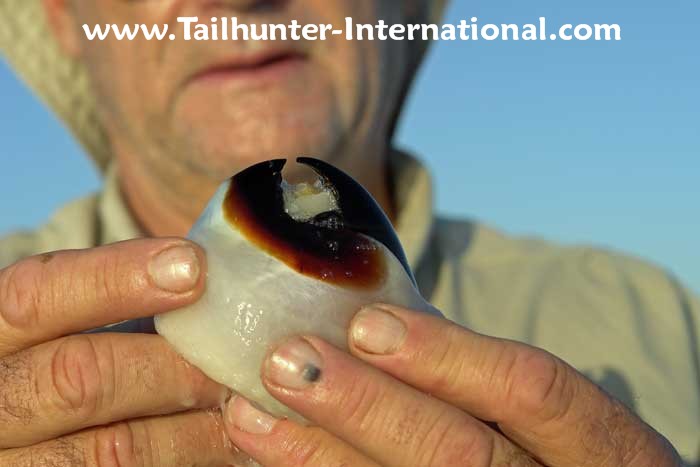
squid_beaktags

The beaks of the giant squid aren’t something to fool around with when still attached to their owners! They’re like big parrot beaks!

THE BIG UGLY

Originally Published the Week of Feb. 28, 2013 in Western Outdoor News

The Captain Victor tied on the heavy leaded lure and handed it back to the angler who looked at it curiously.   He hefted it in his hand and like a weapon.  And indeed, it looked like one.

“Pretty much looks like a medieval club or a torturing device,” he smiled. “a knight could do some damage with this sucker!”

He turned it around in his hand.  The heavy leaded pipe was about a foot long and filled with cement.  It was painted white.  The line was tied to one end.  At the other, it looked like a multi-pronged grappling hook with about a dozen 2-inch long up-turned sharpened spikes.

“Whatever bites this is gonna be interesting,” he said as he put his heavy 4/0 reel with 60 pound test into free-spool and dropped the lure over the side.  Weighing about 2 pounds, it dropped quickly into the depths about 500 yards off the rugged Baja coastline.

Mas linea..more line…more line,” said the captain with a mixture of hand gestures and broken Spang-lish.  “Muy profundo aqui…very deep here, “ as he pointed down into the cobalt morning waters.

“Ok-dokie, amigo” said the angler with a shrug.

The heavy rod and reel continued to play out line.

The captain touched the rod as a sign to stop.  The angler put the rod into gear and figured he was about 400 feet straight-up-and-down.

The Captain Victor motioned for the angler to reel slowly, but at the same time raising and lowering the rod in a sweeping motion stopping the retrieve and letting the heavy jig drop back and winding a few cranks more.

The angler took about half a dozen sweep-and-cranks and suddenly the heavy beefy rod went over double nearly pulling the angler to his feet!

“WHOA!  WHAT THE…???”

Grunting he struggled to turn the handle of the straining reel.  He looked up at the grinning captain now smiling smugly.

“Big squid! Calamar grande!” said Captain Victor with a big satisfied grin and arms folded across his chest.

Sometimes you really have to watch what you ask for.  Often folks want to know if the squid are biting and this just happens to be about that time.  They’re not always “on time” and the bite is cyclical,  but at least for us in La Paz, we get a run of squid in the spring and summer.

Like other sea creatures, it’s not like they send out a memo or anything.

But, when they show up, they generate alot of excitement.  Not only are they fun to catch and extremely feisty when hooked,  but they are just plain fascinating.  They’re the stuff of story, legend and sea-monster!

When folks come down, they normally, aren’t quite ready for what awaits.  The “Humboldt” squid we normally get can be as small as 5 pounders, but 40-100 pound beasts are not uncommon.

When the squid “float” (come near the surface from the cold depths) to where they can be caught, often many boats and pangas will pack the area.  If the big squid are there, it’s not long before heavy rods and double-bent anglers are pulling mightly as if small refrigerators are hanging on the ends…which isn’t too far from the truth!

The vessles are often quite close and once the bite starts, it can get pretty crazy as the wiggling-squirting cephalapods get close to the boats.  A good tip is to let the struggling animals finish their squirting BEFORE bringing them aboard! Between the vessels,  big firehose-sized geysers of water and ink are often seen raining down and spraying anyone within range.  Yells and laughs as well as choice bits of profanity often permeate the scene.

In fact, it’s often a good idea to dispatch the big uglies before bringing them aboard at all.  Squid are voracious and aggressive.  Just because they’re hooked doesn’t mean their beat.

A third of their body length is a mass of tentacles.  An, unlike an octopus, the “suckers” on a squid’s tentacles aren’t little suction cups.  They are concentric circles of teeth surrounding a little beak that can easily break skin when wrapped around the nearest leg, arm or finger.

Certainly, you don’t want to get an appendage near to it’s parrot-like beak which is capable of really doing damage and can take off a finger.  Or they can quickly gouge out a chunk of an angler.

Make no mistake, while small squid in a bait tank can be fun to play with, the Humboldts are dangerous critters.  They are opportunistic feeders and the large ones have been known to attack sharks, tuna and even the occasional diver…not to mention each other.

In fact, the heavy jig used to catch them is painted white to resemble a smaller squid enticing a larger squid to attack it.  Indeed, the squid are cannibalistic and many times, as you’re bringing a squid to the boat, it will often feel like it’s no longer struggling and has turned to dead weight.

If the water is clear enough, you can often see other squid attacking and hacking the one squid impaled on the jig.  There’s no fraternity below the surface.  Eat and get eaten!

It took some grunting and no shortage of sweat and elbow grease to get the big 50-pound squid to the panga.  As per the captains instructions, the angler let the big animal empty it’s jets of water and black ink before bringing it into the panga.

Wiping his brow, with the back of his fist, the angler laid down the rod in exhaustion.

Muy bueno por carnada…good for bait,” smiled Captain Victor as he hacked off one tentacle and wrapped it around a larger bait hook ready to go look for some real fish.

“Like heck!” laughed the angler, cutting off a huge chunk himself and bagging it for the ice chest.  “It’s going into some beer batter for fried squid dinner tonite!”

“But first, let’s catch a few more!” he added tossing the  heavy jig back overboard.

That’s our story!

Jonathan

_______________

Jonathan Roldan has been writing the Baja Column in Western Outdoor News since 2004.  Along with his wife and fishing buddy, Jilly, they own and run the Tailhunter International Fishing Fleet in La Paz, Baja, Mexico  www.tailhunter-international.com.  They also run their Tailhunter Restaurant Bar on the famous La Paz malecon waterfront.  If you’d like to contact him directly, his e-mail is riplipboy@tailhunter-international.com  or drop by the restaurant to say hi!

______________

Jonathan Roldan’s

Tailhunter International


TAILHUNTER FISHING FLEET #1 Rated on Trip Advisor

TAILHUNTER RESTAURANT BAR #1 Rated in La Paz on Trip Advisor


Now follow us on FACEBOOK TOO


Website: www.tailhunter-international.com

U.S. Office: 3319 White Cloud Drive, Suite A, Hacienda Hts. CA 91745

Mexico Office: 755 Paseo Obregon, La Paz, Baja Sur, Mexico

Phones:

from USA : 626-638-3383

from Mexico: 044-612-14-17863

.

Tailhunter Weekly Fishing Report:

http://fishreport.jonathanroldan.com/

Tailhunter YouTube Videos:

http://www.youtube.com/user/pangapirate

“When your life finally flashes before your eyes, you will have only moments to regret all the things in life you never had the courage to try.”
Read Full Post »

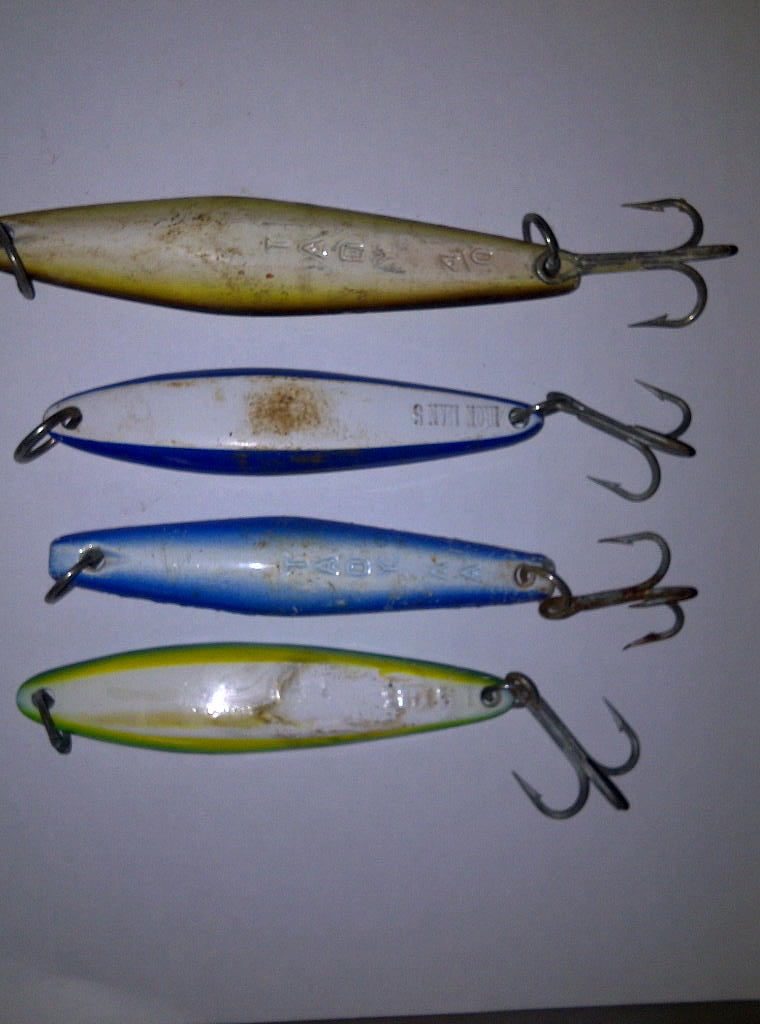
An effective line up of "iron"

An effective line up of “iron”

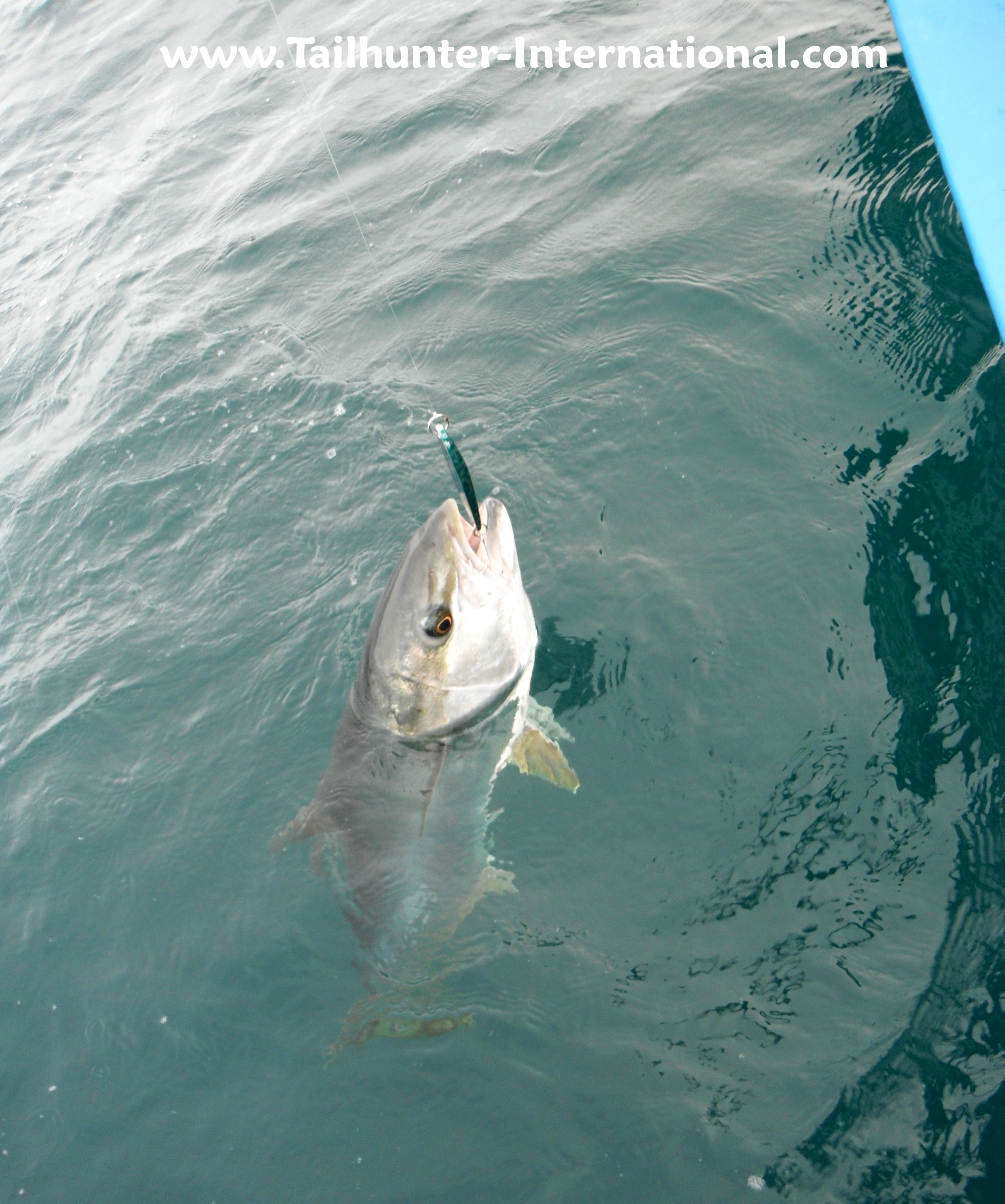
"Fresh one!"  A yellowtail hanging on the iron!  These guys will slam a fast-retrieved iron hard enough to hank the rod from your hands!

“Fresh one!” A yellowtail hanging on the iron! These guys will slam a fast-retrieved iron hard enough to hank the rod from your hands!  A chrome-pattern did the trick on this big yellow.

BAJA PRIMER – “IRON” THE NEXT STEP

Orginally Published in Western Outdoor Publications

You’re ready to try something different.  You’ve got a bit of strut in your step.  You’ve been on your share of fishing trips.  Into Mexican waters from San Diego.  Some trips from Cabo and the East Cape.  Maybe some mother-ship trips from San Felipe.

You’ve put some fish in the bag and a few fillets in the ice chest.  You’re no rookie and think you can pretty much hold your own and know how to tie a knot and which side of the reel is up.

So, now what?

You’re been watching some of the other “hot sticks.”  You realize you’ve caught all your Mexico fish with bait or trolling.  Although it’s exciting and you fill your sack,  you’re ready to step-up your fishing repertoire.

Yawn…

It dawns on you that everyone and anyone can catch fish with bait.  And it’s a no-brainer to drag lures around the ocean waiting for a bite.  In the fish-rich waters of Mexico, if the fish are hungry, they’ll eat a bait.  If you drive the boat over the right patch of water, you get bit too.

What’s the challenge in that?

But, you notice the bit of swagger and yes, maybe even cockiness in the guys they call the “ironmen.”   They’re the guys who can put a fish in the boat when nothing else is biting or no one else is getting bit.  They get the bigger fish.  They win jackpots.  Plus it looks like fun and you want a piece of that!

It does’t take much to get started.  Your local tackle shop can get you started.  Do not be afraid to ask for help and don’t be afraid to admit you’ve never fished “the iron” before.

The best thing is that many of the most popular Mexican game fish like tuna and yellowtail are not only some of the most fun to catch on the iron, but also will readily bite iron lures.

“Iron” refers the class of lures that generally  look like pieces of heavy sculpted elongated metal…a bit like a metal candy bar.  Hence the moniker “iron.”  They come in a dizzying array of shapes, sizes and colors, but just for learning sake,  you can get by with just a handful that will cover most situations:

They involve combinations of chrome/ white/ blue/ green/ yellow/ brown.  Have your tackle dealer point them out.

Manufacturers of many of the most popular include:  Tady / UFO / Fire / Salas/ Raider / Hopkins / Williamson/ and Candy Bar…just to name a few.

Unless you know how to cast already, start with the heavier jigs.  Something that will sink and cast easily like 3-6 oz lures are typical for starters.

If you don’t know how to cast yet, don’t let that stop you.  You can “fish the iron” even if you don’t know how to cast.  If you can do a simple underhand cast or sidearm cast or even just drop the jig overboard, you’ll do just fine.

The real secret in fishing the iron isn’t necessarily in how far you can cast.  The real secret is in getting the jig to “swim” imparting it with a life-like action that will entice a fish to bite.  And that’s where the fun comes in.

If you’ll notice, all lures have “edges.” These are the cuts and angles molded into the lures.  They might give it the appearance of an elongated diamond.  Or a twisted piece of metel or give it little indents or the appearance of “shoulders.”  But these little bits and cuts make the lure “swim” as it’s retrieved through the water.

Some dart and dive.  Others shimmy.  Or spin.  Or wiggle.  All have their own characteristics which change depending on how you retrieve or use the lure.  Some are even cut to flutter like a dead bait when simply sinking in the water.

There are different techniques to do all of this.  One of the most common and the easiest for a beginner is to fish “on the slide.”  While the trolling rods are out, I like to have a nice heavy chrome lure ready and tied to a shorter rod and and least 40-50 pound test.   When the trolling reel goes off, the boat usually coasts or “slides” to a stop while someone battles the hooked fish.

Fishing the “slide” simply entails taking the reel out’ve gear and letting that heavy jig flutter down behind the boat.  If there’s a school of fish, especially tuna following behind the hooked fish watch out!

This is one of the deadliest means of hooking that next fish as they swarm to the boat.  A ferocious strike often occurs as the jig falls or when the reel is suddenly put in to gear!  Hold on!

The second easiest way to learn to fish the iron is called “yo-yo” fishing.  Again, this is as simple as dropping the jig overboard from a stopped boat.  If you can do a side cast or a long under-handed cast all the better.

Let the lure fall.  Once more, don’t be surprised if the lure is hit on the drop as it flutters down through the zones.

After a reasonable time, start winding.  Now, this take a bit of watching.  With some lures, if you wind too fast, the lure “propellers” and just spins.  Not good.  Too slow and the lure doesn’t move at all.  It just hangs there as it comes back to the boat.  Not good either.

So, watch and get a good “swim” on your lure.  Some fish like yellowtail really go after a lure that’s moving fast.  The faster the better.  Others like tuna aren’t so picky.   Remember, the point is to make the lure imitate a live bait that will interest the fish in biting.

Once you have that, try different motions.  The “sweep” involves winding and lifting with the rod at the same time in a “sweep” motion.  Then stopping and letting the lure flutter down again.  Then winding again.

“Ripping” involves a fast  vertical retrieve, then stopping.  Throw the reel into free-spool and letting the lure fall back down.  Then back into gear and winding quickly again.

If you can get a short cast out, try the “Z-pattern.”  Winding back towards the boat.  Stopping and letting the lure fall…then winding again….then letting the lure fall…then winding again in a “Z pattern” back to the boat.

Practice and watch.  You’ll get better in now time and add something new to your fish-catching arsenal.

That’s my story!

Jonathan

______________

Jonathan Roldan has been writing the Baja Column in Western Outdoor News since 2004.  Along with his wife and fishing buddy, Jilly, they own and run the Tailhunter International Fishing Fleet in La Paz, Baja, Mexico  www.tailhunter-international.com.  They also run their Tailhunter Restaurant Bar on the famous La Paz malecon waterfront.  If you’d like to contact him directly, his e-mail is riplipboy@tailhunter-international.com  or drop by the restaurant to say hi!

______________

Jonathan Roldan’s

Tailhunter International


TAILHUNTER FISHING FLEET #1 Rated on Trip Advisor

TAILHUNTER RESTAURANT BAR #1 Rated in La Paz on Trip Advisor


Now follow us on FACEBOOK TOO


Website: www.tailhunter-international.com

U.S. Office: 3319 White Cloud Drive, Suite A, Hacienda Hts. CA 91745

Mexico Office: 755 Paseo Obregon, La Paz, Baja Sur, Mexico

Phones:

from USA : 626-638-3383

from Mexico: 044-612-14-17863

.

Tailhunter Weekly Fishing Report:

http://fishreport.jonathanroldan.com/

Tailhunter YouTube Videos:

http://www.youtube.com/user/pangapirate

“When your life finally flashes before your eyes, you will have only moments to regret all the things in life you never had the courage to try.”

Read Full Post »

There are times when it's just better and safe to hang by the pool for the day, but if you're headed out,  there's a few things you can do to make it easier to fish in rough water!

There are times when it’s just better and safer to hang by the pool for the day, but if you’re headed out, there’s a few things you can do to make it easier to fish in rough water!

PLAYING ROUGH!

Originally Published the Week of January 3, 2012 in Western Outdoor News

Memories of those calm balmy days fishing the Sea of Cortez definitely weren’t going through my brain this afternoon.  On the contrary.

Although the sun was out, I was relatively “bundled” for Baja fishing.   I was still customarily barefoot, but my fishing wardrobe long loose sweat pants and a layering of t-shirt; long sleeve Pendleton and waterproof windbreaker with hood over my head.  It hardly sounded like Baja fishing couture!

But, that being said.  I was chilly.  It was blustery and spray from the wave-tossed northern winds that sweep the Cortez had my clothes damp and my panga captain and I fishing with our hoods pulled way down!  Out of the corner of my mouth, I said in Spanish, “This is why we get paid the big money!”

He grinned and wiped the seawater that was splashing his face and he held onto the tiller!

It was choppy.  White caps tipped the waves even though we weren’t far from shore.  Brrrrr…

My client, a great guy from Oregon, used to fishing the dangerous mouth of the Columbia River was having a great time in his shorts and t-shirt!  “Heck, this is nothing… it’s cold and raining back home!” he laughed.

Well…yay.  Winter is still not my favorite time to fish, but when you gotta work, you gotta work.  Often fishing in winter in the Sea of Cortez or any of Baja waters can be a challenge.  Forget all the fancy brochures.  Weather is still weather and there are some times of the year that are better than others to fish!

That doesn’t mean there’s no fish, but you have to change your tactics a bit when playing in rougher water.

For one, there’s a good chance you might be doing more trolling than normal.  When waters are rough or when it’s off-season, it’s often difficult to purchase bait because either the bait guys aren’t working.  Or, it’s sometimes too rough to net or hook sardines, mackerel or other baitfish.

So, be prepared to troll.

If you have a water temperature gauge, at least try to find the warmer temperature breaks to work.

Also, given the turbulence on the surface,  certain lures work better.  I put away all the “bullet” headed trolling lures and reach for lures with heads that are heavier to dive beneath the chop.  I like using heads that have slanted or flat heads or have “jet holes” that will also create more action as they are pulled through the waters.

You have to be careful about your lure speeds.  It’s not like you can put it on auto pilot on the console or in your brain.  If you’re in waves and swell, your boat speed will vary constantly depending if you’re going upswell or surfing downswell or getting hit sideways.

Which brings up another point.

In heavy weather, use fewer lines.  And run them equidistant from the transom.  Some guys like to run them close.  Others far from the prop wash.  But either way, fewer lines and keeping them equidistant reduces the frequency of tangled lines, especially if you’re doing “S” patterns or the chop is really pushing the boat and the lines around.  Personally, I like running the lines a bit closer than normal.  Don’t worry about the fish.  Believe me, most fish out there can swim faster than the boat can move so if they’re inclined, they’ll hit your lures even if you’re having to run a little faster or slower than normal.

Finally…

It should go without saying to use common sense at all times.  If it’s too rough, no fishing is ever worth jeopardizing anyone’s safety.  Keep it fun!  Either stay onshore or know when to head for the beach and call it a day!

That’s our story!

Jonathan

________________

Jonathan Roldan has been writing the Baja Column in Western Outdoor News since 2004.  Along with his wife and fishing buddy, Jilly, they own and run the Tailhunter International Fishing Fleet in La Paz, Baja, Mexico  www.tailhunter-international.com.  They also run their Tailhunter Restaurant Bar on the famous La Paz malecon waterfront.  If you’d like to contact him directly, his e-mail is riplipboy@tailhunter-international.com  or drop by the restaurant to say hi!

______________
Jonathan Roldan’s
Tailhunter International
 
TAILHUNTER FISHING FLEET #1 Rated on Trip Advisor
TAILHUNTER RESTAURANT BAR #1 Rated in La Paz on Trip Advisor
 
Now follow us on FACEBOOK TOO
 
 
Website: www.tailhunter-international.com
U.S. Office: 3319 White Cloud Drive, Suite A, Hacienda Hts. CA 91745
Mexico Office: 755 Paseo Obregon, La Paz, Baja Sur, Mexico
Phones:
from USA : 626-638-3383
from Mexico: 044-612-14-17863
.
Tailhunter Weekly Fishing Report:
http://fishreport.jonathanroldan.com/

Tailhunter YouTube Videos:
http://www.youtube.com/user/pangapirate


“When your life finally flashes before your eyes, you will have only moments to regret all the things in life you never had the courage to try.”
 

Read Full Post »

Shearer Family goofy tags 5-11

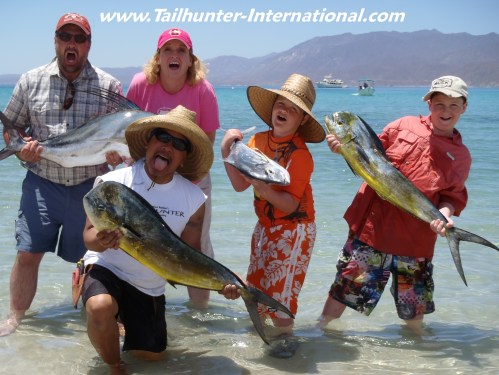
Winter is a great time in Baja and a great time to bring the family! As the our amigos, the Schearer family, from Montana found out with us, Baja is alot warmer than Montana and you don’t have to go out very far to get fish like this!

BECAUSE WE CAN!

Originally Published in Western Outdoor News the Week of Dec. 20, 2012


I’m often asked why we would fish in the winter time?

I guess the quick and wise-guy answer and knee-jerk response is “Because we can!”

But there’s more to it than that. 

During the winter time, the complexion of our Baja vistors changes.  During the regular season,  the majority of our folks are generally fishers.  Or at least have a general focus of getting on or under the water during our warmer months.

During the colder times of the year, I think we see more “escapees.”  These are folks just trying to get away from the chill, ice and wet of home.  “Just lookin’ for some sunshine…any sunshine!” is what I often hear.

While us locals are bundled up in long pants, shoes, and down vests against the “chilly” 60-70 degree weather, folks from Vancouver, Canada…Bozeman, Montana…Portland, Oregon. …happily stroll through town in tank-tops and cargo shorts.   God bless ‘em, they are in sunshine Nirvana!

But, they are often discouraged from fishing when they find out that so many places are rough, windy, or certain “glamour” species like marlin and tuna just aren’t biting in the winter. Or, if they are biting, heading off-shore to catch them can be a long rolling bumpy wet adventure more akin to the very conditions they left back home!

It’s much simplier to park it on a bar stool with a cold umbrella drink and gaze out over the sand and water or take the glass bottom boat ride in the harbor.  Yawn. Right up there with going to listen to a time-share presentation so you can get the free lunch and discount shopping coupons.

But, they shouldn’t let winter discourage time on the water.

One of the great things about fishing in Baja and Mexico is that there is always SOMETHING to catch! 

Frankly, the further south you go, the warmer it will be and the better the chances of catching a glamour fish, but even then, remember that it’s still winter and most of Mexico and Baja’s Pacific coast faces the open ocean (which is why winter surfing in Hawaii is so great!).  There’s big waves and there’s big winds.

It’s no fun being wet and cold and bounced around.

So…

Consider fishing inshore.  So few folks ask for it and so few of the outfitters or charter operators offer it, especially for someone who just walks in or walks up to sign on for a day of fishing.  Which is what so many winter visitors do.  They go fishing on a whim. 

“Honey, instead of visiting the Mayan pottery store,  let’s go ‘deep sea’ fishin’ tomorrow!”

But, chances are you’ll light up a big smile if you ask for inshore fishing.  For the captain our agent or outfitter, it’s a lot more economical since they won’t be burning up a lot of gas.

 Secondly, there’s a lot more inshore fish than offshore blue-water fish .  Therefore,  the chances or success are much greater for them to have smiling anglers at the end of the day.  Finally, believe me.  They don’t want to get beat up out there on the big water any more than you!

From the anglers perspective, waters will probably be calmer.  You’ll have more action with rods in your hands rather than long days of trolling offshore.  Pragmatically, you don’t need a big expensive sportfishing cruiser either.  You can downgrade of fish from pangas since most of the action will be closer to the shores, beaches and reefs. So, it’s less expensive!

In fact, often you’ll just be yards from the shore.  You will often see the bottom and, very often you’ll actually see the fish as they bite. 

And there’s so much variety and action to be had.  Exotic roosterfish…giant pargo…tough jack crevalle…sierra…cabrilla…pompano…are just some of the species available inshore.

And don’t think these fish are any less tough or formidable just because they inhabit the inner waters.  Pargo can be 30-50 pounds with sharp teeth and gillplates as they attack from the rocks.  Roosterfish can swarm in schools or be the big trophy sluggers between 30 and 100 pounds that have made them famous in Baja and the world.  Catch 20 five-pound sierra or a half-dozen 30 pound jack crevalle and I can guarantee your arms will still be sore!

Another bonus is that this is very pro-active fishing. Since you’re not simply dragging lures offshore waiting for hits, you’ll have a rod in your hand most of the time.  This is a great plus if you’re fishing with first-timers, family members or the kids!  Everyone participates.  Everyone has fun.

And, at the end or the day, inshore fish is among the best eating!  So, don’t let winter deter some great fishing fun!

That’s our story!

Jonathan and Jill

__________________

Jonathan Roldan has been writing the Baja Column in Western Outdoor News since 2004.  Along with his wife and fishing buddy, Jilly, they own and run the Tailhunter International Fishing Fleet in La Paz, Baja, Mexico  www.tailhunter-international.com.  They also run their Tailhunter Restaurant Bar on the famous La Paz malecon waterfront.  If you’d like to contact him directly, his e-mail is riplipboy@tailhunter-international.com  or drop by the restaurant to say hi!

______________

Jonathan Roldan’s Tailhunter International

TAILHUNTER FISHING FLEET #1 Rated on Trip Advisor

TAILHUNTER RESTAURANT BAR #1 Rated in La Paz on Trip Advisor


Now follow us on FACEBOOK TOO

Website: www.tailhunter-international.com U.S. Office: 3319 White Cloud Drive, Suite A, Hacienda Hts. CA 91745 Mexico Office: 755 Paseo Obregon, La Paz, Baja Sur, Mexico Phones: from USA : 626-638-3383 from Mexico: 044-612-14-17863

Tailhunter Weekly Fishing Report: http://fishreport.jonathanroldan.com/

Tailhunter YouTube Videos: http://www.youtube.com/user/pangapirate

“When your life finally flashes before your eyes, you will have only moments to regret all the things in life you never had the courage to try.”

Read Full Post »