Feeds:
Posts
Comments

Archive for the ‘Baja Rockfish’ Category

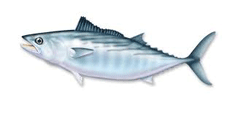
Often it ends up in the garden under the rose bushes or turned into cat food, but the bonito can actually be good eating if you know what to look for! (note the belly has no markings to distinguish it from the lesser tasting skipjack).
“One Man’s Cat Food…Is Not A Bad Dinner”

 
Originally published in Western Outdoor News the Week of May 4, 2011
 

You say Po-TAY-toe.  I say poe-TAH-toe.  Semantics can screw with you.

One man’s bonito is another man’s skipjack and is another man’s catfood and another man’s gourmet dinner!

It was a number of years ago that I was sitting with a group of fishermen in a little  palm-frond palapa bar/restaurant just north…or south of Loreto.  Details are fuzzy.   I remember the beer was chilly.  The sandy floor between my toes felt good and we were all a little wind and sunburned from a good day on the water.  A little fishing.  A little diving.  Some stupid pull-my-finger horseplay between fellow goofballs.

We sat in those scuffed -white -plastic chairs with the beer logo that every Mexican beer company gives to every restaurant with the equally scuffed-up white plastic table.  No matter.  We were hungry and ordered up some fish tacos and a plate of “filete al mojo de ajo” (grilled fish with garlic.)

It arrived on mis-matched plastic plates and served with bent forks but the tortillas were warm; the salsa spicy and the beer so cold that “smoke” came out the mouth  when popped open.  And the fish could not have tasted better!  RIQUISIMO!

We wolfed down taco after taco and plate after plate.  Shoveled it in like chipmunks stuffing our cheeks!  Lime juice squirted all over.

Then someone asked the waiter…Que clase de pescado es? Tan sabrosa!” (What kind of fish is this?  It’s delicious!”

The waiter said with a smile…”BONITO!”

AAACK!!!!

Six guys nearly hurled and choked in unison!  Everyone stopped eating to look up and at each other. Salsa dripping from fingers and corners of mouths. More than one eye-brow arched.

Bonito?  You gotta be kidding me!  We’re eating junk fish?  Isn’t that the stuff we throw away?  Give to the cats?  Put in the garden for fertilizer?  Man…if it is…that’s danged good!

Just another chapter in my enlightenment of Mexican fish! Another fish “epiphany” as it were.

 Just as I had come to enjoy eating such fish like triggerfish and sierra mackerel over the years after thinking they were also “junk fish,” I got schooled about bonito.

Highly-prized as a sport fish, but much maligned as table fare, it’s easy to get confused.  Many of us who grew up or did any fishing on the Pacific Coast came to stereotype bonito as a throw-away species. Catch a ton, but throw them back or give them away!

But, in Mexico the lines get blurred.  Everyone runs into species confusion.  Everyone calls the tuna-look-alike-fish that has trips on it a “bonito.” But, in reality, they’re usually talking about two kinds of fish…black skipjack and real bonito!

They look very identical.  Both are hard-charging members of the tuna family and if you didn’t know better, you’d think they were tuna.  They grow to about 8-12 pounds but fight like 20 pounders. 

Easily caught on live bait, lures, trolled feathers…they’re not real fussy.  Fun at first but after-awhile, if you’re really trying to catch something else like dorado or real tuna, they’re pests!

But that’s the rub.

Most captains will say “bonito” and immediately the stigma is attached.  They make no distinction between bonito and skipjack.  So, the gringo  anglers just toss the fish back and get increasingly frustrated. 

However, a good captain knows the distinction. 

Skipjack have dots or stripes on their silver/white bellies.  Meat is dark red and frankly terrible eating. 

On the other hand, bonito have no marks on their bellies. They have white/silver bellies.   Meat is not only light color, but if bled quickly and all dark meat and blood lines are removed, will fool many into thinking they are eating tuna!

So next time, take a closer look before tossing your “bonito” back !  Or convince your buddy that you really do want those bonito he planned to throw away!  Remember, yesterdays “junk fish” is often today’s dinner. 

 Just remember the prices at your local seafood restaurant for such “junk fish” as …catfish…whitefish…shark…mackerel (yes mackerel!)…tilapia (in Hawaii, they used to bring in tilapia to eat the sewage and mosquitos in the irrigation canals for the sugar cane fields!) Now they call them “African Perch” at 2o bucks a plate.  Believe it or not…even albacore was considered a “throwaway” fish at the turn of the century!

As for us eating that day on the beach…we were just hungry!  Dos mas platos por favor!  (two more plates please!) And more tortillas!

_______________________________________

            Jonathan Roldan has been writing the Baja Column in Western Outdoor News since 2004.  Along with his wife, Jill, they own and run the Tailhunter International Fishing Fleet in La Paz, Baja, Mexico  www.tailhunter-international.com.  They also run their Tailhunter Restaurant Bar on the famous La Paz malecon waterfront.  If you’d like to contact him directly, his e-mail is riplipboy@tailhunter-international.com  or drop by the restaurant to say hi!           

Jonathan

Jonathan Roldan’s
Tailhunter International


TAILHUNTER FISHING FLEET #1 Rated on Trip Advisor

TAILHUNTER RESTAURANT BAR #1 Rated in La Paz on Trip Advisor


Now follow us on FACEBOOK TOO

 
Website: www.tailhunter-international.com
U.S. Office: 3319 White Cloud Drive, Suite A, Hacienda Hts. CA 91745
Mexico Office: 755 Paseo Obregon, La Paz, Baja Sur, Mexico
Phones:
from USA : 626-638-3383
from Mexico: 044-612-14-17863

.
Tailhunter Weekly Fishing Report:
http://fishreport.jonathanroldan.com/

Tailhunter YouTube Videos:
http://www.youtube.com/user/pangapirate


“When your life finally flashes before your eyes, you will have only moments to regret all the things in life you never had the courage to try.”


Read Full Post »

Tim Farrell holds of the "right kind"...a big pargo taken close to shore!

Richard Sawaske holds up a trophy-sized pargo liso (mullet snapper)

This is what big dog-tooth (cubera snapper/ pargo perro) look like!


ADDICTION!

Originally Published in Western Outdoor News the Week of March 9, 2011

            I’m not a gambler at heart.  Not that I haven’t gone through life taking risks, but I just hate losing.  I understand the compulsion to win. 

            I guess like a gambler it’s…one more horse.  One more hand of cards.  One more spin.  One more quarter in the machine. The “next one” is “guaranteed!”  I got it figured out.  I got a “system.”

            Sound familiar?

            How often have I heard those phrases like that over my almost two-decades here in Baja when it comes to fishing for pargo…the red ugly beasts of the Baja!

            Rookies have no idea.  They ask how long it will take to catch a “limit” of pargo.

            Veterans return each season with a new “angle” or “rig” or other “sure-fire” plan or “foolproof” method. Or they have the  newest  piece of angling technology that will surely show these  wiley fish their proper place in the food chain and the fish box.   Surely, they MUST SUBMIT!

            More often than not, it is us who are put/kept in our places.  Sitting or standing in disbelief amid broken lines; straightened hooks; frayed leaders and shattered dreams of finally getting our photo in WON!

            You say you don’t even know what a pargo is?  Never seen a photo of a pargo?  That’s because compared to all the tuna, marlin, dorad, wahoo, roosterfish and other “glamour” species, there aren’t that many photos out there!  It’s pretty hard to take a photo of a fish that doesn’t allow itself to be caught very often.

            However, in Mexico, the “pargo” term is generally applied to three main types of fish. 

            First, there is the Pargo Liso, a.k.a “mullet snapper”.

            Second, there is the “Pargo Mulato, a.k.a “barred pargo.”

            Finally the Pargo Rojo, a.k.a “dog-tooth snapper” or “cubera snapper” or “pargo colorado.”

            All look a bit different, but share some common characteristics.  They all have big nasty teeth, sharp gillplates and scales.  They tend to range in color from copper to red to rust with highlights of orange and sometimes green.  They range from smaller 5 pounders to 70 pounders or more.

              They inhabit reefs, rocks, caves and generally any structure like sunken pilings, ships or anything else offering great cover for them to ambush their prey and optimum opportunity to shred your line and lose your tackle. And, they are all tremendously powerful with bullish freight-train attitudes when hooked.

             They can be aggressive or cagey and cautious.  Blessed with great eyesight, they’ll shun a bait or lure that isn’t presented  “just right.”

            Sometimes they are found as solitary fish.  But during the spring, the “fever sets in” and schools of them come into the shallow rocky areas around reefs, high spots and islands, especially in the southern Baja regions. 

            Seen from the surface as moving undulating dark spots of red, I’ve often described it to others as imagining “a giant Japanese koi pond on steroids.”  Throwing chum or a hooked bait into the middle of it sometimes, it’s like watching giant piranha go “on the feed” as huge backs and wide tails with flashes of red and copper explode at the surface.

            As a writer, perhaps it’s one of my favorite species to write about.  As a fisherman, it’s one of my most frustrating fish to stalk.  As a guide and outfitter here in La Paz, it’s clearly, the most amusing.

            I have often told a skeptical client, “If you hook 10 and bring 1 to the boat, consider yourself lucky.” 

            But, I have seen grown men throw their rods in the water or snap them against the gunwale of a panga in frustration.  I have heard the curses to the fish gods and seen the “rending of cloth” so to speak. 

            And each season at this time of year, I hear the “plans” as if no-one had ever thought of it before.  Everyone has their new “system” or “plan of attack.” that will surely correct missed opportunities of the past.

            “This time, I’m using a shorter rod, but a bigger reel.”

            “80 pound test is the ticket this time”

            “Lighter line, but I’m using  new super-duper drags and a circle hook”

            “Wire leader is the ticket”

            “Slow trolled small needlefish on flurocarbon leader can’t miss.”

            “Wait until all the rest of the boats leave, then be the only boat out there and only use half-a-sardine so they won’t bite the tail off this year”

            “A double trap hook set up is guaranteed!”

            And off they march and launch to their appointed dates with destiny. 

            On the water losing fish-after-fish.  And, like gamblers…”Just one more try! This next one will be the one!”  They cast again.  They bait again.  Often, only to return beaten and defeated. 

            By a big fish with a brain the size of a pea.

            “Just wait ’til next year.  I’ve got some new ideas for next year!”  they say.

            Optimism is eternal.  Everyone has a “system.”

 _______________________________________

Jonathan Roldan has been writing the Baja Column in Western Outdoor News since 2004.  Along with his wife, Jill, they own and run the Tailhunter International Fishing Fleet in La Paz, Baja, Mexico  www.tailhunter-international.com.  They also run their Tailhunter Restaurant Bar on the famous La Paz malecon waterfront.  If you’d like to contact him directly, his e-mail is riplipboy@tailhunter-international.com  or drop by the restaurant to say hi!

Read Full Post »

« Newer Posts