
END OF THE LINE
Originally Published the Week of Nov. 14, 2021 in Western Outdoor Publications
For them, it wasn’t something they decided to do. It was something they were born into and moreso, something they were born to do. And there’s a big difference.
In it’s most elementary terms, it has to do with survival. It’s subsistence. It’s making sure the family has something on the table.
They start as soon as they are able to help fix a line or mend a net for their papas and grandfather abuelos. They clean gear and fish.
Older and bigger, they help push the boats into the waters as the sun rises and then spent countless days on the Mexican waters.
Days turn to years of squinting into the sun. Faces and hands get weathered by salt, spray and relentless heat. Fingers grow thick with callouses from years of line cuts. They look older and rougher than their years.
Grandfather teaches his papa. And papa teaches son.
Learning to read the subtle nuances of water, weather and fish. Repetitive brain and muscle memory and innumerous hours in the elements teach more than any book or classroom.
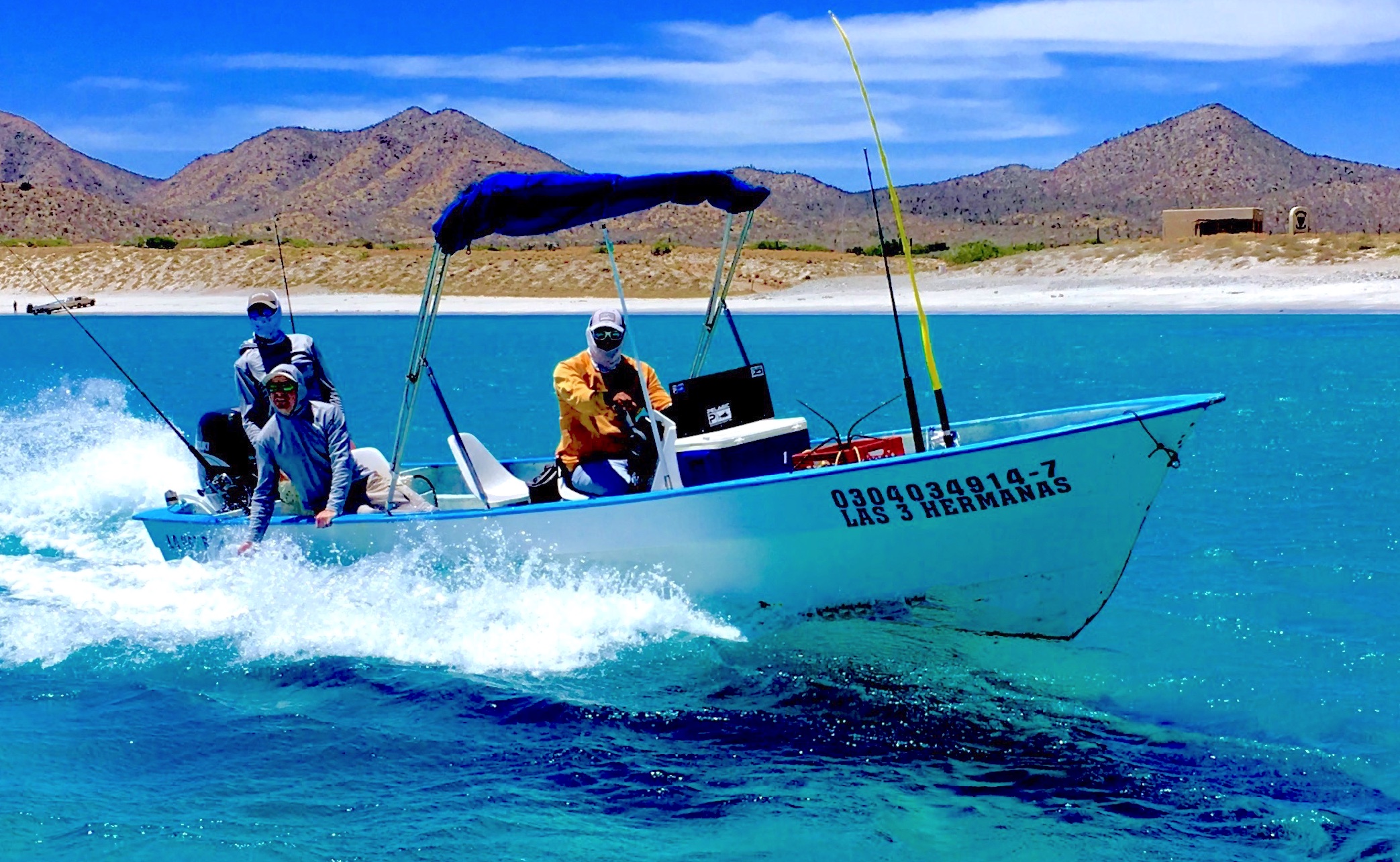
Grandfather’s wooden skiff becomes papa’s plywood panga eventually becomes son’s fiberglass panga. The materials might change, but the design is essentially basic…utilitarian…durable…purposeful.
Like the men themselves.
It’s Mexican blue collar. As blue as it gets.
The boat gets through the surf and rocks. It goes from point A to point B in the waves, salt and sun. It functions as a sturdy working-man’s platform. Like the man it serves, it can take a beating.
Over the years, it might add a “frill or two.” Better seats. Maybe some form of shade for those long hours.
But, those things cost money. Gadgets break or need maintenance. It’s not something easily found in this type of life.
Less is often more. Simple is best.
And it gets him home every night.
Like I said, it’s not something they decided to do. They are born to it.
Socially selective Darwinism, if you will.
Survival of the “fishiest.”
You’re good or you go home. You’re good or you don’t eat.
A lost fish isn’t a lost opportunity. It’s the difference between feeding your family and paying the bills.
For almost 30 years now, I’ve watched my captains push out their pangas into the Sea of Cortez. Some of them have been with me since the first day. None of my captains have been with me for less than 20 years.

Proud. Individualistic. Clannish. Funny. Honestly, salt-of-the-earth hombres. They are the direct descendants of the original Vagabundos del Mar who roamed the Sea of Cortez in tiny skiffs in the days of abundance when the “Ruby Sea” was alive with sealife.
Before high-powered motors. Before GPS. Before fiberglass, ice, and technology. It was often spun cotton fishing line; a crude hook; and some bait.
A few minutes ago, the beach was crowded with our fishermen. Ready for another fun day on the water.
Let’s get everyone going. No dallying. Let’s get on the fishing spots, guys!
One-after-the-other I call names and load gear, ice chest, food and drinks and shove them off with a wave. And yes, a small prayer to St. Peter, the patron of fishermen.
For a good day. A safe day. As I was taught.
And now the beach is empty as I stand ankle deep in the small surf watching the pangas make their way out. Some head north. Some south.
I smile. I know my guys.
I know each has a “game plan” for the day. Each has their own special spots. If nothing else, my captains are also competitive.
The sun is just beginning to airbrush small streaks of orange and blue in the east. It’s helping dry my shorts and t-shirt which get wet from pushing the boats into the water.
After 3 decades of doing this almost daily, I know I’m closer to the end of this particular journey than the beginning. And as I watch my captains start their day, it hits me that this way of life is fading as well.
We are the last generation. They are the last generation.
I’ve watched the families of my captains grow and prosper. I can’t think of any of their children following in their wake. No pun intended. In fact, I know many captains from other fleets as well. The line is coming to an end.
Indeed, their kids are moving off and away. They’re getting off the beaches and moving to the town or cities. They are getting formal educations and becoming teachers, accountants and business owners.
Families of their own.
The younger ones have cellphones. Netflix and social media pervade even in the most rugged and peripheral pueblos.
They might grow up in fishing families, but their aspirations are different. They have opportunities and choices their fathers, uncles and grandfathers never had.
The kids might be born into it, but they are no longer born to making this type of life.
And talking to their fathers, most would prefer their kids NOT make their livings on the water.
In a panga. In the sun. It’s a hard life. Nature can be harsh. Subsistence living is not something most people aspire too.
I’m not writing this to beat our own drum. However, if you get the chance, spend a day or three on the water with a panga captain.
Nowadays, yes, there are fancy cruisers and technology-up-the-yazoo for fishing. Hey, I like comfort too.
Nothing wrong with having ice-makers, cocktails and wi-fi aboard while you fish. Or should I say while the boat fishes FOR you.
Chances are you don’t even have a rod in your hand until something happens.
And that’s OK. I guess.
But if you want the real deal, go find a guy driving a panga. They are all over, but fewer all the time.
They are the best watermen. Probably, the water right in front of him is the only water he has ever fished. His whole life.
Move him up or down the coast a few miles and he’s lost his “hometown and homecourt advantage.” These are HIS waters. Right in front.
He won’t use GPS. He’ll line up the top of a hill; a rock on a cliff and an old shack on the beach for triangulation.
He’ll tell you to drop your line. “Eso. Aqui, Senor.” Here’s the spot to fish!
And hang on. Good things usually happen!
That’s my story…
Jonathan
______________
Jonathan Roldan has been writing the Baja Column in Western Outdoor News since 2004. Along with his wife and fishing buddy, Jilly, they own and run the Tailhunter International Fishing Fleet in La Paz, Baja, Mexico www.tailhunter.com.
They also run their Tailhunter Restaurant Bar on the famous La Paz malecon waterfront. If you’d like to contact him directly, his e-mail is: jonathan@tailhunter.com
Or drop by the restaurant to say hi. It’s right on the La Paz waterfront!
_____________
Jonathan Roldan’s
Tailhunter International
Website:
www.tailhunter-international.com
Mexico Office: Tailhunter International, 755 Paseo Obregon, La Paz, Baja Sur, Mexico
U.S. Mailing Address: Tailhunter International, 8030 La Mesa Blvd. #178, La Mesa CA 91942
Phones:
from USA : 626-638-3383
from Mexico: 044-612-14-17863
.
Tailhunter Weekly Fishing Report: http://fishreport.jonathanroldan.com/
Tailhunter YouTube Video Channel:
https://www.youtube.com/channel/UCBLvdHL_p4-OAu3HfiVzW0g
“When your life finally flashes before your eyes, you will have only moments to regret all the things in life you never had the courage to try.”







 That's My Story
Leave a comment